No other gods — Je suis Français!

Je suis Français! Remember when Je suis Français (I am French) was everywhere on Facebook? That was three years ago after the November 13, 2015 terrorist attack in Paris. Americans identified with the French. Yesterday I felt like that again.

Marking the 100th anniversary of the armistice that ended World War I — “the War to End all Wars” — at the Arc de Triomphe in Paris, French President Emmanuel Macron spoke of the chaos and death unleashed by nationalism. Here’s an English translation of an excerpt:

Patriotism is the exact opposite of nationalism. Nationalism is a betrayal of patriotism. By saying “our interests first, who cares about the others,” we erase what a nation holds dearest, what gives it life, what makes it great and what is essential: its moral values. I know there are old demons which are coming back to the surface. They are ready to wreak chaos and death. History sometimes threatens to take its sinister course once again.

One need not be French to applaud Mr. Macron’s statement. Days before the national election in America, I wrote a piece on nationalism as the rising god of our time.  A wise friend advised against publishing it. He likely was right at the time. But Mr. Macron’s words at the Arc de Triomphe lead me to share a bit of what has been burdening my conscience.

Kosuke Koyama - RIP

Kosuke Koyama (1929-2009) RIP

Those of you who have followed Views from the Edge know how I see the world through the lens of faith. Be Still! Departure from Collective Madness (2017, Wipf & Stock) is dedicated to Japanese theologian Kosuka Koyama. “There is only one sin,” he said during a casual lunch. “Exceptionalism.” Born in 1929, Koyama had grown up with the myth of Japanese exceptionalism. The emperor could do no wrong. Japan had become its own god. Ko saw the same myth rising in America where he had settled with his his wife, Lois, a native Minnesotan.

Paul Tillich observed that whatever is one’s “ultimately concern” is a person’s or nation’s god. Tillich was one of earliest critics of the rising god of German nationalism that led to World War II and the Holocaust. Dismissed from his professorship at the University of Frankfurt i 1933, Paul Tillich, like Koyama, was invited to join the faculty of Union Theological Seminary in New York. It was Reinhold Niebuhr of Moral Man and Immoral Society who paved the way for Tillich, and later, Dietrich Bonhoeffer, to join the theological work of the academy on American soil.

My Christian understanding of faith and life is rooted in Niebuhr, Tillich, Bonhoeffer, Bonhoeffer’s friend Paul Lehmann, and Koyama. Only Koyama lived long enough to observe the old dead god rising to life again on American soil. All of them would have applauded Mr. Macron’s statement that nationalism is a betrayal of patriotism. “History sometimes threatens to take its sinister course again.”

To be human is by nature to be anxious. We know we are not God. We are mortal. Our time is mortal. “Time, like an ever-flowing stream, Soon bears us all away. We fly forgotten as a dream Dies at the opening day.” People who profess faith in the tradition of Abraham — Jews, Christians, Muslims — understand how quickly we turn to the “other gods” for our identity and security.

Rembrandt Moses and Commandments

Rembrandt’s painting of Moses crashing the Ten Commandments

“I am the LORD your God, who brought you up out of the land of Egypt, out of the house of bondage,” says the First Commandment. “You shall have no other gods before Me” (Exodus 20:2-3).

The “house of bondage” is not limited to geography or time. It is any nation that exalts itself as exceptional, any nation that practices hardness of heart to the foreigner, the alien, and sojourner. The First Commandment identifies “the house of bondage” as a god from which the LORD God of heaven and earth sets a person, a nation, and a planet, free.

I am an American. I love my country. But I don’t worship it. Today I say, again, “Je suis Français!”

— Gordon C. Stewart, Chaska, MN, November 12, 2018
 

Two Minute Silence

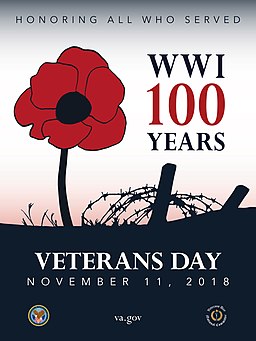
Veterans Day poster 2018

Veterans Administration poster

I remember standing with my classmates at Marple Elementary School for a period of silence on November 11. It was Armistice Day, the anniversary of the end of World War I.

Observing the silence was hard! It wasn’t happy; it was sad. It was an enforced unhappy silence to remember what none of us kids wanted to remember: those who had died in an antique time in service to their country, and the horrors of war itself. I must have wondered why our teachers would enforce a sad silence that made us unhappy. In 1954 Armistice Day became Veterans Day in America. (Click HERE for information about the change.)In Canada, Europe, Great Britain, and Australia, November 11 is called Remembrance Day.

Malcolm Guite — Anglican priest, song writer and poet in Cambridge, England — recalls his experience of the public Two Minutes Silence of Remembrance Day in Silence: a Sonnet for Remembrance Day,

On Remembrance Day I was at home listening to the radio . . . when the time came for the Two Minutes Silence. Suddenly the radio itself went quiet. I had not moved to turn the dial or adjust the volume. There was something extraordinarily powerful about that deep silence from a ‘live’ radio, a sense that, alone in my kitchen, I was sharing the silence with millions. I stood for the two minutes, and then, suddenly, swiftly, almost involuntarily, wrote this sonnet. You can hear the sonnet, as I recorded it on November 11th three years ago, minutes after having composed it, by clicking . . . clicking on the title.

Silence

November pierces with its bleak remembrance
Of all the bitterness and waste of war.
Our silence tries but fails to make a semblance
Of that lost peace they thought worth fighting for.
Our silence seethes instead with wraiths and whispers,
And all the restless rumour of new wars,
The shells are falling all around our vespers,
No moment is unscarred, there is no pause,
In every instant bloodied innocence
Falls to the weary earth, and whilst we stand
Quiescence ends again in acquiescence,
And Abel’s blood still cries in every land
One silence only might redeem that blood
Only the silence of a dying God.

— Malcolm Guite, Sounding the Seasons

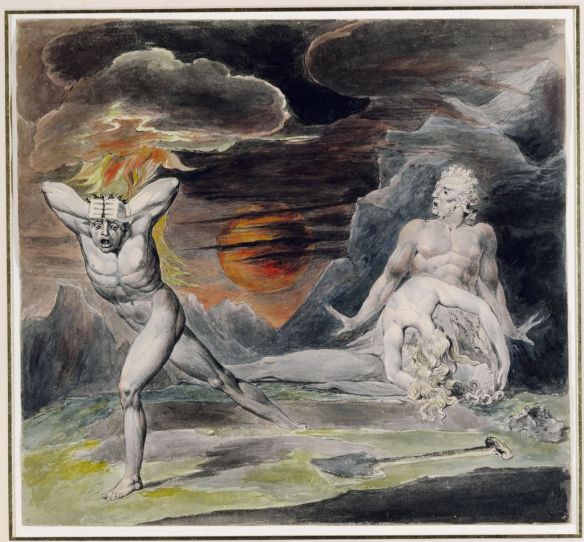
Blake_Cain_Fleeing_from_the_Wrath_of_God_(The_Body_of_Abel_Found_by_Adam_and_Eve)_c1805-1809

William Blake painting of “Cain fleeing from the wrath of God “as Adam and Eve look on in horror following the fratricide.

All these years later, I still struggle with silence on November 11, and on days like yesterday, the 80th anniversary of The Night of Broken Glass (Kristallnacht). Yet, as a person of faith who knows darkness as well as light, I have learned over the years to silence the radio for an unenforced Two Minute Silence.

Abel’s blood still cries in every land
One silence only might redeem that blood
Only the silence of a dying God

— Gordon C. Stewart, Chaska, MN, November 11, 2018.

The Night of Broken Glass

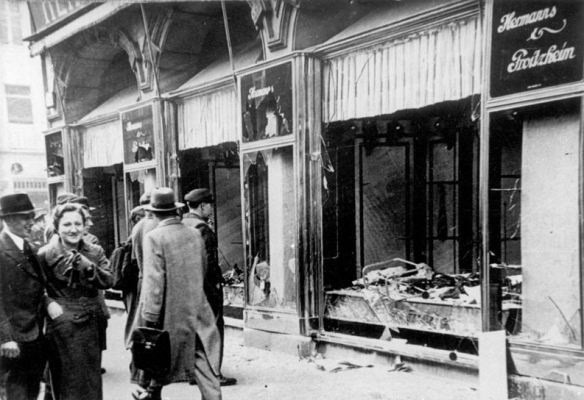
Krystallacht Magdeburg

Photo from Magdeburg, Germany, Nov. 9-10, 1938, Kristallnacht (The Night of Broken Glass)

Today marks the 80th anniversary of The Night of Broken Glass (Kristallnacht).

The smiling man and woman in the photo are strolling past the broken glass of raided shops of the Jewish shopkeepers in the otherwise tranquil city of Magdeburg, Germany. The passers-by likely have never heard of Mechtild of Magdeburg, the 13th Century mystic beguine who had declared that “No one can burn the truth,” nor had they heard the screams or seen the tears of the shopkeepers or synagogue worshipers. Those screams are silent now. (Scroll down for information on  Krystallnacht, The Night of Broken Glass.)

Like the synagogues of Germany, Austria, and the Sudetenland, the Tree of Life Synagogue in Pittsburgh had been a quiet place. The sound of broken glass were heard only during from the traditional breaking of a glass at Jewish weddings. Tree of Life was a sacred place of worship. But the memory of Kristallnacht and the long history of anti-Semitic pograms were, and are, never far away.

The 80th anniversary of Kristallnacht deserves greater attention in the U.S.A. this year when the evil of white nationalism has shattered the glass of the ‘others’ in synagogues, churches, and public gathering places with the weapons of destruction. Today I hear the echoes from The Night of Broken Glass and see the faces of smiling passers-by.  I stand still again in the face of evil and bow my knee before the Eternal Silence of the compassionate God we cannot kill.

  • Gordon C. Stewart, Chaska, MN, November 10, 2018.

U.S. Holocaust Museum account of Kristallnacht

On the night of November 9, 1938, violent anti-Jewish demonstrations broke out across Germany, Austria, and the Sudetenland region of Czechoslovakia. Nazi officials depicted the riots as justified reactions to the assassination of German foreign official Ernst vom Rath, who had been shot two days earlier by Herschel Grynszpan, a 17-year old Polish Jew distraught over the deportation of his family from Germany.

Over the next 48 hours, violent mobs, spurred by antisemitic exhortations from Nazi officials, destroyed hundreds of synagogues, burning or desecrating Jewish religious artifacts along the way. Acting on orders from Gestapo headquarters, police officers and firefighters did nothing to prevent the destruction. All told, approximately 7,500 Jewish-owned businesses, homes, and schools were plundered, and 91 Jews were murdered. An additional 30,000 Jewish men were arrested and sent to concentration camps. Nazi officials immediately claimed that the Jews themselves were to blame for the riots, and a fine of one billion reichsmarks (about $400 million at 1938 rates) was imposed on the German Jewish community.

The Nazis came to call the event Kristallnacht (“Crystal Night,” or, “The Night of Broken Glass”), referring to the thousands of shattered windows that littered the streets afterwards, but the euphemism does not convey the full brutality of the event. Kristallnacht was a turning point in the history of the Third Reich, marking the shift from antisemitic rhetoric and legislation to the violent, aggressive anti-Jewish measures that would culminate with the Holocaust.


Daily Riches: Religion and Established Privilege (Thomas Merton)

Thomas Merton’s quotation on religion and privilege arrived following a national campaign with loud cheers and boisterous rallies that turn Christianity into white nationalism. “…Faith in God . . . becomes in fact faith in [one’s] own nation, class or race.”

Bill Britton's avatarRicher By Far

“Of course, it is true that religion on a superficial level, religion that is untrue to itself and to God, easily comes to serve as the ‘opium of the people.’ And this takes place whenever religion and prayer invoke the name of God for reasons and ends that have nothing to do with him. When religion becomes a mere artificial facade to justify a social or economic system–when religion hands over its rites and language completely to the political propagandists, and when prayer becomes the vehicle for a purely secular ideological program, then religion does tend to become an opiate. It deadens the spirit enough to permit the substitution of a superficial fiction and mythology for this truth of life. And this brings about the alienation of the believer, so that his religious zeal becomes political fanaticism. His faith in God, while preserving its traditional formulas, becomes in fact faith…

View original post 291 more words

It’s not a Caravan

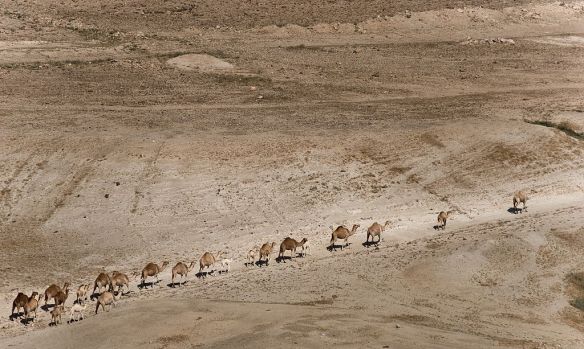
Camel caravan

Caravan in the Jordan Valley

Does anything seem strange about ‘caravan’ as the word to describe the migrants now moving on foot toward the United States’s southern border? ‘Caravan’ is the word used everywhere without a second thought.

The etymology of the word ‘caravan’ is Persian. “From Middle French caravane, from Old French carvane, from Persian کاروان (kârvân), from Middle Persian kʾlwʾn’(kārawān), ultimately from Proto-Indo-European *ker- (army) (whence Old English here). The word was used to designate a group of people who were travelling by camel or horse on the Silk Road.” (Wiktionary)

Language matters. Words matter. “Language: A Mechanism of Social Control” — Newt Gingrich’s GOPAC tutorial for political candidates — knows this better than most. Words like ‘caravan’ have overtones and undertones. They allude to things that awaken hope or fear. There’s nothing like the warning of a caravan to awaken associations with Middle Easterners coming to our Southern border.

Have you ever heard of a Christian caravan? Or a Jewish caravan? Caravans in the American mind have nothing to do with the western hemisphere or western culture. Caravans belong to Persians (Iran) and the Arabs we have come to fear. No American fears a camel caravan! But we do remember the Crusades. We remember the waging of religious war between Christians and Muslims. We call to mind Al Qaida and the Islamic State (ISIS).

The linguistic manipulators of language use such emotive allusions as weapons in election campaigns and underscore the words by sending U.S. Army troops to the border — to keep us safe – to beat back the barbarian Middle Eastern terrorists from Honduras, Guatemala, and El Salvador now walking slowly several hundred miles from the border in hopes of a better life. They know fear works. They know that threats to our freedom and national security will take our imaginations back in time to Arabian desert nomads whose camels carried them — fathers, mothers, sons, daughters, grandparents — from here to there without settling anywhere. They know we will think of a caravan as an army, not a caravan of nomads.

Language matters. Words matter. Don’t let the dispatch of troops to the Mexican border and the language of social control make fools of those who have never met a camel or walked on bandaged feet with bloodied hands pushing broken baby-strollers in hopes for as terror-less life. It’s not a caravan!

  • Gordon C. Stewart, Chaska, MN, November 5, 2018.


Lines Written in the Days of Growing Darkness

Mary Oliver’s “Lines Written in the Days of Growing Darkness” — a poem of love for the world in the season of autumn leaves and shorter days — arrived this morning from Canadian David Kanigan’s blog.

Live & Learn's avatarLive & Learn

Every year we have been
witness to it: how the
world descends

into a rich mash, in order that
it may resume.
And therefore
who would cry out

to the petals on the ground
to stay,
knowing, as we must,
how the vivacity of what was, is married

to the vitality of what will be?
I don’t say
it’s easy, but what
else will do

if the love one claims to have for the world
be true?

So let us go on, cheerfully enough,
this and every crisping day,

though the sun be swinging east,
and the ponds be cold and black,
and the sweets of the year be doomed.

~ Mary Oliver, “Lines Written in the Days of Growing Darkness” in A Thousand Mornings 


Notes: Poem source – Thank you Karl @ Mindfulbalance. Photo via afaerytalelife

View original post

Tree of Life and All Souls

Day of the Dead William Adolphe Bouguereau(1825-1905)

“Day of the Dead” – William Adolphe Bouguereau (1825-1905)

The death of 11 worshipers in the sacred space of Tree of Life in Pittsburgh is no longer the latest heinous act of gun violence in America. There is more to come in a country where the rhetoric of fear and hate divide us with lies and diatribes.

All Souls Day on the Christian calendar calls for deeper reflection about the living and the dead — not just some of us, but all of us: Jewish (Orthodox, Conservative, Reform); Muslim (Shia, Sunni, Sufi); Christian (Eastern Orthodox, Western Catholic, Protestant); Hindu, Buddhist, Jaianist, humanist, animist, agnostic, and atheist — all of us.

There is only one of us. Humankind. A species free to eat from the Tree of Life that blesses or the Tree of Death that turns us into twos and threes, this or that, with words and arms that send 11 Tree of Life worshipers to their graves with forked tongues about good and evil and the planet itself.

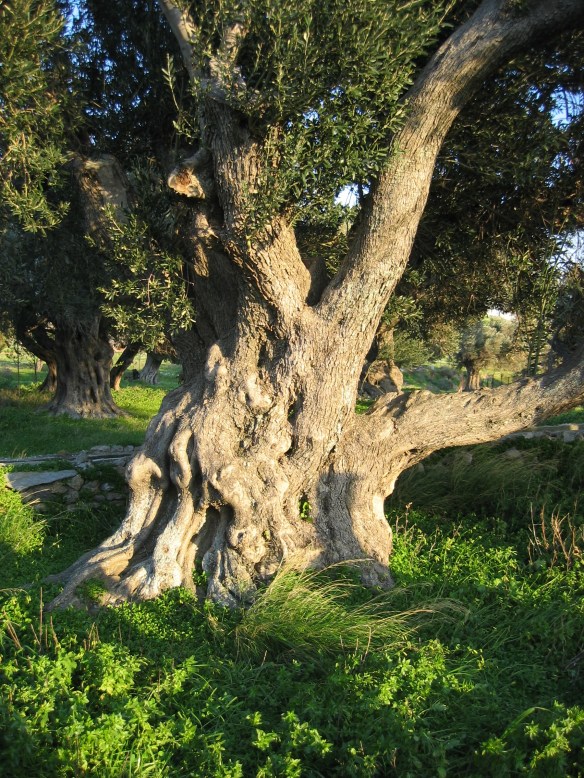
Old_olive_tree_in_Karystos,_Euboia,_GreeceThe people of the Tree of Life know this. They named their place or worship after the Torah story of Humankind (Book of Genesis 2-3). Now in the deadly silence following the death of Abel, the people of the Tree of Life hear the different Voice that cries out, in love, for Cain. “Humankind, who are you? Your brother’s blood is crying out to Me from the ground. There is only one Earth. There is only One of you — one Soul, one Breath — not two, or three, or….” (Genesis 4).
“We live in succession, in division, in parts, in particles. Meanwhile within man is the soul of the whole; the wise silence; the universal beauty to which every part and particle is related, The Eternal One.” – Ralph Waldo Emerson , Essays.

Grace and Peace,

Gordon C. Stewart, Chaska, MN, November 3, 2018


Clowning Around

IMG_4321

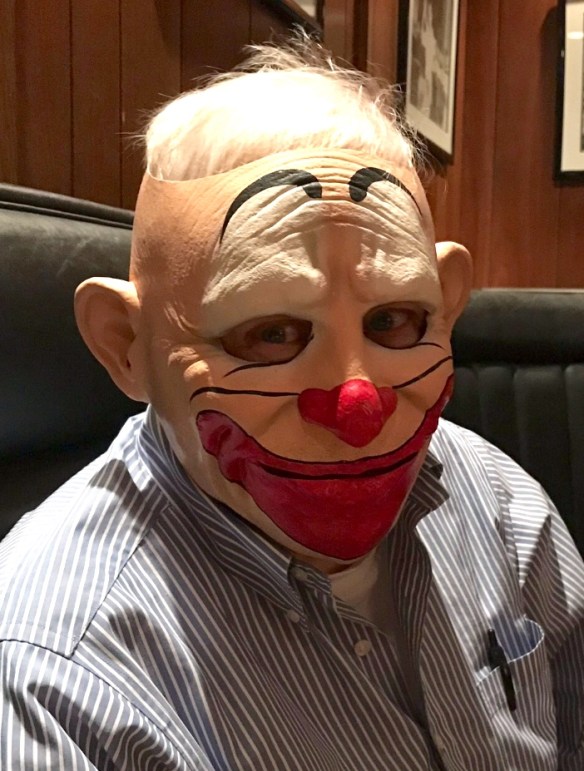
Clown Selfie @ The Porterhouse, Oct. 31, 2018

“People tell me they feel so much more available to life once they learn how to clown around. That’s what being a clown is about; it’s about touching your soul and finally giving it room to laugh.” —Arina Issacson

— Gordon C. Stewart, 20th wedding anniversary, Halloween, 2018


Tikkun Olam

Fourth Presbyterian chicago

Fourth Presbyterian Church – Chicago

John Buchanan looks to the Jewish concept “tikkun olam” amid the alarms of 2018. Dr. Buchanan is Pastor Emeritus of Fourth Presbyterian Church-Chicago, past Moderator of the Presbyterian Church (USA), and former editor of the The Christian Century. “Hold to the Good” is now his pulpit in retirement.

Family of John M. Buchanan's avatarHold to the Good

For years, at the conclusion of public worship, I have used words that come from St. Paul, written 2,000 years ago.

“Go into the world in peace and courage.
Hold to the Good.
Honor all God’s children.
Love and serve the Lord,
Rejoicing in the power of the Spirit.”

Last Sunday, as a guest preacher at Westminster Presbyterian Church, Grand Rapids, Michigan, when I came to the words “Hold to the Good” I almost couldn’t go on. The news from Pittsburgh Saturday morning stood as a contradiction to those words and to everything I hold dear and regard as essential to our life together….

…the trust that in the eternal struggle between good and evil, good will ultimately prevail,

…the trust that the heart of the nation I love, its government and politicians, is essentially fair, honest and good,

…the hope that the long arc of history bends, as Martin…

View original post 521 more words

The Press and the People


Breckwoldt prüfung

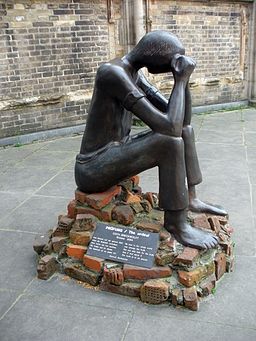
The Ordeal – Sculpture by Edith Beckwoldt, St. Nikolai, Hamburg, Germany.

“No man in the whole world can change the truth. One can only look for the truth, find it and serve it. The truth is in all places.” —  Dietrich Bonhoeffer quotation inscribed on Edith Beckwoldt’s sculpture “The Ordeal”.

“There is great anger in our Country caused in part by inaccurate, and even fraudulent, reporting of the news. The Fake News Media, the true Enemy of the People, must stop the open & obvious hostility & report the news accurately & fairly. That will do much to put out the flame…” — Donald J. Trump tweet, 6:03 AM – 29 Oct 2018.


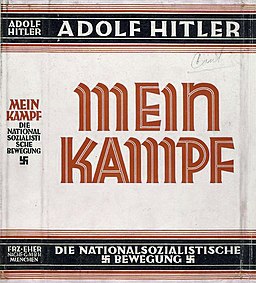
Mein Kampf dust jacket“It is the press, above all, which wages a positively fanatical and slanderous struggle, tearing down everything which can be regarded as a support of national independence, cultural elevation, and the economic independence of the nation.” ― Adolf Hitler, Mein Kampf.

Many advise against any and all such comparisons. As a public theologian raised on Bonhoeffer’s witness, theology and ethics, I ask, “How, in good conscience, can we not?” The playbook today is the same as it was in Bonhoeffer’s time. According to The Art of the Deal’s ghost writer, the speeches of Hitler were prominent in the penthouse bedroom of Trump Tower.

Enter Charlie Chaplin’s parody of the unlikely rise of the Fuhrer and the call to national unity.

“Silence in the face of evil is itself evil: God will not hold us guiltless. Not to speak is to speak. Not to act is to act.” – Dietrich Bonhoeffer.

“We are not to simply bandage the wounds of victims beneath the wheels of injustice, we are to drive a spoke into the wheel itself.” – Dietrich Bonhoeffer.

— Gordon C. Stewart, Chaska, MN, October 31, 2018