A personal reflection on God’s word to Sennacherib
I know your sitting down and your going out and coming in, and your raging against Me
Isaiah 37:28
19th-century wood engraving by Gustave Doré depicting the destroying of Sennacherib’s army outside Jerusalem.
You cannot hide. You plot and scheme as though unseen, not noticed, secure in the dark places of public life. You rise. You sit. You go out among the shadows, declaring innocence and impunity. You mislead. You cheat. You lie. You bear false witness and concoct stories to assail your neighbors. You connive, conspire, and assassinate. You poison your opponents and flood the public with fear and hate. You threaten your critics, and pay, or refuse to pay, legal fees for sycophants who have placed their trust in you. You rant and rage and rouse the people with a voice that feigns righteous indignation.
Because you have raged against Me and your insolence has come to My ears, I will put My hook in your nose and My bit in your mouth; I will turn you back on the way by which you came.
Isaiah 37:29
Uncivil, insolent, resistant, unhinged, kicking up dust on everyone around you, you mock whatever would restrict you, restrain you, expose you to the light of day, but darkness is not dark to Me. I hear you snorting, braying and bellowing. I see you bucking against all attempts to rein in your whims and schemes, your defamations and slander, your arrogance and threats, your schemes of terror, your treasonous justifications of insurrection, invasion, and assassination.
Gordon C. Stewart, public theologian, author of Be Still!: Departure from Collective Madness (2017, Wipf and Stock), 49 brief (two to four page) reflections on faith and public life; Brooklyn Park. MN, Feb. 22, 2024.
Pull down thy vanity, it is not man Made courage, or made order, or made grace Pull down thy vanity, I say pull down. Learn of the green world that can be thy place .
Ezra Pound, Canto LXXLI
They’re not after me. They’re after you. I’m just standing in the way.
There’s been a mistake
There’s been a mistake. I don’t know you; you don’t know me. No one is coming after me. I’m not that important. Neither are you. No one with their wits about them could believe you are the only one who keeps “them” from getting to me. But the pitch has a familiar ring.
The old, old story?
It sounds like “the old, old story of Jesus and his glory, of Jesus and his love,” but this story is a far cry from the one in the New Testament. The Biblical story includes a warning, attributed to Jesus: “Many will come in my name, saying, ‘I am the Messiah,’ and they will lead many astray.”
It’s a biblical way of saying, “Don’t mistake a wolf disguised as Little Red Riding Hood’s Grandma for the Good Shepherd who lays down his life for the sheep.
Life with Buddy
Even a parrot can quote scripture. But there’s a difference: the parrot has no idea what it’s saying. Human beings do. Take Buddy, for example. Shortly after arriving for a visit with old friends, the phone rang. Harry stayed put. Knowing that any call to Harry could be an emergency, we encouraged Harry or Anna to feel free to take the call.
Harry raised his finger to his lips. Anna smiled and whispered, “Shhhh!
The phone continued to ring. When it stopped, a voice from an adjacent room yelled, “Harry! It’s for you! Harry. . . it’s for you!”
If imitation is the highest form of flattery, an African Grey Parrot doesn’t know it. After Buddy had fooled us with his imitation of the phone ringing, with precise intervals between the rings, and calling Harry to the phone, Buddy went on to recite the 23rd Psalm. “The Lord is my shepherd; I shall not want…” before imitating the sounds of Anna he’d heard every morning: brushing her teeth, gargling, and other sounds not fit to print.
Shakespeare: “O, what a goodly outside falsehood hath!”
“The devil can cite Scripture for his purpose,” wrote Shakespeare in The Merchant of Venice. “An evil soul producing holy witness Is like a villain with a smiling cheek, a goodly apple rotten at the heart. O, what a goodly outside falsehood hath!”
Gordon C. Stewart, public theologian, host of Views from the Edge: To See More Clearly, and author of Be Still! Departure from Collective Madness (2017 Wipf & Stock), Brooklyn Park, MN.
Thanks to Carl Krieg for permission to republish “The Rule of Law, No More” from Progressive Christianity. Information about Carl follows the commentary.
The Rule of Law, No More
As the American public reels in the face of the many trials of Donald Trump, delayed again and again by rules only a lawyer could ever know, we are consoled again and again by the analysts who assure us that this only proves that we are a nation wherein the rule of law is supreme and applied equally to all. Baffled though we may be, we Americans want to believe that in drafting the Constitution, the “Founding Fathers” exhibited unparalleled wisdom in creating the bedrock of our society, our law and our democracy. The problem they could not anticipate, and therefore could not adequately prevent, was the possibility that a definitive proportion of that society would ever reject the freedom they were offered and instead choose a dictator. The bedrock of our society, however, is not the Constitution itself, but the public consensus that grants validity to it. Without the mutual agreement that we all accept the rule of law with the Constitution as the foundation, – without that consensus, democracy becomes untenable. And we have lost that consensus.
The Supreme Court interprets the Constitution as it chooses, searching for ways to make the Constitution say what the Court wants it to say. The Republican Party refuses to guarantee that it will accept and support results of future elections. And the Leader of this Party mocks courts every chance he gets, encouraging his disciples to chaos, disruption, and violence. Meanwhile, dictators around the world, fearful that successful democracy elsewhere might loosen their own grip on power, also work to destroy our consensus, covertly undermining the helpful discussion and dissent that characterizes democracy and replacing it with diatribe and demonization. Achieving consensus in a nation of immigrants, such as the US, was never an easy proposition. But maintaining consensus when one of the two major parties refuses to abide by majority decision, is impossible.
That is the situation we now face. Trump and the Republicans will of course accept the results of an election “if it is fair”. But if they lose, by definition the election was not fair. And they will not accept it. As we gather steam toward November, Republicans, please think long and hard about your party’s refusal to abide by election results. We went that route once before and wound up shooting each other as the nation was thrown into civil war. And to all you evangelical Christians, without whom the Republican party could not exist, is this really what you believe God wants of you?
Thanks for coming by, Gordon C. Stewart, public theologian, host of Views from the Edge; author of Be Still! Departures from Collective Madness (2017 Wipf and Stock), Brooklyn Park, MN, May 20, 2024.
In the eyes of QAnon and Christian fundamentalism, I’m a heretic. I don’t believe in Satan. Not that Satan, the devilish opponent of God. But trying to make some sense of life these days has led me to take another look at Satan.
The biblical Satan is the personification of trickery and the reptilian impulses that lie in wait in every mortal psyche. Satan is a con artist. “You will not die,” whispers the serpent to the mortals in the Genesis story of humanity’s fall from paradisaical innocence. Likewise, in the wilderness temptations of Matthew and Luke, it is Satan who lures “the man for others” (Dietrich Bonhoeffer’s description of Christ) to being a man who cares only for himself. Satin is the personification of the lies that flips reality on its head. Satan is a Con Artist.
Con artistry is never far away. Sometimes we come face-to-face with it. I see it inside the courtroom in New York City where a jury wrestles to disentangling truth from falsehood, evidence from sham, honesty from fraudulence, in full view national figures, members of the U.S. House of Representatives take their seats in room as visiting dignitaries who are surely recognizable to at least one member of the jury. Their physical presence is intimidating; it strikes me as its own kind of witness and jury tampering, a violation of the defendant’s gag order.
Outside the courtroom, I see these same Members of the United States House of Representatives, each of whom has sworn the Constitutional oath of office, line up take their turns behind the microphone and media cameras to denounce the judicial system, malign court personnel, the judge, prosecutors and their families, and read aloud. Up is down and down is up; right is wrong and wrong is right; truth-telling is out; conning is in. I hear Pinocchio’s surrogates betray their oaths of office in hopes of becoming Pinocchio’s right hand. Jiminy Cricket is a distant memory. Conscience is nowhere to be found.
Yesterday confirmed what I know of the biblical Satan who never was but always is wherever there’s an Achilles’ Heel – the vulnerability of mortals to the Con that I and we can do no wrong.
Gordon C. Stewart, public theologian, host of Views from the Edge, author of Be Still! Departure from Collective Madness (2017 Wipf and Stock), Brooklyn Park, MN, May15, 2024.
The greeting struck me as peculiar. “Happy Holy Week” is more than a little strange. Something didn’t smell right.
Rev. Al Sharpton response to the “God Bless the USA Bible”
Preying on Praying
Only a person ignorant or defiant of the heart-wrenching events of Jesus’ last days — Peter’s deceitful denials (“I do not know the man”) in the High Priest’s courtyard; the self-serving betrayals and abandonment of Jesus’ closest ‘friends’ and students; Jesus braiding a whip and driving out the money-changers in a fit of rage, turning over the money-changers’ tables for making his Father’s house into a den of robbers; Judas Iscariot, the apostle entrusted with the group’s purse, exchanging intelligence identifying Jesus’ whereabouts; an apostle drawing a dagger at his arrest, cutting off the High Priest servant’s ear, followed by Jesus’ rebuke of the way of violence; the release of one Jesus (Jesus Barabbas), the nationalist insurrectionist prisoner awaiting execution in place of the other (Jesus of Nazareth) in whom Pilate finds no guilt); Jesus’ final meal in an upper room of an unidentified dwelling; the invitation to “Take, eat. This is my body, broken for you” — would wish Christians a happy Holy Week.
Mark Twain Advice
I feel a bit like Mark Twain the day he responded to a sanctimonious businessman notoriously for his unscrupulous business practices.
“Before I die,” said the shyster, “I mean to make a pilgrimage to the Holy Land. I will climb Mount Sinai and read the Ten Commandments aloud from the top.”
“I have a better idea,” said Twain. “You could stay home in Boston and keep them.”
The Way to Easter
You can get to the Easter Bunny without walking through the events of Holy Week, but you can’t get to Easter without walking through the valley of the shadow of death. It’s all there in Christian Scripture. It makes no difference how many Bibles you have —”I have many;” “it’s my favorite book,” or how much you love it — if you’ve never opened one.
Rev. Gordon C. Stewart, public theologian, host of Views from the Edge, author of "Be Still! Departure from Collective Madness" (2017 Wipf and Stock Publishers), 49 two to four-page meditations on faith and public life, Brooklyn Park, MN, April 4, 2024.
Bumpa: Who are you talking about, Elijah? You sound worried.
Don’t ya know, Bumpa? Don’t you watch Rachel? They’re coming after us!
You mean Rachel Maddow?
Yeah, I’m sorry! Mommy said I should be clearer with you and Gramma ‘cause you can’t hear so good without your hearing aids. I apologize, Bumpa.
No offense taken, Elijah.
I’m not talking about football, don’t ya know?
I’m sorry. I wasn’t talking about football. I meant, “I won’t hold that against you.”
Hold what?! I didn’t do anything to get penalized.
Like I just said, I won’t hold it against you. I would never penalize you!
Yeah, the Vikings hold a lot! Their Offensive line is offensive. I’m not talk about the Vikings, don’t you know.
Well, the Vikings need help. Maybe next week they’ll hit the jackpot in the draft. It depends on what they do with Cousins.
I love Calvin and Isabelle. They’re fun, like Uncle Andrew! Don’t the Vikings like cousins?
No, no, no, Cousins is the name of the Vikings’ quarterback. He’s a free agent. He can sign with whatever team he likes best.
Is he going after them or are they coming after him?
Well, I’m sorry to say it doesn’t really matter. It’s all about money. Whoever has the most money gets Cousins. The teams that pay big bucks can afford the best defenses and offenses. Cousins might leave Minneapolis.
So Calvin and Isabelle are safe? They’re not coming after them?
Right. They’re safe. So are you. Who do you think’s coming for us?
The Publicans, don’t you know?! Rachel says so. They’re coming for us ‘cause we like Shifty Schiff, Crazy Nancy, and Crooked Joe.
I think you misunderstood. Rachel was talking about the Republicans. The Publicans are in the Bible. The Republicans control the House!
Not our house! Right, Bumpa? And not Uncle Andrew and Aunt Alice’s either. And Calvin and Isabelle are safe in their house, too. Right, Bumpa?
Right. Not to worry, Elijah. You tell cousin Calvin and Isabelle they’re pretty safe, too.
But what about what about Shifty?
I know you’re only in the first grade. Maybe Ms. Marple hasn’t yet taught you about how to talk about other people. We don’t call people names. It’s not right to call other people “RHINOS” or “Shifty” or “Crazy” or “Crooked.” We need to be more respectful.
Right! We’re not Publicans. We’re nice here n Minnesota, and, we’re Christians, too. Right, Bumpa?
Yes, Elijah. We try to be respectful. Often, people who do bad things can’t stop insulting other people confuse being prosecuted with being persecuted. Bumpa has known people like that. I was their pastor. They were in the Big House or in hospitals for the criminally insane.
Whoa! I’m tired, Bumpa. I’m only six! I’ve never heard of, what’d you call it?
Criminal insanity?
Yea, that.
I understand. We’re both tired. I’m late for my nap. We’ll discuss the Big House and the hospital for the criminally insane later, when we’re not so tired. But you won’t have to wait long, Elijah. It’ll be all over the news.
Bumpa and Elijah, Views from the Edge, Minnesota, USA, March 10, 2024
“God Made Trump” is a masterpiece of cunning. Borrowing creation images from the Book of Genesis 1-3 and the Good Shepherd of fPsalm 23, Ezekiel 34:2-34, John 10:1-2), the three-minute video posted on Donald Trump’s social media platform Truth Social, goes like this:
“And on June 14th, 1946, God looked down on his planned paradise and said, 'I need a caretaker,' so God gave us Trump," the narrator says in the same style that the Book of Genesis in the Bible is written, while a video of Earth from space flashes to a photo of a young Trump.

"God said, 'I need somebody willing to get up before dawn, fix this country, work all day, fight the Marxists, eat supper, then go to the Oval Office, and stay past midnight at a meeting of the state, so God made Trump," the narrator says.

Trump is shown interacting with world leaders, signing executive orders, posing for photos with his supporters, hugging the American flag, and walking onto Air Force One, with former First Lady Melania Trump as the narrator describes God's "need" for the former president.

"God said, 'I need somebody who will be strong and courageous. Who will not be afraid or terrified of the wolves when they attack," says the narrator, while the viewer sees a wolf baring its teeth and Rep. Alexandria Ocasio-Cortez (D-N.Y.), "a man who cares for the flock. A shepherd to mankind who won't ever leave or forsake them."
Personal Reflection: ‘God’ and ‘the gods’
The Reform tradition of Christianity in which I stand views the Bible as a pair of spectacles through which to see God, the world, and oneself more clearly. Looking more clearly at “God Made Trump,” you will see something missing — the letter ‘s’, as in, “You shall have no other gods before Me.” We live among the gods that become God for us. A fitting title would be “The gods Made Trump.”
James Tissot, “The Good Shepherd.”
Mr. Magoo
“God Made Trump” is a rip off that takes off our glasses and turns it viewers into Mr. Magoo. It takes advantage of impaired eyesight. It blurs the ability to differentiate between hype and reality, fraud and truth, pretence and piety, subterfuge and honesty. We are all easily confused. “A little learning,” wrote Alexander Pope, “is a dangerous thing; Drink deep, or taste not the Pierian spring: There shallow draughts intoxicate the brain, and drinking largely sobers us again.”
Impostors of God
A cursory reading of the biblical creation and Good Shepherd stories is a shallow draught. A deeper drink guides the reader into what Karl Barth called “the strange new world of the Bible,” in which we see more clearly. Though monotheists, atheists, and agnostics are of diverse opinions about the one God, they agree that there is not more than one, i.e., the gods do not exist. Those who claim the Bible as their source of truth and life should know better.
Constitutional lawyer, lay theologian William Stringfellow describes the gods as “imposters of God,” which the great theologian and philosopher of culture Paul Tillich saw as substitutes for the “God above god” (life’s Ultimate Concern) and the gods of real but penultimate concern among which all of us live in daily life, e.g. religion, work, money, family, status, sex, patriotism, which, although part of the fabric of human life, become substitutes for that which concerns us ultimately. Living anxiously among the gods leaves us restless – “Our hearts are restless,” said St. Augustine, “until they find their rest in Thee.”
Jacket of An Ethic for Christians and Other Aliens in a Strange LandPaul Johannes Tillich (1886-1965)
Serious study of the Bible leads a reader to notice something missing in “God Made Trump.” The gods of the First Commandment have been deleted – “I am the LORD your God. You shall have no other gods before Me. No longer are their other gods before God. Cut in half, the First Commandment is castrated, but, in reality, only the gods remain.
Seen through the eyes of the First Commandment, Stringfellow, and Tillich, the real question is not whether God made Trump; the question is two-fold: “Which gods made Trump?” and “Which gods are making us in their images?
The Incarnation of the gods
On June 14th, 1946, the gods look looked up and said, “Let us make a creature in our images who will incarnate all of us,” and, so they did. For six days the gods who aspired to be God laid aside their competitive urges to work together as a consortium. They would be godlier than “the God above god” (Paul Tillich), Maker of heaven and earth, whose fatal flaw was to grant the gods freedom to do their mischief.

So, the gods of Pride, Greed, Wrath, Envy, Lust, Gluttony, and Sloth laid aside their several powers for the sake of greater effectiveness. They put their heads together to craft an Immaculate Conception suited to their purposes.

Their creation would be the Incarnation of themselves and would embody all that the less-blessed creatures wanted for themselves: freedom from anxiety, absolute certainty, security, safety, and wealth. So, the gods found a virgin in Queens, and Mary Anne gave birth to her fourth-born child and named him Donald. The things the lesser creatures envied and desired for themselves – his unshakeable self-confidence, freedom to have any woman he wanted, his mastery of the arts of entertainment, prevarication, hypocrisy and greed, exemption from legal restraint and pangs of conscience, fearlessness in the valley of the shadow of death and prosecution, and palaces of silver and gold – would be theirs, just like him.
“God Made Trump” is an adaptation of “God Made a Farmer,” Paul Harvey’s speech to the 1978 Future Farmers of America convention that paid tribute to the American farmer’s dedication to caring for the land, plowing the fields, caring for animals. “God Made a Farmer” honored the farmer without idolizing him. It did not make wrongful use of the Name of God.
Gordon C. Stewart, public theologian and social critic, author of “Be Still! Departure from Collective Madness” (2017 Wipf and Stock), 49 short commentaries on faith and life. Writing from Brooklyn Park, MN, Feb. 7, 2024.
This 2020 commentary has stayed hidden in Views' draft file for reasons perhaps as obvious as the reasons for posting it now.
Every deed in the grand manner on this earth will in general be the fulfillment of a desire which had long since been present in millions of people, a longing silently harbored by many. Yes, it can come about that centuries wish and yearn for the solution of a certain question, because they are sighing beneath the intolerable burden of an existing condition and the fulfillment of this general longing does not materialize.
These words are not Donald Trump’s. “The intolerable burden that yearns for a solution” did not refer to the continuing dispossession of America’s First People, or the descendants of men, women children whose labor produced the wealth of their white kidnappers.
They are the words of Adolf Hitler in Mein Kampf, the book Ivana Trump said her husband kept in his bedroom.
Nations which no longer find any heroic solution for such distress can be designated as impotent, while we see the vitality of a people, and the predestination for life guaranteed by this vitality, most strikingly demonstrated when, for a people’s liberation from a great oppression, or for the elimination of a bitter distress, or for the satisfaction of its soul, restless because it has grown insecure – Fate some day bestows upon it the man endowed for this purpose, who finally brings the long yearned-for fulfillment.
Adolf Hitler, Chapter 8, The Strong Man Is Mightier Alone, Mein Kamp
A Man Endowed for this Purpose: To Save the Nation
The president is a moral predator who feeds on fear of “the other.” Predators show no respect or compassion. Not for the sick and dying during the new coronavirus pandemic. Not for African Americans disproportionately affected by COVID-19. Not for at-risk first responders: doctors, nurses, orderlies, and hospital custodians and kitchen staffs begging for more masks and ventilators. Not for journalists who bring facts to disinformation press conferences. They show no respect for anyone or anything and hold nothing as sacred. They pose with Bibles in front of churches, but never read them.
Is it unreasonable to suppose that a president at risk of losing his fight to keep his tax returns from public scrutiny, fearful of losing his bid for re-election in November, and facing multiple criminal charges after leaving office would use the playbooks his first ex-wife and ghost writer alleged to have been by his bedside?
Hermann Goebbels, Minister without Portfolio Joseph Göring, Minister of Public Enlightenment and PropagandaErnst Röhm, SA co-founder and Chief of Staff
The Supreme Judge of the ________People
As news of the covert operation began to leak, Reich “Minister Without Portfolio” Joseph Göring ordered police stations to burn “all documents concerning the action of the past two days.” Newspapers were told not to publish the names of the dead. Minister of Public Enlightenment and Propaganda Joseph Goring took to the airwaves to announce to the nation that Hitler had prevented traitors from overthrowing the government and throwing the country into turmoil. Eleven days later (July 13, 1934) Hitler gave the nationally broadcast speech to the Reichstag (the German equivalent of the U.S. Congress) in which he conflated the nation and himself. The strong man who made Germany great again proclaimed himself “the Supreme Judge of the German people” and threatened opponents as traitors.
If anyone reproaches me and asks why I did not resort to the regular courts of justice, then all I can say is this. In this hour I was responsible for the fate of the German people, and thereby I became the supreme judge of the German people. I gave the order to shoot the ringleaders in this treason, and I further gave the order to cauterise down to the raw flesh the ulcers of this poisoning of the wells in our domestic life. Let the nation know that its existence—which depends on its internal order and security—cannot be threatened with impunity by anyone! And let it be known for all time to come that if anyone raises his hand to strike the State, then certain death is his lot.
Adolf Hitler speech to the Reichstag, July 13, 1934.
Concerned with potential objection from the Reichstag and the courts, Hitler acted quickly to push official approval by the Reichstag the expansion of his powers. The change was approved immediately and retroactively, serving as official justification for the massacre of the Night of the Long Knives. On July 3rd his administration’s cabinet approve a measure that declared, “The measures taken on June 30, July 1 and 2 to suppress treasonous assaults are legal as acts of self-defense by the State.”
The Blossoms of Disrespect
Had journalists asked former civil rights and peacemaking activist William Sloane Coffin what he would say about the self-proclaiming law-and-order U.S. president and his loyal partisans in Congress, I imagine he might repeat what he said years ago of public figures who insist their language bears no responsibility for hate and violence.
“Trent Lott, Gary Bauer, Pat Robertson, and Jerry Falwell– all insist their words contribute nothing to an atmosphere that might legitimate anti-gay violence. Don’t they know that the seed of disrespect often blossoms into hatred?”
William Sloane Coffin Jr., Credo (WJK)
All who seek a respectful future do well to remember how quickly good gets twisted into evil, and how even a society’s best intentions for a just society can fall prey to the law of unintended consequences: the end of a Constitutional democratic republic by little men with little mustaches and deranged men with orange hair.
My son once asked me, “Dad, what is time?” After a long pause, I responded, “I don’t know. It’s a perennial question of philosophers, theologians, and other thoughtful people. But, so far as I can tell, time is what we have.”
Some people think that time isn’t real, that it’s a human construct and only eternity is real. They think of time as the prison of the soul, the prelude to eternal life.
That always seemed a bit strange to me. Like the imaginary friends that children make up when they’re afraid of being alone in the dark. I could never understand. The animals know what time is. They also experience eternity. They wake and sleep to the rhythm of sunrise and sunset that marks what we call time. They know nothing about clock time or the names of days, months, seasons or years, but they live in the reality of time.
Time is what we have between birth and death. Eternity is the depth of time, the Mystery beneath, within, and beyond the limits of time. We participate in the eternal, but we are not eternal.
The illusion of superiority to the web of nature — the idea that the human species is nature’s singular exception – is a fabrication peculiar to the species that considers itself conscious. The imaginary friend of eternal life may help us sleep better at night, but it leads to slaughter and, eventually, to species suicide.
Ernest Becker (The Denial of Death) saw the denial of death as bedrock to American culture. The denial of death — the refusal to acknowledge death as real; the flight from the gnawing sense of our mortality – not only deprecates life here and now; it takes into its hands the life and death of those different from ourselves. It builds towers to itself that reach toward the heavens while it plunders an earth it considers too lowly for its lofty aspirations.
Time is our friend and time is our limit. We are meant for this. “Grace and pride never lived in the same place,” says an old Scottish proverb, for pride always seeks to exceed what is given (grace).
Time is what we have. Time is mortal participation in the glory of God. If there’s more, it will only by grace.
Gordon C. Stewart, public theologian “Be Still! Departure from Collective Madness” (2017 Wipf and Stock, Brooklyn Park, MN, January 1, 2024
The terroristic threats of Ms. Ruby Freeman and her daughter, Wandrea “Shaye” Moss, in Fulton County, Georgia did not come directly from Rudy Giuliani. “America’s Mayor” of 9/11 fame did not tell anyone in particular to do anything in any particular way at any particular time or place. He neither directed nor suggested the phone calls, emails, and text messages that threatened the two Georgia election workers he claimed were “surreptitiously passing around USB ports as if they’re vials of heroin or cocaine.” They were “engaged in surreptitious illegal activity.”
It was, in fact, America’s Mayor who was engaged in surreptitious illegal activity. Mr. Giuliani admitted under oath that his story about the USB port was false but, moments later, speaking publicly to reporters outside the courtroom, he switched back to the old story, saying it was real. He had just shot himself in the foot, handing fresh evidence to the prosecution’s case and undermining his lawyers’ defense strategy. Rudy Giuliani seemed confused.
Perhaps it’s his age. He’s lost a step or two. Maybe dementia, maybe not. Maybe just the memory loss that comes with getting older. Whatever lay behind the switch from admission to denial, the result was the same. Under oath, he was guilty; outside the courtroom, in the court of public opinion, he claimed innocence, and said his statements were protected under the First Amendment right to free speech.
Could America’s Mayor be held accountable for the terroristic threats that sent a mother and daughter to live in fear for their lives? Appearing before the House special committee on January 6, what happened and what didn’t happen was summed up in two questions and answers. Question: “Ms. Moss, what was it that passed between you and your mother that day?” Answer: “A ginger mint.” Describing how their lives have been affected, the answer was clear. “I don’t feel safe anywhere.”
Stochastic Terrorism
There is a name for what took place in Georgia and what is happening now across the country. Stochastic terrorism, as Author David Neiwert defined it in a 2018 interview with Salon, is a form of domestic terrorism that evades being held responsible for the violence it prompts by others.
Scripted violence is where a person who has a national platform describes the kind of violence that they want to be carried out. He identifies the targets and leaves it up to the listeners to carry out this violence. It is a form of terrorism. It is an act and a social phenomenon where there is an agreement to inflict massive violence on a whole segment of society. Again, this violence is led by people in high-profile positions in the media and the government. They’re the ones who do the scripting, and it is ordinary people who carry it out.
“Proud Boys, if you’re listening, stay back and stand down.” The Proud Boys and the Oath Keepers stayed back and stood down until the president’s tweet invited patriotic American to the Capitol January 6 to “Stop the Steal”. “Be there! It will be wild!”
“There’s a lot of people here willing to take orders. If the orders are given, the people will rise up.” “Our president wants us here,” says a man from a livestream video standing within the Capitol building, “we wait and take orders from our president.’” “We have to have peace,” says President Trump to the January 6 marauders, “So go home, we love you, you’re very special.”
Most people storming the US Capitol on January 6 were “ordinary people” led to confuse violence with protest, insurrection with patriotism, scapegoating with allegiance to the constitution and the rule of law –- unwitting agents of a scheme of violence scripted “by people in high-profile positions in the media and government,” sometimes against others in high-profile positions. “Hang Mike Pence! Hang Mike Pence!” “Stop the steal! Stop the Steal!”
Within hours the noose came down; the threat of domestic terrorism did not. Indicted and scheduled for trial in Florida, New York, Georgia and Washington, D.C., the former president mocks court orders to refrain from targeting judges, prosecutors, court staff, grand jury members, witnesses, potential witnesses, and poisoning the jury pool. Four of the 19 criminal codefendants in the Georgia RICO case (Scott Hall, Kenneth Cheseboro, Sydney Powell, and Jenna Ellis) have pleaded guilty and become witnesses for the prosecution. In Washington, D.C., former White House Chief of Staff Mark Meadows has agreed to immunity after testifying before the federal grand jury in the case prosecuted by DOJ special counsel Jack Smith regarding efforts to overturn the 2020 election.
Meanwhile, the defeated former president stays on script promoting the sham of innocence and claiming his First Amendment rights have been violated by gag orders issued to protect others from harm, while misleading “ordinary people” to confuse the right to free speech with a duty to take it upon themselves to carry out Mr. Trump’s will in whatever ways they choose to make America great again
The genius of stochastic terrorism is that it bumps up against laws re: incitement to riot but doesn’t step across the line that holds people accountable. The way stochastic terrorism talks is a bit like the serpent in the Garden of Eden story. It sows the seeds of confusion and chaos. When Michael Cohen, President Trump’s long-time fixer and lawyer, testified before congress, he said that Donald Trump doesn’t talk like other people. “Donald speaks in code,” he said. Like a Mob boss, he doesn’t speak directly. He tells you what he wants without telling you.
Stochastic terrorism does not end in a courtroom. It walks the streets. It huddles in the basement of the U.S. Capitol. It speaks of law and order while eroding public trust in the legitimacy of the courts and the rule of law. It puts the squeeze on a Speaker of the House, ensuring his failure, and turns the Speaker’s gavel over to a little-known Christian nationalist, a member of the insurrection pack who cheers for the Alpha wolf as he rides the wave of stochastic terrorism to the Oval Office.
— Gordon C. Stewart, Views from the Edge, Dec. 14, 2023
While brewing the coffee this morning, I remembered writing a commentary on the power of language. “The Language of Demagoguery” first appeared on Views from the Edge in 2012, long before the word ‘weaponization’ muscled its way into American public discourse. Here’s the piece. Though no longer in the pulpit, It still speaks for me.
Words are POWERFUL! Sometimes those who preach wonder whether our words matter. But reading this paragraph in Timothy Egan’s NYT, “Deconstructing a Demagogue,”reminded me of just how powerful they are:
Back in 1994, while plotting his takeover of the House, [Newt] Gingrich circulated a memo on how to use words as a weapon. It was called “Language: A Key Mechanism of Control.” Republicans were advised to use certain words in describing opponents — sick, pathetic, lie, decay, failure, destroy. That was the year, of course, when Gingrich showed there was no floor to his descent into a dignity-free zone, equating Democratic Party values with the drowning of two young children by their mother, Susan Smith, in South Carolina.
Today, if you listen carefully to any Gingrich takedown, you’ll usually hear words from the control memo.
Timothy Egan, “Deconstructing a Demagogue,” New York Times, 01/26/2012
And that’s just the beginning of the story of how language is used and abused for purposes of social manipulation. Gingrich knew that language is “A Key Mechanism of Control.” Those who are well-schooled in theology and politics know that language is the primary mechanism of mind control: truth becomes falsehood and falsehood becomes truth; beauty becomes ugliness and ugliness becomes beauty; goodness becomes evil and evil becomes goodness, twisted by the language of innuendo and word association.
Growing Cynicism
The cynicism that pervades the American electorate is due, in part, to this demagogic use of language. Words are precious things. Holy things. Sacred things. When they get twisted, they become vulgar and profane, one might even say ‘demonic’ in the sense in which Paul Tillich defined ‘demonic’: the twisting of the good. “The claim of something finite to infinity or to divine greatness is the characteristic of the demonic” (Paul Tillich, “Life and It’s Ambiguities,” Systematic Theology, Vol. 1, p. 102).
Paul Tillich, “The Courage to Be”
Words are sacred. And those who abuse them enter into the darkness of the demonic twisting that led James Russell Lowell to write the hymn lyrics I sang as a child:
Once to every man and nation Comes the moment to decide, In the strife of truth with falsehood…. Though the cause of evil prosper, Yet t’is truth alone is strong; Though her portion be the scaffold, And upon the throne be wrong , Yet that scaffold sways the future, And, behind the dim unknown, Standeth God within the shadows, Keeping watch above His own.
Hymn “Once to every man and nation,” James Russell Lowell
Gordon C. Stewart public theologian, Brooklyn Park, MN, author of Be Still! Departure from Collective Madness (2017 Wipf and Stock), December 5, 2023.
Every once in awhile, reflecting on a moment of time leads me to look for what I may have said in a sermon at Shepherd of the Hill. I post “Assurance in the Storm” in hope it may speak a word of assurance while living through the storm.
Gordon C. Stewart, sermon “Assurance in the Storm,” Brooklyn Park, MN, Sunday, November 12, 2023.
I stammer and stumble, searching for words. Some days, I am like the stranger I recently saw standing on wobbly legs, hollering and pointing at someone across the street who isn’t there. I wobble and shake my finger at those on the other side of the street. On other days, or later the very same day, I see other strangers rush into the street where the man on the corner has fallen or laid down in the middle of the street. It’s morning rush-hour. Two men stop traffic to protect the man; the other four rescuers struggle to get the man to his feet, one on each arm, and pull him to the curb, the way soldiers often do in times of combat.
The rescuers didn’t see themselves as rescuers. They just did the right thing, the compassionate thing, the kindly thing. None of us, so far as I recall, introduced ourselves before or after pulling the man from the street. A month later, it dawns on me that the courage and goodness of that day had acted out the spirit of the words that dismiss worshipers to live in the Way of Jesus:
Go out into the world in peace; have courage; hold on to what is good; return no one evil for evil; support the weak; help the suffering; honor all people; love and serve the Lord; rejoicing in the power of the Holy Spirit.
Book of Common worship, Presbyterian church (USA)
As a pastor, I’d like to think worshipers take these words as a description of the Way of Jesus, and as a call to put our feet where our mouths have been.
Talk of revenge – “I am your revenge” – hurts my soul. The applause hurts more, like watching the sword pierce Christ’s side again. “Father, forgive them, for they don’t know what they’re doing.” In Jesus’s name, we say Yes to the seduction of power to which Jesus says No. “Then the devil took him to a very high mountain and showed him all the kingdoms of the world and the glory of them,” and tells him it can all be his, if he will bow down and worship him. Jesus tells Satan to take a hike: “Begone, Satan!”
Stamping out evil with evil is not the Way of Jesus, and is out of sync with the Sermon on the Mount. “You have heard that it was said . . . but I say to you . . .”. “You have heard that it was said ‘An eye for an eye a tooth for a tooth.’ But I say to you, ‘Do not resist one who is evil.’” “You have heard that it was said, ‘You shall love your neighbor and hate your enemy. But I say to you, ‘Love your enemies and pray for those who persecute you, so that you may be children of my Father in heaven, for he makes the sun rise on the evil and on the good and sends rain on the just and on the unjust.’” Pushing aside one’s enemies, calling them communists, socialists, traitors, pedophiles, kidnappers, or Democrats, is out of accord with the Way of Jesus. Kindness, not meanness, is the Way of Jesus.
Good and evil are rarely easy to define or separate. We live in an ambiguous world where the temptation of hubris overwhelms us. Some days I find myself lying in the middle of the street only to be pulled to the curb by strangers and friends who, whether they know it or not, manifest the Way of Jesus.
Gordon C. Stewart, Presbyterian Minister, public theologian, author of Be Still! Departure from Collective Madness (2017, Wipf and Stock), Brooklyn Park, MN. November 11, 2023
As far back as I can remember, I’ve said that if, God forbid, what happened in Germany would ever happen in America, I would stand up and speak out. It’s always been part of who I am. I made that commitment early on as a fledgling Christian who saw the flag and cross as the warp and woof of the same cloth. To be a disciple of Jesus was to be an American patriot, to take up my cross on behalf of democracy and freedom. As I saw it then, there was little, if any, distinction between standing for the Hallelujah Chorus on Easter and standing for the national anthem on the Fourth of July. Every school day began standing with hands over our hearts to face the flag and say the Pledge of Allegiance. When we finished the pledge, we took our seats for the Bible reading and a prayer. Once a week we ducked under our desks in fear the Russians would hit Marple Elementary School with a nuclear strike.
American Civil Religion
That was a long time ago, but not so long ago to have forgotten. Flawed though it was, there an unspoken code which Robert Bellah later called the “American civil religion,” a societal consensus that knit us together in one commonwealth, an aspirational commitment to goodness, however strong the forces that threatened to shred it.
Humility was a virtue; arrogance was not. Pride goeth before the fall — don’t get too big for your britches — the foolish man built his house upon the sand, and the rains came down and the floods came up….When you are invited by someone to a wedding banquet, do not sit down in the place of honor . . . For all who exalt themselves will be humbled, and those who humble themselves will be exalted. Honesty was a virtue; lying was not. Revenge was not a virtue. Blessed are the merciful . . . . You have heard that it was said, an eye for an eye, and a tooth for a tooth, but I say to you . . . . Glamour, greed, and wealth were not virtues. Blessed are the meek . . . .Your rich men are full of violence; your inhabitants speak lies, and their tongue is deceitful.Blessed are the poor. The rich man went away sorrowfully. The parable of the rich man and Lazarus. It is easier for a camel to go through the eye of a needle than for a rich person to enter the kingdom of heaven. Blessed are the poor…. Do not store up for yourselves treasures on earth where moth and rust consume, and thieves break in and steal… For where your treasure is, there will your heart be also; you cannot serve both God and wealth.
The Golden Mean between Extremes
Robert Fulgrum’s Everything I Learned in Kindergarten gives insight into a social ethic akin to Aristotle’s Nicomachean Ethics, by which, in the pursuit of happiness (eudaimonia), one navigates the “golden mean” between the opposites. The virtue of courage, for example, is the middle way between cowardice and recklessness. Generosity is the golden mean between the extremes of stinginess and profligacy. Confidence avoids the opposing extremes of arrogance and self-loathing.
Robert Fulgrum’s Everything I Learned in Kindergarten offers practical insight into a social ethic like Aristotle’s Nicomachean Ethics, by which, in the pursuit of happiness (eudaimonia), one navigates the “golden mean” between the opposites. The virtue of courage, for example, is the middle way between cowardice and recklessness. Generosity is the golden mean between the extremes of stinginess and profligacy. Confidence avoids the opposing extremes of self-loathing and arrogance.
A Social Consensus
This moral consensus is rooted in classical Greek and Roman philosophy and culture every bit as much as it is in the Judeo-Christian tradition and scripture. A Thesaurus lists the following adjectives to describe the most egregious extremes of unacceptable behavior and character to be avoided:
big-headed
boastful
braggin
cocky
conceited
condescending
egomaniacal
haughty
high and mighty
hoity-toity
nose in the air
ostentatious
patronizing
pretentious
self-admiring
self-centered
snippy
snooty
snotty
stuck-up
superior
uppity
vain.
The social code at Marple Elementary
At Marple Elementary we feared bullies, but we did not respect them. Though we were often rude, crude, cruel, and mean, we knew better. We were taught that all of us are responsible to each other. We were accountable for our behavior. We were taught to be good sports. We didn’t like sore losers. Getting revenge was not a virtue.
“I am your revenge”
What is happening to us? “I am your revenge.” When did vengeance become a virtue, while truth-telling, honesty, and personal accountability went out of style? How did it become acceptable to insult another person with belittling nicknames? How did attacks on courts, judges, prosecutors, and grand juries (ordinary people exercising their civic duty without favor or prejudice) become accepted practice in American daily life? How did it happen that the party of Abraham Lincoln has become the party of Marjorie Taylor Greene, Matt Goetz, and a Freedom Caucus cowering in fear of the bully? How did criminal indictment become a Medal of Honor?
Legitimacy and a Mist that Vanishes
“I’m a legitimate person. I’ve done nothing wrong. It’s all a hoax.” Legitimacy is the question now. Can it honestly be said that a former president and the Grand Old Party are still legitimate players in a constitutional republic? I’m old now, but not too old to forget the promise I made as a child.
“What is your life?” asked the writer of the Epistle of James. “You are a mist that appears for a little while and then vanishes…. As it is, you boast in your arrogance; all such boasting is evil. Anyone, then, who knows the right thing to do and fails to do it, commits sin.” (from the Letter of James 3:13-17 NRSV.)
Marple Elementary School vanished. The wrecking ball of time demolished it, but some of its old students are still here to fulfill the promise we made to our young selves. If ever there was a time to stand up and speak out, that moment is now.
Gordon C. Stewart, Presbyterian Minister (HR), author of Be Still! Departure from Collective Madness (49 two-four page meditations of faith and public events), host of Views from the Edge: To See More Clearly (gordoncstewart.com); Brooklyn Park, MN, September 13, 2023.
“Nothing strengthens authority as much as silence.” Leonardo da Vinci
Breaking the Silence
“I think he absolutely needs to tell all Americans to stand down and allow the judicial system to take its course,” said Rep. Ken Buck (R-CO), member of the House Freedom Caucus that continues to keep silent about the Big Lie. “We trust judges, we trust juries, we trust appellate courts. This isn’t over until it’s over…. I think that sending a very clear message, and also having a surrogate send a very clear message, that violence will not be tolerated, is appropriate.”
Rep. KEN BUCK (R -CO), SPEAKING WITH ANDREA MITCHELL
The Poetry of Politics
Poets often shine a different light into the darkness. Adrienne Rich is one of them. In her poem “Rape” she takes us inside the minds of a victim and a rapist.
You hardly know him but now he thinks he knows you: … he knows, or thinks he knows, what you secretly wanted.
ADRIENNE RICH, “RAPE,” DIVING INTO THE WRECK: POEMS 1971–1972
The Politics of Rape
In America today a rapist who knows, or thinks he knows, what Americans secretly want, has been indicted on criminal charges four times. No one wants to be raped. Ever! Yet, there is something about American culture that leaves us vulnerable to charmers and thieves who pose as Robin Hood.
The indictments of Donald Trump allege that rape has been committed repeatedly. Members of Congress who fail to “stand down” prove themselves unfaithful to their oaths of office. In spoken words and scheming silence they become accomplices who know, or think they know, what the country secretly want. Some might call it the politics of silence. The politics of silence is the politics of sedition. The politics of sedition is the politics of rape.
Gordon C. Stewart, Public Theologian, social commentator, author of Be Still! Departure from Collective Madness (2017 Wipf and Stock), Brooklyn Park, Minnesota, August 30, 2023.
Like weaker gorillas dominated by the latest chest-thumper, we keep doing it. Chest-pounding is part of gorilla culture. It’s just the way gorillas are. It’s a way they communicate to maintain order in a family. It’s in their DNA.
Looking at us in 2023, I wonder whether human beings are much different.
Chest-thiumping
According to the online Free Dictionary, we humans thump our chests for the following reasons and purposes:
To make an ostentatious display of one’s dominance, superiority, and pride. Typically said of men.
The manager likes to thump his chest and make a big show of his authority during our production meetings, but you’d be hard-pressed to see him doing any actual work around the office.
The politician always makes a point of thumping his chest during press briefings, never missing a chance to brag about his successes in office.
The Free dictionary
What’s “this”?
Hearing a U.S. Senator declare “We can’t allow this to stand!” following Special Counsel Jack Smith’s announcement of the DOJ indictment of the former U.S. president, one might think that the thing which “we can’t allow to stand” referred to the alleged criminal behavior for which Mr.Trump’s has been charged.
But that’s not the “this” (the thing we cannot allow to stand). It was, as Mr. Hawley saw it, the continuing investigations and indictments, the prosecutions that are persecuting the leader of his party.
Questions
The questions are farther reaching than how and why a U.S. Senator and Officer of the Court, sworn by oath to uphold the rule of law and the U.S. Constitution, would disparage the judicial system which is exercising its duty to the Constitution. The more vexing question is how and why so many American citizens concur with Mr. Hawley.
No Time to Waste
Psychologists, sociologists, and historians will offer a variety of insights for decades yet to come, but some of us can’t wait that long. I turn to historians, analytical philosophers, and theologians who have sought to understand the dynamics of illusion, anxiety, fear, and collective madness. Among them are Gabriel Marcel and Willem Zuurdeeg. Each sought for understanding during a chest-pounding momenet.
Gabriel (-Honoré) Marcel and Willam Zuurdeeg
Gabriel (-Honoré) Marcel (1889–1973), the French existentialist philosopher, playwright, and author of Homo Viator, Being and Having, and The Mystery of Being, proposes a dist between the self as ego and the self as person. The self as ego is a poseur, an actor, performing on stage, playing to the audience among whom the poseur himself is the central figure.
Gabriel (-Honoré) Marcel (1889–1973)Willem Frederik Zuurdeeg (1906-1963)
“I attract the attention of others so that they may praise me, maybe, or blame me, but at all events that they may notice me. In every case, I produce myself.”
Gabriel Marcel
Whereas, for the ego, other people exist as a mirror of one’s greatness, a person sees others of value in and of themselves. The ego sees others as objects to be manipulated; the person sees others as she has come to understand herself as responsible and accountable in a community.
Beyond the reach
Philosopher of Religion Willem Zuurdeeg reminds us of Marcel’s warning against identifying ego with evil and personhood with goodness. So long as the ego remains shut up in itself as the prisoner of its own feelings, desires, fears and anxiety, it is beyond the reach of evil as wall as good. It is not yet awake to reality. “There is no doubt that direct judgment cannot be applied to such beings,” says Zuurdeeg.
Like Sleepwalkers
Marcel goes on to say what none of us wants to hear. “Each of us, in a considerable part of his [one’s] life, is still unawakened, that is to say that he (sic) moves on the margin of reality like a sleepwalker.”
Gordon C. Stewart, public theologian and social commentator, author of Be Still! Departure from Collective Madness (2017 Wipf and Stock), Brooklyn Park, MN, August 16, 2023.
Getting up at the break of day is not unusual. I get dressed and take the steps down from the loft to make the coffee. But this daybreak was different. Through the window of the A-frame cabin loft, I catch sight of the tops of two long white necks. I rush to the window to see a Trumpeter Swan pen and cob…and six cygnets parading across the yard. The next day they were nowhere to be found.
Below the Window
morning with the swans, GCS, May 24, 2023
slender snow-white necks
pass below the window of
the a-frame next to the
wetland pond where the
trumpeter swans build their
borning home each year
while the red-wing blackbirds
feast on cotton-candy puffs
the cat’n-nine-tails serve
for breakfast each spring
and the loons dive and
rise to feed their young by
the land we think we own.

no “no trespassing” signs
mark the land where the two-
leggeds come when the
Illusion of meta-verses
where wetlands never shrink
or die leave us yearning for
this wondrous place where a
trumpeter swan pen and cob
proudly march their young
across the dmz between reality
and madness craning their
necks to guard their cygnets
from the two-leggeds looking
through the lofty windows.
Puff
the day after, GCS, March 25, 2023
there was no parade today
below the windows — no cob
or pen, no line of six cygnet
trumpeter swans — on our
side of the dmz, not a feather
left behind. An early morning
mournful loon cry warbles
across the pond a psalmic
lament for the soul-mates who
return each year to build a nest
to hatch and train the next
newborn from primordial depths.

far from the wrecks of time where
drones with artificial intelligence
bulls-eyes drive the world insane —
perhaps somewhere in moscow
or miami a strong-man thirsts for
a place like this where cygnets,
cobs and pens play by the wetland
no one owns where instead of
drones with eyes that cannot not see --
no bully or bomb breaks the hush
when the red-wing blackbirds
swoop and sing an ode to joy.
“Truth Social,” Donald Trump’s social media platform, and Donald Trump’s use of it have two things in common. As a platform, Truth Social is neither truthful nor social. It’s a propaganda machine — untruthful and anti-social. Donald Trump’s self-serving posts are the same, untruthful and antisocial. They reflect the defense strategy Roy Cohn taught him years ago. “Never defend! Always attack! Attack, attack, attack!” Roy Cohn fried whatever and whomever stood in his way.
Two featured news headlines — “Trump reverts to scorched-earth political strategy as he runs for ’24” (NYT), and “In U.S., Phoenix tops them all; climate change threatens health” (Associated Press)— strike me this morning as two sides of the same coin. The US Constitution and Earth are being scorched by an indicted former president and his party. Denial may have worked before now, but it’s harder to ignore when Phoenix and Death Valley hit record-breaking temperatures while the forests are ablaze in the Pacific Northwest and in Canada; the Northeast U.S. is awash with flooding and the scenes are most everywhere around the globe.
It’s time to listen to Bill Nye, the Science Guy
“Do you believe climate change is real? Is human impact making the earth less inhabitable?” should be the FIRST questions a voter asks a candidate. “Yes or No?” If the answer is No, or the candidate does a tap dance, it’s time to turn our backs, and find a candidate who answers “Yes.”
Seven detestable things
This direct question to candidates goes hand in hand with the seven detestable things named in the Book of Proverbs:
• haughty eyes; • a lying tongue; • hands that shed innocent blood; • a heart that devises wicked schemes; • feet that are quick to rush into evil; • a false witness who pours out lies; and • a person who stirs up conflict in the community.
The Faith and Freedom Coalition
At the Gala dinner at the Washington Hilton that ended this year’s Faith and Freedom Coalition Annual Conference (23–24 June 2023), the featured speaker brought his haughty eyes, lying tongue, heart that devises wicked schemes, feet that quickly rush into evil, and mouth that pours out lies to arouse the adrenaline of a crowd that claims to know their Bibles.
“Every time the radical left Democrats, Marxists, communists and fascists indict me,” he declares, “I consider it a great badge of courage. I am being indicted for you….” The faithful lift their Bibles and flags in rapturous worship and praise.
Deception, denial, scorched-earth, and scorched Earth
When a candidate blames his criminal indictments and climate change as hoaxes cooked up by “Democrats, Marxists, communists, and fascists,“ Roy Cohn would be proud. But a scorched-earth defense by offense is not only morally offensive; it is a pattern of deception that is scorching the Earth itself.
Gordon C. Stewart, author of Be Still! Departure from Collective Madness (2017 Wipf & Stock),49 brief meditations on faith and life, Brooklyn Park, MN, July 19, 2023.
It’s stranger than strange, yet, perhaps, not strange at all, for a human being to describe himself as legitimate. “I don’t do things wrong. I do things right. I’m a legitimate person,” said former president DJT on June 27 in self-defense when his integrity had been called into question following release of a self-incriminating audio tape.
What is a legitimate person? What makes a person illegitimate? What might it mean to call oneself a legitimate person? The synonyms for “legitimate” are interesting, but they are less helpful than some of the antonyms: counterfeit, deceptive, dishonest, false, illegal, invalid, unfitting, unreal, unreliable, unsuitable, untrustworthy, unlawful.
Who will rescue me from myself?
There are neither legitimate nor illegitimate persons, according to my faith tradition. Even the best of us lives in the throes of tragic estrangement. No one is exempt. The Apostle Paul — Saul of Tarsus who’d been knocked off his horse and blinded on his way to Damascus to commit domestic terrorism — expressed in his Epistle to the Romans the horrifying truth he had come to see in himself.
Though the will to do what is good is in me, the power to do it is not: the good thing I want to do, I never do; the evil thing which I do not want — that is what I do…. In my inmost self I dearly love God’s law, but I see that acting on my body there is a different law which battles against the law in my mind. So I am brought to be a prisoner of that law of sin which lives inside my body.What a wretched man I am! Who will rescue me from this body of death?
Epistle to the Romans 7:19-24 New Jerusalem Bible
Breaking the paradigm of reward and punishment
While studying Paul’s Epistle to the Romans, Martin Luther saw that the genitive in Justitia Dei (“the justice of God”) was not passive but active, his heart and mind set aside the mistaken view of God as the Judge waiting to reward or punish us according to our own righteousness and embraced the Judge who is gracious toward the defendant who throws himself on the mercy of the court, and, as in the parable of the prodigal son, is met by the grieving parent who has waited patiently for the beloved child’s return and reunion.
“The trouble with our times is not the multiplication of sinners, it is the disappearance of sin.”
“Philosophy always buries its undertakers.”
Étienne Gilson (1884 – 1978).
“I’m a legitimate person” is not a declaration of innocence. It’s a cry for rescue from the horror within one’s own self — the terrifying sense of illegitimacy — the threat that leaves one weeping in a solitary confinement of his own making.
“Life moves against itself through aggression, hate, and despair.”
– Erich Fromm (1900 –1980)
Law and Grace
In my less frequent pastoral moments I hear in the former president’s declaration of legitimacy the stammering cry of a wounded child who put his hand in the cookie jar but was never called to account. When the protest — “I didn’t put my hand in the cookie jar!”— is declared, and the lie is believed, or the truth swept aside with a shrug, the child is split between the instinct of self-preservation and the instinct of self-destruction. There remains a life-long denial, oozing from the cracks between truth and falsehood, a protest of legitimacy —“I don’t do things wrong. I do things right. I’m a legitimate person.” The adult child has yet to learn that none of us is legitimate or illegitimate and that there is a floor of mercy and acceptance waiting to save us from ourselves.
A return to Paul Tillich
In this moment I return to the wisdom of Paul Tillich that broke through the darkness of a despondent college student who had all but concluded that the faith tradition in which I had been raised was a hoax. I
I pray now for a similar wave of light for other sinners like me.
Grace strikes us when we are in great pain and restlessness. It strikes us when we walk through the dark valley of a meaningless and empty life. It strikes us when we feel that our separation is deeper than usual, because we have violated another life, a life which we loved, or from which we were estranged. It strikes us when our disgust for our own being, our indifference, our weakness, our hostility, and our lack of direction and composure have become intolerable to us. It strikes us when, year after year, the longed-for perfection of life does not appear, when the old compulsions reign within us as they have for decades, when despair destroys all joy and courage.
Sometimes at that moment a wave of light breaks into our darkness, and it is as though a voice were saying: “You are accepted, accepted by that which is greater than you, and the name of which you do not know.”
— Paul Tillich, “You Are Accepted,” The Shaking of the Foundations” (New York, Charles Scribner’s Sons, 1948).
No one can claim to be legitimate. None of us can claim we don’t do things that are wrong. No one does only right. The division of life into right and wrong is an early stage of childhood development in which the judge either rewards good behavior or punishes when you’ve put your hand in the cookie jar.
Blessed are they who live long enough to get knocked off their horses, and trust that there is more mercy in God than there is sin in us.
Gordon C. Stewart, public theologian, author of Be Still! Departure from Collective Madness, Brooklyn Park, MN, July 15, 2023
On his way to the Theatre of Pompey, where he would be assassinated, a haughty Julius Caesar passes the seer who had warned him that harm would come to him on the Ides of March. “Well, the Ides of March are come,” says Caesar, mocking the seer. “Aye, they are come,” says the seer, “but they are not gone.”
By the end of the Ides of March in 44 BCE, Caesar’s power over the Roman Republic had come to a cruel end at the hands of the Roman Senate. Although the GOP would have us believe otherwise, Tuesday’s federal indictment of former president Donald Trump was not an assassination. It was a day of accountability under the rule of law. Caesar’s voice fell silent. Donald Trump’s has not.
Of characters without character
It was miraculous. It was almost no trick at all…to turn vice into virtue and slander into truth, impotence into abstinence, arrogance into humility, plunder into philanthropy, thievery into honor, blasphemy into wisdom, brutality into patriotism, and sadism into justice. Anybody could do it; it required no brains at all. It merely required no character.
Joseph Heller, Catch-22
Conversing with Milo
“Will you commit tonight to accepting the results of the 2024 election?” asked the CNN town hall moderator, Kaitlan Collins. “Yes, if I think it’s an honest election, absolutely, I would.” Moderator follow-up: “Will you commit to accepting the results of the election regardless of the outcome?” Answer: “Do you want me to answer it again? If I think it’s an honest election, I would be honored to. And, right now, we are so far ahead of both Democrat and Republican. And you know what? If I don’t win, this country is going to be in big trouble. It’s so sad to see what’s happening.”
“If I think…“
“If I think…” is not new. One expects to hear such “ifs” in the lock-down hospitals for the criminally insane, or in the fiction section of the library. Decades of serving churches and a public defense law office brought me face-to-face with the likes of Milo Minderbender. None of them had access to nuclear codes. These patients created their own worlds, but they lived within confined quarters in the real world. Aside from the nuclear codes, former daily national security briefings, command of the global spotlight, wealth, lawyers, multiple playmates, Donald Trump seems undistinguished from similar souls suffering from the worlds in their heads. He is its center. His wants, wishes, and desires —and his alone — define reality. He is, in fact, the weak man, the needy man, the sick man who puffs himself up to as a “man’s man,” the Strong Man with authority to separate truth and falsehood, good and evil. He is the star who can do whatever he wants — in a lingerie section of an upscale department store, on an airplane, or in a Moscow hotel suite— whose charm persuades masses of people that January 6 insurrectionists are patriots deserving of pardon.
“Hell rages round us” — Paul Tillich then and now
“Hell rages round us. It’s unimaginable!” wrote a young German Army chaplain in a letter to his father from the trenches of Verdun during World War I. “It’s unimaginable.” The young chaplain was Paul Tillich. During the Nazi party rise to power, Tillich served as Professor of Philosophy at University of Frankfort.
On April 13, 1933 — 10 weeks after Adolf Hitler became Chancellor —Tillich was among the first professors ousted from their teaching positions as “enemies of the Reich.”From that time forward, Tillich made his mark on American cultural history with teaching positions at Union Theological Seminary in New York City, Harvard, and the University of Chicago. His descriptions of sin as hubris and as estrangement led Time magazine to feature him on its cover in 1959. Paul Tillich left the world more than a memory or a legacy. His legacy has fresh legs. It walks the streets of the estranged nation America has become.
The cuckoo’s nest: 2023 and 1933
Hell again rages around us in ways once considered unimaginable. No two historical circumstances are identical, but some moments in time bear an uncanny resemblance. The social, cultural, political, economic, spiritual estrangement is as much the challenge now as it was when a deranged Strongman turned Germany into a cuckoo’s nest where morning becomes night, the yearning for the good is twisted into evil, where the fear of death turns life into stone, reality into delusion, faith into demagoguery, courage into cowardice, capacity into carnage.
Shakespeare and One Flew Over the Cuckoo’s Nest
“When Shakespeare was writing,” said Ken Kesey of One Flew Over the Cuckoo’s Nest, “he wasn’t writing for stuff to lie on the page; it was supposed to get up and move around.” The Ides of March are come and gone. It’s June now. The Ides of June are come…but they are not gone.
Gordon C. Stewart, Be Still! Departure from Collective Madness (2017 Wipf and Stock), 49 brief commentaries on faith and the news; Brooklyn Park, MN; June 15, 2023, the Ides of June.
My head is swirling. I can’t keep up. My relationship with the news is like my 17 year-old son’s description of an older married couple he’d just met: “She’s confused, and he’s confusing.” The world is confusing, I’m confused, and it’s about to get worse. Macular degeneration has not yet affected my reading, but, according to my ophthalmologist, it likely won’t be long before I’ll need new glasses.
To see more clearly
For just as eyes, when dimmed with age or weakness or by some other defect, unless aided by spectacles, discern nothing distinctly; so, such is our feebleness, unless Scripture guides us in seeking God, we are immediately confused. — 16th Century CE French reformer Jean Calvin.
The parable of the sheep, the shepherd, thieves and bandits provides a way of looking at what is happening now, as well as then. Jesus’ parables exceed the boundaries of time and place.
Very truly, I tell you, anyone who does not enter the sheepfold by the gate but climbs in by another way is a thief and a bandit (John 10:1).
Very truly, I tell you…
The introduction to the parable, “Very truly, I tell you,” commands my attention. Truth has fallen out of favor. Falsehood is in vogue. To tell the truth is suspect. If honesty prevailed in 2023, many leaders would begin, “Very falsely, I tell you,” before they set off to undermine truth with self-serving partisan speeches, rallies, alternative facts, and agendas.
The Shepherd, thieves, and insurrectionists
The circumstances in which these words are addressed are much like our own. Parables are like that. They exceed the boundaries of time and place. The sheep (people) are threatened by religious leaders (thieves) who have twisted their faith traditions, on the one hand, and bandits (armed nationalist insurrectionists), on the other. Both thieves and bandits are climbing over the stone wall into the sheepfold. The words κλεπτης (thief) and ληστης (robber, brigand, bandit) call for deeper understanding. English translations — “thief” and “robbers” — appear to be a needless repetition, but they are not the same. The κλεπτης is a thief; the ληστης is an insurrectionist.
The Thief
The thief is a burglar, a bad shepherd. Fourth Ezra, a non-canonical work of the second century CE, catches the sense of it. “Do not desert us [the sheep] as a shepherd does [who leaves] his flock in the power of harmful wolves.” The thief in Jesus parable robs the people’s sacred tradition in collusion with the occupying power, the wolf, the Roman empire. When Jesus drives the moneychangers from the Temple, his fury is with the deeper theft— the robbery of the people’s sacred tradition. “Get them out of here! Stop turning my Father’s house into a house of trade!” (John 2:16)
The bandit
The bandit is different from the thief. The ληστης is not a κλεπτης ! The thief (κλεπτης) is malleable. He adapts, as circumstances require. That bandit (ληστης) does not. The last thing a kleptomaniac wants is a ruckus! That bandit (ληστης) makes a ruckus. The ληστης is armed and dangerous, ready to do whatever it may take to get his country back.
The one who enters by the gate is the shepherd of the sheep. The sheep hear his voice. He calls his own sheep by name and leads them out. When he has brought out all his own, he goes ahead of them, and the sheep follow him because they know his voice.
Reckless assumptions
A shepherd’s voice is calm. Its assuring tone and cadence allay anxiety, fear, and panic. The sheep expect a thief or bandit to climb over the wall at night or in broad daylight. They will see it with their eyes and hear it with their own ears.
They will not follow a stranger, but they will run from him because they do not know the voice of strangers.
But what if the stranger impersonates the shepherd’s voice? What if the sheep do not hear the difference between the shepherd’s voice and the imitative voice? What if the shepherd has been away? What if anxiety dulls the flock’s hearing and clouds its vision, such that the desire for security weakens its defenses against impostors? What if they mistake the thief (κλεπτης) for the good shepherd who enters, and leads them out, through the gate?
The thief comes only to steal, slaughter, and destroy. I came that they may have life and have it abundantly. (Jn. 10:10, NRSVA)
Penultimate thoughts
Although, with age, my eyesight is dimming, my knowledge antiquated, and my soul heavy with weakness and defect, an old pair of spectacles helps me see more clearly beneath and beyond the dazzling displays of wealth and power. I’m stunned that we can be so foolish, but I’m not shocked. The parable of the Good Shepherd zooms in on reality. It leaves me asking who I will follow before all goes dark.
Most disturbing to this old preacher are clergy colleagues who, laying aside their spectacles, on Palm Sundays, lead anxious, fearful flocks in the parade, waving palm branches for Barabbas (Bar [Son] of Abba [Father]), the alternative savior thief and insurrectionist who swears he’s been robbed.
No one can serve two masters. Either you will hate the one and love the other, or you will be loyal to the one and have contempt for the other. You cannot serve God and wealth. (Matthew 6:24, CEB)
Gordon C. Stewart, Be Still! Departure from Collective Madness (2017, Wipf and Stock), 49 short essays on faith and the news; Brooklyn Park, MN, May 2, 2023.
The day Congressman Jim Jordan took his House Judiciary Committee on a field trip to NYC, Elijah’s kindergarten teacher took the five year-olds on a field trip to the Science Museum in Saint Paul, Minnesota. Mr. Jordan’s committee went to NYC to hold a “field hearing” to expose the failure of the “pro-crime, anti-victim” policies of Democrats like Manhattan District Attorney Alvin Bragg. Elijah’s kindergarten class rode a school bus without the federal law enforcement that protects congressional committee field hearings.
Different daily drills
The visit to the Science Museum meant time out from the daily safety drills that prepare the kindergartners for what to do when a shooter shows up at their school. Mr. Jordan and his committee didn’t take a break from practicing their daily rope-a-dope drill of how to evade responsibility for the guns that are sending kids on a one way trip to the morgue.
Message to Robb Elementary School parents of students several hours following the shooting.
Body language: pants on fire
Mr. Jordan’s conflicting answers to the repeated question whether and when he talked with the president on Jan. 6, 2021 are captured in this video. Watch the body language that accompanies his words.
CNN post showing Rep. Jim Jordan’s differing answers about the January 6, 2021 insurrection
Under ordinary circumstances, Jim Jordan fires words at the pace of an AR-15 magazine. The Jim Jordan we see in this video stammered, and his stammering was accompanied by something I found more telling — his body language. He was hitching his pants up.
Promoting a radical political agenda
New York City “has lost its way when it comes to fighting crime and upholding the law. Here in Manhattan, the scales of Justice are weighted down by politics. For the district attorney justice isn’t blind — it’s about advancing opportunities to promote a political agenda — a radical political agenda.”
Rep. Jim Jordan, Chair of US House of Representatives Judiciary Committee
Getting it right while getting it wrong
Mr. Jordan got it wrong. NYC’s crime rate is lower than most other American cities. It is also, however, the city whose district attorney, Alvin Bragg, had just indicted Donald Trump on 34 criminal counts for lying about not keeping his pants up.
But Mr. Jordan also got it right. His accusations of others describe himself and his party. He and the Judiciary Committee had travelled to NYC to promote their own political agenda — a radical political agenda — the conspiracy of power that lit the match of the January 6 insurrection and “the Big Lie” that never dies.
This post comes in two parts. The first was written Holy Saturday (the day between Good Friday and Easter); the second was written yesterday, the second Sunday of Easter.
The Silence of Holy Saturday
Everything falls into silence today. Jesus is crucified, dead, and buried behind the heavy rock of a borrowed tomb. Armed guards stand on either side of the stone that secures the tomb; the governor’s seal — the occupying empire’s official seal —warns against tampering with this tomb. The seal is unbroken; everything else is broken.
Holy Saturday is the day after the victory of death on the Hill of Skulls. There is no Easter. No reason to trust that the clouds will blow over, the sun shine through, the shivering stop. Life is frozen stiff. Only the loneliness within my frozen self remains.
To protect themselves against the fear of death, two bullies twist truth into lies, and station their guards to keep the rock in place and the seal unbroken. The piercing of his side; thorns cutting into his skull; the ridicule of vision; the soldiers’ taunts to come down to prove he is the king he never claimed to be; the cynic-sneer that takes the place of innocence; the barren blindness to what was once my sense of beauty; the indictment of hope and trust; the gnarling of beauty, truth, and goodness into tangled knots that are neither truthful nor social, hammer in my head from Moscow, Mar-a-Lago, and now from the state house of Tennessee.
My soul is not still today. The stone has not been moved. The seal stays put. Only Pilate’s questions and sneer remain:”So you’re a king!” “What is truth?”
Thomas and his Twin
I’m a lot like Thomas. Neither of us was there to verify what others told us. We were not in the room when the others reported that the crucified Jesus had come through their locked door. Thomas wasn’t into ghosts. Neither am I. Although my grandmother claimed the old house on Church Lane was haunted by a previous resident named ‘Gus’, and although I often heard the creaking steps outside my bedroom, I’ve always been like Thomas. I’ve never believed in Gus or the Jesus-ghost other apostles say they’d seen and heard.
My Holy Saturday experience this year was just my latest recurring argument with my grandmother and with the surviving apostles who made up fairytales to keep us from doing what Judas did when despair and guilt overwhelmed him.
I like fairytales. I love Wendy, Peter Pan, and Tinker Bell, but I don’t confuse them with the way things are. Neither Wendy’s wand or Jiminy Cricket could wish upon a star and make the Pied Piper drop by Gus’s house to rid the rats that scampered through the walls at night. This year reminded me of that; it’s the year of the rats, another year of the plague with no Pied Piper to lead the rats out of town. In 2023, there is no longer anywhere that is out of town.
Thomas is called ‘The Twin’ with no further explanation or elaboration. People of my ilk carry Thomas’ DNA! We’re Thomas’ identical twin. When Thomas arrives at the upper room to join the other surviving apostles, a week has passed. The difference between Thomas and Judas is that despair has not yet severed Thomas’ sense of connection. Loneliness, not belief, drives him back to what remains of his circle of friends. All hope is gone for Thomas. There is only the grieving: the sounds of nails being driven into Jesus’ hands, the horror of a soldier thrusting a spear into his side, the shouts of mockery and insult, his final declaration that it was over. His Lord is dead and buried, never to return. His friends have told him that things are not as they seem. The rock, they said, had been rolled back, the imperial seal broken, the guards lay on the ground like dead men, an encounter with Mary as a gardener, instruction to meet him in Galilee. All of it a fairytale!
The Incredulity of Thomas – Carravagio
“Put your finger here; reach out your hand”
What happens to Thomas and others like him is more tangible than magic wands and pixie dust. “Put your finger here and see my hands. Reach out your hand and throw it into my side” is not an ethereal invitation. To be a disciple of Jesus means not only to see and hear, but to touch his physical wounds. The new community is born of his wounds and their transformation, commanded to throw ourselves into the sufferings and open wounds from which blood and water still flow. Resurrection is not pixie dust.
In the world it is called Tolerance, but in hell it is called Despair…the sin that believes in nothing, cares for nothing, seeks to know nothing, interferes with nothing, enjoys nothing, hates nothing, finds purpose in nothing, lives for nothing, and remains alive because there is nothing for which it will die.
Dorothy Sayers
Gordon C. Stewart, Be Still! Departure from Collective Madness (2017, Wipf and Stock), 49 short meditations on faith and the news; Brooklyn Park, MN, Second Sunday of Easter, April 16, 2023
Over the years, every Palm Sunday has spoken in ways I did not expect. Today is no different. I no longer fixate on the question whether Palm Sunday happened or is the narrative artistry of Gospel writers. That question no longer interests me. Whether an historical event, or the Gospel writers’ way of looking back on who Jesus was and is, the entry into Jerusalem is filled with parody and paradox. While Caesar’s troops ride into Jerusalem on tall white stallions, Jesus rides in on a donkey as a crowd welcomes his coming with palm branches, the symbol of Jewish resistance to Roman occupation. They are looking for the long-awaited king, the Messiah, who would put an end to national humiliation by a foreign occupation. Jesus was the warrior-king whose purpose was to restore the nation’s glory.
Ecce homo – “Here is the man”
This year, Palm Sunday drew me to Jesus standing before Pilate. “Are you a king, then?” or “So, you are a king, then!” begs the question of Jesus’ understanding of himself. Jesus’ response is as paradoxical as his ride into Jerusalem: “You have said so.”
Mistaken identity?
“You, Pilate, and Caesar, and my compatriots — not I — have said so!” This refusal to claim royal authority is what captured my attention this year. I imagine Donald Trump responding to Judge Juan Merchan’s question tomorrow when the judge unseals the indictments.
“So, you are a King?” “Damn straight! I’m the king who will make America great again.” “But, Mr. President, we don’t have kings in this country.” “Take a look outside, Your Dishonor. Count the crowd! Count the flags, the AK-15s, the gas masks, the helmets, and battering rams; look at the Proud Boys, the Oath Keepers, the Michigan Wolverines, the Congressmen, who know who I am. You can indict me, but you can’t judge me without my consent, and, if you convict me of what I did not do, all hell will break loose.”
Paradox: two indictments — opposite responses
At his arrest, Jesus makes a telling reply, a question and a declaration. “Have you come out with swords and clubs to arrest me as though I were a bandit? Day after day I sat in the temple teaching, and you did not arrest me,” he says. Then comes the parody of the Roman legions who occupied Jerusalem: if he wishes to defend himself, twelve legions of angels would stand with him.
‘Legion’ is the Latin (Roman) word for a Roman military unit, a battalion of some 2,000 soldiers. Jesus’ “twelve legions” do not bear arms; they are angels (messengers), not soldiers, and their number (24,000) far outnumbers the Legions that occupy Jerusalem. Furthermore, Jesus is not to be mistaken for a ‘bandit’ (i.e., an armed insurrectionist). Jesus sees himself as a teacher of Wisdom and Truth. Even when charged with a capital offense, Jesus of Nazareth, the Christ, makes no claims for himself other than as a teacher. It’s quite a contrast with an indictment in the age of QAnon.
What kind of person can charge another person, in this case a former President of the United States, who got more votes than any sitting President in history, and leading candidate (by far!) for the Republican Party nomination, with a Crime, when it is known by all that NO Crime has been committed, & also known that potential death & destruction in such a false charge could be catastrophic for our Country? Why & who would do such a thing? Only a degenerate psychopath that truely [sic] hates the USA, 2023!
Donald Trump, Truth Social, March 24, 2023.
“Then you are a king!” said. Pilate. “You say that I am a king,” he answered, “for this reason I was born and have come into the world, to testify to the truth. Everyone who belongs to the truth hears my voice” (John 18:37).
Within hours, on what we now call Good Friday, the Jesus who bore the cross of truth cried out a plea for mercy: “Father, forgive them, for they know not what they do.”
Gordon C. Stewart, Be Still! Departure from Collective Madness (2017 Wipf and Stock), 49 two to four page meditations on faith and public life; Brooklyn Park, MN, April 2, 2023.
In these times, Ezekiel’s valley of the bones comes to mind. The valley is full of bones. The bones are everywhere, and they are very dry. There is no hope. A Voice speaks from the midst of the valley: “Mortal, can these bones live?” I answer, “No. They’re dead. They’re all dead!’’ To which the Voice responds, “Of course they are. They’re dead, but don’t you see? They are you. You and your people are the bones in the valley” (Ezekiel 37).
Gustave Doré, Vision of the Valley of the Bones (1866)
Like Ezekiel, I look in despair at my country and kindred. Ezekiel’s dry bones were his people in exile, far from their homeland. I’m a stranger in my own country, the valley of the bones, with little reason to no hope for a transformation.
Fresh bones are thrown into the valley every day. The remains of three nine-year-old children and three of their teachers in Nashville are the latest to hold our attention, until tomorrow another man, woman, or child repeats the horror somewhere else, while our children and grandchildren go through drills to protect themselves in the event the next gunman comes to their schools.
The land of the fearful
The assault weapons carried by American soldiers in Afghanistan and Iraq, and the culture of war — “kill-or-be-killed” — have come home to roost, turning schools, shopping malls, synagogues, churches and mosques into valleys of death and destruction in Ukraine and places like Nashville. The “land of the free” has become the land of the fearful; the home of hucksters and cowards. not the home of the brave. The assault weapons that killed nine-year-old Evelyn Dicephalus, Hallie Scruggs, and William Kinney and their teachers were not stolen; they were bought and sold legally.
Asking questions — speak what is real
Evelyn, Hallie, and Billy won’t blow out 10 candles on their next birthdays. They cannot ask the man who has failed to represent them in Congress whether he might now think twice before sending another Christmas card picturing his smiling family, each brandishing an AK-15, or why, moments after they were shot and killed, he said nothing can be done to “fix it,” noting that he homeschools his children. Evelyn, Hallie, and Billy can’t ask him what goes haywire in his brain that allows him to sport an AK-15 on his lapel on the floor of Congress, and shed tears and express surprise and horror at what happened at the school in the district he represents.
Understanding ourselves
Answers to how America arrived at the valley of the bones in 2023 are as many as the disciplines that study such matters: psychology, sociology, history, biology, genetics, economics, philosophy, anthropology, and, yes, religious studies and theology. I look through the lens of theological anthropology — mortals and mortality (death) understood in light of that which does not die—the Immortal, the Eternal, the Encompassing within which every mortal lives and dies.
Guns don’t kill?
“Guns don’t kill; people do.” Seriously? Guns don’t kill? AK-15s don’t kill? A firearm in the hands of “God-fearing, law-abiding citizens” won’t kill? Guns do kill; assault weapons slaughter, massacre, and tear bodies into body parts.
I’d like to say I don’t get it, but I think I do. The bones in Ukraine are added to the valley every hour by a mortal’s worship of himself and his nation. The idolatry of self and nation is no different in America. What’s the difference between “Make America Great Again” and “Make Russia Great Again?” How did the party of Lincoln (“Honest Abe”) become the party of John Wilkes Booth? Why do elected Representatives and Senators wear AK-15s on their lapels and take the floor to block legislation that would put legal boundaries around the freedom to bear arms under the Second Amendment? Guns don’t kill; elected officials do. Guns don’t kill; liars and cowards do. Guns don’t kill; bullies do. Guns don’t kill; ideologues do. Guns don’t kill; those who mistake themselves as more than mortal do.
From folly to wisdom
For people like me there is no better explanation for such horror than the violation of the First Commandment that Moses brought down from Mount Sinai. The sense of it is this: “You are not the center of the universe. You are mortal. You are born and you will die. You are not infinite. You are finite. To worship yourself is folly.
I scratch my head and wonder why the obvious isn’t obvious. The valley of the bones makes me weep. Nothing I do will turn us from this madness. The dry bones in Ukraine will not rattle, come together, and stand again, as in Ezekiel’s vision. But my faith tradition insists, against all evidence to the contrary, that the Word is more powerful than an AK-15, and the Immortal greater than a mortal.
There is no such thing as Christian nationalism. It’s an oxymoron. Come to think of it, so are Jesus and those who confuse Jesus with power. “You are a king, then?” asks Pilate. Jesus responds, “You have said so!” You, not I, say so. The Gospels of Matthew and Luke paint pictures of Jesus alone in the wilderness, where the Satan (the Twister/the Liar) puts him to the test. “All these (nations) I will give you, if you fall down and worship me,” says the Twister. Jesus does not bow down, and for that, he is crucified. Jesus refuses to be a king. “I have come to bear witness to the truth,” says Jesus to Pilate. The idea of a Christian nation has no biblical footing. It’s a hoax. It’s a lie.
Refusal of Special Privileges
My faith tradition has no desire to achieve religious supremacy or special privilege. The organizational meeting of the Presbyterian Church in this country adopted eight Preliminary Principles. The FIRST principle declared the following views about religion and the civil authorities:
We consider the rights of private judgment, in all matters that respect religion, as universal, and unalienable: we do not even wish to see any religious constitution aided by the civil power, further than may be necessary for protection and security, and, at the same time, equal and common to all others.
First preliminary principle, adopted in 1789 by the first general Assembly of the Presbyterian Church in America
Parable about Here and Now: the Last Judgment
In Jesus’ parable of the last judgment, the King (the Sovereign) will gather all the nations and separate the goats from the sheep. It is no accident that national identity plays no part in the division between sheep and goats. The only thing that matters to the Sovereign is compassion. Period!
It’s a parable, of course, not a peek into the end of time. It’s about now. Jesus’ parable turns every nationalist claim on its head. The question is the same for all the nations: what are you doing for “the least” among you — the hurting among you, people in the cellar of the tower?
The sheep have no idea there is a reward. They just do it. The goats complain that, if only the Sovereign had told them the rules of the game, they would have fed the hungry, given drink to the thirsty, welcomed the stranger, clothed the naked, visited the sick and imprisoned. If you had just told us, we would have done it.
No claim to national exceptionalism stands the test. Christian nationalism is an oxymoron. No questions are asked about belief or religion. There is no, “Have you accepted Jesus Christ as your Lord and Savior?” No, “What church do you belong to. No, “What’s your religion, your belief system?” There is one criterion. Only one: COMPASSION. “Insofar as you have done it to the least of these….”
Former President Jimmy Carter has entered hospice care at home. The love of his life, Rosalind, asked that their privacy be respected. They have had their fill of limelights and cameras. When Ronald Regan defeated his bid for a second term, President Carter graciously conceded, and returned to their home in Plains, GA. He spent the rest of his life with hammer and saw in hand, building homes for Habitat for Humanity.
On Presidents Day, President Joe Biden risked a visit to Kiev for a face-to-face meeting with Vladimir Zelensky to assure him that the USA would keep its commitment to Ukraine for as long as it takes to put down Vladimir Putin’s siege. Joe Biden was in the limelight yesterday, but the limelight was not about him. It was about Ukraine and the defense of democracy against autocracy and oligarchy.
Former President Donald Trump was at home alone with a golf club in one hand and a scorecard in the other. The cameras and microphones were missing. His soul, buried in a sand trap, was his only company, if he could find it. No one is holding their breath waiting for Mr. Trump to find the conscience he had sliced into the rough years ago, long before he pressured Vladimir Zelensky to investigate — and announce to the world — Ukraine’s investigation of Hunter Biden as the quid pro quo for releasing the US budgeted dollars he was withholding from the Zelensky administration.
Living in the Metaverse
In the latest issue of The Atlantic (March 23), Megan Garber’s “We’re Already Living in the Metaverse” draws on the insights of George Orwell, Aldous Huxley, Neil Postman, Neal Garber, Hanna Arendt, and others to trace how we came to live in the dystopian “post-truth” era when “the news is entertainment, and entertainment is the news.
In the metaverse, the ideal subjects of authoritarian rule are not the true believers in the cause. They are instead people who come to believe in everything and nothing at all: people for whom the distinction between fact and fiction no longer exists.
To live in the metaverse is to expect life should play out as it does on our screens. And the stakes are anything but trivial. In the metaverse, it is not shocking but entirely fitting that a game-show host and Twitter personality would become president of the United States.
Megan garber, “we’re already living in the metaverse,” The Atlantic, March 2023
Character counts for little in the world of the metaverse. Glitz and entertainment are everything. But flesh and blood reality doesn’t disappear. Within a matter of weeks, Jimmy Carter will breathe his last in Plains, GA. Rosalind and the Carter family will decide how best to celebrate the exemplary character of the former president whose real hammers and saws remind us that character is everything.
Gordon C. Stewart, public theologian, author of Be Still! Departure from Collective Madness (2017 Wipf and Stock), Brooklyn Park, Minnesota, February 21, 2023.
Today’s post is in two parts. Part one was written before the State of the Union Address. Part two was added after the Address.
PART ONE: Finding a Foothold
America is stumbling. In such a time as this, looking back at an earlier anxious moment may help us regain a footing. The assassination of Abraham Lincoln is one of those moments.
The body of President Lincoln lay in State in Independence Hall when Phillips Brooks, Rector of Philadelphia’s Church of the Holy Trinity, addressed mourners in words and concepts that overflow the banks of time and place.
Brooks’ sermon called listeners to aspire to the higher standard of character he attributed to Lincoln: a template for personal and national character. Brooks’ text was Psalm 78:71-73:
“He chose David also His servant, and took him away from the sheepfolds; that he might feed Jacob his people, and Israel His inheritance. So he fed them with a faithful and true heart and ruled them prudently with all his powers.” (Psalm 78:71-73)
The Blending the Two Kinds of Power
Phillips Brooks offers a description of our better selves — the blending of what he called the moral and mental powers.
The line between the two kinds of power is always vague and indistinct in the simplest characters. They run together, and in their best combinations you are unable to discriminate, in the wisdom which is their result, how much is moral and how much is intellectual. You are unable to tell whether in the wise acts and words which issue from such a life there is more of the righteousness that comes of a clear conscience, or of the sagacity that comes of a clear brain.
A feeble and narrow conscientiousness and an unprincipled intelligence
In more complex characters, and under more complex conditions, the moral and mental lives come to be less healthily combined. They cooperate, they help each other less. They come even to stand over against each other as antagonists; till we have that vague but most melancholy notion which pervades the life of all elaborate civilization, that goodness and greatness, as we call them, are not to be looked for together, we expect to see a feeble and narrow conscientiousness, on the one hand, and a bad, unprincipled intelligence, on the other, dividing the suffrages of men.
The wedding of greatness with goodness
It is the great boon of such characters as Mr. Lincoln’s, that they reunite what God has joined together and man has put asunder. In him was vindicated the greatness of real goodness and the goodness of real greatness of real goodness. The twain were one flesh.
The one was free to look all that claimed to be truth in the face, and separate the error from the truth that might be in it; the other did not dare to investigate, because its own established prides and systems were dearer to it than the truth itself, and so even truth went about in it doing the work of error.
Brooks’ manner of speaking is different. It’s dated. He doesn’t talk like us. His cadence varies. The sentences are longer. Complex and compound sentences outnumber the simple ones. Yet we may, I think, presume that his hearers were well-equipped to follow and take the measure of his thoughts. There was no talk radio. There was the blending of heart and intellect that can come when the two powers, though different, are not divorced from each other.
When encouraged to stand for election as the Episcopal Church’s Bishop of Massachusetts, Brooks declined because he did not believe in the apostolic succession of the bishopric. He spoke his truth. His character was such that, though he had demurred, the Episcopal Church elected him Bishop of Massachusetts in 1891.
PART TWO: STUMBLING FORWARD
Last night’s State of the Union Address offered a public illustration of “the feeble and narrow conscientiousness, and bad, unprincipled intelligence” of which Phillips Brooks spoke. Historian Heather Cox-Richardson speaks for me in her Feb. 7 issue of Letters from an American:
What viewers saw tonight was a president repeatedly offering to work across the aisle as he outlined a moderate plan for the nation with a wide range of popular programs. He sounded calm, reasonable, and upbeat, while Republicans refused to clap for his successes—800,000 new manufacturing jobs, 20,000 new infrastructure projects, lower drug prices—or his call to strengthen the middle class.
And then, when he began to talk about future areas of potential cooperation, Republicans went feral. They heckled, catcalled, and booed, ignoring House speaker Kevin McCarthy’s (R-CA) attempts to shush them. At the State of the Union, in the U.S. Capitol, our lawmakers repeatedly interrupted the president with insults, yelling “liar” and “bullsh*t.” And cameras caught it all.
Extremist Marjorie Taylor Greene (R-GA), her hands cupping her wide open mouth to scream at the president, became the face of the Republican Party.
HEATHER COX-RICHARDSON, LETTERS FROM AN AMERICAN, FEB 7, 2023.
Gordon C. Stewart, Public Theologian, author of Be Still! Departure from Collective Madness (2017 Wipf and Stock), 49 short essays on faith and the news; Brooklyn Park, MN, February 9, 2023.
“King of the Hill” came to mind while looking for some explanation for the cruelty we saw in Memphis. This incident seems different. Tyre Nichols had not been stopped for “driving while Black.” The cops were also Black. Why would five Black cops stop a young Black man to beat him as though they were members of the Ku Klux Klan (KKK)? This horror was not about race. What happened was about something deeper that’s killing us all from inside out.
King of the Hill
Pieter Brueghel the Elder (1526/1530–1569) King of the Hill (cropped from “Children’s Games”)
Training for the game of Dominate
The object of King of the Hill is domination. In my back yard, most of us got to be king, for a moment. The rest of the time we were disgruntled subjects, doing what we could to knock the latest king off the mountain. It was just a game we kids played in each other’s back yards.
It was fun back then, but it’s not fun and it’s not funny anymore. It’s no longer a kindergartners’ game. Children no longer play King of the Hill in our backyards these days, and that’s too bad, because, if they did, we adults might see and flee from the game we’ve been trained to play. King of the Hill has become America’s game.
You have to dominate or you’ll look like jerks
“You have to dominate,” declared the king of the hill to the nation’s governors, “or you’ll look like a bunch of jerks, you have to arrest and try people . . . You don’t have to be too careful . . . . You have to dominate. If you don’t dominate, you’re wasting your time.”
Donald Trump had just peeled back the layers of obfuscation that keep the game’s ugliness out of sight and hearing, until it surfaced again, as it did in Memphis two years after George Floyd died under a White police officer’s knee in Minneapolis.
Some social critics attribute the unrestrained violence to police training or the lack of it. But perhaps the cause and remedy are deeper than police training. Before they put on badges and uniforms to “protect and serve,” they — like the rest of us — had been well-trained by the culture of king of the hill where the objective is to dominate without legal and moral guard rails to restrain us.
Domination = you can cheat, you can lie, you can beat without consequences
America stands at a crossroads between the reign of compassion or tyranny; between kindness and cruelty; between tending to the Samaritan’s wounds or throwing him in the ditch. “You have to dominate. If you don’t dominate, you’re wasting your time.” And, remember, “You don’t have to be too careful.”
To get to the top of the hill and stay there, you can cheat, you can lie, you can roll stones down the hill to stop disloyal subjects and enemies from taking your place.
We are well trained in how to succeed in a society without the spiritual, moral and legal guardrails that would keep us honest and true to our better selves. “It’s a movement,“ said an angry president, referring to Black Lives Matter. “The only time it’s successful is when you’re weak and most of you are weak.”
King of the Hill — dominate or you’ll be dominated — has become America’s game in Minneapolis, in Memphis, and here, there, and everywhere. It’s not fun anymore.
Gordon C. Stewart, Public Theologian, author of Be Still! Departure from Collective Madness (2017, Wipf and Stock), 49 short social commentaries on faith and public life; Brooklyn Park,
“…The world is all messed up. The nation is sick. Trouble is in the land; confusion all around…. But I know, somehow, that only when it is dark enough, can you see the stars.”
THE REV. DR. MARTIN LUTHER KING, JR., Memphis, TN, April 4, 1969
The world was messed up on April 4, 1969, the night the Rev. Dr. Martin Luther King, Jr spoke these words in his last speech. America was sick. It was troubled, confused and confusing, shrouded in darkness. Is it less messed up now? Is America in 2023 healthier now? Are we less troubled? Less confused, and less confusing? Do we agree that it is only in deep darkness that we can see the stars?
The Plumb-line and the bob
“Let justice roll down like waters,” implored Amos in the 8th Century BCE, “and righteousness like an ever-flowing stream.” Amos’s imagery became a poetic plumb-line of Martin Luther King, Jr, and the civil rights movement. The plumb-line, kept taut by the heavy bob of righteousness and justice, was the moral standard in a crooked world.
Martin Luther King, Jr called America to stay true to the plumb-line of justice and righteousness that keeps a society aligned with its better self. Just as gravity pulls a weighted string taut, straight and vertical from top to bottom, the plumb-line of Amos and Martin is the moral plumb-line that sets the standard for a just society.
What is the plumb-line in America? Is there any plumb-line left by which to assess the world and America? What worth is a plumb-line if it stays hidden, is pushed to the side, stored in a museum of artifacts from another time? What happens to a society when the national plumb-line is hung by the hand of greed and weighted at the bottom with a bob of material wealth that moths consume and thieves break in and steal? What happens to the soul of a person or a society that builds a house without a plumb-line?
To the civil rights movement, justice meant following Jesus in turning over the tables of the money-changers with non-violent action that would recognize the intrinsic structural connection of love and justice. “Justice,” ways Cornel West, “is Love made public.” The movement of non-violent social transformation was a movement of faithful souls willing to pay the price. Though the great host of those who honored the plumb-line never stood in the limelight, the names of Martin Luther King, Jr, Rosa Parks, C. T. Vivian, Ruby Bridges, Hosea Williams, Ralph Abernathy, Fannie Lou Hamer, Hosea Williams, Bayard Rustin, Andrew Young, Jessie Jackson, and John Lewis will never be forgotten.
Most of the freedom riders of the 1950s and ’60 are dead and buried, but America’s original sin is not. Neither is the plumb-line of righteousness and justice.
Though we sometimes feel overwhelmed by the darkness, we are not without light. The darkness is the same. The darkness is White, as it has been since the genocide of America’s First Peoples and the day White kidnappers loaded African hostages on slave ships as cargo to be bought and sold on the slave market.
America’s original sin and its darkness remain the same, but so does the light of blackness. Amos’s plumb-line calls us to our better selves. Congressmen Elijah Cummings, John Lewis, Jim Clyburn, Hakim Jeffries, and Bennie Thompson still insist that a better America can only be built with a weighted plumb-line, not a pendulum, or a string without a bob.
ELIJAH (5 yrs. old): Bumpa, now that Santa Claus is in Congress, will he still come next Christmas?
BUMPA: Santa Claus isn’t in Congress.
Uh-hu! He’s all over the news. He’s very conventional. Don’t you watch the News Hour or listen to NPR?
I do. Grandma and I watch the News Hour every night. I think maybe you meant ‘controversial’.
Then you saw him with your own two eyes. He looks different ‘cause he shaved his beard and his hair’s not white, but it’s definitely Santa. You forgot to put your ears in again, didn’t ya.
You mean my hearing aids.
Yeah. your ears. Maybe you need to change the batteries.
Elijah, there must be a misunderstanding. Santa isn’t real.
Whoah! You don’t believe in Santa and Rudolph? I’m going to tell Mommy! You’re an atheist!
I think you’re confusing religion and politics. I have a lot in common with Atheists and a lot of differences. I go to church. They don’t. I worship God. They don’t. But we both believe Santa is a fantasy. He’s an illusion. Congress is different. Congress is no illusion. Congress is real.
You went to school, right, Bumpa?
Yes.
Mommy says you used to say the Pledge of Illusion every morning.
We did, Elijah. But it’s the Pledge of Allegiance, not the pledge of illusion. It’s important to get that straight.
What’s a pledge?
Well, it’s pretty simple, Elijah. A pledge is a promise.
Like when I promise Santa every Christmas that I’ll be good next year.
Right. Now you’re getting the hang of it. If you’re bad, Santa won’t bring any presents. You’ll get coal in your stocking. The Pledge of Allegiance is sort of like that. It’s a promise to do the right thing for your country.
Yeah, and it’s not an illusion, right?
Right.
What’s an illusion?
It’s something that isn’t real. Like Santa Claus. An illusion is something that isn’t there. You can’t make a promise to an illusion ‘cause it’s not real.
Our country’s real, right, Bumpa?
Right.
And so is Congress, right?
Right.
But Santa isn’t?
Right.
He is too, Bumbpa! Santa’s real! He’s a member of Congress who pledges allegiance. He was just put on two committees.
Okay, it’s taken me a long time to get what you’re talking about. The new Congressman isn’t Santa. His name is Santos.
And Santos is real, right?
Well, yes and no, Elijah. Yes, Santos really is in Congress, and, No, he lied to get there. None of what he said about himself is true. It was all an illusion, and everyone knows it.
So, Santos will get coal in his stocking next Christmas?
Gordon C. Stewart, Public Theologian, Author of Be Still! Departure from Collective Madness (2017, Wipf and Stock), Brooklyn Park, MN, January 19, 2023.
Some memories blur over time. Others, like the hospital visit with Nee-gon-we-way-we-dun (Clyde Bellecourt, Jr), still ring the fire alarm.
I had come to visit Clyde — Nee-gon-we-way-we-dun (“Thunder Before the Storm”) — in the cardiac care unit after he had suffered a minor heart attack. It had been Clyde and the Legal Rights Center (LRC) Board who invited me to step in as LRC’s interim executive director. LRC and I were in the same boat: our boats were sinking. I stayed at LRC for the next seven years.
LRC is the creation of Black and American Indian community civil right leaders as an “outside the system” community-based public defense corporation belonging to, managed by, and serving low-income African-American and American Indian defendants in the courts of Hennepin County.
I had been in Clyde’s room in the cardiac care unit no more than 10 minutes when an Anishinabe Midew arrived to offer prayers for healing to Gitche Manitou (the Great Spirit). She brought sage and sweetgrass, the herbs for ‘smudging’ in preparation for prayer. Smudging serves the purposes of cleansing, keeping evil away, and providing a spirit of calm and peacefulness.
The Midew had, of course, come with matches to bring the herbs to a smolder to create the smoke for smudging. She lit the match, and the smoke triggered the hospital fire alarm throughout Hennepin County Medical Center. The alarm stopped a few minutes later when an attending nurse smelled the sweet smell of smudging, and sent the word that stopped the alarms. We never did get to the prayers.
If we had gotten beyond the preparation for prayer, the Midew would have offered something like this Ojibwe prayer for the healing of each other and the healing of the planet:
Grandfather,
 look at our brokenness.
 We know that in all creation
 only the human family
 has strayed from the Sacred Way.
 We know that we are the ones
 who are divided
 and we are the ones
 who must come back together
 to walk the Sacred Way.
 Grandfather,
 Sacred One,
 teach us love, compassion, and honor
 that we may heal the earth
 and heal each other.
 (Ojibwe prayer)
The Legacy of Thunder Before the Storm
Clyde is gone now (RIP), but his legacy will live on. Though he could not end the racism or heal America of the trail of broken promises, he did what a human being is called to do. Because he did, his thunder is still heard. Professional sports teams no longer bear the names or wear the logos that dehumanize America’s first peoples. Although fans of the Cleveland ‘Guardians’ (MLB) and the Washington ‘Commanders’ (NFL) may not know or care why, when, and how their teams took their names, those who know will not forget the persistence that blew away the insults. Soon no one will remember, with a chuckle, the day preparation for prayer set off the fire alarms. No one will know that security systems can’t be smudged.
Gordon C. Stewart, public theologian, host of Views from the Edge, Author of Be Still! Departure from Collective Madness (2017 Wipf and Stock), writing from Brooklyn Park, Minnesota, December 19, 2022.
Christmas felt different this year. I did not feel the Light shining in darkness. It feels as though the darkness has overcome the light. I feel the heaviness of bombed out, homeless Ukrainians more than Zelenkov’s resistance lightens my spirit. “Faith, hope, and love abide, but the greatest of these is love.” Love overflows the banks of hope, and no hope that ignores reasons for despair is worth a damn.
So I stayed home on Christmas Eve. In the morning, the NPR annual broadcast of the Festival of Lessons and Carols that lifted my soul in years past, was silent. I didn’t turn it on. Everything was off. Fairy tales can be true, or they can be delusive. Ludwig Feuerbach, Karl Marx, and Sigmund Freud’s critiques of religion as illusion crashed the place where sugar plumbs once danced in my head.
Faith is a Leap — Reality is Existential
So much of what passes for Christian faith is nonsense. It doesn’t take a Ludwig, a Karl, or a Sigmund to ask what is real; it’s not a head trip. The difference between illusion and reality is existential — a disturbance of the stomach, a migraine, or a numbness that won’t go away.
Eight years into retirement, I have stopped looking for a church home. Nowhere is the darkness darker than in the churches that profess Jesus Christ as Lord and Savior while following a stand-in savior who fabricates and perpetuates the lie that he has been robbed of his legitimate authority. The embrace of QAnon conspiracy theory — the latest iteration of the division of the world between the saved Bible-believing patriots, and the damn pedophiles, child kidnappers, and sex traffickers of the Deep State — fits like a glove, but it is a betrayal the churches profess.
I was never big on Satan. Over the years, the division of the human species between good (heaven-bound) and evil (hell-bound) made less and less sense until it made no sense at all. Belief in life after death, or, as William Stringfellow called it, “after-death life,” struck me as a comforting delusion, the fanciful escape from death, the limit of every mortal creature.
Who we are, and what we’re not
The Book of Genesis parable of humankind’s tragedy in the Garden of Eden goes straight to the heart of the matter. The temptation is to know what only God knows, namely, the difference between good and evil that would make them like God, i.e., the illusion that they, the human creatures, would never die. The great sin is refusing to be what we are — trying to be what we are not.
The Day after Christmas in Minnesota
December 26, 2022, marked the 160th anniversary of the Mankato Massacre when 38 Dakota were hanged on a platform built for public shaming. The white European settlers gathered to observe the largest execution ever to take place on American soil.
They came to watch the ultimate shaming, but, before the execution, they heard what they did not expect. The heard voices from the gallows, chanting a prayer to the Great Spirit:
Wakantanka taku nitawa tankaya qaota; mahpiya kin eyahnake ca, makakin he duowanca. Mniowanca sbeya wanke cin, hena ovakihi.
Dakota hymn
Many and great, O God, are Thy works, Maker of earth and sky; Thy hands have set the heavens with stars, Thy fingers spread the mountains and plains. Lo, at Thy word the waters were formed; Deep seas obey Thy voice. Grant unto us communion with Thee, Thou star-abiding One; Come unto us and dwell with us: With Thee are found the gifts of life. Bless us with life that has no end, Eternal life with Thee.
Mankato was not calm the day after Christmas in 1862. No bright star shone down on the gallows. No angels sang. No babe in swaddling cloths. No shepherds knelt. No cattle were lowing. No ‘kings’ brought gifts. No carols rang out from the churches.
The day after Christmas was a time for crucifixion (a state execution) by White Christian Nationalists. Even so–or perhaps because it was a crucifixion — a Dakota hymn of faith, hope, and love still echoes from a gallows in Mankato. Love overflows the banks of hope, and no hope that ignores reasons for despair is worth a damn.
Gordon C. Stewart, public theologian and social commentator, author of Be Still! Departure from Collective Madness (2017 Wipf and Stock), Brooklyn, MN, December 26, 2022.
It’s a new year according the calendar, but it’s the same world we had hoped to leave behind on New Year’s Eve. It’s still Pinocchio’s world. Pinocchio’s nose has grown longer each year. Those who have mistaken insurrection for patriotism, and party loyalty for fidelity to the Constitution have all but forgotten Jiminy Cricket. The voice of conscience is missing. All that’s left is the song meant to encourage children:
When you wish upon a star
Makes no difference who you are
Anything your heart desires
Will come to you
If your heart is in your dream
No request is too extreme
When you wish upon a star
As dreamers do
Like a bolt out of the blue
Fate steps in and sees you through
When you wish upon a star
Your dreams come true
Optimism and the hand grenade
Before taking the oath of office, a prerequisite for the new Congress to convene, is sworn in, the new majority pulled the pin on the hand grenade before throwing it, leaving the House a mess without a Speaker.
THE REALITY OF CLIMATE CHANGE
The worst of it is the failure to face and act upon the reality of climate change. Whether by willful ignorance, misinformation, blind optimism, despair, or humankind’s Achilles’ Heel — our mortal propensity toward illusion — there is a deafening silence, louder than the calamity of war, that will not go away in 2023 and the years that follow.
Jiminy’s optimism has faded and the voice of conscience is weaker now. If Pinocchio’s nose had grown longer in private, it would be less consequential. No one would follow him. But Pinocchio cannot stand living without a stage and applause. The audience has come to the theater wanting Pinocchio to be more than someone’s puppet. Whoever is managing the strings, one thing is certain. It is not Gipetto. Pinocchio never goes on stage without Jiminy Cricket.
My father’s absence, return, and absence again
What child does not find hope in Jiminy Cricket’s calm invitation to wish upon a star, no matter who you are? But what adult can believe it “makes no difference who you are/ Anything your heart desires/Will come to you/If your heart is in your dream”? Does it? Does fate step in? Will fate see us through 2023? Fanciful thinking won’t get us through.
Questions of reality and illusion have been part of me since the day my father stepped from the B-29 Bomber at Logan International Airport. My mother and grandparents had assured me that I did have a daddy, but they had also prayed for his safety, and listen to the radio, hoping there would be no bad news about American troops in the South Pacific.
When my father stepped from the B-29 at Logan Airport and scooped me up in his arms, I pulled back. “Are you really my Daddy?” “I am,” he said. “And I’m never going away again!” The next morning, he was gone. What child knows the difference between “I’m never going away again!” and leaving the next day to be honorably discharged from the Army Air Corps?
Skepticism in Pinocchio’s world never left me. What is, and is not, trustworthy; what is real and what is illusion; what are faith, hope, and love in a Pinocchio world? In the adult world of 2023, Jiminy Cricket has changed his tune, but his call to conscience remains. Fate and destiny are not the same. Optimism is not the same as hope. Faith is a leap of faith, hope, and love that plunges into a sea of not-knowing and not-yet for the sake of a destiny greater than fate.
Gordon C. Stewart, public theologian and social commentator, Brooklyn Park, MN, January 5, 2023
Stepping back from my dismay that the Department of Justice (DOJ) has not yet indicted Donald Trump brings into view the wider context that suggests good reason to give AG Merrick Garland and the DOJ the benefit of the doubt.
In the executive branch of federal government, the Department of Justice is responsible for protecting and enforcing “the rule of law” but the DOJ cannot do its job by itself. The Attorney General would be foolish to indict Donald Trump without careful planning with other departments and agencies that bear responsibility for domestic civil order and national security. How, when, and where to take Donald Trump into custody are daunting questions the DOJ cannot answer alone. The likelihood of January 6 on steroids received cheers just a few days ago when Congresswoman Marjorie Taylor Greene stoked the embers of January 6.
“I tell you what,” she said, “if Steve Bannon and I had organized that [i.e., January 6], we would have won, not to mention we would’ve been armed.”
The necessity and threat of collaboration
Collaboration with the Department of Homeland Security, Capitol Police, Speaker of the House and Minority Leader, Senate Majority and Minority Leader, the Senate and House Judiciary Committees and the Secret Service would seem wise and prudent. Donald Trump is no longer in the Oval Office, but his fingerprints everywhere in the executive branch of government, in Congress, and in the judiciary. One slip, one leak could trigger a greater horror than January 6.
There are ‘moles’ — Far Right operatives — embedded in the institutions meant to protect the Constitution and we, the people. No interagency plan is secure. The DOJ is in a pickle. The pickle is green, but it’s not Kosher. It’s only green inside, with different shades of green we don’t see in ordinary times, green as in Marjorie … and Peter Navarro’s “The Green Bay Sweep.”
This week, the House Special Committee to Investigate the January 6th Attack on the United States Capitol will make public its referrals for criminal investigation and release its final report. The Republican Party, led by the Freedom Caucus, will call it a witch hunt. Jim Jordan, soon to become chair of the House Judiciary Committee, will fulfill his pledge to investigate the investigators and impeach Attorney General Garland and the president who “stole the election” of 2020.
Reservation and purpose of evasion
January 3, every elected member of the House of Representatives and one-third of the Senate will take the Constitutional Oath of Office. “I do solemnly swear (or affirm) that I will support and defend the Constitution of the United States against all enemies, foreign and domestic… without any mental reservation or purpose of evasion….”
The Constitution has already been undermined by Far Right members of Congress who cross their fingers while mouthing the words about domestic enemies. Once again, they will have no scruples taking the Oath without reservation or purpose of evasion.
Nothing feels sane these days because it isn’t. Doubt is always in order.‘Thinking outside the box’ requires us to keep our eyes fixed on what is happening inside the box — the institutions meant to uphold and preserve the rule of law, guard the nation from enemies foreign and domestic, and protect the future of democracy.
Gordon C. Stewart, public theologian, Author of Be Still! Departure from Collective Madness (2017, Wipf and Stock), Brooklyn Park, Minnesota, December 18, 2022.
The Nihilism of which Cornel West wrote in Race Matters describes American culture across all lines of division.
Nihilism is to be understood here not as a philosophic doctrine that there are no rational ground for legitimate standards of authority; it is, far more, a lived experience of coping with a life of horrifying meaninglessness, hopelessness, and [most important of all) lovelessness. The frightening result is a numbing detachment from others and a self-destructive disposition toward the world. Life without meaning, hope, and love breeds a cold-hearted, mean-spirited outlook that destroys both the individual and others.
Cornel West, Race Matters, p. 22-23
A Lived Experience
Years before meeting Cornel West, Professor Paul Lehmann, spoke of him as a brilliant rising star, and advised me to keep my eyes open for him as a source of wisdom worthy of attention.
A decade later, Cornel was the guest speaker of the Westminster Town Hall Forum at Westminster Presbyterian Church in downtown Minneapolis.
Shunning the Limelight
Of all the Forum speakers, Cornel West made the most lasting impression. It wasn’t what he said. It’s what he did. He wanted to meet the rest of the church staff, and he did. He eagerly greeted each and every one as if that person were the apple of God’s eye. With Al in the basement boiler room office, members of Al Cooper’s custodial staff, administrative support staff, associate pastors, he greeted them eagerly, as though they, not he, were the honored guest.
That was then. This is now. Some things are different; other things have not changed. For both good and ill, the present moment springs from our roots. To turn a blind eye to the past is to become blind to the present.
American history is a tinderbox of unresolved contradictions. We inherit a legacy of both neighborliness and violence, compassion and cruelty, wisdom and folly, love and hate, aspirations toward a more equitable society and persistence of the pecking order. Underneath every contradiction lies the fear of our mortality, the denial of death that spills the blood of Abel. Abel’s blood still cries out from the ground where kidnapped Africans lived and died as property of White slave owners deluded by the same presumption of racial, religious, and cultural superiority that committed mass murder of America’s indigenous peoples after coming here to practice religious freedom and build the biblical “city set upon a hill.”
The Politics of the Limelight
No nation is exceptional. Every nation that imagines itself to be the city set upon a hill rises by, and falls on, its own sword. The rise and fall of the myth of national exceptionalism has turned Ukraine into a killing field. Once the strongmen had been Stalin and Hitler. Now, their protégé continues the propaganda of lies and fears to establish himself and Russia as exceptions to the tides of history.
We cannot point to Vladimir Putin as unusual. He’s not. While Putin seeks to rescue Russia from the ashes of history, the defeated president who gathered the wood and lit the match on January 6, 2022, continues his campaign of arson that will Make America Great Again, free of criminal indictment and prosecution to stop him. In the meantime, the people he has seduced into conflating America and himself feed the “rule of law” and the Constitution through the paper shredder.
The Politics of Cultural Conversion
People like Al in the boiler room, and administrative assistants like Eloise, Mary, and Sharon quietly stand guard over the boiler and the paper shredder, remembering the moment when Cornel West shined a light on them. With no need for recognition, they practice “the politics of [cultural] ]conversion that shuns the limelight — a limelight that solicits status seekers and ingratiates egomaniacs.” (West, p. 31)
Gordon C. Stewart, public theologian, Author of Be Still! Departure from Collective Madness (2017, Wipf and Stock), Brooklyn Park, MN, December 14, 2022.
“For what is your life? It is but a vapor that appears for a little time and afterward vanishes away.”
Letter of James 4:14b RGT
A Vapor or a Mist
The Letter of James’ answer to the question of who and what we are is unexpected by those trained to believe one’s life is more than a vapor that vanishes away. Other translations render ‘vapor’ (ατμις) as a mist or smoke that vanishes or disappears. The NT Greek word ἀφανίζω,v can be translated as vanished, snatched out of sight, extinguished, destroyed, consumed, or deprived of luster.
When the luster fades
When a megalomaniacal public figure’s media echo falls faint, the spotlight dims, and the luster fades, an ingrained, well-practiced defense mechanism takes over: When a critic attacks, project onto the critic what you yourself are and fear becoming — an irrelevant psycho.
What you are, and fear you are becoming
Former White House Chief of Staff, retired US. Marine Corps General John Kelly, claims that his boss, the former president, tried to use the FBI, the IRS, and other federal agencies as weapons against perceived enemies, former FBI Director James Comey and Deputy Director Andrew McCabe, among them.
The former president’s spokesperson refuted Kelly’s claim with the defense mechanism and tone to which the world has grown accustomed:
“It’s total fiction created by a psycho, John Kelly, who . . . made it up just because he’s become so irrelevant.”
DJT spopkesperson
A Letter to the Editor
Sharon Decker’s letter to the editor of the Star Tribune (Nov. 17, 2022) poses vexing questions.
Lord, let me know my end and what is the measure of my days; let me know how fleeting my life is. Surely everyone stands as a mere breath. Selah Surely everyone goes about like a shadow. Surely for nothing they are in turmoil; they heap up and do not know who will gather.
Psalm 39:4-6 NRSVE
Gordon C. Stewart, public theologian, author, Be Still! Departure from Collective Madness (2017 Wipf and Stock), Brooklyn Park, MN, Nov. 30, 2022.
As a retired ordained minister born and bred in the Presbyterian Church (USA), I find the embrace of QAnon among ‘evangelical’ Christians staggering, but I am not stunned.
QAnon’s Satan
Satan is the central character of QAnon conspiracy theory. Satan conspires from deep within the Deep State from which an anonymous snitch exposes the truth — a Satanic plot of pedophiles, child molesters, sex-traffickers, cannibals, and kidnappers conspiring against the savior of freedom, righteousness, and truth, Donald Trump.
The historical roots of QAnon
‘Christian nationalism’ has a long history. A group of expatriating British citizens, seeking refuge to practice their faith without government interference, planted its flag on Native American soil. They brought with them two myths: white supremacy and Christian exceptionalism, essential building blocks to build the city set upon a hill, a holy nation, God’s own people, the New Jerusalem. It is not incidental that Satan, ‘the prince of this world,’ the source of evil, arrived with them.
Wayward Puritans
Sociologist Kai Erikson’s Wayward Puritans: a Study of Social Deviance offers insight into the psycho-social dynamics of social cohesion and deviance. Social deviance is a tool of insuring a society’s cohesion. The Massachusetts Bay Commonwealth consensus was fraying. At Mrs. Anne Hutchinson’s trial, Presiding Judge, Gov. John Winthrop, expressed the reason the defendant had been brought to trial: “troublesomeness of spirit and the danger of her course amongst us, which is not to be suffered.”
“Unfit for our society”
“Mrs. Hutchinson, the sentence of the court you hear is that you are banished from out of our jurisdiction as being a woman not fit for our society, and are to be imprisoned till the court shall send you away.” Judge, Gov. John Winthrop.
Anne Hutchinson accepted the court’s sentence and left the Bay Colony to co-founded, with Roger Williams, the state of Rhode Island.
Others were not so lucky. Quaker Mary Dyer was banished, and hanged in 1660 on Boston Common after three times violating the court’s banishment.
At Salem, between 1662 and ’63, women, men, and girls (19 female and six males) accused of practicing witchcraft, were executed as unfit for (a Christian) society.
The First Amendment: no to Christian Nationalism
A century later, when the Founders adopted the First Amendment establishing the right of religious freedom, the memory of this intolerance and the horrors of the idea of a Christian nation informed and shaped their conscience.
The idea of Satan has been kidnapped
How, then, did it come to pass that some professing Christians have embraced the Satan of QAnon? Only Satan knows. But there lies the problem. Satan doesn’t know, and can’t know, because there is no ‘being’ named Satan. QAnon misconstrues references to Satan in the Bible. The Hebrew שָׂטָן (śāṭān) is variously translated into English as accuser, adversary, liar, slanderer. Accusation, lying, and slandering are behaviors, not a name. Nearly always, the article ‘the’ precedes Satan: the accuser, the adversary, the trickster, the slanderer.
Delusion, illusion, and self-glorification
The New Testament Gospel narratives of Jesus alone with the Devil τοῦ διαβόλοß (Koine Greek rendering שָׂטָן śāṭān) for forty days in the wilderness are not about a being named ‘Satan’. They are about Jesus and the rest of us in our propensities toward illusion, delusion, and self-glorification. Will Jesus do what no other human being can do — turn stones into bread, leap from the Temple without a fatal fall, refuse power over the nations — as what defines him?
The scene of Synoptic Gospel narratives is the wilderness; the circumstance is mortal vulnerability: unassuaged weariness and hunger. The adversary beckons Jesus to become what he is not. The wilderness narratives paint pictures marking the difference between honoring the truth of our finite (limited) mortal nature, and confusing one’s self with what we are not: Infinite and Immortal. Jesus refuses to glory himself.
The beasts fo the human spirit
The Gospel of Mark, the earliest of the New Testament Gospels describes the wilderness experience without the three temptations added later added by Matthew and Luke. “The Spirit drove him into the wilderness to be tested by the Satan, and he was with the wild beasts, and angels ministered to him.”
Christian faith and QAnon
This is the Jesus professing Christians proclaim as Lord and Savior. It is this way of living that is the way of Christ. This is the Christ who leads us through the wilderness toward and beyond Golgotha (the Hill of Skulls). This is the savior who tells the śāṭān to go away when Peter acts as the Satan, the adversary, the liar who tells Jesus he will never die.
Gordon C. Stewart, public theologian, host of Views from the Edge, author of Be Still! Departure from Collective Madness (2017, Wipf and Stock), Brooklyn Park, MN, Nov. 30, 2022.
This sermon has been dormant since 2014. It was written the first Sunday following retirement. It has never been spoken from the pulpit, no ears have heard it, no one has read it until now. Noah Bieman’s Los Angeles Times editorial, “The Great Divide” (republished today by the Star Tribune), offers reason to post it. Jesus of Nazareth never heard of Florida or its governor’s description of it: “a refuge of sanity, a place “where woke goes to die.”
“KEEP AWAKE!”
First Sunday in Advent, 2014 Texts: Isaiah 64:1-9 Mark 13:24-37
“And what I say to you I say to all: Keep awake.”
Jesus of Nazareth (Mark 13:37, NIV)
It’s hard to stay awake in times like these. To be conscious means grief, helplessness, anger at the state of the world and the stupidity of the human race.
“Heaven and earth will pass away, but my words will not pass away” is supposed to bring comfort, but it doesn’t, unless the heaven and earth of which Jesus speaks are the ones our pride has created: the imaginary ones, the heavenly and earthly projects that rise out of human insecurity, as in the Genesis story of Babel, the story of what never was but always is, according to which the building of the ideal city is interrupted and the tower “with its top in the heavens” is “left off”. But the Word — the story about it — has not passed away. It endures. As fresh today as it was when first shared around a campfire as a way of teaching a new generation the respective places of God and humankind.
Fourteen years after the World Trade Center Twin Towers collapsed, a new tower, One World Trade Center — taller, stronger, bolder — stands where the old towers crumbled on 9/11. One World Trade Center resuscitates a national myth on life support.
Standing a few blocks from Wall Street, where the global economy is reconstructed every day, One World Trade Center picks up the pieces of the myth of national supremacy, benign goodness, and presumed virtue of the American economic system.
We could have left Ground Zero empty of monoliths. Turned it into a memorial to the error of undue pride, a turning away from national arrogance. A repentance from the economic-military-religious-technological complex that expropriated the oil fields in the Middle East, assassinated the elected President of Iran in 1958, installed the Shah in his place, ignored the human rights of Palestinians, supported and installed western-friendly oligarchies and strong men in Saudi Arabia, Iraq (Saddam Hussein), Libya (Muammar Gaddafi), and Egypt (Hosni Mubarak) until, except for Saudi Arabia, they turned against us.
Instead of listening to the word that does not pass away, we Americans, to the sorrow of New Yorkers like Michael Kimmelman (“The Great Divide,” NY Times, Nov. 29, 2014), opted for the old words and worn-out scripts that had failed us. The Democratic Spring in Libya, Egypt, and Tunisia did not do what the NeoCon exporters of Western democracy had imagined. It unleashed a seething volcano of anti-American resentment. Meanwhile, Afghanistan, Iraq, and Syria became desert quagmires – Vietnams without jungles.
Eisenhower’s last speech to the nation warning of the emerging “military-industrial complex” is a pessimistic memory we ignore as the phoenix of One World Trade Center is raised up…and up…and up out of the ashes, symbol of global dominance to fool ourselves again.
Human scale –truer neighborhoods
“But it [i.e. the World Trade Center] never really connected with the rest of Lower Manhattan. There had been talk after Sept. 11 about the World Trade Center re-development including housing, culture and retail, capitalizing on urban trends and the growing desire for a truer neighborhood, at a human scale, where the windswept plaza at the foot of the twin towers had been.”
Michael Kimmelman, “The Great Divide,” Los Angeles Times, Nov. 29, 2014
What is at issue is human scale, a windswept plaza, or a tower of divine proportions with “its top in the heavens.” Our words will pass away, even the best of them.
Keeping awake
Keeping awake is hard. Staying attuned to what is not passing away takes courage in search of wisdom. It takes faith. It takes hope. It takes love.
During this most puzzling of seasons — the Season of Advent, the season of wakeful anticipation of a Coming in fullness — I find myself crying out with Isaiah. It feels as though “you have hidden your face from us, and have delivered us into the hand of our iniquity.” [Isaiah 64:7]
O that you would tear open the heavens and come down, so that the mountains would quake at your presence—as when fire kindles brushwood and the fire causes water to boil — to make your name known to your adversaries, so that the nations [the ethnoi in NT Greek, i.e. the peoples] might tremble at your presence!
Isaiah 64:1-2
The ‘nations’ have always been God’s adversaries, closed in on themselves, puffed up, defensive against intruders, plunderers of nature and other nations, hostile to the foreigner, both human (the other) and Divine (the Other).
Deliver us from ourselves
In this season of ‘economic recovery’ when the poor continue to get poorer, the rich get richer, and the middle class shrinks, deliver us, good Lord, from “the hand of our own iniquity.
”Remember, “O LORD, you are our Father; we are the clay, and you are our potter; we are all the work of your hand.” [Isaiah 64:8]
This word is the only word that lasts. Stay awake, my soul. Stay awake to the whole of it — all of it: the sorrow and the grief of it, the loneliness of it, the anger toward it, the guilt of it, the finger pointing that points back at me, a nation to myself, and the presence of the Potter — and my soul shall be well, new and fresh every morning.
Gordon C. Stewart, public theologian, author of Be Still! Departure from Collective Madness (2027, Wipf and Stock), Brooklyn Park, Minnesota, November 20, 2022.
“What is your life?” asks the Letter of James. “You are a vapor that appears for a little while and then vanishes.”
Letter of James 4:14b (NIV)
When a megalomaniacal public figure fears that his Echo is growing faint, and that the spotlight is fading, or turning against him, an ingrained and well-practiced defense mechanism kicks in, as surely as night follows day:
When a critic attacks, project onto your critic what you yourself are, and fear becoming.
Former Director of Homeland Security, later chosen to serve as White House Chief of Staff, retired Marine Corps general John Kelly, claims that his boss tried to use the FBI, the IRS, and other federal agencies as weapons against the president’s perceived enemies — former FBI Director Jim Comey and Deputy Director Andrew McCabe, among them.
John F. Kelly is ceremonially sworn in prior to President Trump’s speech at DHS Headquarters on January 25, 2017. Kelly was actually sworn in five days prior.
The former president’s current spokesperson refutes Kelly’s claim with the defense mechanism to which Americans have become accustomed:
"It’s total fiction created by a psycho, John Kelly, who . . . made it up just because he’s become so irrelevant.”
“You do not even know what will happen tomorrow. What is your life?” asks the Epistle of James. “You are a vapor that appears for a little while and then vanishes.” (James
A Letter to the Editor
A Letter to the Editor in today’s Star Tribune (Nov. 17, 2020) asks and answers a few vexing questions about fiction, psychos, and irrelevance.
Gordon C. Stewart, public theologian, author, Be Still! Departure from Collective Madness (2017 Wipf and Stock), Brooklyn Park, MN, November 17, 2022
Some memories blur over time. Others, like the hospital visit with Nee-gon-we-way-we-dun (Clyde Bellecourt, Jr), still ring the fire alarm.
I had come to visit Clyde — Nee-gon-we-way-we-dun (“Thunder Before the Storm”) — in the cardiac care unit after he had suffered a minor heart attack. It had been Clyde and the Legal Rights Center (LRC) Board who invited me to step in as LRC’s interim executive director. LRC and I were in the same boat: our boats were sinking. I stayed at LRC for the next seven years.
LRC is the creation of Black and American Indian community civil right leaders as an “outside the system” community-based public defense corporation belonging to, managed by, and serving low-income African-American and American Indian defendants in the courts of Hennepin County.
I had been in Clyde’s room in the cardiac care unit no more than 10 minutes when an Anishinabe Midew arrived to offer prayers for healing to Gitche Manitou (the Great Spirit). She brought sage and sweetgrass, the herbs for ‘smudging’ in preparation for prayer. Smudging serves the purposes of cleansing, keeping evil away, and providing a spirit of calm and peacefulness.
The Midew had, of course, come with matches to bring the herbs to a smolder to create the smoke for smudging. She lit the match, and the smoke triggered the hospital fire alarm throughout Hennepin County Medical Center. The alarm stopped a few minutes later when an attending nurse smelled the sweet smell of smudging, and sent the word that stopped the alarms. We never did get to the prayers.
If we had gotten beyond the preparation for prayer, the Midew would have offered something like this Ojibwe prayer for the healing of each other and the healing of the planet:
Grandfather,
 look at our brokenness.
 We know that in all creation
 only the human family
 has strayed from the Sacred Way.
 We know that we are the ones
 who are divided
 and we are the ones
 who must come back together
 to walk the Sacred Way.
 Grandfather,
 Sacred One,
 teach us love, compassion, and honor
 that we may heal the earth
 and heal each other.
 (Ojibwe prayer)
The Legacy of Thunder Before the Storm
Clyde is gone now (RIP), but his legacy will live on. Though he could not end the racism or heal America of the trail of broken promises, he did what a human being is called to do. Because he did, his thunder is still heard. Professional sports teams no longer bear the names or wear the logos that dehumanize America’s first peoples. Although fans of the Cleveland ‘Guardians’ (MLB) and the Washington ‘Commanders’ (NFL) may not know or care why, when, and how their teams took their names, those who know will not forget the persistence that blew away the insults. Soon no one will remember, with a chuckle, the day preparation for prayer set off the fire alarms. No one will know that security systems can’t be smudged.
Gordon C. Stewart, public theologian, host of Views from the Edge, Author of Be Still! Departure from Collective Madness (2017 Wipf and Stock), writing from Brooklyn Park, Minnesota, December 19, 2022.
In Russia, Vladimir Putin denies responsibility for the death of Alexei Navalny. In the U.S.A, Donald Trump serpentine mind twists Navalny’s assassination into a fun house mirror, portraying himself as America’s Navalny — a victim of state power. When words fail me, I often turn to the Hebrew prophets. Finding Isaiah’s rebuke of Assyrian King Sennacherib in the Seventh Century BCE gives me the words. Isaiah speaks in the name of God (“I AM”) who cannot be mocked.
Isaiah’s rebuke
But I know your sitting down and your going out and coming in, and your raging against Me. Isaiah 37:28
ISaiah 37:28
A personal reflection
You cannot hide. You plot and scheme as though unseen, not noticed, secure in the dark places of public life. You rise. You sit. You go out among the shadows, declaring innocence and impunity. You mislead. You cheat. You lie. You bear false witness and concoct stories to assail your neighbors. You connive, conspire, and assassinate.
You poison your opponents and flood the public with fear and hate. You threaten your critics, and pay legal fees for sycophants who have placed their trust in you. You rant and rage and rouse the people with a voice that feigns righteous indignation.
Isaiah’s rebuke continued
Because you have raged against Me and your insolence has come to My ears, I will put My hook in your nose and My bit in your mouth; I will turn you back on the way by which you came.
Isaiah 37:29
A hook in the nose
Personale reflection
Uncivil, insolent, resistant, unhinged, kicking up dust on everyone around you, you mock whatever would restrict you, restrain you, expose you to the light of day, but darkness is not dark to Me. I hear you snorting, braying and bellowing. I see you bucking against the bit and bridal that will break you of your whims and schemes, your defamations and slander, your arrogance and threats, your schemes of terror, your treasonous justifications of insurrection and assassination.
I AM. You cannot hide from Me.
A call for prophets
The biblical prophets Isaiah, Amos, Micah, Ezekiel et.al. were not, as is commonly supposed, fortune tellers. They were not palm readers. Isaiah confronted Sennacherib, king of an empire, while he called his countrymen to re-claim the souls they had almost lost.
Eugene Peterson paraphrases the rebuke of Sennacherib in his masterpiece rendering of the Bible, The Message:
I know all about your pretentious poses,

  your self-important comings and goings,

 and, yes, the tantrums you throw against me.

Because of all your wild raging against me,

 your unbridled arrogance that I keep hearing of,

I’ll put my hook in your nose and my bit in your mouth.

I’ll show you who’s boss. I’ll turn you around

 and take you back to where you came from.

Isaiah 37:28-29
Gordon C. Stewart, public theologian, author of Be Still!: Departure from Collective Madness (2017, Wipf and Stock), 49 brief (two to four page) reflections on faith and public madness; Brooklyn Park. MN, Feb. 22, 2024.
Rock a bye baby on the tree top, When the wind blows the cradle will rock, When the bough breaks the cradle will fall, And down will come baby, cradle and all.
Rock a bye baby on the tree top, When the wind blows the cradle will rock, When the bough breaks the cradle will fall, And down will come baby, cradle and all.
Multiple drafts of a reflection on “Rock a reflection on the Baby” missed the mark. I was aiming at humor, but I’m no Andy Borowitz. None of them was funny. Some I ripped up. They’re on the floor of my office.
The drafts had been attempts to take “Rock a Bye Baby” as the template for a commentary on American public life in February, 2022. When the baby on the tree top is rocked by gale force winds, we hear the boughs of the old oak tree creaking. If and when the bough breaks and Baby and cradle do fall, we can only hope the chain-saw rescue crew doesn’t cut down the tree and turn it into sawdust.
The Origins of “Rock a Bye Baby”
The oldest copy of “Rock a Bye Baby” is found in “Mother Goose’s Melody” in London in 1765. One story of origins locates it in a London pub on the occasion of the birth of King George II’s son, the prince who would continue the royal line they detested. The first known copy of “Rock a Bye Baby” has a hand-written note:
The oldest copy of “Rock a Bye Baby” is found in “Mother Goose’s Melody” in London in 1765. One story of origins locates it in a London pub on the occasion of the birth of King George II’s son, the prince who would continue the royal line they detested. The first known copy of “Rock a Bye Baby” has a hand-written note:
"This may serve as a warning to the proud and ambitious, who climb so high that they generally fall at last."
That hope feels farther away after a perplexing presidential debate and the Supreme Court’s 6-3 ruling interpretation of the meaning and boundaries of the U.S. Constitution’s provision of Presidential Immunity. Drip by drip, bucket after bucket, I shudder at the erosion of democracy. I scream, watching a Narcissistic entertainer move closer to the White House, and ask again whose shoulders lifted him to the tree, and why they have. Then I remember Daniel Boorstin who now seems like the Greek seers of classical Greece and the Greek.
The Reign of the Image
Daniel Boorstin’s book, The Image: A Guide to Pseudo-events in America (1662), was a ground-breaker. Historian and Librarian of the Library of Congress. Here are a few excerpts from Daniel Boorstin’s The Image in 1962.
“We [Americans] suffer primarily not from our vices or our weaknesses, but from our illusions. We are haunted, not by reality, but by those images we have put in their place.”
“Celebrity-worship and hero-worship should not be confused. Yet we confuse them every day, and by doing so we come dangerously close to depriving ourselves of all real models. We lose sight of the men and women who do not simply seem great because they are famous but are famous because they are great. We come closer and closer to degrading all fame into notoriety.”
“A sign of a celebrity is often that his name is worth more than his services.“
“The image, more interesting than its original, has become the original. The shadow has become the substance.“
“The American citizen thus lives in a world where fantasy is more real than reality, where the image has more dignity than its original. We hardly dare face our bewilderment, because our ambiguous experience is so pleasantly iridescent, and the solace of belief in contrived reality is so thoroughly real. We have become eager accessories to the great hoaxes of the age. These are the hoaxes we play on ourselves.“
“By a diabolical irony the very facsimiles of the world which we make on purpose to bring it within our grasp, to make it less elusive, have transported us into a new world of blurs.“
Thanks for coming by.
Have courage; hold to the good; refuse to return evil for evil; love your enemies,
Gordon
Gordon C. Stewart, public theologian, author of Be Still! Departure from Collective Madness (2017 Wipf and Stock), Brooklyn Park, MN, July 1, 2024. Originally published on VFTE, February 12, 2022.
There are times to stay silent. This is not one of them. Views from the Edge’s long silence does not imply consent. It was born of despair. Philosophy is born in a cry, wrote Willem Zuurdeeg in Man Before Chaos.1
Finding words to describe the origins of my protest failed me until the line “the walls of gold entomb us” came to mind and wouldn’t let go until I found it. Identifying its source felt like finding a breadcrumb pointing me home to my heritage and my deepest self. “O God of Earth and Altar” by G. K. Chesterton says what I believe, think, and feel in this “Golden Age.”
“Our earthly leaders falter, Our people drift and die”
O God of earth and altar, Bow down and hear our cry;
Our earthly rulers falter, Our people drift and die; The walls of gold entomb us, The swords of scorn divide; Take not Thy thunder from us, But take away our pride.
From sleep and from damnation, Deliver us good Lord! From all that terror teaches, From lies of tongue and pen; From all the easy speeches That comfort cruel men; From sale and profanation Of honor and the sword; From sleep and from damnation, Deliver us, good Lord!
Tie in a living tether The prince and priest and thrall; Bind all our lives together, Smite and save us all; In ire and exultation Aflame with faith, and free, Lift up a living nation, a single sword to Thee.1
Faith and Politics
Poetry is timeless. The lyrics Chesterton wrote in 1906 bubbled up from a hidden sea deep within me, the greater ‘Yes’ that includes the ‘No’ –– the protest of a primal cry against this new ‘Golden Age’ which moth and rust will inevitably consume.
“O God of Earth and Altar” strikes me now as a kind of catechism––a set of cliff notes on what it means –– and does not mean –– to follow Christ. Christian faith and ethics stand at the intersection of the divine and secular, prayer and politics, profession and profanation, truth and lies, salvation and damnation.
Three years after Chesterton said ‘No’ to life entombed within the ‘the walls of gold’, American poet priest Walter Russell Bowie spoke of walls when lust and greed no longer “Wring gold from human pain. “O Holy City, Seen of John” expresses the inseparability of faith and the ethic of compassion.
O Holy City, seen of John, Where Christ, the Lamb doth reign, Within whose four-square walls shall come No night, nor need, nor pain, And where the tears are wiped from our eyes That shall not weep again!
O shame on us who rest content While lust and greed for gain In street, and shop and tenement Wring gold from human pain, And bitter lips in blind despair Cry, “Christ hath died in vain”!2
Gordon C. Stewart, author of Be Still! Departure from Collective Madness (2017 Wipf and Stock), January 6, 2026.
1 Willem Zuurdeeg, “Man Before Chaos,” Abington Press, 1968.
2 Gilbert Keith Chesterton (1874-1936), “O God of Earth and Altar,” in The Commonwealth, 1906.
3 Walter Russell Bowie (1882-1969), “O Holy City Seen of John,” 1909.
“Here am I,” says Isaiah, ”Send me,” in reply to the question of the Holy One,” “Whom shall I send? Who will go for us?”––Young’s Literal Translation
Christian Nationalism is a Parasite
Propaganda is a parasite. It can’t live without a host. ‘Christian Nationalism’ sucks the blood out of sacred texts. Few biblical texts are as beloved as the calling of Isaiah. In the original Hebrew text, Isaiah speaks in the present tense: “In the year that king Uzziah died, I see the Lord, high and lifted up, and his train is filling the temple.” He sees the seraphs flying above the throne, singing “Holy, holy holy, [is] Jehovah of hosts, the fullness of all the earth [is] his glory.”
A Homeland Security promotional recently featured an ICE recruit attributing his sense of call to become an ICE agent to Isaiah in the temple, “Hear am I, Send me.” The Homeland Security promotional [since taken down from X] turns Isaiah’s call into a parasite that sucks the blood of compassion from its host. “We will cut you down,” the voice-over of a helicopter sighting two migrants moving through the night toward the U.S. southern border, displaces the “Holly, holy, holy.” The whole earth that is full of God’s glory is shrunk to the parcel of earth.
An Autobiographical Reflection
It was in college that the calling of Isaiah took hold of me. I don’t remember who put Frederick Buechner’s The Hungering Dark in my hands, but I’ve never forgotten the impact of Buechner’s reflection on the call of Isaiah (Isaiah 6:1-8). I was not in the Temple in Jerusalem; my dormitory room was not filling with smoke; I knew nothing of seraphim, let alone seen them flying overhead or heard them calling to each other their song of praise for God’s holiness. No seraph had touched my lips with a hot coal from the altar. Even so, I knew this story the way a child ‘knows’ a story before the codes of reason ridicule its sense of wonder. Like Isaiah in the year that King Uzziah died, the foundations of what I once thought to be solid were trembling. The world was a mess. So was I. I was a man of ‘unclean lips’ living among ‘a people’ of unclean lips.
The summer before reading The Hungering Dark, my foundations had been shaken by the daily trips on the Red Arrow bus and Philadelphia subway that took me back and forth between where I lived and the squalor of Opal Street in north Philadelphia. Two landmark institutions gave stability to north Philadelphia: the Pennsylvania State Penitentiary and Corinthian Avenue Chapel. The eight homeless men with whom I had spent the afternoons that summer had been guests of the penitentiary before they were released to the streets. Corinthian Avenue Chapel, the empty shell of a once thriving Presbyterian church, vacated by white flight, was three blocks north of the prison.
It was a game of dodgeball with the kids who lived in the tenements on Uber Street that introduced me to the men of Opal Street and set the course for the rest of the summer. There was no traffic on Opal Street. My focus shifted from working with kids to an altogether unexpected summer with “the Brothers of Opal Street.”
An errant throw sent the dodgeball through the circle of ‘winos’ (their designation, not mine) who gathered every afternoon, seated on wooden orange crates, in the middle of Opal Street . After apologizing for interfering, I continued walking to the far end of the block. Like the condemned tenements that lined the east side of Opal Street, the far end of the street was blocked by a boarded-up fence. The chalk outline of a body was still fresh on the pavement
When I returned with the ball, the men asked what I was doing there. When I spoke of games for the kids, one of them drew laughter when he asked, “Do you have any games for us?” “I do,” I said. “Any of you ever play quoits?“ “Quoits?” Again there was an uproar of laughter. “Well, how about horseshoes?” Corky had played horseshoes in the Army. The next day I set up the Quoit stakes on the street. Every afternoon, we played Quoits until the men could no longer stand.
On my last day with them, the men wanted to have “a little talk.” I had expected the sharing of good-byes. What happened was something else. In retrospect it was life-changing, A one-of-its-kind Isaiah in-the-Temple moment. No seraphim flew above us, singing “Holy, holy, holy.” But there was smoke, a red-hot coal striking my lips, and a realization that I was a man of unclean lips among ‘a people of unclean lips’.
“Why did you come here?” they asked. “Don’t come back here. ‘Your people’ own this place. Look around. You don’t see any white faces. Your people never show up around here, but they own this place. It’s too late to help us. But the kids? If you want to make a difference here, go back to ‘your people’ and change things there.”
I had come to Opal Street as a disciple of Jesus, wanting to be of service among the “less fortunate,” like the good Samaritan who crossed the road to show compassion to the man who’d been left half-dead in the ditch. It had seemed that simple at first. I had assumed the western Main-line suburbs and Opal Street were worlds apart. One was wealthy, the other was poor. One was white, the other was black.
Now, after a long, hot summer, the ‘winos’ and ‘junkies’ of Opal Street had shattered the myth of separate worlds. Power and powerlessness, parasites and hosts live in the same world. I returned to college, confused, at sea, questioning everything I had been taught, and threw myself into contemporary philosophy and political science in search of answers to questions that have lasted a lifetime.
Years later, Kai Erikson’s Wayward Puritans provided a sociological framework that deepened my understanding of why and how we human beings ‘other’ each other. Cultures need deviants, outsiders, stereotypes who threaten the majority’s view of itself. Witches became the scapegoats that served to define what the majority was not. The Massachusetts Bay Colony was Christian and moral; witches were neither. The witches of Salem, the banishment of Mr.s Anne Hutchinson and the execution of Mary Dyer, served to save the Bay Colony’s religious–racial consensus from fraying further.
A BURNING COAL melts ICE
The Department of Homeland Security likening the call of Isaiah to a call to join ICE is chilling. It’s bad theology, bad faith, and bad patriotism. But heat always melts ice. Isaiah’s calling is remarkable for its sense of holiness and wonder. The Homeland Security rendering of “Here am I, Send me” is a call to cruelty and unmatched power over the ‘other’. It confuses divine calling with a call to dominate. In the ICE propaganda, there is no sense of the young man feeling lost, no sense of woe, no awareness of unclean lips or of one’s own people as a people with unclean lips, no hot coal from the altar burns away the sin. ICE’s adaptation of Isaiah is a parasite. It replaces the burning coal with an ice cube. Where the seraphim sang of the whole earth filled with God’s glory, border patrol helicopters buzz overhead migrants seeking a better life with the message, “We will cut you down!”
Every person of honest faith and good will is being called in this moment of American history to answer “Here am I, Send me!” Isaiah’s call is not past tense. It is now.
Gordon C. Stewart, Presbyterian Church (USA) pastor and public theologian, author of Be Still! Departure from Collective Madness (2017 Wipf and Stock), writing from Brooklyn Park, Minnesota, August 6, 2025.
Congressman Elijah Cummings (RIP) took congressional oversight seriously. Overseeing the Department of Homeland Security, he is like a mother bear protecting her cubs. His judgment rises from compassion. Addressing convicted felon Michael Cohen, he speaks like a grandfather to a grandson.
Rep. Elijah Cummings (RIP), former Chair of the U.S. House of Representatives Oversight Committee
We have met the enemy
The Truth and Reconciliation Commission of South Africa broke through the wall of apartheid. Can a process of honest confession (truth-telling), and forgiveness reconcile us in America?
In the real world, I have often confused good and evil. I come up short until I remember that I live in Pogo’s world. “We have met the enemy, and he is us.” Like the biblical prophets, Elijah Cummings confronted the worst in us and encouraged the best in us. “We can do better,” he says. I wonder if we can. “We’re better than this.” I wonder whether we are.
STOP! Listen up!
“If you bite and devour one another,” wrote the Apostle Paul to a church whose people were biting and devouring each other, “watch out that you are not consumed by each other.” (Epistle to the Galatians 5:15). The warning is more than a suggestion. In the Greek text, “WATCH OUT!” is to morality and ethics what “Halt!” is to soldiers:“STOP! LISTEN UP!”
Groaning too deep for words
What makes us human is not power or the capacity to create chaos and division. Or to make noise. Or to take center stage. Noisy gongs and clanging cymbals distract us from hearing the groaning that rumbles deep within every human heart. These groans are the labor pains by which a better Michael Cohen, a better Donald Trump, a better America, a better world, and a better us are born.
Gordon C. Stewart, public theologian, author of Be Still! Departure from Collective Madness (2017 Wipf & Stock), Brooklyn Park, MN, July 16, 2025.
The video of a rhinoceros killing a lion and throwing it into the air like trash called to mind Eugene Ionesco’s Rhinoceros. As I remembered it, Rhinoceros, like other works of The Theater of the Absurd, tore back the curtain of presumption that keeps us from seeing who we really are. If Rhinoceros was about anything else, it was about order and chaos, dominance and subservience, power and the wannabe herd that surrenders its power to the Rhinoceros.
A day in Brooklyn Park
My sense of the absurd grows every day. I see myself as E.E. Cummings’ “Little i” –– Who am I, “little i” among the herd of “little i’s” clamoring for dominance? I know so much less than I once knew. The sense of absurdity has shredded my confidence in the unseen hand of divine providence.
Kay and I live in Brooklyn Park, Minnesota, where a police bulletin advised all residents to stay in our homes until a future advisory. Keep the doors locked while the police searched for a shooter at loose in our neighborhood. The man is armed and dangerous. Do not answer the door under any circumstances. The suspect may be dressed like a police officer. Do not answer the door for anyone until you receive a further advisory.
The next day we learned that a suspect had been arrested. He had shot and killed former Speaker of the Minnesota House of Representatives, Melissa Hortman and her husband, Mark, and had critically wounded MN state Senator John Hoffman and his wife, Yvette.
The Army of God and the ‘unhumans’
The shooter had abandoned his van to flee on foot. The van contained a hit list of 40+ public servants. Everyone on the list was prominent member of the Democratic-Farm-Labor Party (DFL). To some, it came as a shock that the suspect identified himself as a Christian. On most Sundays, he attended worship at an evangelical megachurch. Others were not surprised. They recalled Stephanie McCummen’s article, “The Army of God Comes Out of the Shadows” (The Atlantic, January 9, 2025). The far-right New Apostolic Reformation has quietly sweeps through charismatic-evangelical Churches with its message of Christian nationalism.
“Our study of history,” says a book endorsed by JD Vance, “has brought us to this conclusion: Democracy has never worked to protect innocents from the unhumans. It is time to stop playing by rules they [i.e.‘unhumans’] won’t [keep].”
Earlier in American public life, residents of Brooklyn Park did not imagine that hate, heartlessness, and cruelty would define their community. Nor would they have thought of a Christian drawing up a hit list, disguising himself as a police officer driving a squad car facsimile loaded with guns, rifles, and military-style weapons used for assassinations and executions of public servants. There was, as there always is among humans anger, frustration, scapegoating, and loathing of others, but the community, for the most part, observed its own cultural commandments of do’s and don’ts.
Living with the Absurd
The ethical norms required for a healthy society have been eroded so slowly that we wonder how we got to the America of 2025 so quickly. Like buildings of brick and mortar, nations, religions, and communities need maintenance. Without it, they crumble.
While a student at a small Christian college, the Theater of the Absurd suddenly came to make more sense than the “Life-of-Brian” view of divine providence in which God’s in his heaven and nothing can go wrong. Things were not right with world. Unless God is a sadist, the world made no sense. I was 19 years-old when Eugene Ionesco, Albert Camus, and Jean-Paul Sartre pulled me, dragging and screaming, into the Theater of the Absurd. I had experienced the angst to which Camus’ The Plague, Sartre’s No Exit, and Ionesco’s Rhinoceros gave expression, but I did not know enough history to understand the Sitz im Leben from which they wrote.
Don’t you see?
White Rhinoceros, courtesy of Working with Wildlife, South Africa
All these years later, I get it. Life in 2025 bears ghostly resemblance to these authors’ experience almost a century ago. In an interview published in 1983, Ionesco described the circumstances that led him to the image of a rhinoceros:
I first thought of the rhinoceros image during the war, as I watched Romanian statesmen and politicians and later French intellectuals accommodate themselves to Hitler’s way of thinking. They might say something like, “Well, of course the Nazis are terrible, terrible people, but you know, you must credit them with their good points.” And you wanted to say to them: “But don’t you see, if you start granting them a good point here, a good point there, eventually you will concede everything to them.” Which is exactly what happened. But they looked upon you as an alarmist, then a nuisance, finally an enemy to be run down. They looked like they wanted to lower their heads and charge.
Eugene Ionesco, Le Nouvel Observateur, February 1983
Conceding Everything
The statesmen, politicians, and intellectuals who today accommodate themselves to the thinking and morality of a rhinoceros are not Romanian, German, or French. They are Americans. The way of thinking is the same. The psychology is the same. Though the targets are different, the phenomena are the same. If Jews, gypsies, and homosexuals became the scapegoats that propped up the illusion of Aryan racial superiority in Germany, today in America, the enemy is leftists, socialists, communists, people of color, immigrants, and migrants poisoning the blood of our country. The scapegoat mechanism is the same. The excuses and accommodations are the same. The results are the same.
The strategy and tactics that now threaten democracy in the U.S.A. have a history. Too little has been made of the similarity of the Nazi’s failed coup d’etat –– the Beer Hall Putsch (November 8-9,1923) in Munich –– and the attempted coup d’etat in Washington, D.C. on January 6, 2021. Or of the fact that Adolf Hitler was tried and found guilty of treason and the charges in the second impeachment trial of Donald Trump in the wake of January 6. Or that the book Hitler wrote in prison, Mein Kampf, and the Speeches of Hitler, were, according to members of the Trump family and the co-author of The Art of the Deal, Tony Schwartz, were the only books in his bedroom. Most poignant is the Nazi decision to shift from the strategy of violent revolution to a slower evolutionary road to victory. It would happen more slowly and less spectacularly, but it would succeed. They would destroy democracy from within. And they did.
“Hitler’s lesson from the failed putsch,” wrote historian Christopher Browning in the February 2022 issue of The Atlantic, “was that he needed to pursue revolution through ‘the politics of legality’ rather than storm Munich City Hall. The Nazis would use the electoral process of democracy to destroy democracy.”
The late Bill Moyers (RIP) described Donald Trump as a man who has an open sore where a soul should be. Eugene Ionesco saw a Rhinoceros, and a herd of wannabe rhinoceroses, tromping behind the Rhinoceros whenever a snort tells them to lower their heads and charge.
Gordon C. Stewart, Presbyterian Church (USA) pastor, social critic, and public theologian, author of Be Still! Departure from Collective Madness (2017 Wipf and Stock), 49 brief commentaries on faith and public life, Brooklyn Park, MN, July 9, 2025.
The date June 14 had multiple layers of meaning for my family this year. June 14 (Flag Day) was my mother’s birthday. Muriel Eva Titus Stewart would have been 110 this year. It was Donald J. Trump’s birthday; it was the day of the military parade celebrating the President’s birthday and the 250th Anniversary of the United States Army.
It was the day a gunman killed Minnesota Speaker of the House emerita Melissa Hortman (DFL-Brooklyn Park), her husband, Mark, in their own home, and critically wounded Sen. John Hoffman (DFL-Champlin) and his wife, Yvette, in their home.
A Brooklyn Park Police advisory to secure our property and stay put during the search for the suspect.
Later that day, downtown Minneapolis Interfaith Clergy representing Christian, Jewish, Muslim, and Unitarian-Universalist congregations published the following statement on hate and violence.
Downtown Interfaith Clergy Statement, Jun 14, 2025
We are a multi-faith coalition of clergy representing more than 35,000 Minnesotans from congregations across the city of Minneapolis.
Many of us have had the honor of offering prayers in the chambers of the Minnesota House of Representatives and the Minnesota Senate. As clergy, we pray for unity, peace, and guidance for our elected officials—public servants working toward the well-being of all Minnesotans.
It is unimaginable that Speaker Emerita Melissa Hortman and her husband, Mark, and Senator John Hoffman, his wife Yvette, and their daughter were targeted in an act of extreme political violence. We mourn alongside the family of Speaker Emerita Hortman and her husband in their time of inconceivable grief, and we send our prayers for a complete healing of body and spirit to Senator Hoffman, Yvette, and their daughter.
In these deeply troubling times, we stand united against the rising culture of hatred and fear that has been allowed to take root in our communities. Violent words lead to violent actions, and we must not let depravity become the new normal in our world. Together, we will work to counter it wherever we see it.This is a time of great divisiveness in our country. As people of faith, we are called, as the prophet Jeremiah teaches us, to seek “peace in the city, and in the places where we dwell.” (Jeremiah, 29:7) As interfaith religious leaders, we have worked to maintain connections across faiths through thoughtful and respectful dialogue, even when we disagree. Such conversations between people of faith offer a powerful alternative to division and hostility.
Interfaith relationships have brought us closer to our own faith and convictions. This work has opened the door to deeper engagement with our holy texts, our sacred communities, and our relationships with God. In the words of Dr. Martin Luther King Jr., “The arc of the moral universe is long, but it bends toward justice.” But it does not bend on its own. We must bend it—with courage, conviction, compassion, and action.
God help us to live our lives with moral courage, to strengthen our communities, and to stand together for justice.
Rabbi Marcia Zimmerman, on behalf of the Downtown Interfaith Clergy
Rev. Jeffrey Japinga, Westminster Presbyterian Church; Rev. Dan Adolphson, First Christian Church; Rev. Jullan Stoneberg, First Unitarian Society; Rev. Elizabeth Macaulay, Hennepin Ave United Methodist Church; Pastor Elijah McDavid III, Fellowship Missionary Baptist Church; Rev. Timothy M. Kingsley, Saint Mark’s Episcopal Cathedral; Rev. Jen Crow, First Universalist Church; Rev. Peter Nycklemoe, Central Lutheran Church; Makram El-Amin, executive director, Al-Maa’uun; Father Daniel Griffith, Basilica of St. Mary;Father Kevin Kenney, St. Olaf Catholic Church.
Downtown interfaith Clergy statement, Minneapolis, MN, June 14, 2025
Gordon C. Stewart, public theologian, host of Views from the Edge, author of Be Still! Departure from Collective Madness (2017, Wipf and Stock), Brooklyn Park, MN, June 30, 2025.
Before Mitchell Dahood’s Anchor Bible Commentary on the Psalms (Psalms II) caught my attention, I had read Psalm 94 as addressing ‘the God of vengeance’. I don’t like vengeance, retaliation, or retribution. I see their results every day in others and in myself. “I am your retribution,” says Donald Trump on the campaign trail. The way of Jesus counters vengeance with mercy, retaliation with forgiveness, retribution with the sweet taste of kindness.
The God of vindication, Yahweh,
The God of vindication, shine forth.
It was the God of vengeance whose wrath terrified Augustinian monk Martin Luther until Paul’s Epistle to the Romans relieved his distress. “God of vengeance” is mistaken; God was sovereign, yet His heart was for us; not against us. We were no less sinful than Luther had said, but Divine love surpasses our sin. One is ‘justified’ by divine grace through faith.
Father Dahood, Professor of Language and Literature at the Pontifical Institute in Rome, translates the Hebrew word which most translations render as ‘vengeance’ altogether differently. Psalm 94 addresses” the God of vindication.”
I confess that I sometimes hope for vengeance. “’Vengeance is mine; I will repay,’ says the Lord.” So where is it? Is it hiding? If so, why? Is it a projection? Painting God in our image? A Benedictine spiritual guide once replied to my statement, “I don’t believe in Hell” with “Well, we Benedictines say that Hell is real… but there’s probably nobody in it.” The monk was preserving God’s sovereignty as Judge, while maintaining God’s essence as Love.
Whether it’s God of vengeance or vindication, I feel the psalmist’s cry for God to show up, shine forth, come out of hiding. Show Yourself. Vindicate Yourself!
Dahood’s translation is also strange for spelling out the Hebrew Name for God. The Hebrew name was originally four consonants without verbs: YHWH, the inscrutable Name given to Moses out of the burning bush on Mount Horeb. “I Am,” “I Am Who I Am” or “I will be Who I will be.” The Name too holy to speak is above every name – the Breath that breathes in me, in us, in all life. Who , then, am I––little I— to come before You. Who am I to shrink You to a name, you who are the Mystery beyond and within the chaos, neither friend nor foe, “Immortal, Invisible, God only wise, in light inaccessible hid from our eyes.”
Rise, judge of the world,
give the presumptuous their deserts
I want the world to be judged by an angry God, a vengeful God, but that God is AWOL –– either absent or indifferent to the carnage inflicted on the people of Gaza and Ukraine, indifferent to the wounded, dead and dying, the maimed and the starving, the blank eyes of babies and children dying of malnutrition.
Here in the USA, disinformation replaces reality. Presumption is everywhere without consequence. It sits behind desks in Moscow and in Washington, D.C. God’s name is spoken, but it is a god of vengeance that is invoked. Presumption waves a chain saw, smashes the good, destroys the boundaries that keep life human and humane.
How much longer shall the wicked, O Yahweh,
How much longer will the wicked exult?
I watch the still-to-be sentenced convicted felon entertain his followers, alone on stage at a campaign rally, moving awkwardly, like a teenager who never learned to dance, swaying to the music of YMCA. I see an arena full of adoring fans who have no problem watching the 35-minute visible display of self-absorption.
How long will they pour forth defiant words,
    shall all the evildoers flaunt themselves?
I watch the richest man in the world jump up and down on stage like a clueless clown, brandishing a chain-saw to rescue prisoners held captive by the forest whose shade and shelter keep them free and sane. I ask what is wrong with us. What has become of us?
Your people, Yahweh, they crushed, and your patrimony they afflicted. Widow and stranger they killed, the orphan they murdered, Thinking “Yah does not see, Jacob’ God takes no notice.”
There is no Higher Power to judge our cruelty, no Holy One to hear their speeches or rebuke their misuse of authority. Though God is dead to them, ‘God-talk’ remains useful for their purposes. “God saved me,” says the POTUS after surviving two assassination attempts. “I felt then, and I believe even more so now, that my life was saved by God to make America great again.”
Learn some sagacity, you dolts, fools, when will you understand? Yahweh knows how vapid are men’s thoughts.
Our thinking is askew and dangerous. Our thoughts are vapid, a narcissistic revolt against our finitude, presuming dominance over the web of nature, indifferent or willfully blind to the harm our presumption has wrought: the increasing frequency of 100-year storms, winds, and fire that leave wide swaths of Hawaii, Los Angeles, and Ashville in embers and ashes; the rising sea levels, floods, and tsunamis which the Māori and other aboriginal peoples see as signs that the gods were angry — a clear message to run to higher ground; the warning of climatologists that we are at the point of climate departure when there is no way back.
William Blake painting of “Cain fleeing from the wrath of God “as Adam and Eve look on in horror following the fratricide.
I think of ‘Hevel’ — The Hebrew name translated into English as Abel, the slain brother in the Genesis story of Cain (Kay-in) and Abel (Hevel) — and wonder what the story-teller is telling us by naming the murdered brother Hevel (a mere short breath) and by leaving us with the image of Hevel’s blood crying from the ground. I hear Hevel’s voice screaming from the ground in Palestine, Ukraine, Sudan, Sandy Hill, Uvalde, Parkland, Ferguson, Minneapolis. How ‘vapid’ are my thoughts. I am a puff of air, nothing less and nothing more than a vapor that appears in the morning and by evening vanishes. “What is your life?” asks the Epistle of James. “For you are a mist that appears for a little time and then vanishes.”
How have we mortals become such dolts that we would regard our species as inextinguishable? How does a Puff like me become wise? How does a descendant of Cain atone for spilling Hevel’s blood on the ground? How will I, a puff of air, live less pretentiously, more humbly before the Breath of Life itself, YHWH, God only wise, hid from my eyes?
I think of Elie Wiesel’s story of Rebbe Baruch and his grandson Yahiel. Wiesel tells the story in Four Hasidic Masters and Their Struggles with Melancholy. When Yahiel walks into his grandfather’s study in tears, Rebbe Baruch greets him with great tenderness. “Why are you crying, Yahiel?” His answer opens the door for Baruch to teach Yahiel about his relationship to God, and the character of God. Yahiel and his friend had been playing Hide-‘n-Seek, but the game ended before they had finished. Yahiel had hid so well that his friend gave up looking for him. He ran home in tears
“That’s not fair,” says Yahiel to his grandfather.
“God is hiding, too, Yahiel,” says the Rebbe. “God is crying because we have stopped searching.”
YHWH is hiding. God, too, is crying.
Gordon C. Stewart, public theologian, host of Views from the Edge, author of Be Still! Departure from Collective Madness (2017, Wipf and Stock), Brooklyn Park, MN, April 29, 2025
“Beware the Ides of March,” says the seer, warning Caesar that his reign would end that day. ”Well, the Ides of March are come,” declares Caesar, mocking the seer with a sneer. “Aye, they are come,” says the seer, “but they are not gone.” — Joseph Heller’s Catch-22.
A very long day
When words escape me, I look to a psalm, a poem, or work of fiction. Today I find words for what I feel in Joseph Heller’s Catch-22, and in the exchange between Caesar and the seer in the Ides of March. In 2025, it happens, if it happens, on more than one day. The day for us is longer––weeks, months and years – when we are suspended between Caesar’s sneer and the seer’s prophecy.
Donald Trump and Elon Musk continue to turn the Oval Office into a whipping post, the headquarters of a demolition crew, and a showroom for a car dealership. None of us has lived through a period like this. Which is why good fiction like Joseph Heller’s Catch-22 offers a different lens to see what is happening in real time.
Joseph Heller’s character without character: Milo Minderbinder
The setting of Catch-22 is a U.S. Army Air Corp base during World War II. First Lieutenant Milo Minderbinder, the squadron’s entrepreneurial mess officer, finds a way to turn the weapons of war to his financial advantage without a hint of principle or scruples.
The result, M&M (Milo & Minderbinder Enterprises) is all about Milo. Led by Lieutenant Minderbinder, M&M Enterprises amasses weapons of war through the black market and by a covert deal with the enemy. By the end, Milo takes pleasure watching the explosions that kill and maim his own troops.
Good fiction lifts the veil on reality,
How does an author describe someone like that? Heller calls him ‘a miracle’. “It was miraculous” is an apt description of what is happening to America now, in real time. Four years ago, it was unthinkable that the American electorate would return Donald Trump to the White House. It would take a miracle, or so it seemed. Until Mr. Trump, like Jesus, walked on water. Heller’s description of Milo Minderbinder jumps from the pages of Catch-22. “It was a miracle,” Heller says,
” It was almost no trick at all, he [Milo] saw, to turn vice into virtue and slander into truth, impotence into abstinence, arrogance into humility, plunder into philanthropy, thievery into honor, blasphemy into wisdom, brutality into patriotism, and sadism into justice. Anybody could do it; it required no brains at all. It merely required no character.” — Joseph Heller, Catch-22.
It takes a character like that to lead others to see you as a miracle, as happened in the Weimar Republic of Germany on Feb. 27, 1933, when the Reichstag (Parliament building) went up in flames. It happened a month after Hitler became Chancellor. Hitler and his devotees blamed the Communists.
Some events outlive their dates on the calendar. Like COVID, Polio, and Measles, they disappear, but never go away. They lie dormant until the circumstances are ripe for their return. Social, cultural, political, economic, and spiritual alienation is the challenge now as it was in Germany. A charismatic sociopath turned Germany into a cuckoo’s nest where morning becomes night, goodness becomes evil, the fear of death turns hearts into stone, mortality into delusions of grandeur, faith into demagoguery, courage into cowardice, patriotism into cruelty and carnage. It’s happening now in America.
Criminal Insanity requires no character
Serving churches and a public defense law office has brought me face-to-face with the likes of Milo Minderbinder. They were patients in the State Hospital for the Criminally Insane. Their delusions and illusions had created their own worlds. None of them had access to nuclear codes. They were burdened, but no one bore the burden of national security. They lived in secure quarters within the real world.
Aside from the nuclear codes, former daily national security briefings, drawing the global spotlight, extreme wealth and power, multiple women, wives, and lawyers, and well-practiced skills to avoid legal consequences, Donald Trump seems undistinguished from similar souls suffering from the worlds in their heads. He, Donald, is its center. His wants, wishes, and desires — and his alone — define reality. He is, in fact, the weak man, the needy man, the sick man who puffs himself up to be a man’s man, the strong man with authority to separate truth and falsehood, good and evil. He is the star who can do no wrong— in a lingerie section of an upscale department store, on an airplane, or in a Moscow hotel suite. His charm beguiles millions of Americans to believe January 6 was an act of patriotism, deserving of pardons, rather than a poorly executed insurrection, an act of treason.
Fiction and reality
Author George Saunders’ work of fiction, “The Moron Factory” (The Atlantic, March 2025) captures what many are feeling in the world’s very long day:
Sometimes feel life stinks, everything bad/getting worse, everyone doomed. Then day like today occurs, reminding one that yes, although life stinks, does not always stink to same extent, i.e., variations can occur in extent to which life, from day to day, may stink.
Today strange.
Maryanne Trump Barry speaks candidly of her younger brother Donald in terms akin to Heller’s description of Milo Minderbindinder:
“He [Donald] has no principles. None. None. And his base, I mean my God, if you were a religious person, you want to help people. Not do this. . . It’s the phoniness of it all. It’s the phoniness and this cruelty. Donald is cruel.”
Today is March 27. The Ides of March have passed, yet nothing has changed. Milo and M&M Enterprises are still undermining the country I thought I knew.
Get up and walk around
You can’t make this stuff up. But novelists and poets can and do. They remove the veil of ignorance. Creative imagination allows us to see reality as it is. Ken Kesey, author of One Flew Over the Cuckoo’s Nest, George Shakespeare, belong in the same guild as Heller and Shakespeare. Kesey saw in Shakespeare’s work a moral imperative.
“When Shakespeare was writing,” said Kesey, “he wasn’t writing for stuff to lie on the page; it was supposed to get up and move around.”
Poetry and fiction may yet save us from Caesar and Milo Minderbinder and our worst selves. That will only happen if we get up and move around.” This long day has not yet passed. Get up and move around!
Gordon C. Stewart, author of "Be Still! Departure from Collective Madness"(2017 Wipf and Stock), 49 brief commentaries on faith and public life, Brooklyn Park, MN; June 4, 2023.
President Abraham Lincoln (first DEI president) and Sojourner Truth
Lincoln’s Character
Abraham Lincoln is said to have spoken of his life as plucking thistles and planting flowers. Thanks to L.K. Hanson’s “You Don’t Say” (Minnesota Star Tribune, Feb, 17, 2025)
Die when I may, I want it said of me by those who know me best, that I have always plucked a thistle and planted a flower where I thought a flower would grow. – Abraham Lincoln, 16th President
When there is no character
The structure of Lincoln’s statement remains the same this Presidents’ Day, but the thistles are taking root where flowers grew.
Die when I may, I want it said of me by those who know me best, that I have always plucked a flower and planted a thistle where I thought a thistle would grow.
Where have all the flowers gone? Gone to thistles every one. When will we ever learn?
Where have all the flowers gone?
Gone to thistles every one. When will we ever learn?
“He who saves his Country does not violate any Law.”
Donald J. Trump
Gordon C. Stewart, Brooklyn Park, Minnesota, Presidents Day, Feb. 17, 2025
I’ve never been much into hell. I mean, I don’t believe in Hell, not that I’ve never been there, mostly of my own making. Though I think of Hell as a symbol of alienation and estrangement, it feels more real every day in America. The search for faith and hope that Love has the final word led back to this sermon from a decade ago. I am less the preacher than a listener now, in need of reassurance that cruelty and criminal insanity will not prevail.
Christus Victor: the Harrowing of Hell
Thanks for coming by Views from the Edge. Grace and peace,
Gordon
Gordon C. Stewart, PC(USA) minister (HR), public theologian and social critic; host of Views from the Edge: To See More Clearly; author of Be Still! Departure from Collective Madness (2017, Wipf and Stock), 49 brief meditations on faith and the news; Brooklyn Park, MN, January 25, 2025.
U.S. Senator Chris Murphy (D-Conn) entreats his Senate colleagues to stand up and be counted for the American Constitutional Republic and the survival of the rule of law and law enforcement. The three examples of January 6 violence are chilling. We’re better than that!






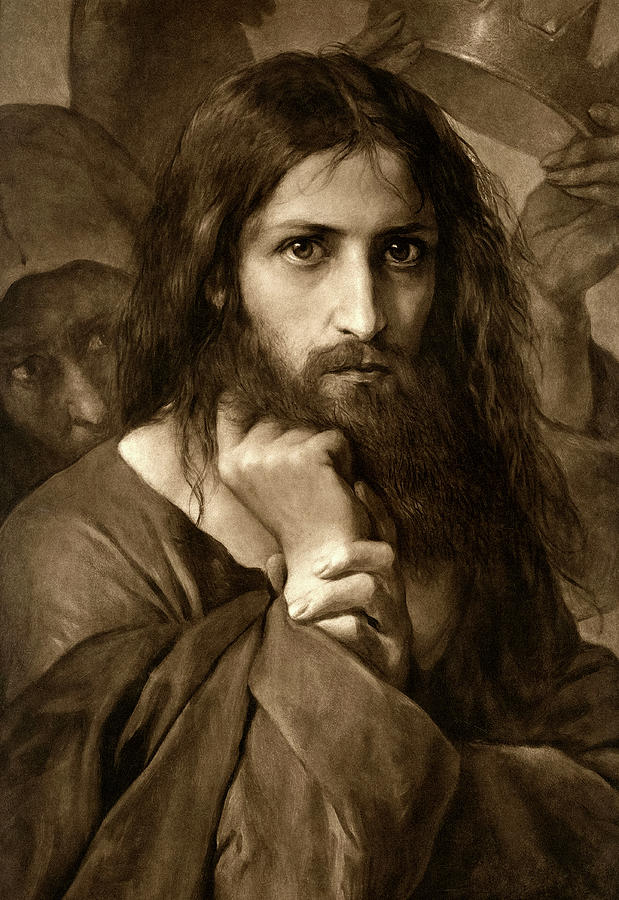
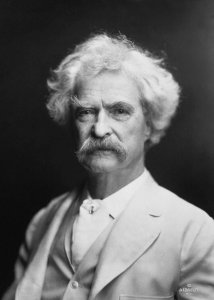

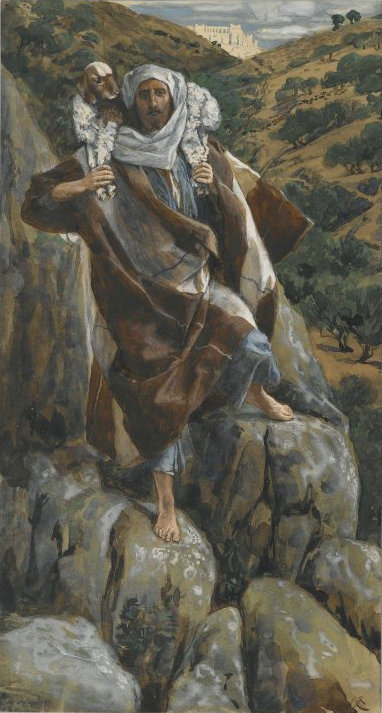

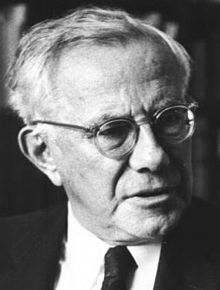
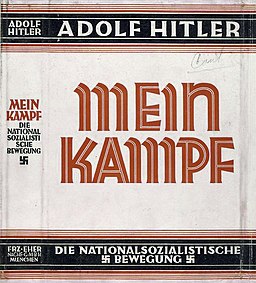
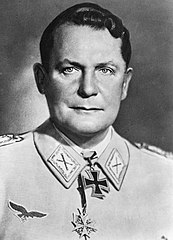

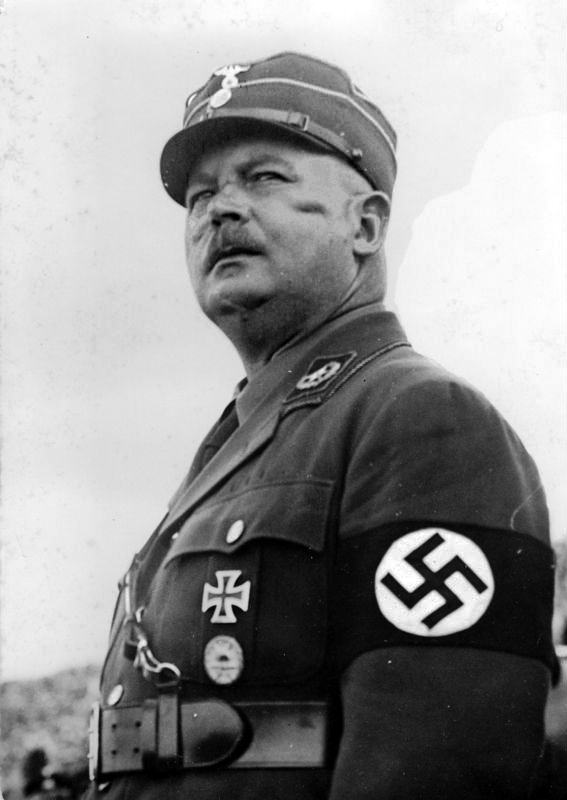


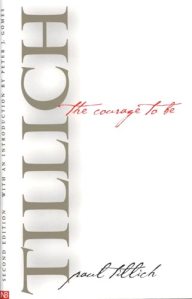
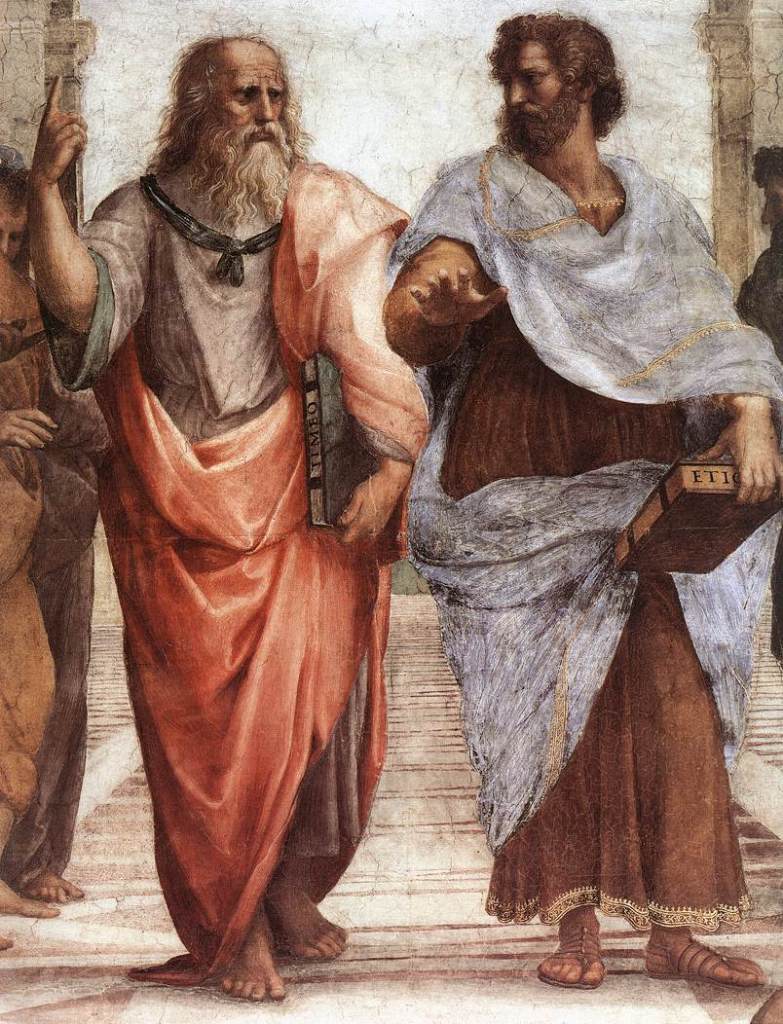








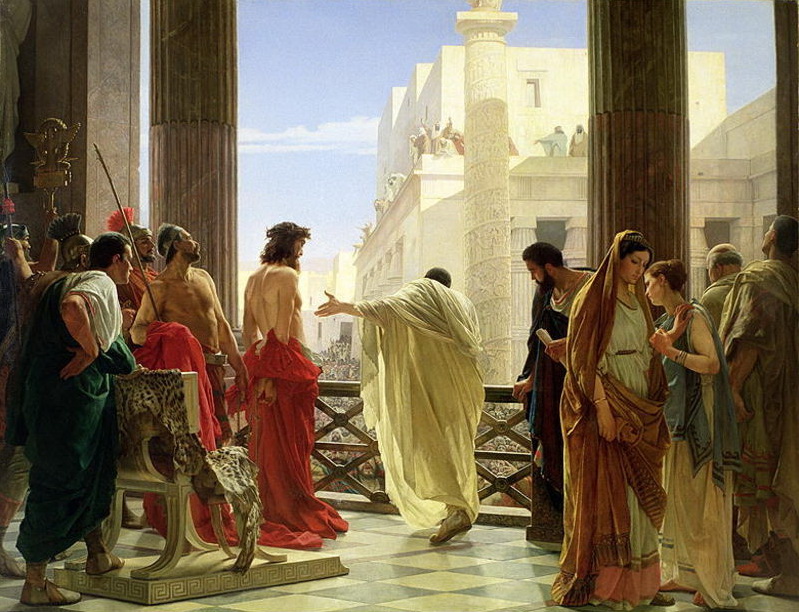
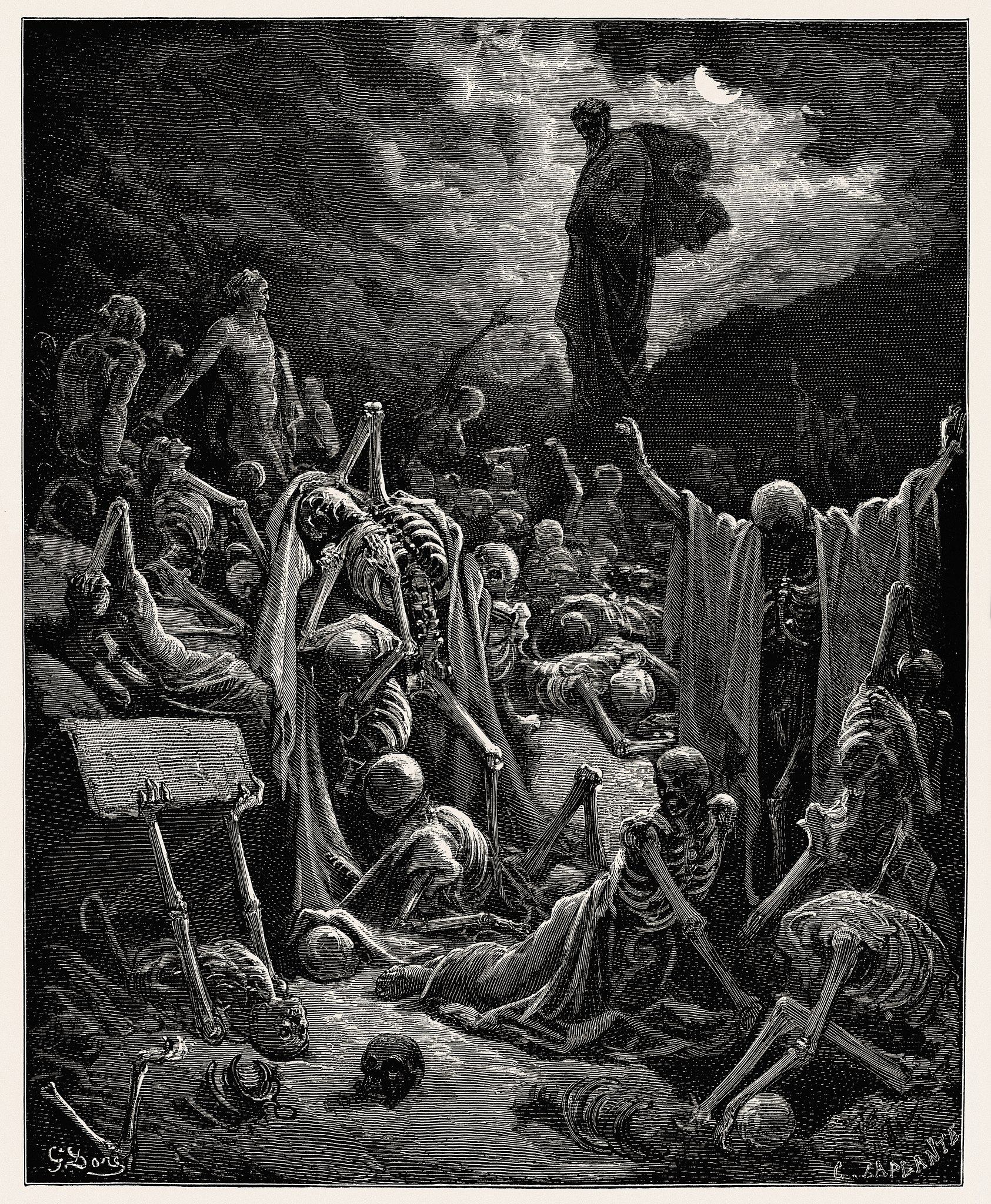


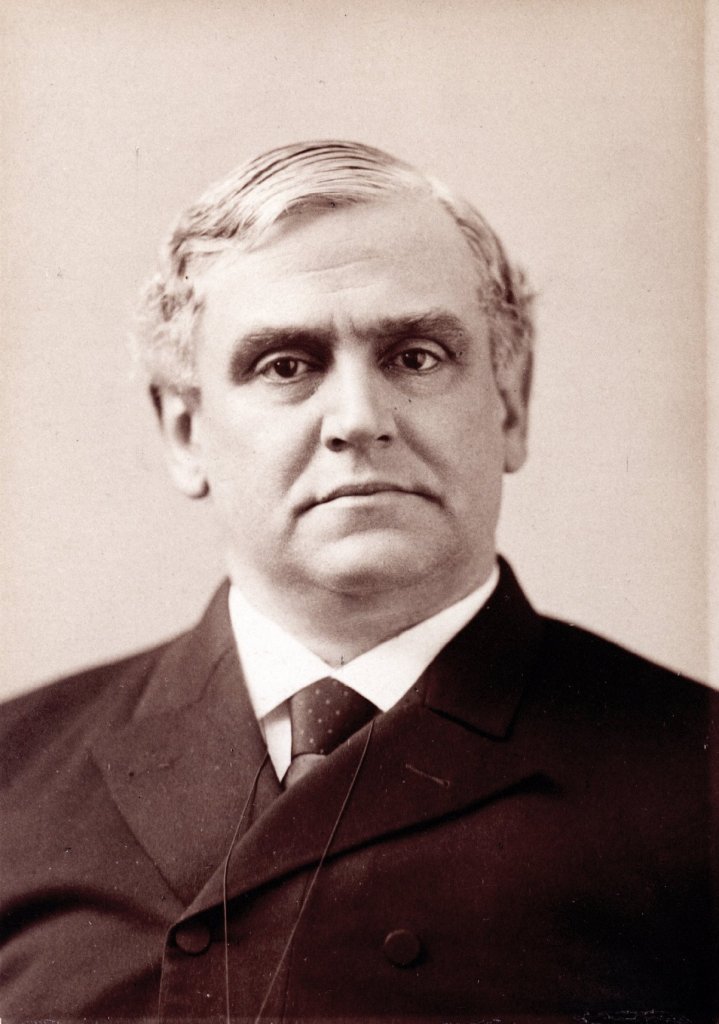













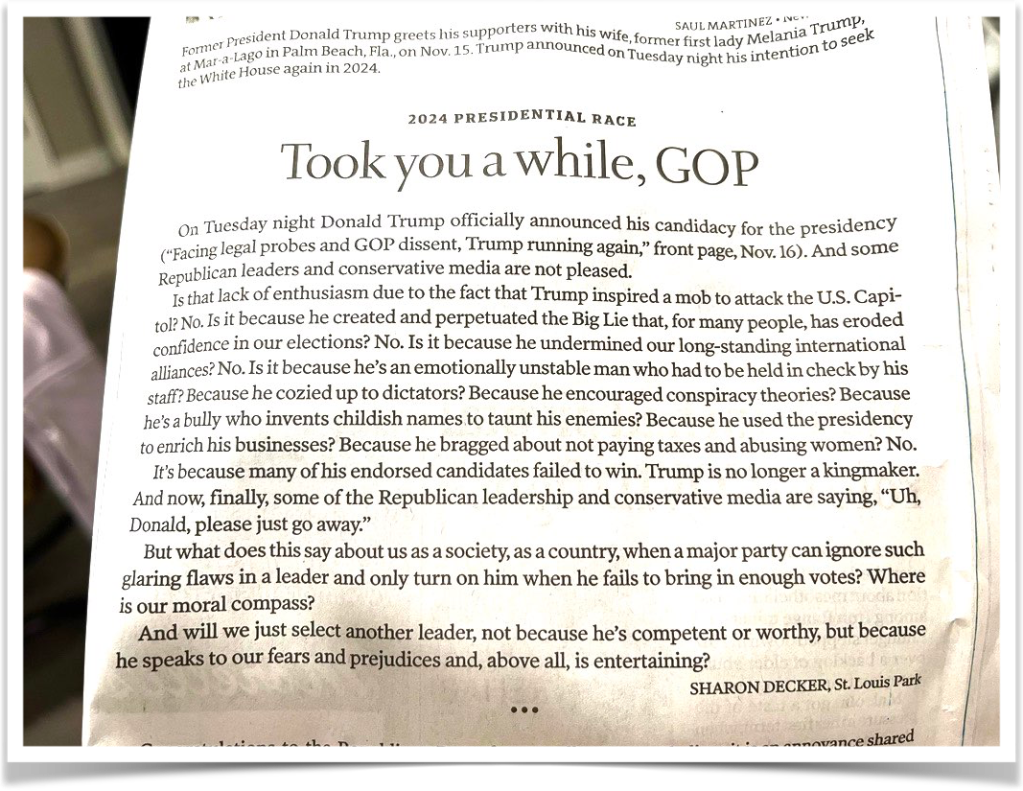









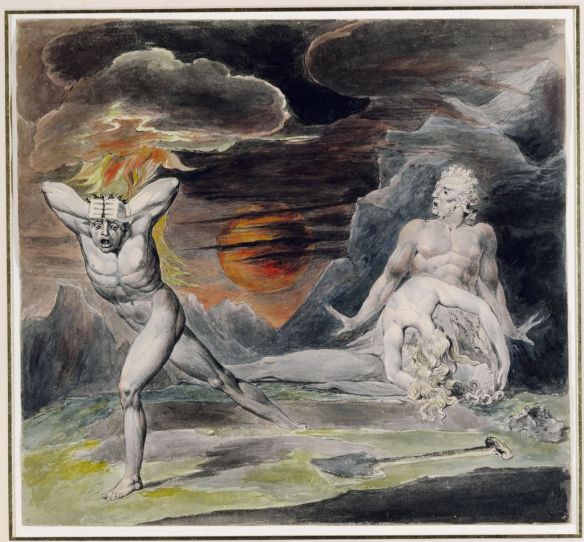

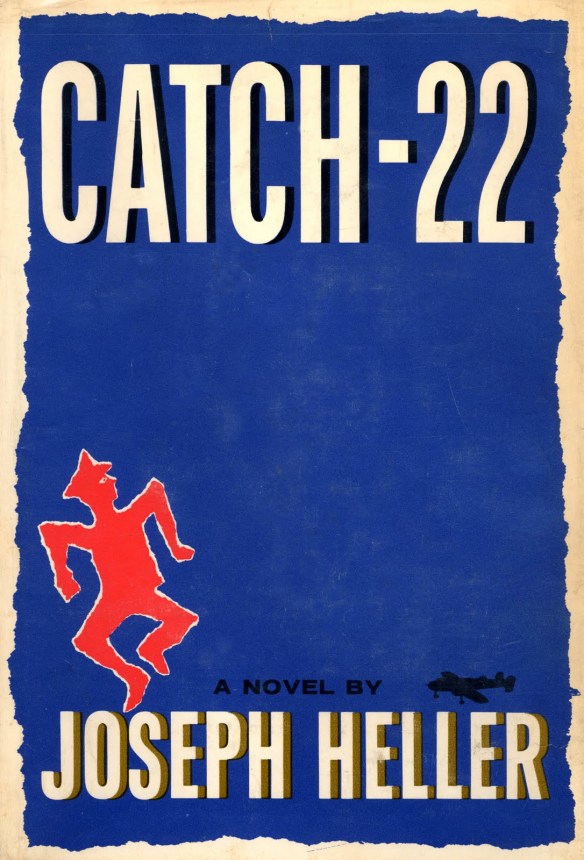



 Views from the Edge