Elijah on the worst of the worst

IMG_1890

Elijah talking about his day with Marissa

Grandpa, Marissa threw her shoe at the television this morning.

Did she break the television?

No, actually, it was a slipper but she thew it hard.

Why’d she throw her slipper at the TV, Elijah?

She thew it at the President.

Why? What was he doing?

He was talking bad to the FBI! He said people like Marissa are “the worst of the worst,” Grandpa! Before I could understand what he’d said, her slipper sailed by my play pen and hit the TV!

Wow! That must have been scary!

men-putting-shingles-on-house

manual labor roofing a house for a roofer

Yeah, but what Marissa said he said was scarier. Marissa said the President’s either evil or ignorant and that he should come to Minnesota to see what her cousins do. He should meet some immigrants. They’re not the worst of the worst. Miguel works up on roofs in the hot sun 16 hours a day all summer long, Grandpa.

HOUSEKEEPER-BATHROOMHer other cousin, Maria, makes minimum wage cleaning toilets and making beds for a hotel. It’s not enough to live on. She works hard, Grandpa. So does Marissa. They’re not the worst of the worst. They work harder than you do!

So I have an idea, Grandpa.

Okay, Elijah. Let’s hear it. “Out of the mouths of babes….”

I’m not a baby anymore, Grandpa. I crawled today. I’m seven.

Well, you’re not seven. You’re seven-months. But it doesn’t matter. You’re very wise. Let’s hear it.

Okay, Grandpa, here’s my idea. Everyone elected to office in the United States should have to pass a six-week orientation re-roofing houses and cleaning toilets to qualify for taking the oath of office. That way people like the President will stop insulting good hard-working people like Marissa, Miguel, and Maria, like he did this morning, and Marissa won’t break here television. She can’t afford a new one.

115th_Congress_Freshman_Class

Freshman Class of 115th Congress, January 2017

What a great idea, Elijah! That’s a GREAT idea. Maybe an Amendment to the U.S. Constitution requiring a six-month orientation working in minimum-wage jobs before the oath of office is administered as a hedge against evil, ignorance and the worst of the worst serving in office.

Yeah! Let’s amend the Constitution! What’s a Constitution?

Sometimes, Elijah, you make me smile, even on cruel days when I don’t feel like it.

  • Grandpa Gordon, Chaska, MN, Dec. 15, 2017.


The beginning of the good news of …

I need a bath. Wait! Wait! Stay with me!

“The good news according to Caesar, the Son of God” was the beginning of imperial announcements by Caesar throughout the Roman Empire.

Into this imperial world comes “The beginning of the good news of Jesus Christ, the Son of God ” (Gospel of Mark 1:1). For the First Century hearers, the irony was clear. This was a counter-narrative to the narrative of empire — a rebuke of it, and a revolutionary alternative to it. But the announcement was also only the beginning of the good news.

Unlike the imperial messengers dressed in official garb, the announcer of this good news in Mark’s Gospel (in the time it was written the term “gospel” had not yet been used to describe a book such as we know today: Matthew, Mark, Luke, and John) wears no royal clothing. He wears camel hair and eats locusts and honey. He appears in the wilderness, far from the centers of religious authority in Jerusalem and policial-economic power in Rome. There is no advance warning of his appearance. He appears suddenly, without explanations, and without trumpets.

7faaa32d3ba7f7ba7995c76b934af737

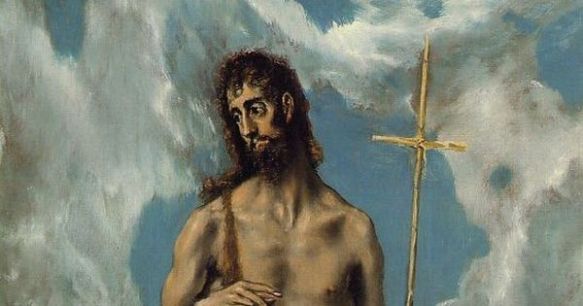
John the Baptizer

“Now John was clothed with camel’s hair, with a leather belt around his waist, and he ate locusts and wild honey.”  John is one odd duck! Not the kind of figure one expects to win friends and influence people. Unless the people were ready for his message: the overthrow of the reign of Caesar, the “Son of God” according to the imperial cult.

Flash forward to 2017.

“It’s okay to say ‘Merry Christmas’ again, says the President of the United States, as if restoring Christianity as the established religion of the United States of America and everywhere else in the world that is part of Pax Americana. Strange how a gospel whose beginnings offered a counter-narrative to Caesar and the empire’s divine claims of national exceptionalism would be used to scorn the original beginning of the good news in Mark’s revolutionary Gospel.

John the baptizer appeared in the wilderness, proclaiming a baptism of repentance for the forgiveness of sins. … I have baptized you with water, but he will baptize you with the Holy Spirit.”

27-donald-trump-roy-moore.w710.h473.2x

President Donald J. Trump and Senate candidate Roy Moore

In the First Century of the Common Era, a ritual bath represented a cleansing from sin and the act of repentance, embarking on a new way. Twenty centuries after the “beginning of the good news of Jesus Christ, the Son of God,” I’m baptized. So are the president and a senatorial candidate from Alabama. It’s confounding. I feel dirty all over.

I need a bath!

  • Gordon C. Stewart, Chaska, MN, Dec. 11, 2017.


The Stranger of the Jubilee

December 6, 2017, Atlanta, Georgia.

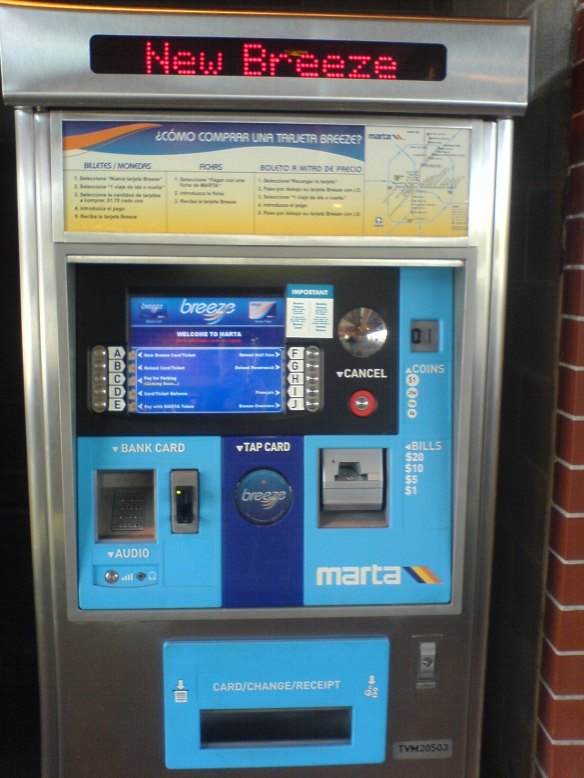
I’m a stranger in Atlanta. I go to the ticket-vending machine to buy the $2.50 ticket for the MARTA, Atlanta’s metro subway system, that will take me to my early morning appointment for a recording session at Day1.org.

Breeze_vending_machine

Marta ticket machine

The MARTA machine is not accepting my credit card. “Enter zip code.” I enter the Minnesota zip code. “Credit card not accepted.” I try again. Same result.

A poorly dressed man in his mid-30s or early 40s — it’s hard to tell how old he is — asks if he can help. Strange things happen to strangers on public transportation platforms, but something about him leads me to believe I can trust him. He inserts my credit card with the same result. “Credit card not accepted.”

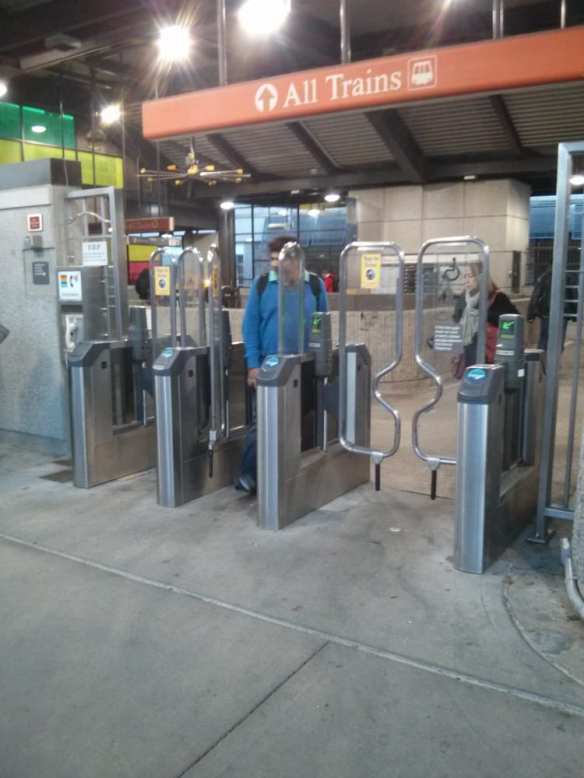
“Follow me,” he says. He walks over to the turnstiles that admit ticket-payers to the MARTA, goes through, and holds the turnstile open for the penniless stranger who’s been so rudely welcomed to Atlanta by a machine that doesn’t like Minnesotans. Maybe the machine recognized my Minnesota zip code and thinks I’m Senator Al Franken. Maybe if my zip code had been from Alabama where I could vote for Roy Moore, my credit card would have been accepted.

o

MARTA turnstiles

I follow the rescuer through the turnstile. He extends his hand, introduces himself, and says he’s on his way to work at Goodwill. He learns where the stranger from Minnesota is going, identifies the right stop, and stays with me to tell me when to get off. The Goodwill where he works is one stop beyond mine.

On the platform, waiting for the MARTA train, I ask whether he grew up in Atlanta. Turns out he’s new here. He’s from Miami. I ask what brought him here. “I came to start a new life,” he says. “I’ve been here four months now. The Lord’s been good to me.” I ask no questions and make no assumptions about why he left Miami. “I woke up blind one day. I couldn’t see. Couldn’t see a thing. I prayed to get my sight back and it was given. I gave my life to the Lord to start over. That’s why I’m here.”

He was not evangelizing me. He showed no signs of the emotional manipulations that usually accompany such stories. There was no follow-up “Are you saved?” Just a sharing that seemed honest, if hard to believe or understand. People don’t just wake up blind. And they don’t all of a sudden get their sight back.

“Like the Damascus road,” I say, referring to the conversion of the Apostle Paul who was struck blind but received his sight back as a gift. “Yes,” he says. I ask whether he has a church. “O, yes! The Church of the Jubilee.”

“Ah, the Jubilee — when all wealth is redistributed,” I say, as he smiles a knowing Yes.

From what little I can tell, the man from Miami owns little to nothing in the way America defines wealth. He works at the Goodwill. But he is wealthy. He goes to a Bible study every Wednesday night, “another meeting” Friday nights, and worship on Sunday mornings. The day the machine failed, a man of good will struck blind in Miami became part of the Jubilee and welcomed another stranger whose credit card wasn’t worth a nickel.

  • Gordon C. Stewart, Chaska, MN, December 6, 2017.


Giovanni’s Buffet Mirror

“Buffet Lunch: All You Can Eat” says the sign.

I decide to try it. “Eight dollars with soda; $7 with water,” says the woman at the counter.

Sugar makes me fat and frantic. I choose the water.

salad-bar-min

The buffet is loaded. Full salad bar. Spaghetti with meatballs and your choice of meat or meatless marinara sauce. Garlic toast. And four kinds of pizza – fattening … and more fattening.

I pass up the salad bar and load up on spaghetti with meatballs, meat sauce, and, of course, garlic toast. I love garlic toast.

Since I’m alone, there’s plenty of time to look around while I eat. You’re not supposed to stare at people, so I don’t. I’m careful not to stare. But I can’t help but look. There’s no one to talk with. My dog’s outside in the car. So is my MacBook Air. There are no distractions. So my eyes scan the room for something of interest.

Eventually I realize a common characteristic to the buffet diners — obesity. I think of Richard Simmons, Oprah, and Michelle Obama, and their attempts to get people to eat better and less.

I fill up my plate with a second helping of spaghetti, and add two slices of pizza. It’s good. Really good! All that gooey cheese, and a great crust — just like the pizza I’d had as a child at Fonzo’s Pizzeria in Philadelphia, Pennsylvania. But this isn’t Philadelphia and this isn’t the 1950s. I’m at Giovanni’s Pizza in Staples, Minnesota almost a year after Michelle’s White House school obesity initiative went the way of all flesh.

“They’re all fat!” I think to myself. I take another sip of water before getting up to pay my bill.

Next to the cash register is somebody’s idea of a joke: a full-length mirror. I see an ugly guy with a belly staring back at me and think I hear a voice scream: “You’re fat too!”

aHR0cDovL3d3dy5saXZlc2NpZW5jZS5jb20vaW1hZ2VzL2kvMDAwLzAyNC82MTcvb3JpZ2luYWwvZGlldC1zY2FsZS0xMTAxMjUtMDIuanBn

I pay the $7 with tip, swallow hard, and begin to digest an old biblical teaching:

“Before you criticize the pounds on others, first remove the ton from your own abdomen.”

  • Gordon C. Stewart, November 3, 2017.

Neighborly Economics

Mindfulness —the latest topic around the water coolers — helps in times like these. While some use Yoga or some other eastern meditation to become more mindful, my practice is to contemplate the poetry of the Book of Psalms. I open Psalm 146 in hopes of putting my anxious soul at ease from this moment of history.

Praise the LORD, O my soul,
I will praise the LORD as long as I live;
I will sing praises to my God as long as I have my being.

Put not your trust in rulers, nor in any child of earth,
for there is no help in them.

When they breathe their last, they return to the earth,
and in that day their thoughts perish. (Ps. 146:1-3)

The psalmist assures me that this moment will not last forever. The elevation of the rich and the assault on the poor, the game of matches lit near the fuses of nuclear devices on two sides of a vast ocean, the name calling between the two narcissists whose Echoes sound the same despite the differences in language, the scenes from Puerto Rico in the aftermath of Maria, the burned-out forests, homes, and vineyards in northern California, the undermining of the hope for universal health care, and the disregard for the Paris Accord addressing climate change have ground me down. There is no help in the White House or Capitol Hill. But, their time, the psalmist declares, is but a breath, a moment. Their thoughts will perish.

IMG_8484

cabin by the wetland

In the solace of the cabin by the wetland far from the news, I am breathing easier. Away from the rulers in whom the psalm urges me to place no trust, my mind is calmer. I am in need of no great thing.

But, after lighting the fire in the wood stove, it dawns on me that we’ve forgotten some supplies for the weekend. We have no bread. Or ice cream!

I remember a sign for “DON & DAVE’S: Groceries and Gas — 4 Miles.”

IMG_8514Don & Dave’s is a throw-back to the day Don founded it 70 years ago. From the looks of the exterior, although it is well-kept, I imagine little except for the “ATM Inside” sign has changed since 1947.

“You must be Don or Dave,” I say to the man inside. “I’m Dave,” he says with a smile. I’m Don’s son.” Dave is in his late ‘60s. Don was his father, killed in a car accident years ago. Dave joined his father in the business in 1977. I introduce myself as the owner of the A-frame by the wetland, but he already knows from Shirley, our only neighbor within a quarter of a mile of the cabin.

I take a look around the store, pick up a $1.59 loaf of locally made wheat bread, notice the ice cream freezer, pick up a large tub of Neopolitan ice cream, notice a Hershey milk chocolate with almonds bar, and take them to the check-out counter where Don meets me.

I take out my credit card. “We don’t take plastic,” says Don. “Just cash or check.” I tell him I don’t have either. “Well, we have an ATM,” he says. “I don’t do ATM’s,” I say. You need a PIN for that. I have no idea what the PIN is; Kay does that. I don’t have a clue.” He laughs and invites me to take the bread, ice cream, and Hershey bar without paying. “No problem. Please take it. You can pay me when you come back.”

He takes out a slip of scrap paper, writes down my name, the amount I owe, and the date, and wishes me a good weekend.

Four hours later I return with the cash just before 6:00 P.M., hoping Don and Dave’s is still open on a Saturday night. Turns out they open at 8:00 A.M. and closes at 10:00 P.M. seven day a week! I learn from the young woman who greets me that Don has left for the day, and explain that I’m here to pay my bill. She asks my name, and fetches the piece of paper from a shelf below the cash register. “What should I do with this? Tear it up?”

“No,” I say, “I want Don to know I came back and I want to say thanks. Just write ‘paid’ with today’s date and let me add a word of thanks.”

I had learned earlier from Don that there are four Walmarts with a 60 mile radius of Don & Dave’s. I wonder when the last time was Walmart sent an empty-handed customer away with so much as a loaf of bread, a tub of ice cream, and a candy bar.

I’m very mindful. In the moment. 1947 never looked better!

Liddle Elijah and Bumpa (Grandpa)

Bumpa, we’re supposed to respect people, right?

IMG_8373

Elijah asks about the president and senator corker

Yes, Elijah, that’s part of growing up.

Yeah, I’m not growed up yet. I’m liddle.

Well, yes, but it’s “grown” up, and you spell ‘little’ with two ‘t’s not two ‘d’s.

That’s not how the president spells it. Who am I supposed to respect more, you or the president?

Hmm. When it comes to spelling and not calling people names, I think Grandpa may deserve a little more respect. That’s just Grandpa’s opinion. But the president called Senator Bob Corker ‘liddle’ and meant it as an insult. Senator Corker is short; he’s little compared to the President. But a person’s physical stature shouldn’t matter to grown-ups. Do you understand?

And what about that IQ thing?  What’s an IQ?

Lots of people are asking that question these days.

Is having a higher IQ like being taller? I’m tall. Dr. Smith said I’m in the top 94 percentile of four-month-olds! What’s a percentile?

It’s a way of measuring, Elijah. It’s complicated. It’s just a statistic. But it gives me comfort that the percentage of people approving of the president seems to have become littler in all 50 states between last January and September.

We like little. Right Bumpa?

We do, Elijah. Sometimes we do.

“I look to a day when people will not be judged by [how tall they are]], but by the content of their character.” — Rev. Dr. Martin Luther King, Jr.

  • Grandpa Gordon, Chaska, MN, October 11, 2017.

Elijah, Las Vegas, and The Big Truck

Elijah recoiled at the pictures from Las Vegas.

“Marissa, estamos seguros? Estamos en Las Vegas?” (“Marissa, are we safe? Are we in Las Vegas?”)

las-vegas-shooting-carry-gty-ps-171002_12x5_992Marissa assured him that he wasn’t in Las Vegas. Las Vegas is far, far away, and they were nowhere near a casino.

Elijah was feeling calmer until Marissa’s husband came home for lunch.

Ese hijo de puto! Sólo le interesan los casinos,” said Pablo. “¿Qué tiene que ver un casino con Dios? ¡No habla de Dios cuando habla de Puerto Rico! Él no es un creyente. Es un falso. Es todo gringo!” (“That son-of-a-bitch! He only cares about casinos. What’s a casino got to do with God? He doesn’t talk about God when he talks about Puerto Rico! He’s not a believer. He’s a fake. He’s all gringo.”)

Later that evening, 19-week-old Elijah visited his grandparents.

¿Abuelo, qué es un casino?” he asked.

“Elijah, I’m sorry. Grandpa doesn’t speak Spanish. What did you say?

“Grandpa,” he asked, “I forgot. ‘What’s a casino?'”

Las_Vegas_slot_machines

Las Vegas casino slot machines

“Well, let me tell you a story about a casino, Elijah. A casino is a place where people gamble.”

“What’s ‘gamble’?”

“Actually gamble is a verb; the noun is gambling. You’ll learn the difference later. Gambling is when a person takes a risk with their money. Gamblers get a charge out of taking the risk that they’ll make lots of money, but they usually lose what they have. The casino is the business that makes lots and lots of money from gamblers.”

“Yeah, it’s like uncle Bob. He’s a gambler. He goes to the casino, right?”

“Right. Grandpa doesn’t like it, but, yes, he does. He’s gambled at casinos in Las Vegas and Atlantic City.

“Why don’t you like gambling?”

“Well, that’s the story I want to tell you.”

“I love stories! Is this the one about the Big Truck?

“No, it’s different. It’s a story that kinda rhymes with ‘big truck’ but it’s not a happy story. Years ago Grandpa went to a casino here in Minnesota to pick up a big check – thousands of dollars – that the casino was donating to Grandpa’s nonprofit poverty law firm.

“Because the casino belonged to an American Indian tribe, I asked an American Indian who worked with me at the law firm to go with me to pick up the check. I wanted the tribal chief, who was also the CEO of the casino, to hand the check to Richard instead of me.

“But you know what happened, Elijah?”

“What? You saw the Big Truck! I bet you saw the Big Truck on the way to the casino.”

“No, but it does rhyme with big truck. Here’s what happened. When Richard and I started to go into the casino, Richard wouldn’t go in.  He just stood there! Like he was frozen. Like he’d had a stroke or something.

“I asked what was happening.

“‘I can’t go in there,’ he said. ‘My wife’s going to be in there at the slot machines. She’s here every day. We’re separated. We’re losing our house. We’re going bankrupt. I hate this place!!!’

“Richard’s wife took the casino bus from downtown Minneapolis every morning and spent the day at the casino hoping she’s get rich. She just got poorer day by day, week by week.

“That’s what a casino is, Elijah. A place that takes people’s money by making false promises that they’ll get rich.”

“Marissa’s husband’s like Richard. He hates casinos, but what’s a casino got to do with the President?”

“Well, Elijah, before Donald Trump became President, he was a real estate developer. He built a casino in Atlantic City in 1990 and put his name on it. Trump Taj Mahal cost $1.2 billion! He called Trump Taj Mahal ‘the eighth wonder of the world.’”

TAJ-MAHAL-LIQUIDATION-SALE“But it failed, Elijah. It failed. The deal failed. He sold it for $50 million to a company named Hard Rock International.”
“Wow, Grandpa! No wonder Pablo called the President a hijo de puto. Pablo said the President only understands business. He doesn’t care about people like the poor in Puerto Rico who are stuck between a rock and a hard place. So, did you ever get the check from the casino?”

“We did, Elijah. I was Richard’s boss. I convinced him to go in. We went in and got the check from the Big Truck.”

  • Grandpa Gordon, October 3, 2017.


Grandpa, are we safe?

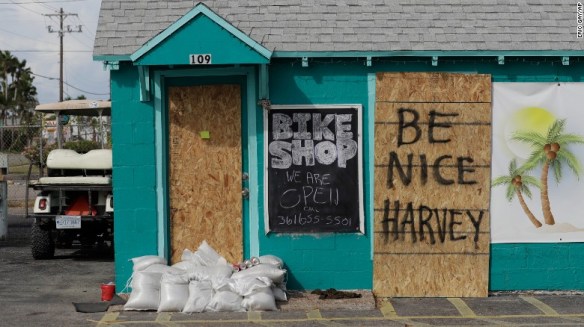
Grandpa and Elijah are talking while pictures of Hurricane Harvey are disturbing 14-week old Elijah.

170825133856-01-hurricane-harvey-0824-exlarge-169

“Grandpa, are we safe? Are we in Houston?”

“No, Elijah. Not to worry. We’re in Minnesota, a long way from Texas. It’s ‘nice’ in Minnesota.”

“Okay, I feel safer. But am I legal?”

“What do you mean, legal?”

“Like . . .  can I be arrested?”

“No, you’re not going to be arrested. You’re not illegal.”

“We’re a country of law, right, Grandpa?”

“Yes, we’re a constitutional republic. We live under the protection of the law.”

Elijah and Harvey

Elijah, “Uh-uh!”

“Uh-uh! That Sheriff profiled people in Arizona! He broke the law and the President pardoned him! Pardon me, but that’s not law. Why’d the President do that when there’s a natural disaster in Texas?”

“Well, the timing of it is scary, Elijah. Maybe we’re not so safe after all.”

“What do ya mean? Is Hurricane Harvey coming here? Is Joe Arpaio coming to Minnesota to look for illegals?”

“No, they’re not coming here, Elijah. The issue is the rule of law itself. Charles Kaiser argues that “Donald Trump’s pardon of Sheriff Joe Arpaio marks the real beginning of the coming constitutional crisis in America.” It’s a piece by Charles Kaiser. I read it this morning on Bill Moyers & Company.”

636210386015065550-arpaioandtrump

Sheriff Joe Arpaio and President Trump

“What’s a constitutional crisis? Is that worse than Hurricane Harvey?”

Screen-Shot-2016-12-01-at-10.31.01-AM

  • Grandpa Gordon, Chaska, MN, August 28, 2017.


Sinner, do you have my groceries?

I’d never thought about groceries back in Broomall. We’d drive to the Acme, fill the grocery cart, and bring the bags home. It was just part of daily life. Or so I thought.

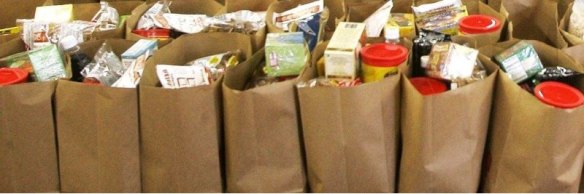
groceriesI was 17 the day I learned about groceries in America.
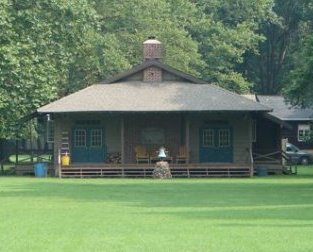
Tony and I had become friends at Pennington Island, the church camp in the Delaware River, after meeting each other on the Saturday several years before when the junior-high youth groups from Marple Presbyterian Church and Berean Presbyterian Church had met during a service project at the Green Street Settlement House.

NLIOn Pennington Island the kids from Philadelphia and the Philadelphia suburbs spent nights together in the same cabins, rose early for “morning watch”, played games, ate the same food at the same tables in the mess hall, swam in the same swimming pool, and sang hymns and spirituals like Jacob’s Ladder. We were living in the same economy while climbing somewhere together.
After the week or two on Pennington Island, the members of his ideal economy would say good-bye and return to the disparate circumstances whose differences we preferred not to know.

Ignorance was bliss. Until the day Tony visited our home in Broomall, 15 miles west of Philadelphia, and watched my mother pull into the driveway with the groceries. My mother spoke of it years later as one of those moments that opened her eyes.

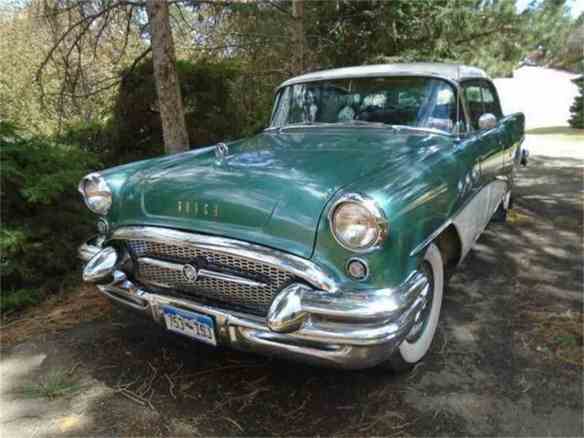
7769907-1955-buick-special-std-cAs we began to unload the groceries from the ’55 Buick, Tony’s eyes grew bigger. There was more than one bag. Never had he seen multiple grocery bags. When the Lewises had a little money, they’d bring home what they needed for the day…or maybe two, on a good day. There were never five, six, seven bags of groceries.

“Sinner, do you love my Jesus,” we had sung in the egalitarian economy of Pennington Island where we were climbing higher together. But unloading the grocery bags that day in Broomall, the difference in groceries seemed more like a symptom of sin – the gulf of separation between two worlds. One home was much “higher” than the other — one white, one black; one privileged, one not — in a black and white economy.

  • Gordon C. Stewart, Chaska, MN, August 14, 2017.


Into a dense fog: Sinner, do you love my Jesus?

The descent from my suburban home in Broomall to serve the “less fortunate” on Green Street sent me home looking into a dense fog.

The Wanderer

Wanderer Above the Sea of Fog –  Caspar David Friedrich, c.1818

I had given up a Saturday as a youthful answer to the song I learned has a child. “If you love him, why not serve him?”  Serving Jesus meant serving those who were less fortunate than we, as we used to describe the difference.

The kids from Marple Presbyterian Church in Broomall were aware that Jacob’s Ladder and the other spirituals we sang rose from the slave fields of the white Southern plantations, but the plantations were in the south. We were northerners. We were the abolitionists. We were part of the solution, not the problem.

The day on Green Street knocked me off my ladder. Those few hours on the calendar time of Chronos were a pivotal Kairos moment that placed me before a dense fog searching for answers to how and why life was so different for the two junior high youth groups from Marple Presbyterian Church in Broomall and Berean Presbyterian Church in north Philadelphia.

How and why was it that Tony was born into poverty while I was born into relative economic wellbeing in a suburb became a daunting question. I was looking into a dense fog.

Prior to the plunge to Green Street I hadn’t paid much attention to the first word of the stanza about loving Jesus: “Sinner… do you love my Jesus?” Although I knew myself to be a sinner — I had told a lie or two and not been kind to my younger brothers — I was no Judas! I was a soldier of the cross. “If you love him, why not serve him, soldier of the cross?”

Suddenly, the fog was not just outside of me. It was inside me, a jarring sense that I and “my people” were self-deceived sinners.

But what is sin and what is a sinner? Institutional slavery was sinful.  The slaveowners were sinners. I knew that. The slaveowners were white. The slaves were black. I knew that. The slaveowners were Christians. I knew that. The slaves were Christians. I knew that — or thought I knew it.

I didn’t learn until much later that the slaves were forced into the Christian faith no less than they had been herded like cattle onto slave ships, or that the difference in the churches was as different as it had been on the slave ships. The difference was that on board the slave ships, the slaves were chained together in the hold while the slave traders were up above; in the churches, the slaves were up above in the rear balcony, looking down on the sea of whiteness on the main floor. Until Richard Allen led the revolt from the balcony to form the African Methodist Episcopal Church.

But the kids from Berean Presbyterian Church were not African Methodist Episcopalians. They were Presbyterians in the theological tradition of the Protestant Reformation, John Calvin’s Institutes of the Christian Religion, and the doctrine of predestination.

Was Tony predestined to poverty in north Philadelphia? Was I predestined to white privilege in Broomall? Or was predestination a hoax, the idea of sinners washing their hands like Pilate that had nothing to do with the will of God?

Caspar_David_Friedrich_018

Frau am Fenster
Caspar David Friedrich, 1818–1822
Öl auf Leinwand
44,0 × 37,0 cm
Alte Nationalgalerie Berlin

I was no longer standing on the heights of innocence overlooking the landscape. I was a child of privilege, confined and alone, looking through a very small window at the world beyond what had belonged to “my Jesus”. I was pondering the ships of past and future and the dense fog that went on as far as my eye could see. It has lasted my whole lifetime.

  • Gordon C. Stewart, Chaska, MN, August 11, 2017.