Grandpa, what’s joy?

Video

Grandpa, what’s joy? Is it like happiness?

Good morning, Elijah! What brought that up?

Mom keeps singing “Joy to the world”! What’s joy? What’s the world?

Joy is deep gladness, Elijah. Happiness is like joy, but joy is deeper. It has to do with who you and and an inexplainable assurance about you, your Mom, and the world. It’s a deep inner gladness. You show it to me every day.  Don’t let the world take away your gladness, Elijah!

Okay, Grandpa! But what’s with that third stanza, that thing about the curse?

Oh, that! “No more let sins and sorrows grow, Nor thorns infest the ground; He comes to make his blessings flow Far as the curse is found, Far as the curse is found, Far as, far as, the curse is found.”

Yeah, that. What’s the curse, Grandpa? We’re not supposed to curse, right?

Right. But this is a different kind of curse. It’s the curse of selfishness and greed that bring sorrow to the world.

Isaac Watts — he’s the one who wrote the words to “Joy to the World” for Christmas — knew all about selfishness and greed when he wrote “Joy to the World” way back in 1719. Isaac was English. He knew all about colonialism and the nations.

Yeah, my baby-sitter really loves that last stanza about the nations! She says American exceptionalism is a curse. She really likes that fourth stanza. “He rules the world with truth and grace, And makes the nations prove The glories of His righteousness, And wonders of His love, And wonders of His love, And wonders, wonders, of His love.”

  • Grandpa Gordon, Chaska, MN, December 20, 2017.


Elijah on the seven words

Grandpa, what are the seven last words?

Oh, my, Elijah, that’s a strange question for this season.

Why? What’s a ‘season’?

A season is a period of days or weeks, a period of time. Right now we’re in the Advent season and Christmas season is almost here.

IMG_1889Okay, thanks. So . . .  why is a question about the seven words strange for this season?

Because the Seven Last Words are from Good Friday. This isn’t Holy Week; we’re getting ready for Christmas. 

That’s not what my baby-sitter says! She says the seven last words are diversity, fetus, transgender, vulnerable, entitlement, science-based, and evidence-based. We’re never ever supposed to use those words again. Are those curse words, Grandpa?

HHS_CDC_cmylogoNo, Elijah, they’re not curse words. But the ones who told the Center for Disease Control not to use seven words anymore are cursers. They’re substituting their seven words for Jesus’s seven last words.

The Centers for Disease Control and Prevention (CDC) reportedly received a list from the Trump administration on Dec. 14 consisting of seven words or phrases that will be banned in all official documents prepared for 2018’s budget. Many in the U.S., both those who work in public health and concerned citizens alike, are struggling to come to grips with the nature of the terms that are being censored.

The seven forbidden words or phrases are: “evidence-based,” “science-based,” “vulnerable,” “entitlement,” “diversity,” “transgender,” and “fetus.”– Futurism.com.

Grandpa, I was a fetus just seven months ago. Oops! I shouldn’t have used that word!

Yes, and you’re still very vulnerable. But, according to the You-Know-Who Administration, we’re not supposed to talk about that. 

So those are the ‘Seven Last Words’?

No, those are seven words that the CDC is not supposed to use anymore in its 2018 budget preparations, but the “Seven Last Words” are very different. We’re Christians, Elijah. We listen to the news with the Seven Last Words from the cross ringing in our ears.

So…we’re supposed to consider the ‘seven words’ of the You-Know-Who Administration in light of the ‘Seven Last Words’?

Yes, Elijah. Yes. And they’re very different.

So…was Jesus a scientist? What did he say from the cross, Grandpa, and what’s a cross?

No, Jesus wasn’t a scientist, but he loved the truth, just like real scientists do. A cross was the means of a state execution, Elijah. It was the way the Roman Empire killed people who got in the way of their agenda. Lots of people were executed during Jesus’s time. Jesus was executed. In our tradition, there are seven words he spoke from the cross.

Okay, I’m starting to get the picture. So what were the ‘Seven Last Words’?

Okay. Remember these and share them with Marissa tomorrow at day care.

  • Father, forgive them, for they know not what they do.
  • Today you will be with me in paradise.
  • Behold your son: behold your mother.
  • My God, my God, why have you forsaken me?
  • I thirst.
  • It is finished.
  • Father, into your hands I commit my spirit.
Brooklyn_Museum_-_What_Our_Lord_Saw_from_the_Cross_(Ce_que_voyait_Notre-Seigneur_sur_la_Croix)_-_James_Tissot

James Tissot, What Jesus Saw from the Cross, Brooklyn Museum of Art

So does God forgive the You-Know-Who Administration because they don’t know what they’re doing?

Hmmm. Good question, Elijah. Sure looks to me like they know exactly what they’re doing, but even when we think we know what we’re doing, I guess we really don’t. And “Behold your son; behold your mother” was a ‘word’ spoken to Jesus’s vulnerable mother and his best friend, but, according to the You-Know-Who Administration we can’t say ‘vulnerable’ any more. All those words are ‘finished’.

Yeah! And that’s not right! I’m still little but I pay attention to the ‘Seven Last Words’. I’m going to  be like Jesus’s friend. I’m going to take care of my vulnerable mother, Grandpa. Mom and I are vulnerable. Who’s going to take care of us if the You-Know-Who Administration doesn’t?

Like Jesus said, “into your hands I commit my spirit.” Remember, Elijah, the cross doesn’t have the last word. No one expected Easter. We live in resistance to cruelty with hope in a better tomorrow. It’s also the season of Chanuka, the Festival of Lights when our Jewish friends — always remember, Elijah, that Jesus was a Jew — light a new candle of hope every day to remember how an occupying power like the You-Know-Who Administration in the second century BCE was brought down by the Maccabean revolt. Thus us a season for hope, Elijah.

PanS9015968

Child lighting candle of Chanukah menorah

  • Gordon C. Stewart (Grandpa Gordon), Chaska, MN, Dec. 19, 2017

God and the gods in Alabama

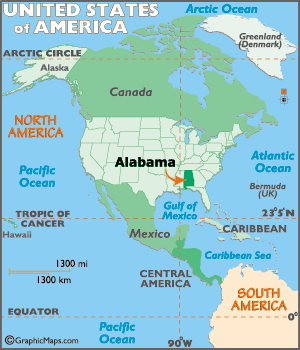
The Alabama Senate race was mostly about God and the gods. The election of Doug Jones over Roy Moore shows that, though God and the gods were often confused, Alabamians declared by a very slight margin that God may not be white.

c4e4c3a6a670d319ca9be32c9cf3fc26

Some things die hard. In America, no core convictions die harder than 1) white supremacy, white superiority, white exceptionalism, and 2) male supremacy, male superiority, male exceptionalism.  It’s not just in Alabama. It’s not just in the mind of Roy Moore. It elected a president who, like Roy Moore, dismisses all claims of sexual harassment as a partisan media hoax, supported Moore’s candidacy, and issues a tweet that suggests Senator Kirsten Gillibrand, who has called for his resignation, is what misogynists see as the only alternative to the Virgin Mary.

Doug Jones beat Roy Moore yesterday by a hair. But, as a defiant Roy Moore rightly said, it’s not over. Nor will it be over if and when the President resigns or is successfully impeached and removed from office.

Core cultural convictions  — gods — don’t die so easily. They go underground, as they did during the eight years of the Obama Presidency, until they spy another opening to claim their turf.

you decide 14614081_G

Through it all the choice is to reach up to the God who is above and beyond the dying gods of gender, racial, religious, cultural, and national exceptionalism, or remain their prey.

  • Gordon C. Stewart, Chaska, MN, December 13, 2017.


The beginning of the good news of …

I need a bath. Wait! Wait! Stay with me!

“The good news according to Caesar, the Son of God” was the beginning of imperial announcements by Caesar throughout the Roman Empire.

Into this imperial world comes “The beginning of the good news of Jesus Christ, the Son of God ” (Gospel of Mark 1:1). For the First Century hearers, the irony was clear. This was a counter-narrative to the narrative of empire — a rebuke of it, and a revolutionary alternative to it. But the announcement was also only the beginning of the good news.

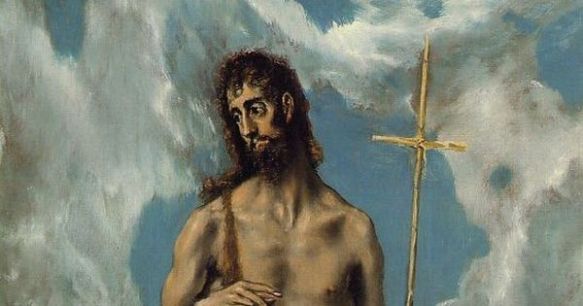
Unlike the imperial messengers dressed in official garb, the announcer of this good news in Mark’s Gospel (in the time it was written the term “gospel” had not yet been used to describe a book such as we know today: Matthew, Mark, Luke, and John) wears no royal clothing. He wears camel hair and eats locusts and honey. He appears in the wilderness, far from the centers of religious authority in Jerusalem and policial-economic power in Rome. There is no advance warning of his appearance. He appears suddenly, without explanations, and without trumpets.

7faaa32d3ba7f7ba7995c76b934af737

John the Baptizer

“Now John was clothed with camel’s hair, with a leather belt around his waist, and he ate locusts and wild honey.”  John is one odd duck! Not the kind of figure one expects to win friends and influence people. Unless the people were ready for his message: the overthrow of the reign of Caesar, the “Son of God” according to the imperial cult.

Flash forward to 2017.

“It’s okay to say ‘Merry Christmas’ again, says the President of the United States, as if restoring Christianity as the established religion of the United States of America and everywhere else in the world that is part of Pax Americana. Strange how a gospel whose beginnings offered a counter-narrative to Caesar and the empire’s divine claims of national exceptionalism would be used to scorn the original beginning of the good news in Mark’s revolutionary Gospel.

John the baptizer appeared in the wilderness, proclaiming a baptism of repentance for the forgiveness of sins. … I have baptized you with water, but he will baptize you with the Holy Spirit.”

27-donald-trump-roy-moore.w710.h473.2x

President Donald J. Trump and Senate candidate Roy Moore

In the First Century of the Common Era, a ritual bath represented a cleansing from sin and the act of repentance, embarking on a new way. Twenty centuries after the “beginning of the good news of Jesus Christ, the Son of God,” I’m baptized. So are the president and a senatorial candidate from Alabama. It’s confounding. I feel dirty all over.

I need a bath!

  • Gordon C. Stewart, Chaska, MN, Dec. 11, 2017.


The Stranger of the Jubilee

December 6, 2017, Atlanta, Georgia.

I’m a stranger in Atlanta. I go to the ticket-vending machine to buy the $2.50 ticket for the MARTA, Atlanta’s metro subway system, that will take me to my early morning appointment for a recording session at Day1.org.

Breeze_vending_machine

Marta ticket machine

The MARTA machine is not accepting my credit card. “Enter zip code.” I enter the Minnesota zip code. “Credit card not accepted.” I try again. Same result.

A poorly dressed man in his mid-30s or early 40s — it’s hard to tell how old he is — asks if he can help. Strange things happen to strangers on public transportation platforms, but something about him leads me to believe I can trust him. He inserts my credit card with the same result. “Credit card not accepted.”

“Follow me,” he says. He walks over to the turnstiles that admit ticket-payers to the MARTA, goes through, and holds the turnstile open for the penniless stranger who’s been so rudely welcomed to Atlanta by a machine that doesn’t like Minnesotans. Maybe the machine recognized my Minnesota zip code and thinks I’m Senator Al Franken. Maybe if my zip code had been from Alabama where I could vote for Roy Moore, my credit card would have been accepted.

o

MARTA turnstiles

I follow the rescuer through the turnstile. He extends his hand, introduces himself, and says he’s on his way to work at Goodwill. He learns where the stranger from Minnesota is going, identifies the right stop, and stays with me to tell me when to get off. The Goodwill where he works is one stop beyond mine.

On the platform, waiting for the MARTA train, I ask whether he grew up in Atlanta. Turns out he’s new here. He’s from Miami. I ask what brought him here. “I came to start a new life,” he says. “I’ve been here four months now. The Lord’s been good to me.” I ask no questions and make no assumptions about why he left Miami. “I woke up blind one day. I couldn’t see. Couldn’t see a thing. I prayed to get my sight back and it was given. I gave my life to the Lord to start over. That’s why I’m here.”

He was not evangelizing me. He showed no signs of the emotional manipulations that usually accompany such stories. There was no follow-up “Are you saved?” Just a sharing that seemed honest, if hard to believe or understand. People don’t just wake up blind. And they don’t all of a sudden get their sight back.

“Like the Damascus road,” I say, referring to the conversion of the Apostle Paul who was struck blind but received his sight back as a gift. “Yes,” he says. I ask whether he has a church. “O, yes! The Church of the Jubilee.”

“Ah, the Jubilee — when all wealth is redistributed,” I say, as he smiles a knowing Yes.

From what little I can tell, the man from Miami owns little to nothing in the way America defines wealth. He works at the Goodwill. But he is wealthy. He goes to a Bible study every Wednesday night, “another meeting” Friday nights, and worship on Sunday mornings. The day the machine failed, a man of good will struck blind in Miami became part of the Jubilee and welcomed another stranger whose credit card wasn’t worth a nickel.

  • Gordon C. Stewart, Chaska, MN, December 6, 2017.


Grandpa, I can’t take it anymore!


Elijah_9146What can’t you take, Elijah?

You-Know-Who!

No, I don’t. You said you can’t take “it” anymore. Not “who”. What are you talking about?

Grandpa, I can’t take “it” anymore because You-Know-Who is making me cry!

I’m sorry, but I still don’t know who “who” is. Who’s “who”?

Grandpa, you’re supposed to know this stuff!!!

Well, communication’s a very tricky thing, Elijah, as you’re finding out. You can”t assume other people know what you mean by “it” and “You-Know-Who”. They don’t unless you spell it out. Clear communication depends on you.

No. Depends are for adults, Grandpa; we discussed this yesterday. Huggies are for us. Your generation wears Depends; my generation wears Huggies. And President You-Know-Who is taking away all the huggies your generation is supposed to give the next generation.

Ah, so now you’re speaking more clearly! You-Know-Who is President You-Know-Who, the president whose name your babysitter refuses to say out loud like all the curse words she’s teaching you not to use. So now I know who “who” is. But I still don’t know what “it” is? What is “it” you can’t take anymore, Elijah?

Grandpa, you know! “Who” and “it” are the same thing. You-Know-Who just made an announcement in Utah — something about cutting bears’ ears and shrinking grand staircases. He thinks they’re too big. How big can bears ears be? He just keeps wrecking stuff. And he’s all in for that guy from Alabama! What’s with that?

Oh, you mean Roy Moore?

Yeah, Roy Moore, the 10 Commandments guy.

Bill Day Moore cartoon

Bill Day cartoon – The 10 Commandments and Roy Moore

He’s not a 10 Commandments guy, Elijah. Neither is You-Know-Who. They only know one commandment and they think it’s about them: “I am the LORD, your God. You shall have no other gods before me.” That’s the First Commandment.

Yeah! “Love yourself only, and feel free to abuse women, teenage girls, and Bears Ears and Grand Staircase Monuments in Utah.”

171203220157-bears-ears-hoodoos-large-169

Bears Ears National Monument

I’m glad we had this talk, Elijah. You’ve made yourself clear. I can’t take “it” or You-Know-Who anymore either. “It” seems to get worse every day.

But remember the Sabbath, to keep it holy, Elijah. We all need to take a break and remember who’s God.

  • Grandpa Gordon, Chaska, MN, Dec. 5, 2017.


Two Birds of the Secret Heart

59476eb9d98ab50256137e216d23f129--scripture-art-psalms

“Create in me a clean heart, O God…” is a well-known prayer from the Psalms.  It’s context — its back-story — is not so familiar.

Psalm 51 is a prayer attributed to David. It is not a quiet prayer. It is a wrenching, sobbing prayer, the words tumbling from David’s mouth in halting phrases and stammers with tears flooding his eyes, streaming down his cheeks.

The Inward Being

“Behold, You seek truth in the inward being;
therefore teach me wisdom in my secret heart.” (Psalm 51:6)

Is the secret heart the deepest place in us, the place where God is: the equivalent or synonym for “the inward being” – a poetic parallelism of Hebrew poetry? Or is it, perhaps, the secret place where we hide from God: the hiding place where we go off to a different heart than the Divine heart? Or could it be both at the same time?

David’s secret heart is dirty and he knows it. He cannot wash the stain of blood from his hands. “Wash me thoroughly from my iniquity,” he cries out, “and cleanse from my sin! For I know my transgressions, and my sin is ever before me.” It is a scene from Shakespeare’s Macbeth:

“Out, damn spot! OUT, I say…. all the perfumes of Arabia will not sweeten this little hand. Oh, oh, oh!”

The Hebrew Psalms are like that. They are not sanitized. They plunge the reader into the conflict between the reader’s inmost being, the true secret heart, you might say – the heart that pumps life into us – and the secret heart of our flight from truth and goodness, the heart of deception and self-deception.

Why is David crying out? What has he done? What is the sin that is ever before him, the blood he can’t wash from his own hands?

A Response to Accusation

Psalm 51 comes in response to an accusation that has exposed the bloody behavior his secretive heart has produced. It is Nathan, David’s commander on the battlefront, who confronts David with the truth.

Nathan has just returned from the front to tell David that Uriah, the King’s next door neighbor, a man of impeccable loyalty valor, Bathsheba’s husband, whom David’s scheming heart has sent off to war, is dead! His blood is on David! Nathan has spoken the truth to power.

There is no wisdom in David’s secret heart. There is treachery there.

“Purge me!” cries David. Imagine Richard Burton at his most dramatic. “Purge me with hyssop, and I shall be clean; wash me and I shall be whiter than snow!” (Ps. 51:7)

Hyssop, the foliage of an aromatic plant named in the Passover story (Exodus 12:21-27), was used in the cleansing of a leper (Leviticus 4:51).

Two Small Birds

The rite of cleansing centers on two small birds. One bird is killed. The other bird is washed in the blood of the other under the flow of water and the sweetness of hyssop. The one bird dies. The second bird lives.

“Thus he (the priest) shall cleanse the house with the blood of the bird, and with the running water, and with the living bird, and with the cedarwood and hyssop and the scarlet stuff; and he shall let the living bird go out of the city into the open field; so he shall make atonement for the house, and it shall be clean.” (Lev. 14:52-53)

“Deliver me from blood-guiltiness, O God, the God of my salvation” cries Uriah’s killer curled up in a ball, hoping against all hope, “and my tongue will sing aloud of Your deliverance.” (Ps. 51:14)

Release Into the Open Field

David is both birds. He is the one who deserves to die. He is also the one who is living. He lives not because of the secretive heart that had conspired against Uriah, betraying his own inward being – “Against You only have I sinned…” (Ps. 51:4). He lives on because there is more mercy in God (the inward being) than there is sin in him.

“The sacrifice acceptable to God,” he concludes with tears, is “a broken spirit; a broken and contrite heart, O God, You will not despise.”

His body quivers as he imagines himself as the bird released into the open field by mercy alone, “according to Your steadfast love; according to Your abundant mercy.” (Ps. 51:1)

  • Gordon C. Stewart, Chaska, MN, Nov. 27, 2017

Christ the King

Poet Malcolm Guite’s poetry holds the essential paradox of the Christian faith and life. Open the re-blogged piece to read and listen to his poem for the last Sunday of the Christian liturgical year, Christ the King Sunday.

malcolmguite's avatarMalcolm Guite

20111119-111210We come now to a feast of Ends and Beginnings! This Sunday is the last Sunday in the cycle of the Christian year, which ends with the feast of Christ the King, and next Sunday we begin our journey through time to eternity once more, with the first Sunday of Advent. We might expect the Feast of Christ the King to end the year with climactic images of Christ enthroned in Glory, seated high above all rule and authority, one before whom every knee shall bow, and of course those are powerful and important images, images of our humanity brought by him to the throne of the Heavens. But alongside such images we must also set the passage in Matthew (25:31-46) in which Christ reveals that even as He is enthroned in Glory, the King who comes to judge at the end of the ages, he is also the hidden King…

View original post 215 more words

Thanksgiving for The Boston Declaration

This Thanksgiving I’m thankful for The Boston Declarationissued several days ago by 300+ Christian theologians on the state of Christianity in the United States in 2017 and a call for repentance by evangelical Christians.

Susan Thistlethwaite’s Huffington Post article gives the background and more detail on The Boston Declaration. Click Original Signatories for a listing of the original signers of the Declaration.

Boston Declaration original signatories.

I’m thankful for Rev. Dr. Reggie Williams, Associate Professor of Ethics at my alma mater, McCormick Theological Seminary, and author of Bonhoeffer’s Black Jesus: Harlem Renaissance Theology and an Ethic of Resistance, one of the original signers. Reggie is the tall one in the center of the photo.

Rev. Dr. Reggie Williams, professor of ethics at McCormick Theological Seminary, talked of the heavy hearts carried by himself and other African-Americans in this current moment. “These are sinister times, but they are not new. As a black person educated in Evangelical Christian institutions, I am familiar with a Christianity that has a history of ignoring my being, and providing theological justification for my non-being.”

But, he emphasized, what is “new in my lifetime to have such an over embrace of it.” How can people say it is Christianity “to proclaim good news to the rich or push the differently embodied person to the margins? Now is the time to follow Jesus the poor Jewish prophet whose teaching of the Kingdom was the inspiration for the Boston Declaration.” – Susan Thistlethwaite, Huffington Post.

The Trump Administration’s 18-month deadline for 60,000 Haitian refugees to leave the U.S. strikes me as the latest confirmation of white supremacy as the nation’s “original sin.” The order makes no sense apart from shoring up a base that sees white supremacy in peril. What’s happening in America today is only secondarily ‘political’. The primary  issue is theological and ethical — how we understand ultimate reality (God) and ourselves. It is what the Boston Declaration says it is.

Grace and Peace to all on this Thanksgiving holiday.

  • Gordon C. Stewart, Chaska, MN, November 23, 2017.


Taking Heart in Heartless Times

1Nessan

Rev. Dr. Craig L. Nessen

by Craig L. Nessan

Wartburg Theological Seminary

Dubuque, Iowa

“I have said this to you, so that in me you may have peace. In the world you face persecution. But take heart; I have conquered the world!” John 16:33

We live in unprecedented times. Polarizing discourse, red versus blue, the failure of public reasoning, name calling, and denial of facts are the order of the day. The post-modern yields to the post-truth era. Some political leaders simply make it up as they go along.

There is a public heartlessness evident about the needs of others, especially the most vulnerable, that concludes with repeated assertions of privileged self-interest. Public discourse is diverted daily from focusing on the needs of those in harm’s way, including the well-being of creation. In the church many contend that it is useless even to try and engage in civil conversation about what makes for the common good.

All this unfolds in a world of enormous and increasing disparity in wealth between an economic elite and those struggling to make ends meet. This economic disparity is visible everywhere, in every state and local community. Moreover, it is the secret in plain sight behind the movement of people across borders, the unprecedented numbers of displaced persons and refugees.

The need for political advocacy is urgent. Yet it is extremely hard to know where to begin. There appear a dozen new issues or tweets each day against which to react. It becomes crucial to search out reliable information, as from church based advocacy organizations, to help us discern wisely in this political moment. In my own analysis I seek to distinguish between what might be considered the “substantive agenda” of the current administration, which primarily has to do with executive orders and legislative initiatives intended to increase private profit for a few, and the symbolic agenda, especially designed to daze, distract, and confuse us.

To make this distinction is not, however, to minimize the harmful effects of the symbolic agenda, grounded in a white male identity politics that operates in binary categories to incite fear, anger, and hatred against all categories of difference, whether based on race, gender, sexual orientation, immigration status, or religion, especially against Muslims. By contrast to this white male identity politics, we seek to articulate and enact a neighbor politics, embracing of all, especially the marginalized.

In these heartless times we are called actively to participate in spiritual disciplines, in order to reduce our reactivity and seek to remain oriented to the mind and character of Jesus Christ. How does one remain centered and grounded in these heartless times? How does one remain rooted in the peace of Jesus Christ, taking heart and courage amid the whirlwind?

The mystical and political always belong together. Consider the witness of Mahatma Gandhi and Dietrich Bonhoeffer, Dorothy Day and Thomas Merton, Rosa Parks and Martin Luther King, Jr., Gustavo Gutiérrez and Elsa Tamez, Walter Brueggemann and Elizabeth Johnson. As with Jesus, prayer and praxis belong together. Retreat for prayer leads to prophetic engagement: acts of healing, feeding, exorcizing, welcoming, sharing, and publicly demonstrating. The rhythm of the Christian life is both inward and outward.

“Radix,” the origin of “radical” means going to the root of the matter in a twofold movement—the mystical as inward movement and the political as outward movement. Both movements are needful. Counter-intuitively, a heartless political climate makes the inward mystical movement even more needful.

The Mystical

How do we move ever more deeply into relationship with God?

Spiritual practices draw us into the depths of classical disciplines. Personal practices include prayer, meditation, walking, breathing. Communal practices encompass worship, study, dwelling in the Word. Practices that involve colleagues lend us encouragement and accountability in life-giving relationships

Spiritual practices and worship contribute to a mysticism of the ordinary, by which we detect the holy in what is right in front of us, even in what may appear chaotic in these heartless times. We need to attune the eyes to see and the ears to hear.

Hearing the Word of Christ in Scripture stories and participating in sacraments at worship provide the lens for recognizing divine presence in the everyday. Liturgy entails formation in life practices: truth telling, peacemaking, listening, confessing, interceding, offering thanks, welcoming, feeding, and blessing. At worship we participate in the divine economy where all are welcome and there is enough for all. All of this provides the means for us to perceive the shalom of God in the commonplace, even in heartless times like these.

The Political

The mystical movement toward God always turns us inexorably toward political movement for the sake of our neighbors. In the Great Commandment the vertical and horizontal dimensions are inextricable. Should we persist in efforts to provoke change from above? Yes, advocacy at the national and state levels remains essential. Following the guidance of trusted organizations—denominational advocacy organizations, Fellowship of Reconciliation, Bread for the World, 350.org, Amnesty International, and many others—remains imperative.

Even more in heartless times, however, we need to redouble efforts at change through organizing at the grassroots in local communities. Not only by making financial donations or sending advocacy letters, this means engaging people in one’s community. For all their limitations, congregations remain the most intact neighbor-directed communities on the local level, faith communities such as already exist in every locale across the country. We need to become very intentional and proactive in building coalitions with others in local communities—through one on one conversations, writing personal viewpoints for social media or in newspapers, and engaging in symbolic actions. When asked by a reporter whether he really thought that he could change the world by lighting a candle in a demonstration, A.J. Muste replied: “Oh, you’ve got it all wrong. I’m not doing this to change the country. I do it so the country won’t change me.”

The theory and practices of active nonviolent resistance are still in their infancy in human history, but these offer our best hope for lasting change in establishing the foundations for democracy and building up an equitable civil society. In this regard the research of Erica Chenowith and Maria Stephan published in their book, Why Civil Resistance Works: The Strategic Logic of Nonviolent Conflict, needs to become widely known.

I encourage us not to underestimate the ripples of difference our efforts can make, as we remain spiritually centered and especially as we join together in ecumenical and interfaith groups, as well as with all those ethically engaged but not religiously affiliated people who are committed to common good, reaching out to one neighbor at a time. We are called to create safe places and spaces of trust where people can be together, listen to each other, and learn from one other.

Taking Heart

While through the mystical movement we put on the mind and character of Christ—which is peacemaking, social justice, eco-justice, and respect for the inalienable dignity of each person—in the political movement we engage through reasoned and persuasive arguments that are not overburdened by religious jargon. In our public articulation we remain deeply grounded in faith, as strategically we may choose to express our political convictions in categories not freighted with explicit religious references. We do so to communicate effectively in the public square and to transcend the off-putting rhetoric of the religious right.

There are times and occasions for making explicit theological claims, as did Dr. King. Yet in this heartless time of excessively hyperbolic discourse, including that by religious people, we are called to communicate clearly through reasoned, publicly accessible language. In this polarized climate, where Christians are assumed to take regressive political stances, it is of even more value for Christians to make compelling arguments that are understandable to those who may not share our theological categories. This helps us move beyond the religious identity politics of the religious right to an expansive neighbor politics. This honors too what Bonhoeffer meant by the nonreligious interpretation of biblical concepts.

Finally, we are on this journey for life. We may not now see many signs of effectiveness, yet we take heart in even small signs of the kingdom’s appearance. As our bottom line we seek to live by integrity, searching to align our lives with the things of God in Christ, especially in times like these when we cannot see that it makes a difference. We trust that the things that make for peace, like generosity, a healthy creation, and human respect, are the things that last forever. In the words of Carrie Newcomer, in the end, only kindness matters.

 “And let us consider how to provoke one another to love and good deeds, not neglecting to meet together, as is the habit of some, but encouraging one another, and all the more as you see the Day approaching.”  Hebrews 10:24-25

  • Rev. Dr. Craig L. Nessan is Academic Dean & Professor of Contextual Theology and Ethics, The William D. Streng Professor for the Education and Renewal of the Church at Wartburg Theological Seminary in Dubuque, Iowa. Views from the Edge is pleased to have the honor of being the first to publish “Taking Heart in Heartless Times” with the author’s permission.