Getting smart with sick people

https---blueprint-api-production.s3.amazonaws.com-uploads-card-image-567195-92342710-0d5c-4235-a14a-8c7f1b862648

Pictures like this from Charlottesville, Virginia send chills down the spine. White supremacy, white nationalism, the KKK, and the Neo-Nazis sometimes evoke a reptilian response in me. I hate the haters.

I am like the psalmist in the psalm I learned as a child.

Surely thou wilt slay the wicked, O God: depart from me therefore, ye bloody men.

For they speak against thee wickedly, and thine enemies take thy name in vain.

Do not I hate them, O Lord, that hate thee? and am not I grieved with those that rise up against thee?

I hate them with perfect hatred: I count them mine enemies. [Psalm 139:19-22 KJV].

They are evil, pure and simple! I hate them with a perfect hatred.

Then I remember the conclusion of the psalmist’s reflection immediately that strangely comes on the heels of hating God’s enemies with a perfect hatred. These last lines of Psalm 139 come only after the psalmist takes a very deep breath — a more contemplative introspective pause.

Search me, O God, and know my heart: try me, and know my thoughts:

And see if there be any wicked way in me, and lead me in the way everlasting. [Psalm 139:23-24 KJV]

Evil is not only out there. It’s also in here. In me. It’s like an infection. It’s pandemic. Comparing myself with the most egregious white supremacists leaves me among the righteous, but, as an old professor observed, comparison is the Devil’s work.

andrew-young

Andrew Young and Martin Luther King, Jr.

“I grew up in New Orleans, La., 50 yards from the headquarters of the Nazi party. Before I went to kindergarten, I was having to look in the window on Saturdays, and watch all these folks [shout] “Heil, Hitler!”

“In 1936.

“And my daddy said, those are sick people. They’re white supremacists, and white supremacy is a sickness. You don’t get mad, you get smart. You never get angry with sick people, because you’ll catch their sickness. That’s what I worry about with our young people. Anger and this emotional militancy will give you ulcers, give you heart attacks.

“Don’t get mad, get smart. Your brain is the most important thing you have.”

Andrew Young, August 16, 2017.

reptilian brain

The reptilian brain uploaded from http://www.collectiveevolution.com

Click How to By-Pass Your Reptilian Brain and Restore Your Creative Powers, or Controlling Anger Before It Controls You on the American Psychological Association web site, and remember Andrew young. “Don’t get mad, get smart. Your brain is the most important thing you have.”

Or just remember the psalmist in light of the snake’s deception in the biblical myth of the Garden of Eden: “You will be like God, knowing good and evil!”

  • Gordon C. Stewart, Chaska, MN, August 17, 2017.

General Pershing and the Commander-in-Chief

waponews

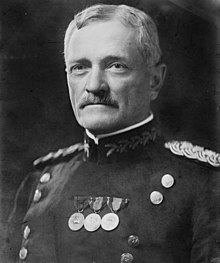
These Letters to the Editor (August 19) responding to President Trump’s tweet that invoked a debunked legend about Gen. John J. Pershing subduing Muslim rebels in the Philippines with bullets dipped in pig blood deserve an audience beyond the readership of the Star Tribune.

I won’t stand for fake news about my cousin, Gen. John Pershing

“I don’t usually express my political opinions in public, which may or may not be a good thing. But now it’s personal. When a sitting president tries to spread fake news about my relative, Gen. John J. Pershing, I take it personally. (“Under siege, Trump turns fire on GOP,” front page, Aug. 18).

“Cousin John was an exemplary general, most notably because of the humane and respectful way he treated the African-American soldiers under his command. To even suggest that the general displayed hateful behavior is, at best, ill-informed or, at worst, vicious and ignorant.

“In this case, President Donald Trump is propagating fake facts to make a fine, upstanding historical figure look like a white supremacist. Totally not true, as historian after historian has repeatedly said. The events that the president is using to make a point simply did not happen.

“This is just another example of the bullying behavior Trump has shown over and over. If he can’t get his way, he finds someone else to put down or uses fake news to make his point — even if the point has no merit.

“Melania Trump has said she wants to fight bullying while she is First Lady. I suggest that she start at home.”

  • Susan Wiesler Dean, Northfield, MN [fourth cousin of Gen. John J. Pershing]

220px-General_John_Joseph_Pershing_head_on_shouldersThis Letter to the Editor followed.

“Long story short.

“Trump has defamed and slandered the good name of Gen. John ‘Black Jack’ Pershing.

“Short story longer.

“He and George Washington are the only two people to be named General of the Armies. As a young man, Pershing taught at an all-black school. He was given the nickname ‘Black Jack’ as a pejorative because he treated the black students fairly, and he works the ‘insult’ proudly. When he arrived in the Philippines, he gave a copy of the Qur’an to the local leaders and offered to assist in building mosques. During World War I, he had the command of the segregated 369th and was respected and admired by the black troops.

“While Pershing was apolitical, the treatment that blacks received from him and their fellow French troops gave hope to the civil rights struggle of returning black vets between the wars. He was never an Islamaphobe.”

  • Ernie Neve, Minneapolis

The same day the Star Tribune published the letters, the president waved to his departing chief strategist, Steve Bannon, as a warrior against fake news:

“Steve Bannon will be a tough and smart new voice at @BreitbartNews…maybe even better than ever before. Fake News needs the competition!” – Donald J. Trump.

2017-08-18t17-24-08-733z--1280x720.nbcnews-ux-1080-600

Grandpa, he’s just a baby!

“Grandpa, they think I’m a baby. I don’t like all these stuffed animals!”

IMG_7165

“I can see that, Elijah. But, ya know . . .  you’re still a baby.”

“I’m not, Grandpa. I’m not a baby! I’m 12!”

“Well, I understand that you feel that way. You have very little control. You’re still very vulnerable at 12 weeks. You have no defense against Mom and Grandma putting stuffed animals in your arms whether you want them or not. But you’re not ready for independence.”

“Uh-uh! Am too!”

“No, you’re really not. You still need your diapers changed.”

“So what? So does the President! He’s just a baby, Grandpa. How come nobody’s helping him? You could give him one of my stuffed animals to help him be calm. He can have this one. Except for black eyes, it’s all white and kinda cuddly, and it is an elephant!”

  • Gordon C. Stewart, Chaska, MN, August 17, 2017


Sinner, do you have my groceries?

I’d never thought about groceries back in Broomall. We’d drive to the Acme, fill the grocery cart, and bring the bags home. It was just part of daily life. Or so I thought.

groceriesI was 17 the day I learned about groceries in America.
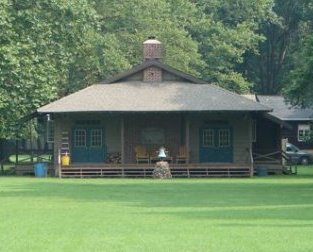
Tony and I had become friends at Pennington Island, the church camp in the Delaware River, after meeting each other on the Saturday several years before when the junior-high youth groups from Marple Presbyterian Church and Berean Presbyterian Church had met during a service project at the Green Street Settlement House.

NLIOn Pennington Island the kids from Philadelphia and the Philadelphia suburbs spent nights together in the same cabins, rose early for “morning watch”, played games, ate the same food at the same tables in the mess hall, swam in the same swimming pool, and sang hymns and spirituals like Jacob’s Ladder. We were living in the same economy while climbing somewhere together.
After the week or two on Pennington Island, the members of his ideal economy would say good-bye and return to the disparate circumstances whose differences we preferred not to know.

Ignorance was bliss. Until the day Tony visited our home in Broomall, 15 miles west of Philadelphia, and watched my mother pull into the driveway with the groceries. My mother spoke of it years later as one of those moments that opened her eyes.

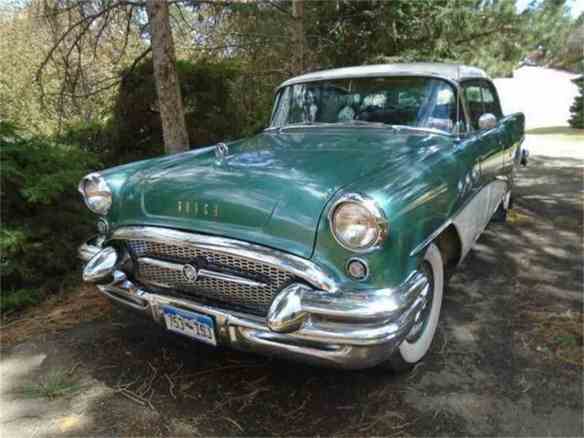
7769907-1955-buick-special-std-cAs we began to unload the groceries from the ’55 Buick, Tony’s eyes grew bigger. There was more than one bag. Never had he seen multiple grocery bags. When the Lewises had a little money, they’d bring home what they needed for the day…or maybe two, on a good day. There were never five, six, seven bags of groceries.

“Sinner, do you love my Jesus,” we had sung in the egalitarian economy of Pennington Island where we were climbing higher together. But unloading the grocery bags that day in Broomall, the difference in groceries seemed more like a symptom of sin – the gulf of separation between two worlds. One home was much “higher” than the other — one white, one black; one privileged, one not — in a black and white economy.

  • Gordon C. Stewart, Chaska, MN, August 14, 2017.


Grandpa, did the President (not) say that?

President Trump’s statement and silence about white supremacy following the terror in in Charlottesville prompted a brief but telling conversation in Minnesota.

IMG_5234“Grandpa, the President just said he wants me to feel safe to play outside, right?”

“Right, Elijah, that’s what he said. That had nothing to do with the reason for the violence in Charlottesville, but, yes, he did say that.”

“Yeah, if he cares about all the children, why didn’t he say the words?”

“What words, Elijah?”

“You know, Grandpa. You know!”

“I do, Elijah. I do.”

  • Gordon C. Stewart, Chaska, MN, August 13, 2017.


Into a dense fog: Sinner, do you love my Jesus?

The descent from my suburban home in Broomall to serve the “less fortunate” on Green Street sent me home looking into a dense fog.

The Wanderer

Wanderer Above the Sea of Fog –  Caspar David Friedrich, c.1818

I had given up a Saturday as a youthful answer to the song I learned has a child. “If you love him, why not serve him?”  Serving Jesus meant serving those who were less fortunate than we, as we used to describe the difference.

The kids from Marple Presbyterian Church in Broomall were aware that Jacob’s Ladder and the other spirituals we sang rose from the slave fields of the white Southern plantations, but the plantations were in the south. We were northerners. We were the abolitionists. We were part of the solution, not the problem.

The day on Green Street knocked me off my ladder. Those few hours on the calendar time of Chronos were a pivotal Kairos moment that placed me before a dense fog searching for answers to how and why life was so different for the two junior high youth groups from Marple Presbyterian Church in Broomall and Berean Presbyterian Church in north Philadelphia.

How and why was it that Tony was born into poverty while I was born into relative economic wellbeing in a suburb became a daunting question. I was looking into a dense fog.

Prior to the plunge to Green Street I hadn’t paid much attention to the first word of the stanza about loving Jesus: “Sinner… do you love my Jesus?” Although I knew myself to be a sinner — I had told a lie or two and not been kind to my younger brothers — I was no Judas! I was a soldier of the cross. “If you love him, why not serve him, soldier of the cross?”

Suddenly, the fog was not just outside of me. It was inside me, a jarring sense that I and “my people” were self-deceived sinners.

But what is sin and what is a sinner? Institutional slavery was sinful.  The slaveowners were sinners. I knew that. The slaveowners were white. The slaves were black. I knew that. The slaveowners were Christians. I knew that. The slaves were Christians. I knew that — or thought I knew it.

I didn’t learn until much later that the slaves were forced into the Christian faith no less than they had been herded like cattle onto slave ships, or that the difference in the churches was as different as it had been on the slave ships. The difference was that on board the slave ships, the slaves were chained together in the hold while the slave traders were up above; in the churches, the slaves were up above in the rear balcony, looking down on the sea of whiteness on the main floor. Until Richard Allen led the revolt from the balcony to form the African Methodist Episcopal Church.

But the kids from Berean Presbyterian Church were not African Methodist Episcopalians. They were Presbyterians in the theological tradition of the Protestant Reformation, John Calvin’s Institutes of the Christian Religion, and the doctrine of predestination.

Was Tony predestined to poverty in north Philadelphia? Was I predestined to white privilege in Broomall? Or was predestination a hoax, the idea of sinners washing their hands like Pilate that had nothing to do with the will of God?

Caspar_David_Friedrich_018

Frau am Fenster
Caspar David Friedrich, 1818–1822
Öl auf Leinwand
44,0 × 37,0 cm
Alte Nationalgalerie Berlin

I was no longer standing on the heights of innocence overlooking the landscape. I was a child of privilege, confined and alone, looking through a very small window at the world beyond what had belonged to “my Jesus”. I was pondering the ships of past and future and the dense fog that went on as far as my eye could see. It has lasted my whole lifetime.

  • Gordon C. Stewart, Chaska, MN, August 11, 2017.


My lifelong Quest

Some things take a lifetime. More or less.

It took until a few days before my 75th birthday to become clear about my lifelong quest. Some would call it my “vocation” in life, my “calling” as we say. Others might call it an obsession. In either case, it’s taken this long to say a word about it.
In a nutshell, my life’s occupation has been, and still is — are you ready? — theological anthropology.
EliIMG_6311
“Whoah! What’s that?” my 11-week-old grandson Elijah is asking.
Theological anthropology, like all anthropology, is the search for understanding of the human species. The term  ‘anthropology’ is the combination of the Greek words  anthropos (human) and logos (word). Anthropo-logy is ‘the word’ about ‘humankind’.
Theological anthropology is the study of humankind in the context of ‘theos’, i.e. ‘G-d’ — which Paul Tillich translated as Being-Itself, the Ground of Being, that which is ultimately Real.
Anthropos is contingent; Being-Itself is not. Like all species, ours has a very short lifespan in the aeons of eternity. We are a small part of the All or the Whole (Friedrich Schleiermacher), creatures of time with the rest of moral nature who can be understood, if at all, only in light of this larger timeless Whole.
The Psalmist question –“What is man that Thou art mindful of him?” (Ps. 8:4 KJV) — is my life-long question.
Who are we as a species? Who am I as a member of it? Who are the Andrews, the Tituses, the Campbells, the Stewarts among the vast assortment of homo sapiens? Who am I in relation to Barclay, my Cavalier King Charles Spaniel friend, the forests, the flowers, the birds, and the rest of the species of dust and ashes holding our breath before the majesty of life itself?
Why theological anthropology?
You can take the human species out of the universe and the universe will go on as it did aeons before anthropos came along. We can’t say the opposite. Essential to the human experience is the terror of contingency and the wonder of of it all, what Rudolf Otto called “mysterium tremendous et fascinans”.
The idea of “man (the human species) over nature” is a deadly illusion, a flight from reality itself, an escape from the trembling that comes with our vulnerability, our transience, our mortality, the final limit of all human creativity (the “image of God”).
After only one cup of coffee on my 75th birthday, that’s the best I can do.
Mom

Muriel Titus Stewart

This afternoon I’ll be in the Philosophy Lounge at Macalester College in Saint Paul, MN at the invitation of a philosophy professor, a long way away from the delivery room and the loving, laboring mother who pushed me into the world (the philosopher’s lounge) back in Mechanicsburg, Pennsylvania. Thanks, Mom!
– Gordon C. Stewart, Chaska, MN, August 10, 2017.

“My Jesus”

Part 3 of “Jacob’s Ladder at Almost 75”

“Sinner, do you love my Jesus?”

The day I met Tony Lewis, “my Jesus” fell off the ladder.

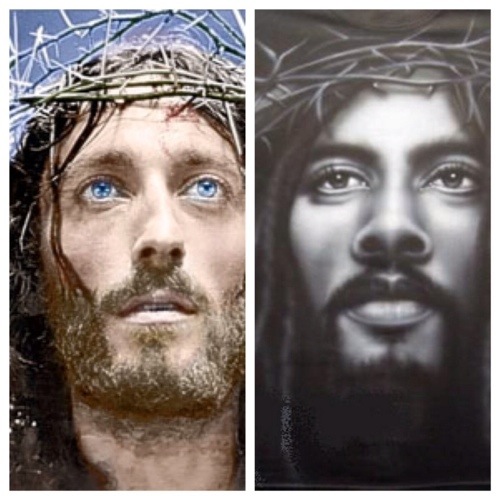
Ladder-5The Jesus of my childhood was white. He was kind and loving, having descended from heaven, like the angels on the ladder between heaven and earth.  My Jesus had made me a soldier of the cross whose job it was to stay on the ladder to heaven and carry others with me.


Until the day I met Tony, I had no idea my faith in the descended Jesus also was condescending, the creation of white privilege.

The day my love for “my Jesus” died was the day my church’s junior-high youth group from Marple Presbyterian Church spent helping move furniture at the Green Street Settlement House in Philadelphia.

Opal Street

North Philadelphia street scene

Green Street was the ghetto. We had gone there from our middle-class suburb of Broomall, the home of all things white and Christian, to help those less fortunate than ourselves. We had no knowledge that our Minister and the Minister of the Berean Presbyterian Church on Green Street had conspired to join together the white Marple and the black Berean church youth groups with the excuse of “helping” move the Green Street Settlement House furniture down the street to its newly purchased location.

That was the day I met Tony, whose Jesus was not a suburban white guy with blue eyes and blond hair taking me up the ladder to a white heaven.

Jesus 20140228-091217

Tony’s Jesus had descended from God the Father and had made him a “soldier of the cross” — but the Jesus Tony loved was neither white nor condescending.

“Sinner,” he seemed to ask without an once of hubris, “do you love my Jesus?”

I became conscious of sin.

  • Gordon C. Stewart, Chaska, MN, August 7, 2017.


“Every round goes higher, higher”

Part 2 of “Jacob’s Ladder at Almost 75”

As a child and youth, Jacob’s Ladder touched something deep within me. I couldn’t have described what it was or why at the time.

Looking back, it was a happy song. We were all climbing. Getting older meant climbing higher, getting taller, becoming mature, successful adult “soldiers of the cross.”

“Every round goes higher, higher.”

It expressed a joyful innocence and confidence. I had no knowledge of the economic-political origins of the ‘spiritual’ until much later.

The connection between the slaves’ faith, or their understanding of what it meant to be a “soldier of the cross” — the struggle for economic-political liberation, climbing “higher” to freedom in the North — was as far from consciousness as white is from black.

As a 13 year-old, Jacob’s Ladder expressed an innocent childhood hope during those hormone-challenging years when ascending the ladder toward adult self-sufficiency felt like a fireman trying to save  an 800-pound gorilla in a raging fire. All I could do was stay on the ladder, hoping that human equivalents of angels might be there to catch me when I fell.  The closest thing to angels were people like Mr. and Mrs. Kidder and friends who encouraged my upward progress from childhood to adulthood. Surely some progress must be made.

Faith still meant climbing higher on a ladder that was going someplace, as the Genesis story (Genesis 28:10-19a) of the ladder between heaven and earth seemed to say. We were on the upward ladder.

Then, something happened.

  • Gordon C. Stewart, Chaska, MN, August 6, 2017.


Jacob’s Ladder at almost 75

Sometimes I can’t get it out of my head. I go to sleep with it. Wake up with it. Walk the dog with it. It’s been over a month now.

“We are climbing Jacob’s ladder” begs for my attention.

So this morning I surrender. What will come out on the page is a mystery until it’s written.

I ask myself, “Why this song?”

This stretch of time has been anxious. Unsettling, restless, down, bored, and struggling with my own inner demons and the bigger demons of human madness around the world.

Jacob’s Ladder has been with me my whole life, like an old friend who shows up when I need her. Like her cousins “Sometimes I Feel Like a Motherless Child” and “Swing Low, Sweet Chariot,” and “Joshua Fit the Battle of Jericho,” there’s something about the tune that brings comfort, placing me in the good company of the slaves whose faith and hope are timeless though they themselves are long gone.

It’s the melody, the music – the language of the soul – that gets me. But it’s also the words. Words like ‘climbing, ‘higher’, ‘soldier’, ‘cross’, ’sinner’, ‘love’, ‘Jesus’, ‘serve’. Words that have stuck in my throat at different times in my life journey as either highly objectionable or as deeply expressive of what I know and feel to be ‘true’. “Jacob’s Ladder” feels like a summary of where I’ve been, where I am now, and a strange kind of invitation to resolve the contradictions as I move forward after three-quarters of a century.

So this morning and in the days to come I will have a conversation with Jacob and his ladder, stopping at each stanza and phrase to dig deeper into what is crying for attention.

Chagall_jacobs-ladder2_Nice-medium

Chagall, Marc, 1887-1985. Jacob’s Dream, from Art in the Christian Tradition, a project of the Vanderbilt Divinity Library, Nashville, TN. http://diglib.library.vanderbilt.edu/act-imagelink.pl?RC=54650 [retrieved August 6, 2017]. Original source: http://www.flickr.com/photos/abeppu/.

“Listen to your life,” wrote Frederick Buechner in Now and Then: A Memoir of Vocation. “See it for the fathomless mystery that it is. In the boredom and pain of it no less than in the excitement and gladness: touch, taste, smell your way to the holy and hidden heart of it because in the last analysis all moments are key moments, and life itself is grace.”

At almost 75 and no longer climbing, I’ve been pondering grace itself.

  • Gordon C. Stewart, Chaska, MN, August 6, 2017.