Unknown's avatar

About Gordon C. Stewart

I've always liked quiet. And, like most people, I've experienced the world's madness. "Be Still! Departure from Collective Madness" (Wipf and Stock Publishers, Jan. 2017) distills 47 years of experiencing stillness and madness as a campus minister and Presbyterian pastor (IL, WI, NY, OH, and MN), poverty criminal law firm executive director, and social commentator. Our cat Lady Barclay reminds me to calm down and be much more still than I would be without her.

Playing Chicken over a Wall

indian-game-chickens-featureIn Phoenix President Trump threatened to play Chicken with Congress. If the bill to keep the federal government open for business does not include funding for the border wall he promised Mexico would pay for, he threatened to use his veto power to shut down the federal government.

The president was hawkish.

“Bully for you!” roared the crowd.

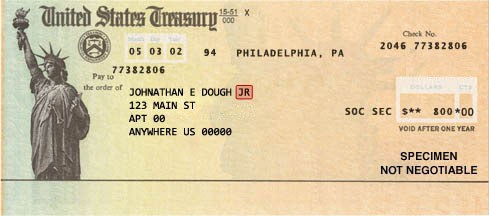
The older folks in the crowd will roar again when their Social Security checks no longer arrive.

G711-001g

It’s time to grow up.

Something there is that makes children love the game of Chicken, and something there is that loves a wall — unless the hawk and the wall turn out to be between a rock and a hard place: me and my Social Security benefit.

Chicken Game Over Dont Look

  • Gordon C. Stewart, Chaska, MN, August 24, 2017.

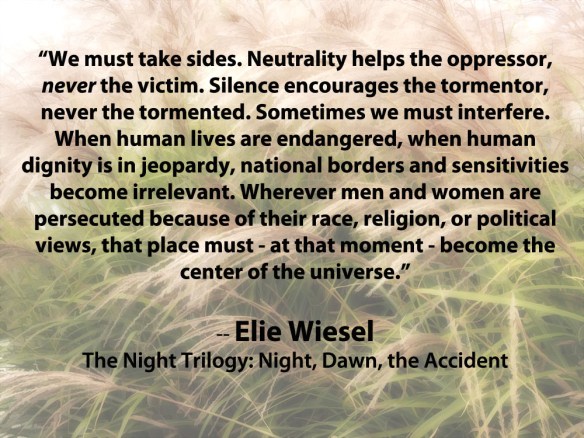
NEUTRALITY AND THE OPPRESSOR – ELIE WIESEL

The Scapegoat

screen-shot-2014-10-14-at-8-04-13-am

Sometimes a line leaps from the page to arrest me.

“Living among us, Jesus loved us. He broke bread with outcasts and sinners, healed the sick, and proclaimed good news to the poor.”

Sitting in the pew the week following the horrors of Charlottesville, this line from the Great Prayer of Thanksgiving of the sacrament of holy communion begged for deeper reflection.

Who were the outcasts, sinners, and sick people on the streets of Charlottesville? Who were the outcasts, sinners, and sick watching the news, tweeting, texting, yelling, screaming, retreating, turning off, tuning out? Who were the poor waiting good news?

Surely, I’m not poor. Am I? I love the outcasts, the sinners, the sick, don’t I, Jesus? I am among the counter-demonstrators, the despisers of white supremacy, the champions of racial equality, the scorners of the KKK and their white supremacist and white nationalist cousins. My anger boils over watching these sick people turning back the clock.

Preparing for the bread and cup, I am aware of my poverty, my thirst for good news. Failing, or refusing, to see the faces and listen more carefully to the shouting of the white supremacists in Charlottesville, I have cast them out as hopeless sinners: the outrageously sick representatives of white supremacy, America’s original sin.

christ-of-saint-john-of-the-cross

“Christ of St. John of the Cross” – 1951, Salvador Dali 

I consider not receiving communion today.

Then I recall René Girard‘s work on the crucified Jesus as the scapegoat whose life, death, and resurrection dismantles the scapegoat mechanism of religion and society.

“Everywhere and always, when human beings either cannot or dare not take their anger out on the thing that has caused it, they unconsciously search for substitutes, and more often than not they find them.”
René Girard, The One by Whom Scandal Comes

I ponder the ways capitalism turns us against each other: privileged and poor, insiders and outcasts, scapegoaters and scapegoats, sheep and goats — the company of sinners in need of the better news that there is, in reality, no division among us.

I remember Salvador Dali’s painting of the cosmic Christ and read again the lines of the Great Prayer of Thanksgiving:

“Living among us, Jesus loved us. He broke bread with outcasts and sinners, healed the sick, and proclaimed good news to the poor.

“He [the Scapegoat] yearned to draw all the world to himself, yet were heedless  of his call to walk in love.”

  • Gordon C. Stewart, Chaska, MN, August 23, 2017

THE SECOND COMING – W. B. YEATS

Thanks to Marilyn Armstrong for sharing W.B. Yeats’ “The Second Coming” today.

Marilyn Armstrong's avatarSerendipity - Seeking Intelligent Life on Earth

THE SECOND COMING – William Butler Yeats


The Second Coming” is a poem written by Irish poet W. B. Yeats in 1919, first printed in The Dial in November 1920, and afterwards included in his 1921 collection of verses Michael Robartes and the Dancer.

View original post

The Shadow of Fred Trump

150202142706-new-york-times-profit-780x439To a degree greater than his Oval Office predecessors, President Trump is waging perpetual war with the press, especially the New York Times.

Why?

Like Father, Like Son

Sons who reflect deeply on what makes them tick eventually wade in the muddy waters of their relationships with their fathers.

Although psychotherapists warn against armchair diagnosis, especially by those not trained in the DSM and diagnostic practice, some things have always been in the public domain of human wisdom. Among them is the existential relationship of a father and a son.

It’s taken 75 years of self-reflection to reach the little clarity I have about my father and me. Along the way I have listened to men, young and old, wrestling with — or refusing to wrestle with —their fathers.

Sometimes the fathers are alive. Sometimes they’re dead. But a father never dies. He lives on in the son who looks to him for approval, for legitimacy, for love.

The Story of Jacob

Although we are not trained in clinical diagnosis like our psychology counterparts, rabbis, priests, ministers, and imams, rabbis, priests, ministers, and imams are privileged to wade in these sacred waters with other waders and wrestlers.

We are schooled in a companion tradition to the DSM, the ancient wisdom passed on from generation to generation by the Torah like the story of Jacob wrestling with the night visitor by the ford of the Jabbok.

The back story of Jacob’s night of wrestling is Jacob’s tricking his blind father Isaac into giving him the father’s blessing meant for Esau and Jacob’s crafty theft of Esau’s birthright.

“After that Esau hated Jacob because of the blessing from Isaac. He thought to himself, ‘My father will soon die, and I will be sad for him. Then I will kill Jacob.’” [Genesis 27:41.]

Esau’s fury has sent Jacob into flight fearing for his life. Now, after years of running for his life, Jacob is about to meet the brother he assumes intends to kill him.
300px-Eugène_Ferdinand_Victor_Delacroix_061

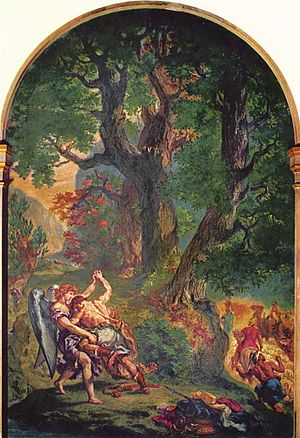
Jacob wrestling with the angel – Eugene Delacroix 

It is the night before Jacob’s encounter with Esau.

“Jacob was left alone; and a man wrestled with him until daybreak.  When the man saw that he did not prevail against Jacob, he struck him on the hip socket; and Jacob’s hip was put out of joint as he wrestled with him. Then he said, ‘Let me go, for the day is breaking.’ But Jacob said, ‘I will not let you go, unless you bless me.’

So he said to him, ‘What is your name?’ And he said, ‘Jacob.’ Then the man said, ‘You shall no longer be called Jacob, but Israel, for you have striven with God and with humans, and have prevailed.’ Then Jacob asked him, ‘Please tell me your name.’ But he said, ‘Why is it that you ask my name?’ And there he blessed him. So Jacob called the place Peniel, saying, ‘For I have seen God face to face, and yet my life is preserved.’ The sun rose upon him as he passed Penuel, limping because of his hip.” [Genesis 32:24-31 NRSV.]

Jacob’s dark night of the soul appears at first to be his unresolved sin against his brother Esau. But beneath the obvious, what the Genesis narrator sets up as a life-and-death moment between the two estranged brothers is a night-dream resolution of Jacob’s very being — his grounding in God . . . and his father.

Jacob is not the only one who has wrestled alone in the night. No night is bleaker than the absence of love, and the darkest of them come when the absence comes from one’s mother or father.

The memory of a father like Isaac casts a long shadow over a man like Jacob. No matter how far Jacob runs from his brother, he cannot walk outside the shadow of Isaac’s disapproval. So long as we run, we miss the holy limp that results from the wrestling.

Perhaps in the light of a son’s relationship with his father we see something much deeper than politics in the behavior and speech of Donald j. Trump.

Walking with a Limp

Jacob’s night of wrestling leaves him permanently injured. Forever after he walks with a limp. After his night by the ford of the Jabbok and the next day when Esau embraces him against every expectation, Jacob and Esau join together to bury their dead father.

For Donald Trump’s sake and for all the brothers and sisters the president has managed to estrange across the world in 2017, one can pray, and hope against hope, that Fred Tump’s heir would finally bury his father’s fight with the New York Times.

FredTrumpArrest

  • Gordon C. Stewart, Chaska, MN, August 21, 2017.

 

Getting smart with sick people

https---blueprint-api-production.s3.amazonaws.com-uploads-card-image-567195-92342710-0d5c-4235-a14a-8c7f1b862648

Pictures like this from Charlottesville, Virginia send chills down the spine. White supremacy, white nationalism, the KKK, and the Neo-Nazis sometimes evoke a reptilian response in me. I hate the haters.

I am like the psalmist in the psalm I learned as a child.

Surely thou wilt slay the wicked, O God: depart from me therefore, ye bloody men.

For they speak against thee wickedly, and thine enemies take thy name in vain.

Do not I hate them, O Lord, that hate thee? and am not I grieved with those that rise up against thee?

I hate them with perfect hatred: I count them mine enemies. [Psalm 139:19-22 KJV].

They are evil, pure and simple! I hate them with a perfect hatred.

Then I remember the conclusion of the psalmist’s reflection immediately that strangely comes on the heels of hating God’s enemies with a perfect hatred. These last lines of Psalm 139 come only after the psalmist takes a very deep breath — a more contemplative introspective pause.

Search me, O God, and know my heart: try me, and know my thoughts:

And see if there be any wicked way in me, and lead me in the way everlasting. [Psalm 139:23-24 KJV]

Evil is not only out there. It’s also in here. In me. It’s like an infection. It’s pandemic. Comparing myself with the most egregious white supremacists leaves me among the righteous, but, as an old professor observed, comparison is the Devil’s work.

andrew-young

Andrew Young and Martin Luther King, Jr.

“I grew up in New Orleans, La., 50 yards from the headquarters of the Nazi party. Before I went to kindergarten, I was having to look in the window on Saturdays, and watch all these folks [shout] “Heil, Hitler!”

“In 1936.

“And my daddy said, those are sick people. They’re white supremacists, and white supremacy is a sickness. You don’t get mad, you get smart. You never get angry with sick people, because you’ll catch their sickness. That’s what I worry about with our young people. Anger and this emotional militancy will give you ulcers, give you heart attacks.

“Don’t get mad, get smart. Your brain is the most important thing you have.”

Andrew Young, August 16, 2017.

reptilian brain

The reptilian brain uploaded from http://www.collectiveevolution.com

Click How to By-Pass Your Reptilian Brain and Restore Your Creative Powers, or Controlling Anger Before It Controls You on the American Psychological Association web site, and remember Andrew young. “Don’t get mad, get smart. Your brain is the most important thing you have.”

Or just remember the psalmist in light of the snake’s deception in the biblical myth of the Garden of Eden: “You will be like God, knowing good and evil!”

  • Gordon C. Stewart, Chaska, MN, August 17, 2017.

General Pershing and the Commander-in-Chief

waponews

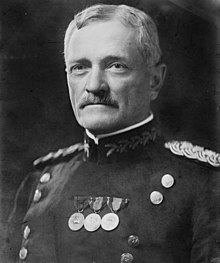
These Letters to the Editor (August 19) responding to President Trump’s tweet that invoked a debunked legend about Gen. John J. Pershing subduing Muslim rebels in the Philippines with bullets dipped in pig blood deserve an audience beyond the readership of the Star Tribune.

I won’t stand for fake news about my cousin, Gen. John Pershing

“I don’t usually express my political opinions in public, which may or may not be a good thing. But now it’s personal. When a sitting president tries to spread fake news about my relative, Gen. John J. Pershing, I take it personally. (“Under siege, Trump turns fire on GOP,” front page, Aug. 18).

“Cousin John was an exemplary general, most notably because of the humane and respectful way he treated the African-American soldiers under his command. To even suggest that the general displayed hateful behavior is, at best, ill-informed or, at worst, vicious and ignorant.

“In this case, President Donald Trump is propagating fake facts to make a fine, upstanding historical figure look like a white supremacist. Totally not true, as historian after historian has repeatedly said. The events that the president is using to make a point simply did not happen.

“This is just another example of the bullying behavior Trump has shown over and over. If he can’t get his way, he finds someone else to put down or uses fake news to make his point — even if the point has no merit.

“Melania Trump has said she wants to fight bullying while she is First Lady. I suggest that she start at home.”

  • Susan Wiesler Dean, Northfield, MN [fourth cousin of Gen. John J. Pershing]

220px-General_John_Joseph_Pershing_head_on_shouldersThis Letter to the Editor followed.

“Long story short.

“Trump has defamed and slandered the good name of Gen. John ‘Black Jack’ Pershing.

“Short story longer.

“He and George Washington are the only two people to be named General of the Armies. As a young man, Pershing taught at an all-black school. He was given the nickname ‘Black Jack’ as a pejorative because he treated the black students fairly, and he works the ‘insult’ proudly. When he arrived in the Philippines, he gave a copy of the Qur’an to the local leaders and offered to assist in building mosques. During World War I, he had the command of the segregated 369th and was respected and admired by the black troops.

“While Pershing was apolitical, the treatment that blacks received from him and their fellow French troops gave hope to the civil rights struggle of returning black vets between the wars. He was never an Islamaphobe.”

  • Ernie Neve, Minneapolis

The same day the Star Tribune published the letters, the president waved to his departing chief strategist, Steve Bannon, as a warrior against fake news:

“Steve Bannon will be a tough and smart new voice at @BreitbartNews…maybe even better than ever before. Fake News needs the competition!” – Donald J. Trump.

2017-08-18t17-24-08-733z--1280x720.nbcnews-ux-1080-600

Religion and Race in America

20160327_ResurrectionSunday_rp_374

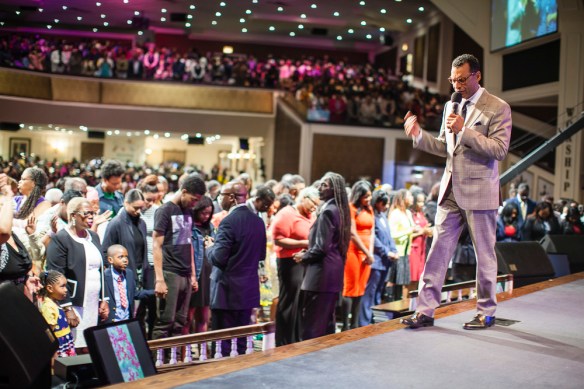
A.R. Bernard, Easter Sunday, Christian Cultural Center, NYC.

“Megachurch pastor resigns from Trump’s evangelical council” reads the headline in today’s Washington Post about the resignation of A.R. Bernard. Other council members are staying put for now.

The term ‘evangelical‘ is a hot word for folks like me from what were once called America’s ‘mainline churches“. We understand the gospel differently from our Christian sisters and brothers who claim the term and sit on the President’s evangelical advisory council.

Mainline Protestants were a majority of all Christians in the United States until the mid-20th century, but they now constitute a minority among Protestants. Mainline churches include the so-called Seven Sisters of American Protestantism—the United Methodist Church, the Evangelical Lutheran Church in America (not to be confused with Confessional Lutheranism), the Presbyterian Church (USA), the Episcopal Church, the American Baptist Churches, the United Church of Christ, and the Disciples of Christ—as well as the Quakers, Reformed Church in America, African Methodist Episcopal Church (AME) and other churches. – –  “Mainline Protestant” Wikipedia.

Among the differences between the evangelical churches and the mainline churches is the meaning of euangelion (the Greek New Testament word which translates into English as ‘good news’ or ‘gospel’).

From this writer’s perspective, the Good News/Gospel is the conquering of sin by the power of Love, the victory of love over hate, of compassion over cruelty, of oneness over division, of mercy over viciousness, of reconciliation over racism.

Or, as I have more recently come to think of it, the gospel of Jesus Christ is the counter-narrative to every exceptional or superior claim — national exceptionalism, racial exceptionalism, cultural exceptionalism, gender exceptionalism, species exceptionalism, and — yes — religious exceptionalism.

A.R. Bernard’s decision to leave the the President’s evangelical advisory council in the wake of the news in Charlottesville is worthy of national news coverage. A.R. Bernard’s decision bears witness to the gospel’s counter-narrative.

gettyimages-682637522_wide-47040a0ed3f4dd41fc01c544653aed86be13e28a-s900-c85

President Trump and Rev. Jerry Falwell, Jr.

While the members of the President’s evangelical advisory council like Jerry Falwell, Jr. have stayed put, mainline church leaders like Herbert Nelson of the Presbyterian Church (USA) have stepped up with statements that fly beneath the attention of national publicity.

Here’s an excerpt from Herbert Nelson’s word to leaders of the Presbyterian Church (USA) in the aftermath of President’s remarks following the white nationalist, white supremacist nightmare in Charlelottesville, “Are we complicit in the racism of the alt-right?” (August 14, 2017) .

jhn_preaching_cropped_flipped_medium250

Dr. Herbert Nelson, Stated Clerk, Presbyterian Church (USA)

“Jesus reminds us in the gospel of John, “If you love me, you will keep my commandments. And I will ask the Father and he will give you another Advocate to be with you forever” (John 14:15–16).This word advocate comes from the Greek word advocare, which means to “stand beside or stand with.” Its connotation is akin to a lawyer standing beside a client. Jesus is preparing them to live a life in faith without his physical presence, while reminding them that the spiritual presence that guided him will still be with them; will stand beside them; will be an advocate for them. We use the words justice advocacy to explain the power of walking beside the victimized in our society. Racism represents a historic ill and victimization of people of color in this nation. It is a cancer in the soul of our country that can be driven out only by love. This love makes both the believer and nonbeliever uncomfortable, because it causes us to recognize that we can do more when we take our eyes off ourselves and place them on the Almighty.

“White supremacy will not be eradicated until faith leaders become willing to risk their very lives (professional and otherwise) for the sake of the gospel. The Scriptures remind us that “Whoever tries to keep their life will lose it, and whoever loses their life will preserve it” (Luke 17:33). Our denomination must be willing to lose its life for the sake of eradicating more than 400 years of white supremacy in the United States.

Perhaps today I may be forgiven for taking a little comfort — very little — in being part of a non-exceptional dying church that bears witness to the counter-narrative gospel in spite of itself.

  • Gordon C. Stewart, Chaska, MN, August 19, 2017.


Killing Evil?

white_rally-620x412

White Supremacy Rally

White supremacy, America’s original sin, is demonic. Always has been. Always will be.

Rarely does evil show up as visibly as it did last week in Charlottesville, Virginia and in the days that have followed.

What does one do in the face of evil?

Banishing evil

In the fight of good with evil the first impulse is to kill it. Get rid of it. Banish it from from existence itself.

The snake’s aside in the biblical story of the Garden of Eden whispers anew its eternal invitation to self-deception: “You will be like God, knowing good and evil.”

You cannot kill a demon. If you try to kill it, you end up killing your brother, your sister, your neighbor as your enemy.

Killing the Memory

baghdad-1

Dismantling of Saddam Hussein statue, Baghdad, 2003

Statues like the one of Robert E. Lee on the public squares of the former Confederacy bear witness to the unfinished business of America’s Civil War, or, as it is known in the South, The War Between the States.

Should they all come down? Does right-mindedness — a new public consciousness beyond the evil of white supremacy — demand we do the same with them the people of Iraq and our troops did with the statue of Saddam Hussein to celebrate the end of the reign of terror: take them down?

Knowing how near the serpent of deception is, Dom Sebastian Moore, O.S.B, invites a more ambiguous response in The Crucified Jesus Is No Stanger:

“We have to think of a God closer to our evil than we ever dare to be. We have to think of [God] not as standing at the end of  we way take when we run away from our evil in the search for good, but as taking hold of us in our evil, at the sore point which the whole idealistic thrust of man is concerned to avoid.”

Preserving Memory

Pulling down the statues from their pedestals feels like a catharsis to many of us. To others it feels like an assault. But we do ourselves no favor by framing the issue as one of anti-racist versus racist, pitting the righteous against the sinners.

Historians, spiritual guides, and social psychologists know that societies and individuals that bury their pasts are doomed to repeat them in one form or another. The demons never disappear.  You cannot kill a demon. It always come back to haunt you — all the mores when you think you’ve killed it.

Channel Markers: not becoming what we hate

The statues serve as channel markers that keep us on the way to a consciousness beyond the America’s original sin of white supremacy instead of symbols of our reverence for what we have come to despise.

andrew-young

Rev. Dr. Andrew Young and Rev. Dr. Martin Luther King, Jr.

It is in this spirit that Martin Luther King, Jr.’s colleague Andrew Young takes the unexpected view that the statues should remain.

“I grew up in New Orleans, La., 50 yards from the headquarters of the Nazi party. Before I went to kindergarten, I was having to look in the window on Saturdays, and watch all these folks [shout] “Heil, Hitler!”

“In 1936.

“And my daddy said, those are sick people. They’re white supremacists, and white supremacy is a sickness. You don’t get mad, you get smart. You never get angry with sick people, because you’ll catch their sickness. That’s what I worry about with our young people. Anger and this emotional militancy will give you ulcers, give you heart attacks.

“Don’t get mad, get smart. Your brain is the most important thing you have.”

You cannot kill a demon. It’s always whispering in the shadows of our flight from the evil that lies so close. Don’t get mad, get smart.

  • Gordon C. Stewart, Chaska, MN, August 18, 2017.


No More Silence

JohnMBuchananPastor Emeritus of Fourth Presbyterian Church in Chicago, former Moderator of the Presbyterian Church (USA), and former publisher of The Christian Century John M. Buchanan shares his inner struggle following events in Charlottesville.

Other religious leaders’ reflections will follow here on Views from the Edge.

Family of John M. Buchanan's avatarHold to the Good

At first I thought that David Brooks was on to something in his New York Times editorial, August 8, 2017: “Getting Trump Out of My Brain.” I nodded in sympathy with Brooks’ observation: “For the past two years Trump has taken up an amazing amount of my brain space. My brain has apparently decided that it is not interested in devoting neurons to that guy. There’s nothing more to be learned about Trump’s mixture of ignorance, insecurity and narcissism. Every second spent on his bluster is degrading rather than informative.” I’ve abided by that sentiment for a while. I have been so overwhelmed by what I have seen happen to my country and its institutions that I simply haven’t known what to say. But I remembered whose I am and who I follow, and my own Christian saints and mentors, and I cannot remain silent.

After the violence and murder…

View original post 728 more words