Habits and Inspiration

I’ve never been a big fan of habits. In spite of what Octavia Butler believes — “Habit will sustain you, whether inspired or not” — I have scorned habits in favor of a more creative, spontaneous, non-habitual life. But this morning I came to my senses. I’ve not been inspired, and I’ve gotten out of a habit that sometimes brings inspiration.

Elijah joy IMG_9566

Elijah

I’ve felt like the psalmist . . .  or like poor little Elijah just 24 hours ago when he couldn’t keep anything down. Not even the Gatorade. When a joyful 19 month-old child gets sick, he doesn’t know what hit him. Sometimes his 76 year-old grandfather doesn’t know either.

Some viruses can’t be seen under a microscope. Some illnesses require more than an Internist’s diagnosis. Their origins defy medical explanation and resist our usual remedies: a stiff drink, an anti-depressant, vitamin and mineral supplements, exercise, or a change of diet. Which is where habits come in.

It’s been weeks since I got out of the habit of morning prayer. Flailing about at four o’clock this morning, I remember the line from Chaim Potok’s The Chosen: it’s the four-o’clock-in-the-morning questions that trouble us over a lifetime. I’ve gotten out of the habit of greeting the day with readings from the Book of Common Prayer (BCP), spending a quiet time pondering the psalms and other readings assigned by a calendar prescribed by doctors of the soul. I need to return to a healthy diet.

My best friend is hospitalized, awaiting surgery required by complications from pancreatic cancer. His time is limited. So is mine. Fifty-four years of friendship soon to vanish like the morning mist. Whatever happens today on the operating table, it won’t be long before one of us is gone. I open the BCP. “What profit is there in my blood, if I go down to the Pit? Will the dust praise you or declare your faithfulness? Hear, O LORD, and have mercy upon me; O LORD, be my helper,” cries the psalmist (Psalm 30:10-11, BCP), recognizing that there is no quick fix for what ails him.

My friend knows this feeling. He also has a habit that serves him well when the raindrops keep falling on his head. When the four-o’clock-in-the-morning clouds and torrential rains come over him, he turns, as do I this morning, to that which he has not made up, and crawls inside the psalmist’s faith that “weeping may spend the night, but joy comes in the morning” (Ps. 30:6, BCP).

Returning to the habit I’d neglected, I read the psalm again and pray for my friend. But I’m not seeing my friend. I’m seeing someone else. I’m looking at Elijah. He has crawled inside his mother’s watchful care…in the bathtub. He is smiling, playing, and splashing the bath water with no hint of memory of last night when he couldn’t even keep down the Gatorade.

“You have turned my wailing into dancing; you have put off my sack-cloth and clothed me with joy. Therefore my heart sings to you without ceasing; O LORD my God, I will give you thanks for ever” (Ps. 30:12-13. BCW).

— Gordon C. Stewart, Chaska, MN, December 15, 2018.

Escape at Dannemora

Watching the first episode of Showtime’s new series Escape at Dannemora was a de ja vu experience. The small town of Dannemora, tucked away in the far northeast corner of New York State, had been invisible to the public eye until June 6, 2015 when two inmates escaped from the town’s principal employer, the state penitentiary, Clinton Correctional Facility.

Clinton_correctional_facility,_Dannemora,_NY,_2007

Clinton Correctional Facility, Dannamora, NY

How I learned of Martin Sostre

It was during the weekly Wednesday evening programs and visits with inmates at Dannemora that I learned about the case of Martin Gonzalez Sostre. Martin, who had owned and operated a radical black liberation bookstore in Buffalo, NY, insisted on his innocence, claiming he was a prisoner of conscience framed by a police set-up. Before his transfer to Dannemora from Attica, Martin he had filed and won the human rights court case — Sostre v. Rockefeller — that ruled against the routine practice of rectal searches following prisoner visitations with family and friends. Transferred from Attica to “New York’s Siberia” Dannemora, Martin continued to refuse all visitations. He was held in solitary confinement without access to anyone beyond the prison walls. A campaign for Martin’s release and pardon was happening without the benefit of direct access to Martin.

Martin Sostre and the Book of Revelation

No book of Christian scripture is more egregiously abused than the last book in the New Testament. The Apocalypse of John (Book of Revelation) is read as though it were a palm reader or a crystal ball. It wasn’t. Its author was a prisoner of conscience held by the Roman Empire on the Isle of Patmos. It was then, and is now, a work of social criticism expressed in the strange apocalyptic literary genre of its time. It’s not about the future. It’s about now.

The new series on the escape from Dannemora takes me back to my time with the inmates and guards within the prison walls, and the published sermon that came from that experience. Below are excerpts from the sermon at the Gunnison Memorial Chapel of St. Lawrence University in Canton, New York inspired by a prisoner of conscience named Martin Sostre and a fresh reading of The Book of Revelation through the eyes of the oppressed. The sermon “Worship and Resistance: the Exercise of Freedom,” was published soon after by The Christian Century (March, 1974).

“Worship and Resistance” links the case of Martin Gonzalez Sostre’s imprisonment in solitary confinement at Clinton Correctional Facility with the witness of faith by the prisoner of conscience in his own kind of solitary confinement on the Isle of Patmos. Dannemora is its own kind of island, known by inmates across the State of New York Correctional System, as “New York’s Siberia” — “the Hell Hole” of the New York prison system.

Excerpts from “Worship and Resistance: The Exercise of Freedom”

“Incarcerated on the Aegean Island of Patmos, a penal settlement of the Roman Empire in the first century A.D., was a political prisoner named John. He wrote a political-religious manifesto declaring open resistance to the Roman Empire. The Revelation to John – the Apocalypse, the last book of the Bible – is the earliest extant Christian tract deliberately and openly directed against the pretensions of the world’s greatest power. In the Revelation to John, resistance to Roman power and authority is so inextricably bound together with worship of God that they constitute two sides of the same coin. Worship and resistance are the twin sides of faith’s freedom to celebrate God’s gift of life. The unity of resistance and worship is expressed with notable clarity in the passage where the fall of mighty Babylon occasions a celebration in heaven. The destruction of Babylon is joined to the salvation of the world itself and is the sign of God’s power and righteous rule over the nations. Only those who profit by Babylon’s wealth, power and injustice have reason to mourn her fall, while those who have ‘come out of her’ – who have disentangled themselves from her oppression, corruption and imperial claims – have cause to worship and sing joyful hymns of praise.”

+++

William Stringfellow

William Stringfellow

“Babylon is the state or nation in its presumption to be God. Babylon is any state, nation, or constellation of principalities and powers, which attempts to rule as final judge of persons and nations. Babylon is any such power – in any time or place – which makes its people subjects, calling them into idolatry of the nations, and any state or nation that persecutes its prophets of righteousness, peace and justice while rewarding the aggressive supporters and the silent ones who acquiesce. America is Babylon.” –William Stringfellow, An Ethic for Christians and Other Aliens in a Strange Land.

“Envision once more a visit to Clinton Correctional Facility. Remember the disorienting sensation of having left everything familiar on the other side of the wall, the feeling of walking out of a real world into a nightmare, the shock induced by the size of the walls and the presence of the guards – strange and terrifying.

“But the closer one gets to the prison reality, the more one comes to realize that it is not so strange, that it is simply a more exaggerated and visible form of our own everyday reality in the face of death. Here on the outside, the walls are not visible, but they are much higher. Out here the guards do not stand poised with machine guns, but they are real and far more powerful – the guards our own fears provide.”
+++
“Then I heard another voice from heaven saying, ‘Come out of her, my people, lest you take part in her sins…’” (Rev. 18:4 RSV).

Meeting Martin Face-to-Face
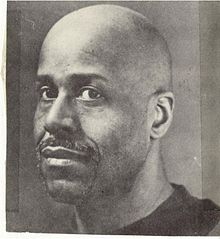
Martin Sostre

Martin Gonzalez Sostre

Sometime following the sermon at Gunnison Memorial Chapel, a Dannemora guard informed us during the Wednesday visits with prisoners that Martin had been transferred temporarily to the Federal Detention Center in lower Manhattan, NYC, as a witness in someone else’s trial.  Unlike the state system, there are no body searches after visitations in the federal system. Martin would be free to accept visitors.

As a “man of the cloth” it fell to me to attempt a face-to-face visit on behalf of the committee working for Martin’s release. I drove the eight hours to lower Manhattan,  put on my clerical collar and presented myself to the kindly woman at the Detention Center reception desk as Martin’s pastor, hoping that 1) the prison officials would be unaware that Martin was not a Christian, and 2) Martin himself would accept the visitation from a complete stranger who claimed to be his pastor. A description of the experience just before the face-to-face visit appeared previously on Views from the Edge. Click “Robert” Who? for that part of the story.

The Release of Martin Sostre

In December 1973 Amnesty International put Sostre on its “prisoner of conscience” list, stating: “We became convinced that Martin Sostre has been the victim of an international miscarriage of justice because of his political beliefs . . . not for his crimes.” In addition to numerous defense committees in New York State, a Committee to Free Martin Sostre, made up of prominent citizens, joined in an effort to publicize Sostre’s case and petition the New York Governor Hugh Carey for his release. On December 7, 1975, Russian Nobel Peace Laureate Andrei Sakharov added his name to the clemency appeal. Governor Carey granted Sostre clemency on Christmas Eve of 1975; Sostre was released from prison in February 1976. Governor Carey eventually issued a pardon. — Wikipedia.

Worship and resistance are two sides of the same coin.

  • Gordon C. Stewart, Chaska, MN, December 16, 2018

It’s about time!

TIMELY REFLECTIONS OF AN ANACHRONIST

Original movie poster for Being ThereRobert Mueller III’s and the Southern District of New York’s court filings, and the President’s response, confirm that “Individual-1” never should have been administered the oath of office “to protect and defend the Constitution of the United States of America.”

The people around the Oval Office are the only brakes on the man who, like Chauncey (“Chance”) Gardner, played by Peter Sellers, in the humorous film Being There, spends his days watching his favorite television shows, doesn’t read, and reduces complexity to the simplest of terms. 

Ron Steigler: Mr. Gardner, uh, my editors and I have been wondering if you would consider writing a book for us, something about your um, political philosophy, what do you say?

Chance: I can’t write.

Ron Steigler: Heh, heh, of course not, who can nowadays? Listen, I have trouble writing a postcard to my children. Look uhh, we can give you a six figure advance, I’ll provide you with the very best ghost-writer, proof-readers…

Chance: I can’t read.

Ron Steigler: Of course you can’t! No one has the time! We, we glance at things, we watch television…

Chance: I like to watch TV.

Ron Steigler: Oh, oh, oh sure you do. No one reads!

MY SON’S QUESTION

Wooden_hourglass_3Soon after my young son learned to read, he asked a philosophical question: “What’s time?” “Time is what we have” was the best I could do. The other day a photograph of an ill-cared for, deteriorating church with a clock that still works led me back to Douglas’s question. I’m older now. Not wise. Just older. But I tell myself that length of years sometimes brings us closer to the outskirts of wisdom than when our years were few and our days seemed longer. At my age, when speed and virtual reality fill our lives, I would add an addendum: “Time is what we have but refuse to recognize.

A MATTER OF PERSPECTIVE

In Being There, Louise, who has raised Chance from early childhood, is watching Chance on television with other poor black seniors.

Louise: “It’s for sure a white man’s world in America. Look here: I raised that boy since he was the size of a piss-ant. And I’ll say right now, he never learned to read and write. No, sir. Had no brains at all. Was stuffed with rice pudding between th’ ears. Shortchanged by the Lord, and dumb as a jackass. Look at him now! Yes, sir, all you’ve gotta be is white in America, to get whatever you want. Gobbledy-gook!”

Chance and Donald are a lot alike. Neither reads. Both watch television all day. Both are white. Both are stuffed with rice pudding between their ears. Both speak gobbeldy-gook. Yet they are also very different. One strikes us as funny. The other does not. One is a pure soul. The other is cunning. One is entertaining. The other is dangerous. 

IT’S ABOUT TIME!

256px-Constitution_of_the_United_States,_page_1It’s time to recognize what time it is. Time for Congress to speak aloud the real name of Individual-1.  Time to act on the sworn testimonies of Michael Flynn, Michael Cohen, Manafort, et. al. alleging behavior that “subverts and attacks the Constitution of the United States of America.” Time to care for, and restore, the deteriorating rule of law under the Constitution.

  • Gordon C. Stewart, Chaska, MN, December 8, 2018,

Sunday Morning

I’d never heard of Pico Iyer or his views on the urgency of slowing down, and I’ve only traveled to Japan in my imagination while listening to Dave Brubeck’s Kyoto Song. But I like how Pico thinks.

https://www.youtube.com/watch?v=LbdD9gPnhhM

“I can soon begin to tell the time by how the light is slanting off our walls at sunrise and when the darkness falls” describes what happens in the cabin next to the wetland in Minnesota. Like Pico in Kyoto, I become more essentially human in the midst of real time.

Thanks to David Kerrigan for featuring the On Being interview with Krista Tippett.

Live & Learn's avatarLive & Learn

Yes, and I think we all know that sensation. We have more and more time-saving devices but less and less time, it seems to us. When I was a boy, the sense of luxury had to do with a lot of space, maybe having a big house or a huge car. Now I think luxury has to do with having a lot of time. The ultimate luxury now might be just a blank space in the calendar. And interestingly enough, that’s what we crave, I think, so many of us.

When I moved from New York City to rural Japan — after my year in Kyoto, I essentially moved to a two-room apartment, which is where I still live with my wife and, formerly, our two kids. We don’t have a car or a bicycle or a T.V. I can understand. It’s very simple, but it feels very luxurious. One…

View original post 281 more words

Tell that Fox

Most every day I get up around 4:30, go downstairs, brew a pot of coffee, and begin to percolate. The percolations always sound about the same. With one difference. Coffee doesn’t stew. I do.

Looking in from the outside, you might say “You can take a man out of the pulpit, but you can’t take the pulpit out of the man,” and you would be partly right. But I have no desire to stand in a pulpit. I loved the early mornings when a sermon began to percolate — pausing over a biblical text while world events swirled around my head. I still do. You can’t take that part of the pulpit out of the man.

SWIRLING AND STEWING

The world is always swirling, but these days the swirling feels different. More like a tornado. I go to bed with the news storming in my head and I get up early with it still swirling. But, no matter how ominous the news is, I know I can always take time out to get a better grip, to settle the spinning, to go into the eye of the storm I have become. 

Some mornings, it’s a word that pops up to hold my attention. Yesterday it was two words: serpents and doves. This morning there are three: serpents, doves, and a fox. Stay with me. Views from the Edge is my pulpit in retirement; it’s my pulpit, and I’ll cry if I want to! But this morning the words don’t lead me to cry. They inspire hope and define the way forward.

It began yesterday with serpents and doves. “Behold, I am sending you out as sheep in the midst of wolves, so be wise as serpents and innocent as doves,” says Jesus to his disciples. 

“WISE AS SERPENTS”?  

Get yourselves educated. Become intimately familiar with the world you’re walking into. Be wise to the culture of cunning.” 

“INNOCENT AS DOVES”? 

Become like the dove that brings the olive branch back to the ark; work on whatever is not peaceful in your own hearts.”

Then this morning, along came the fox. “Go and tell that fox. . . ,” says Jesus to those who have come to warn him. 

“GO AND TELL THAT FOX”?

It’s not quite what it seems. The word is hard to render in English. In the culture of the times, it was a derogatory term, a slap in the face, according to biblical linguist Randall Both. Sort of like ‘pipsqueak’. Or small-fry, usurper, poser, clown, insignificant person, cream puff, nobody, weasel, jackass, tin soldier, peon, hick, pompous pretender, jerk, upstart. 

The ‘fox’ is Herod Antipas, the despised tetrarch, a Jewish national who feathered his own nest, a turncoat who served at the pleasure of the Roman Emperor Tiberias. He had ingratiated himself to Tiberias by changing the name of the Sea of Galilee to the Lake of Tiberias and by building a new city with a lush vacation palace on the site of a Jewish cemetery. Herod was a turncoat to his faith and his country. Herod was a usurper. 

“Go tell that fox, ‘I will keep on driving out demons and healing people today and tomorrow . . . .”

“DEMONS AND HEALING”?

The ‘demons’ in the New Testament are not creepy little creatures, although they are creepy. They are twisters of goodness and truth, liars and tricksters who take possession of a person or a society. Sometimes they hold power and authority, building palatial palaces and private clubs, ingratiating themselves to a foreign power by changing the name and language of a local treasure. The demons make us sick. Healing comes as a result of throwing out the demons to end the demonic occupation. Driving out demons and healing is the continuing work of the community gathered around Jesus.

Like I said, you can take the man out of the pulpit, but you can’t take the pulpit out of the man. Sometimes in the storm that is America today, a word pops up and percolates with the coffee: serpents, doves, and foxes. Five minutes before going back upstairs for my afternoon nap, I hear the words with which Jesus often ended an obscure parable:

“Let those with ears hear.” Хорошего дня.

–Gordon C. Stewart, Chaska, MN, November 30, 2018.

Go home! There’s no room for you in this inn!

And so it came to pass in the third century of a democratic republic that the Wise Men returned to the countries from which they had come. Their sudden departure came the same way they had come: they had seen a star rising in the West. 

The original star that invited them to follow it was a sign of great promise. It was a lofty promise — a bright star in a dark sky — beckoning them to go and see this great thing that had come to pass. Leaving behind their camels, they boarded ship with only a trace of frankincense, gold, myrrh, and a translator, and followed the star to a foreign continent.

Statue of Liberty –NY Harbor

Having braved the high seas, they saw a statue over which the star stood still. A torch held high in the Lady’s hand burned as brightly as the star that shone above her, and a plaque was there they could not read. “Send these . . . tempest-tossed to me,” read the translater, “I lift my lamp beside the golden door!” And, hearing the words of welcome . . . they opened their gifts of gold, frankincense and myrrh and with exceeding great joy set foot upon the land and settled there.

There would be times when the Wise Men and their descendants continued to see the star shining still above the Lady of welcome, and times when the star was covered by clouds and the Lady stood battered by storms, but the flame seemed eternal. 

Then, suddenly, in the third century of their sojourn, the different kind of star appeared — an entertainer who scoffed at the modest amounts of gold, frankincense, and myrrh which the tempest-tossed Wise Men had presented the Lady to whom the star had led them. And so it came to pass in the republic’s third century that the Wise Men’s descendants boarded ship for the East, escaping the new star who was wrestling babies from their parents’ arms, extinguishing the torch over which the star once had stood, and replacing the plaque at the foot of the Lady with a new message:

Go home! There’s no room for you in this inn.”

— Gordon C. Stewart, Chaska, MN, November 29, 2018

Gratitude in Place and Time

Blake_jacobsladder

William Blake, Jacob’s Dream

Thanksgiving 2018 arrives as a welcome interruption. It invites us into a sacred pause in this time and place of national division. One place to pause is the story of Jacob wrestling with God, the Nameless Presence (Genesis  ), and the song “We are climbing Jacob’s ladder.” The Genesis story is Jacob’s dream the night before he would come face-to-face with the estranged brother he had every reason to fear. After many years of separation, Jacob is about to face the brother he had tricked and had stolen Esau’s right to the family inheritance. Jacob does not want to meet his brother. Neither do we Americans who will sit down to a turkey dinner with family members on the other side of the political fence from us. Discussion of Jacob’s Ladder might bring an insightful Thanksgiving 2018 around the tables where Donald Trump is the turkey the family is afraid to carve .

The origins of “Jacob’s Ladder”origins — African slaves singing in the cotton fields under the plantation owner’s nose — gives a different meaning to the song. Jacob’s Ladder and the biblical text from which it comes represent a great reversal in human consciousness. After Jacob was defeated by the Nameless Presence, his spirituality took a 180 degree turn. “Surely God was in this place, and I did not know it!” His encounter wth his estranged brother turns the tables from fear and the rule of violence to the unexpected gift of reconciling love.

Gratitude Doubled

Human_Infant_in_Incubator

Infant in incubator photo by Chris Horry, 2002.

As our way of offering Thanksgiving greetings, we share John Buchanan’s “Gratitude Doubled” reflection on becoming a great-grandfather of new-born twins in an incubator.

This Thanksgiving also marks the 18-month anniversary of grandson Elijah’s birth. Great-grandfather joy will have to wait a few years, but the sense of life as John speaks of it is immediate. Wishing you a grateful Thanksgiving.

Family of John M. Buchanan's avatarHold to the Good

Yesterday I experienced the most unlikely, most wonderful thing that has ever happened. I carefully extended my sanitized hand through the small, round opening in the incubator and, with my forefinger, gently touched the cheek of my brand new great-granddaughter, just 18 hours old. And then I did it again, reached through the small, round opening and touched the cheek of her identical twin sister, my second great-granddaughter.

I never thought much about great-grandparenthood. No one did. My great-grandparents were long gone when I was born and I have only vague memories of my parents talking about them, their grandparents. They were remote, to say the least.

But now, I am one, a great-grandfather and my new status has set me to ruminating – on, among other things, my own age. Unlike my great-grandparents, I’m still here, alive, well and reasonably active and healthy. And – I have seen and…

View original post 227 more words

What We Have in Common

OLYMPUS DIGITAL CAMERA

Over coffee at Starbucks following the 2018 American mid-term election, a psychiatrist observed an epidemic of stress among his patients, regardless of their political leanings. They’re like inexperienced swimmers doing the doggie paddle in a tsunami.

The tension, the angry tone, the incivility, the name-calling, the smirks, the mocking impersonations, the barrage of lies and twisted truth are leading many of us to Sigmund or Anna Freud’s couch. Or to a fifth. Or pills. And to acts of verbal or physical violence of our own. We’re brawling in America and we wonder how we got here.

Sigmund and Anna Freud, Carl Jung, Alfred Adler and today’s practitioners of therapy know something about stress. So do the wisdom traditions of religion — the Tao that bridges the differences that divide us. It is this deeper sense of the Tao that is the source of human goodness. The Tao (Way) of Judaism, Christianity, Islam, Hinduism, and Buddhism guides individuals, cultures, and nations to flourish across all the walls we erect to separate us from each other.

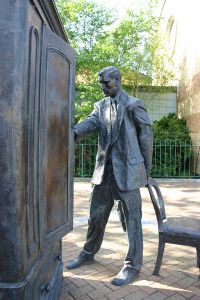
C.S.Lewis Belfast

In his The Abolition of Man, C.S. Lewis, to whom Ross Wilson‘s  statue pays tribute, wrote that without the perspective of the Tao, which calls us to something more than brute emotion, “…the world of facts, without one trace of value, and the world of feelings without one trace of truth or falsehood, justice or injustice, confront one another, and no rapprochement is possible.”

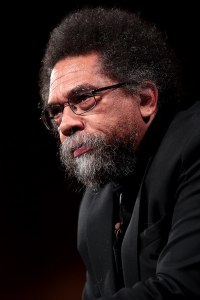
Today in America, emotions are displacing the Tao. Narcissim and nihilism increasingly divide us into what Lewis called “trousered apes” and “urbane blockheads” who call each other names from different sides of a dividing wall. Like Lewis in his time and place, public philosopher-theologian Cornel West identifies nihilism as the plague let loose in America in his book Race Matters. “Nihilism is a natural consequence of a culture (or civilization) ruled and regulated by categories that mask manipulation, mastery and domination of peoples and nature.

Cornel West by Gage Skidmore

Cornel West photo by Gage Skidmore

“We need … the courage to be impatient with evil and patient with people, the courage to fight for social justice. In many instances we will be stepping out on nothing, and just hoping to land on something. But that’s the struggle. To live is to wrestle with despair, yet never allow despair to have the last word.”

When the common ground binding a society together is shopping, we step out on nothing, just hoping to land on something. Everything is up for grabs. A culture which turns its back on a spiritual-moral compass we didn’t make up, and that connects us to something greater than oneself, soon leaves its people flailing in an emotional and cognitive tusanami.

We [America]are at a crucial crossroad in the history of this nation–and we either hang together by combating these forces that divide and degrade us or we hang separately,” says West. “Do we have the intelligence, humor, imagination, courage, tolerance, love, respect, and will to meet the challenge? Time will tell. None of us alone can save the nation or world. But each of us can make a positive difference if we commit ourselves to do so.”

The therapist’s couch in my friend’s office will never be empty. Some stress is part of life. But is it too much to hope that his clients may go there in sesarch of the Tao hidden beneath the false choice of being a trousered ape or an urbane blockhead, less patient with evil and more patient with people to meet the challenge of our time?

— Gordon C. Stewart, Chaska, MN, November

Open Letter to President Trump

November 15, 2018

Dear Mr. President,

I’m concerned for the country. I’m also worried about you. The two go hand-in-hand, yet they are not the same. Though we have never met, we share something: we were baptized in Presbyterian churches. Neither of us can remember that moment. We were infants. We had no choice.

Because we do have a choice now, I write to share with you the story of another person who, unlike us, was old enough to choose.

Kosuke Koyama was 15 years old at the time. Japan was his country. Tokyo was his home. The United Church of Japan was his church family. The scene of his baptism could not be more different from ours. It was 1945 during the American fire bombing of Tokyo. The worshipers could hear the bombs exploding all around the church. Through the windows they could see the flames.

His pastor gently took  Koyama’s face in his hands, looked him in the eye, and charged him with words that succinctly say what baptism into Christ means:”Kosuke, you are a disciple of Jesus Christ. You must love your enemies. Even the Americans.” It was a defining moment for the rest of Kosuke’s life.

Kosuke Koyama - RIP

Kosuke Koyama (1929-2018 “Well done, good and faithful servant” (Mt. 25:23) RIP

Through the eyes of faith, Koyama later plumbed the depths of that moment, and came to a deeper understanding of what had happened to his native country. Japan had come to regard itself as exceptional — a singularly superior nation and culture. Japan had made itself into its own house god. It had twisted love of country (patriotism) into nationalism, and nationalism gave license for imperialist adventures that led to unimaginably horrific consequences. In 1967 the United Church of Japan issued a Confession of Responsibility During World War II as a way of restoring the church’s integrity.

Kosuke Koyama died in 2009 after a distinguished professional career that officially ended with his retirement from the John D. Rockefeller Chair of World Religion at Union Theological Seminary in your home city. Robert McAfee Brown, who wrote the book you and I were assigned to read in confirmation class, The Bible Speaks to You, was Koyama’s faculty colleague. During his 14 years at Union Seminary, and following his retirement, Dr. Koyama created a legacy that lives on in his books (Water Buffalo Theology, Mount Fuji and Most Sinai, No Handle on the Cross, and others) and in the lives of those he influenced by his teaching and humble character.

World War I centenary

World War I Centenary, Paris, France, Nov. 11, 2018

Today you call yourself a nationalist. You have embraced the great sin that Kosuke came to see so clearly in his native country. Watching you at the Arc de Triomphe last week for the 100th anniversary of the armistice that ended World War I, I saw you through Koyama’s lens of faith. You sat among the company of other world leaders, but you looked very alone. Sitting very nervously away from the spotlight, you waved back to someone, as if to assure yourself of your importance. I saw a very lonely man without the company of friends and allies. In that moment, I felt a bit of sympathy for you. I wished you could slip away to a nearby cafe where we could talk, just the two of us as pastor and president.

Trump and Macron III July 2017Then I heard the President of France, Emmanuel Macron, step to the podium to issue a rebuke to nationalism as “a betrayal of patriotism” that eliminates what makes a nation great: its moral compass. While my heart leaped for joy, I wondered what you were feeling and thinking all alone there in Paris.

Patriotism is the exact opposite of nationalism. Nationalism is a betrayal of patriotism. By saying “our interests first, who cares about the others,” we erase what a nation holds dearest, what gives it life, what makes it great and what is essential: its moral values. I know there are old demons which are coming back to the surface. They are ready to wreak chaos and death. History sometimes threatens to take its sinister course once again.

I thought again of Koyama and wondered whether it would have made a difference if your pastor had baptized you during a bombing raid when you were old enough to choose, looked you in the eye, and said, “Donald, you are a disciple of Jesus Christ. You must love your enemies [and friends], even the French.” New York Avenue Presbyterian Church, a short walk from the White House. It was President Abraham Lincoln’s home church during his presidency. Mr. and Mrs. Lincoln worshiped there to hear a word from a free pulpit which they knew they could not command. It could become a home for you, Melania, and Baron, too.

I will pray for you. I will love our country. But I will not worship it. Neither should you.

Respectfully,

Gordon C. Stewart

Retired Minister (HR), Presbyterian Church (USA), Chaska, MN