Dad was bad today

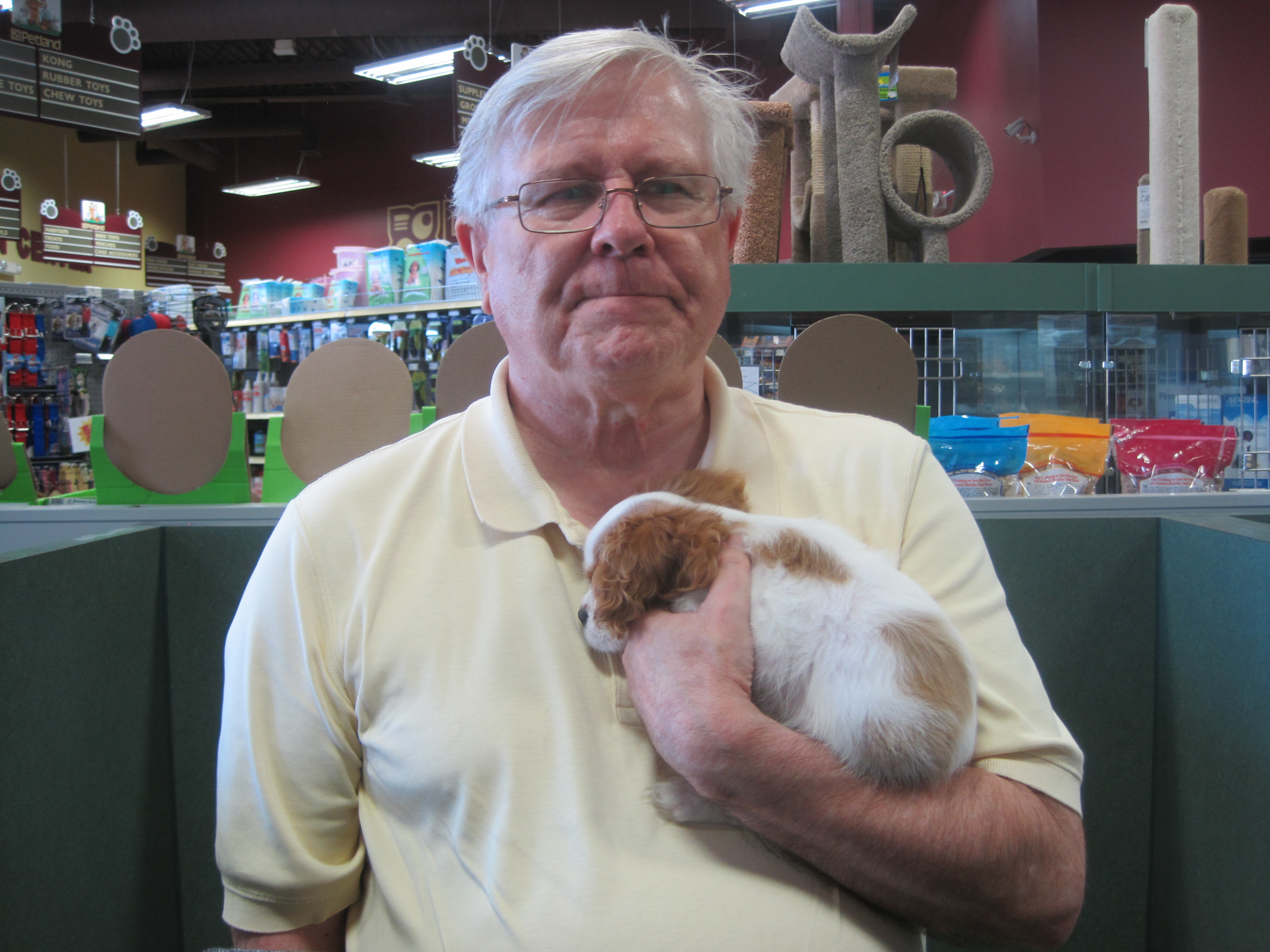
Barclay (Cavalier King Charles Spaniel) and bad Dad (homo sapiens)

Barclay (Cavalier King Charles Spaniel) and bad Dad (homo sapiens)

The new puppy (3 pounds 8 ounces) was leaping from my arms, flying to the sidewalk before I knew what was happening. It happened so quickly. Barclay was still excited from meeting the children around the corner; he was not his customary docile self.

The plunge from my arms was terrifying. The yelping was blood-curdling. I thought for sure he had hit his head or broken a leg or suffered some internal injury. He crawled forward under the Blue Spruce for protection, still crying loudly. I fetched him from under the tree, held him close, apologized profusely – “I’m so sorry, little guy. I’m so sorry” – and carried him into the house, still traumatized and whimpering. He settled down in my arms while I checked his body for signs of damage. Finding none, I put him down to see how he would walk. His walk was slow but straight. He spent the rest of the day more quietly but was fine as the day wore on, returning to his playful self during late afternoon play time.

Barclay greeted Kay’s return from work with a wagging tail and kisses to her face, as if to say, “Dad was bad today, but I forgave him. I’m glad you’re home!”

Bemused by Time

Gordon C. Stewart, August 8, 2013 copyright.

I have always been bemused by time . . . and place. I am on a train listening in the night to the eerie sound of the train whistle and the constant click-clacking of the wheels. Where were we? Where are we going – and why, just my mother and I?

We were between times and places. My father had shipped out for war in the South Pacific. Hewas somewhere on a ship and might not return. My mother and I were on our way from LA to Boston. Two different places: one hours behind, one many hours ahead. But for the time being, there was only the now of the train, the whistle, and the steady clickety-clack from the track carrying us from there to here to there, from then to now to then. Perplexity with time and place is my earliest memory.

We are all in transit. But from where to where and from when to when have become less and less my questions.

I do not share the popular view that time is an illusion or that the material world is the prison from which we will be released at death. Time and place are gifts of creaturely existence, boundaries within which we live our lives appreciatively or scornfully in the midst of the Eternal. To scorn them is to deprecate existence itself in the Promethean hope that we can steal fire from the gods to become what we are not: timeless and placeless.

Time and place are set within the larger Mystery that Rudolph Otto called the Mysterium tremendum et fascinans – the Mystery that makes us mortals tremble and fascinates us at the same time, the Mystery of the Eternal without which we are nothing that draws us to itself like iron to a magnet. Time and place – birth, finite life, death – exist within the Mystery of that which does not die: Eternity.

I am not amused by the denial of death that is so rampant in our culture. Surveys show that roughly 90% of Americans, regardless of religious affiliation, believe in life after death, by which they do not mean that life will go on without them, but that they themselves will never die.

I have come to believe that the denial of death and the fear of death lie close to the core of American culture at its worst. Ernest Becker’s The Denial of Death informs how I see the world and myself; Becker sits beside me as I turn to the Scriptures in the morning.

Psalm 90:1-5, paraphrased by Isaac Watts (1719) and sung as the hymn “O God, Our Help in Ages Past” is as much in my early memory bank as the train whistle on the ride to Boston. It has always represented a mature faith that takes seriously Otto’s Mysterium:

Before the hills in order stood,
Or earth received its frame,
From everlasting Thou art God,
To endless years the same.

A thousand ages in Thy sight
Are like an evening gone;
Short as the watch that ends the night
Before the rising sun.

Time, like an every rolling stream
Bears all its sons away;
They fly forgotten, as a dream
dies at the opening day.

O God, our help in ages past,
Our hope for years to come,
Be Thou our guard while life shall last
And our eternal home.

Standing at the gravesites over the years, I have prayed the same prayer so many times that it has become an essential part of me. I confess that I don’t know what it means exactly but it expresses the sentiment of good faith as I have come to understand it for myself.

O Lord, support us all the day long,
until the shadows lengthen,
and the evening comes,
and busy world is hushed,
and the fever of life is over,
and our work is done.
Then, in Your mercy,
grant us a safe lodging,
a holy rest,
and peace at the last.

The shadows have grown longer since the trip to Boston and the first time I sang the hymn. Evening is closer now. The sense of the Mysterium tremendum et fascinans is different but no less real now than it was on the train to Boston. The hush of the busy world will come soon enough. Between now and the day my work is done, I want to listen more attentively for the Hush in the midst of time, and give thanks that the Silence is not empty. It is full of Eternity. I am bemused by time.

Click O God, Our Help in Ages Past for a video that captures the spirit of the hymn and the prayer.

It’s a Puppy World

Barclay on chestAfter much careful (actually impulsive) thought, we decided to add to the household. Barclay arrived in this world May 21, 2013. We brought him home last Sunday evening.

Barclay is a Cavalier King Charles Spaniel, a breed known for extraordinary companionship, quietness, intelligence, beauty, and ease of training, all of which drew us to the breed. But when we saw this little guy, saw those big eyes and that excitedly wagging tail, picked him up (all 3 lbs.6 ounces of him), and experienced the quick licks to the face and gentle nibbles on the ear, we were putty in a 10 week-old puppy’s paw.

Life has changed for him and for us.

He has a home…..and our sleeping days are over. He’s very quiet. Doesn’t whine at all. As we learned Monday night, he’s too young to make it through the night without a potty time. Poor little guy was cold, wet, and shivering when Kay came down at 4:30 for her cup of coffee and quiet time. He recovered well throughout the day, and we adjusted our schedule to be better “parents” to the un-house-broken baby. He has had no other accidents…largely because I watch his every move every day. I’m the stay-at-home puppy dad who now required TWO naps a day, just like Barclay.

We feel very blessed to have lost our mind and ask your good wishes and prayers that the three of us survive puppyhood in “a good way,” as our American Indian friends say.

Verse – Suspicions

Is she? Is he? Are they?
Have they? Will they?

They look, they speak,
they touch, she smiles,
he stares, but do they…

He also stares at men–
Could he be…

She has a woman friend–
Might she be…

Bi? Poly? Omni?
Asexual? Surely not…

Celibate? Faithful?
Don’t make me laugh.

– Steve Shoemaker, Urbana, IL, August 7, 2013

An acrostic verse: Missa Solemnis

“Missa Solemnis”

LORD HAVE MERCY begins the Mass
Under the baton of Maestro
Dean Craig Jessop. The last word: PEACE.
Wisdom and beauty from solo
Instrument, the mass choir, voice
Go to the top of Cathedral.

Vast walls of sound show pain also,
Arising from those who are cruel.
Nothing human escapes alto,

Bass and tenor and soprano.
Even a skeptic like Ludvig
Enlisted to create music,
Tries to make out of the tragic:
Hope, faith, love, kindness, and courage.
Overwhelmed by suffering, he
Values still signs of human will.
Even though stone deaf, he can be
Nurturing peace and harmony.

– Steve Shoemaker, Urbana, IL August 7, 2013

EDITOR’S NOTE: Craig Jessop is Dean of the College of the Arts at Utah State University, and former Director of the Mormon Tabernacle Choir.

Solitude and Society

Lectio Divina

This post is written by John Buchanan, Pastor Emeritus, Fourth Presbyterian Church, Chicago.

Lectio Divina.

A little eccentric – you think?

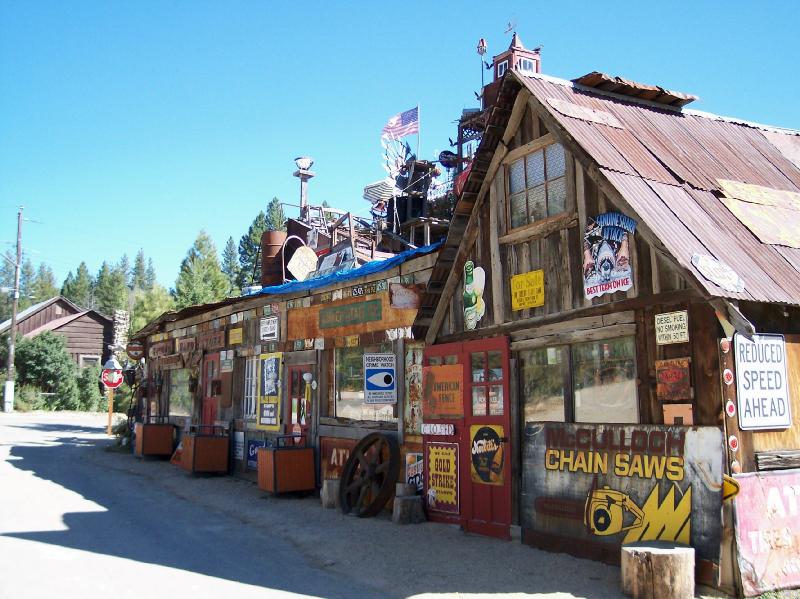
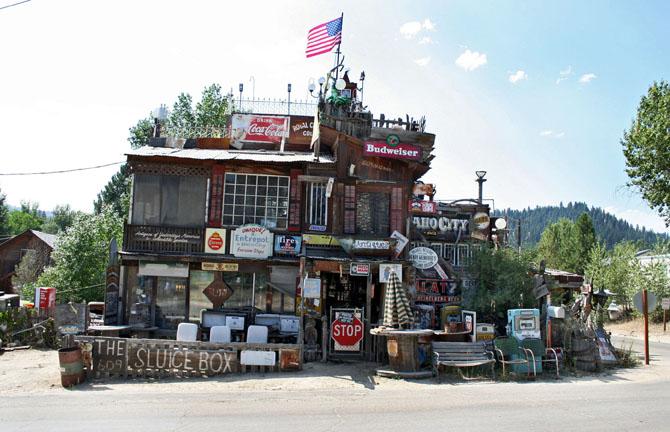
The Sluice Box, Idaho City, ID

For sale in Idaho City

For sale in Idaho City


This piece of real estate can be yours. The Sluice Box sits at the end of the main street in Idaho City, Idaho waiting for a new owner.

According to the woman who strolled up the street while Kay was taking photographs, it belonged to a fella who was “a little eccentric” whose surviving relatives didn’t want to continue “the business” so it has sat vacant for a couple of years waiting for a new owner. She said it could be ours for $350,000 – and not just the property, but ALL the valuables inside. It’s been vandalized several times, she said, but with a little attention, if the right person came along and “restored” the place, it could become a thriving operation. People would come from miles around.

Wouldn’t you like to meet the man who owned and operated The Sluice Box? Elsewhere on Views from the Edge we’ve noted famous people who were a little eccentric – people like Bishop James Pike – and suggested the world would be a better place if we were all a bit more eccentric. Whoever the man was who (sort of) maintained this old 1800s structure while collecting everyone else’s junk, he wasn’t into a throw-away culture.

A web search uncovered the current asking price: $249,900. Click HERE for the real estate listing. Turns out the house next door comes with it.

Are Rainbows Real?

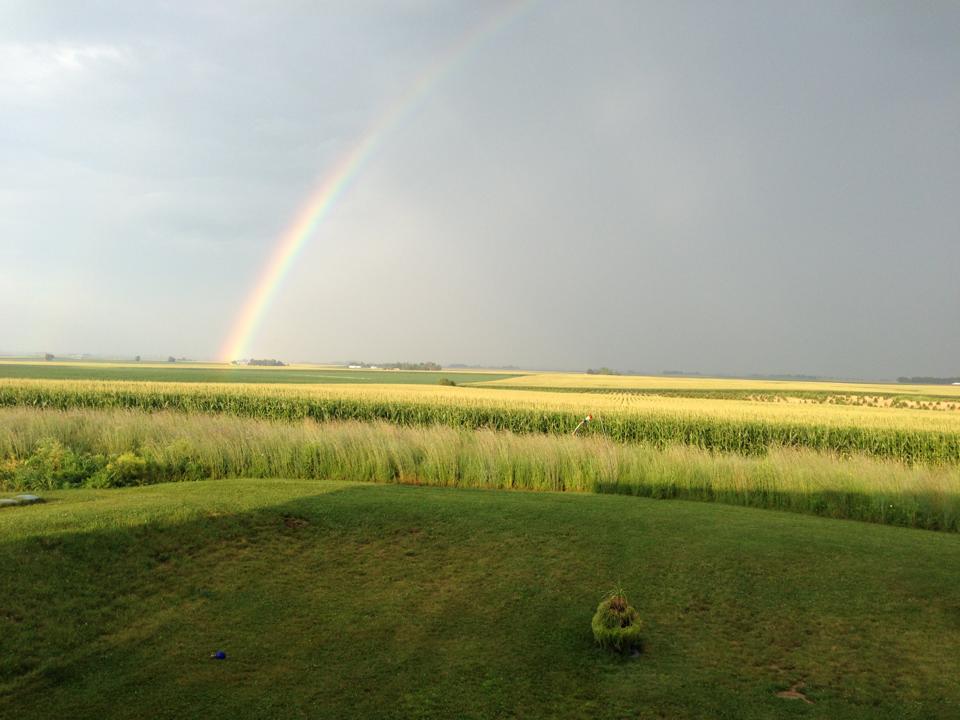
Rainbow over the IL prairie.

Rainbow over the IL prairie.

They can be seen by other eyes than mine–
but rainbows are mono-directional:

they disappear if you will face the sun.
If you move toward a rainbow you will fail

to ever reach it: always up ahead,
elusive, magical–the circle seen

only above the earth. Sometimes instead
of one, two bows appear, and in between

a darker band in contrast to the light
below the palette of diversity.

Beyond prediction, measurement or fact,
a rainbow’s truth will live inside the eye.

– Verse and photography by Steve Shoemaker on the
plain behind his prairie home in Urbana, IL.

All Things Considered commentary and audio

Click HERE and then click the audio link on the Minnesota Public Radio website to hear yesterday’s commentary on the classical spiritual-philosophical-ethical premise we need to remember. This piece was written two days BEFORE the President delivered his speech yesterday at Knox College.

    EXCERPT:

The English word “economy” comes from the Greek work “oikos” – the Greek word for house. The word “economics” derives from the Greek word “oikonomia”- -the management of a household.

Before it is anything else, economics is a perspective, a frame of reference. Before it decides anything about household management, it knows that there is only one house. Good household management – good economics – pays attention to the wellbeing of the entire house and all its residents.