Click To Never Hurt A Fly for the poem by an author named Sandy who came to our attention when she “liked” Steve’s poem today. Since Views from the Edge stands with those at the edge, calling for an end to gross income and wealth disparity, both here and worldwide, “To Never Hurt a Fly” posted on The Disappearing Island struck a chord.
Verse – Saints in Saint Louis
The Gateway Arch is higher than
a building sixty stories tall.
Foundations underground, unseen,
go down for sixty feet. In all,
concrete and steel above, below,
weigh almost 40,000 tons.
But we see air, for Eero
Saarinen drew the leaping lines
into the sky, and stainless steel
reflects the clouds, and frames the sun.
The brave will ride a tram and feel
at apex angel-like, heaven-
residing happy holy beings,
although with very nervous bellies…
- Steve Shoemaker, Urbana, IL, Oct. 21, 2015
Happiness
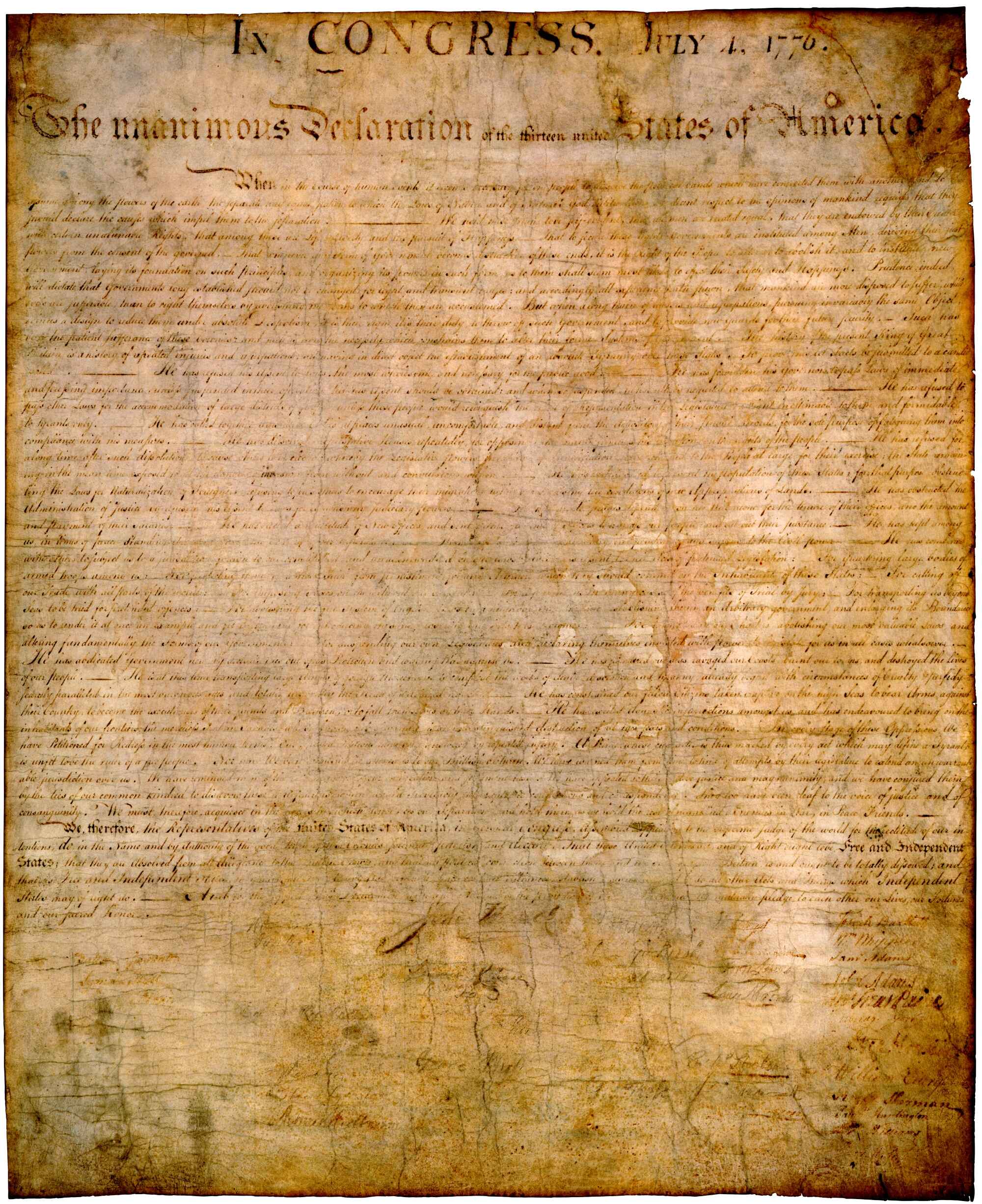
What is this searched after state we Americans pursue, one of only three “unalienable rights” specifically named as worthy of praise in the American Declaration of Independence – “the pursuit of happiness”?
Did the writers of the Declaration mean what we mean? Or was it something different? Why was such a subjective term as ‘happiness’ listed with Life, and Liberty? Was there a reason why the pursuit of Happiness was listed as the last of the three? What it considered least important, of equal importance, or, perhaps, as most important?
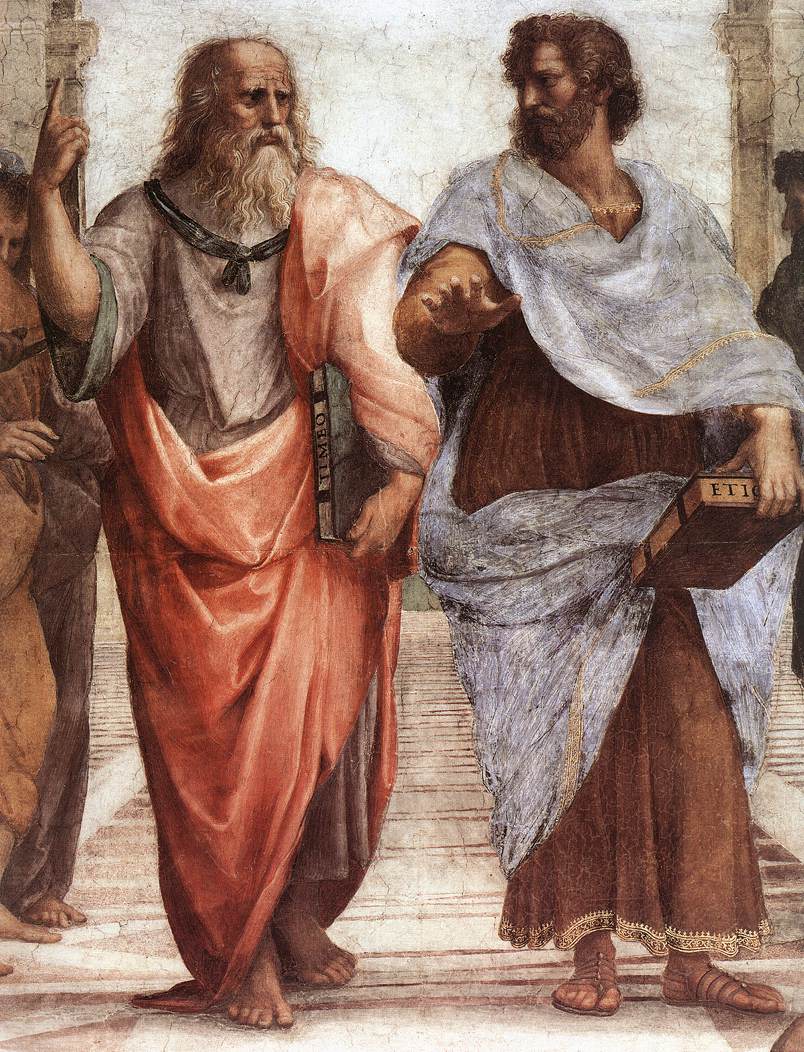
Thomas Jefferson and John Adams, the principal writers of the Declaration, were well-schools in the Classics – the ancient Greek and Roman philosophers, novelists, playrites and poets; Democritus, Plato, Aristotle, Homer, Cicero and Diogenes. They read Plato’s Republic, Cicero’s Disputations, Aristotle’s Nicomachean Ethics, Metaphysics, and Politics; Virgil’s The Aeneid, and Sophocles’ Oedipus Rex in their original Greek or Latin language. They translated the New Testament Gospel of John from its original Greek into Latin and into English.
What did happiness mean to these classical writers? How did it inform Jefferson, Adams, Franklin, and the rest?
The word εὐδαιμονία’ (eudaimonia) expressed the Greek philosopher’s understanding of what Jefferson and Adams called happiness.
The term “eudaimonia” is a classical Greek word, commonly translated as “happiness“, but perhaps better described as “well-being” or “human flourishing” or “good life“. More literally it means “having a good guardian spirit”. Eudaimonia as the ultimate goal is an objective, not a subjective, state, and it characterizes the well-lived life, irrespective of the emotional state of the person experiencing it. ….
Socrates, as represented in Plato‘s early dialogues, held that virtue is a sort of knowledge (the knowledge of good and evil) that is required to reach the ultimate good, or eudaimonia, which is what all human desires and actions aim to achieve.
Happiness, as understood in Aristotle’s Nicomachean Ethics, is the full human flourishing which is the highest of all good according to Nature.
The Committee of Five that wrote the final draft approved by the Second Continental Congress had something like that in mind.
One researcher claims the following:
“Actually, happiness was defined by the Continental Congress in the original May 1776 declaration of independence as “internal peace, virtue, and good order,” closely following Cicero’s Tusculan Disputations; the definition of happiness was drafted by John Adams, not Jefferson.” [Link inserted by VFTE]
[Unidentified source within longer article on the origins of “the pursuit of happiness in the American Declaration of Independence.] -Other Choices (talk) 00:14, 16 June 2012 (UTC)
Whether we are happy in America is a matter of perspective and definition. Some of us would say we are; others would say not. But a fresh look at the Declaration of Independence’s original meaning of the word as human flourishing might lead us to the discussion of “the full human flourishing which is the highest of all good according to Nature” in a consumer society intoxicated with distraction and superficial definitions of happiness.
- Gordon C. Stewart, Chaska, MN, October 28, 2015
Re-Framing the Gun Conversation
“We hold these truths to be self-evident, that all men are created equal, that they are endowed by their Creator with certain unalienable Rights, that among these are Life, Liberty and the pursuit of Happiness.” – American Declaration of Independence, July 4, 1776.
Today in America we continue to define, weigh, and measure these three “unalienable Rights”.
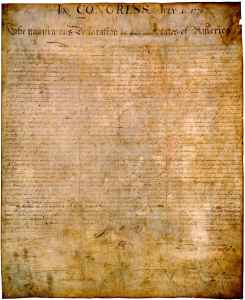
No matter whether the Declaration’s principal author, Thomas Jefferson, and the Committee of Five of the Second Continental Congress assumed these three Rights to be mutually compatible or whether they saw them in tension with each other, today in America there is little agreement about the meaning of, or the relations among, Life, Liberty, and the pursuit of Happiness. Instead we are locked in a heated debate about one of the three – Liberty – focused on the Second Amendment to the U.S. Constitution, adopted in 1791.
Lost in the debate is the more reflective philosophical, moral, and religious pondering of the “unalienable Rights” which, in the eyes of Jefferson and the Second Continental Congress were essential virtues of a new republic. Then, as now, the way we understand life, liberty, and the pursuit of happiness is shaped, to some extent, by different cultural experiences. At the time of the Declaration of Independence, the differences were often between northern and southern colonies. Today the differences are still sectional, but perhaps even more, they are between rural and small town, urban, and suburban cultures and settings.
Rural and small town populations, especially those who plow the fields and grow our food, tend to view guns as instruments that support life and the pursuit of happiness. A gun is used for hunting, protecting the animals from coyotes, or for skeet shooting. The rifle by the back door is part of rural life, not meant to be used on another human being, except in the unlikely event of a burglary. The right to own and use a gun is a matter not only of liberty but of life and the ability to pursue happiness. The gun is a family friend.
Urban populations, especially those living in densely populated centers with the high crime rates that accompany economic deprivation, see guns differently. Guns in their neighborhoods are not for hunting, protecting animals, or shooting coyotes. They are threats to Life and the pursuit of Happiness. The cities are divided between very wealthy, middle class, and the economically impoverished neighborhoods where gun shots are heard while putting children to bed. Residents who can afford to leave for the suburbs to pursue Happiness sometimes do.
Suburban populations are a blend of former rural and urban dwellers with native suburbanites. Some grew up on the farm or in small towns where there was little or no tension among the three unalienable rights. Some left the city in pursuit of happiness or in search of a safe place to live. Some, born and raised in the suburb, can imagine neither the farm, small town, nor the city as a preferred place to live. In the suburbs it is a matter of some confusion and debate whether Liberty, as in gun rights, supports or conflicts with, Life and the pursuit of Happiness.
The National Sheriffs Association, serving rural and small town America, takes a conservative position on gun rights and gun control, while the National Association Chiefs of Police and International Association of Chiefs of Police, serving urban, small cities, and large suburban communities, call for improved gun control legislation.
Although informed debate about the origins and intent of the Second Amendment is good and necessary, a preoccupation with the Second Amendment all but insures the demise of a productive national conversation.
We would do better to look earlier in our history to the Declaration of Independence which defined the goals of a soon-to-be-born American republic. To this writer’s knowledge, there has been little if any discussion of gun rights and regulation in the context of the three unalienable rights explicitly lifted up in the document we all celebrate on July 4th.
Those who declared American independence from Great Britain in 1776 could not have imagined that one of the three named unalienable Rights — Liberty — would stand as the sole Right without reference to Life and the pursuit of Happiness.
Few venues lend themselves to a mature discussion among rural/small town, urban, and suburban American experiences. In theory, the 50 state legislatures and the United States Congress provide the forums for thoughtful discussion and the search for solutions by representatives of rural, urban, and suburban constituents. But in today’s America where representative government itself is often viewed with distrust and even fear, the likelihood of success is far less than the Founders might have hoped.
Where and how, then, do we, the people — rural and small town, urban, and suburban — citizens of the diverse country we all love, come together to discuss our life in light of the creative tension of the rights to Life, Liberty, and the pursuit of Happiness in 2015?
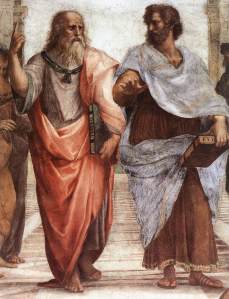
In 2015 one could hardly say we in America are happy. In the light of current tragedies of gun violence and our socio-poliictal history, we might do well to remember the wisdom of Aristotle (384—322 B.C.E) to help guide citizens of a constitutional republic:
“Happiness depends upon ourselves.”
- Gordon C. Stewart, Chaska, MN, October 20, 2015

A Picture of God
A Kindergarten teacher observed the children drawing pictures in her classroom. As she walked around the room, one little girl was totally absorbed in her drawing when the teacher asked what she was drawing.
“I’m drawing God!”
“But no one knows what God looks like,” said the teacher.
The girl kept drawing. Without a hitch and without looking up, she replied, “They will in a minute.”
As part of their research, psychologists have asked children to draw pictures of God looking for correspondences between the children see their parents and how they imagine God.
“God the Father” of trinitarian Christian theology was of particular interest. The children’s drawings turn out to be vastly different, depending upon positive or negative experiences with their fathers. Some drew God as kind and loving; others drew God as fearful and violent.
Sigmund Freud, Karl Marx, and Ludwig Feuerbach would not be surprised. Each in his own way saw ‘God’ as a human projection, not a Divine reality. Yet there is something about even the most disbelieving of us that is still drawn to try to draw God.
Maybe the little girl in the kindergarten class had heard in church the line that “No one has ever seen God, but if we love one another, God lives in us and his love is made complete in us” (I John 4:12). Maybe she was drawing Love.
- Gordon C. Stewart, Chaska, MN, Nov. 5, 2015.
Verse – “He was just a railroad man”
Trains are steel and men are flesh–
When they meet some men will die.
He lay crushed, those passing by,
“He was just a railroad man.”
The dispatcher heard them talk–
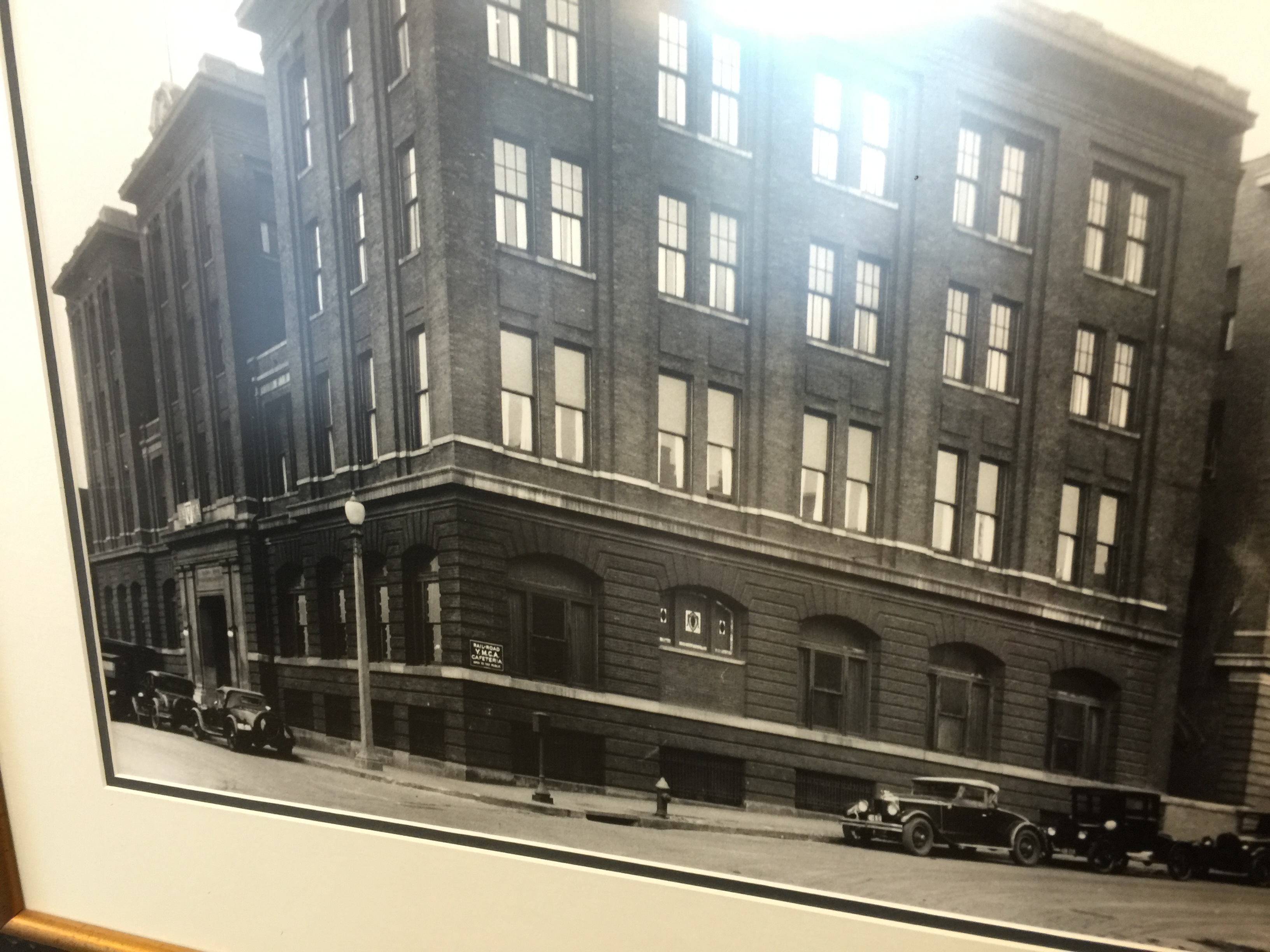
He told his friends down at the Y.
Cleveland built a Railroad Y
Welcomed all the working men.
Nineteen hundred eleven
Saw two hundred railroad Y’s
Eat some chow, get some shut-eye,
Read a book–a healthy man.
Railroads paid for about half–
Workers gave to help their life.
Dignity, respect, human:
Yes, he was a railroad MAN.
- Steve Shoemaker, Urbana, IL, Oct. 19, 2015
A Papal Education by Daniel A. Wagner – Project Syndicate
In September, the UN and Pope Francis both called on the international community to fight poverty and preserve the environment. At the center of these efforts will be education – particularly one goal on which the world is still falling short: literacy.
Source: A Papal Education by Daniel A. Wagner – Project Syndicate
Daniel (“Dan”) Wagner is UNESCO Chair in Learning and Literacy, Professor of Education, and Director of the International Literacy Institute at the University of Pennsylvania, and a long-time friend.
Thanks to Dan’s spouse, Mary Eno, a Ph.D. practicing psychologist in private practice and friend of Kay Stewart since junior high school, for bringing Dan’s article to our attention.
Life, Liberty, and the Pursuit of Happiness
Vivinfrance’s Blog posts interesting thoughts of a writer named Viv who lives in France. Today’s post is about weapons and creativity.
How could I write a poem about weapons
without swearing or weeping?
It is my deeply held view that
makers, sellers, buyers of weapons
are as guilty of murder
as those who use them.***
Transform the energy from good food
into breathing, walking, running.
Transform scraps of this and that
into a meal, a sculpture, a quilt, a poem.
Practise living a healthy, creative life
in kindness and beauty.
Here in the U.S. we’re fighting over who’s responsible for all the violence. “It’s people who kill, not guns,” say some opponents of gun control, defenders of a skewed rendering of the Second Amendment. But it’s also the guns, the bombs, the drones, the land mines, the missiles – the weapons manufacturers who kill and maim. There’s nothing in the Second Amendment about the right to kill and maim.
More importantly and too often missing from the public discussion, the Preamble of the Declaration of Independence starts with certain “unalienable Rights, among which are the Right to “Life, Liberty, and the pursuit of Happiness.”
In that trinity of unalienable rights and values liberty means nothing unless it supports the right to life and the pursuit of happiness. Otherwise, it serves the purposes of death and sorrow. As Viv reminds us from France,
makers, sellers, buyers of weapons
are as guilty of murder
as those who use them.
Until we the people demand that liberty be returned to its rightful place, the weapons manufacturers will continue to make a killing on killing at home a abroad.
- Gordon C. Stewart, Sunday morning, reflection, Chaska, MN, October 18, 2015.
Verse – The Memorial Service
The day we remember
at the Memorial Service
a friend of 55 years, some
will say he was a human
having a spiritual experience,
looking to the skies for the
one who’s “passed on”.
Others of us remember
the face, the smile, the stride,
the fitness, the speech
and mannerisms during
walks in the mountain woods
of a real human having a
spiritual experience.
Are we flesh and blood,
living on the eternal’s shore
turned back to dust?
Or are we stardust that
never dies, immortals
experiencing mortality
before returning to the sky?
Has he died or passed on?
Are the ashes and memories
of Phil what remain of him
or were his smile, his walk
and talk just time-bound
expressions of a spiritual
being locked in a cage?
I hear no bird singing but
the funeral dirge and hymn
reminding us to think
less of ourselves and our
not-so exceptional species
of flesh and blood, dust and
ashes left in cemetery urns.
“O God, our help in ages
past, our hope for years to
come, we fly forgotten as
a dream dies at the opening
day. Be Thou our guide
while life shall last and
our eternal home.”
Today our tears again will
fall, as do all creatures
great and small when
time’s short river returns
to the eternal ebb and flow
whence we came and to
which all soon return, with
sobs of humility and praise.
- Gordon C. Stewart, Chaska, MN, October 17, 2015, written in anticipation of today’s Memorial Service for college and seminary classmate and friend Philip Conner Brown. At the same time as the Memorial Service today at White Bear Lake United Methodist Church, he will be remembered in a Chapel service for Maryville College alumni who died during the last year.
A Limerick for World’s Greatest Cubs Fan
For the Cubs 1-0-7 long years
Crying No-Series-Winner sad tears.
Yes, I live far away,
But soon on that great day
Baby Bruins will sure hear my cheers!
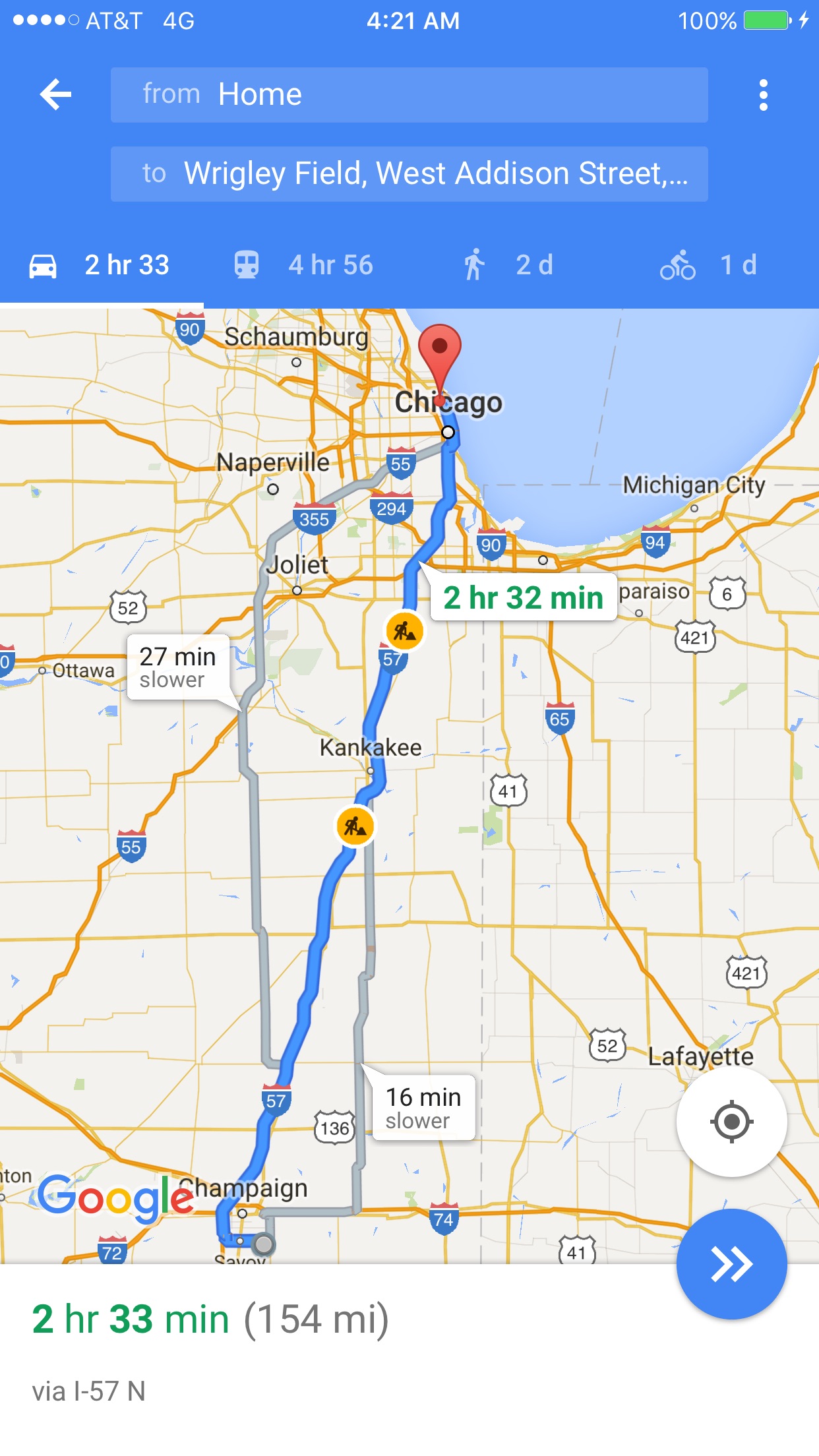
– Steve Shoemaker, Cubs fan writing 154 miles from Wrigley Field in honor of Harry Lee Strong, world’s greatest Cubs fan.
Steve and Harry are lifelong, long-suffering “Baby Bruins” fans hoping the sports heavens are about to open after the 107 year drought since the Cubs last won the World Series. Harry, pictured below in his tux, and his dog with the Cubs tie, have been “dressing for success” in Harry’s “Cubs cave” farther away in AZ.