Senator Rubio, Welders and Philosophers

“Welders make more money than philosophers,” said Mr. Rubio during last night’s Republican presidential debate. “We need more welders and less philosophers.”

No one on the stage seemed to remember John Adams, one of the Founding Fathers, who observed,

“I must study politics and war [in order] that my sons may study mathematics and philosophy.”

Instead of raising the minimum wage, Mr. Rubio calls for re-tooling America’s educational system to prepare people for jobs so they’ll make more money. Education would become training for a specific job.

His contrast between welders and philosophers is more about liberal arts education than about wages. Classical liberal arts programs teach people how to think. Philosophers are thinkers.

There is an anti-intellectual streak in American culture. When a skilled debater scratches that itch, there is loud applause, as there was last night in Milwaukee.

In the search for simplicity, those who applauded Mr. Rubio’s swipe at philosophers ignored philosopher Bertrand Russell’s observation.

“To teach how to live without certainty and yet without being paralyzed by hesitation is perhaps the chief thing that philosophy, in our age, can do for those who study it.”

The stereotype of the philosopher as aloof and beside the point makes for an easy target and an immediate laugh. But governing is not like welding.  We need need good philosophers and good welders.

“The society which scorns excellence in plumbing as a humble activity and tolerates shoddiness in philosophy because it is an exalted activity will have neither good plumbing nor good philosophy; neither its pipes nor its theories will hold water.” – John W. Gardner

  • Gordon C. Stewart, Chaska, MN, November 11, 2015


How I Became a Catcher

Once upon a time a long time ago, I was a little “Big A”, a Little League baseball team in Broomall, Pennsylvania. So was Coach McBride’s short son, Dickie, the 10 year-old Little League All Star catch. I was the smaller than small 8 yr. old Big A’s bench-warmer without a position.

I came to the plate once as an 8 yr. old. “Stewart,” said Mr. McBride, “Get a bat. You’re going to pinch hit. We’ve got to get somebody on base. You’re the man. Robin Williams is the best in the league, but you’ve got the smallest strike zone. So… here’s what I want you to do. Crouch down. Don’t take the bat off your shoulder. Make him pitch to you. No matter how good the pitch looks, DON’T SWING. Got it?”

“Got it, Coach.”

Three pitches later, the bat was still on my shoulder. I struck out on three called strikes. But the truth was I could barely see Robin’s fast ball!

When the McBride family moved to Cleveland the next year, the Big A’s had no catcher. The new coach lined all us Big As up in a row along the first base line. “We don’t have a catcher. Who’d like to catch?”

No hands went up. Not a one.

“Here’s my big chance to get off the bench. Dickie was short. Size didn’t matter to Dickie!” said I to myself.

“I’ll try it!”

They strapped on the shin guards, six inches taller than my knees. The chest protector draped over my torso like a horse blanket over a pony. The mask and catcher’s mitt were heavy. Freddie Lamb took the mound. Bobby Lawson stepped into the batter’s box. The pitch came. Bobby swung and missed. I blinked…but, to my surprise, caught the ball. From that moment on I was the Big A’s little catcher.

Moral of the story? If you’re short, don’t count yourself out. You, too, could proudly wear the tools of ignorance, and become another Big A’s All Star catcher.

  • Gordon C. Stewart, Big A forever with Freddie Lamb, Bobby Lawson, Ron Nagy, Kenny Olson, Arden Silverian, Gary Boen, Robbie Gillmor, and all the rest. You guys were the best! Love you all. November 10, 2015.

Glory and Obscurity

“Glory is fleeting, but obscurity is forever.”

Who do you suppose said that? An obscure figure unknown by history? A great historical figure whose glory fled? 

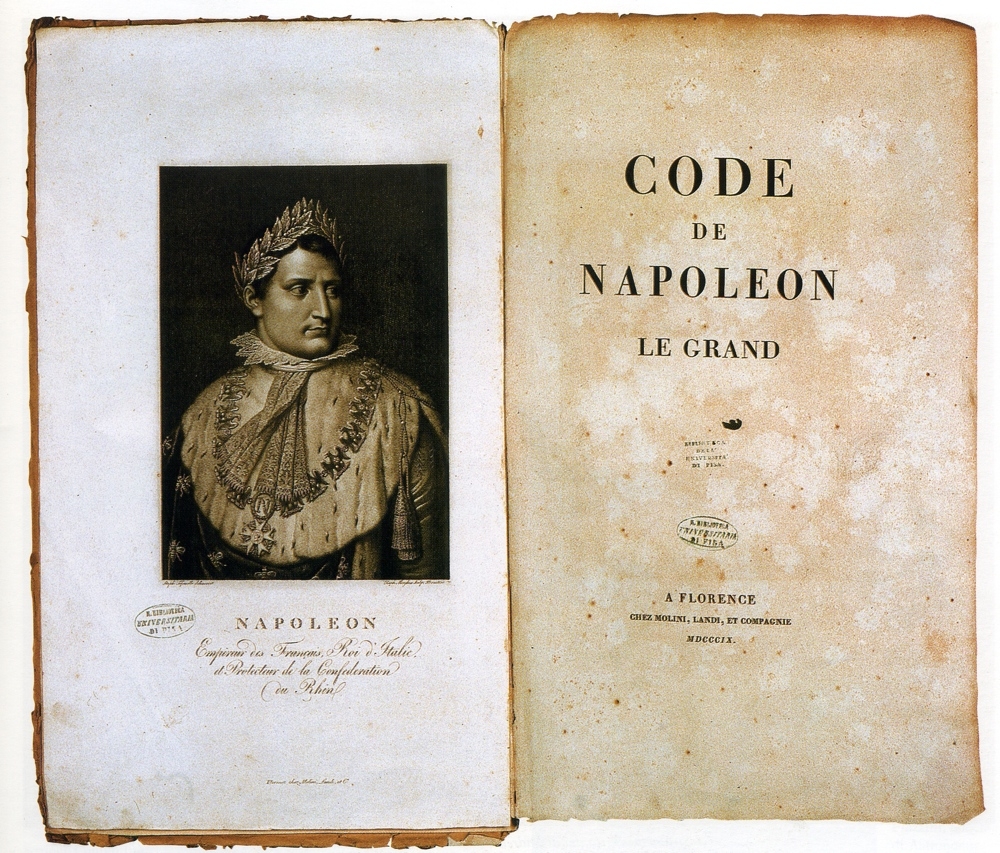
It was the latter – Napoléon Bonaparte (1769 – 1821), glorious military conqueror, political hero of the French Revolution, and Emperor, who died ingloriously in exile on the Isle of Saint Helena.

Napoleon and the Napoleonic Code

Napoleon and the Napoleonic Code

The Napoleonic Code, which forbade privileges based on birth, allowed freedom of religion, and specified that government jobs should go to the most qualified, remains his legacy. Upon his death, more than 1,000,000 people are said to have viewed his remains when he was brought home to Paris.

Obscurity: “the state of being unknown, inconspicuous, or unimportant.”

Might Napoleon have endorsed Nelson Mandela‘s sentiment, spoken when Mandela was leaving behind a glorious career and office in South Africa:  “I would like to rest, and welcome the possibility of reveling in obscurity”?

  • Gordon C. Stewart, Chaska, MN, November 4, 2015

Guns and God

No matter what your religion or politics, this is worth a look.  Click “Beyond Any Singing” below to tune in to the video of an evangelical Christian pastor’s reflections on how his mind has changed on gun violence.

Seeing different things and common sense

Not only do we see things differently; we see different things.

Minnpost.com republished Views from the Edge’s “Reframing the Gun Conversation.” The commentary encourged a more thoughtful conversation among rural, urban, and suburban Americans by placing the issue of gun violence within the philosophical context of “Life, Liberty, and the pursuit of Happiness” (American Declaration of Independence).

Fifty-nine response were mostly respectful, sometimes contentious, frequently like ships crossing in the night. The differences seemed grounded in something else much more foundational than the rural, urban, suburb settings that contribute to our perceptions.
MBTI Chart

MBTI Chart

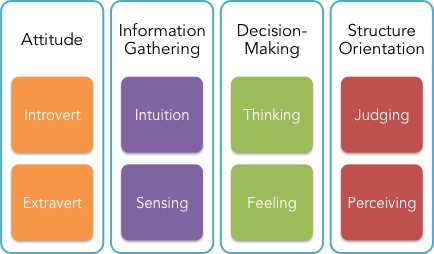
On later reflection, the comments struck me as a poster child for the Myers-Briggs Type Inventory  (MBTI), which identifies 16 different ways individuals put their worlds together.

Mr. A, for example, could not understand Mr. Y’s preoccupation with statistical information. To Mr. A’s way of putting his world together, Mr. Y’s facts and statistics alleging to prove that gun violence in America is decreasing are an attempt to dismiss any serious discussion of gun violence in America.

For Mr. Y’s way of putting the world together, hard data are the baseline for any reasonable discussion. Phrases describing “a tidal wave of mass shootings” and “an endless parade of mass shootings” misrepsent the facts. In his view, Mr. A is clearly biased from the beginning. There can be no discussion if the premise is biased by emotion.

According to the MBTI profiles of different types of cognition, Mr. A and Mr. Y demonstrate contrasting extremes of perception and decision making, very different ways of putting their worlds together. “ST” types (Mr. Y) “know” by collecting information and analyzing it; “NF” types know” by intuiting a situation and approach an issue based on values.  Sometimes never the twain shall meet.

Despite all their differences, the majority of comments and exchanges made one thing clear. The word ‘gun’ is a trigger word. For gun rights advocates, it triggers a defense in fear that “they’re coming to take away our guns” or an outcry in fear that”they’re going to keep and us their guns no matter what.”

Most interesting was the comment by a gun-owner and Second Amendment rights advocate who seemed to bridge the gap in search for “common sense” solutions to gun violence in America.  We’ll call her Ms. Q. She wrote:

I am one who grew up in a rural area. I own guns. It may surprise some, but not others, that it wasn’t uncommon to find student vehicles (pickups, mostly) with guns openly stored in them. That has probably changed…it’s been a while. But I would venture to guess that guns can still be found in the vehicles of students, just not so openly.

My dad was a member of the NRA. One day, I realized (or maybe Dad mentioned it) that there was a junior membership. Well, being a daddy’s girl, I considered it. I enjoyed hunting, I enjoyed spending time with Dad, I respected what Dad thought and did. So, I read some of the NRA literature. Being somewhat precocious, I realized that the NRA wasn’t about hunting or hanging out with Dad. It was about guns. Guns Guns Guns Guns. Even back then (as I said, it’s been a while), it wasn’t about freedom or happiness, the NRA was about guns. I realized that I didn’t want to join the NRA because my gun ownership wasn’t about guns. I didn’t love guns. I loved being an American kid who had the freedom to be happy doing things like hunting with my dad. There were better organizations that more perfectly captured that feeling for me.

As I’ve aged, I am still a defender of Second Amendment rights. But not the NRA way, which seems to be the dominant position among the loudest gun rights advocates. We need to think practically about the problem. Sure, we law abiding gun owners are doing the right thing. Right? I own 3 guns and have never sold those 3 guns. However, only 1 of those guns was new when I got it. The others were purchased…well…without any safeguard at all. Friends of friends type of deal. Yeah, it’s been a while, but I guarantee you that those types of sales haven’t stopped and they are certainly not subject to background checks. How do you suppose people who commit crimes with guns get them? All of those guns were likely sold legally at some point, but eventually ended up in the wrong hands. How do we stop that?

I agree that certain restrictions will have absolutely no effect. But I also submit that many legitimate gun owners are failing to see how they contribute to the problem. What do you do with a gun you no longer want? How about this: in 2010, about 4 million babies were born in the US…but 5.5 million new guns were manufactured in the US and another nearly 3 million were imported. How many guns does each baby need? Seriously, the pace of gun manufacture has outstripped the growth of the country, which means that there are a significant number of people who are buying multiple new guns and either accumulating them (most gun collectors are harmless) or selling some. Once a gun leaves the hands of the original owner, it is harder and harder to make sure that the next owner is not one of those “inner city criminals.” That is, if you’ve ever sold a gun, you’ve contributed to the problem.

Further, I submit that keeping a gun in such a way that results in harm to someone else, particularly children, is a criminal act. Which suggests that even some law abiding gun owners are actually not law abiding. At the very least, every gun owner should be properly trained in gun use and storage. And, if gun owners oppose that measure, then for the sake of their unfortunate children, laws should be allowed to physically restrict who can use the gun. A dead child isn’t a good way to learn that lesson.

Finally, not everyone is a hero. No, not everyone should have a gun on them to “protect themselves.” Half of all people are of average intelligence or less. Combine that with the fact that common sense isn’t so common, and disaster is waiting to happen. Case in point: the woman who decided to fire upon a SHOPLIFTER leaving a home improvements store while they were driving away in a parking lot that had other people in it. She had not been threatened and none of the stolen items were hers. That woman showed all the intelligence and common sense of a dead slug. Fortunately, her Second Amendment right didn’t kill anyone, but not for lack of trying.

Can we agree that we should consider applying real common sense to the problem?

Thank you, all, but special thanks to Ms. Q for the final question.

  • Gordon C. Stewart, Chaska, MN, Nov. 2, 2015

Donald Trump and the Presbyterians

Donald Trump and Ben Carson

Candidate for President Donald Trump’s sideswipe at fellow Republican candidate Ben Carson’s Seventh Day Adventist faith calls for a response from those who are what Mr. Trump is not – a Presbyterian.

Although Mr. Trump attended Sunday School and was confirmed at the First Presbyterian Church of Jamaica in Queens, NY, he is not a member of a Presbyterian Church. His church of choice on Easter and Christmas is Marble Collegiate Church, the historic Reformed Church in America congregation in midtown Manhattan best known for the Rev. Dr. Norman Vincent Peale, author of The Power of Positive Thinking.

“I am Presbyterian Protestant. I go to Marble Collegiate Church,” he told reporters in Greenville, S.C.  Two funny thing about that: 1) Marble Collegiate Church is not a Presbyterian church, and 2) even if it were,  Mr. Trump is not a member there, according to the church itself.

Why does it matter?

Who cares?  UNTIL Mr. Trump presents himself as a Presbyterian in contrast to another candidate’s Seventh Day Adventist faith in a way that is typically very un-presbyterian.

“I’m a Presbyterian. I’m a Presbyterian. I’m a Presbyterian!” he proclaimed with pride, insinuating that he is in the mainstream while Dr. Carson’s Seventh Day Adventism (SDA) is a fringe group outside the mainstream of American religious life. He seemed unaware that 1) Seventh Day Adventists are one of the fastest growing churches both in the U.S. and the world with a worldwide membership of 18.1 million, and 2) unlike the overwhelmingly white Presbyterian Church to which he claims to belong, the SDA is full of color and immigrants.

As to his own faith, Trump’s answer to Frank Luntz’ question of whether he’s ever asked for forgiveness offers further insight:

“I am not sure I have. I just go on and try to do a better job from there. I don’t think so,” he said. “I think if I do something wrong, I think, I just try and make it right. I don’t bring God into that picture. I don’t.”

Trump said that while he hasn’t asked God for forgiveness, he does participate in Holy Communion.

“When I drink my little wine — which is about the only wine I drink — and have my little cracker, I guess that is a form of asking for forgiveness, and I do that as often as possible because I feel cleansed,” he said. “I think in terms of ‘let’s go on and let’s make it right.'”

The Presbyterian-Reformed Tradition

There are a few things about the Presbyterian-Reformed tradition of the Christian faith that Mr. Trump seems not to know or has forgotten:

  1. The Reformed-Presbyterian faith shuns ostentation.
  2. Simplicity is a characteristic of the Christian life.
  3. “The sins forbidden by the First Commandment” include “self-seeking, and all other inordinate and immoderate setting of our mind, will, and affections upon other things;…hardness of heart, pride, presumption, carnal security” (Larger Catechism, Q 1).
  4. Confession of sin – both in private prayer and in the “Confession of Sin” in every Sunday service of worship – is a daily spiritual discipline of Christian life and practice.
  5. Divine grace and the forgiveness are the sources of personal and communal renewal and reconciliation.
  6. Respect for other religions -“Christians find parallels between other religions and their own and must approach all religions with openness and respect” (Confessions of 1967 IIB3) – and humility about one’s own religious claims are called for before God.

Local Presbyterians and Seventh Day Adventists

Momoh Freeman

Momoh Freeman

Every Sunday for seven years Momoh Freeman, a gifted Liberian refugee musician, served as Director of Music at Shepherd of the Hill Presbyterian Church in Chaska; on Saturdays he served in the same capacity at a Seventh Day Adventist Church in Minneapolis. The beliefs and practices of the two congregations are distinctly different in many respects, but we became fast friends.

The SDA Choir, comprised of Liberian-Americans, Liberian refugees, and African Americans, performed in concert at Shepherd of the Hill at our invitation, singing both African hymns and Handel’s Hallelujah Chorus a cappella!

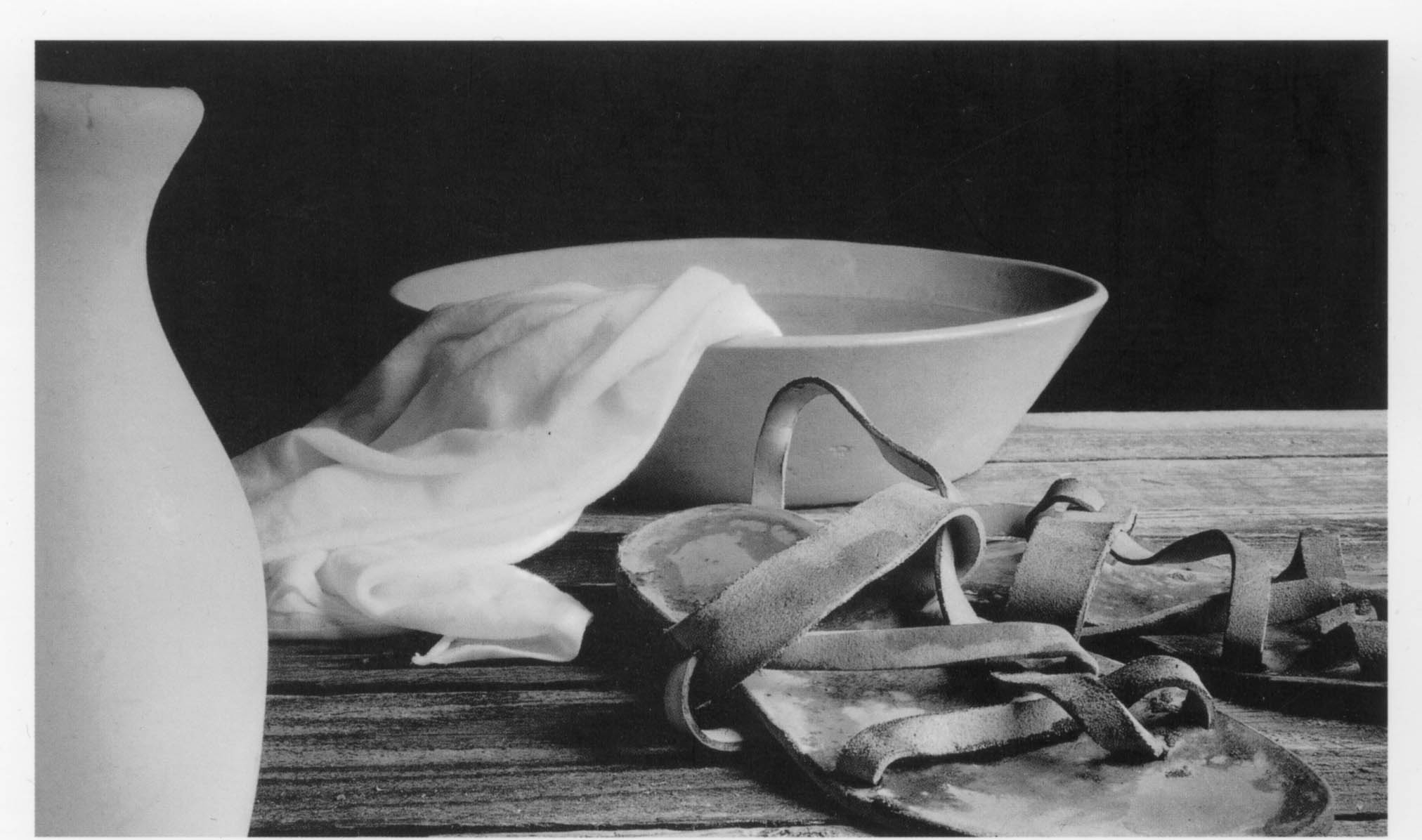
We Presbyterians joined our SDA friends in Minneapolis for Saturday worship, including the foot-washing ritual that preceded the Sacrament of Holy Communion to which we were also welcome. None of us went to the table “drink my little wine…and have my little cracker.”

A remedy of humble faith

Considering the disrespect in the run up to a presidential nomination, a good foot-washing seems in order.

When Jesus washed Peter’s feet, Peter replied, “Lord, not my feet only but also my hands and my head!” (John 13.9)

  • Gordon C. Stewart, Presbyterian Teaching Elder (i.e., Minister of Word and Sacrament) H.R., Chaska, Minnesota, October 28, 2015


A funny thing happened at the doctor’s office

A funny thing happened yesterday during my annual physical.

The physician was excited to share something she’s very proud of: a policy statement on “Firearm-Related Injury and Death in the United States: A Call to Action from 8 Health Professional Organizations and the American Bar Association“. Click HERE to read the entire text.

It begins with an Abstract that reads, in part, “Deaths and injuries related to firearms constitute a major public health problem in the United States.

The document provides findings and recommendations based on the separate policies of the 7 health professional societies that represent most physicians in the United States – American Academy of Family Physicians, American Academy of Pediatrics, American College of Emergency Physicians, American College of Obstetricians and Gynecologists, American College of Physicians, American College of Surgeons, and American Psychiatric Association and the American Bar Association.

She noted how rarely doctors and lawyers join together on public policy positions, let alone an issue as contentious as this one. This was a victory of common sense among doctors and lawyers.She was pleased that her medical society is part of this Call to Action.

“The specific recommendations include universal background checks on gun purchases, elimination of physician ‘gag laws’, restricting the manufacturing and sale of military-style assault weapons and large capacity magazines for civilian use, and research to support strategies for reducing firearm-related injuries and deaths. … The American Bar Association through its Standing Committee on Gun Violence, confirms that none of these recommendations conflicts with the Second Amendment or the rulings of the U.S. Supreme Court.

“Across the United States, physicians have first-hand experience with the effects of firearm injuries and deaths and the impact of such events on their patients and families. Many physicians and other health professionals recognize that this is not just a criminal violence issue but also a public health problem.”

This year’s annual physical enlightened more than the state of my health. Like clergy, physicians hear stories that confidentiality keeps between sealed lips, but the doctors know the sorrow from the inside out in ways to which most do not have access. Congratulations for speaking out to frame the questions in terms of public health.

  • Gordon C. Stewart, Chaska, MN, October 27, 2015

Flip Saunders and the Media

Yesterday morning Minnesota media announced the untimely death of Flip Saunders, one of Minnesota’s most beloved public figures.

Cheered long ago as the diminutive starting point guard of the University of Minnesota Gophers basketball team, Flip worked his way through the ranks of the CBA to become a successful NBA Head Coach with Minnesota, Detroit, and Washington before returning “home” to Minnesota as both President and Head Coach of the Minnesota Timberwolves.

There is a deep sadness over his loss. At 60 years old, he was looking forward to the fruits of his labor, the makings of a future world championship team developed by Flip’s extraordinary draft picks, trades, and the return to Minnesota of Kevin Garnett, the NBA star who credits Flip with his development when Kevin was fresh out of high school.

Like Garnett himself, Flip Saunders was not a native Minnesotan. But he, and Garnett, came to see this as home, as do many out-of-state transplants once they taste the beauty and culture of Minnesota.

Today it’s that culture that should be lifted up along with the love for Flip: the respectful silence kept by the media in response to the Saunders family request for privacy during the long hospitalization that began in early September.

Readers and sports pundits who feed on sensationalism might have misinterpreted the absence of detailed coverage as meaning the sports writers and the media didn’t give a flip about Flip. It’s rare that the need for privacy is honored, even when a family requests it.

Team owner Glenn Taylor and the Minnesota Timberwolves were a class act from the first announcement of his diagnosis and encouraging prognosis to the heartbreak of his long hospitalization and death.

Flip’s illness and death were handled with the rare discretion that represents the very best of Minnesota Nice. Minnesotans don’t like prying into each others’ business unless invited, and quiet respectfulness is a Scandinavian characteristic that held back the pens of sports writers and voyeurs until there was something to share.

The StarTribune headline, quoting the NBA Commissioner, reads “Flip Saunders ‘leaves gaping hole in the fabric of the NBA”.  In the fabric of NBA culture of bigger-than-life heroes, Flip Saunders brought something smaller, more private, and all too rare.

Verse – the Decline of Western Civilization

What we called “Jewels”
are now called “Junk.”

And what we straight guys called “Heaven”
is now called a “Hoohaw.”

[Nota bene: if one clicks “like” on this post, it does NOT mean one approves of this degradation of nomenclature. Rather, a “like” indicates gratitude to the author for pointing out yet another sign of impending disaster. 😇]

  • Steve Shoemaker, Urbana, IL, October 23, 2015

Views from the Edge republished today

Click Reframing the Gun Conversation for today’s republication (with some fine editing) by MinnPost.com, one of Minnesota’s best independent news sources.

  • Gordon Stewart, Chaska, MN, October 22, 2015