Some things take a lifetime. More or less.


Muriel Titus Stewart


Muriel Titus Stewart

The time with Tony on Green Street changed my life in ways I could not have expected when the junior high youth group had left Broomall that morning to do a good deed for “the less fortunate” — an act of Christian service, as we would have called it — in north Philadelphia.

Chronos and his Child by Giovanni Francesco Romanelli, National Museum in Warsaw, a 17th century depiction of Titan Cronus as “Father Time,” wielding a harvesting scythe
Time is a funny thing. Chronos (clock time) and Kairos (existential time) both happen on the clock but they are not the same.
Chronological time ticks forward, leaving every previous moment behind; Kairos stops time and re-orients the future.
The hours on Green Street are as fresh at the three-quarter century mark as the day they happened.
“If you love him, why not serve him, soldier of the cross?” asks Jacob’s Ladder of all who aspire to follow Jesus. If Jesus could stoop down to wash his disciples’ feet, surely we could go down to Green Street for a day.
The kids from Marple Church in Broomall left that morning to do just that. We went to serve as a different kind of army, the philanthropic foot-washing soldiers of goodness giving up a Saturday to carry heavy furniture at a ghetto settlement house with other young soldiers of the cross from the inner city African-American Berean Presbyterian Church.
“If you love him, why not serve him?”
We put on our work clothes, travelled to Green Street, and rolled up our sleeves in the strange new world of the Green Street Settlement House.
Although we knew spirituals like “Jacob’s Ladder” and “Swing Low, Sweet Chariot,” we had little if any idea of their socio-economic-policitical origins or implications. Although we were conscious of their origins in chattel slavery, we were northerners. We knew nothing of W.E. DuBois, and Michael Harrington’s The Other America, William Stringfellow’s My People Is the Enemy, James Cone’s The Spirituals and the Blues and Black Theology and Black Power were years away from being published. Reading them would come years later.
During an afternoon break, the woman who organized the day asked Tony to go home to get something they needed. Perhaps it was a screwdriver. Or maybe a rubber band. It doesn’t matter. I went “home” with Tony. “When we get home,” said Tony as best I can recall it, “my brother might be there. If he’s there, he’ll be sitting in the corner. Just ignore him and you’ll be okay. He won’t like you being there.”
Tony’s older brother Danny didn’t like white people. He had left the church to become a convert to The Nation.
The furthest thing from the mind of the loving servants of Jesus from Broomall was that someone might not like white people. Or that Tony’s brother would see Christian “service” as servile — a demeaning attack on black dignity and pride — or see the “soldiers of the cross” as the problem, not the solution. Danny didn’t look up during our brief visit to the Lewis’s home.
The day with Tony shook my sense of innocence to its foundations. It was a Kairos moment — a deconstruction and reconstruction of faith and consciousness that continues at age 75.
But each person’s autobiography is distinct. I didn’t realize until this morning how much my memory of the day is a guy‘s memory of it. I was lifting heavy furniture with a kid named Tony, getting to know each other carrying sofas and chairs from one location to the next. Although neither Tony nor I was big or strong, my diminutive friend Carolyn was smaller . . . and she was a member of the “weaker sex,” as it was called by some back then.
Only yesterday did I learn that my dear Broomall friend Carolyn was having anything but a Kairos moment scrubbing a toilet on Chronos time all by herself. Carolyn’s email reads as follows:
I had a very strange time. It seemed to them, and I’m sure they were correct, that I couldn’t do some of the heavy lifting, so they set me to sandpapering a few layers of awful paint off the toilet seat. I worked hard at it all day, and only got about half done when they remembered I was there and I was embarrassed that in all that time I had not finished my only project. They were very nice about it. But I didn’t get a chance to meet any of the Berean folks except the lady who gave me the job.
Reading Carolyn’s memory takes me in different directions that change the intent of this reflection: the difference gender, as well as racial privilege, seems to have made scraping multiple layers of paint and who knows what else from a crusty toilet seat, a task that may have been all too familiar to the woman who assigned the job to Carolyn.
Some Chronos moments are Kairos moments, as the day with Tony was for me. Others are time bent over a toilet seat. The difference is as clear as black and white, poor and rich. How many of the women from Berean rose every morning to put on their maid uniforms to catch the subway and the Red Arrow bus to become invisible, forgotten “soldiers of the cross” in the wealthy homes on the Main Line an hour’s ride west of Philadelphia?
“Sinner, do you love my Jesus?”
The day I met Tony Lewis, “my Jesus” fell off the ladder.
The Jesus of my childhood was white. He was kind and loving, having descended from heaven, like the angels on the ladder between heaven and earth. My Jesus had made me a soldier of the cross whose job it was to stay on the ladder to heaven and carry others with me.

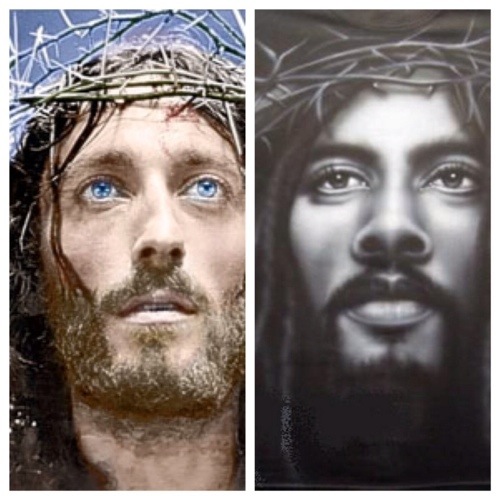
Until the day I met Tony, I had no idea my faith in the descended Jesus also was condescending, the creation of white privilege.
The day my love for “my Jesus” died was the day my church’s junior-high youth group from Marple Presbyterian Church spent helping move furniture at the Green Street Settlement House in Philadelphia.

North Philadelphia street scene
Green Street was the ghetto. We had gone there from our middle-class suburb of Broomall, the home of all things white and Christian, to help those less fortunate than ourselves. We had no knowledge that our Minister and the Minister of the Berean Presbyterian Church on Green Street had conspired to join together the white Marple and the black Berean church youth groups with the excuse of “helping” move the Green Street Settlement House furniture down the street to its newly purchased location.
That was the day I met Tony, whose Jesus was not a suburban white guy with blue eyes and blond hair taking me up the ladder to a white heaven.

Tony’s Jesus had descended from God the Father and had made him a “soldier of the cross” — but the Jesus Tony loved was neither white nor condescending.
“Sinner,” he seemed to ask without an once of hubris, “do you love my Jesus?”
I became conscious of sin.
Sometimes I can’t get it out of my head. I go to sleep with it. Wake up with it. Walk the dog with it. It’s been over a month now.
“We are climbing Jacob’s ladder” begs for my attention.
So this morning I surrender. What will come out on the page is a mystery until it’s written.
I ask myself, “Why this song?”
This stretch of time has been anxious. Unsettling, restless, down, bored, and struggling with my own inner demons and the bigger demons of human madness around the world.
Jacob’s Ladder has been with me my whole life, like an old friend who shows up when I need her. Like her cousins “Sometimes I Feel Like a Motherless Child” and “Swing Low, Sweet Chariot,” and “Joshua Fit the Battle of Jericho,” there’s something about the tune that brings comfort, placing me in the good company of the slaves whose faith and hope are timeless though they themselves are long gone.
It’s the melody, the music – the language of the soul – that gets me. But it’s also the words. Words like ‘climbing, ‘higher’, ‘soldier’, ‘cross’, ’sinner’, ‘love’, ‘Jesus’, ‘serve’. Words that have stuck in my throat at different times in my life journey as either highly objectionable or as deeply expressive of what I know and feel to be ‘true’. “Jacob’s Ladder” feels like a summary of where I’ve been, where I am now, and a strange kind of invitation to resolve the contradictions as I move forward after three-quarters of a century.
So this morning and in the days to come I will have a conversation with Jacob and his ladder, stopping at each stanza and phrase to dig deeper into what is crying for attention.

Chagall, Marc, 1887-1985. Jacob’s Dream, from Art in the Christian Tradition, a project of the Vanderbilt Divinity Library, Nashville, TN. http://diglib.library.vanderbilt.edu/act-imagelink.pl?RC=54650 [retrieved August 6, 2017]. Original source: http://www.flickr.com/photos/abeppu/.
At almost 75 and no longer climbing, I’ve been pondering grace itself.
“Grandpa, I’m big. I’m 10 weeks old today! How old are you?”

“Well, Elijah, there are lots of ways to calculate that. Usually we tell a person’s age in years. Kinda hard for a 10-week-old to understand, huh?”
“Yeah. What’s a year?”
“Like I said, it’s kinda hard to understand but let’s try. Okay?”
“Give me your best shot!”
“Okay, a year is 12 months and…”
“What’s a month?”
“A month is four weeks and usually a few days. It’s always at least four weeks (28 days) but, depending on the month, it can be four weeks and three days like November, April, June, and September, or it can be four weeks and one day like February, except every four years when it’s Leap Year. All the rest of the months have 31 days.”
“Grandpa, why are you talking like this? You’re not making any sense. Do you have dimentia or something? Does being old mean you can’t answer a simple question, Grandpa? This conversation started with a simple question: How old are you? I’m 10-weeks-old. So…how old are you?”
“I’m almost 75, Elijah.”
“Wow! You’re 7.5 times older than I am!


“Actually, the difference is a LOT bigger than that, Elijah. Let’s think of the years as weeks. There are 52 weeks in a year.
“Yeah! I’m 10. How many are you?”
“I’m 3,899 weeks OLDER than you, almost three-quarters of a century, Elijah.”
“Wow! What’s a century?”
“In America, the race goes to the loud, the solemn, the hustler. If you think you’re a great writer, you must say that you are.” – Gore Vidal (1925-2012)

Gore Vidal – Dobson’s Improbable Quote of the Day
After driving four hours Tuesday to lead a discussion of being still while resisting social madness, and spending the night alone in the Super 8 parking lot in Storm Lake, Iowa, the 2003 Toyota Avalon returned home yesterday with all the books still in the trunk. Its driver failed at hustling Be Still! Departure from Collective Madness.
Had she read The Guardian‘s tribute to Gore Vidal following the controversial writer’s death, the Avalon would never have left Minnesota.
His quick wit and acid tongue made him a sought-after commentator; he himself once quipped: “I never miss a chance to have sex or appear on television.” A stint on ABC opposite William Buckley, covering the 1968 Republican and Democratic conventions, degenerated into abuse, with Vidal calling Buckley a “crypto-Nazi”, Buckley suggesting that the “queer … [should] go back to his pornography”, further attacks in the magazine Esquire, and suits for libel on both sides. The same refusal to back down characterised his dispute with Norman Mailer, whose attitudes towards women had brought rebukes from Gloria Steinem and Kate Millett. Vidal entered the fray with an article suggesting there was “a logical progression” from Henry Miller to Mailer to Charles Manson. Mailer responded at a Manhattan dinner party in 1977 by throwing a glass of whiskey in Vidal’s face, head-butting him and then throwing a punch. Vidal is said to have replied: “Lost for words again, Norman?”

The Avalon’s licking the whiskey from its face before trying again!
Elijah overhears Grandpa and Grandma talking about John Burroughs.
“Grandpa, who’s John Burroughs?”
“Well, Elijah, there’s John Burroughs and then there’s the John Burroughs. We’re not talking about the John Burroughs.”
“I’m confused, and you’re confusing!”
“I understand. It is confusing. I can see why you’d be confused.”
“I’m only eight-weeks old, Grandpa! I shouldn’t have be be confused already. I have plenty of time to get like you.”
“Okay. I apologize. Grandma and I shouldn’t be talking about this in your presence. We’ll try to be more careful.”
“Thanks, Grandpa. I don’t want to be as confused as you are! So, who’s John Burroughs?”
“Okay, like I said, there are two John Burroughs. There’s a guy named John Burroughs who wrote a nice review of Grandpa’s book, and there’s the John Burroughs who’s famous. That John Burroughs died a long time ago. This John Burroughs is still alive. I know nothing about him. He likes my book.”

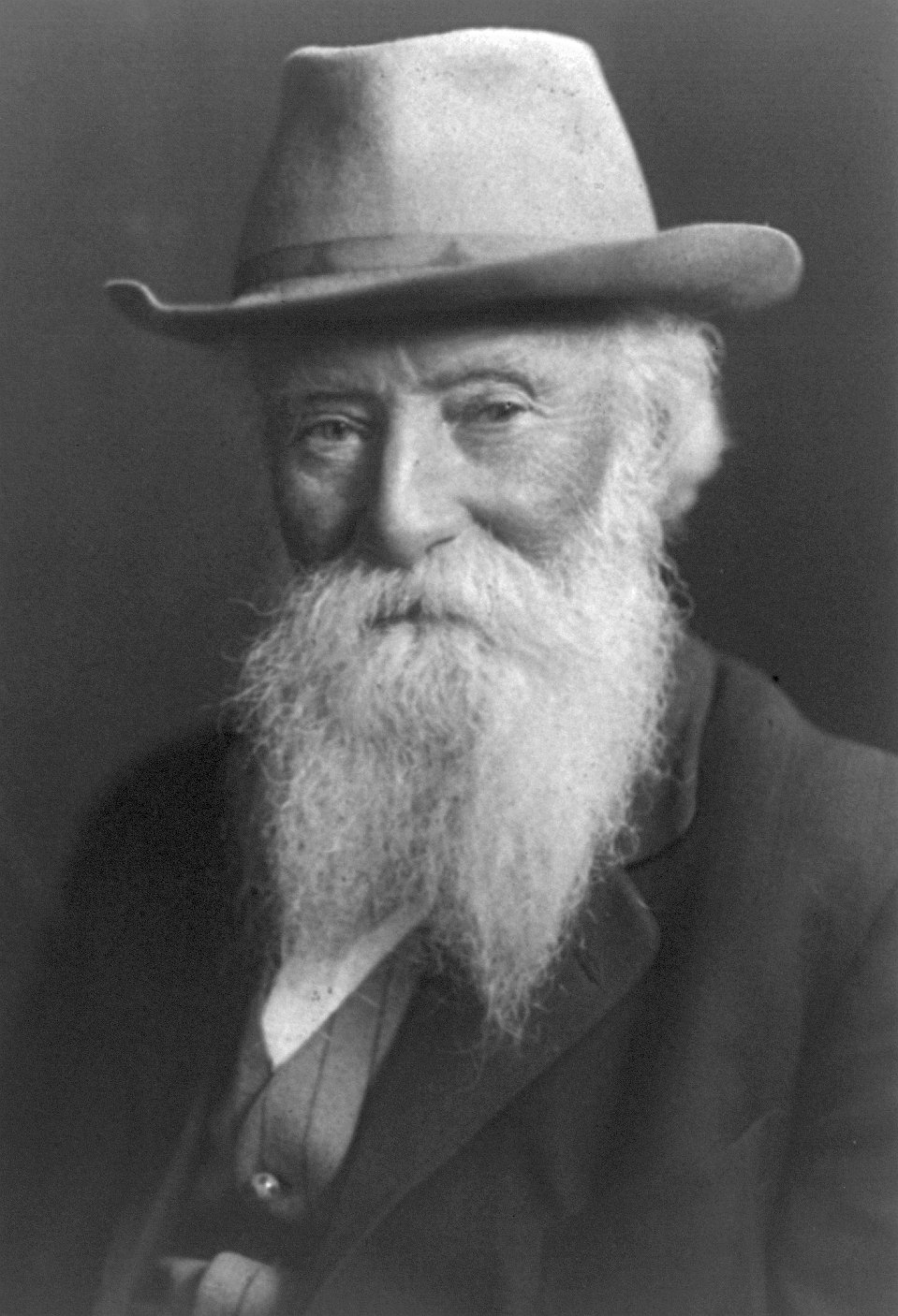
The John Burroughs, American naturalist and essayist (1837-1921)
“Wow! You don’t know anything about John Burroughs, but he knows about your book? Maybe John Burroughs knows you quote John Muir, the John Burroughs’ close friend! Maybe this John Burroughs is the John Burroughs’ grandson!”
“No, Elijah. Not everyone who is the grandson of someone famous!”
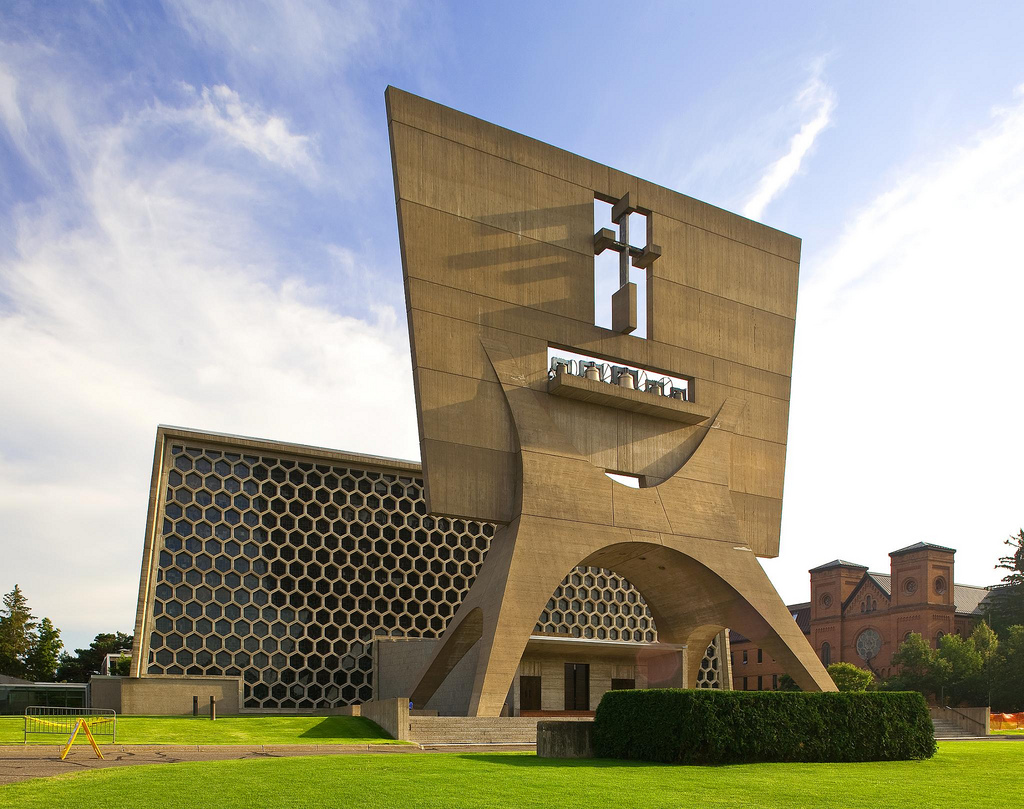
Visiting St. John’s Abbey for the first time years ago just before noon, one of the Benedictine monks invited the guest to join the monks for mid-day prayer.

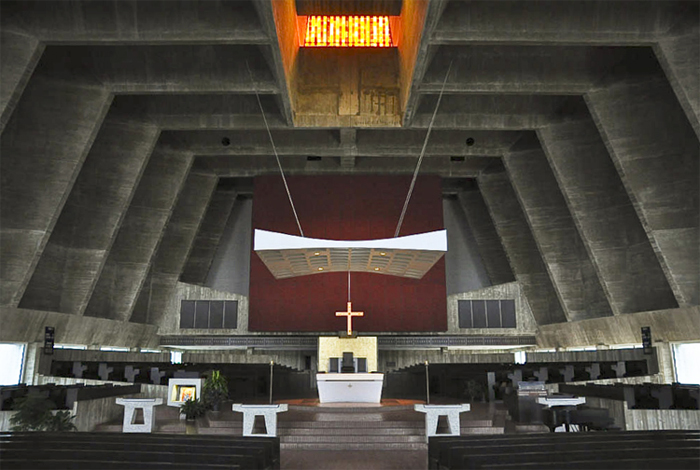
St. John’s Abbey Church, Collegeville, Minnesota
Moments after declining the offer, I changed my mind. Risking the embarrassment of unfamiliarity with the Benedictine rite, I quietly made my way up the right side aisle toward the Chancel choir loft where the monks were gathering.

Interior of St. John’s Abbey Church, Collegeville, Minnesota
Anxious and wanting to be as invisible as possible, I slid up the steps of the choir loft like a cockroach and found a suitable hiding place, the seat in the far corner of the top row (far right in the photograph).
I felt a tug on my left shirt sleeve. “I don’t think you want to sit there,” said the kindly Benedictine Brother with a twinkling eye, “unless you want to be the Abbot!”
Any early childhood protestant prejudice that monasteries are places where people of lesser faith go to hide came tumbling down! There is no hiding place in a Benedictine monastery. No one is a cockroach.
During a crisis years later, I returned to St. john’s for spiritual guidance and took a more lowly place in the choir loft.
With the explosion of Pan Am Flight 103 over Lockerbie, Scotland in the news yesterday, we share this excerpt from James Whyte’s sermon for the mourners at the Lockerbie Memorial Service 1988.
That such carnage of the young and of the innocent should have been willed by men in cold and calculated evil, is horror upon horror. What is our response to that?
The desire, the determination, that those who did this should be detected and, if possible, brought to justice, is natural and is right. The uncovering of the truth will not be easy, and evidence that would stand up in a court of law may be hard to obtain.
Justice is one thing. But already one hears in the media the word ‘retaliation’. As far as I know, no responsible politician has used that word, and I hope none ever will, except to disown it. For that way lies the endless cycle of violence upon violence, horror upon horror. And we may be tempted, indeed urged by some, to flex our muscles in response, to show that we are men. To show that we are what? To show that we are prepared to let more young and more innocent die, to let more rescue workers labour in more wreckage to find the grisly proof, not of our virility, but of our inhumanity. That is what retaliation means.
The Right Rev. James Whyte was the Moderator of the Church of Scotland, still suffering from grief and physical fatigue following his wife’s death. He had recently retired as Principal and Professor of Practical Theology at the University of St. Andrews’ divinity school, St. Mary’s. The full text of the Lockerbie Memorial sermon was published in Laughter and Tears: Thoughs on Faith (Reflections), pp. 92–5.
Every Thursday afternoon in the summer of 1991 the Right Rev. Professor James (“Jim”) Whyte brewed a pot of tea and served scones to the complete stranger he’d welcomed to St. Andrews, an American Presbyterian minister seeking his tutelage in practical theology during a sabbatical from pastoral duties at Knox Presbyterian Church in Cincinnati. His hand-written prayers delivered at Hope Park Church in St. Andrews remain a priceless treasure.
Elijah and Grandpa had just read the President’s tweet about Mika Brzezinski when Elijah said a bad word.

“You need to be more respectful of the President!”
“Why?” asked Elijah. “He’s not my President! Look what he just did to Mika! What’s he have to do that for! He’s mean, Grandpa!”
“I wish I knew, Elijah. Most of his tweets happen when he wakes up early in the morning.”
“Maybe he needs to be nursed as soon as he wakes up. That always calms me down.”
“Well, I’m afraid Donald Trump’s mother is way beyond being able to nurse him. She’s really old, way older than Grandpa, Elijah.”
“Then you should call the White House. They should give him a bottle as soon as he wakes up before he attacks another mother! When he stops tweeting insults at women like Mika, I’ll stop calling him a mother.”