Epiphany 2018

One day in advance of Epiphany, we bring you a reading from an unauthorized revision of the New Revised Standard Version (NRSV) Gospel according to Matthew 2:13-23, which some call the GCS Translation:

Now after the wise men from Iran had left, an angel of the Lord appeared to José in a dream and said, “Get up, take the child and his mother, and flee to Canada, and remain there until I tell you; for Herod is about to search for the child, to destroy him.” Then José got up, took the child and his mother, Maria, by night, and went to Canada, and remained there until the impeachment of Herod. This was to fulfill what had been spoken by the Lord through the prophet, “Out of Canada I have called my son.”

The Round-Up of the Infants

When Herod saw that he had been tricked by the wise men from Iran, he was infuriated, and he sent orders to round up all the children in and around Charlottesville who were two years old or under, according to the time that he had learned from the wise men. Then was fulfilled what had been spoken through the prophet Jeremiah:

“A voice was heard in Ramah,
    wailing and loud lamentation,
Rachel weeping for her children;
    she refused to be consoled, because they are no more.”

The Return from Canada

After Herod had been impeached, an angel of the Lord suddenly appeared in a dream to José in Canada and said, “Get up, take the child and his mother, and go back to the U.S.A., for those who were seeking the child’s life are no more. Then José got up, took the child and his mother, and went to the U.S.A. 

But when José heard that Pence was ruling in place of Herod, he was afraid to go there.

Nazareth TX statue of liberty

Statue of Liberty in Nazareth, Texas

And after being warned in a dream, he withdrew to the high plains of the Llano Estacado of Castro County in the State of Texas. There José made his home in a town called Nazareth (pop. 311), so that what had been spoken through the prophets might be fulfilled, “He will be called a Nazorean.”

 — GCS, Chaska, MN, January 5 (the Eve of the Epiphany), 2018.

 

Our Dwelling Place and the Wrath of God

Six old friends have arrived from Indiana, Minnesota, and Illinois for New Year’s Eve in the Dempsey’s living room. A seventh unbidden visitor — pancreatic cancer managed by chemotherapy — makes us freshly aware of our mortality.

d593c79180a244b638efd9900ecf7e44--himalayan-moonlight

We read aloud Psalm 90 (NRSV), pausing to reflect on each section.

Lord, you have been our dwelling place
    in all generations.
Before the mountains were brought forth,
    or ever you had formed the earth and the world,
    from everlasting to everlasting you are God.

The great theologian Paul Tillich called this dwelling place “Being-Itself” or “the Ground of Being.”

You turn us back to dust,
    and say, “Turn back, you mortals.”
For a thousand years in your sight
    are like yesterday when it is past,
    or like a watch in the night.

We are increasingly aware that we are dust. We are mortals. Our yesterdays far outnumber any tomorrows. But the friend threatened by the cancer that almost always kills is quietly at peace with being turned back to dust. He has always known we are dust.

You sweep them away; they are like a dream,
    like grass that is renewed in the morning;
in the morning it flourishes and is renewed;
    in the evening it fades and withers.

Like our late friend Steve, whose life ended with pancreatic cancer, his faith is in something greater than himself, not because he is certain of what will happen when he takes his last breath, but because he is thankful for the days he has been given and trusts that whatever his place may be now, or then, it lies within the Dwelling Place. It is as it should and will be.

For we are consumed by your anger;
    by your wrath we are overwhelmed.
You have set our iniquities before you,
    our secret sins in the light of your countenance.

For all our days pass away under your wrath;
    our years come to an end  like a sigh.

ImageGen.ashx

We are unaccustomed to talk of the the wrath of God or the fear of it. We talk of the love of God. We are not of the religion right.

But California Governor Jerry Brown’s recent use of the word springs to the center of the conversation. After a year of a public cancer — lies, name-calling, climate change denial, Charlotteseville, the alt-Right, obscene wealth, greed, and narcissistic grandiosity of little boys with toys threatening nuclear holocaust while eating away the healthy institutional cells on which a democratic republic depends — we have a fresh sense of wrath.

“I don’t think President Trump has a fear of the Lord, the fear of the wrath of God, which leads one to more humility,” said Jerry Brown in a ’60 Minutes’ interview. “And this is such a reckless disregard for the truth and for the existential consequences that can be unleashed.”

The days of our life are seventy years,
    or perhaps eighty, if we are strong;
even then their span is only toil and trouble;
    they are soon gone, and we fly away.

Who considers the power of your anger?
    Your wrath is as great as the fear that is due you.
So teach us to count our days
    that we may gain a wise heart.

We are students of aging, learning to count our days, aware of the dust to which we turned a blind eye in younger years while establishing ourselves as adults, raising children, and making names for ourselves. In our late 60s and mid-70s life is less a matter of the mind than it is of the heart. We are more aware of the Dwelling Place. Counting our days — and giving thanks for this one day — is the new arithmetic of the wisdom of the heart.

Turn, O Lord! How long?
    Have compassion on your servants!
Satisfy us in the morning with your steadfast love,
    so that we may rejoice and be glad all our days.
Make us glad as many days as you have afflicted us,
    and as many years as we have seen evil.
Let your work be manifest to your servants,
    and your glorious power to their children.
Let the favor of the Lord our God be upon us,
    and prosper for us the work of our hands—
    O prosper the work of our hands!

  • Gordon C. Stewart, January 1, 2018.

New Year’s Gift from the Lutherans

The First Quarter 2018 Issue of Currents in Theology and Mission published today a review of Be Still!. Currents is the quarterly theological journal of the Lutheran School of Theology at Chicago and Wartburg Theological Seminary in Dubuque, Iowa. Click Book Reviews for the review by Edward F. (Ted) Campbell, McCormick Theological Seminary Professor of Old Testament Emeritus.

ELCA-Logo-VerticalThanks to Currents in Theology and Mission editors Craig Nessan (Wartburg Theological Seminary) and Kathleen Billman (Lutheran Theological Seminary at Chicago), and “Book Reviews” editors Ralph Klein, Troy Troftgruben, and Craig Nessen for featuring Be Still! as the first among Currents‘ “Book Reviews” for the First Quarter 2018.

Prayers for grace, peace, stillness, and for small victories of “prophetic” madness over collective madness in 2018.

  • Gordon C. Stewart,  Chaska, MN, December 29, 2017.


To Initiate a Contemplative Mood

Thom Hickey’s The Immortal Jukebox is like no other jukebox. Tune out the noise and turn up the volume. Enjoy this gift for the season from a blogger in Surrey, England. Click the link at the bottom for all the music of this lovely post.

And breathe! To initiate the contemplative mood I turn to the contemporary Estonian Composer, Arvo Part with his luminous, liminal setting of Mary’s eternal prayer, ‘The Magnificat’. Part has been labelled a Minimalist and a retro Medievalist. I prefer to think of him as having the gift to make time past, time present and time […]

via Contemplative Christmas 1 — The Immortal Jukebox

Elijah and the baby Jesus

Seven-month-old Grandson, Elijah, spent this afternoon with his Uncle Andrew while his Mom and Grandma went to so something special for Grandma’s birthday.

As Uncle Andrew learned, caring for a child who has just learned to crawl poses new challenges for care-givers. Elijah began to crawl earlier this week.

Last night Elijah arrived early at Grandpa and Grandma’s house for Grandma’s birthday party. We had a quick chat before Uncle Andrew and Aunt Alice arrived with his Elijah’s cousin, Calvin (named after Calvin in “Calvin and Hobbes”).

“Grandpa,” asked Elijah with a puzzled look, “what’s a monster?”

Oh, my! You’re too little to know about monsters, Elijah. Monsters are creepy and ugly and really, really scary!  Who told you about monsters?

Uncle Andrew! He said I was becoming a monster! Am I scary, Grandpa?

Did Uncle Andrew laugh when he said you’re becoming a monster? It sounds like humor.

IMG_9340That’s not funny, Grandpa. I wasn’t being a monster. I was just checking stuff out, like the wires to the television and the computer and the lamps and the door to the apartment, just normal stuff I’ve been wanting to check out for a long, long, long, long time. I wasn’t being a monster. 

Sometimes people like Uncle Andrew are kidding with you, Elijah. Like when you surprise them by crawling and getting into things your Mom, Grandma, Uncle Andrew and I didn’t have to worry about before you started crawling.

Whew! So baby Jesus was a monster, too, in Bethlehem. We love Jesus, right Grandpa?

We do, Elijah. But Jesus didn’t become a monster in Bethlehem. He learned to crawl somewhere in Egypt after Joseph and Mary fled to Egypt to escape from King Herod who wanted to kill him (Gospel of Matthew 2:13-23).

William_Blake_-_The_Flight_into_Egypt_(1799)

William Blake ( 1757- 1827) — “The Flight into Egypt” (c.1799)

Wow, that’s awful, Grandpa! Why would a king want to kill a baby? Either King Herod was a real monster or he thought baby Jesus was a scary monster. I’m crawling but I guess I still have lots to learn before I can walk and talk like you, Grandpa.

It’s part of the pattern, Elijah. Like the Christmas Carol we heard this morning on NPR from the King’s College Festival of Nine Lessons and Carols says,

For He is our childhood’s pattern;
Day by day, like us, He grew;
He was little, weak, and helpless,
Tears and smiles, like us He knew;
And He cares when we are sad,
And he shares when we are glad.

  • Grandpa Gordon, Chaska, MN, Grandma Kay’s birthday, Dec. 23, 2017.

The Light Shines in the Darkness

“Hold to the Good” once again speaks clearly what so many of us are feeling as Christmas nears. Thank you, John Buchanan and Marilynne Robinson. By all means, hold to the good, hold to the light the darkness cannot overcome.

Family of John M. Buchanan's avatarHold to the Good

I’m finding it difficult to be hopeful this Christmas. The slow, steady, daily attacks on what I hold dear and what I cherish about my country are eroding my spirit, even the week before Christmas.

My government is….
– loosening regulations designed to protect my grandchildren from the effects of environmental degradation,
– lifting restrictions on mining and drilling that will endanger wildlife and reduce the precious areas of stunning national beauty every president before this one, all the way back to Theodore Roosevelt, regarded as national treasures to be protected and preserved,
-alienating long-time traditional allies, asserting “America First” at the expense of the welfare of all people and all nations,
– turning away from empirical science about climate change and human responsibility for global warming which the vast majority of scientists, and even the Pentagon, regard as real threats to life on our planet,
-attacking any information it…

View original post 413 more words

The Paradox of Parables

parables-350-197-300x169

After finishing daily readings of Be Still! during Advent, Craig Nessen, Academic Dean and Professor of Contextual Theology at the Wartburg Theological Seminary, Dubuque, IA, posted a lovely five-star review of Be Still! on Amazon.

Parables to Transform the Ordinary into the Extraordinary

This book conveys challenging messages about the meaning of faith through reflections on the events of the day. The author writes with an economy of precise, colorful language to tell parables which transform the ordinary into the extraordinary. This is a timely message about the public vocation of the Christian movement to address this time of collective madness.The author assists the reader to remain centered in core convictions for living in resistance and hope.

Would be excellent for personal study, devotions, or group discussion!

The best of lives are humble. They don’t promote themselves. They don’t hawk their own goods. Authorship is its own kind of curse: self-promotion, self-deception, and the narcissistic illusion that you and your work are very, very important. It’s very un-Christ-like.

tissot-pardoning-thief300x232

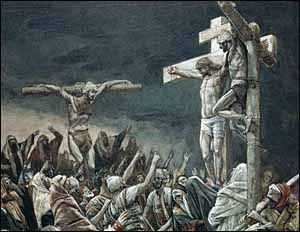
James J. Tissot, “Pardoning of the Good Thief” (1886-1894)

But perhaps you will forgive me as Christ forgave the thief from the cross, though, unlike the thief, I know what I’m doing: growing the sins and sorrows whose doom is secured and assured in the meekness of the child of Bethlehem and man of Golgotha.

No more let sins and sorrows grow
Nor thorns infest the ground
He comes to make His blessings flow
Far as the curse is found
Far as, far as, the curse is found.

Maybe in spite of the author’s sin and by the grace of God and people like Craig Nessan,  “Be Still! may become for someone else “parables to transform the ordinary into the extraordinary.”

parables_orig

With thanks to Craig Nessan,

Blessings and Peace,

Gordon, Chaska, MN, December 23, 2017.


The World at Christmas

“He rules the world with truth and grace, and makes the nations prove….” (“Joy to the World“) will ring out again this Christmas. But, does “He”?

Isaac Watts‘ Christmas carol celebrates faith in the future by looking back at the most unlikely of places: an animal feeding trough, a manger, in Bethlehem, on the outskirts of the Roman Empire.

He rules the world with truth and grace,
And makes the nations prove
The glories of His righteousness,
And wonders of His love,
And wonders, wonders, of His love.

In 2017 it’s hard to sing. In too many ways, it’s not true. Not yet. Herod’s search for the child, Herod’s lies and the slaughter of children that led Mary and Joseph to become refugees in Egypt feel more familiar than the rule of grace and truth. The nations do not prove the glories of His righteousness or the wonders of His love. The world continues to be ruled by deception and greed.

Even so, whether singing “Joy to the World” or listening to Handel’s Messiah, as Martha Ann Kennedy shared in her “The Messiah” post, we sometimes find ourselves going where only music takes us — the longing of the human heart whose aching seems to echo a promise that evokes it, a subjectivity inspired by a longer objectivity, as it were — the victory of goodness over evil, beauty over ugliness, and truth over falsehood.

The curse is not yet removed, but it is countered by a promise and a command: the hope for the rule of grace and truth over the nations.

No more let sins and sorrows grow,
Nor thorns infest the ground;
He comes to make His blessings flow
Far as the curse is found,
Far as, far as, the curse is found.

It falls to us to act responsibly in the face of the sins and sorrows that still grow, the thorns that infest the ground and threaten the planet; to be channels of truth and grace through which His blessings flow, far as the curse is found.

He rules the world with truth and grace
And makes the nations prove
The glories of His righteousness
And wonders of His love
And wonders, wonders, of His love.

  • Gordon C. Stewart, Chaska, MN, Dec. 22, 2017.

The Infinite Interior (Dennis Aubrey)

dennis-boscherville

Dennis Aubrey of Via Lucis Photography

Dennis Aubrey’s Via Lucis photographic reflection on the different between Gothic and Romanesque architecture opens the Infinite Interior I needed this morning.

If you, too, are looking for light in the midst of darkness of whatever sort, this is for you. If you read nothing else, scroll down to the last paragraph and ponder our own infinite interior.

Dennis Aubrey, PJ McKey and Via Lucis are Views from the Edge‘s favorite companions on the way.

Gordon C. Stewart, Chaska, MN, Dec. 21, 2017

Dennis Aubrey's avatar

The subconscious is ceaselessly murmuring, and it is by listening to these murmurs that one hears the truth. ― Gaston Bachelard, The Poetics of Reverie

Basilique Saint Austremoine, Issoire (Puy-de-Dôme) Photo by PJ McKey Basilique Saint Austremoine, Issoire (Puy-de-Dôme) Photo by PJ McKey

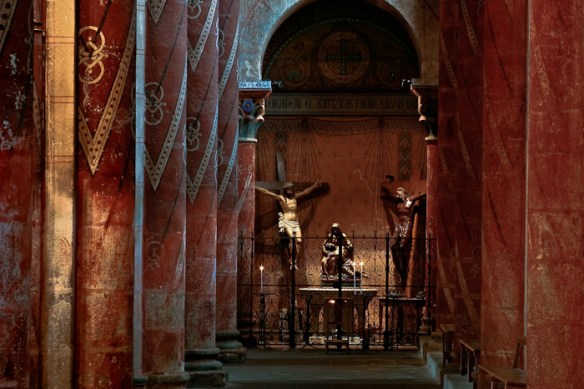
There is a conceptual difference between Gothic and Romanesque churches and cathedrals. While the Romanesque builders paved the way for the Gothic, there is a deep and wide chasm between the two worlds. It starts on the outside – Gothic cathedrals make you want to sit on a bench and admire the exterior. One enters later and experiences the wonders of the soaring internal architecture.

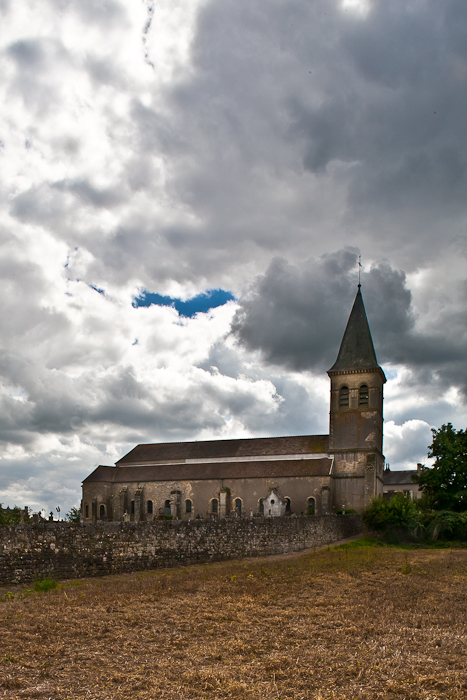
The exterior of Romanesque church architecture is different, much simpler. It is dominated by three features – the clocher, west front, and the chevet. The clocher (or belltower), like the contemporary church steeple, identifies the structure from the distance as a church.

Église Saint-Révérien, Saint-Révérien (Nièvre) Photo by PJ McKey Église Saint-Révérien, Saint-Révérien (Nièvre) Photo by PJ…

View original post 383 more words

Elijah asks Grandpa about taxes

taxreformGrandpa, do we like taxes?

Why are you asking about taxes, Elijah?

‘Cause they’re all over the news. I don’t get it. Are taxes bad or are they good, Grandpa?

It all depends, Elijah.

You always say stuff like that! Depends on what? I wear Huggies!

We’ve already talked about that. I don’t mean that kind of Depends. I mean it depends on what kind of taxes.

Yeah, like the tax of Caesar Augustus that made Joseph and Mary go to Bethlehem. Mom’s been getting me ready for my first Christmas. Look at this picture of Caesar Augustus, Grandpa. He did the same thing with his hand president You-Know-Who does! And he didn’t care about that little baby. Maybe that little baby is Jesus!

Statue-Augustus

And it came to pass in those days, that there went out a decree from Caesar Augustus that all the world should be taxed. (And this taxing was first made when Cyrenius was governor of Syria.)

And all went to be taxed, every one into his own city.

And Joseph also went up from Galilee, out of the city of Nazareth, into Judaea, unto the city of David, which is called Bethlehem; (because he was of the house and lineage of David:) to be taxed with Mary his espoused wife, being great with child.

And so it was, that, while they were there, the days were accomplished that she should be delivered. – Gospel According to Luke 2:1-6 KJV.

Yes, Elijah, it was because of a Roman census for purposes of levying Roman taxes on the country they occupied. The tax system wasn’t fair.

Hmmm. So taxes are bad!

No, they’re not. Like I said, Elijah, it all depends.

On what?

On whether the taxes are fair. Taxes are good so long as they fairly distribute the financial burden for maintaining life together in a good society: things like health care, roads, fire-fighters like the ones battling the fires in California, and economic assistance for the disabled, children, the poor, and retired people like Grandma and Grandpa who depend like Social Security.

So fair taxes are good? Unfair taxes are bad?

Yes, sort of. Tax systems that don’t require the wealthy to pay their fair share are like Roman taxes and like the British taxes that caused the American Revolution. The tax wasn’t fair. And tax systems measure what a country values. So even if the tax burden is fairly distributed, they can be bad if the money is used badly.

Yeah, just like Mary said, “He lifted up the lowly, and the rich he has sent empty away!” Liddle Bob Corker is lowly but he just voted for tax reform that Marissa says isn’t fair.

Yes, he did, Elijah. Senator Corker was a hold-out who agreed to vote for the tax bill after it was amended in a way that favored his real estate interests so he wouldn’t be so little anymore.

You own real estate, right? Are you going to vote for the tax bill, Grandpa?

No, Elijah, I really don’t own any real estate. The bank owns Grandma and Grandpa’s condo. We still make mortgage payments. And I don’t get to vote on it. Members of the House of Representatives and Senate represent us in Congress. Only they get to vote, and the president can then sign it or veto it.

Hmm. So you’re going to be liddler than liddle Bob Corker. But in my eyes, you’ll always be big, Grandpa. Remember Joseph and Mary and Jesus in liddle old Bethlehem.

I will, Elijah. Here’s a more hopeful picture for you to remember. Mary and the baby Jesus are at the top. At the bottom are prophetess named Sybil and Caesar Augustus, but it doesn’t look anything Caesar. It’s the Byzantine emperor Manuel II from the 15 Century that the artist viewed as the new Caesar. Every empire has its emperor, and every one of them is soon forgotten, but the story of Christmas is eternal.

©Photo. R.M.N. / R.-G. OjŽda

— Grandpa Gordon, Chaska, MN, Dec. 20, 2017.