Faith, Patriotism, and the Administered Consciousness

After a week of contentious struggle in the U.S. Senate that left the nation not just red and blue, but black-and-blue, I harkened back to “the administered consciousness” (Herbert Marcuse, One Dimensional Man) that mutes Cain’s question after he had slain his brother Abel: “Am I, or am I not, my neighbor’s keeper?” And “who is my neighbor?”

Hope in dark times

In times like these, I often turn to the hymn “O God, Our Help in Ages Past,” Isaac Watts’ paraphrase of Psalm 90 from 1719. Today I turned to it again for solace and hope. All the singers are white, but, hey, so am I, and there is hope even for the likes of I.

Psalm 90 in its entirety is a song of lament, but hope — and a call to personal responsibility — rise from despair.

Years ago I was given a copy of The Book of Psalms and Scottish Hymnal (1879) with the cursive signature of the man who used it: “John Campbell, Blair Mill, 1886.” (My middle name is Campbell.) I dusted it off this morning to read it through. The rendition of Psalm 90 John Campbell sang in 1886 ends with a prayer that recognizes our own responsibility for “the works of our hands”:

“And let the beauty of the Lord our God be upon us: Our handy-work establish Thou, establish them each one” (Psalm 90:17).

  • Gordon Campbell Stewart, Chaska, MN, October 7, 2018.

Lightly Child, Lightly

David Kanigan’s post arrived this morning. I’m turning to it after events this afternoon. P.S. David writes from Canada.

Live & Learn's avatarLive & Learn

I pause under that summer tree, the one that feels like a friend, as my dog wonders why we’ve stopped. She was trotting in such rhythm. But when this still, I wonder what part of me, way down, remains untouched by dream or memory? What drop of being remains out of reach of the opinions of others? When up close, each thing reveals its shimmer. And it’s the unexpected closeness that holds everything together. The light spreads across my dog’s face, her eyes so devoted to wherever I want to go.

Can I be this devoted to the pull of life?  

Mark Nepo, from “Speechless” in Things That Join the Sea and the Sky: Field Notes on Living


Notes:

  • Photo: Bill Leslie with Groovy Times
  • Prior “Lightly child, lightly” Posts? Connect here.
  • Post Title & Inspiration: Aldous Huxley: “It’s dark because you are trying…

View original post 28 more words

The Two Parts of Wisdom

A Facebook comment led me to recall the words of a 16th century theologian most people today regard as an old fuddy-duddy. First the old fuddy-duddy:

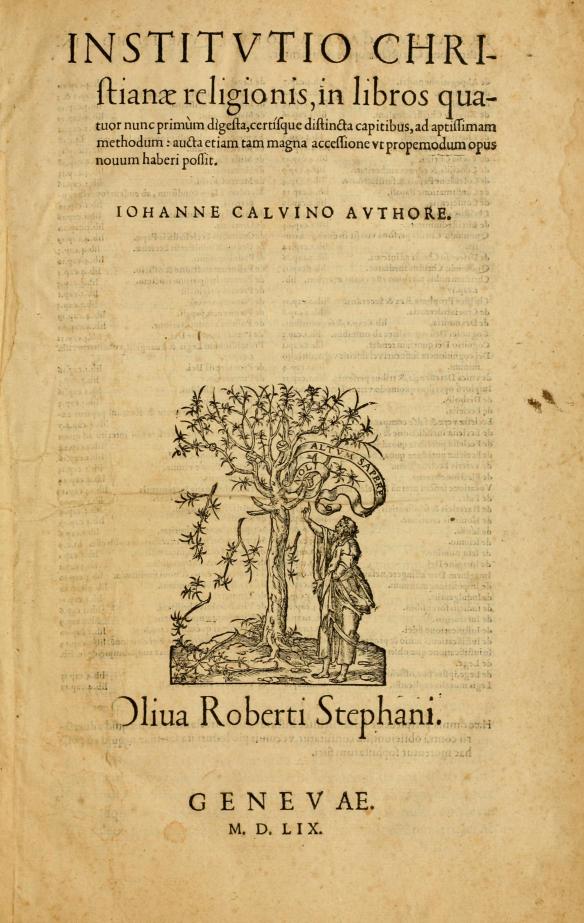
Our wisdom, in so far as it ought to be deemed true and solid Wisdom, consists almost entirely of two parts: the knowledge of God and of ourselves. But as these are connected together by many ties, it is not easy to determine which of the two precedes and gives birth to the other.

CalvinInstitutio

John Calvin (1504-1564) was no more a Calvinist than Jesus was a Christian. You can’t follow yourself. He didn’t. He sought wisdom. Many times his search led him to disconcerting conclusions, and actions that trouble me. But the quotation from the very first paragraph of the first page of Calvin’s Institutes of the Christian Religion is pure gold. It’s stayed with me as priceless. They could have come from Carl Jung!

Prodigal Son Rembrandt drawing

The return of the prodigal son – Rembrandt drawing

Recognition of the inseparable connection between the knowledge of self and the knowledge of God is as old as philosophy and theology themselves. Augustine of Hippo wrote about coming to the knowledge of God through the knowledge of himself. “Our hearts are restless until they find their rest in Thee,” wrote St. Augustine after leading an unsavory life like the one portrayed in Jesus’ Parable of the Prodigal Son. Only by delving into the self that was deeper than his squandering was Augustine able to write his Confessions and The City of God. The search for knowledge of himself and for the knowledge of God were of one piece.

Anticipating the FBI’s expanded background check of Supreme Court nominee Brett Kavanaugh, I began to wonder what we’re seeing and how we’re seeing it in light of the two kinds of knowledge that give birth to “the true and solid Wisdom.” Then, almost by accident, I stumbled across a remarkable personal reflection on sexual abuse and sexuality on Facebook. I’d never heard of the writer until this morning. But I do know his mother, a ministerial colleague, who appears to have raised him to search for two parts of wisdom.

With the writer’s permission, we share here the LINK to the personal reflection on Facebook. It’s long, but well worth the read.

  • Gordon C. Stewart, Chaska, MN, October 1, 2018.


Find your Fire

Fire, in this case, is passion. If you want to be a successful blogger, find your fire.

The advice comes from The Art of Blogging. I wish I’d read that before launching Views from the Edge years ago. But, hey, it’s never too late, right?

Thanks to fellow-blogger Marilyn Armstrong for the photo. I’m musing on the lily pad!

So, what, I’m asking myself, is my passion? What’s the fire in my belly? The thing that makes me tick? The thing that makes me come alive? It’s a simple question. A clarifying question. But the answer’s not so simple. Not so clear.

Writing that last incomplete sentence led me to my fire, my life passion: To see more clearly!

Life is strange. Truth is almost always strange, sometimes stranger than fiction (Lord Byron). Searching for what’s real — cutting through the appearances, illusions, shams, and socially acceptable convictions and beliefs — has always been my fire. I am naturally skeptical of things that seem normal and claims that call for my allegiance.

fish pond

garden fish pond

Since the day I plunged to the bottom of Dickie Tinsley’s fish pond after Mrs. Thomas told our Vacation Bible School kindergarten class that Peter could walk on water because he had faith, my fire has been a quest to get to what is real — to see more clearly.

I used to be a preacher man. Now I’m a blogger. According to The Art of Blogging, anyone who wants to be a successful blogger needs to pay as much attention to a post’s ending as to its beginning. I need to end not with a preacher’s declaration but with a philosopher’s query that invites readers to engage and respond from their own experience. So here’s the question that invites your response:

What’s your fire? What’s your passion?

  • Gordon, Chaska, MN, September 30, 2018.

No one can burn the truth

The most telling point in yesterday’s Senate Judiciary Committee hearing was the sudden shift away from Rachel Mitchell, the experienced prosecutor of sex crimes whom the Republican all male majority had appointed to examine the accuser and the accused on their behalf. It was an unprecedented protocol.

Dr_Christine_Blasey_Ford

Professor Christine Blasey Ford

All morning, during the testimony of Professor Christine Blasey Ford, the members of the majority ceded their five-minutes to Ms. Mitchell. She, not they, did all the questioning. Then, early in the afternoon session with Kavanaugh, the protocol disappeared.

Ms. Mitchell’s impartial inquiry came to a sudden end when Sen. Lindsay Graham lit the match that shifted the focus from Ms. Mitchell’s methodical inquiry. The protocol for “getting at the truth” went up in flames. Ms. Mitchell never was called upon again. The men who had brought her from Arizona to Washington, D.C. brushed her aside without explanation or comment by anyone of the committee. She was no longer useful to the majority’s purposes.

256px-Lindsey_Graham,_Official_Portrait_2006

Sen. Lindsay Graham (R)

Experts in the field of sexual violence have eyes and ears — and a sixth sense — most of us don’t have. They know the typical behaviors of victims and perpetrators. Belligerence is one of the behaviors of perpetrators. Judge Kavanaugh’s less than judicial demeanor — his unrestrained anger and belligerent attack on Sen. Klobuchar’s legitimate, pertinent  questions about the use of alcohol — would have rung a familiar bell. Ms. Mitchell’s attempt to get at the truth had gotten too close.

The Judiciary Committee appears ready to recommend confirmation. Majority Leader McConnell has pledged to push it through the full Senate.

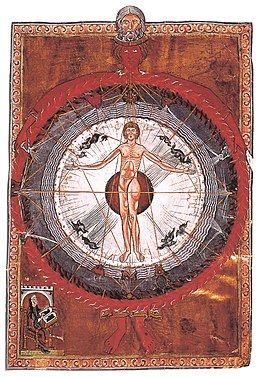
Hildegard_von_Bingen_Liber_Divinorum_Operum

The Universal Man, Liber Divinorum Operum of St. Hildegard of Bingen (1165)

Last night the American Bar Association, which endorsed Judge Kavanaugh as highly qualified, called for what the chair, majority members, and the nominee himself have steadfastly refused to do: suspend the process and call for the FBI to re-open its independent investigation of the facts.

It’s enough to make me hope that Mechtild von Magdeburg, the lesser known medieval mystic contemporary of Hildegard von Bingen was right:

“No one can burn the truth.”

  • Gordon C. Stewart, Chaska, MN, September 28, 2018.

Hope is IN SPITE OF Troubles!

Kosuke Koyama - RIP

Kosuke Koyama (1929-2009)

“You have to be hopeful; you have to give them hope.”

“Okay,” I said, “but I can’t give anyone else hope. Hope comes from within.”

Hope seems harder in 2018 than it was when Kosuke Koyama advised the younger preacher to stay positive. Years later, it was to Dr. Koyama that Be Still! Departure from Collective Madness was dedicated for many reasons. Maintaining hope was one of them. His humility was another. His characteristic kindness and compassion reached out when friends were scarce. But nothing became more impactful than the statement he made over lunch: “There is only one sin: exceptionalism.”

Years before his death in 2009, Koyama (“Ko”) had begun to view the environmental crisis through the lens of humankind’s presumption: the mistaken belief that we, the human species, are the exception to Nature. For Ko it was a form of idolatry.

In light of this week’s avalanche of news, I’ve wondered what Ko would say. He still would bless us with his smile. He would encourage us to resist the claim of American exceptionalism, the confusion of nationalism (worship of country) with patriotism (love of one’s country), any border policy that takes children from their parents arms in the name of national security, every energy policy that feeds the coffers of the fossil fuel industry (“God is green,” said Ko), every exaltation of greed, every distortion of truth, every tax policy that keeps the poor poor while lining the pockets of the 1%, and any President and Congress that reminded him of Emperor Hirohito and the cult of national exceptionalism he grew up with in Tokyo. The god of empire, he observed, never says no. The God of the Bible says no: “You are a stiff-necked people!”

But amid all the issues that deserve our attention, I believe Ko would urge us to keep our eye on the biggest of sin — the mega sin — the sin against Nature that imperils the planet as we know it. His legacy invites us to bow our stiff necks to that which is bigger, longer lasting, and more encompassing than ourselves. Everything less is built on sinking sand.

Ko spoke in metaphors and parables. I believe he would remind us of Jesus’ parable of the wise man who built his house upon the rock versus the foolish one who built his house upon the sand. “And the rains came down, and the floods came up, and the winds blew, and beat upon that house; and it fell: and great was the fall of it.”

256px-ShipTracks_MODIS_2005may11

NASA satellite photo of clouds created by the exhaust of ship smokestacks.


He would rally behind Bill McKibben’s declaration that “climate change is the single biggest thing that humans have ever done on this planet. The one thing that needs to be bigger is our movement to stop it.” The only way to stop it is to turn from the the mega sin — the idol of human exceptionalism, the worship of ourselves.

“[T]hrough endurance, to feel that life is surrounded by the warm approval of God, will that not be the experience of hope? Hope is in spite of troubles. There is not hope apart from troubles. There is no automatic hope, no easy hope. Hope is hope against all odds.” — Kosuke Koyama, Three Mile an Hour God.

  • Gordon C. Stewart, Chaska, MN, September 25, 2018.

 

Bumpa, what’s faith?

Elijah and Bumpa (i.e. Grandpa) are talking after the Vikings-Packers game.

Elijah and Grandpa talking

Bumpa, what’s faith?

Why are you asking about faith, Elijah?

Mom just said it. She said that word again, just like she did last week.

Said what?

She said “You gotta have faith.” Maybe you should turn up your hearing aids.

I see. Mom was talking about Bumpa’s attempt to lose weight.

Yeah. I hate to wait!

Well, waiting is different but it does require faith. Bumpa can’t just wait to lose weight. I have to work at it.

You’re drivin’ me crazy! I asked you a simple question: “What’s faith?”

Okay. Faith is the assurance of things hoped for, the conviction of things not seen.

What’s assurance?

It’s a little like confidence, Elijah. Or believing things will turn out well even when everything looks bad.

So that rookie kicker needed faith, right?

Yes. He lost his faith right there on the football field…THREE times. He lost his confidence. He didn’t believe it was going to turn out well, and he blew nine points. Nine points!!! All because he lacked faith.

Yeah, his coach lost faith in him and he lost faith in himself, right Bumpa?

Right. But faith is about more than football, Elijah. It’s about life. It’s the assurance of things hoped for, the conviction of things unseen.

What’s conviction? So we believe in ghosts?

No, Elijah. Remember when Barclay let you play with his ball and didn’t bite? It’s a little like that. Faith is trust. I hope you never lose your faith!

  • Bumpa and Elijah, Chaska, MN, September 17, 2018.


Living with Myself

Antoni-de-melo

Anthony de Mello (1931-1937)

Living with myself is hard sometimes. Almost as hard as it is to live with me. I need lots of help to be a better person.

This morning, Anthony de Mello‘s and Dietrich Bonhoeffer‘s reflections featured in William Britton’s Wisdom from the Margins: Daily Readings brought me up short.

Saʿdī of Shiraz tells this story about himself: “When I was a child I was a pious boy, fervent in prayer and devotion. One night I was keeping vigil with my father, the Holy Koran on my lap. Everyone else in the room began to slumber, and soon was sound asleep. So I said to my father: ‘None of these sleepers opens his eyes or raises his heart to say his prayers. You would think that they were all dead.’ My father replied, ‘My beloved son, I would rather you were asleep like them than slandering.’” (Anthony de Mello, The Song of the Bird)

My own father and Saʿdī’s father were much the same. I can’t help wondering what Dad might say today of all the slandering and the sleeping.

To my unredeemed slandering heart and mind, the sleepers (those who refuse to stay awake to what is happening in America) are readily identifiable by their choice of a news channel. The sleepers, I say to myself, are not awake…like me. Oops! The voices of Saʿdī’s father and mine alert me to my habitual slandering. They call me to a lead a more gracious, fuller, life.

Bundesarchiv_Bild_146-1987-074-16,_Dietrich_Bonhoeffer

Dietrich Bonhoeffer (1906-1945)

But the way of living with myself and others consciously and respectfully seems impossible. It’s not simple. Slander is a sin of commission. Consenting to evil is the sin of omission. One is still called to act, but without slandering.

“Who stands firm?” asked Dietrich Bonhoeffer from his German prison cell following a failed plot to assassinate Hitler to end World War II. “Only the one for whom the final standard is not his reason, his principles, his conscience, his freedom, his virtue, but who is ready to sacrifice all these, when in faith and sole allegiance to God he is called to obedient and responsible action: the responsible person, whose life will be nothing but an answer to God’s question and call” (Letters and Papers from Prison).

While the masses had fallen asleep to the horror of the German Third Reich, Bonhoeffer “stood firm” and paid the ultimate price — state execution — for committing the sin of commission: resistance to Hitler and mass madness and slaughter. One might suppose that a man like Bonhoeffer’s disdained the character of those who fell asleep. But it was this same Bonhoeffer who instructed the students of his underground seminary the lesson Saʿdī’ father and mine tried to teach us.

“By judging others, we blind ourselves to our own evil and to the grace to which others are just as entitled as we are” (Dietrich Bonhoeffer, The Cost of Discipleship).

It’s hard to live with myself! I need all the help I can get. Bill Britton’s Wisdom from the Margins: Daily Readings is a hidden treasure worth the price for anyone feeling the need to “stand up” without slandering.

  • Gordon C. Stewart, on the wetland with the Trumpeter Swans, September 12, 2018.

T.G.I.F.: It’s been a long week. (Beyond Comprehension…)

Live & Learn's avatarLive & Learn

87 Elephants Slaughtered in One of the Largest Poaching Incidents in Africa (Sept 3, 2018, LiveScience.com)


(Photo via Newthom)

View original post