Preaching to Myself

The longer I live, the less I know. The less I have lived, the more I think I know.

“Knowledge puffs up; but love builds up.”(I Cor. 8:1b)

These words seem strange to those of us who value education. But peeking into the internal squabble within the First Century CE Corinthian church (First Corinthians 8:1-13) may also give us an unexpected peek into ourselves in 2015.

There is a tension between knowledge and love. The better educated among us see the relation between knowledge and love as complimentary. Love and knowledge grow together into ever expanding circles of freedom, like snakes shedding their skins and lobsters shedding their shells for bigger skins and shells that can hold their more mature selves.

Yet we are sometimes scornful of the less educated, the concrete thinkers, the legalists who are certain about what little knowledge they have. We are quick to join Paul’s opinion that “Anyone who claims to know something does not yet have the necessary knowledge ….” (I Corinthians 8:2). A little knowledge is a very dangerous thing. True education leads not only to increasing knowledge but to increasing awareness of one’s own vast ignorance.

We think of Copernicus and Galileo who challenged the prevailing knowledge, and those who judged them for their unbelief, a new “knowledge” that has changed the human view of our place in a vast, expanding universe. Or we think of Darwin and the Scopes Trial – the showdown between the knowledge of evolution and the ignorance of the creationists. We think of the difference between enlightened biblical scholarship that interprets Scripture through the eyes of love’s expansion and the biblical inerrantists who insist that the Bible be taken literally, such that the book is closed on matters of human sexuality.

“‘All of us possess knowledge.’ Knowledge puffs up; but love builds up.” 

Paul makes a masterful move here in the chess game of the knowers. He says that all the “knowers” know little, and that those who know more – the stronger in faith – are in greater danger than those who know less – the weaker in faith.

He is writing to the strong, the ones who are more advanced in the knowledge of the liberty to which Christ has set them free. “But take care that this liberty of yours does not somehow become a stumbling block to the weak.” Knowledge itself puts us on trial, the trial of humility, the trial of love. Paul calls for the stronger to be humble lest what they assume to know become the new idolatry that places Christ’s weaker followers on the cross of educated privilege.

The Christian claim of faith is not our knowledge, no matter how great or small. The claim of the disciples of Jesus is God’s knowledge of us. It is God’s knowing us that is the heart of faith for followers of the crucified, risen Christ. It is God’s knowledge -the wisdom of love – into which we are baptized as novices. One might even say, we die to every claim but love.

We are saved by grace through faith, not by works. For the likes of me and my progressive friends and colleagues in the Presbyterian Church (USA) and for members of the church who are choosing to leave the PC(USA) because of what they regard as excessive liberty, knowledge sometimes becomes the new “works” that substitute for justification by grace.

To be justified (i.e. made “right” with God) by grace through faith, as Paul understood it, represents a 180 degree repentance, a reversal of the direction and flow of the human-divine encounter from us to God to from God to us. Paul later speaks of the practical implications of love with respect to all claims of knowledge:

“And if I ….understand all mysteries and all knowledge, and if I have all faith, so as to remove mountains, but have not love, I am nothing.” (I. Co. 13:2)

“Love is patient and kind; love does not envy or boast; it his not arrogant or rude. It does not insist on its own way; it is not irritable or resentful; it does not rejoice at wrongdoing, but rejoices with the truth. Love bears all things, believes all things, hopes all things, endures all things.” (I Corinthians 4-7)

I am among those who remain puzzled by what to do. It’s far from simple. Paul’s description of the Christ-like life is centered, but it’s not simple. The patience and kindness come hard when faced with what I am sure are the weaker, more homophobic folks whose view of Scripture supports their opposition to the full inclusion of LGBTQ members. I boast of a greater knowledge based on love. In the name of love, I become arrogant. I am rude. I have a short fuse. I want to separate myself and the more enlightened from the less enlightened, the weaker, as Paul might say. In their presence I quickly become irritable, resentful of their presence in the Body of Christ. I do not bear all things. I do not believe all things, hope all things, endure all things. I do not believe that if I understand all mysteries and have all knowledge but have not love, I am nothing.

Though Paul was writing his letter to the tumultuous church at Corinth in the middle of the First Century CE, his words still speak. They arrive unexpectedly like a surgeon’s scalpel removing a cancer for the sake of the Body of Christ. The gospel cuts with a knife, but it is always for the sake of healing, a dying to ego for the sake of the resurrected Body of Christ.

Gracious Lord, by your healing mercy, keep me in the knowledge of Your love.

– Gordon C. Stewart, Sunday, Feb. 1, 2015.

My Soul Waits in Silence

A contemplative reflection on Psalm 62 at Saint Augustine Beach, Saint Augustine, FL.

For God alone my soul waits in silence, for my hope is from him. I wait in silence. [Psalm 62:5 NRSV]

I wait in silence.

Withdrawing from the noisy men next door in Saint Augustine, I am like the Hermit Crab crawling into the borrowed snail shell on Saint Augustine Beach.

This is the same beach brave souls dared to integrate in 1964, a place where then there was no place to hide, the public white beach where the Hermit Crabs refused to hide when the billy clubs swing to drive them from the white man’s beach. There are no billy clubs on the beach today but the shouting of the world we call civilized still hurts by ears.

How long will you assail a person,
will you batter your victim, all of you,
as you would a leaning wall, a tottering fence? [Ps. 62:3 NRSV]

The world is noisy. Loud. Cacophonous. Bellowing blasts, bewailing, and bedlam in Beirut, Baghdad, and Boston hurt my ears. Hoping to leave it, I come to the beach where the tides know nothing of the color of my skin, my income, my worries or fears.

For God alone my soul waits in silence,
for my hope is from him.
He alone is my rock and my salvation,
my fortress; I shall not be shaken.
On God rests my deliverance and my honour;
my mighty rock, my refuge is in God.  [Ps. 62: 5-7 NRSV]

Hermit Crab crawling into abaondoned snail shell

Hermit Crab crawling into abaondoned snail shell

At low tide I crawl inside the borrowed shell looking for a respite from the noonday heat, my deliverance, my refuge, my fortress. But, even here, the noise follows me.

The blasts, buzzes, and bellowing echo inside the shell. Silence eludes me. Even here, I am a poor man, a mere breath, walking among the vendors and hawkers, resentful, angry, beset, a man of low estate.

Those of low estate are but a breath,
those of high estate are a delusion;
in the balances they go up;
they are together lighter than a breath.
Put no confidence in extortion,
and set no vain hopes on robbery;
if riches increase, do not set your heart on them. [Ps. 62:9-10 NRSV]

Here I am a breath stripped from the delusions of high estates indulged on the other side of the sand dunes that separate the beach from the street.

I wait in silence.

I ponder the speed outside the Hermit Crab’s temporary home, the abandoned snail shell, the speed that is itself an illusion, a flight of hubris washed away by the tides of time. I remember the race to nowhere, the myths of ownership, invulnerability, control, and superiority that race through the minds of low and high estates alike.

I hear the distant shouts and screams from the integration of Saint Augustine Beach that still plunge the despondent men next door into the oblivion of cheap booze, dope, and, maybe, crack. But the longer I wait and listen, my heart grows strangely calmer. Quieter. More at peace.

I come into the deeper Silence of the Breath once heard by the psalmist.

Once God has spoken;
twice have I heard this:
that power belongs to God,
and steadfast love belongs to you, O Lord.
For you repay to all
according to their work. [Ps. 62: 11-12 NRSV]

In the wordless silence I hear the Word I’ve come to the beach to hear:

“Be still, and know that I am God.” [Ps. 46:10 NRSV]

– Gordon C. Stewart, Saint Augustine, Florida, January 31, 2015


Mr. Cub and Dr. Borg

Ernie Banks, known with great affection against his protestations as “Mr. Cub”, died yesterday, two days after theologian Marcus Borg.

Each excelled in his respective field, Ernie in the ivy-covered walls of  “the Friendly Confines” of Wrigley Field, Marcus in the ivy-covered walls of the academy. Though their fields were different, their way of life was the same. It was humble.

Ernie objected to the “Mr. Cub” title, arguing that the designation should be shared among team members who excelled each year.

Marcus responded to the question “How do you know you’re right?” with “I don’t know. I don’t know that I’m right.”

Each was humble, and each anticipated death.

“I may have ten years left. Not sure I want more. There comes a time to let go. And I could, with gratitude, sooner than that. My life has been very blessed.”

Dr. Marcus Borg (Mar. 11, 1942 – Jan. 21, 2015) to former student and friend, the Very Reverend Barkley Thompson, October, 2014.

“When I die, I want my ashes to be spread over Wrigley Field with the wind blowing out!”

–  “Mr. Cub” – Ernie Banks (Jan. 31, 1931 – Jan. 23, 2015)

Thank you, Gentlemen, for the memories. R.I.P.

Marcus Borg Up Close and Personal

Marcus Borg

Marcus Borg

Marcus Borg (1942-2015), renowned scholar, teacher, and theologian of progressive Christianity, died January 21, 2015. (Click HERE for information on Dr. Borg.) When Don Dempsey learned of his death, he wrote to six close friends. Views from the Edge publishes it here with permission:

This morning I received notice of Marcus Borg’s death.

Marcus was one of my favorites – he spoke to me.  His “The Heart of Christianity” was one of the most meaningful books I’ve ever read!  I also used his book “Speaking Christian” for several adult ed classes.

When I served as an interim pastor at the First Presbyterian Church of Lake Forest, I coordinated and arranged for Marcus to be present for a weekend visit.  It began with a Friday night presentation, followed by a Saturday workshop, and preaching at both services on Sunday.  He was controversial to some, but I loved it all.  Saturday was standing room only with the majority who were present not from FPC.  He had quite a Chicagoland following. 

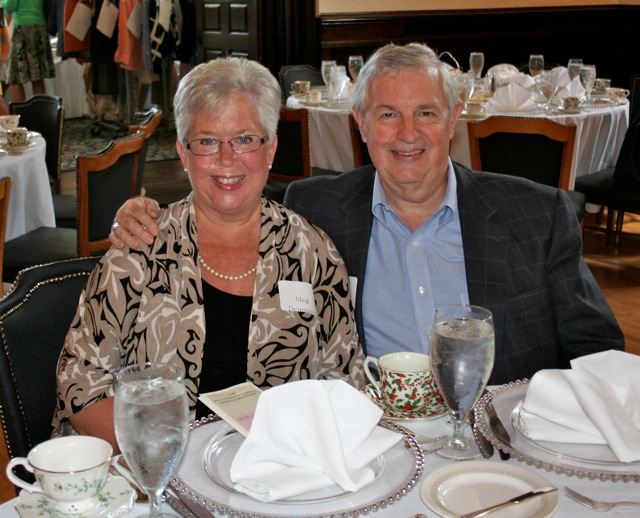
It was my honor and privilege to be his guide and host the whole weekend.  It began on Thursday as Meg and I picked him up at O’Hare airport.  We told him we’d meet him at the baggage claim.  As Meg was getting out to go in and find Marcus, she asked, “how will I recognize him?”  She found him right away. 

After picking him up on Thursday we had a delightful conversation driving him to his hotel in Lake Forest.  As we dropped him off we asked, what are your dinner plans?

He said, “What do you suggest?”  We looked at each other and quickly said “Why don’t you get settled in and we’ll be back and pick you up for dinner at our house.”

What a great evening!  Marcus was such a warm and engaging person, he wanted to know all about us, he listened so intently to our stories.  That evening sitting on our deck sharing conversation, beaking bread, and sharing wine was indeed a celebration of communion that Meg and I shall never ever forget.

He inscribed my copy of “The Heart of Christianity” on 9/16/06:

To Don and Meg,
With rich memories, gratitude for your hospitality, and best wishes.
Marcus Borg

Rest in peace my friend, your voice and your presence will be greatly missed!

Don and Meg Dempsey

Don and Meg Dempsey, gracious hosts of Marcus Borg

Don and Meg Dempsey, gracious hosts of Marcus Borg

The Rev. Dr. Donald Dempsey and and Meg live in Fort Sheridan, Highland Park, IL. Don is one of six McCormick Theological Seminary friends who gather annually for renewal of friendship and theological inquiry.


“I don’t know that I’m right”

Marcus Borg‘s answer to the question “How do you know you’re right?” is spot on.

“I don’t. I don’t know that I ‘m right.”

Barkley Thompson reports the exchange in yesterday’s posting on God in the Midst of the City following Dr. Borg’s deathre-posted today on Views from the Edge as “Tribute to Marcus Borg (1942-2015)”.

I never met Marcus Borg. I wish I had. We were born in 1942 within a few months of each other. You might say we grew up next door to each other in different towns. There’s something about time that situates people in the same location, asking the same or similar questions, searching the same search, vexed, in our case, by the early horrors of World War II, German concentration camps, the Holocaust, and the American bombings of Hiroshima and Nagasaki. As children of faith we grew up asking how we could square a loving God with the stacked bodies of Auschwitz and Hiroshima, the economic disparities of poverty and injustice of racial segregation.  As happened to a lesser extent with some of his peers, Marcus developed a theology and Christology that rose out of these compelling questions about the real world that had shaped him, and the irrepressable hope for something better that drove him deeper and wider as he grew older and wiser.

Marcus’s humble response to the questioner who asked how he knew he was right -“I don’t know. I don’t know that I’m right” – is one for the ages. If only we could clone it to create a humbler humanity of neighborliness across all the terror our world is making, we might fetch the blessing from the curse of absolute religious certainty.

“God’s dream for us is not simply peace of mind, but peace on earth.”- Marcus J.Borg & John Dominic Crossan, The First Christmas, 2007, HarperOne.

– Gordon C. Stewart, Chaska, MN, January 22, 2015


Tribute to Marcus Borg (1942 – 2015)

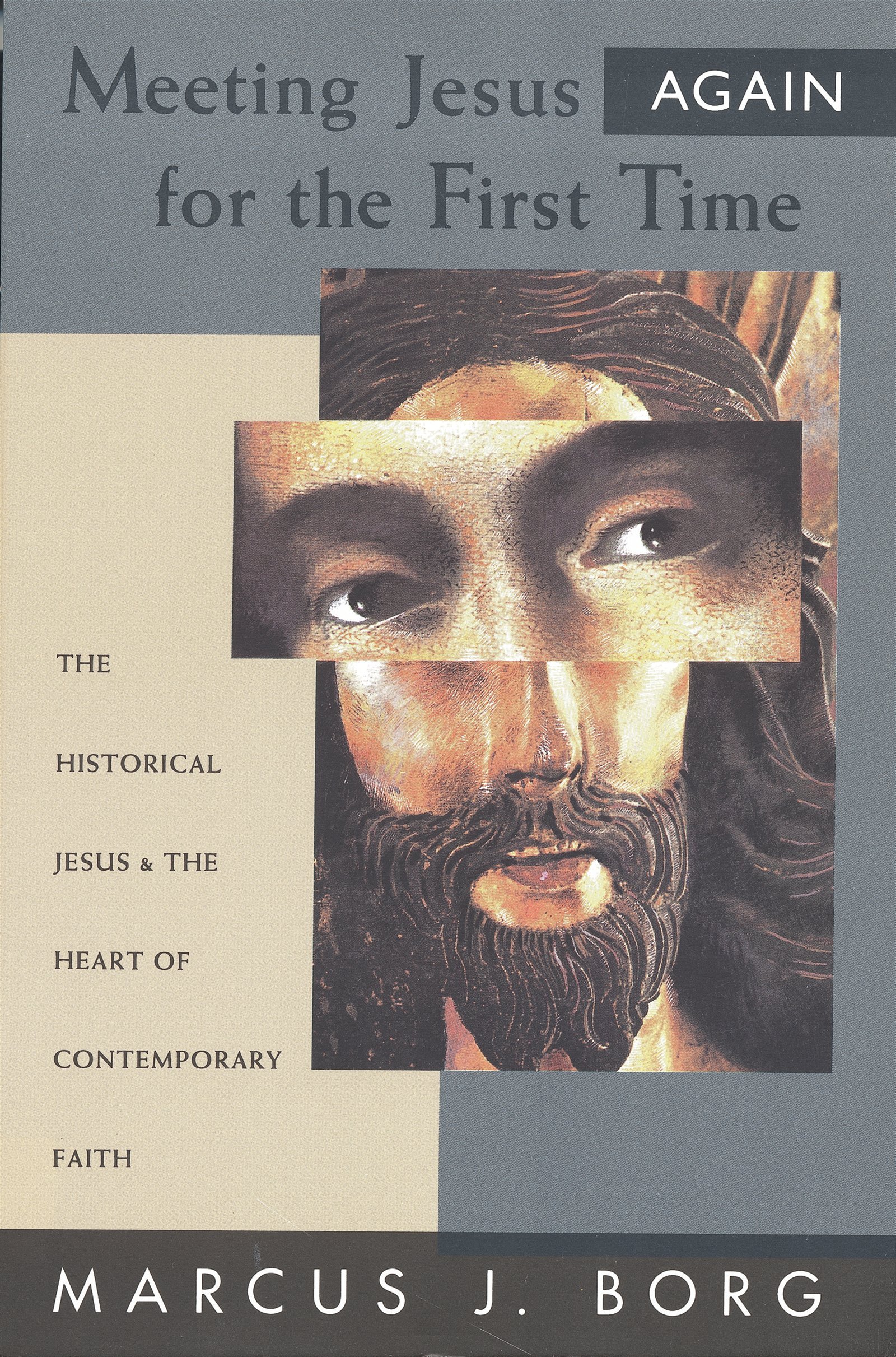
Cover of Marcus Borg book

Cover of Marcus Borg book

Marcus Borg’s writing and teaching affected millions.  Steve Shoemaker received an email of Marcus’s death yesterday from Barkley Thompson, who had quickly writtten the following tribute to Marcus on his blog “God in the Midst of the City“.

My friend, Marcus Borg
WEDNESDAY, JANUARY 21, 2015 / THE VERY REVEREND BARKLEY THOMPSON

Marcus Borg died this morning after a prolonged illness. I received a phone call this afternoon from a Cathedral parishioner and friend of Marcus, relaying the news to me.

I first became aware of Marcus Borg when I was a sophomore at Hendrix College. His landmark book, Jesus: A New Vision had just been released. It hit me at exactly the right time. I was a philosophy & religion major who knew God and increasingly knew about God, but I had little room or need for Jesus. Marcus’ book gave me an entirely new access point: to consider Jesus as Jesus had been historically, as a wisdom teacher, a healer, a social prophet, and more.

Marcus Borg

Marcus Borg

I first heard Marcus speak at Hendrix. He was the epitome of a college professor, right down to the cardigan sweater and pipe. He spoke calmly and with passion, and the first time I heard him in person was also the first time I understood how those tho things–calm and passion–could coincide.

I heard Marcus speak several other times over the years, but it was after I’d become a priest that I came to know him personally. When he was the annual Dodson Lecturer at St. John’s-Roanoke, he and I went to dinner. I was starstruck and wanted to quiz him about his research and his approach to Christianity. He’d have none of it. Marcus wanted only to talk about me, about St. John’s, about our ministry, and about my experience as a young priest in the Episcopal Church. He was solely interested in me, and I’ve never forgotten it.

Several shared meals and opportunities for fellowship later, my Christology has become higher and higher as the years have gone by. In ways I could not have done all those years ago in college, I now attest without hesitation that Jesus the Christ is God Incarnate, the hinge of history, the defeater of death, and the fulfillment in a single human life of God’s hopes for the whole world. And yet, my approach to Holy Scripture, my social convictions, and my love for the Episcopal Church mirror Marcus’ own perspectives quite closely. I once introduced Marcus to a church audience by saying, “I agree with roughly 75% of what Marcus will say to you this evening.” When he stepped into the pulpit, Marcus quipped, “I’m tempted to forego my notes and discuss with Barkley the other 25%!”

Unlike so many other writers in the field of religion (on both ends of the spectrum), Marcus was humble. Once one of my parishioners asked him during Q&A, “But how do you know that you’re right?” He paused, looked at her thoughtfully, and said, “I don’t know. I don’t know that I’m right.”

Very many people who had left the Christian faith have returned to it through Marcus’ evangelism (though he would grimace at my use of the word, I suspect). Marcus was a Christian, a follower of Jesus Christ in word and in deed. He understood Jesus (and especially the Resurrection) differently than I do. But the veracity of his faith was clear. And calm. And passionate.

Marcus and I last corresponded in late November. I’d asked how he was doing, and he responded, “I may have ten years left. Not sure I want more. There comes a time to let go. And I could, with gratitude, sooner than that. My life has been very blessed.”

Like Abraham, Marcus was blessed so that he could be a blessing. He blessed my life, and I am grateful.

NOTE: Since February 2013, Barkley serves as the eighth dean and twentieth rector of historic Christ Church Cathedral in Houston, Texas.  Click HERE for more information about the him.


MLK Day 2015 – the house next door

94 South Street, St. Augustine, FL

94 South Street, St. Augustine, FL

On Martin Luther King Day 2015 the historic house next door to us on The Freedom Trail here in St. Augustine is a faint shadow of its former self. A weathered sign by the rear entry reads:

“NO TRESPASSING by order of the City of St. Augustine. Violators will be prosecuted to the full extent of the law.”

Some of the louvered glass windows on the back porch are broken out. Sheets and blankets cover the windows.

The White family paid the price for their courage. James and Hattie were leaders in the Civil Rights Movement, as was their son Samuel. But, as Isaac Watts (1674–1748) reminds us in his poem and hymn “O God, Our Help in Ages Past”:

Time, like an ever-rolling stream,
Bears all its sons away;
They fly forgotten, as a dream
Dies at the opening day.

Time has a way of placing brackets around even the best historic moments. James, Hattie, and Samuel, their 14 year-old son, who was sent to reform school for sitting in at the downtown St. Augustine Woolworth’s, have been borne away by time. The three of them are deceased; their story and the dream is still alive.

When young Samuel and his three friends later known as “the St. Augustine Four” were arrested at Woolworth’s, the authorities agreed to release them to their parents’ custody on one condition: that they sign a statement that their children would not violate the law again. The four young men pleaded with their parents not to sign the pledge, assuring their parents that they, the sons, could make no such pledge. Mr. and Mrs. White refused to sign. Fourteen year-old Samuel was sent to reform school for a year. He served six months of the sentence before Dr. Martin Luther King, Jr., Jackie Robinson and other civil rights movement leaders came to St. Augustine to shine the national spotlight on St. Augustine. Samuel and the other incarcerated member of The St. Augustine Four were released by order of the Governor of Florida. The Civil Rights Act followed.

For all the saints, who from their labours rest,
Who Thee by faith before the world confessed,
Thy Name, O Jesus, be forever blessed.
Alleluia, Alleluia!

And when the strife is fierce, the warfare long,
Steals on the ear the distant triumph song,
And hearts are brave, again, and arms are strong.
Alleluia, Alleluia!

– William Walsham How  (1823 – 1897) 

God wounded in Paris

Today’s news from Paris is chilling. Still reeling from the Charlie Hebdo attack, hostages are taken in a Kosher (Jewish) market in Paris. Fear of extremist Islamic terrorism spreads across France.

During a gathering of twelve of us at The Reformed Roundtable in Indianapolis two days ago, South African anti-Apartheid leader  the Rev. Dr. Allan Boesak quoted none other than John Calvin, according to whom whenever a human being wounds another, God is wounded.

The killers and hostage-takers in Paris claim the name of Allah. Their abuse of the name is an affront to faithful Muslims who reject violence and terror as much as adherents of Judaism, Christianity, Hinduism, and Buddhism. Religion itself, whatever its form and doctrine, is to be measured by its compassion.

Events in Paris remind me of Dr. Boesak’s statement and the Very Rev. James A. Whyte‘s sermon at the January 9, 1989 memorial service after Pan Am flight 103 carrying 259 passengers exploded over Lockerbie December 22, 1988. Eleven more were killed on the ground in the small town of Lockerbie.  The Church of Scotland reluctantly called it’s Moderator, James Whyte, out of mourning his wife’s death for his to preach at the memorial service for the victims of the terror at Lockerbie.

In that sermon he proposed a vexing answer to the vexing question: Where was God when the plane went down? “God,” he said, “was on the plane.” 

“Justice, yes; retaliation no,” he declared. “For if we move in the way of retaliation we move right outside of the fellowship of Christ’s suffering, outside of the Divine consolation. There is nothing that way but bitterness and the destruction of our own humanity.”

Four hundred years after Calvin’s statement and decades before James Whyte’s sermon at Lockerbie, Dietrich Bonhoeffer wrote the following from his prison cell before he was hanged by the Nazi’s whose “God” was without compassion. Bonhoeffer wrote as a disciple of Jesus, the Crucified, but his picture of God as suffering and the call to stand with God in God’s suffering int he world of human cruelty represents the compassionate faith shared by compassionate people of every stripe.

Christians range themselves with God in his suffering; that is what distinguishes them…. As Jesus asked in Gethsemane, “Could ye not watch with me one hour?” That is the exact opposite of what the religious man expects from God. Man is challenged to participate in the sufferings of God at the hands of a godless world. He must therefore plunge himself into the life of a godless world, without attempting to gloss over its ungodliness with a veneer of religion or try to transfigure it. He must live a ‘worldly” life and so participate in the suffering of God. He may live a worldly life as one emancipated from all false religions and obligations. To be a Christian does not mean to be religious in a particular way, to cultivate some particular form of asceticism (as a sinner, a penitent or a saint), but to he a man. It is not some religious act which makes a Christian what he is, but participation in the suffering of God in the life of the world.  [Bolded type added]

Dietrich Bonhoeffer, Letters and Papers from Prison

Today God is wounded again…in Paris, and we participate in the suffering of God at the hands of a cruel world.


The Foster Child who successfully fostered

Unusual obituaries come along once in a while. Steve and I found this one endearing.

RANTOUL, IL –

Joan Copeland chose Christmas to give up the goods and embark on her next adventure.

Her daughters, their husbands, several grandchildren, and her lifelong friend, Barbara Markland, were all with her at Carle Foundation Hospital to offer love as she transitioned.

She was born on July 25, 1934, to Louis and Elsie Fetters Silagy. She had a multitude of siblings. Severe hardship forced the family to scatter to the winds when she was a young girl.

She successfully fostered with the Gordon and Dorothy Almy famiiy of Indianola during grade school and then with the John and Opal Bettag family of Danville for her high school years. She graduated from Danville High School in 1552.

She went on to marry Don Carrigan and Benny Copeland Jr., both of whom departed before her. She turned down several other proposals of marriage over the years.

Those forced to forge ahead without her are [her three daughters, two sons-in-law, eight grandchildren, and 14 great-grandchildren.]

Also left behind is Sophie, her feline companion of 17 years and another longtime friend, Hazel Demeris of Champaign.

– News Gazette Obituary, Sunday, Jan. 4, 2015.

NOTE:  Joan Copeland “chose Christmas to give up the goods….” We all give up the goods in the end.  The deceased’s family provides a picture of someone we’d like to have known. Laced with humor – “she had a multitude of siblings” – and respect, they paint her not as a poor foster child but as an actor who “successfully fostered” with the Almy and Bettag families. At the same time they pay tribute by including the first names of all six of the parents, biological and foster alike, and the names of her closest friends human and feline. They include husbands Dan and Bennie but leave chose not to humiliate the suitors of “the several other proposals.”

God as Policeman or Lover

Sebastian Moore, OSB

Sebastian Moore, OSB

In the eyes of Views from the Edge, the  late Dom Sebastian Moore, O.S.B. (12.17.1917 – 02.21-2014) of Downside Abbey, England, is one of our time’s more interesting thinkers.

Steeped in the psychology of Carl Jung, the spiritual discipline of the Benedictine Order, the theology of Bernard Lonergan, S.J., and the mimetic theory of Rene Girard, his eyes were penetrating, his vision both deep and far-reaching. During a long life os spiritual searching, he wrote in his book The Inner Loneliness:

[O]nce you see the self as naturally self-centered, you deny that the self wants God above all things, and you degrade God from being the fulfiller, the lover, into being the policeman. Paul’s conversion, through the stunning vision of Jesus he had on the road to Damascus, was from God the policeman to God the lover.

[The Inner Loneliness, Crossroads Press, 1982, p.49]

We met briefly in 1971 at a meeting of campus ministers in Milwaukee. He was chaplain at Marquette University at the same time I served as campus minister at the University of Wisconsin-Whitewater. Gathered at the Episcopal Campus Ministry Center at UW-Milwaukee, I wondered who this strange monk was who seemed to observe everyone very closely without saying more than a word or two. I’m not sure I even knew his name. I just knew he was unusual.

Twenty-six years later, during a period of personal and professional turmoil, a therapist mentioned the name Sebastian Moore. I purchased The Crucified Jesus Is No Stranger and saw his picture on the jacket. His perspective left me in awe and anchors me still. I’ve been knocked off my horse on the way to way to Damascus. Every real conversion is the turning from God the policeman to God the Lover.