The Prophets: Parents of Newtown

The parents of the murdered children of Sandy Hook Elementary School in Newtown are back in Washington, D.C today and tomorrow. They are meeting with our nation’s law-makers.

Like Jeremiah, “the Weeping Prophet” who cried over the plight of his people, these mourning parents are courageous spokespersons for sanity, compassion, and an end to America’s love of violence.

May the Spirit that inspires these grieving parents to leave home for meetings in the center of American power and public scrutiny stir the consciences of the Congressional Representatives and Senators with whom they meet.

A friend brought to my attention “Thank God, I’m Alive” on the latest tragedy of gun violence to garner national attention in Santa Monica, California.

As Moses said when Joshua wanted to silence two people (Eldad and Medad) who were speaking out without authorization: “I wish that all God’s people were prophets!” (Book of Numbers 11:29, Torah, Hebrew Bible).

I invite your prayers and well wishes for the parents of Newtown as they carry forward the prophetic tradition. Let no one silence you. Speak the truth with love, and let the Spirit do its work.

Please share your comments.

Hide-and-Seek: Oysters Can’t Hide

Oysters can't hide!

Oysters can’t hide!

The subsistence fishers who have inhabited Isle de Jean Charles since 1830 see things differently from BP and the mainline press.

‘Come to Louisiana. Everything is fine’ say the BP ads. Well, they’re not fine. There are no oysters. There are no shrimp,” said Chief Albert Naquin of the Isle de Jean Charles Band of the Biloxi-Chitimacha-Choctaw during a recent three hour conversation in Chaska, Minnesota.

Chief Naquin and Kristina Peterson were on route to Duluth for a consultation of American indigenous people focusing on the Mississippi River from its headwaters in Minnesota to its mouth in Louisiana, the site of the vanishing traditional home of the Isle de Jean Charles tribe.

Kristina is a professional community disaster recovery specialist who splits her time between the University of New Orleans Center for Hazards Assessment, Response, and Technology (CHART) and the Blue Bayou Presbyterian Church in Gray, LA, where she is the Pastor. Kristina had come to Chaska, MN two years ago as speaker for First Tuesday Dialogues: examining critical public issues locally and globally, a community forum of Shepherd of the Hill Presbyterian Church.

For three hours we discussed what was happening three years after the ecological tragedy America has almost forgotten.

ABOUT ISLE DE JEAN CHARLES

The people of Isle de Jean Charles have been there since 1830. They re-settled there after fleeing the U.S. government’s forced re-settlement program, leaving their native lands in search of a place where they could continue their culture and live together in hiding.

The place that became home was a piece of solid land hidden deep in the freshwater marshlands of the Louisiana Delta. When they settled there, the island measured 10 miles long by five miles wide.

From there they fished the coastal waters abundant in oysters, crabs, shrimp, and fish. They grew their own vegetables and fruit trees, and used its green pasture for horses and cows. The members of the tribe in hiding shared their seafood, dairy products, chickens, and produce with each other in a barter economy.

“My mother told me every time I went out to play, ‘If you see a stranger, hide.”’

THE 1940s: OIL CANALS

As Chief Albert tells the story, the accelerated erosion of the Gulf coastlands dates to the early 1940s. Big oil received a license from federal, state, and local authorities to dig canals through the Delta marshlands in search of oil. The new canals cut every which way, often crisscrossing, in search of liquid gold. And as they did, the marsh began to disappear. The salt water of the Gulf of Mexico seeped further and further into the Delta.

Chief Naquin and his people do not forget. They have long attention spans. They remember that oil canals were created by licensed permission under specified conditions. They remember that the licenses had time limits The time limits have long since passed. They remember what others have ignored or conveniently forgotten: the terms of the licenses required the oil companies to remediate the land at the conclusion of the license period.

The reclamation never took place. The Chief remembers. Click HERE for BP’s online promotion of its work to restore the Gulf of Mexico since Deep Water Horizon. There’s nothing about the canals or the licenses that required reclamation of the Delta.

ISLE DE JEAN CHARLES TODAY

The island that once measured 10 miles by five miles has shrunk to two miles long and one-quarter mile wide. The island will not survive.

Chief Naquin has been working to negotiate a suitable substitute for their ancestral home. The Army Corp of Engineers offered an alternative site that would have kept the tribe together, preserved their way of life, and helped bring income to the tribe by means of a visitor center for tourists.

A condition of occupying the new land, however, was that 100% of the tribe’s members vote Yes on the proposal. The vote was 85%. The 15% minority are mostly older people who have lived their entire lives on Isle de Jean Charles and insist they will go down with the island.

“When’s the last time any city, any nation, any group, any organization was asked for a vote of 100%?” asks Chief Naquin. “It’s impossible. We had 85% but it wasn’t enough.”

There is no hiding place. There is no lasting hiding place.

CHASING DOWN THE STRANGER: SURVIVAL BEYOND HIDING
Perhaps survival beyond hiddenness is the lesson of Isle de Jean Charles. Not just the Chief’s people who once hid from hostile powers in the Louisiana Delta, but all of us who hide from the harsh reality of the crony capitalism that grants a permit to oil companies to cut their canals through our fragile ecosystems and then allows those same companies to disappear into hiding from the initial terms of the licenses.

They call the oil rigs “rigs” for a reason. The whole thing is rigged.

If we see a stranger on what used to be Isle de Jean Charles; if we see canals still crisscrossing through the marsh; if we’ve seen the fires of Deep Water Horizon light up the Gulf of Mexico and slick the waters and estuaries with black gold; if we’ve seen the evidence of breaking-and-entering in the house of the Gulf Coast waters, if we see empty oyster shells where once there were oysters; if we’ve heard about the oil companies hiding without anyone playing seek, we can ignore the game or we can seek and find for the sake of survival.

There is a stranger on our island. The fire of Deep Water Horizon lit up the horizon to expose his hideout. The blazing fire in the Gulf of Mexico three years lit up the world with a previously hidden truth that called us to embrace the more transparent future we share with the shorebirds, shrimp, crabs, and oysters.

The oysters can’t hide. Will we, who can make moral choices, hide, or will we seek and call to account the strangers on our island?

Be in the Moment

by Gordon C. Stewart, written five weeks ago in flight from Minneapolis to Los Angeles…before we learned that Kay’s ankle was broken.

Pay attention. Live in the moment. Don’t rush to be where you aren’t. Be right where you are.”

If, for instance, you’re on the stairs… well, watch your step!

This morning Kay and I rose early to catch a flight for a much-needed vacation on the coast of California. We’re excited about this trip, planned at the last moment in the aftermath of losing the dog companions who have been with us for all but the first month of our 14+ year marriage.

Lonely at home without Maggie and Sebastian, I called Kay last Thursday. “Let’s get out of here. The house is empty without them…but we now have freedom to travel. Let’s go somewhere fun.”

Fred, Kay’s colleague at work, said he knew just the place: Cambria, California, a four hour drive north of LA, one his favorite places on the California coast just south of Big Sur.

Within 24 hours we had booked the flights, found a beautiful home in Cambria through VRBO (“Vacation Rental by Owner”), and looked forward to flying out of Minnesota on Monday (today).

Yesterday, Susan Lince, a local artist who moved to Chaska two years ago after teaching Eskimo children in northern Alaska, led us through exercises to become more aware of the senses. Most important is being where you are….touching, tasting, smelling, hearing, seeing.

So…this morning…with Maggie and Sebastian gone, we packed our bags and headed downstairs to the garage.

I had gone first, packed most of the bags in the car, and was waiting for Kay. I assumed she had gone back to get something or to turn something off in the kitchen. I was wrong.

She had fallen down the steps – nine of them – carrying a suitcase I had missed. She came into my sight in the garage limping badly on the ankle that is severely sprained, at best, pulling the suitcase behind.

We iced the ankle and left home for the airport.

Right now we’re on Sun Country Airlines Flight 421 to Los Angeles. Kay has been treated royally since we arrived at the terminal. A wheelchair. Special privileges in getting through security without a line. A Sun Country Airlines attendant pushing her wheelchair and taking care of her needs while the husband who had forgotten the suitcase that contributed to her fall took care of his own bodily needs. The people at Gate 3 arranged for us to change seats so that Kay could have her own row of seats to keep her leg up during the flight.

So…Live in the moment. Touch, see, smell, hear, and taste where you are. And if you’re on your way to California, watch your step when you’re still in Minnesota. You could end up feeling the cold of an ice-pack on your ankle.

Remembering Will Campbell

Will Campbell

Will Campbell

Will Campbell (1924-2013) is unforgettable. Beyond unusual, he was idiosyncratic. In death, he calls us to the deeper selves we so easily lose.

Will Campbell was that rare person of integrity who seemed to fulfill the hard calling described once by his friend William Stringfellow – “to be the same person everywhere all the time” – and his different places still blow the mind.

He was idiosyncratic. Who else would or could march at the forefront of the Civil Rights Movement in the 1950s and ‘60s, once the law was changed, turn his ministry to sipping whiskey with the Good Ol’ Boys on the front porches of the Ku Klux Klan?

Campbell was a son of the Deep South, a white Southern Baptist preacher raised in Mississippi, who betrayed his white privilege as a matter of Gospel discipleship. He became one of the closest friends of the youth Rev. Dr. Martin Luther King, Jr., the only white person present at the founding of the Southern Christian Leadership Conference that led the charge for Civil Rights in America. He was trusted that much.

His life was threatened repeatedly. He gained national prominence as a field worker for the Department of Racial and Cultural Relations of the National Council of Churches, the nation’s largest ecumenical council that suffered heavy criticism from anti-civil rights forces across the country, but especially in the Deep South. The National Council of Churches and Will Campbell were to their critics what the KKK was to those who worked to eliminate segregation in America.

When the nine black school children walked through hostile crowds to integrate the public school system in Little Rock, Arkansas, Will Campbell was one of four people at their side.

He became Director of the Committee of Southern Churchman, a position he used to promote racial reconciliation, his vocation until the day he died.

With the passage of the Civil Right Act, the man who spent his ministry to help win freedom for blacks did something no one could have imagined. He chose to re-direct his ministry to the new lepers of society, the defeated hooded enemies of integration, the Ku Klux Klan.

No one but Will Campbell would have done this, and few others could have done this. But he did. He became known as the chaplain to the KKK. Campbell wrote in Brother to a Dragonfly, one of 26 publications that bear his name:

“I had become a doctrinaire social activist without consciously choosing to be. And I would continue to be some kind of social activist. But there was a decided difference. Because from that point on I came to understand the nature of tragedy. And one who understands the nature of tragedy can never take sides.”

Will Campbell was not a hater. He was a reconciler who loved people. All kinds and conditions of people, even his ‘enemies’. He was the same person everywhere all the time.

He confused his critics – first the Right and then the Left – by insisting that his soul did not belong to any team – racial, political, religious, cultural. It belonged to the Kingdom of God. There was only one team, and that was the family of ALL God’s children everywhere. Compassion came first in his hierarchy of values. Compassion led him to campaign for justice in the Civil Rights Movement, and compassion led him to sip whiskey with the cross-burners in the rocking chairs on their front porches. His was a ministry of reconciliation, a living, idiosyncratic expression a bold declaration of the biblical gospel that God was in Christ reconciling the world to God’s own Self.

The notice of Will’s death (June 3, 2013) at the age of 88 in Nashville, Tennessee reminded me of just how hard it is to be a disciple of Jesus, how hard it is to love my neighbor as myself, especially when the neighbor is the enemy of my own claims to righteousness. Would that all of us were as idiosyncratic as Will.

I’m not going to take it anymore!

A dear friend sent an email about cause-weariness. She’s not alone in suffering an assault of email alarms and solicitations. She’s very conscientious and exhausted. I responded:

I, too, find myself increasingly angry. And that’s not a good thing. It’s right, but it’s not good for my soul. You have always been a tender, gentle, loving, musical person with that unique sense of humor, and this hits you hard, maybe harder than it hits me. I, too, am weary of all the emails and solicitations. They, too, have come to make me angry. “Just leave me alone!!!” I say to myself…and… out loud sometimes. “I’m not on your team. I’m not on anybody’s team. I don’t like teams. And stop treating me like one of the President’s best friends! He doesn’t know me from the man-in-the-moon, and, NO, you can’t get another $100 from me by peddling a raffle for lunch with the president! I don’t like gambling. Never have. Never will. Giving should be giving, not for purposes of getting.”

Anyway, you get my point.

I am torn between being a responsible disciple and citizen – staying abreast of current events and looking deeply into their meaning and the powers and principalities behind them – and living in the joy to which we are called.

I don’t know what to do either. I do know that you are one of God’s very precious children with a love of music and the arts. Listen to LOTS of music and spend time with beauty to off-set the ugliness.

Sober and Drunk

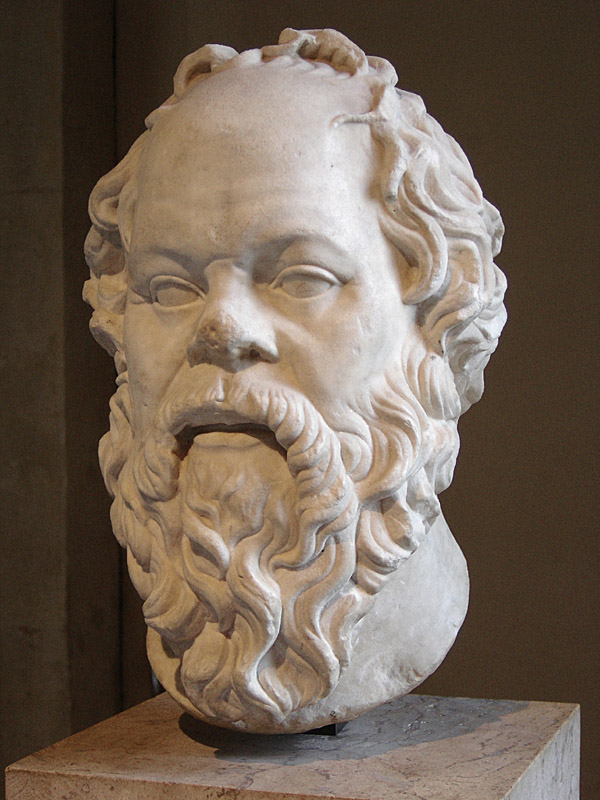
Socrates, The Louvre

Socrates, The Louvre

Is it true Socrates said
we should argue every problem
sober and then drunk? Well fed
then hungry? Free then enslaved? When
we try to ascertain truth,
historical or otherwise,
science, engineering, math–
is the answer that we all prize
irrefutable? Will all
bow down to its logic, reason,
pertinence? Or will it fail
to win the imagination,
hearts as well as minds–dreamers
as well as the philosophers?

– Steve Shoemaker, Urbana, IL, May 18, 2013

The Prison Church of the Good Thief

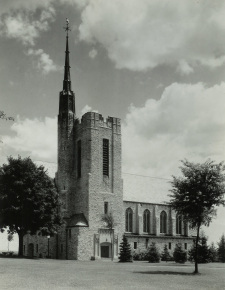
The Church of the Good Thief, Clinton Correctional Facility, Dannemora, NY

The Church of the Good Thief, Clinton Correctional Facility, Dannemora, NY

Dannemora, New York, home of Clinton Correctional Facility

Dannemora, New York, home of Clinton Correctional Facility

Within the forbiddingly high walls of the NY State Prison in the village of Dannemora stands a remarkable structure: The Church of St. Dismas (the Good Thief).

The prison is now known as “Clinton Correctional Facility,” but to the inmates across the state of New York it is known as “the Hell Hole” of the New York prison system – “New York’s Siberia” – because it is cold in the northeast corner of New York. The inmates of Attica think of Dannemora the way people outside the system think of Attica – the most dreaded place in the New York prison system.

The Church of St. Dismas was built by the prisoners between the years of 1939 and 1941 as a witness to God’s presence within the walls of the prison. Its name pays homage to the thief next to Jesus of Nazareth, the political criminal who was pardoned and promised Paradise.

On the Wednesday evenings between 1974 and 1977 I drove across the Adirondacks from our home in Canton, New York to Dennemora where a group of church members, college students, and university faculty put on programs and visited with prisoners. The times with the inmates confirmed what I had read in Kai Erickson’s incisive book Wayward Puritans: a Study in the Sociology of Deviance in which he argued that society creates and maintains deviance as a means to identifying itself as the opposite of “the other”.

Leaving Dannemora those Wednesday nights, the sound of the iron prison gates clanging shut marked the clear difference between inside and outside the walls. I drove back across the mountains, remembering the conversations with “Blue” and other men I’d just left inside. Like those who built the Church of St. Dismas with their own hands, I remembered the criminal crucified with Jesus, and drove home from the prison “yard” to the yards we mowed back home in Canton where the walls were invisible.

Later I learned the Taize Community (France) chanted prayer of “the penitent thief’ set to music: “Jesus, remember me when you come into your Kingdom”.

April 16, 2012

What the Book of Revelation was REALLY about

No book has been more abused and abusive than the Book of Revelation.

Gunnison Memorial Chapel, St. Lawrence University, Canton, NY

Gunnison Memorial Chapel, St. Lawrence University, Canton, NY

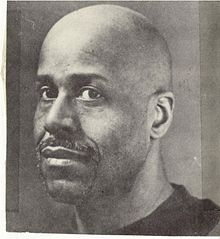
Martin Ramirez Sostre. inmate held in solitary confinement, later pardoned.

Martin Ramirez Sostre. inmate held in solitary confinement, later granted clemency by NY Gov. Carey..

Below are excerpts from a sermon preached at the Gunnison Memorial Chapel of St. Lawrence University in Canton, NY inspired by Martin Sostre and re-reading the Book of Revelation. The sermon was published by The Christian Century (March, 1974).

The first half of the “Worship and Resistance: The Exercise of Freedom” introduces the hearer/ reader to the case of Martin Sostre’s resistance as a political prisoner incarcerated in solitary confinement at Clinton Correctional Facility in Dannemora, NY, known as “New York’s Siberia” or, as the inmates refer to it, “the Hell Hole of the New York Prison system”.

It was during my weekly Wednesday evening program and visits with prisoners there that I learned about the case of Martin Sostre, held in solitary confinement in resistance to dehumanizing prison practices, and joined the campaign for his pardon.

Excerpts from “Worship and Resistance: The Exercise of Freedom:

“Incarcerated on the Aegean Island of Patmos, a penal settlement of the Roman Empire in the first century A.D., was a political prisoner named John. He wrote a political-religious manifesto declaring open resistance to the Roman Empire. The Revelation to John – the Apocalypse, the last book of the Bible – is the earliest extant Christian tract deliberately and openly directed against the pretensions of the world’s greatest power. In the Revelation to John, resistance to Roman power and authority is so inextricably bound together with worship of God that they constitute two sides of the same coin. Worship and resistance are the twin sides of faith’s freedom to celebrate God’s gift of life. The unity of resistance and worship is expressed with notable clarity in the passage where the fall of mighty Babylon occasions a celebration in heaven. The destruction of Babylon is joined to the salvation of the world itself and is the sign of God’s power and righteous rule over the nations. Only those who profit by Babylon’s wealth, power and injustice have reason to mourn her fall, while those who have ‘come out of her’ – who have disentangled themselves from her oppression, corruption and imperial claims – have cause to worship God and sing joyful hymns of praise.”

….

“Babylon is the state or nation in its presumption to be God. Babylon is any state, nation, or constellation of principalities and powers, which attempts to rule as final judge of persons and nations. Babylon is any such power – in any time or place – which makes its people subjects, calling them into idolatry of the nations, and any state or nation that persecutes its prophets of righteousness, peace and justice while rewarding the aggressive supporters and the silent ones who acquiesce. America is Babylon.”

….

“Envision once more a visit to Clinton Correctional Facility. Remember the disorienting sensation of having left everything familiar on the other side of the wall, the feeling of walking out of a real world into a nightmare, the shock induced by the size of the walls and the presence of the guards – strange and terrifying.

“But the closer one gets to the prison reality, the more one comes to realize that it is not so strange, that it is simply a more exaggerated and visible form of our own everyday reality in the face of death. Here on the outside, the walls are not visible, but they are much higher. Out here the guards do not stand poised with machine guns, but they are real and far more powerful – the guards our own fears provide.”
….
“Then I heard another voice from heaven ssying, ‘Come out of her, my people, lest you take part in her sins…’” (Rev. 18:4 RSV).

A commentary will follow soon on my experience of visiting Martin during the time he was transferred to the Federal Detention Center in NYC where he was held as a witness in someone else’s trial. Prior to that visit, none of us in Northern New York had been able to meet with Martin because of his refusal to see visitors on the principle that the rectal “searches” required before and after visits violated his human rights.

NY Governor Carey eventually issued a pardon.

Wilderness – Carl Sandburg, Jesus, and Us

Boundary Waters Canoe Areas Wilderness, Minnesota

Boundary Waters Canoe Area Wilderness, Minnesota

Once upon a time a pompous nobleman paid a call to the English Embassy in St. Petersburg, Russia. He walked into the office and demanded to see the ambassador immediately. “Pray, take a chair,” said the young attaché, “the ambassador will be here soon.”

The visitor took exception to the off-hand way he had been treated. “Young man, do you know who I am?” he demanded, and recited a list of his many titles and appointments.

The lowly attaché listened, paused and said, “Well then take two chairs.”

Pride, vanity, greed, self-deception, and illusions of grandiosity are part of the human condition.

We are creatures of the wilderness, wanderers and sojourners in time who have here no lasting city to dwell in. And so, as in the legend of the Tower of Babel in The Book of Genesis (chapter 11), we (humankind) come upon the Plain of Shinar . . . or some other version of it. . . and settle down to rid ourselves of anxiety . . . and we settle there as though we could build something permanent that would be a fortress against the uncertainties of the wilderness and the knowledge of ultimate vulnerability and ultimate dependence. We build our own societies and towers of Babel.

Yet there is something about us that still loves a wilderness. Something in us that knows that refusing the nomadic wilderness – “and as they journeyed, they came upon the Plain of Shinar, and settled there” – is fraught with greater danger and social peril. Something in us knows better than to settle down on the Plain of Shinar to build something impervious to the dangers of the wilderness and time. Something in us knows that the brick and mortar will crumble, that the projects of pride, vanity, and greed will fall of their own weight, and that the high towers we build with the little boxes at the top that presume to house and control Ultimate Reality (G-d) are little more than signs of a vast illusion, the vain act of species grandiosity. For in the Hebrew tale of the tower of Babel with its “top in the heavens,” the joke’s on us. The narrator speaks truth with humor: God has to come down to see this high tower.

Every society and culture has its own version of the city and the tower of Babel. Equally so, in every society there is at least the memory of the wilderness, a sense of call to recover our deeper selves as mortals whose destiny is only found by traveling beyond the politics and religiosity of pride, vanity, greed, self-deception, and grandiose illusions.

Perhaps that is why John the Baptist heads out to the wilderness – “the voice of one crying in the wilderness” – away from delusions and distractions of the city of Babel. Perhaps that is also why, as scripture tells it, the masses also went out to the wilderness and the Jordan River to go under the muddy Jordan waters to rise to the hope of a fresh beginning on the other side of the formative influences of Babel-ing nonsense.

After the authorities imprison John, Jesus asks the crowds what had drawn them to John in the wilderness. “What did you go out to see? A reed shaken by the wind? A man clothed in soft raiment? No. Those who wear soft clothing live in kings’ houses. What then, did you go out to see?”

Jesus begins his ministry in the wilderness. He partakes of John’s baptism, and when he did, the Spirit grasped him and called him further into the wilderness, “drove him into the wilderness” – away and apart from all distractions and illusion – back to the place where humankind lives before it “settles” to build the political-economic-religious tower, the impervious fortress and monuments to itself in the Plain of Shinar.

Those who would learn from the Genesis legend and those who wish to follow Jesus are called into the wilderness to restart the long spiritual journey that stopped too early.
For the fact we deny is that underneath all our steel, glass, and technology, we are still animals – mortals subject to the most primitive yearnings, vulnerable creatures who possess nothing.

In his poem “The Wilderness” American poet laureate Carl Sandberg realized a great truth long before it came into vogue.

There is a wolf in me . . . fangs pointed for tearing gashes . . . a red tongue for raw meat . . . and the hot lapping of blood—I keep this wolf because the wilderness gave it to me and the wilderness will not let it go.

There is a fox in me . . . a silver-gray fox . . . I sniff and guess . . . I pick things out of the wind and air . . . I nose in the dark night and take sleepers and eat them and hide the feathers . . . I circle and loop and double-cross.

There is a hog in me . . . a snout and a belly . . . a machinery for eating and grunting . . . a machinery for sleeping satisfied in the sun—I got this too from the wilderness and the wilderness will not let it go.

There is a fish in me . . . I know I came from salt-blue water-gates . . . I scurried with shoals of herring . . . I blew waterspouts with porpoises . . . before land was . . . before the water went down . . . before Noah . . . before the first chapter of Genesis.

There is a baboon in me . . . clambering-clawed . . . dog-faced . . . yawping a galoot’s hunger . . . hairy under the armpits . . . here are the hawk-eyed hankering men . . . here are the blonde and blue-eyed women . . . here they hide curled asleep waiting . . . ready to snarl and kill . . . ready to sing and give milk . . . waiting—I keep the baboon because the wilderness says so.

There is an eagle in me and a mockingbird . . . and the eagle flies among the Rocky Mountains of my dreams and fights among the Sierra crags of what I want . . . and the mockingbird warbles in the early forenoon before the dew is gone, warbles in the underbrush of my Chattanoogas of hope, gushes over the blue Ozark foothills of my wishes—And I got the eagle and the mockingbird from the wilderness.

O, I got a zoo, I got a menagerie, inside my ribs, under my bony head, under my red-valve heart—and I got something else: it is a man-child heart, a woman-child heart: it is a father and mother and lover: it came from God-Knows-Where: it is going to God-Knows-Where—For I am the keeper of the zoo: I say yes and no: I sing and kill and work: I am a pal of the world: I came from the wilderness.

Jesus of Nazareth, whom Christians call The Christ, walked in our wilderness to live authentically and faithfully as a human being among all the beasts of the menagerie that were part of his nature and are part of our nature. Immediately after he had gone down into the waters to die to the worlds that would fool and twist him, and just as quickly as the voice from heaven declared him “my beloved Son in whom I take pleasure,” the spirit immediately drove him into the wilderness. As the Gospel of Mark narrates the story, he was there for forty days among the wild beasts, and angels ministered to him.

By God’s grace and power, may it be so also with us.

Sermon preached by Gordon C. Stewart, Shepherd of the Hill Presbyterian Church in Chaska, MN.

Alt-Facts and the ‘Anti-Christ’

Talk radio host

Talk radio host

Views from the Edge re-publishes this piece on Maundy Thursday, 2017. It first appeared here on March 24, 2010. Sadly, nothing much has changed. The U.S. was sucker-punched by the apocalyptic spirituality of the alt-right politics of Rush Limbaugh and Steve Bannon.

Something from the Christian tradition – the idea of ‘the Anti-Christ’ – is lifting its ugly head, a word and concept that could trigger unthinkable tragedy unless we clean up our civil discourse.

According to Harris Interactive Poll taken between March 1 and 8, “more than 20% believe [President Obama] was not born in the United States, that he is ‘the domestic enemy the U.S. Constitution speaks of,’ that he is racist and anti-American, and that he ‘wants to use an economic collapse or terrorist attack as an excuse to take dictatorial powers.’ Fully 20% think he is ‘doing many of the things that Hitler did,’ while 14% believe ‘he may be the anti-Christ’ and 13% think ‘he wants the terrorists to win.”

The poll reflects what we all know: our civic health as a nation is being poisoned by inflammatory rhetoric from both sides of the political aisle. This toxic disregard for truth lies behind the results of the Harris Poll. Trigger words like ‘socialist,’ ‘communist,’ ‘terrorist,’ ‘anti-American,’ and ‘the Anti-Christ’ and the allegation that America’s first black president is the nation’s chief domestic enemy take us beyond the McCarthyism of the ‘50s. This cocktail is lethal.

As a Christian pastor I rue the use of Christian scripture to stoke the fires of fear and hate. The Christian life – or spiritual life of any sort, for that matter – is a life of discernment about the powers that shape ordinary life. It is not blind to evil. But loud spirituality is an oxymoron. We need to be reminded that all the great religions hold some version of the essential tenet expressed in the First Letter of John. “Whoever says he is in the light and hates his brother is in the darkness still” and “If any one says, ‘I love God,’ and hates his brother, he is a liar, for he who does not love his brother whom he has seen cannot love God whom he has not seen. And this commandment we have from him, that he who loves God should love his brother also.”

Labeling the President of the United States ‘the Anti-Christ” gives deranged minds a license to kill . . . in the name of the non-violent, crucified Jesus. If some deranged American patriot like the Marine who plotted to assassinate the President should succeed . . . God forbid! . . . the blood will be on the hands of all who remained silent when the hate speech was being poured into the public stream of consciousness. And if you claim to be a disciple of Jesus, get yourself to church Maundy Thursday and Good Friday to ground yourself again in the love that conquers hate and fear.

  • Gordon C. Stewart, Chaska, MN, Maundy Thursday morning, Chaska, MN.