The Hostages 2019

Going through airport security recently, I thanked the TSA employees for working. Other passengers did the same. It’s an odd thing to do. We expect employees to show up for work. We also expect their employers to pay them for their work. No one can expect employees to work without compensation.

New flag of the TSA unveiled at the TSA’s 2018 commemoration of the 9/11 attacks.

These TSA workers have families. Their needs are not shut down. Only the paychecks that pay the rent and utility bills, the public transportation to and from work, groceries, insurance, prescriptions, and day care for their families are shut down.

Denver Airport security

“Thank you for working,” said the passengers going through the security procedures put in place to prevent another high-jacking like those on 9/11. Their work is essential to national security. Looking back on it, I’m ashamed of myself. You don’t thank hostages for being hostages. You free them from their hostage-taker . . . without paying the $5.1 Billion ransom to make America safe again.

— Gordon C. Stewart, Chaska, Minnesota, January 20, 2019

The Wall: a documentary

We offer this morning “The Wall: A 2,000-mile border journey,” a short documentary fly-over of the Southern border of the U.S.A.

You can’t make this up. The topography speaks for itself.

Thanks for coming by Views from the Edge.

— Gordon C. Stewart, Chaska, Minnesota, January 9, 2019.

National Emergency

The Big Lie

Yesterday President Donald Trump said the government shut-down could go on for months or even years. There will be no end to the Mexican standoff until Congress agrees to fund his campaign promise to build a wall on our southern border.

That’s not what he promised. The campaign promise had two parts. 1) A wall would be built on the Mexican border, and 2) Mexico would pay for it. It wouldn’t cost American taxpayers a dime. If it didn’t happen, he would issue an apology to the electorate.

Mexico refused to pay for the wall. There’s been no apology. What the nation gets instead is a tantrum.

Later in the day, the president pulled out a trump card from his sleeve. He could invoke the National Emergencies Act to declare a national emergency. “I can do it if I want to,” he said at today’s press conference.

The border wall built by Mexico was always a hoax. Now, it’s also a distraction. The wall that’s needed is not made of steel or concrete. It’s built of an informed electorate, on the one hand, and an invisible cyber wall that protects the integrity of the American electoral system and the security of at-risk power grids, nuclear silos, and communication and command networks.

The government shutdown is based on a Big Lie. Or two. Or three.

The Big Truth

There is a real national emergency. It occupies the Oval Office, stands before microphones, and sends out daily tweets to garner attention and continue the hoax. It sits in the offices of the president’s cabinet members who have not the courage to invoke the 25th Amendment that would remove the threat from the Oval Office. It sits in a Congress that has failed to exercise its constitutional duty to oversee the integrity of the government institutions. It comes in threats to Robert Mueller’s investigation into foreign interference in the 2016 American election process.

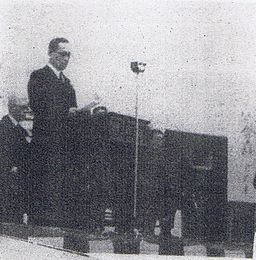
Joseph Goebbels, Chancellor of Nazi Germany, wrote of the Big Lie as a propaganda technique in reference to the English in “Aus Churchills Lügenfabrik” (English: “From Churchill’s Lie Factory”) dated January 12, 1941: “The essential English leadership secret does not depend on particular intelligence. Rather, it depends on a remarkably stupid thick-headedness. The English follow the principle that when one lies, one should lie big, and stick to it. They keep up their lies, even at the risk of looking ridiculous.” – Aus Churchills Lügenfabrik (“From Churchill’s Lie Factory”), January 12, 1941.

Seventy-eight years after Goebbel’s publication on the lie factory, and 75 years after Joseph McCarthy used the Big Lie here in America, the Big Lie again stares us in the face. So does The Big Truth, as American poet James Russell Lowell expressed it during the American Civil War in his poem “The Present Crisis.” I was raised on the hymn “Once to Every Man and Nation” with the lyrics from Lowell’s poem. It etched in my heart and mind that the decisions we take make a difference to this world.

“Once to every nation Comes the moment to decide In the strife of truth with falsehood. . . .Though the cause of evil prosper, Yet ’tis truth alone is strong. . . . ” — James Russell Lowell (1819-1895), “The Present Crisis.” 

— Gordon C. Stewart, Chaska, MN, January 4, 2018.

For background on “the Big Lie” as a propaganda tool, click The Big Truth of a Working Democracy, published yesterday on Views from the Edge.

Tell Out My Soul

Tell out, my soul, the greatness of His might!
Powers and dominions lay their glory by;
Proud hearts and stubborn wills are put to flight
;
The hungry fed, the humble lifted high.

“Tell Out My Soul” rang out across the world yesterday, the last Sunday of Advent and the first Sunday of the government shut-down in the USA. The third stanza (above) expresses a timeless and timely hope.

In the immortal words of Timothy Cratchet (Tiny Tim) to Ebenezer Scrooge’s “Bah, humbug!” (A Christmas Carol): “God bless us, every one!”

  • Gordon C. Stewart, Chaska, MN, December 23, 2018.

You Tyrant!

Recalling Steve Shoemaker’s post “A Song for Each Kind of Day” after returning to the habit of reading the Psalms each morning, I am stunned by the aptness of the Psalm for today.

The Psalms are existential in nature. They are profoundly personal, but they also address public life. They give voice to the heart’s desire in a given time and place — our thanksgivings, yearning, exultations, lamentations, and cries against injustice. Often they are the poet’s responses to public life in the light of faith.

THAT’S NOT NICE!

You tyrant, 

why do you boast of wickedness 

against the godly all day long?

 You plot ruin;

Your tongue is like a sharpened razor,

O worker of deception.

 You love evil more than good

and lying more than speaking the truth.

You love all words that hurt,

O you deceitful tongue.

 Oh that God would demolish you utterly,

topple you, and snatch you from your dwelling,

and root you out of the land of the living!

 The righteous shall see and tremble, 

and they shall laugh at him, saying,

“This is the one who did not take God for a refuge,

but trusted in great wealth

and relied upon wickedness.”

  • Psalm 52:1-7 (Book of Common Prayer)

Psalm 52 isn’t nice. The psalmist knew nothing of Watergate or the Mueller investigation, or Donald J. Trump. Nor was he imbued with an ethic that told him not to judge, to be kind, to watch his tongue, to believe that all’s right with the world because God’s in His heaven or the claim everything happens for a reason.The psalmist is not a fatalist or a determinist. He holds sacred his personal responsibilty for public life. His life is not his own. He knows himself to be a member of a commonwealth. When the integrity of the commonwealth comes under threat, his heart must speak.


BREAKFAST WITH A PSALMIST

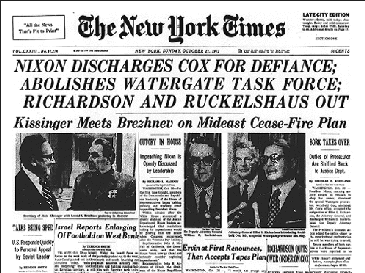
Former U.S. Attorney General Elliot Richardson is remembered for “the Saturday Night Massacre” when he resigned his office, refusing to obey President Richard Nixon’s order to fire Watergate Special Prosecutor Archibald Cox. 

NYTimes_Saturday_Night_Massacre.jpegYears later, Elliot Richardson came to Minneapolis as the featured speaker at the Westminster Town Hall Forum. As was the custom, he moderator and the guest speaker enjoyed conversation over breakfast the morning of the Forum. At his initiation, the convsersation turned to religion. He was writing a book, occasioned in part by the growing public agreement with John Lennon’s “Imagine There’s No Religion,” arguing that, if the slate of human history were wiped clean of religion, we would re-create it in a heartbeat because it’s in our nature. Searching Amazon’s listing of Richardson’s books, it appears it was never published. If we had the opportunity again all these years later, I would ask him if he had crawled inside Psalm 52 before he took the leap of faith that made him a hero of personal conscience and public intergrity.

ONLY A POEM (A PSALM) 

Some things are matters of the heart. Some things in public life pierce the heart so deepLy; some sins against the commonwealth are so egregious; some wealth is so obscene; some abuses of power against the commonwealth so obvious, that only a poem (a psalm) says what we feel. There is a psalm for this kind of day.

  • Gordon C. Stewart, on the wetland, Dec. 18, 2018

Escape at Dannemora

Watching the first episode of Showtime’s new series Escape at Dannemora was a de ja vu experience. The small town of Dannemora, tucked away in the far northeast corner of New York State, had been invisible to the public eye until June 6, 2015 when two inmates escaped from the town’s principal employer, the state penitentiary, Clinton Correctional Facility.
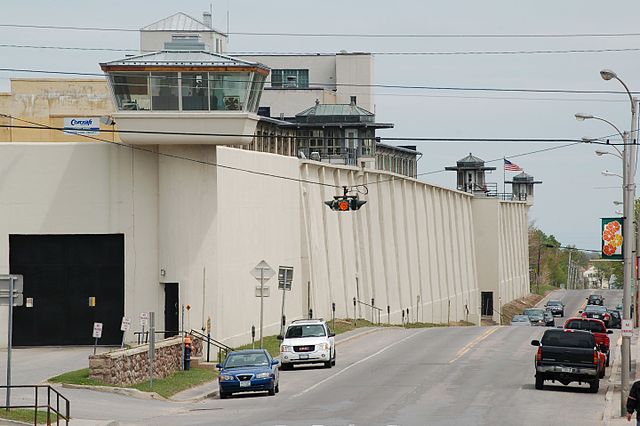
Clinton_correctional_facility,_Dannemora,_NY,_2007

Clinton Correctional Facility, Dannamora, NY

How I learned of Martin Sostre

It was during the weekly Wednesday evening programs and visits with inmates at Dannemora that I learned about the case of Martin Gonzalez Sostre. Martin, who had owned and operated a radical black liberation bookstore in Buffalo, NY, insisted on his innocence, claiming he was a prisoner of conscience framed by a police set-up. Before his transfer to Dannemora from Attica, Martin he had filed and won the human rights court case — Sostre v. Rockefeller — that ruled against the routine practice of rectal searches following prisoner visitations with family and friends. Transferred from Attica to “New York’s Siberia” Dannemora, Martin continued to refuse all visitations. He was held in solitary confinement without access to anyone beyond the prison walls. A campaign for Martin’s release and pardon was happening without the benefit of direct access to Martin.

Martin Sostre and the Book of Revelation

No book of Christian scripture is more egregiously abused than the last book in the New Testament. The Apocalypse of John (Book of Revelation) is read as though it were a palm reader or a crystal ball. It wasn’t. Its author was a prisoner of conscience held by the Roman Empire on the Isle of Patmos. It was then, and is now, a work of social criticism expressed in the strange apocalyptic literary genre of its time. It’s not about the future. It’s about now.

The new series on the escape from Dannemora takes me back to my time with the inmates and guards within the prison walls, and the published sermon that came from that experience. Below are excerpts from the sermon at the Gunnison Memorial Chapel of St. Lawrence University in Canton, New York inspired by a prisoner of conscience named Martin Sostre and a fresh reading of The Book of Revelation through the eyes of the oppressed. The sermon “Worship and Resistance: the Exercise of Freedom,” was published soon after by The Christian Century (March, 1974).

“Worship and Resistance” links the case of Martin Gonzalez Sostre’s imprisonment in solitary confinement at Clinton Correctional Facility with the witness of faith by the prisoner of conscience in his own kind of solitary confinement on the Isle of Patmos. Dannemora is its own kind of island, known by inmates across the State of New York Correctional System, as “New York’s Siberia” — “the Hell Hole” of the New York prison system.

Excerpts from “Worship and Resistance: The Exercise of Freedom”

“Incarcerated on the Aegean Island of Patmos, a penal settlement of the Roman Empire in the first century A.D., was a political prisoner named John. He wrote a political-religious manifesto declaring open resistance to the Roman Empire. The Revelation to John – the Apocalypse, the last book of the Bible – is the earliest extant Christian tract deliberately and openly directed against the pretensions of the world’s greatest power. In the Revelation to John, resistance to Roman power and authority is so inextricably bound together with worship of God that they constitute two sides of the same coin. Worship and resistance are the twin sides of faith’s freedom to celebrate God’s gift of life. The unity of resistance and worship is expressed with notable clarity in the passage where the fall of mighty Babylon occasions a celebration in heaven. The destruction of Babylon is joined to the salvation of the world itself and is the sign of God’s power and righteous rule over the nations. Only those who profit by Babylon’s wealth, power and injustice have reason to mourn her fall, while those who have ‘come out of her’ – who have disentangled themselves from her oppression, corruption and imperial claims – have cause to worship and sing joyful hymns of praise.”

+++

William Stringfellow

William Stringfellow

“Babylon is the state or nation in its presumption to be God. Babylon is any state, nation, or constellation of principalities and powers, which attempts to rule as final judge of persons and nations. Babylon is any such power – in any time or place – which makes its people subjects, calling them into idolatry of the nations, and any state or nation that persecutes its prophets of righteousness, peace and justice while rewarding the aggressive supporters and the silent ones who acquiesce. America is Babylon.” –William Stringfellow, An Ethic for Christians and Other Aliens in a Strange Land.

“Envision once more a visit to Clinton Correctional Facility. Remember the disorienting sensation of having left everything familiar on the other side of the wall, the feeling of walking out of a real world into a nightmare, the shock induced by the size of the walls and the presence of the guards – strange and terrifying.

“But the closer one gets to the prison reality, the more one comes to realize that it is not so strange, that it is simply a more exaggerated and visible form of our own everyday reality in the face of death. Here on the outside, the walls are not visible, but they are much higher. Out here the guards do not stand poised with machine guns, but they are real and far more powerful – the guards our own fears provide.”
+++
“Then I heard another voice from heaven saying, ‘Come out of her, my people, lest you take part in her sins…’” (Rev. 18:4 RSV).

Meeting Martin Face-to-Face
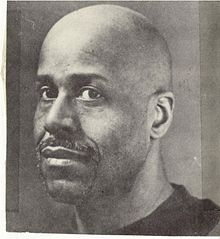
Martin Sostre

Martin Gonzalez Sostre

Sometime following the sermon at Gunnison Memorial Chapel, a Dannemora guard informed us during the Wednesday visits with prisoners that Martin had been transferred temporarily to the Federal Detention Center in lower Manhattan, NYC, as a witness in someone else’s trial.  Unlike the state system, there are no body searches after visitations in the federal system. Martin would be free to accept visitors.

As a “man of the cloth” it fell to me to attempt a face-to-face visit on behalf of the committee working for Martin’s release. I drove the eight hours to lower Manhattan,  put on my clerical collar and presented myself to the kindly woman at the Detention Center reception desk as Martin’s pastor, hoping that 1) the prison officials would be unaware that Martin was not a Christian, and 2) Martin himself would accept the visitation from a complete stranger who claimed to be his pastor. A description of the experience just before the face-to-face visit appeared previously on Views from the Edge. Click “Robert” Who? for that part of the story.

The Release of Martin Sostre

In December 1973 Amnesty International put Sostre on its “prisoner of conscience” list, stating: “We became convinced that Martin Sostre has been the victim of an international miscarriage of justice because of his political beliefs . . . not for his crimes.” In addition to numerous defense committees in New York State, a Committee to Free Martin Sostre, made up of prominent citizens, joined in an effort to publicize Sostre’s case and petition the New York Governor Hugh Carey for his release. On December 7, 1975, Russian Nobel Peace Laureate Andrei Sakharov added his name to the clemency appeal. Governor Carey granted Sostre clemency on Christmas Eve of 1975; Sostre was released from prison in February 1976. Governor Carey eventually issued a pardon. — Wikipedia.

Worship and resistance are two sides of the same coin.

  • Gordon C. Stewart, Chaska, MN, December 16, 2018

It’s about time!

TIMELY REFLECTIONS OF AN ANACHRONIST

Original movie poster for Being ThereRobert Mueller III’s and the Southern District of New York’s court filings, and the President’s response, confirm that “Individual-1” never should have been administered the oath of office “to protect and defend the Constitution of the United States of America.”

The people around the Oval Office are the only brakes on the man who, like Chauncey (“Chance”) Gardner, played by Peter Sellers, in the humorous film Being There, spends his days watching his favorite television shows, doesn’t read, and reduces complexity to the simplest of terms. 

Ron Steigler: Mr. Gardner, uh, my editors and I have been wondering if you would consider writing a book for us, something about your um, political philosophy, what do you say?

Chance: I can’t write.

Ron Steigler: Heh, heh, of course not, who can nowadays? Listen, I have trouble writing a postcard to my children. Look uhh, we can give you a six figure advance, I’ll provide you with the very best ghost-writer, proof-readers…

Chance: I can’t read.

Ron Steigler: Of course you can’t! No one has the time! We, we glance at things, we watch television…

Chance: I like to watch TV.

Ron Steigler: Oh, oh, oh sure you do. No one reads!

MY SON’S QUESTION

Wooden_hourglass_3Soon after my young son learned to read, he asked a philosophical question: “What’s time?” “Time is what we have” was the best I could do. The other day a photograph of an ill-cared for, deteriorating church with a clock that still works led me back to Douglas’s question. I’m older now. Not wise. Just older. But I tell myself that length of years sometimes brings us closer to the outskirts of wisdom than when our years were few and our days seemed longer. At my age, when speed and virtual reality fill our lives, I would add an addendum: “Time is what we have but refuse to recognize.
A MATTER OF PERSPECTIVE

In Being There, Louise, who has raised Chance from early childhood, is watching Chance on television with other poor black seniors.

Louise: “It’s for sure a white man’s world in America. Look here: I raised that boy since he was the size of a piss-ant. And I’ll say right now, he never learned to read and write. No, sir. Had no brains at all. Was stuffed with rice pudding between th’ ears. Shortchanged by the Lord, and dumb as a jackass. Look at him now! Yes, sir, all you’ve gotta be is white in America, to get whatever you want. Gobbledy-gook!”

Chance and Donald are a lot alike. Neither reads. Both watch television all day. Both are white. Both are stuffed with rice pudding between their ears. Both speak gobbeldy-gook. Yet they are also very different. One strikes us as funny. The other does not. One is a pure soul. The other is cunning. One is entertaining. The other is dangerous. 

IT’S ABOUT TIME!

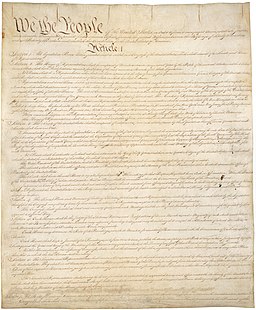
256px-Constitution_of_the_United_States,_page_1It’s time to recognize what time it is. Time for Congress to speak aloud the real name of Individual-1.  Time to act on the sworn testimonies of Michael Flynn, Michael Cohen, Manafort, et. al. alleging behavior that “subverts and attacks the Constitution of the United States of America.” Time to care for, and restore, the deteriorating rule of law under the Constitution.

  • Gordon C. Stewart, Chaska, MN, December 8, 2018,

Go home! There’s no room for you in this inn!

And so it came to pass in the third century of a democratic republic that the Wise Men returned to the countries from which they had come. Their sudden departure came the same way they had come: they had seen a star rising in the West. 

The original star that invited them to follow it was a sign of great promise. It was a lofty promise — a bright star in a dark sky — beckoning them to go and see this great thing that had come to pass. Leaving behind their camels, they boarded ship with only a trace of frankincense, gold, myrrh, and a translator, and followed the star to a foreign continent.

Statue of Liberty –NY Harbor

Having braved the high seas, they saw a statue over which the star stood still. A torch held high in the Lady’s hand burned as brightly as the star that shone above her, and a plaque was there they could not read. “Send these . . . tempest-tossed to me,” read the translater, “I lift my lamp beside the golden door!” And, hearing the words of welcome . . . they opened their gifts of gold, frankincense and myrrh and with exceeding great joy set foot upon the land and settled there.

There would be times when the Wise Men and their descendants continued to see the star shining still above the Lady of welcome, and times when the star was covered by clouds and the Lady stood battered by storms, but the flame seemed eternal. 

Then, suddenly, in the third century of their sojourn, the different kind of star appeared — an entertainer who scoffed at the modest amounts of gold, frankincense, and myrrh which the tempest-tossed Wise Men had presented the Lady to whom the star had led them. And so it came to pass in the republic’s third century that the Wise Men’s descendants boarded ship for the East, escaping the new star who was wrestling babies from their parents’ arms, extinguishing the torch over which the star once had stood, and replacing the plaque at the foot of the Lady with a new message:

Go home! There’s no room for you in this inn.”

— Gordon C. Stewart, Chaska, MN, November 29, 2018

Open Letter to President Trump

November 15, 2018

Dear Mr. President,

I’m concerned for the country. I’m also worried about you. The two go hand-in-hand, yet they are not the same. Though we have never met, we share something: we were baptized in Presbyterian churches. Neither of us can remember that moment. We were infants. We had no choice.

Because we do have a choice now, I write to share with you the story of another person who, unlike us, was old enough to choose.

Kosuke Koyama was 15 years old at the time. Japan was his country. Tokyo was his home. The United Church of Japan was his church family. The scene of his baptism could not be more different from ours. It was 1945 during the American fire bombing of Tokyo. The worshipers could hear the bombs exploding all around the church. Through the windows they could see the flames.

His pastor gently took  Koyama’s face in his hands, looked him in the eye, and charged him with words that succinctly say what baptism into Christ means:”Kosuke, you are a disciple of Jesus Christ. You must love your enemies. Even the Americans.” It was a defining moment for the rest of Kosuke’s life.

Kosuke Koyama - RIP

Kosuke Koyama (1929-2018 “Well done, good and faithful servant” (Mt. 25:23) RIP

Through the eyes of faith, Koyama later plumbed the depths of that moment, and came to a deeper understanding of what had happened to his native country. Japan had come to regard itself as exceptional — a singularly superior nation and culture. Japan had made itself into its own house god. It had twisted love of country (patriotism) into nationalism, and nationalism gave license for imperialist adventures that led to unimaginably horrific consequences. In 1967 the United Church of Japan issued a Confession of Responsibility During World War II as a way of restoring the church’s integrity.

Kosuke Koyama died in 2009 after a distinguished professional career that officially ended with his retirement from the John D. Rockefeller Chair of World Religion at Union Theological Seminary in your home city. Robert McAfee Brown, who wrote the book you and I were assigned to read in confirmation class, The Bible Speaks to You, was Koyama’s faculty colleague. During his 14 years at Union Seminary, and following his retirement, Dr. Koyama created a legacy that lives on in his books (Water Buffalo Theology, Mount Fuji and Most Sinai, No Handle on the Cross, and others) and in the lives of those he influenced by his teaching and humble character.

World War I centenary

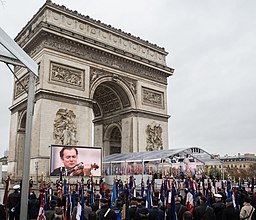
World War I Centenary, Paris, France, Nov. 11, 2018

Today you call yourself a nationalist. You have embraced the great sin that Kosuke came to see so clearly in his native country. Watching you at the Arc de Triomphe last week for the 100th anniversary of the armistice that ended World War I, I saw you through Koyama’s lens of faith. You sat among the company of other world leaders, but you looked very alone. Sitting very nervously away from the spotlight, you waved back to someone, as if to assure yourself of your importance. I saw a very lonely man without the company of friends and allies. In that moment, I felt a bit of sympathy for you. I wished you could slip away to a nearby cafe where we could talk, just the two of us as pastor and president.

Trump and Macron III July 2017Then I heard the President of France, Emmanuel Macron, step to the podium to issue a rebuke to nationalism as “a betrayal of patriotism” that eliminates what makes a nation great: its moral compass. While my heart leaped for joy, I wondered what you were feeling and thinking all alone there in Paris.

Patriotism is the exact opposite of nationalism. Nationalism is a betrayal of patriotism. By saying “our interests first, who cares about the others,” we erase what a nation holds dearest, what gives it life, what makes it great and what is essential: its moral values. I know there are old demons which are coming back to the surface. They are ready to wreak chaos and death. History sometimes threatens to take its sinister course once again.

I thought again of Koyama and wondered whether it would have made a difference if your pastor had baptized you during a bombing raid when you were old enough to choose, looked you in the eye, and said, “Donald, you are a disciple of Jesus Christ. You must love your enemies [and friends], even the French.” New York Avenue Presbyterian Church, a short walk from the White House. It was President Abraham Lincoln’s home church during his presidency. Mr. and Mrs. Lincoln worshiped there to hear a word from a free pulpit which they knew they could not command. It could become a home for you, Melania, and Baron, too.

I will pray for you. I will love our country. But I will not worship it. Neither should you.

Respectfully,

Gordon C. Stewart

Retired Minister (HR), Presbyterian Church (USA), Chaska, MN


The Night of Broken Glass

Krystallacht Magdeburg

Photo from Magdeburg, Germany, Nov. 9-10, 1938, Kristallnacht (The Night of Broken Glass)

Today marks the 80th anniversary of The Night of Broken Glass (Kristallnacht).

The smiling man and woman in the photo are strolling past the broken glass of raided shops of the Jewish shopkeepers in the otherwise tranquil city of Magdeburg, Germany. The passers-by likely have never heard of Mechtild of Magdeburg, the 13th Century mystic beguine who had declared that “No one can burn the truth,” nor had they heard the screams or seen the tears of the shopkeepers or synagogue worshipers. Those screams are silent now. (Scroll down for information on  Krystallnacht, The Night of Broken Glass.)

Like the synagogues of Germany, Austria, and the Sudetenland, the Tree of Life Synagogue in Pittsburgh had been a quiet place. The sound of broken glass were heard only during from the traditional breaking of a glass at Jewish weddings. Tree of Life was a sacred place of worship. But the memory of Kristallnacht and the long history of anti-Semitic pograms were, and are, never far away.

The 80th anniversary of Kristallnacht deserves greater attention in the U.S.A. this year when the evil of white nationalism has shattered the glass of the ‘others’ in synagogues, churches, and public gathering places with the weapons of destruction. Today I hear the echoes from The Night of Broken Glass and see the faces of smiling passers-by.  I stand still again in the face of evil and bow my knee before the Eternal Silence of the compassionate God we cannot kill.

  • Gordon C. Stewart, Chaska, MN, November 10, 2018.

U.S. Holocaust Museum account of Kristallnacht

On the night of November 9, 1938, violent anti-Jewish demonstrations broke out across Germany, Austria, and the Sudetenland region of Czechoslovakia. Nazi officials depicted the riots as justified reactions to the assassination of German foreign official Ernst vom Rath, who had been shot two days earlier by Herschel Grynszpan, a 17-year old Polish Jew distraught over the deportation of his family from Germany.

Over the next 48 hours, violent mobs, spurred by antisemitic exhortations from Nazi officials, destroyed hundreds of synagogues, burning or desecrating Jewish religious artifacts along the way. Acting on orders from Gestapo headquarters, police officers and firefighters did nothing to prevent the destruction. All told, approximately 7,500 Jewish-owned businesses, homes, and schools were plundered, and 91 Jews were murdered. An additional 30,000 Jewish men were arrested and sent to concentration camps. Nazi officials immediately claimed that the Jews themselves were to blame for the riots, and a fine of one billion reichsmarks (about $400 million at 1938 rates) was imposed on the German Jewish community.

The Nazis came to call the event Kristallnacht (“Crystal Night,” or, “The Night of Broken Glass”), referring to the thousands of shattered windows that littered the streets afterwards, but the euphemism does not convey the full brutality of the event. Kristallnacht was a turning point in the history of the Third Reich, marking the shift from antisemitic rhetoric and legislation to the violent, aggressive anti-Jewish measures that would culminate with the Holocaust.