The Unacceptable Risk of Impeachment
Second in a four-part series on The Resignation of Donald J. Trump by john M. Miller. Graphics and links have been added by Views from the Edge.
President Trump must be convinced it is in the nation’s interest and his own personal interest to resign the presidency. Having made that brazen assertion, it must be noted it is totally impossible under current circumstances that will happen anytime soon.
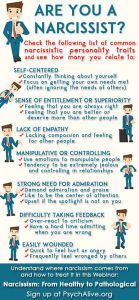
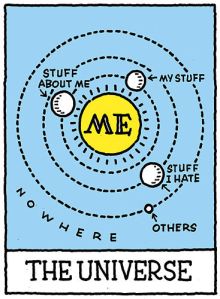 As was stated in the first of this series of four essays, our President has a very serious personality disorder. The Diagnostic and Statistical Manual of Mental Disorders is the most commonly used sourcebook to designate and describe various mental diseases and abnormalities. Its enumeration of the symptoms of narcissism is clear and lengthy.
Donald Trump fits every single one of those symptoms in astonishing and easily quantifiable detail. He constantly exhibits severely narcissistic behavior.
One of the primary characteristics of narcissists is that they are fully convinced they are rarely and perhaps never wrong. Because of that terribly unfortunate characteristic, it is almost certain that Mr. Trump would never resign anytime soon. From his standpoint, why would he? Why should he? He is convinced has done nothing wrong. Any narcissist who does no wrong does not resign, ever, especially if he is Donald Trump.
If the nation refuses to recognize and affirm that the President must leave office, and soon, we place ourselves in grave danger. Do we consciously intend to do that?
Not long ago the columnist Charles Krauthammer renounced his membership in the Republican Party. He did so, among other reasons, because he finds it incomprehensible that the GOP itself has not renounced Donald Trump for his “pathological need to display dominance.” Charles Krauthammer has been a lifelong Republican and is a very gifted political thinker. If someone such as he takes a position such as this, it is a vitally important statement, whether or not anyone agrees with its essence.
By no means is there presently a sufficiently widespread resistance to the President’s conduct in order for any person or group of people to persuade him to resign. But what about impeachment? Might he be found guilty in a constitutionally-provided impeachment trial?
The Four Major Presidential Investigations
Section 4 of Article II of the U.S. Constitution says this: “The President, Vice-President and all civil officers of the United States, shall be removed from office on Impeachment for, and Conviction of, Treason, Bribery, or other high Crimes or Misdemeanors.” A two-thirds vote of both Houses of Congress is required for conviction in an impeachment trial.
There are at least four important investigations being conducted regarding potentially impeachable actions of the President before or after being sworn into office.
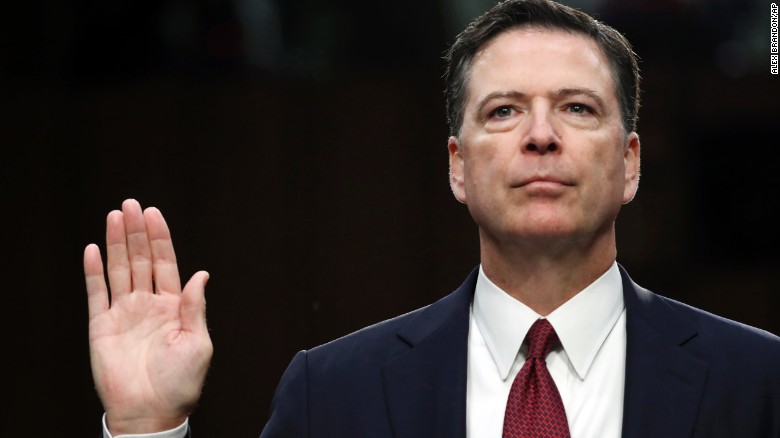 The FBI, under its then-director James Comey, was already conducting an investigation of activities by Mr. Trump before his election. It has not divulged the nature of that investigation.The President fired Mr. Comey precisely because of the existence of that inquiry, and a new director was named. The FBI is continuing its investigation. At some point, presumably, they shall publicize their findings.
In addition, within weeks of the President taking his oath of office, the Senate and the House Intelligence Committees started looking into what were alleged irregularities by the President with respect to his dealings with foreign governments, particularly Russia. Since each of those committees has a majority of Republican members, and since Donald Trump is a Republican, understandably neither committee is working at the swiftest possible pace. If they discovered and could prove that the President had violated any laws, it is difficult to imagine that they would immediately report their findings. For their own protection, The Republican committee members would drag their feet as long as possible.
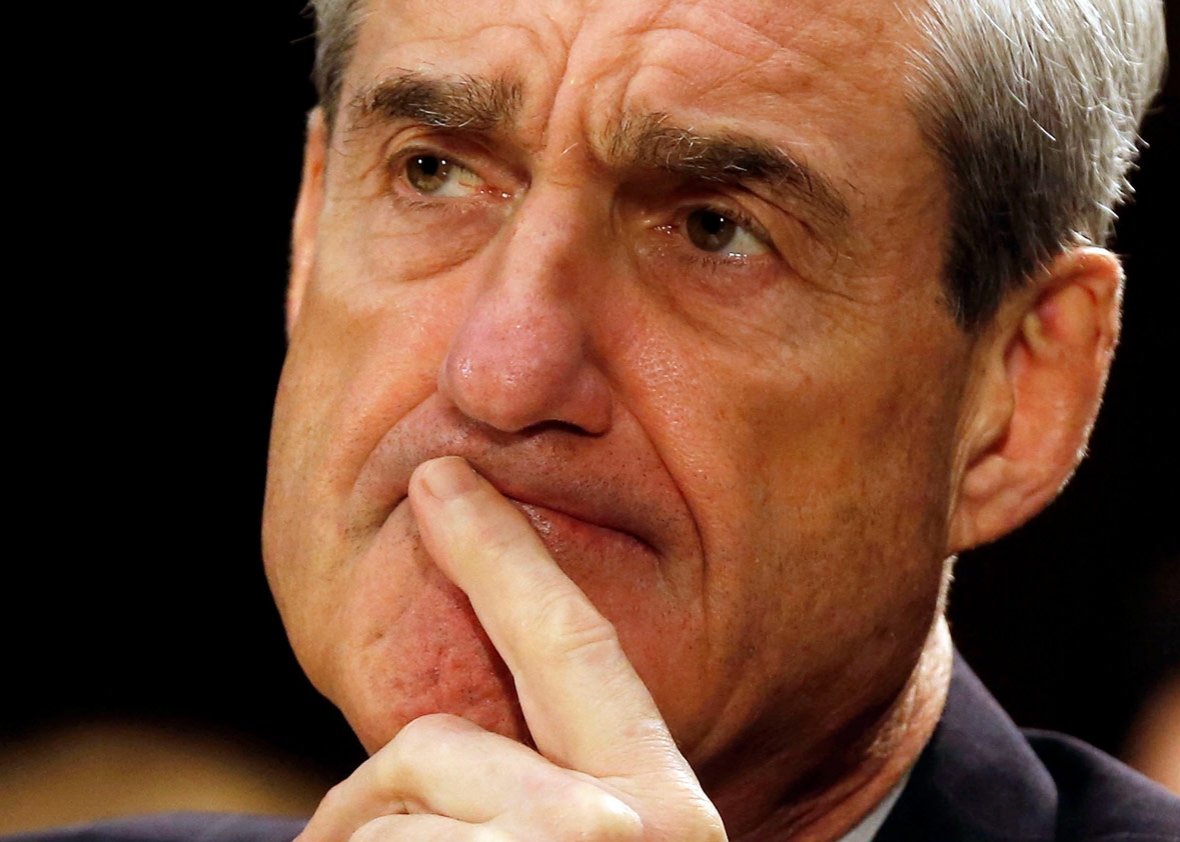 In the meantime, Congress named Robert Mueller as Special Counsel to look into possible breaches of law by the President. As soon as Mr. Mueller was designated as Special Counsel ( not Special Prosecutor, as in the impeachment proceedings against President Clinton), Mr. Trump has threatened on numerous occasions to fire Mr. Mueller. Thus far the President has reluctantly followed very powerful advice not to do that because of the potentially disastrous political fallout it would almost certainly evoke.
It is unrealistic for any citizen or elected government official to imagine that any of these four investigations will rush to judgment. They might not be ethically inclined to do that if the one being investigated was a low-level clerk in a government department accused of wrongdoing, let alone the President of the United States. None of these investigations, as thorough as they may be, is likely to turn up anything of legally verifiable substance in the next several months or for the next year or more. The wheels of justice, with very good reason, grind exceedingly slowly.
Furthermore, if any of the four investigations were shortly to recommend an impeachment trial of the President, it would never succeed. Republicans, and perhaps some Democrats as well, would see to that. Such a result would further solidify the unshakeable conviction of the fiercely loyal Trump base that an evil cabal of enemies are conspiring to scuttle the attempts of a genuine reformer who is seeking to re-establish a true government of the people, by the people, and for the people.
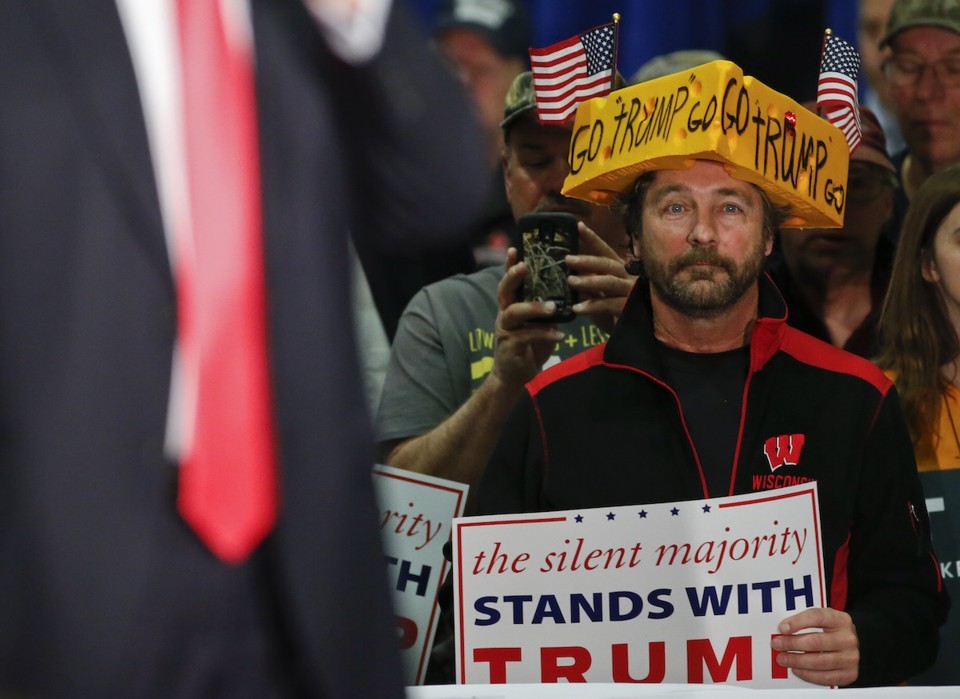 If things are bad now, they would be infinitely worse in the event of a failed attempt for an impeachment trial. The uproar of the Trump base would be deafening.
 Unless or until key leaders of Congress and the most respected members of the President’s Cabinet convince him to resign, he shall not give up his office. His narcissism will surely prevent that. Meanwhile, every day everyone in the news media spends inordinate time and space covering the latest unpredictable actions of Mr. Trump. His huge (“’uge”) ego can never receive too much of this attention, negative as it may be. Why would the sufferer of such an extreme personality disorder voluntarily relinquish the continual coverage in which he luxuriates?
The Unacceptable Risk of the 25th Amendment
Ah, but what about the 25th Amendment to the US Constitution? Does it not offer an alternative means of removing a President from office, other than by resignation or impeachment?
Indeed it does. Its first three sections address a presidential vacancy by death or resignation, and how the Vice President constitutionally is then empowered to assume the office of President.
It is the Fourth Section of Amendment XXV that offers a Congressional alternative to removing a President if he neither dies nor resigns. Reading the Constitution can be fascinating, but it also can be befuddling. Section Four of Amendment XXV is one of those befuddling parts. After some mystifying, muddled language (you can read it for yourself), it says that Congress must “determine by a two-thirds vote of both Houses that the President is unable to discharge the powers and duties of his office.”
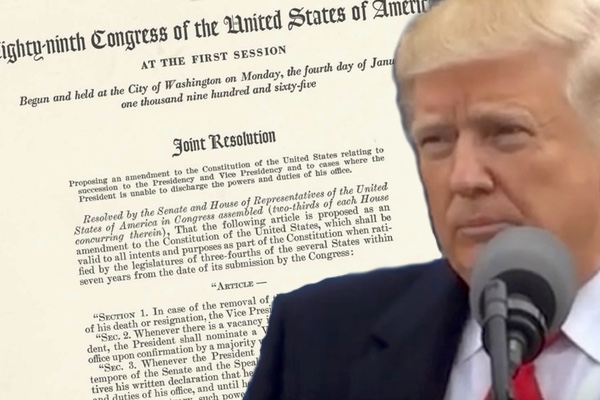 If the wheels of justice grind slowly, the wheels of Congress to remove a President for being “unable to discharge the powers and duties of his office” for medical reasons would grind inordinately slowly. And if extreme narcissism is the unfortunate condition which is purported to render Mr. Trump incapable of continuing as President, trying to employ Amendment XXV right now would be an unimaginable disaster.
Suppose that any of the ongoing four large-scale investigations into presidential wrongdoing were quickly to conclude that in fact the President had committed high crimes or misdemeanors. Even more unlikely, suppose they decided his criminal actions were the result of his mental derangement. There is far too little political or ethical support currently for Congress to initiate the politically treacherous procedure whereby the President might be found unable to discharge the powers and duties of his office.
There is an undeniable political polarization which has paralyzed Congress for far too many years. Any effort presently to remove the President by constitutional impeachment provisions or by Amendment XXV would be doomed to acrimonious failure, and would only further polarize the electorate. That would be particularly true among those who continue to support Mr. Trump to the greatest degree possible.
Many congressional Democrats would be delighted for partisan political reasons to seek the President’s removal from office on the basis of his being mentally unable to fulfill his office. They believe it could assist in their next re-election. For precisely the same partisan political reasons, many congressional Republicans would do everything they could to prevent the removal of the President by means of Amendment XXV, because they believe their resistance to the effort would enhance their own re-election. That indicates how partisan all of them are in their thinking, and how little they are considering what is best for the country.
Far too many professional politicians perceive the Trump presidency as a purely political issue. It is not. It is a constitutional issue. There is an increasingly rapid growing threat afoot to undermine American democracy.
 Under Donald Trump, we are all witnessing the USA turning into a dictatorship. However, too many of us are too distracted by the daily news cycle to admit that alarming truth. We are becoming a Russia, a China, a Syria, a Turkey, a Philippines, or a Venezuela. Yet we steadfastly ignore the obvious trend because of our daily distractions and our cowardly timidity.
How can we exit this potentially if not actually catastrophic situation?
- John M. Miller, August 3, 2017
[John Miller is a writer, author, lecturer, and preacher-for-over-fifty-years who is pastor of The Chapel Without Walls on Hilton Head Island, SC. For Views from the Edge readers, John is a personal friend, ministerial colleague, and author. We share the same alma mater.]


 The Jesus of my childhood was white. He was kind and loving, having descended from heaven, like the angels on the ladder between heaven and earth. My Jesus had made me a soldier of the cross whose job it was to stay on the ladder to heaven and carry others with me.






 His last published book — Theology and Violence: Towards A Theology of Nonviolent Love — awaits translation into English from the original Japanese. We wait on bended knee.


 “Grandpa, I’m big. I’m 10 weeks old today! How old are you?”
 “Wow! You’re 7.5 times older than I am!
 Views from the Edge