Unknown's avatar

About Gordon C. Stewart

I've always liked quiet. And, like most people, I've experienced the world's madness. "Be Still! Departure from Collective Madness" (Wipf and Stock Publishers, Jan. 2017) distills 47 years of experiencing stillness and madness as a campus minister and Presbyterian pastor (IL, WI, NY, OH, and MN), poverty criminal law firm executive director, and social commentator. Our cat Lady Barclay reminds me to calm down and be much more still than I would be without her.

Christmas 2017

Dsc_3861d70sm4

And so it came to pass that a child was born in a stalled car in Charlottesville. And the angels sang under the viaduct of joy and peace on earth, good will to all. And a squad car stopped to see what was the matter, and saw the child and his Mexican parents huddled in the car with an expired license.

And when the officer saw the scene, he didn’t ask for identification or give the parents a ticket or turn them over to ICE.  He held the child in his arms, invited the family into his warm squad car, and radioed ahead to his wife to prepare for them the room they had decorated for the infant child they had just lost.

And so it was that on Christmas in the year 2017, another child was born and cared for by strangers whose better angels ignored Herod’s reign of terror to make a home for the homeless God.

  • Gordon C. Stewart, Chaska, MN, Christmas Day, 2017.


Seasons Greetings

This Christmas Eve we write to thank you for reading Views from the Edge and to share with our readers this Seasons Greetings letter and photos sent to those nearest and dearest to us.happy-holidays

Dear Friends,

2017 brought into our lives two new grandsons, Elijah (7 mos.) and Calvin (one mo.) and the joy that comes with the innocence of children. Fortunately for us, Kristin (with Elijah), and Andrew and Alice (with Calvin) live 20 minutes from Chaska. We only wish we could shower the same affection on outstate grandkids Jack (17), Amelia (14) KY, and Ruby (4) CA, and sons John (CA) and Doug (NYC, VT) and their spouses, Jen and Jason.

Other notable events?

These two news events have long-lasting importance: 1) Last January’s publication of Be Still! Departure from Collective Madness (click the link), Gordon’s collection of essays, and 2) August’s moment of temporary insanity when we raided our retirement funds to buy a small four-season A-Frame on a wetland two and a half hours north in Minnesota.

Buying the cabin while we grow closer to buying the farm felt a bit foolish. But, hey, we got the impulse, acted on it, and are loving the simplicity of rough-cut pine, wildlife (trumpeter swans, beaver, deer, skunks, and owls), and total isolation from all electronic distractions. We build a fire in the wood stove, break out a book, write what we feel like writing, take naps, and walk Barclay (Cavalier King Charles Spaniel now 4 yrs. old) down the dirt road to see what’s happening. It’s a simpler life that we savor as novel and precious.

Although Season’s Greetings normally steer clear of things political, we would be untrue to ourselves without commenting on the over-riding fact of daily life since January 20. Elijah calls the president “You-Know-Who” because we refuse to name him except in blog posts of conversations between Elijah and Grandpa about what faith calls for in the face of greed and collective madness. The cover of Be Still! — Vincent van Gogh’s, Prisoners Exercising, painted during his time in Saint-Paul asylum in Saint-Rémy — could not have been better chosen.

We count ourselves among the fortunate who have family and dear friends whose love and kindness keep our spirits focused on justice, mercy, and humility. We are so grateful for your friendship, and wish you and yours the very best of life in the Second Year of the You-Know-Who Era. Fortunately, God’s patience is longer than ours, but, as California Governor Jerry Brown said recently about climate change denial, so is God’s wrath. 😳

In the belief and hope that the cries in the wilderness count and that Love wins,

Seasons Blessings and Happy New Year,

Gordon and Kay

 cabin IMG_6563

Cabin

Andrew and Calvin

Andrew and Calvin

Gordon and Kay

Kay and Gordon

IMG_9456

Cabin wetland

Kristin and E

Kristin and Elijah

  • Gordon and Kay Stewart, Chaska, MN, Dec. 24, 2017.

Elijah and the baby Jesus

Seven-month-old Grandson, Elijah, spent this afternoon with his Uncle Andrew while his Mom and Grandma went to so something special for Grandma’s birthday.

As Uncle Andrew learned, caring for a child who has just learned to crawl poses new challenges for care-givers. Elijah began to crawl earlier this week.

Last night Elijah arrived early at Grandpa and Grandma’s house for Grandma’s birthday party. We had a quick chat before Uncle Andrew and Aunt Alice arrived with his Elijah’s cousin, Calvin (named after Calvin in “Calvin and Hobbes”).

“Grandpa,” asked Elijah with a puzzled look, “what’s a monster?”

Oh, my! You’re too little to know about monsters, Elijah. Monsters are creepy and ugly and really, really scary!  Who told you about monsters?

Uncle Andrew! He said I was becoming a monster! Am I scary, Grandpa?

Did Uncle Andrew laugh when he said you’re becoming a monster? It sounds like humor.

IMG_9340That’s not funny, Grandpa. I wasn’t being a monster. I was just checking stuff out, like the wires to the television and the computer and the lamps and the door to the apartment, just normal stuff I’ve been wanting to check out for a long, long, long, long time. I wasn’t being a monster. 

Sometimes people like Uncle Andrew are kidding with you, Elijah. Like when you surprise them by crawling and getting into things your Mom, Grandma, Uncle Andrew and I didn’t have to worry about before you started crawling.

Whew! So baby Jesus was a monster, too, in Bethlehem. We love Jesus, right Grandpa?

We do, Elijah. But Jesus didn’t become a monster in Bethlehem. He learned to crawl somewhere in Egypt after Joseph and Mary fled to Egypt to escape from King Herod who wanted to kill him (Gospel of Matthew 2:13-23).

William_Blake_-_The_Flight_into_Egypt_(1799)

William Blake ( 1757- 1827) — “The Flight into Egypt” (c.1799)

Wow, that’s awful, Grandpa! Why would a king want to kill a baby? Either King Herod was a real monster or he thought baby Jesus was a scary monster. I’m crawling but I guess I still have lots to learn before I can walk and talk like you, Grandpa.

It’s part of the pattern, Elijah. Like the Christmas Carol we heard this morning on NPR from the King’s College Festival of Nine Lessons and Carols says,

For He is our childhood’s pattern;
Day by day, like us, He grew;
He was little, weak, and helpless,
Tears and smiles, like us He knew;
And He cares when we are sad,
And he shares when we are glad.

  • Grandpa Gordon, Chaska, MN, Grandma Kay’s birthday, Dec. 23, 2017.

The Light Shines in the Darkness

“Hold to the Good” once again speaks clearly what so many of us are feeling as Christmas nears. Thank you, John Buchanan and Marilynne Robinson. By all means, hold to the good, hold to the light the darkness cannot overcome.

Family of John M. Buchanan's avatarHold to the Good

I’m finding it difficult to be hopeful this Christmas. The slow, steady, daily attacks on what I hold dear and what I cherish about my country are eroding my spirit, even the week before Christmas.

My government is….
– loosening regulations designed to protect my grandchildren from the effects of environmental degradation,
– lifting restrictions on mining and drilling that will endanger wildlife and reduce the precious areas of stunning national beauty every president before this one, all the way back to Theodore Roosevelt, regarded as national treasures to be protected and preserved,
-alienating long-time traditional allies, asserting “America First” at the expense of the welfare of all people and all nations,
– turning away from empirical science about climate change and human responsibility for global warming which the vast majority of scientists, and even the Pentagon, regard as real threats to life on our planet,
-attacking any information it…

View original post 413 more words

The Paradox of Parables

parables-350-197-300x169

After finishing daily readings of Be Still! during Advent, Craig Nessen, Academic Dean and Professor of Contextual Theology at the Wartburg Theological Seminary, Dubuque, IA, posted a lovely five-star review of Be Still! on Amazon.

Parables to Transform the Ordinary into the Extraordinary

This book conveys challenging messages about the meaning of faith through reflections on the events of the day. The author writes with an economy of precise, colorful language to tell parables which transform the ordinary into the extraordinary. This is a timely message about the public vocation of the Christian movement to address this time of collective madness.The author assists the reader to remain centered in core convictions for living in resistance and hope.

Would be excellent for personal study, devotions, or group discussion!

The best of lives are humble. They don’t promote themselves. They don’t hawk their own goods. Authorship is its own kind of curse: self-promotion, self-deception, and the narcissistic illusion that you and your work are very, very important. It’s very un-Christ-like.

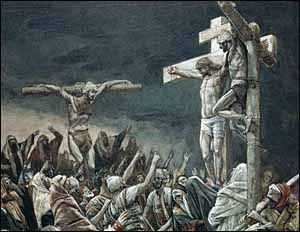
tissot-pardoning-thief300x232

James J. Tissot, “Pardoning of the Good Thief” (1886-1894)

But perhaps you will forgive me as Christ forgave the thief from the cross, though, unlike the thief, I know what I’m doing: growing the sins and sorrows whose doom is secured and assured in the meekness of the child of Bethlehem and man of Golgotha.

No more let sins and sorrows grow
Nor thorns infest the ground
He comes to make His blessings flow
Far as the curse is found
Far as, far as, the curse is found.

Maybe in spite of the author’s sin and by the grace of God and people like Craig Nessan,  “Be Still! may become for someone else “parables to transform the ordinary into the extraordinary.”

parables_orig

With thanks to Craig Nessan,

Blessings and Peace,

Gordon, Chaska, MN, December 23, 2017.


The World at Christmas

“He rules the world with truth and grace, and makes the nations prove….” (“Joy to the World“) will ring out again this Christmas. But, does “He”?

Isaac Watts‘ Christmas carol celebrates faith in the future by looking back at the most unlikely of places: an animal feeding trough, a manger, in Bethlehem, on the outskirts of the Roman Empire.

He rules the world with truth and grace,
And makes the nations prove
The glories of His righteousness,
And wonders of His love,
And wonders, wonders, of His love.

In 2017 it’s hard to sing. In too many ways, it’s not true. Not yet. Herod’s search for the child, Herod’s lies and the slaughter of children that led Mary and Joseph to become refugees in Egypt feel more familiar than the rule of grace and truth. The nations do not prove the glories of His righteousness or the wonders of His love. The world continues to be ruled by deception and greed.

Even so, whether singing “Joy to the World” or listening to Handel’s Messiah, as Martha Ann Kennedy shared in her “The Messiah” post, we sometimes find ourselves going where only music takes us — the longing of the human heart whose aching seems to echo a promise that evokes it, a subjectivity inspired by a longer objectivity, as it were — the victory of goodness over evil, beauty over ugliness, and truth over falsehood.

The curse is not yet removed, but it is countered by a promise and a command: the hope for the rule of grace and truth over the nations.

No more let sins and sorrows grow,
Nor thorns infest the ground;
He comes to make His blessings flow
Far as the curse is found,
Far as, far as, the curse is found.

It falls to us to act responsibly in the face of the sins and sorrows that still grow, the thorns that infest the ground and threaten the planet; to be channels of truth and grace through which His blessings flow, far as the curse is found.

He rules the world with truth and grace
And makes the nations prove
The glories of His righteousness
And wonders of His love
And wonders, wonders, of His love.

  • Gordon C. Stewart, Chaska, MN, Dec. 22, 2017.

MISOGYNY FROM THE 1950’S TO TODAY – BY ELLIN CURLEY

Gallery

This gallery contains 9 photos.

Originally posted on Serendipity – Seeking Intelligent Life on Earth:
I was a child in the 1950’s and a teenager in the 1960’s. So I should be well versed in the misogynistic attitudes that were, and in some ways still…

The Infinite Interior (Dennis Aubrey)

dennis-boscherville

Dennis Aubrey of Via Lucis Photography

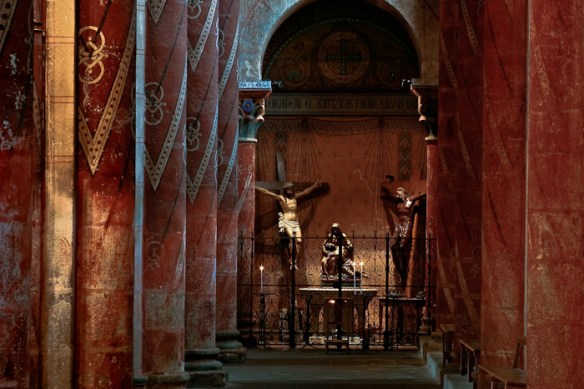
Dennis Aubrey’s Via Lucis photographic reflection on the different between Gothic and Romanesque architecture opens the Infinite Interior I needed this morning.

If you, too, are looking for light in the midst of darkness of whatever sort, this is for you. If you read nothing else, scroll down to the last paragraph and ponder our own infinite interior.

Dennis Aubrey, PJ McKey and Via Lucis are Views from the Edge‘s favorite companions on the way.

Gordon C. Stewart, Chaska, MN, Dec. 21, 2017

Dennis Aubrey's avatar

The subconscious is ceaselessly murmuring, and it is by listening to these murmurs that one hears the truth. ― Gaston Bachelard, The Poetics of Reverie

Basilique Saint Austremoine, Issoire (Puy-de-Dôme) Photo by PJ McKey Basilique Saint Austremoine, Issoire (Puy-de-Dôme) Photo by PJ McKey

There is a conceptual difference between Gothic and Romanesque churches and cathedrals. While the Romanesque builders paved the way for the Gothic, there is a deep and wide chasm between the two worlds. It starts on the outside – Gothic cathedrals make you want to sit on a bench and admire the exterior. One enters later and experiences the wonders of the soaring internal architecture.

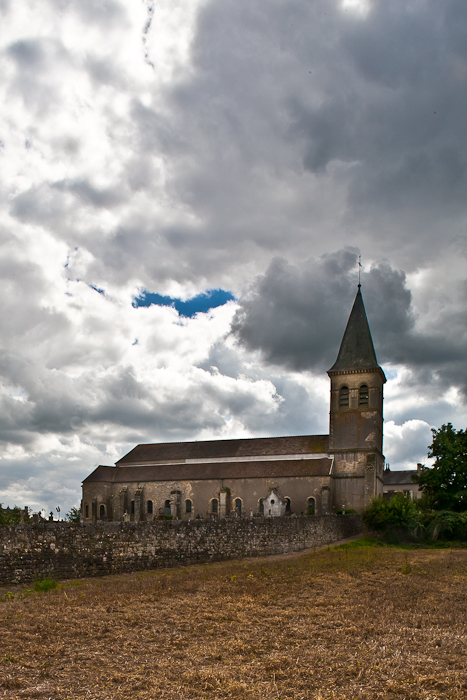
The exterior of Romanesque church architecture is different, much simpler. It is dominated by three features – the clocher, west front, and the chevet. The clocher (or belltower), like the contemporary church steeple, identifies the structure from the distance as a church.

Église Saint-Révérien, Saint-Révérien (Nièvre) Photo by PJ McKey Église Saint-Révérien, Saint-Révérien (Nièvre) Photo by PJ…

View original post 383 more words

Elijah asks Grandpa about taxes

taxreformGrandpa, do we like taxes?

Why are you asking about taxes, Elijah?

‘Cause they’re all over the news. I don’t get it. Are taxes bad or are they good, Grandpa?

It all depends, Elijah.

You always say stuff like that! Depends on what? I wear Huggies!

We’ve already talked about that. I don’t mean that kind of Depends. I mean it depends on what kind of taxes.

Yeah, like the tax of Caesar Augustus that made Joseph and Mary go to Bethlehem. Mom’s been getting me ready for my first Christmas. Look at this picture of Caesar Augustus, Grandpa. He did the same thing with his hand president You-Know-Who does! And he didn’t care about that little baby. Maybe that little baby is Jesus!

Statue-Augustus

And it came to pass in those days, that there went out a decree from Caesar Augustus that all the world should be taxed. (And this taxing was first made when Cyrenius was governor of Syria.)

And all went to be taxed, every one into his own city.

And Joseph also went up from Galilee, out of the city of Nazareth, into Judaea, unto the city of David, which is called Bethlehem; (because he was of the house and lineage of David:) to be taxed with Mary his espoused wife, being great with child.

And so it was, that, while they were there, the days were accomplished that she should be delivered. – Gospel According to Luke 2:1-6 KJV.

Yes, Elijah, it was because of a Roman census for purposes of levying Roman taxes on the country they occupied. The tax system wasn’t fair.

Hmmm. So taxes are bad!

No, they’re not. Like I said, Elijah, it all depends.

On what?

On whether the taxes are fair. Taxes are good so long as they fairly distribute the financial burden for maintaining life together in a good society: things like health care, roads, fire-fighters like the ones battling the fires in California, and economic assistance for the disabled, children, the poor, and retired people like Grandma and Grandpa who depend like Social Security.

So fair taxes are good? Unfair taxes are bad?

Yes, sort of. Tax systems that don’t require the wealthy to pay their fair share are like Roman taxes and like the British taxes that caused the American Revolution. The tax wasn’t fair. And tax systems measure what a country values. So even if the tax burden is fairly distributed, they can be bad if the money is used badly.

Yeah, just like Mary said, “He lifted up the lowly, and the rich he has sent empty away!” Liddle Bob Corker is lowly but he just voted for tax reform that Marissa says isn’t fair.

Yes, he did, Elijah. Senator Corker was a hold-out who agreed to vote for the tax bill after it was amended in a way that favored his real estate interests so he wouldn’t be so little anymore.

You own real estate, right? Are you going to vote for the tax bill, Grandpa?

No, Elijah, I really don’t own any real estate. The bank owns Grandma and Grandpa’s condo. We still make mortgage payments. And I don’t get to vote on it. Members of the House of Representatives and Senate represent us in Congress. Only they get to vote, and the president can then sign it or veto it.

Hmm. So you’re going to be liddler than liddle Bob Corker. But in my eyes, you’ll always be big, Grandpa. Remember Joseph and Mary and Jesus in liddle old Bethlehem.

I will, Elijah. Here’s a more hopeful picture for you to remember. Mary and the baby Jesus are at the top. At the bottom are prophetess named Sybil and Caesar Augustus, but it doesn’t look anything Caesar. It’s the Byzantine emperor Manuel II from the 15 Century that the artist viewed as the new Caesar. Every empire has its emperor, and every one of them is soon forgotten, but the story of Christmas is eternal.

©Photo. R.M.N. / R.-G. OjŽda

— Grandpa Gordon, Chaska, MN, Dec. 20, 2017.

 

Grandpa, what’s joy?

Video

Grandpa, what’s joy? Is it like happiness?

Good morning, Elijah! What brought that up?

Mom keeps singing “Joy to the world”! What’s joy? What’s the world?

Joy is deep gladness, Elijah. Happiness is like joy, but joy is deeper. It has to do with who you and and an inexplainable assurance about you, your Mom, and the world. It’s a deep inner gladness. You show it to me every day.  Don’t let the world take away your gladness, Elijah!

Okay, Grandpa! But what’s with that third stanza, that thing about the curse?

Oh, that! “No more let sins and sorrows grow, Nor thorns infest the ground; He comes to make his blessings flow Far as the curse is found, Far as the curse is found, Far as, far as, the curse is found.”

Yeah, that. What’s the curse, Grandpa? We’re not supposed to curse, right?

Right. But this is a different kind of curse. It’s the curse of selfishness and greed that bring sorrow to the world.

Isaac Watts — he’s the one who wrote the words to “Joy to the World” for Christmas — knew all about selfishness and greed when he wrote “Joy to the World” way back in 1719. Isaac was English. He knew all about colonialism and the nations.

Yeah, my baby-sitter really loves that last stanza about the nations! She says American exceptionalism is a curse. She really likes that fourth stanza. “He rules the world with truth and grace, And makes the nations prove The glories of His righteousness, And wonders of His love, And wonders of His love, And wonders, wonders, of His love.”

  • Grandpa Gordon, Chaska, MN, December 20, 2017.