When the news goes away

Days away from internet access brings a calmer reflection. Being in touch isn’t all it’s cracked up to be. Out of touch with bad news brings relief to the body.

220px-Tipi_bij_daglichtIf living in the developed world means being on edge all the time, I’d prefer a less developed one — maybe a teepee with smoke signals for communication. Anxiety is real enough without the constant sting of bad news from far away and beyond my small sphere of influence.

Madison Avenue loves my anxiety. It preys on what can only be prayed about. An ad agency is no praying mantis! It loves green but its antennae hunt for the anxious selves who confuse wants with needs, buying the things we do not need if we believe we only exist by having them.

Stillness and being are not their thing. Selling is their game. They don’t pray. They prey on well-trained animals, ringing Pavlov’s bell for manufactured tastes and smells, while down on Wall Street Monday’s opening bell opens the door of hornets’ nest.

Praying_mantis_indiaLike the praying mantis, the non-preying prayers live far from the bells. In touch with what’s worth much more than it’s cracked up to be: a less bad news world where humans live teepee-lives in touch with the body . . . in the stillness of time.

“Their aim is to confound the plans of the afflicted, but the LORD is their refuge.” [Psalm 14:6, The Book of Common Prayer]

  •  Gordon C. Stewart, wilderness cabin, northern Minnesota, September 3, 2017

What would Bill say?

What_Would_Wellstone_Do_-254x300“What would Wellstone do?” is a question often heard in Minnesota after the un-timely death of Senator Paul Wellstone. Most people can make a well-educated guess at the answers.

What would Bill say?” is the question I’m pondering this morning, looking for light in the darkness of the chemical eco-catastrophe  in Crosby, Texas.

Bill Gibson — click William E. Gibson to read Bill’s obituary — was a campus ministry colleague in the mid-’70s.

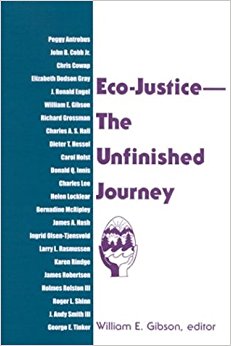
41XX644YJ4L._SY344_BO1,204,203,200_One of 27 campus ministers in New York State under the auspices of United Ministries in Higher Education*, Bill was “doing his own thing” at Cornell. His own thing — “eco-justice“– resulted in Eco-Justice — the Unfinished Journey. Click the title to read from the book Bill edited.


Like Paul Wellstone, Bill Gibson was a trailblazer. Unlike the senator, he worked away from the floodlights, quietly taking the path less taken on what has proven to be humanity’s great unfinished business.

Thank you, Bill. Rest in Peace.

Bill-Gibson-1Your joy and light still shine.


  • Gordon C. Stewart, Chaska, MN, September 1, 2017.

*Click HERE for the history of United Ministries in Higher Education (UMHE), the ecumenical ministry jointly funded by the American Baptist, Christian Church (Disciples of Christ), Episcopal, Moravian, Reformed Church in America, Presbyterian Church (USA), United Brethren, United Church of Christ, and United Methodist churches.

Harvey, Houston, and the Holy

The urgency of a rescue operation is not the time for anything but compassion.

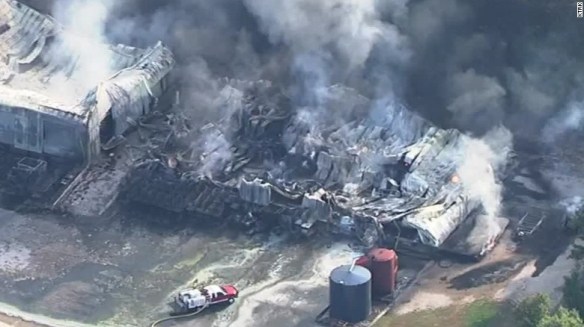
Timing and perception are everything in this startling time of Hurricane Harvey, 500-year floods, and the chemical plant explosions now taking place in Houston. Watching a helicopter rescue the elderly and disabled from the rising waters of a flood that has put people at risk is not the time to say I told you so.

But sooner or later it is time to speak about the unnatural crisis hidden behind the crisis of nature. In times like this, everyone becomes a socialist, and, if we’re seeing straight, no one stays a climate change-denier in the city big oil built.
150814201758-texas-chemical-plant-fire-aerials-vo-00002322-exlarge-169

Chemical plant explosions are the latest horrific news that graphically illustrate a national crisis that is more than ‘natural’. The crisis is anthropological and theological.

“Man over nature” was always an illusion. A hoax. A faux understanding of the human species’ relationship with the rest of nature — “man (sic.) over nature,” as though the first were separate from the latter — that leads to destruction and self-destruction.

The chemicals are exploding because the plants that make them cannot keep them cool. Keeping them cool requires an operative electrical grid, or, when the grid goes down, an emergency generator that isn’t vulnerable to flooding. When the grid and backup generators fail, the chemicals heat and explode.

Timing and perception are everything.

14353975_1473359308.1101

Not much more than a year ago Standing Rock was being touted as the emerging symbol of the revised understanding, the shift in consciousness, and the new behavior required of humankind in the age of climate departure. The oil pipeline from Canada to Texas refineries was stopped in the name of nature itself.

f7WX3K4OV6amH3_ORNVUDgCWLmwZicPzOSbGvdcoCAY1Vse2qbjIWF_nCQgAavToiW0PU-sxqw9UosshC70VmVMv-Mi8s4hw5Uzq5FS_wgzShx8Uu32eAwz0rJt2pyVHoNQAAeEX

That was before the 2016 election, and the 2017 appointment of a climate change-denier to gut the EPA, presidential executive orders stripping away regulations on the fossil fuel industry, and America’s spiritual retreat from the Paris Accord on Climate Change. Texas, not Standing Rock, was in charge again. Or so it seemed until Harvey came ashore to wash away the illusion of “man over nature.”

It’s time now for a clearer perception. Time to hold next to each other a picture of flooded Texas chemical plant explosions and the peaceful protest of Standing Rock,  and ask ourselves which picture is truer than the other. Or perhaps the truth is better seen when both are held together side-by-side: two anthropologies and two theologies. According to the one, humankind and the human city are the measure of reality itself. According to the other, God (i.e. the Eternal, Being-Itself) is the “natural” context — the mysterium tremendum et fascinans* — in which we live, and move, and have our being.

Today is, and tomorrow will still be, time for compassion and help for the people of Houston. It is also time to perceive something much deeper and wider. The rescued people of Houston, southeast Texas, and Louisiana are but the latest victims of the tragedy of the human mind and spirit: the fanciful illusion and creation of an alt-world of species superiority to nature.

Could the trembling of this horrific moment lead us to a holier fascination with reality itself?

iottoru001p1

Rudolf Otto (1869-1937)

The people of Standing Rock and Rudolf Otto are watching.

*Rudolf Otto‘s Latin term for the human experience with the Mystery beyond all taming that both fascinates and causes us mortals to tremble. (Rudolf Otto (1869–1937), The Idea of the Holy: An Inquiry into the Non-Rational Factor in the Idea of the Divine and its Relation to the Rational.)

  • Gordon C. Stewart, Chaska, MN, August 31, 2017



A Hymn for Houston

Watching rescue workers, the Red Cross, FEMA workers, and volunteers serving in Houston brings to mind a rare hymn that focuses on the city in a time of despair.

Click HERE for the lyrics.

Erik Routley’s rendering of Charleston, an American folk tune, honors all who love and serve the city, all who bear its daily stress.

Across America — from tiny churches in Appalachia, the bayous of Louisiana, and Sitka, Alaska to Memorial Church at Harvard — prayers are lifted and hymns are being sung in thanks for all who love and serve the city.

  • Gordon C. Stewart, Chaska, MN, August 30, 2017.


A Moment of National Decision

Pastors sometimes view the world differently. Pondering the President’s visit to Houston today, the lines from three hymns come to mind.

“In an age of twisted values we have lost the truth we need. In sophisticated language we have justified our greed.”

“We have built discrimination on our prejudices and fear. Hatred swiftly turns to cruelty if we hold resentments dear.”

And these lines from James Russell Lowell‘s old chestnut, “Once to Every Man and Nation”:

“Once to every man and nation/ Comes the moment to decide/ In the strife of truth with falsehood/ For the good or evil side;/ Some great cause, some great decision/ Offering each the bloom or blight,/ And the choice goes by forever/ ‘Twixt that darkness and that light.”

If John Newton, the former slave ship captain, could be turned into an abolitionist by the amazing grace “that saved a wretch like me,” who’s to say amazing things can’t happen on August 29, 2017?

  • Gordon C. Stewart, Chaska, MN, August 29, 2017.

Singing through the storm?

Watching the floods in Texas, I don’t feel like singing. But, while weeping for the people of south Texas, I hear the song of Pete Seeger wading through the storms and lamentations.

When Robert Lowry (1826-1899) wrote “How Can I Keep from Singing,” Pete Seeger (1919-2014) hadn’t been born, but Lowry’s music found a voice in Pete and others who listen amid life’s storms and lamentations.

Robert_Lowry

Rev’d Robert Lowry, preacher and hymn writer

A reporter once asked him what was his method of composition— “Do you write the words to fit the music, or the music to fit the words?” His reply was:

“I have no method. Sometimes the music comes and the words follow, fitted insensibly to the melody. I watch my moods, and when anything good strikes me, whether words or music, and no matter where I am, at home or on the street, I jot it down. Often the margin of a newspaper or the back of an envelope serves as a notebook. My brain is a sort of spinning machine, I think, for there is music running through it all the time. I do not pick out my music on the keys of an instrument. The tunes of nearly all the hymns I have written have been completed on paper before I tried them on the organ. Frequently the words of the hymn and the music have been written at the same time.”

Robert Lowry regarded “Weeping Will Not Save Me” as the best hymn he ever wrote.

  • Gordon C. Stewart, Chaska, MN, August 29, 2017.


Who is Joe Arpaio?

This is the convicted former sheriff President Trump has pardoned before he served a day of time.

6629170821_e02e4fb8d6

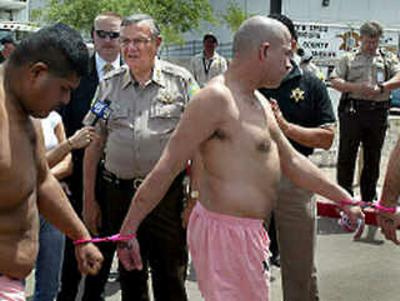
The president just thumbed his nose at the rule of law under the constitution he swore to protect. This is Joe Arpaio’s longer story of a convicted lawless lawman who forced prisoners to wear pink underwear under the hot sun.

  • Gordon C. Stewart, Chaska, MN, August 28, 2017.

Monday Morning Wake-Up Call

A hopeful contrast to Sheriff Arpaio’s tent city prisons! We’ll take hope wherever we find it. Sometimes it comes from the zoo beyond the borders of the U.S. zoo.

Live & Learn's avatarLive & Learn


An Indonesian black macaque named Niv holding a young chicken at the Ramat Gan Safari Park near Tel Aviv. After the chicken wandered into Niv’s enclosure, zoo officials said, the pair bonded. (Jack Guez, Agency France-Presse, Getty Images, wsj.com August 25, 2017)

View original post

Grandpa, I’m special, right?

On his 14th (week) birthday Elijah was watching Mr Rogers’ Neighborhood this morning.

51IO0pzdoqL._AC_UL320_SR226,320_Grandpa, Mr. Rogers says I’m special! I love Mr. Rogers!
We all love Mr. Rogers, Elijah. We all do!

Yeah! He’s a Presbyterian minister just like you, right Grandpa?

Yes, he was. And, like all Presbyterian ministers, Rev. Rogers made mistakes.

Like what?

Like telling you you’re ‘special’.

What you talking’ about? I AM special. Mr. Rogers makes me feel good.

I understand that and I’m glad. I just wish he’d used a different word than ‘special’ because none of us is ‘special’. You’re unique, Elijah. No one will ever be just like you. But that doesn’t mean you’re ‘special’.

You don’t like Mr. Rogers! I don’t like you! You’re a poop-head!

Sometimes I am, Elijah. I know I’m a poop-head sometimes. We all are, and that’s my point. We’re all in this together. None of us is special. Each of us is precious. Each of us is loved. I just wish he’d said ‘precious’ instead of ‘special’ because ‘special’ leads people to think they’re ‘exceptional’. You know, better than anyone else.

Mr. Rogers doesn’t mean that! Everyone’s welcome in Mr. Rogers’ neighborhood, even Mr. McFeely!

Well, even Mr. Rogers is a sinner, Elijah. He should never have named the mailman Mr. McFeely.

enhanced-buzz-6528-1363800770-6

  • Grandpa Gordon, Chaska, MN, August 28, 2017.


Grandpa, are we safe?

Grandpa and Elijah are talking while pictures of Hurricane Harvey are disturbing 14-week old Elijah.

170825133856-01-hurricane-harvey-0824-exlarge-169

“Grandpa, are we safe? Are we in Houston?”

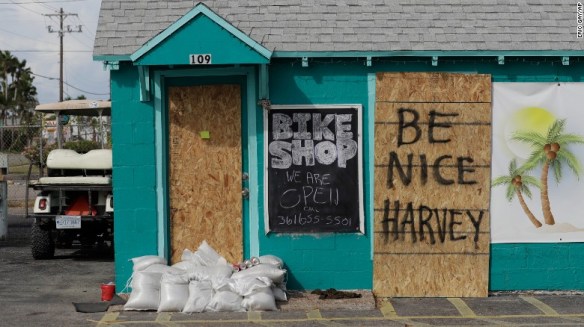
“No, Elijah. Not to worry. We’re in Minnesota, a long way from Texas. It’s ‘nice’ in Minnesota.”

“Okay, I feel safer. But am I legal?”

“What do you mean, legal?”

“Like . . .  can I be arrested?”

“No, you’re not going to be arrested. You’re not illegal.”

“We’re a country of law, right, Grandpa?”

“Yes, we’re a constitutional republic. We live under the protection of the law.”

Elijah and Harvey

Elijah, “Uh-uh!”

“Uh-uh! That Sheriff profiled people in Arizona! He broke the law and the President pardoned him! Pardon me, but that’s not law. Why’d the President do that when there’s a natural disaster in Texas?”

“Well, the timing of it is scary, Elijah. Maybe we’re not so safe after all.”

“What do ya mean? Is Hurricane Harvey coming here? Is Joe Arpaio coming to Minnesota to look for illegals?”

“No, they’re not coming here, Elijah. The issue is the rule of law itself. Charles Kaiser argues that “Donald Trump’s pardon of Sheriff Joe Arpaio marks the real beginning of the coming constitutional crisis in America.” It’s a piece by Charles Kaiser. I read it this morning on Bill Moyers & Company.”

636210386015065550-arpaioandtrump

Sheriff Joe Arpaio and President Trump

“What’s a constitutional crisis? Is that worse than Hurricane Harvey?”

Screen-Shot-2016-12-01-at-10.31.01-AM

  • Grandpa Gordon, Chaska, MN, August 28, 2017.