Conversations with a best friend newly diagnosed with pancreatic cancer led to me back this morning to Ted Gill, whose obituary we republish here.
Why? Because my friend, like Ted Gill, served as president of an institution of theological education, participated in the civil rights movement, and is finding fresh meaning in the communion of saints, that strange article of the Christian creed that connects the living and the dead as we have never been gathered in time.
People in Minnesota often ask “What would Wellstone do?” Paul Wellstone was a child of the Iron Range. So was Ted Gill who was born in the town where the Wellstone’s plane crashed.
In light of Ted Gill’s obituary — “Late in his life, Ted Gill remarked that ‘the high point of my career in the ministry was the week that I cost my seminary five million dollars’” — we might well ask, “What would Ted do?”
Theodore A. Gill, Sr.
Presbyterian Pastor, Theologian, and Educator
 The Rev. Dr. Theodore Alexander Gill, a former president of San Francisco Theological Seminary and later provost of John Jay College of Criminal Justice in the City University of New York (CUNY), died at the age of 85 on Friday, June 10 following a lengthy illness, in Princeton, New Jersey.
Born in Eveleth, Minnesota on January 7, 1920, Ted Gill was educated at the University of Wisconsin-Madison, Princeton Theological Seminary, Union Seminary in New York City, and the University of Zurich where he wrote his doctoral dissertation on “Recent Protestant Political Theory.” His teachers included Emil Brunner, Karl Barth, Josef Hromadka, Reinhold Niebuhr, and Paul Tillich. He was awarded six honorary doctorates during his career. In his time at the San Francisco seminary, he became one of the founders of the Graduate Theological Union based in Berkeley.
After serving Presbyterian parishes in New Rochelle, New York and West End Presbyterian church in New York City, he became professor of religion and dean of the chapel at Lindenwood College in St. Charles, Missouri, and subsequently managing editor of The Christian Century magazine in Chicago and editor of its sister publication The Pulpit. He was president of San Francisco Theological Seminary from 1958 to 1966, leaving that position to occupy the higher education desk of the World Council of Churches in Geneva, Switzerland. Following a return to the parish in Detroit, he joined the faculty of John Jay College of Criminal Justice, a CUNY college in midtown Manhattan, where he remained from 1971 through 1989. In retirement, he served as theologian in residence at Nassau Presbyterian Church in Princeton, New Jersey.
Ted Gill’s passion was for the link between religion and the arts, and over the years he served as a part-time leader of such organizations as Art, Religion, and Contemporary Culture – founded by Paul Tillich – and American Summer Institutes, a series of annual seminars on theology and the arts in locations that included Rome, Berlin, Budapest, and St. Andrews. As president of the San Francisco seminary, he organized a ground-breaking program on theology and theatrical arts. He also served on Presbyterian judicial commissions in the northeast and on national church committees that produced The Worshipbook of 1970 and commissioned the seal or logo of the Presbyterian Church (U.S.A.) in 1985. At the time of his death, he was a retired member of the Presbytery of New York City.
From the early days of the US civil rights struggle, Ted Gill publicly supported equal rights for all and openly opposed segregationist practices in both southern and northern states. In 1963-64, he was regional chair of California’s “No on Proposition 14” campaign against discriminatory housing legislation, and in 1965 he marched with Martin Luther King from Selma to Montgomery, Alabama in support of voting rights. As he and dozens of students and faculty members from San Francisco Theological Seminary participated in the Selma to Montgomery civil rights march of 1965, promises of millions of dollars in endowments to the institution he led were withdrawn in protest by potential donors. Late in his life, Ted Gill remarked that “the high point of my career in the ministry was the week that I cost my seminary five million dollars.” In later years, he voiced support for the full participation of gays and lesbians in church and society.
 He was the author or editor of numerous books, journals, and articles. Among his books were The Sermons of John Donne (1958), Memo for a Movie: A Short Life of Dietrich Bonhoeffer (1971), and, with Robert Bellah and Krister Stendahl, Religion and the Academic Scene (1975).
He was noted for editorial columns and sermons that were featured in church magazines and on radio’s “The Protestant Hour.” Preaching in a sermon series titled “Christian Clichés,” Ted Gill told his listeners:
“I have known and loved too many of the victims of the old-fashioned version of the ‘Christian’ life: wonderful, juicy human beings who were persuaded by a misguided church that they had to veil their vividness, bank their fires, dehydrate their interest, denature their enthusiasms, if they wanted to be Christian. No, the old idea will not do… The Christian life is not the life that is made to fit the legalistic box, that is forced to fit into the pattern. The Christian life is life lived in a certain direction – in, through, around, above whatever temperamental, physical, psychological obstacles any of us may have. But always in that direction – the direction which is assigned to us by what we know of God, by what we know in Jesus Christ of the character and nature of the realest real, by what we know in Jesus of God and the love of God. The Christian life is life lived in appropriate reaction to God’s action for us. The Christian life will be described in terms of the direction we are headed, and of how well we keep going in that direction, no matter how often we trip and fall.”
At the 1968 assembly of the World Council of Churches, Ted Gill gave a speech on “The Great Convergence” of education and the churches. Reflecting on student demonstrations in universities that spring, he revealed his discomfort with patterns of conformity in higher education:
“On the campuses, a generation erupted, an important piece of society let fly. The protest might have begun on the field of general education, but it was a wild shout, a rough rejection of education-in-general, of everything taken for granted by all the elements now molding people, coercing society, determining the future. The real adversary was not this or that administrator or this or that teacher or this or that course. The real adversaries were that rigid vice-chancellor, the status quo; those sternly directive professors, government and industry; that intolerable bore, academic tradition; those long courses in accommodation… Some of the brightest and best of our youth flame now in revolutionary dissatisfaction with the goals they see accepted by those who teach them, affect them, direct them. They distrust the values commonly invoked. They defy the system which ever more efficiently instructs the new generation in means that they see leading straight to inhuman ends: unendurable inequities, intolerable narrowing of human possibilities, blasphemous vulgarizations of spirit.” (“The Great Convergence,” The Ecumenical Review 20.4 [Oct. 1968], 385-94.)
In the April 1958 issue of The Pulpit, editor Gill reflected on the intricacies of theology in light of his father’s recent death: “We squabble and we rant about all the picayune details we assign to mysteries completely beyond our assessing, when all we really have to tell the world, all we really have to live on is the good news that God is love… But now, the love of God that gets us through our hard days is for more than funerals. It is for living along. When you know in your bones that the most real knows you and loves you, that beyond the vicissitudes of experience and the catastrophes of existence the ground of all being has declared itself for you, there should be a relief and a release in your living, a new inventiveness and zest in your living, a new pleasure, a more confident participation in life and its precious fascinations.”
Due to a blockage of his carotid artery in May 1994, he lost the capacity for speech and began a gradual decline in health. His wife of 57 years, Katherine Yonker Gill, died in July 2002. He is survived by a daughter, Laurie Melissa Keeran of Brewster, Massachusetts; a son, the Rev. Theodore A. Gill, Jr. of Geneva, Switzerland; a grand-daughter, Elizabeth Katherine Gill of Durham, North Carolina; and longtime caregiver Ben Mensah of New York City. A memorial service will be held at Nassau Presbyterian Church in Princeton, New Jersey and is being planned for Monday, June 20.
Click HERE to read the NYT obituary.
- Gordon C. Stewart, Chaska, MN, September 20, 2017.

 Elijah and I were watching the President’s speech to the United Nations General Assembly when suddenly Elijah sat bolt upright.
 Did he just call Kim Jung Un “Rocket Man”?
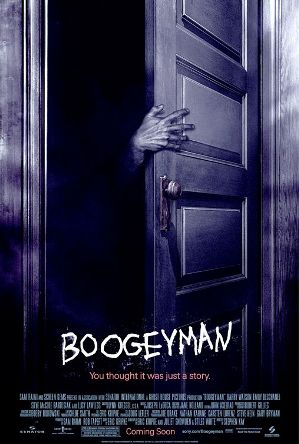 Well, I think he’s acting like the Boogeyman. Don’t ever leave me in the same room with the president, Grandpa. He’s mean. He’s scary!

 A flock of Canadian geese flews over the wetland before dusk, honking their way south before winter comes to the Upper Midwest, while inside the cabin walls the Toronto Blue Jays had flown south to Minneapolis over the radio to play a ballgame with the Twins. Unlike the Canadian geese, the Blue Jays are going nowhere; the Minnesota Twins are preparing for a long flight to the World Series.
 There is something strange about being alone in a remote wilderness cabin without a remote or internet, but some things stay close. Like the radio I bring to listen to the Twins games, and my canine companion Barclay who doesn’t care about the Twins or the radio but does care about candlelight. Barclay had headed for his kennel for the night an hour after the Twins had broken the sacred silence—until the sound of a match drew him back to the sofa to watch the candlelight flicker against the walls.
 By the seventh inning stretch, I’m tired of the Twins game, blow out all the candles, see Barclay to his kennel, and head up the ladder to the loft in the darkness. Only then do I notice the light show beyond the cabin walls: the Northern Lights dancing across the sky, a natural light show no World Series can match. Through the loft window I watch the light that knows nothing of matches, candles, or our whereabouts off the human map.
 Today The Englewood Review of Books published its book review of Be Still! Departure from Collective Madness.
 Ms. Cramer’s review is the first to lift up the deep affinity between the book’s cover, Vincent Van Gogh’s “Prisoners Exercising”, and the book’s elaboration of the less obvious forms of imprisonment, and our searches, alone and together, for sanity and stillness.
 Steve Shoemaker’s poetry reminded Views from the Edge readers that there is “A Song for Each Kind of Day” [April 12, 2012].
 Those who are my enemies without cause are mighty,

 I become aware of the light dancing on the aspen leaves in a gentle breeze, the yellow oak leaf signaling the turn of summer toward fall, the sudden gust of wind from across the nameless pond, the osprey circling overhead on currents I cannot see, the ice-cold water hand-pumped from the well, the warmth of the fire in the wood stove, the feel of dirt from the flower beds—the living silence of a dead stop.
 Views from the Edge