There! I said it!
- Gordon C. Stewart, Chaska, MN, October 6, 2018

There! I said it!

BOO! And a good day to you. Sixteen-month-old Elijah’s strapped in his carseat for the drive to day care. Mom initiates some fun. Elijah imitates her babbling. Then, on his own initiative, he suddenly takes off his knit cap to play Peek-a-Boo, like the children in Georgios Jakovides‘s 1895 Peek-a-Boo painting from Germany. Some games are timeless and ubiquitous. Peek-a-Boo!🤗
David Kanigan’s post arrived this morning. I’m turning to it after events this afternoon. P.S. David writes from Canada.

I pause under that summer tree, the one that feels like a friend, as my dog wonders why we’ve stopped. She was trotting in such rhythm. But when this still, I wonder what part of me, way down, remains untouched by dream or memory? What drop of being remains out of reach of the opinions of others? When up close, each thing reveals its shimmer. And it’s the unexpected closeness that holds everything together. The light spreads across my dog’s face, her eyes so devoted to wherever I want to go.
Can I be this devoted to the pull of life?
~ Mark Nepo, from “Speechless” in Things That Join the Sea and the Sky: Field Notes on Living
Notes:
View original post 28 more words
The Senate’s vote on the confirmation of the President’s appointment to the Supreme Court is more than a partisan matter. At stake is the trust of the American public in its most basic institutions.

First Supreme Court Chief Justice John Jay (1785-1789) — Gilbert Stuart portrait
1. Public confidence in the foundational institutions of the American republic has plummeted. The success of a democratic republic depends on its citizens’ faith in the integrity of the Senate, the Presidency, and, most of all, the U.S. Supreme Court.
2. Any appointment to the Supreme Court should increase rather than erode public confidence in the Court as the final arbiter and interpreter of the law.
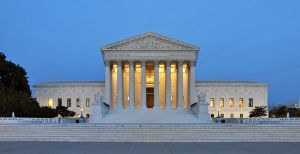 3. The myth of the Supreme Court as standing on the lofty heights of objectivity is a myth, but it is a myth and aspiration worth preserving. Without public trust in the Justices’ commitment and disposition to rule without prejudice, the Rule of Law is viewed as the partisan Rule of Power and Prejudice.
4. Judge Kavanaugh’s behavior during last week’s hearing violated the standards of judicial ethics re: nonpartisanship and calm judicial temperament. Judge Kavanaugh’s appointment will further erode trust in the Supreme Court as an objective arbiter and interpreter of the law.
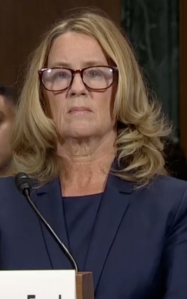
Dr. Christine Ford
5. While the President declared publicly to the press that the FBI was free to go wherever it needed — with no restrictions placed on its background check — the White House already had limited the FBI to a handful of people. The President’s statements were duplicitous and deceptive.
6. Names of corroborating witnesses provided during the FBI interviews with the nine people the White House had authorized were ignored. They include high school and college classmates who publicly refute Judge Kavanaugh’s testimony regarding excessive drinking and allegations of sexual misconduct.
7. The majority party’s and the president’s shifts from belief in Dr. Ford’s credibility to public mockings of Dr. Ford and angry allegations of a partisan plot to destroy Judge Kavanaugh raise red flags about a predominantly male Senate’s ability to take women seriously.
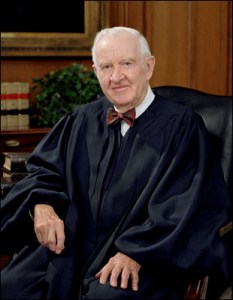
Supreme Court Justice John Paul Stevens official portrait
8. Supreme Court Justice John Paul Stevens (Ret.) yesterday urged disapproval of confirmation based on the nominee’s partisan and aggressive testimony before the Judiciary Committee. Retired Justices don’t do that. Stevens did, for the sake of the Court’s reputation and integrity.
9. Senate confirmation of a Supreme Court nominee who has declared his position that the law prevents a sitting president from being indicted, and who, in his testimony, refused to say he would recuse himself on such a case, gives the appearance of prejudicing the Court in favor of any case that might come before it.

Yale yearbook photo of Brett Kavanaugh
10. Judge Kavanaugh’s op-ed in The Wall Street Journal is welcome. The admission of inappropriate conduct before the Senate Judiciary Committee last week neither erases the behavior nor qualifies him for appointment to the Supreme Court.
– Gordon C. Stewart, Chaska, MN, October 5, 2018.
During a recent visit to our house, Elijah’s mother had taped a moment between grandson and grandpa. Yesterday, Kristin wanted to show Elijah the video. He calls Grandpa Gordon “Bumpa” — take a peek.

Barclay smiling in the car
There’d been no intention of a Happy Hour yesterday when I decided to go to Target for a short errand. “Barclay,” I asked, “wanna go for a ride in the car?” Barclay cocked his head, ran for the door to the underground garage, and leaped for joy. We drove to Target. I cracked open the windows, left Barclay in the car. In the parking lot, I see my friend Chuck, whom I’d been with an hour earlier on a business matter where I’d asked whether he’d ever been to Ike’s. He hadn’t. “Why do you ask? Is it good?” “I don’t know. I’ve never been there,” I’d said. “My neighbor Michael tells me it has the best Martini in town — not one of those tiny Martinis you get at most places around here. It’s big, and they give you the shaker, too.”
Inside Target, Chuck and I take our places in the line for picking up prescriptions. The line is long. Neither of us is good at waiting. We decide, on the spur of the moment, to go to Ike’s Happy Hour for a different prescription. We leave Target and join Barclay for the trip to Ike’s. At Ike’s I again leave Barclay in the car, opening all four windows a little more than I had at Target. As he always does, Barclay smiles. He knows the routine. He lies down on the driver’s seat.
Sitting at the bar for our nonprescription drugs, we notice the wind has come up and it’s pouring rain outside. “Do you think Barclay’s okay?” asks Chuck. “He’ll be fine,” I say, “nothing flusters him. He’s not afraid of storms.” The Martini is everything Michael had said it would be. So is the Happy Hour food he’d recommended: two mouth-watering beef tenderloin sliders with grilled onions and horseradish sauce, one on pumpernickel, the other on sourdough, for $7.50. We love this place!
We pay the tab and head back to the car. Barclay is calm until Chuck opens the passenger door. Barclay sits up, smothers Chuck with kisses, and says, “I was worried about you guys!” Both seats are partially wet from the storm. Barclay is dry. We are not.

Barclay
We leave Ike’s parking lot and drive back to Target where Chuck had left his car. Chuck goes in for his prescription. Barclay and I call it a day and head home. Safe at home in the underground garage, Barclay stays put like a petulant child. “Dad, why can’t I stay in the car? I love Happy Hour!”

Sen. Jeff Flake (R-AZ)
During last Sunday’s “60 Minutes” interview, Sen. Jeff Flake was asked if he could have done what he did last week in the Supreme Court confirmation process if her were running for re-election. He was quick to respond. “No!” He and his colleague from the other side of aisle, Chris Coons, confirmed what many Americans have come to lament: the tar and feathering of compromise — the art on which a democratic republic depends.
In the simplified mindset of good versus evil, there is no room for compromise. The Judiciary hearing room was a room like that. But the behavior we saw in the hearing room wasn’t really about good versus evil. Jeff Flake’s “No” tore off the mask. It’s about money — the ability of candidates to secure financing for their campaigns on both sides of the aisle. Any candidate running for election in 2018 would be foolish to reach across the aisle, even though conscience might lead to do so. Sen. Mitch McConnell later put it bluntly: any Republican who votes not to confirm Kavanaugh will no longer receive campaign money. The Republican National Committee (RNC) will turn off the faucet.
 Meanwhile, RNC money and dark money pours into the race in Minnesota’s 3rd Congressional District. I’ve waded through mud many times over the years, but this is the dirtiest campaign I’ve ever experienced. Yesterday’s snail mail, for example, contained TWO slick negative ads funded by the Republican National Committee, slandering the Democratic candidate. These same ads leap out from my computer monitor whenever I open a YouTube video. Someone has mastered cyber analytics, and it’s not the Russians. The RNC-sponsored, complete with “I [Erik Paulsen] approve this message,” approved by Erik paint Dean Phillips, as a monster, A hypocrite. They twist facts. The real message? Erik is the “good guy”; Dean is the “bad guy”.
Yet only Dean Phillips refuses to accept money from the PACs, special interests, and lobbyists that elects partisan loyalists who surrender conscience and the courage to compromise. The “good guy” refused to join the “bad guy” in that pledge. The money is pouring into the 3rd District from outside Minnesota — like fire trucks and rescue squads responding to a 5-alarm fire. The hoses spew mud.

It’s the responsibility of the electorate to slog through the mud and take off our waders before entering the voting booth.
Gordon C. Stewart, Minnesota 3rd Congressional District, October 3, 2018.
A Facebook comment led me to recall the words of a 16th century theologian most people today regard as an old fuddy-duddy. First the old fuddy-duddy:
Our wisdom, in so far as it ought to be deemed true and solid Wisdom, consists almost entirely of two parts: the knowledge of God and of ourselves. But as these are connected together by many ties, it is not easy to determine which of the two precedes and gives birth to the other.

John Calvin (1504-1564) was no more a Calvinist than Jesus was a Christian. You can’t follow yourself. He didn’t. He sought wisdom. Many times his search led him to disconcerting conclusions, and actions that trouble me. But the quotation from the very first paragraph of the first page of Calvin’s Institutes of the Christian Religion is pure gold. It’s stayed with me as priceless. They could have come from Carl Jung!

The return of the prodigal son – Rembrandt drawing
Recognition of the inseparable connection between the knowledge of self and the knowledge of God is as old as philosophy and theology themselves. Augustine of Hippo wrote about coming to the knowledge of God through the knowledge of himself. “Our hearts are restless until they find their rest in Thee,” wrote St. Augustine after leading an unsavory life like the one portrayed in Jesus’ Parable of the Prodigal Son. Only by delving into the self that was deeper than his squandering was Augustine able to write his Confessions and The City of God. The search for knowledge of himself and for the knowledge of God were of one piece.
Anticipating the FBI’s expanded background check of Supreme Court nominee Brett Kavanaugh, I began to wonder what we’re seeing and how we’re seeing it in light of the two kinds of knowledge that give birth to “the true and solid Wisdom.” Then, almost by accident, I stumbled across a remarkable personal reflection on sexual abuse and sexuality on Facebook. I’d never heard of the writer until this morning. But I do know his mother, a ministerial colleague, who appears to have raised him to search for two parts of wisdom.
With the writer’s permission, we share here the LINK to the personal reflection on Facebook. It’s long, but well worth the read.
Fire, in this case, is passion. If you want to be a successful blogger, find your fire.
The advice comes from The Art of Blogging. I wish I’d read that before launching Views from the Edge years ago. But, hey, it’s never too late, right?

Thanks to fellow-blogger Marilyn Armstrong for the photo. I’m musing on the lily pad!
So, what, I’m asking myself, is my passion? What’s the fire in my belly? The thing that makes me tick? The thing that makes me come alive? It’s a simple question. A clarifying question. But the answer’s not so simple. Not so clear.
Writing that last incomplete sentence led me to my fire, my life passion: To see more clearly!
Life is strange. Truth is almost always strange, sometimes stranger than fiction (Lord Byron). Searching for what’s real — cutting through the appearances, illusions, shams, and socially acceptable convictions and beliefs — has always been my fire. I am naturally skeptical of things that seem normal and claims that call for my allegiance.

garden fish pond
Since the day I plunged to the bottom of Dickie Tinsley’s fish pond after Mrs. Thomas told our Vacation Bible School kindergarten class that Peter could walk on water because he had faith, my fire has been a quest to get to what is real — to see more clearly.
I used to be a preacher man. Now I’m a blogger. According to The Art of Blogging, anyone who wants to be a successful blogger needs to pay as much attention to a post’s ending as to its beginning. I need to end not with a preacher’s declaration but with a philosopher’s query that invites readers to engage and respond from their own experience. So here’s the question that invites your response:
What’s your fire? What’s your passion?
 Yesterday 16 month-old Elijah and his mom came by to visit Grandma and Bumpa (Grandpa). But mostly he wanted to play with his friend Barclay, the five year-old Cavalier King Charles Spaniel. He took Barclay for a walk and a little conversation on the parking lot, stopping to point to the sky, step up to the sidewalk, leash in hand, and walk Barclay as no one else ever has.

 Views from the Edge