I’m not ready for this. I’m not wired for a world gone haywire. Like the psalmist, I am “old and gray” (Ps. 71:18), living in a frantic world that makes no sense, knowing that speaking what little I think I have come to know will not reach beyond what remains of a shrinking circle of influence. Even so, I continue to write in the vain hope it may make a difference.
Aerial view of doctor stethoscope and computer laptop
Listening through the stethoscope
Sitting in front of a blank sheet of paper/blank computer screen is the morning exercise to find my deeper self again. Writing is like a stethoscope to hear what’s inside my chest. Writing taps into the deeper stream of consciousness — sighs and groans too deep for words.
Some days begin and end with a blank page. Other mornings the groaning and sighing summon me to write. Not just for myself, but for others as well. That’s what publictheologians do.
Reality and illusion
The Psalter is always close by. The psalms take me deeper. Only then can I go wider. The Psalms are poetry. They are not prescriptions. They are the naked, honest, unfiltered, uncensored expressions of what the psalmist feels and thinks in that moment. The psalmist is exposed. No secret is hidden. No pride left unmasked. Every Illusion of grandeur blown away by the wind.
The three year-old and the-man-in-the-radio
The poet of Psalm 71 is old and gray. So am I. Listening through the stethoscope, I hear unresolved sighing and groaning from early childhood.
I am three years-old, sitting around the dining room table with my grandparents and my mother. My mother and I are living with Grandpa and Grandma Stewart in Chestnut Hill, MA. My father is in the big war somewhere far, far away. Every night, Grandpa looks at his watch, stops eating, leaves the table, and walks over to the big brown radio. He pushes a button to let the man-in the-radio talk to us. “Shhhhh,” says Grandpa, as I continue talking. “We need to be real quiet so we can hear the news.” The man-in-the-radio begins to talk. He’s serious. He’s not fun, but no one is afraid of him. Everyone listens carefully.
Some nights the man-in-the-radio stops to let another man in the radio talk. The other man is not nice. He’s not kind. He’s mean. He’s angry. He’s scary. Even for Grandpa! I watch the faces of my mother, grandpa and grandma as they listen for news about the big war far, far away where my father is the Army Chaplain. My father is the only one on Saipan who doesn’t have a gun. He may not make it home or he might come home dead.
Protestant Service on Saipan, end of WWII.
Honoring a promise
I am old and gray and hard of hearing, but I have a stethoscope. I still hear the groaning and sighing in my chest and I still hear the madman in the radio. I determined early in life that if Adolf Hitler won the war and came to Chestnut Hill, I would not be silent. I would not stay seated. I would stand up. I would speak up! I would tell what I know and not let go, for the sake of generations yet to come.
 And now that I am old and grey-headed, O God, do not forsake me,
     til I make known Your strength to this generation
     and Your power to all who are to come. (Ps. 71:18 BCP).
Gordon C. Stewart, public theologian, author of Be Still! Departure from Collective Madness (2017 Wipf & Stock), Brooklyn Park, MN, October 3, 2021.
This “conversation” between Grandpa (Bumpa) and Elijah took place during the Senate’s first impeachment trial. It’s been buried in the draft file. Elijah was two-and-a-half at the time. But some things are still true when Elijah is four.
Elijah and Bumpa (Grandpa) in Elijah’s room
Elijah: I don’t get it, Bumpa! I have questions.
Grandpa: What questions, Elijah? Shoot!
I don’t want to! We don’t like guns at daycare!
I’m sorry, Elijah. I don’t mean shoot. I meant it as a “figure of speech”.
Yeah! We like figures. One, two, free, four, . . . l, m, n, o, p. . .
I’m so proud of you!, Elijah! You know your numbers and your ABCs! But “a figure of speech” is different, it’s an idiom.
Like what?
Like . . . you might say that somebody “lies like a rug.” So what are your question?
We hate lying, We like facts, right Bumpa?
Yes. We do, Elijah.
So we don’t like the Publicans. They lie like rugs, right?
Publicans?
Yeah, Publicans, like the ones on TV who hate facts and get all angry on TV.
I see.
We’re not Publicans! We like Jesus, right?
Well, yes, sort of. You’ll come to your own faith as you grow older. The Publicans collected taxes for the Romans. It would be like Americans working for a foreign government.
Okay. But we’re not publicans. We don’t like craters and creezin, right?
Creezin? Are you sure you have the right words?
Geez, Bumpa! Don’t ya know? C r e e z i n ! Like you and Grandma have for breakfast every morning.
Ah, now I get it. We eat Raisin Bran. R a i s i n B r a n. You mean treason! T r e a s o n.
Yeah! Are they going to de-peach you? Did you commit creezin? Are you and Gamma craters who should be de-peached? Publicancraters?
Those are big words you’ll learn about in school. No, we can’t be impeached, and we’re not Publicans. We try to stick with the facts, not lie like a rug. Any other questions?
Yeah. Ucranes. We have Ucranes at the cabin. Do Ucranes whistle?
A recent Minnesota Poll sent me back to the “draft” file to retrieve John M. Miller’s one-page commentary reflecting on results of a Pew Research Center poll asking where people get their news in 2021. John is an old friend and colleague influenced by Dutch philosopher of religion Willem Zuurdeeg, Professor of the Philosophy of Religion at McCormick Theological Seminary in Chicago. John is a voracious reader who reads widely, but his writing makes clear that he listened more carefully than most to his old professor.
Reading too much — thinking too little
Each student is in danger of reading too much and thinking too little. If one section of this book should commend itself especially to the reader, he (sic) should not begin with reading more about this topic, but first of all reconsider his own thinking on the subject. A bibliography tempts the student to extend his reading and to postpone his own philosophizing.
— Willem Zuurdeeg, author of An Analytical Philosophy of Religion and Man Before Chaos: Philosophy Is Born of a Cry.
Some Highly Distressing Statistics re: “The News”
by John M. Miller
The Pew Research Center recently published the sources from which Americans prefer to receive the news. From the highest percentage to the lowest, here are the results:
Television – 35% News websites or apps – 26%; Search engines – 12%; Social media – 11%; Radio – 7%; Print publications – 5%; Podcasts – 3%; No news source – 1%.
This means that 87% of the respondents to the poll prefer to get their news on a screen, either a computerized screen or a TV screen. To me that is simply astonishing. For generations print publications were virtually the only source of news. Then radio, and then television, came along. But this poll says it is the Internet that is now the dominant source for news (news websites and apps, search engines, social media, and podcasts.)
Short and Simple
It also is painfully disheartening to me that only 5% of Americans prefer to read news in vetted written form: newspapers or news magazines. They are the only media that truly give thorough coverage of any news stories, yet 95% of the American public prefer brief, less detailed information about what is happening in the world. They want it kept simple.
Liminal and Subliminal Biases: Talking without pause
Almost all news that is available on television or the Internet has a recognizable bias: Republican/Democrat; conservative/liberal; local/state; national/international. etc. That is true in many news publications as well, but the bias there is “liminal” as opposed to subliminal. The “hot medium” of a screen does more of a number on us than print does, because we can read at our own pace and reflect on what we are reading to whatever depth we choose. However, the faces on the screen just keep talking without pause.
Little Time to Ponder
If we are watching news on a screen, subconsciously we are swept along at whatever pace the news is being reported, and either it does or does not fully register with us. In other words, we may or may not completely absorb what is said, but we have very little time to ponder it if we intend to hear and see what is next reported.
Deliberate Ignorance
One percentage number in this poll is a total sham. That is the one per cent of everyone who responded by saying they avail themselves of no news sources at all. Were that an accurate number, it would be highly encouraging, but surely it is untrue. Far more than 1% of Americans are deliberately ignorant of “the news.” Therefore the rest of the numbers are somewhat skewed. But the lowest poll number is highly suspect.
News Sources and American Perception
What happens when these news sources genuinely reflect the American perception of the news? Donald Trump: that’s what. It is not surprising that Trump won in 2016. On the other hand, it is therefore amazing that Joe Biden won in 2020. Maybe Americans have learned that it is imperative to pay more attention to real news. If so, what a wondrous advancement that is!
– March 16, 2021
John M. Miller, the OLD Philosopher, is Pastor of The Chapel Without Walls on Hilton Head Island, SC. More of his writings may be viewed at www.chapelwithoutwalls.org. Republished by Views from the Edge, Saturday, October 2, 2021.
Gordon
Gordon C. Stewart, Chaska, author of Be Still! Departure from Collective Madness (2017 Wipf and Stock), 49 brief reflections on faith and life, available from the publisher HERE and from Amazon HERE; Chaska, MN,
THE WETLAND POND

The wetland pond is shrinking.
Dark-chocolate cattails and
summer-green milkweed pods
burst into the white cotton
balls they always do when
autumn comes, a cotton
field of wisps and puffs that
match the color of my hair.

The sumacs are changing into
the red dress they always wear
this time of year, a royal
crimson robe, glistening in
the morning sun before
frost and snow turn their
fleeting autumn puffs from
regal red to winter white.

I see no yellow on the wetland
pond beside this dirt road that
has no name or dot on anyone’s
map. The yellow lilies on the
lily-pads have gone to sleep
to greet the Spring again if
the pond is still here.

--GCS, September morning walk
September 27, 2021.
O LORD, what are we that You should care for us?
     mere mortals that You should think of us?
We are like a puff of wind;
     our days are like a passing shadow.
Do not cast me off in my old age.
     (Psalm 144:3,4; 71:9 BCP)
The Founders Archives of the National Archives preserves a letter to Ben Franklin eighteen months before the Declaration of Independence was issued. Ben Franklin, the Philadelphia “Quaker,” became a household name. Charles Thomson (1729-1824), the Philadelphia Presbyterian, did not, and that’s a shame.
Charles Thomson was the Secretary of the First and Second Continental Congress, a quiet Founder on the road from colonial rule to an independent democratic republic. The official Declaration of Independence had only two signatures, the President and the Secretary of First Continental Congress: John Witherspoon and Charles Thomson.
He held the office of Secretary from 1774 throughout the American Revolution until the adoption of the Constitution. Thomson’s correspondence with his friend Benjamin Franklin is learned and passionate. His translation of the Bible and the Septuagint from Greek into English is the first English Bible published in America. Thomson’s love of language and range of literature is evident in his letter to Franklin.
Charles Thomson Letter to Benjamin Franklin
“When I look back,” wrote Thomson to Franklin in London, “and consider the warm affection which the colonists had for Great Britain till the present reign, the untainted loyalty unshaken fidelity and cheerful confidence that universally prevailed till that time, and then view the present heartburnings, Jealousies, gloom and despair, I am ready to ask, with the poet, ‘Are there not some chosen thunders in the stores of heaven armed with uncommon wrath to blast those Men,’ who by their cursed schemes of policy are dragging friends and brothers into the horrors of civil War and involving their country in ruin?” — Thomson Letter to Franklin, Nov. 1, 1774
Charles Thomson and Cato, A Tragedy
The poet whose words Thomson cited were from James Addison, the anti-royalist English poet-playwright, whose play, “Cato, a Tragedy” was widely read and often quoted by the Founders of the new nation. Whether intentionally or inadvertently, Thomson changed the “Cato” text from singular to plural to suit the circumstances that enraged him. “Blast the Man” (the king) became “Blast those Men” (i.e. Parliament) who had violated the rights and freedoms of the American colonies’ rights and freedoms under British law.
Dragging their Country into Ruin
The circumstances of November 1, 1774 have changed, but Charles Thomson’s unusual outburst is as fresh today as the day he wrote to Franklin. The longing for a king exceeds the bounds of time. The anxiety that hangs over us makes our heads spin; we long for solid ground, something solid that does not change. So it is that a political party and a portion of the American public have come to mistake treason for patriotism, a bully with a savior, a quack with a swan, and have followed the strong man’s quackery into the halls and offices of the Congress that makes America a democratic republic. When we confuse patriotism with terrorism, Charles Thomson’s letter from the Founders Archives is more than archival.
Teetering on the Edge of the Precipice
When a hollow man and hollow party hollow out the core of what we have thought we valued, the question from Cato’s tragedy rumbles like thunder from the heavens. Charles Thomson’s renderings from Cato fit the eve of a threatened sequel to January 6, when the democratic republic once again “teeters on the very edge of the precipice.”
Toward Healing the Wounds
Will we in 2022 share the hope and prayer with which Charles Thomson ended his letter of November 1, 1774: “Even yet,” he wrote, “the wounds may be healed and peace and love restored; But we are on the very edge of the precipice. I am sir your affectionate Friend and humble Servant.– Chas Thomson”
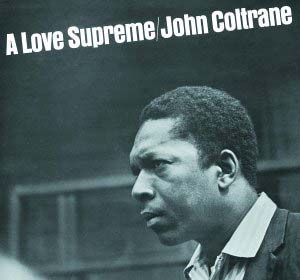
A psalmic reflection on Derek Chauvin in light of Psalm 32 and John Coltrane’s “A Love Supreme”
Blessed is the one whose transgression is forgiven,
and whose sin is put away!
Blessed/happy is the one to whom the LORD imputes no guilt,and in whose spirit there is no deceit!
He is guilty. It was his knee that pressed George Floyd’s neck against the pavement. I saw it with my own eyes. I watch his eyes during the trial. I see no hint of remorse. No sense of guilt. He sheds no tears. His mouth stays shut. He does not speak.
When I kept silent,
    my bones wasted away
    through my groaning all day long.

For day and night
    Your hand was heavy on me;
my strength was sapped
    as in the heat of summer.
Is he silent now in solitary confinement? Does he have conversations with himself? Does he scream at the jury for failing to vindicate him? Does he talk with God? Is he restless all day and all night? Does he feel a heavy hand pressing down on him the way his knee had pressed down on George Floyd’s neck? Is he wasting away, groaning all day long?
You are my hiding place;
You preserve me from trouble;
    You surround me with shouts of deliverance.
He is not preserved from trouble in maximum security. The shouts of other inmates on the solitary confinement cell block are taunts, not shouts of deliverance: “I can’t breathe; I can’t breathe, Mr. Officer! Get your White knee off my Black neck!” There is no hiding in this place where only perps, not cops, do time. There is no solitude. There are no shouts of deliverance.
“I will instruct you and teach you in the way that you should go;
    I will guide you with My eye.
Does he sense a presence waiting to instruct and guide him into a way beyond the White/Black—Innocent/Guilty—Cop/Perp—Top/Bottom—Up/Down-World his eyes are trained to see? Does he sense the presence of a different Eye, a greater I than he?
“Do not be like a horse or mule, without understanding;
     Whose temper must be curbed with bit and bridle,
     else it will not stay near you."
Will he bow his head to be fit with the long-suffering patience that reins in deluded mules and bucking broncos? Will the solitary cop in orange shift from wailing in the minor key of down-and-out-over-and-done to the glad shouts of deliverance by an I greater than he? Does he hear the the chant — “a love supreme…a love supreme…a love supreme” — of a bridled Coltrane resounding off the walls in this not-so-God-forsaken place?
In this place where cops are perps and perps are cops with heads bowed by the law, will the killer cop bow the knee that killed George Floyd? Will he bow his head to be fit with the bit and bridle of a Love Supreme that delivers the soul from every illusion of supremacy?
A Love Supreme
Click HERE and scroll forward to 6:00 minute to hear Coltrane’s unexpected chant, a love supreme, a love supreme.
— Gordon C. Stewart, public theologian, author of Be Still! Departure from Collective Madness (2017 Wipf and Stock), a reflection on Psalm 32 (GCS Unauthorized Version), and the solitary confinement of Derek Chauvin, August 9, 2021.
Early morning reflection from the dirt road by the wetland pond
Walking the off the map dirt road where nothing much happens, it’s quiet. The only sounds are bird songs; the only things that lie here are the lily pads lying on the shrinking wetland pond bordered by the cattails and wild flowers between the pond and the unpaved road. Nothing toils or spins. Nothing is anxious here. Not this morning.
Lily pads on a wetland pond
“Consider the lilies of the field, how they grow; they neither toil nor spin; yet, I tell [all of] you [human beings], even Solomon in all his glory was not arrayed like one of these.” (Jesus of Nazareth, Sermon on the Mount, Matthew 6:28b-29.)
There are no Solomons here. No kings. No countries. No states. Nothing seduced by the will-to-power. No illusions of sovereignty. No delusions of grandeur or control. No toiling and spinning like the mind observing it all from the dirt road. Everything is what it is: Yellow Goat’s-Beard, Yarrow, and Golden Clubs; Sweetflag, White Sweet Clover, and Butterfly-Weed; Bugle-Weed, Cuckoo-Flowers that aren’t cuckoo, and Bullhead-Lilies that don’t bully; pink Storkbills, Wild Sorels, Common Milkweeds, and blue-violet Pickerelweed.
Water lily –Photo by Hiu1ebfu Hou00e0ng on Pexels.com
Only the hunting-blind on the distant hill gives evidence of other spinning heads that toil for the mastery we cannot have. The hunting-blind on stilts high about the pasture waits for trigger fingers. Soon buckshots from the tower will fire babel that breaks the silence of this place. The flowers of the field — the Butterfly-Weed, the Bugle-Weed, and the Cuckoo-Flowers, the Lilies, and the lily pads — are not anxious. They are what they are. What is is what is. What will be will be. They neither toil nor spin.
— Gordon C. Stewart, from the wetland, August 3, 2021
We saw no tears during the daily coronavirus updates. Narcissus could not lift his head from his image in the pond. The inner well of empathy was empty. Eternal and solitary, he was imperial and impervious to suffering. Gods don’t cry. Narcissus is strong and cold. He bows to no one but himself. To him every knee must bow. He does not know the truth: Illusion always dies.
A Daffodil Blooms Where Illusion Died
Photo of daffodil
The Resurrection of Empathy
On the spot where vanity dies of thirst, beauty raises its head again. A daffodil breaks through the tamped-down place where Narcissus bowed to himself, and lifts its head to the sky as a silent Ode to Joy.
Compassion floods the Reflecting Pool and radiates from candles on the White House steps in honor of the dead. The wordy self is hushed. Heads are bowed in solemn silence in recognition of what is greater than ourselves. Tears flow. The well of empathy is full again.
Hanging by a Thread — The Pressure of Being and Holiness
One moment I was alone in the room, myself the centre of my own little self-constructed world, the next it was as though I had been flung an infinite distance to some edge or margin, to make room for the enormous presence and pressure of sheer Being and Holiness that filled the room. I felt the ground go from beneath my feet and suddenly realized that I was utterly dependant, that I was hanging by a thread. But I was content to hang by a thread if only to know that there was, at the heart of things, and radiating everywhere, this Holy Presence.
Gordon C. Stewart, Chaska, author of Be Still! Departure from Collective Madness (2017 Wipf and Stock), 49 brief reflections on faith and life, available from the publisher HERE and from Amazon HERE; Chaska, MN, March 5, 2021.
The maximum capacity crowd at the First Tuesday Dialogue did not have a crystal ball. It was February 1, 2013, eight years before the insurrection that would come eight years later. QAnon, the Proud Boys, the Boogaloo Bois, Wolverine Watchmen, Oath Keepers, and other White nationalist militias that traveled to Washington, D.C. to “Stop the Steal!” were unknown, but the mindset was already there.
Some Mindsets Never Really Die
Some states of mind are like toxic waste. They have long shelf lives. Before two people in the crowd took the floor to read aloud from the John Birch Society Blue Book and newsletter, it had been years since I last thought of the John Birch Society (JBS). What we thought had ended with the public shaming of Sen. Joe McCarthy and McCarthyism had not died. Like a baton that changes hand in a mile relay race, the mindset of McCarthyism was passed into the hand of the John Birch Society.
Like McCarthy’s search for traitors hiding in government and the entertainment industry the Birch Society’s conspiratorial mindset was ludicrous. The JBS had alleged that President Dwight Eisenhower (“Ike”) was not to like. Ike, his brother, Milton, and Allen Dulles, director of the CIA were closet Communists or Communist sympathizers.
When the John Birch Society Blue Book and newsletter were quoted on February 1, 2013, those who knew their history recognized the old voice we thought had died in the mid-1960s.
The Jack Ash Society lyrics (Mary Brooks)
A bunch of jack ashes at large in this land
 Have suffered a terrible fright
 They looked under their beds and discovered such reds
 As Allen and Milton and Dwight


 If more you would know of this Jack-Ash credo
 See the blue book, the black book, the white
 If you do you will find we're all Reds of some kind,
 Like Allen and Milton and Dwight.


 Joe McCarthy is dead, so Jack Ash instead
 Leads the anti-Communist fight;
 U. S. Reds he has found swarming all around.
 (179 million so far)
 Including Allen and Milton and Dwight.


 If you believe in more hospitals, housing, and schools,
 New highways and civil rights,
 The Ashites will add you to the un-American list,
 Along with Allen and Milton and Dwight


 Social security's a Bolshevik plot
 Cooked up by some shrewd Muscovite.
 So go naked you must or be security risk
 Like Allen and Milton and Dwight.


 Beware of good pay and the minimum wage,
 It's part of the Socialist blight;
 Created by conspirators bold,
 Like Allen and Milton and Dwight.
Pete Seeger and the “Jack Ash Society”
Pete Seeger performing The Jack Ash Society
The Berkeley Pit
Photo by William Rosmus uploaded from Wikipedia. Shot of telephone poles used to show scale of the flooded Berkeley Open Pit mine site, with respect to the photo ‘Composite fish eye view of the Berkeley Pit in Butte, Montana’ (Butte_MT_Berkeley_Pit_April_2005_Composite_Fisheye_View.jpg). The poles are just slightly right of centre in the larger composite fish eye picture of this flooded open pit mine.
Long Shelf Lives
An uninformed passer-by may assume the Berkeley Pit is a swimming hole, a place to swim and fish. It’s not. Nothing lives there. The Berkeley Pit is a pool of deadly toxins left behind by the Atlantic Richfield Company which bought the site from Anaconda Copper. Anaconda Copper left long ago, but the Berkeley Pit is still there. The Pit is not managed by the Department of Parks and Recreation. It’s an U.S. Environmental Protection Agency Superfund site, one of the largest, if not the largest in the land of the free.
The Call for Patriots
By 2013 the John Birch Society’s had made a quiet comeback in American political-cultural. It had not perished. The toxins from its Superfund clean-up site had seeped into the stream of American consciousness. It has never been cleaned up.
Now, more than ever, your patriotic leadership is needed. Is this the America our Founders envisioned? Their principles, and the Constitution itself, are under attack by forces that include socialists, Marxists, globalists, and the Deep State. We’ve created some great resources for you to educate Americans and stand for freedom. May we count on your help? We, as Americans, cherish our God-given liberties. We stand for a free and independent nation that fully abides by the Constitution and the Founding Fathers’ values. The John Birch Society provides a national program designed to counter the Deep State/Big Government agenda and to restore our rights.
John Birch Society website
The Birther Movement and “Stop the Steal!” Call for Patriots
2010 billboard displayed in South Gate, California, questioning the validity of Barack Obama’s birth certificate and by extension his eligibility to serve as President of the U.S. The billboard was part of an advertising campaign by WorldNetDaily.
The “Birther” and “Stop the Steal!” movements repeat the Birch Society call for real patriots to fight against “socialists, Marxists, globalists, and the Deep State.”
During Barack Obama’s campaign for president in 2008, throughout his presidency, and afterwards, “there was extensive news coverage of Obama’s religious preference, birthplace, and of the individuals questioning his religious belief and citizenship—efforts eventually known as the ‘birther movement‘”, by which name it is widely referred to across media. The movement falsely asserted Obama was ineligible to be President of the United States because he was not a natural-born citizen of the U.S. as required by Article Two of the Constitution. Birther conspiracy theories were predominantly held by conservatives and Republicans, as well as individuals with anti-black attitudes.
“Barack Obama citizenship conspiracy theories,” Wikipedia
The Pit of American Toxic Waste
Donald Trump tapped into that toxic stream in which right is wrong and wrong is right, truth is wrong and falsehood is right, information is wrong and disinformation is right, reality is wrong and fantasy is right, science is wrong and ignorance is right, confession is wrong and denial is right, Howdy Doody is wrong and Mr. Bluster is right.
But some things stay the same. White is still right and Black is still wrong. Barack Obama had no birth certificate. He had been elected, but his presidency was illegitimate. So was the election of 2020. Donald Trump is legitimate. Real patriots know they wish to believe. Real patriots stand back and stand by until the time is right to fight.
The toxins in American culture reach far back into our history, and the Pit is deep. The prevailing myths of White supremacy and national exceptionalism were here from the start. The Founding Fathers’ and Mothers’ values are both healthy and toxic.
Cleaning Up the Superfund Site
Only we can clean up the mess. The toxins in the Berkeley Pit still poison the American mind and turn hearts to stone. American culture and politics will be clean when we embrace our history as the continuing struggle between truth and falsehood, reality and fantasy, and all the hard truths we prefer not to see.
Bob Dylan, like Mary Brooks and Pete Seeger, may have thought the Birch Society was terminal. Or perhaps Bob, like Mary and Pete, knew that some toxins continue to make us blue.
John Birch Paranoid Blues — Bob Dylan
Gordon C. Stewart, author of Be Still! Departure from Collective Madness (2017 Wipf and Stock) — 49 two-four page social commentaries on faith and life — Chaska, MN, Feb. 24, 2021.
Samuel Clemons (“Mark Twain”) wrote in his autobiography words akin to the Gospel of Mark’s briefest description of Jesus’s 40 days and nights in the wilderness:
“With the going down of the sun my faith failed and the clammy fears gathered about my heart. Those were awful nights, nights of despair, nights charged with the bitterness of death. In my age as in my youth, night brings me many a deep remorse.
None of us is ever quite sane in the night. Our faith fails. The clammy fears gather in our hearts. Despair descends. It is into this primitive night of the soul that Jesus enters when Mark describes Jesus’s wilderness temptation with one line:
“He was with the wild beasts, and angels ministered to him.”
Living with the Wild Beasts
The Gospel of Mark says nothing about three temptations, as in the later Gospels of Matthew and Luke.
Mark cuts to the heart of the matter. Jesus enters the frightening solitude which Gerard Manley Hopkins described as a miserable soul “gnawing and feeding on its own miserable self.”
The wild beasts of Mark and of the Hebrew Scripture are symbols representing the violence and arrogance of nations and empires: the lion that threatened David’s sheep; the lion with wings, and a bear gnawing insanely on its own ribs in Daniel’s dream; a leopard and a dragon with great iron teeth destroying everything in its way. The beasts of Daniel and the Hebrew Scripture symbolize the deepest threats, threats to human wellbeing and existence itself. In Daniel’s dream, when the Ancient of Days takes his judgment seat and gathers the nations (wild beasts), they are as nothing before him, but “of his kingdom there shall be no end.”
Like Samuel Clemons, with the going down of the sun [our] faith fails and the clammy fears gather about my heart.
The Primal Cry
In his book Man Before Chaos Dutch philosopher-theologian Willem Zuurdeeg argues that all philosophy and religion is born in a cry. Whether the great philosophies of Plato or Aristotle or Hegel, whether Buddhism, Judaism, Islam, Christianity or what we arrogantly describe as ‘primitive’ religions; whether the political philosophy of Western democracy or Islamic theocracy or one or another economic theory – capitalist, socialist, communist, or communitarian – all philosophy and religion is born in a cry for help. It is the primal cry of human vulnerability, our contingency, our finitude, our mortality. It is the cry for order, protection and meaning in the face of the chaos without and within.
Separated from all social structure and from all the answers that express or muffle the cry, removed from civilization and all distraction – no computers, no video games, no reading material, no play stations, no TV, no artificial noise, nothing unreal to distract him – in the wilderness of time, “he was with the wild beasts.”
The One Line Cliff Note
“He was with the wild beasts” is a kind of cliff notes for Jesus’ entire life and ministry. He would dwell among the wild beasts – the unruly principalities and powers that defy the ways of justice, love and peace. He lived and died among the wild beasts that mocked him at his trial – “Hail, King of the Jews!” – stripped him of his clothing, plaited a crown of thorns believing they had seen the end of him. But after the beasts of empire had torn him to shreds, he become for us the crucified-risen King whose love would tame us all.
There are times for each of us when the beasts are all too real, moments when faith falters, nights in the darkness when despair gnaws and paws at us, and hope has all but disappeared.
Beasts and Angels in the Atlanta Airport
A young woman sits in the Atlanta airport. She is returning home from a year of study abroad. All flights have been delayed because of a storm. She is anxiously awaiting the final leg of her journey home. But home as she had known it no longer exits. Her mother and father have separated. Her father has entered treatment for alcoholism. She has entered a wilderness not of her own choosing. The beasts are tearing her apart. Her ordered universe has fallen apart.
She goes to the smoking lounge to catch a smoke. A stranger, her father’s age, sits down. He jolts her out of her fog. “Do you have the time?” he asks. As strangers are sometimes wont to do, they begin to talk. Unaware of her circumstances, he tells her that he is a recovering alcoholic, a former heavy drinker whose drinking was destroying his marriage until his wife became pregnant. The impending birth of his daughter snapped him into treatment and sobriety. “I thought I was going to die,” he says, “but it was the beginning of a resurrection, a whole new life.”
The young woman begins to feel a burden lifting. The stranger finishes his cigarette and disappears. She never gets his name. The loudspeaker announces her flight’s departure. She boards her flight, and as the plane rises through the clouds, she finds herself momentarily sandwiched between two sets of clouds – one below, one above – and the space between is filled with rainbow light, a world whose grandeur and grace exceed all reasons for despair. She is strangely calm in the face of what lies ahead. A sense of peace descends. She is sure that the man has been given to her as a gift. She has been with the wild beasts. An angel has ministered to her.
Dreaming with Daniel
During these 40 days and nights of Lent we live more consciously with the wild beasts, praying that the angels of our better nature will minister to us in the wilderness of time, dreaming with Daniel and Jesus of the Ancient of Days taking his judgment seat and gathering the nations. They are as nothing before him, but of his kingdom there shall be no end.
Gordon C. Stewart, author of Be Still! Departure from Collective Madness (2017 Wipf and Stock), Chaska, MN, Feb. 22, 2021.















 Views from the Edge