A Song for Beirut and Paris

Video

News from Paris and Beirut reminds us of the history of Lac qui Parle, the Dakota Creation Song, that still speaks hope to a violent world. Thirty-eight Dakota men sang it in its original Dakota language – Wakantanka taku nitawu – before their executioners took them to the gallows in Mankato, MN in 1862.  The threat of death did not deter them from affirming the goodness of creation.

“Many and great, O God, are Thy things, Maker of Earth and Sky; Thy hands have set the heavens with stars, Thy fingers spread the mountains and plains. Lo, at Thy word, the waters were formed; Deep seas obey Thy voice

“Grant unto us communion with Thee, Thou star-abiding One; Come unto us and dwell with us: With Thee are found the gifts of life. Bless us with life that has no end, Eternal life with Thee.

[Joseph R. Renville, Dakota, 1842; paraphrased translation, R. Philip Frazier, 1929 and 1953]


All the World – tout le monde, kl alealam

Christian Theological Seminary‘s “Statement on Attacks on Beirut and Paris” (11.16.15) is one for the ages.

“Friends,

“All the world – tout le monde – grieves and stands with France in the midst of these harrowing days. All the world – kl alealam – grieves and stands with Lebanon. As people of faith, our hearts can only break when God’s children turn against each other in the name of God. And the most elemental, effective way to counter such “turning against” is to reverse the gesture, turning toward one other in solidarity, compassion, and hope.

“On Friday night, I attended the student-organized vigil against racism, a gathering powerfully proclaiming that Black Lives Matter. CTS student body president Whittney Murphy spoke eloquently that we are like the candles we held that night: sometimes flickering in the wind, or even going out, but then rekindled by the lights of others. The shadows may fall and the winds threaten, but together we can walk in the promise that God is with us, and that God is a light the world’s shadows cannot and will not overcome.

“As we stood together in the vigil that night along Michigan Road, the attacks in Lebanon were only a day old, and the news was just beginning to come in about the attacks in Paris. On one level, these various events – the vigil and the attacks – seem separate and distinct. But on a deeper level, they are profoundly connected. The same dehumanizing act of dividing the world into “us” on the one hand and “our enemies” on the other is the root of both racism and religious intolerance. The peace and equality for which the vigil called here at home is the same peace and equality we need in France, Lebanon, and beyond. And what’s more (and more troubling), while France has received a public outpouring of support and solidarity from around the world, Lebanon has not. For many, this has understandably raised the question: When it comes to the world’s solidarity and concern, don’t Lebanese lives matter as much as French ones? If our hearts (or Facebook pages) now bear the French flag’s blue, white, and red, shouldn’t they also bear Lebanon’s red, white, and green?

“In the New Testament Gospels, Jesus’ signature move is to stand with outsiders, with the forgotten or marginalized, and to reach across religious and ethnic lines of hostility. Following Jesus as best we can, we can only heed the call to do the same. Jesus is in Lebanon. Jesus is standing along Michigan Road. Jesus is in France, and in so many other places around the world, mending the brokenhearted, calling for justice, calling for love. Wherever the shadows fall, there Jesus goes, the flickering, quickening light of the world.

“And so we give thanks for student leaders, their voices clear, their faces illuminated by candles of hope. We give thanks for all of those committed to helping to turn these horrifying attacks into renewed resolve to work toward reconciliation. For as we approach the coming Season of Advent, those four weeks of lament and prayer that lead to a once-forgotten backwater not far from Lebanon, we know our lives depend on the love that binds us together. So much depends on that love. All the world – tout le monde, kl alealam – depends on it.

“God’s shalom,

Matthew Myer Boulton

Matthew Myer Boulton

Matthew Myer Boulton
President and Professor of Theology
Christian Theological Seminary
1000 W. 42nd Street, Indianapolis, IN 46208″


Syrian Refugees Welcome Here

Suggested letter to come from the Board of the small Presbyterian Church of Philo, Illinois:

Dear Syrian refugee family,

Yes, we know you are Muslims, fleeing for your lives from a violent cult that claims they have all the truth & can harm anyone they want.

We are a small Presbyterian Christian Church in a small town, Philo, in Illinois.

Yes, our State’s Governor in Springfield says no Syrian refugees can come to our State. Fortunately, our Country separates Church from State, so we will welcome you here. Tell us where you are & we will send a car…

Members, Philo, Illinois, Presbyterian Church

  • Steve Shoemaker, Urbana, IL, Nov. 16, 2015
Philo Presbyterian Church, Philo, Illinois

Philo Presbyterian Church, Philo, Illinois


Being Human – nothing more, nothing less

The ISIL fundamentalist extremists who terrorized Paris, San Bernardino, Beirut, and elsewhere in the name of God believe in an eternal reward for sacrificing themselves for a holy cause. Though it may seem strange to many of us in the West, they share two beliefs widely held by others who are not terrorists:

  1. God (Allah, in Arabic) is a being — the Supreme Being, but ‘a being’ nonetheless.
  2. Death is not the end of mortal life; we are destined for immortality – Heaven or Hell, eternal states of bliss or punishment.

It’s not just the jihadists who deny our mortality, our perishable nature within the order of Nature.

In Man Before Chaos: Philosophy Is Born in a Cry, philosopher of religion Willem Zuurdeeg wrote:

“Threatened by nonbeing, by chaos, and meaninglessness, man looks for a foothold in the Imperishable.”

The “soldiers of the caliphate” are young. Paradoxically, as hideous, grotesque, and deranged as their thinking is, their massacres are performed in the name of an ideal. They are idealists claiming “a foothold in the Imperishable”.

Seeking to rid the world of evil, they succumb to evil. In the name of heaven and the Imperishable, they create hell on earth.

But what if God is not a being? What if, as Paul Tillich argued, God does not “exist” as a thing or person exists, but instead is Being-Itself or the Ground of Being or the God above god?

What if we are mortal? What if death is the end, not a doorway to heavenly reward or eternal punishment? What if no St. Peter stands at the pearly gates to separate sheep and goats? What if no vestal virgins are waiting? What if life and death are what they seem?

John Lennon’s “Imagine” strikes a chord in the aftermath of the attacks in Paris, Beirut, and Mali. Imagine there’s no religion. But imagining won’t erase the problem of religion or the anxiety endemic to the human condition. We are suckers for certainty desiring the end of complexity and ambiguity.

“Finitude,” wrote Paul Tillich, “means having no definite place; it means having to lose every place finally, and with it, to lose being itself.”  [Systematic Theology, Vol. I., p. 195, University of Chicago Press]

The appeal of fundamentalist certainty, whatever its form, is the promise of a secure foothold, place in immortality – a purpose bigger than life itself, the escape from ambiguity.

When faith is ill-conceived as acting to end the ambiguities represented by the enemies of God, instead of as coping with life’s inherent ambiguities, we create what we seeks to escape. We create a foothold in what will not hold.

What if to be human is not to escape mortality, but to embrace it thankfully and to live courageously within the boundaries of time, of mortal flesh filled with the Eternal in the midst of time?

“Being holy . . . does not mean being perfect but being whole; it does not mean being exceptionally religious or being religious at all; it means being liberated from religiosity and religious pietism of any sort; it does not mean being morally better, it means being exemplary; it does not mean being godly, but rather being truly human.” ― William Stringfellow, A Keeper of the Word: Selected Writings.


  • Gordon C. Stewart, Chaska, MN, January 9, 2016

Paris, ISIL, a poem, and a hymn

ISIL has claimed responsibility for yesterday’s terrorist attacks in Paris.

We publish its statement here, followed by Steve’s  verse “Doing only what we’re told” (published by Views from the Edge moments ago) and a video of the hymn “O God of Every Nation”.  In times like this, it’s easy to forget that ISIL’s “soldiers of the Caliphate” do not represent the Islamic world any more than the Florida preacher who hanged Muhammed in effigy and burned the Quran represents Christianity.

ISIL Statement of Responsibility

In the Name of Allah, the Most Merciful, the Most Beneficent

Allah (ta’ala) said, {They thought that their fortresses would protect them from Allah but Allah came upon them from where they had not expected, and He cast terror into their hearts so they destroyed their houses by their own hands and the hands of the believers. So take warning, O people of vision} [Al-Hashr:2].

In a blessed battle whose causes of success were enabled by Allah, a group of believers from the soldiers of the Caliphate (may Allah strengthen and support it) set out targeting the capital of prostitution and vice, the lead carrier of the cross in Europe-Paris. This group of believers were youth who divorced the worldly life and advanced towards their enemy hoping to be killed for Allah’s sake, doing so in support of His religion, His Prophet (blessing and peace be upon him), and His allies. They did so in spite of His enemies. Thus, they were truthful with Allah – we consider them so – and Allah granted victory upon their hands and cast terror into the hearts of the crusaders in their very own homeland.

And so eight brothers equipped with explosive belts and assault rifles attacked precisely chosen targets in the center of the capital of France. These targets included the Stade de France stadium during a soccer match – between the teams of Germany and France, both of which are crusader nations – attended by the imbecile of France (Francois Hollande). The targets included the Bataclan theatre for exhibitions, where hundreds of pagans gathered for a concert of prostitution and vice. There were also simultaneous attacks on other targets in the tenth, eleventh, and eighteenth districts, and elsewhere. Paris was thereby shaken beneath the crusaders’ feet, who were constricted by its streets. The result of the attacks was the deaths of no less than two hundred crusaders and the wounding of even more. All praise, grace, and favor belong to Allah.

Allah blessed our brothers and granted them what they desired. They detonated their explosive belts in the masses of the disbelievers after finishing all their ammunition. We ask Allah to accept them amongst the martyrs and to allow us to follow them.

Let France and all nations following its path know that they will continue to be at the top of the target list for the Islamic State and that the scent of death will not leave their nostrils as long as they partake in the crusader campaign, as long as they dare to curse our Prophet (blessings and peace be upon him), and as long as they boast about their war against Islam in France and their strikes against Muslims in the lands of the Caliphate with their jets, which were of no avail to them in the filthy streets and alleys of Paris. Indeed, this is just the beginning. It is also a warning for any who wish to take heed.

Allah is the greatest.

(And to Allah belongs all honor, and to His Messenger, and to the believers, but the hypocrites do not know) [Al-Munafiqun: 8].

Doing only what we’re told

Not all sects are cults, it’s clear,
But each cult is too a sect:
All others are seen with fear,
Only those inside respect.

If we tell ourselves a lie
And repeat it night and day
Soon it is all right to kill
Any that our leaders say
Go against our own god’s will…

Steven Shoemaker
Urbana, Illinois

[Friday, November 13, 2015, Paris]

Verse on Paris Terror

Doing only what we’re told

Not all sects are cults, it’s clear,
But each cult is too a sect:
All others are seen with fear,
Only those inside respect.

If we tell ourselves a lie
And repeat it night and day
Soon it is all right to kill
Any that our leaders say
Go against our own god’s will…

Steven Shoemaker
Urbana, Illinois

[Friday, November 13, 2015, Paris]

Old Joe Hill and Old Doug Hall

Joe Hill (1879-1915)

Joe Hill (1879-1915)

I dreamed I saw Joe Hill last night,
Alive as you or me
Says I, “But Joe, you’re ten years dead,”
“I never died,” says he.

I dreamed I saw Doug Hall last night,
Alive as you or me
Says I, “But Doug, you’re 11 years dead,”
“I never died,” says he.

If Doug Hall had heroes, foremost among the candidates were Joe Hill, the labor organizer and Paul Robeson, whose rendition of Old Joe Hill was his Doug’s favorite. Willie Nesbitt echoed Robeson’s versions of Old Joe Hill and Old Man River at Doug’s Memorial Celebration November 14, 2004.

Those who live and die for economic justice never die. They live on through those who pick up the shovels when they’re gone.

  • Gordon C. Stewart, Chaska, MN, November 13, 2015

Echoing through time

Eleven years ago tomorrow – November 14, 2004 – the sounds of Windy Downwind’s flute and AIM founders Clyde Bellecourt, Dennis Banks, and Bill Means’s Honor Song convened the respectful celebration of the life of Doug Hall in the St. Felix School Gymnasium in Wabasha, MN.

I often think of Doug and his life-partner Marian, but it was yesterday’s re-descovery of “The Book of Doug”, a gift from the Hall family following the celebration of Doug’s life, that led to this post.

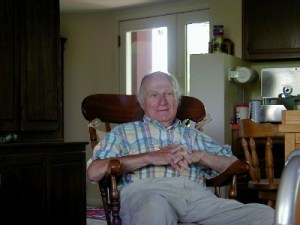
Doug Hall at home in Wabasha

Doug Hall at home in Wabasha

Verse – His Own True Self

He sits and smiles,
His dog Sparky
Resting against his leg,
His eyebrows hanging
Like willow branches.

The bell has tolled
For him, a tolling
Like a wind-song
From the North
Marking the end.

Stephanie Autumn and Clyde Bellecourt honoring Doug with Indian blanket

Stephanie Autumn and Clyde Bellecourt honoring Doug with Indian blanket

He sits and smiles,
Peaceful, thankful,
Accepting, connecting
With those he loves,
Caring for those he will leave

The earth, his home,
Calls him to itself,
Beyond eternal claims
Or expectations,
He sits at peace

Mortal flesh he knows
Cannot prolong itself,
Nor should it seek what it
Cannot attain
Beyond its measure.

No control of time
Which bears us all away,
No need now to storm
The barricades against
The end of time.

He sits and smiles
In gratitude and wonder
For sun and shadow,
For all creatures great and small,
For family love and friends.

For these he sits and smiles –
This self-disclaiming man
Who intended nothing
But his own true self
In whatever time was his.

[Gordon C. Stewart, 2004]

Windy’s flute and the Honor Song drumming echoed Doug’s spirit. Like Old Joe Hill, Doug’s voice still echoes down through the ages of time for all who seek justice, love mercy, and walk humbly on this Earth.

Minnesota Law and Politics named Doug Hall to Minnesota’s Legal Hall of Fame. Scroll down to #38 to read the Law and Politics’ tribute to him.

– Gordon C. Stewart, November 14, 2015


Verse – It Works with Congress

Some think a score-keeper’s in heaven.
They say that it simply must be.
For life here below,
It’s easy to show,
Is not fair for you or for me…

You’re sweet and always kind-hearted,
But also as poor as a bird.
I’m mean as a snake,
But I always make
So much money, it’s simply absurd!

You work-out, but never are healthy.
I drink booze and lounge with TV.
I’m never unwell,
And all can just tell
I’ll out-live you, just wait and see.

Some say Justice waits till here-after.
The scales must be balanced up there.
I hope that a BRIBE
Will get me inside,
And that Heaven will still not be fair!

  • Steve Shoemaker, Urbana, IL, Nov. 12, 2015

Ordinary people, Socrates, and the Psalmist

Last Sunday was my first experience with the Adult Forum at Trinity Episcopal Church. It was a brainstorming session for the church’s adult faith formation program.

A woman introduced herself as “the octogenarian in the group” to lots of laughter since a number of them were well on their way to their 80s. She proposed “living well in anticipation of dying and death” as her topic of interest. The group’s response was immediate. They were hungry for it.

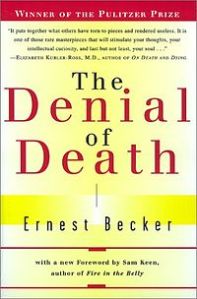
DenialofdeathcoverThey went immediately to the practical considerations like Living Wills, leaving clear instructions for children. But the discussion soon moved to the deeper matter of mortality itself, our culture’s juvenile denial of death (a la Ernest Becker), and the desire to go deeper into the philosophy and theology of wellness, death, and dying.

Two days later at last night’s Republican presidential debate, when Senator Marco Rubio drew roaring applause for his put down of philosophers – “We need more welders, less philosophers” – I wanted to invite the senator and everyone in the auditorium to join the 20 people  next Sunday in the Fireside Room where ordinary people will heed the wisdom of Socrates to “apply themselves in the right way to philosophy”:

“Ordinary people seem not to realize that those who really apply themselves in the right way to philosophy are directly and of their own accord preparing themselves for dying and death”

Death is always the elephant in the living room. So is philosophy when it is scorned. It’s easy to be glib about it, to knock it, ignore it, or mock it. Not so easy to face it “of [our] own accord”, as Socrates and the psalmist urge those who would live well – with gladness and and mercy – in anticipation of dying and death.

“So teach us to number our days, that we may apply our hearts unto wisdom. … O satisfy us early with thy mercy; that we may rejoice and be glad all our days.” – Psalm 90:12,14, KJV

Gordon C. Stewart, Chaska, MN, November 11, 2015.