Just another day. Another mass shooting. Funerals for young children who left home with homemade sandwiches in their backpacks on their way to school in Uvalde. Another day of partisan hide-’n-seek for who is to blame. Just one more day of jabbering and cross-fire when the NRA sheds tears and offers prayers for the kids and families of Uvalde, and then applaud the former president and Texas senator talking about the need for more good guys with guns to stop the bad guys with guns. Just another day in the land of the free, the home of the bullies.
Just another day 100+ days after mass graves began to be dug in Ukraine for children and parents as innocent as the children mowed down in Uvalde. Another day in far-away Ukraine and close-by in neighbors in Uvalde, Buffalo, Tulsa. Another day when Members of Congress ignore the oath to the Constitution they solemnly swore. Another day when patriotism falls prey to partisan propaganda insisting, though they know better, that “guns don’t kill; people do.” A day like any other when nothing happens to stop the power of the gun lobby, dark money, PACS, and the belief, without evidence, that the election was stolen.
Just another day when the monsters of lies and fear turn us against each other.
Gordon C. Stewart, public theologian, author of Be Still! Departure from Collective Madness (2017 Wipf and Stock), Brooklyn Park, MN, June 5, 2022.
Some memories blur over time. Others, like the hospital visit with Nee-gon-we-way-we-dun (Clyde Bellecourt, Jr), still ring the fire alarm.
I had come to visit Clyde — Nee-gon-we-way-we-dun (“Thunder Before the Storm”) — in the cardiac care unit after he had suffered a minor heart attack. It had been Clyde and the Legal Rights Center (LRC) Board who invited me to step in as LRC’s interim executive director. LRC and I were in the same boat: our boats were sinking. I stayed at LRC for the next seven years.
LRC is the creation of Black and American Indian community civil right leaders as an “outside the system” community-based public defense corporation belonging to, managed by, and serving low-income African-American and American Indian defendants in the courts of Hennepin County.
I had been in Clyde’s room in the cardiac care unit no more than 10 minutes when an Anishinabe Midew arrived to offer prayers for healing to Gitche Manitou (the Great Spirit). She brought sage and sweetgrass, the herbs for ‘smudging’ in preparation for prayer. Smudging serves the purposes of cleansing, keeping evil away, and providing a spirit of calm and peacefulness.
The Midew had, of course, come with matches to bring the herbs to a smolder to create the smoke for smudging. She lit the match, and the smoke triggered the hospital fire alarm throughout Hennepin County Medical Center. The alarm stopped a few minutes later when an attending nurse smelled the sweet smell of smudging, and sent the word that stopped the alarms. We never did get to the prayers.
If we had gotten beyond the preparation for prayer, the Midew would have offered something like this Ojibwe prayer for the healing of each other and the healing of the planet:
Grandfather,
 look at our brokenness.
 We know that in all creation
 only the human family
 has strayed from the Sacred Way.
 We know that we are the ones
 who are divided
 and we are the ones
 who must come back together
 to walk the Sacred Way.
 Grandfather,
 Sacred One,
 teach us love, compassion, and honor
 that we may heal the earth
 and heal each other.
 (Ojibwe prayer)
The Legacy of Thunder Before the Storm
Clyde is gone now (RIP), but his legacy will live on. Though he could not end the racism or heal America of the trail of broken promises, he did what a human being is called to do. Because he did, his thunder is still heard. Professional sports teams no longer bear the names or wear the logos that dehumanize America’s first peoples. Although fans of the Cleveland ‘Guardians’ (MLB) and the Washington ‘Commanders’ (NFL) may not know or care why, when, and how their teams took their names, those who know will not forget the persistence that blew away the insults. Soon no one will remember, with a chuckle, the day preparation for prayer set off the fire alarms. No one will know that security systems can’t be smudged.
Gordon C. Stewart, public theologian, host of Views from the Edge, Author of Be Still! Departure from Collective Madness (2017 Wipf and Stock), writing from Brooklyn Park, Minnesota, December 19, 2022.
When I first heard anyone speak of “the moral power of death,” I thought I must have been mistaken. Morality is one thing; moral power might describe the morally responsible use of power; death is something else altogether.
“Death is not a power,” I said to myself. “Death has no power. Death is the total absence of power. Death is what happens at the end; it is passive — an outcome of death-dealing powers in life. It has no morality. Death makes no distinctions among the powers that delivers every one of us all into its final keeping — e.g., a cardiac arrest, a traffic accident, cancer, ALS, old age, a gun shot, a murder, a war, or suicide — death doesn’t know the difference. The variety of means that deliver us to the end are varied, but death is always the same. It takes us when life is gone. It has no power of its own. Why, then, speak of death as a moral power? Who would talk like that?”
A Strange Man Named Stringfellow
William Stringfellow saw things differently. Forgoing Wall Street law firms’ lucrative offers, he rented a small tenement apartment in East Harlem after graduation from Harvard Law School. “The stairway smelled of piss,” he write.
“The smells inside the tenement — number 18, 342 East 100th Street, Manhattan — were somewhat more ambiguous. They were a suffocating mixture of rotting food, rancid mattresses, dead rodents, dirt, and the stale odors of human life.”
William Stringfellow, My People Is the Enemy: An Autobiographical Polemic (1964, Holt, Rinehart, and Winston).
Though I never had lived in a place like East Harlem, Stringfellow’s autobiographical polemic read like a personal letter. During the summers of 1961 and 1962, the hour-long daily commute between my suburban home and my summer internship on the streets of north Philadelphia put me in a dense fog between two different realities that had once seemed a world apart. The commutes became cognitive pauses that begged the fog to lift, but it didn’t . . . until three years later.
My People Is the Enemy became the text for the small group of seminarians engaged in bar ministry at Poor Richard’s in Chicago’s Old Town. Each Wednesday morning the seven of us convened at 6:00 a.m. to reflect on our experience at Poor Richard’s in light of Stringfellow’s book and to share a bare-bones Agape Meal.
My People Is the Enemy was transformative. I began to understand the title of Stringfellow’s book. Corinthian Avenue and Opal Street were not an accident. My people, not theirs, was the enemy. My people owned the tenements, evicted tenants, bribed the cops, provided the drugs, and red-lined property in Philadelphia, Broomall, and most everywhere else. My people, not the poor folks welfare, was the leach sucking blood from the ghetto we created and maintained. “My people” were the spillers and the sponges dependent on keeping the milk and hope spilling.
Stay tuned
Thanks for coming by.
Gordon C. Stewart, public theologian, author of Be Still! Departure from Collective Madness (2017 Wipf and Stock), 49 brief social commentaries on the news of the day, writing from Brooklyn Park, Minnesota, April 27, 2022.
“The Democracy of the Dead,” a podcast by Gordon Stewart, Brooklyn Park, MN.
Gordon C. Stewart is author of Be Still! Departure from Collective Madness (2017 Wipf and Stock), and host of Views from the Edge (gordoncstewart.com). He writes and publishes from Brooklyn Park, Minnesota.
Easter was hard this year. I couldn’t bring myself to put my body in a pew. Imagining the shiny brass trumpets heralding Christ’s victory over sin and death had no more appeal than the silly silky banners waving up and down the aisle to make Easter more festive. Whether Easter felt like a fraud orI felt like the fraud didn’t matter yesterday.
A Ghost named Gus
If we’re honest about the resurrection, many, if not most, of us have some difficulty with one or another of the post-crucifixion stories of Jesus’ resurrection. Although my grandmother swore that our 120 year-old home was haunted by a friendly ghost named Gus, I’ve never gotten into ghostly apparitions.
Hamlet and his father’s ghost — Henry Fuseli
Years ago an eccentric older congregant, long since deceased, claimed her deceased husband regularly visited her, standing at the foot of her bed. Even without this claim, there were multiple grounds for concluding that she would have been institutionalized in a previous generation. I never could get into her story, or the story about Gus’s footsteps creaking the steps of my childhood home. They were outside my experience. Like the Apostle Thomas, my faith is suspicious of such claims. “Unless I see for myself…” is second nature to me.
Unless I See
One person’s experience, however, is not the measure of all things, especially in matters that cannot be confirmed by objective verification. The world is full of experiences that are enigmas to my little piece of reality. My slice is not the whole pie, although, come to think of it, if my slice tastes like blueberries, chances are good the pie is blueberry. “To thine own self be true,” Shakespeare’s Polonius advises Laertes.
“And it must follow, as the night the day thou canst not then be false to any man . . . ” (Shakespeare, Hamlet, Act 1, Scene III). Being true to oneself leads some honest people to leave the faith. Think Jean-Paul Sartre. Think Albert Camus. It leads others to stay and dig deeper. Though I was once almost one of the former, I am still one of the latter.
An Honest Conversation
Nowhere is the challenge of good faith greater than the resurrection. “Seeing for ourselves” like the Apostle Thomas is a hard way to live; it can be tricky. Sometimes we see things that aren’t there; other times we don’t see what stares us in the face. In a year like this, I rub my eyes in hopes of a clearer view of what is true. Honesty is slipping away in America. So is hope for the nation. The dark clouds of willful ignorance and unabashed dishonesty leave me looking for the light that faith tells me cannot be overcome.
Honesty, or the attempt at it, was what I had, but not much more. Although I could not say, with James Russell Lowell, “I do not fear to follow out the truth,” I know that the search for truth takes place “along the precipice’s edge.”
A Jarring Juxtaposition Between Two Fires
For the likes of those of us who stay, Easter is less accessible in the garden outside an empty tomb than in the encounters with the skeptical Thomas, and with Peter, who has gone back to his fishing nets after the crucifixion. Staying home on Easter for the first time reading the Gospels’ passion narratives, portrayals of Peter caused me to stop and ponder the jarring juxtaposition between two scenes around a fire.
The first fire is set in the courtyard of the High Priest’s residence where Peter “The Rock” crumbles like shale. Warming himself by the courtyard fire, two domestic workers identify Peter as Jesus’ disciple. His Galilean accent betrays him. Three times Peter denies it. “I do not know the man!” “I do not know the man!” “I do not know the man!” The rock crumbles.
The Second Fire
The second fire is lit on the shoreline to which Peter, the fisherman, returns after what would have been a bad night without the miracle shouted by the stranger on the shore. Peter has not become a fisher of fellow-humans; he is a fisher of fish again, not different from before Jesus had called him, except for the guilt he now carries from his denial before the fire in the courtyard. That I understand. That reversal I know by experience. I wasn’t Peter, but the dead, crucified, and buried Jesus whom the Creed claims “descended into hell” reached down into the hell of my own making to blow the remaining embers of the first fire into the charcoal fire of the second. The risen Christ is not an apparition. Christ comes as the stranger we forgot we knew, the host who serves us breakfast on the shoreline.
Gordon C. Stewart, public theologian, author of Be Still! Departure from Collective Madness (2017 Wipf and Stock), writing from Brooklyn Park, Minnesota, April 20, 2022.
NOTE: “Between the Image and Reality” first appeared as a podcast by the same name. Here’s the printed text.
Letters from an American
The latest gift from the “best friend” I’ve never met greets me most mornings. Letters from anAmerican is Heather Cox Richardson’s daily news summary. Heather does what I cannot do. She collects the information on current events from a host of sources, swallows it, digests it, and brings it back to the nest to feed fledglings like me.
Heather Cox Richardson
Her succinct self-description resonates with me in this moment when marketing strategies and images continue to dig the mass graves of what little remains of reality:
I’m a history professor interested in the contrast between image and reality in American politics, I believe in American democracy, despite its frequent failures. — Heather Cox Richardson
Daniel J. Boorstin
In this era of American culture and politics we need the historians. Among them is Daniel Boorstin, the historian of the Library of Congress, whose controversial, ground-breaking book, The Image (1962), focused a laser beam on the emerging dominance of new image-making media and technology over American public life.
“The deeper problems connected with advertising,” wrote Boorstin, “come less from the unscrupulousness of our ‘deceivers’ than from our pleasure in being deceived, less from the desire to seduce than from desire to be seduced.
“We Americans suffer primarily not from our vices or our weaknesses, but from our illusions. We are haunted, not by reality, but by those images we have put in the place of reality.”
Daniel J. Boorstin, the image: Or, What happened to the American Dream (1962)
If you’re a fledgling waiting for the arrival of real food; if you take no pleasure in being deceived or seduced, if you are haunted by images we have put in the place of reality, Heather Cox Richardson may be the best friend you’ve never met. Click Letters from an American to welcome Heather to your nest. She’ll help you fly.
Follow-up coming soon: The Bubble of Pretend.
Gordon C. Stewart, public theologian, author of Be Still! Departure from Collective Madness (2017 Wipf and Stock), forty-nine brief reflections on faith and the news, Brooklyn Park, Minnesota, April 10, 2022.
I write with great respect for your offices as President of the Russian Federation and as the Russian Orthodox Patriarch of Moscow and All Russia. My words to the two of you are confidential. Few people dare to speak candidly with you.
We haven’t met, but that’s not unusual; lots of people I’ve never met say I’m their closest friend. Many of them have made me up. They delete what they don’t like about me or my story, or do end-runs around my words. Take, for instance, my cry from the cross, “Abba, forgive them, for they do not know what they’re doing.” Forgiveness is real, but it’s not cheap. It’s not an excuse to sin.
Russian Orthodox Patriarch Kirill and Russian Federation President Vladimir Putin.
Clean Monday was only three weeks ago. On Clean Monday you and Eastern Orthodox Christians on both sides of the Russian-Ukrainian border marked the beginning of “The Great Lent” with a service that features something a bit odd and humbling. Every worshiper bows down before another worshipper to ask for forgiveness with the intent of walking through the six weeks of the Great Lent with clean hearts and a clear conscience. I like that. I’ll return to the subject of bowing later.
Do you remember the parable of the Last Judgment? My parable isn’t about an End Time when the wicked will be punished and the good rewarded. It’s not about Then; it’s about the Now, the ever-recurring Now of daily life. The parable is about how to live your life now as a neighbor.
I told that parable not to scare people; I told it so the listeners would pause, reflect, and turn around when they are living like goats pleading innocence because they never see the suffering. The parable is the Beatitudes in story form. You may remember those: Blessed are the poor, the grieving, the meek, the merciful, the peace-makers, and those who yearn for righteousness. The Beatitudes and the parable of the sheep and the goats are meant to turn the popular winner-loser perception on its head. The sheep feed the hungry; the goats don’t see them. The sheep “see” the naked and clothe them; the goats don’t notice. It’s the same with the homeless, the sick, and the imprisoned. The goats would have “seen” if only they had known there was a reward at the end. The sheep have no knowledge of reward and punishment. It is the sheep that break the popular myth of reward and punishment.
The parable goes to the heart of my reason for writing. You have great authority and power. One of you is the latest “king” of the Russian Federation; the other is the latest “king” of Russia’s spiritual affairs, Patriarch Kirill, Patriarch of Moscow and All Russia. You are said to have a good relationship. But I tell you, if the sheep and goats were separated in real time at this moment, the two of you would be bleating billygoats leading the line of those who plead innocence.
It is not by accident that the parable is not about individuals. The sheep and goats gathered for judgment are not individuals. They are the nations, all of them. Russia is no exception. Ukraine is no exception. Poland is no exception. The United States is no exception. There is no exception.
Every nation is capable of great compassion and of astonishing cruelty. A nation can be peace-loving or war-mongering, merciful or cruel, loving or hateful, seeing or not seeing. Whenever a nation sees itself as exceptional or superior among the global community of neighbors, things always turn out badly, as is happening now in Ukraine. The sun shines and the rains fall without respect for borders.
As president of the Russian Federation you hold the power and authority of Russia’s head of state and commander-in-chief. You have exceeded all boundaries of moral restraint. The weight of the cruelty, suffering, devastation, and death unleashed on Ukrainian rests on your shoulders. Yet you do not see. You take no responsibility for the suffering imposed on Ukraine.
Patriarch Kirill, you also bear responsibility. The day after Clean Monday, your Ukrainian and Polish peers met in Kyiv. Aware of public criticism of your relationship with Mr. Putin, they appealed to you to meet with Putin to stop the war, and asked you to break your public silence about the war as the cause of suffering. Clean Monday was not clean this year. There can be no pleas of ignorance.
Finally, I leave you with another parable. This one was told by those who thought they saw divinity in my humanity. It was told of me, not by me. Whoever created the parable packed every challenge I faced during my life, which you also face now. Like the parable of the Last Judgment, It’s a work of imagination that puts everything in a nutshell, but its meaning is pretty simple really. It’s about bowing.
Then the devil took him to a very high mountain, and showed him all the kingdoms of the world and their glory; and [the devil] said to him, “All these I will give you, if you will bow down and worship me.”
The question of faith is about Now. The question is pointed. It draws no line between the political and the spiritual. It’s simple:
“To whom are you bowing now?”
— Jesus of Nazareth
Gordon C. Stewart, public theologian, author of Be Still! Departure from Collective Madness, Brooklyn Park, MN, March 18,2022.
Imagine yourself listening in on a conversation between God and Vladimir Putin. Even if you don’t believe in God. Pretend you do for just a moment. -:)
“But I know your rising and your sitting,
    your going out and coming in,
    and your raging against me.

Because you have raged against me
    and your arrogance has come to my ears,
I will put my hook in your nose
    and my bit in your mouth;
I will turn you back on the way
    by which you came.
-- 2 Kings 19:25-27
“Your arrogance has come to my ears.”
The rage and arrogance hurt my ears. If I had a hook, I’d put it in Vladimir Putin’s nose to rein in his urge to reign. If I had a bit to tame arrogance, I’d put it in the mouth of Putin’s best friend in Florida who applauds Putin’s “genius” in re-framing the invasion of Ukraine as a peace-keeping mission. Two best friends who have no other friends.
The “hook” in the nose and the “bit” in the mouth were tools for bringing an unruly camel under control. The raging camel was Sennacherib, the arrogant King of Assyria. The message is for him.
Isaiah put these words on the lips of the One who has no lips but whose anguish cries out in us and whose tears run down our cheeks whenever a feral camel wanders into someone else’s yard.
Whoever wrote Second Kings would be shocked to find that the story of the two kings — Sennacherib of Assyria and Hezekiah of Judah — would be read in 2022. But the story is ageless. Watching another strongman invade his next door neighbor, who can fail to imagine the divine rebuke of the unruly camel who sticks its nose under tents where it does not belong, and the other camel whose mouth never stops?
-- Gordon C. Stewart, public theologian, author of "Be Still! Departure from Collective Madness" (2017 Wipf and Stock, Eugene, OR), writing from Brooklyn Park, MN, February 25, 2022.
Last night’s documentary of Congressman Jamie Raskin before and after the tragic loss of his beloved son, showed qualities of character in short supply: personal integrity, moral-spiritual courage, a playful spirit, and faithfulness to his oath of office to uphold the Constitution. Those qualities were evident before and after the tragic death of his son “Tommy” whose funeral was the day before the January 6 attempted coup at the U.S. Capitol.
Thomas (“Tommy”) was 25 when he took his life. Thomas fell within the 18 – 29 year-old age range of the Harvard-Kennedy Center Youth Poll taken in the autumn of 2021. The poll’s findings are staggering.
When one in four young adults between ages18 and 29 think of doing harm to themselves more than once in a two-week period (Oct. 26- Nov. 8, 2021) something is terribly wrong.
More than half (51%) of young Americans report having felt down, depressed, and hopeless — and 25% have had thoughts of self-harm — at least several times in the last two weeks.
The youngest participants in the poll were one year-olds when the Twin Towers fell in 9/11, 2001. Tommy was four. The oldest were eight years old, old enough to be terrorized and fearful of the world around them. Even the children at the lower end of the poll’s range would not have escaped sensing their parents’ emotions — shock, fear, panic, despair, anger, dread.
Thomas Raskin and His Peers
No stranger can know what broke in Tommy on New Years Eve. But we do know this. Whatever mixture of clinical depression and despair over a dark world he could not repair, we know from the Harvard-Kennedy Center Youth Poll that Tommy lived and died as one of a host of young adults struggling to make it through the day.
Tom Raskin’s generation has been served an omelet of violence, fear, distrust, and hatred for breakfast. Every day. They have never known a time of peace. Terror has broken into their homes and schools, synagogues, churches, mosques, malls, supermarkets, music concerts with a frequency and rapidity unknown to my generation.
The events of their lifetime blow the hinges off my generation’s prevailing sense of innocence. The America they experience is the scene of madness, splintered into camps of trust or distrust in one another and the institutions on which democracy depends. They encounter a world of cruel absurdity. Election to office is not public service. Partisanship is more about power and greed than about governing wisely. Driving Black or walking Black puts target on your back, and the man with the badge puts his knee on your neck until you can’t breathe. A president of the United States of America sweeps a peaceful Black Lives Matter protest off the plaza for a photo op, proudly holding up a Bible he doesn’t read. This generation knows that White’s not right. White privilege weighs on people like Tommy, as it always has on African Americans and America’s First People for whom Whiteness meant slave-ownership and genocide.
On top of all that, there is Donald Trump, and there is QAnon
Any pastor who visits congregants in psychiatric hospitals or hospitals for the criminally insane is not shocked when religion becomes the host of insanity. Often the patient suffered illusions of grandeur. Some think of themselves as Jesus Christ, or feel the burden of saving people from a cruel world. Some hear voices. Some live in a endless nightmare of conspiracy. I would like to say I’ve never seen anything close to QAnon, but I can’t say that.
Many of the patients I’ve visited know where they are; some know why there are there. But the years of my pastoral visits ended before Donald Trump and QAnon. I’ve met the likes of Donald several times in a hospital for the criminally insane, but I never met anyone who imagined a satanic conspiracy of a cabal of child-kidnapping, child-molesting, sex-trafficking cannibals intent on destroying a president.
Why would it surprise us that 51% of young adults in the poll feel “down, depressed, and hopeless” or that 25% of them have had “thoughts of self-harm — at least several times in the last two weeks?” Twenty-five year old Thomas Raskin was one them.
There is a Yearning for Meaning, Integrity, and Courage in the Storm
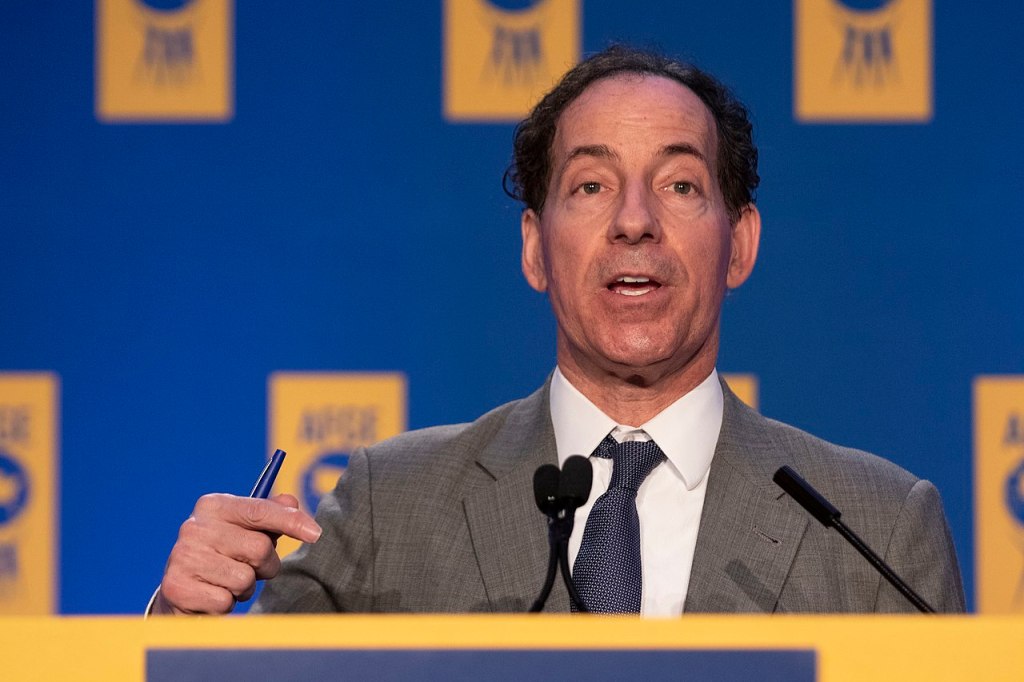
Rep. Raskin speaking at the 2020 AFGE Leadership Conference
Thomas’s father writes in Unthinkable: Trauma, Truth, and the Trials of Democracy reflects on how January 6, 2021 would have affected Tommy. That “stomach-churning, violent insurrection; that desecration of American democracy would have wrecked Tommy Raskin.
“So as a congressman and a father of a lost son and two living daughters, I would take a stand, with everything I had left, against that violent catastrophe in the memory and spirit of Tommy Raskin, a person I have, alas, not even begun to properly render in words.”
Rep. jamie raskin, unthinkable: trauma, truth, and trials
While a criminally insane former president remains free, Tommy’s father and every prosecutor who can hold him to account have bull’s eyes on their backs. Perhaps, by the grace of God and the stand of a grieving father, the Constitution will continue and the Oath of Office be honored.
Gordon C. Stewart, author of Be Still! Departure from Collective Madness (2017, Wipf and Stock), Brooklyn Park, MN, Feb. 7, 2022









 Views from the Edge