
November 15, 2018
Dear Mr. President,
I’m concerned for the country. I’m also worried about you. The two go hand-in-hand, yet they are not the same. Though we have never met, we share something: we were baptized in Presbyterian churches. Neither of us can remember that moment. We were infants. We had no choice.
Because we do have a choice now, I write to share with you the story of another person who, unlike us, was old enough to choose.
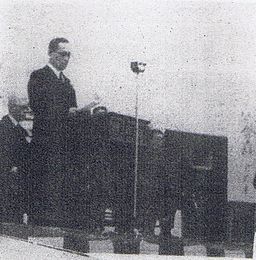
Kosuke Koyama was 15 years old at the time. Japan was his country. Tokyo was his home. The United Church of Japan was his church family. The scene of his baptism could not be more different from ours. It was 1945 during the American fire bombing of Tokyo. The worshipers could hear the bombs exploding all around the church. Through the windows they could see the flames.
His pastor gently took Koyama’s face in his hands, looked him in the eye, and charged him with words that succinctly say what baptism into Christ means:”Kosuke, you are a disciple of Jesus Christ. You must love your enemies. Even the Americans.” It was a defining moment for the rest of Kosuke’s life.

Kosuke Koyama (1929-2018 “Well done, good and faithful servant” (Mt. 25:23) RIP
Through the eyes of faith, Koyama later plumbed the depths of that moment, and came to a deeper understanding of what had happened to his native country. Japan had come to regard itself as exceptional — a singularly superior nation and culture. Japan had made itself into its own house god. It had twisted love of country (patriotism) into nationalism, and nationalism gave license for imperialist adventures that led to unimaginably horrific consequences. In 1967 the United Church of Japan issued a Confession of Responsibility During World War II as a way of restoring the church’s integrity.
Kosuke Koyama died in 2009 after a distinguished professional career that officially ended with his retirement from the John D. Rockefeller Chair of World Religion at Union Theological Seminary in your home city. Robert McAfee Brown, who wrote the book you and I were assigned to read in confirmation class, The Bible Speaks to You, was Koyama’s faculty colleague. During his 14 years at Union Seminary, and following his retirement, Dr. Koyama created a legacy that lives on in his books (Water Buffalo Theology, Mount Fuji and Most Sinai, No Handle on the Cross, and others) and in the lives of those he influenced by his teaching and humble character.

World War I Centenary, Paris, France, Nov. 11, 2018
Today you call yourself a nationalist. You have embraced the great sin that Kosuke came to see so clearly in his native country. Watching you at the Arc de Triomphe last week for the 100th anniversary of the armistice that ended World War I, I saw you through Koyama’s lens of faith. You sat among the company of other world leaders, but you looked very alone. Sitting very nervously away from the spotlight, you waved back to someone, as if to assure yourself of your importance. I saw a very lonely man without the company of friends and allies. In that moment, I felt a bit of sympathy for you. I wished you could slip away to a nearby cafe where we could talk, just the two of us as pastor and president.
 Then I heard the President of France, Emmanuel Macron, step to the podium to issue a rebuke to nationalism as “a betrayal of patriotism” that eliminates what makes a nation great: its moral compass. While my heart leaped for joy, I wondered what you were feeling and thinking all alone there in Paris.
Patriotism is the exact opposite of nationalism. Nationalism is a betrayal of patriotism. By saying “our interests first, who cares about the others,” we erase what a nation holds dearest, what gives it life, what makes it great and what is essential: its moral values. I know there are old demons which are coming back to the surface. They are ready to wreak chaos and death. History sometimes threatens to take its sinister course once again.
I thought again of Koyama and wondered whether it would have made a difference if your pastor had baptized you during a bombing raid when you were old enough to choose, looked you in the eye, and said, “Donald, you are a disciple of Jesus Christ. You must love your enemies [and friends], even the French.” New York Avenue Presbyterian Church, a short walk from the White House. It was President Abraham Lincoln’s home church during his presidency. Mr. and Mrs. Lincoln worshiped there to hear a word from a free pulpit which they knew they could not command. It could become a home for you, Melania, and Baron, too.
I will pray for you. I will love our country. But I will not worship it. Neither should you.
Respectfully,
Gordon C. Stewart
Retired Minister (HR), Presbyterian Church (USA), Chaska, MN
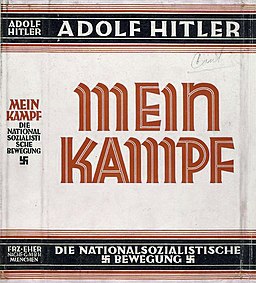 “It is the press, above all, which wages a positively fanatical and slanderous struggle, tearing down everything which can be regarded as a support of national independence, cultural elevation, and the economic independence of the nation.” ― Adolf Hitler, Mein Kampf.

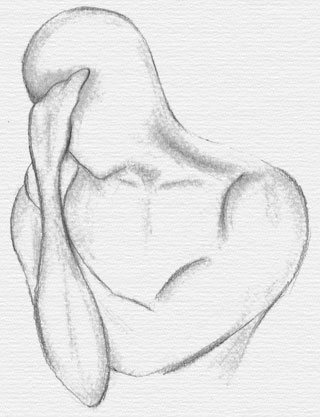 You’ve had days like this. I know you have. Days when everything hurts. Days when you open your eyes and can’t see, or wish you couldn’t see. Days when, if you have hearing aids, you put them away. Days when your head hurts, though you have no headache. Days when what you cherish is belittled, twisted, misrepresented, and assaulted.
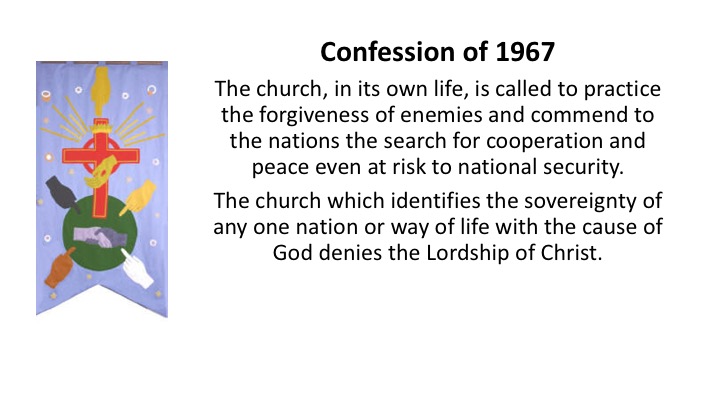 The president’s overtures to North Korea and Russia have given reason to wonder whether perhaps he is following that spirit of The Confession of 1967. But, then, I hear the name calling, the insults, the braggadocio, and remember the dedication of the U.S. Embassy in Jerusalem, and the headache threatens to become a migraine. But I have learned over the years since confirmation class that, though the loudest voices often hold the microphone, there is an inverse relation between loudness and truth, volume and good sense, loud clashing cymbals and the still small Voice that cannot be silenced.
 It was
 Thanks to Currents in Theology and Mission editors Craig Nessan (Wartburg Theological Seminary) and Kathleen Billman (Lutheran Theological Seminary at Chicago), and “Book Reviews” editors Ralph Klein, Troy Troftgruben, and Craig Nessen for featuring Be Still! as the first among Currents‘ “

 Views from the Edge