If you love him, why not serve him?

Fourth in a series on “Jacob’s Ladder at Almost 75”

kairos55954.kairos

The time with Tony on Green Street changed my life in ways I could not have expected when the junior high youth group had left Broomall that morning to do a good deed for “the less fortunate” — an act of Christian service, as we would have called it — in north Philadelphia.

Romanelli_Chronos_and_his_child

Chronos and his Child by Giovanni Francesco Romanelli, National Museum in Warsaw, a 17th century depiction of Titan Cronus as “Father Time,” wielding a harvesting scythe

Time is a funny thing. Chronos (clock time) and Kairos (existential time) both happen on the clock but they are not the same.

Chronological time ticks forward, leaving every previous moment behind; Kairos stops time and re-orients the future.

The hours on Green Street are as fresh at the three-quarter century mark as the day they happened.

“If you love him, why not serve him, soldier of the cross?” asks Jacob’s Ladder of all who aspire to follow Jesus. If Jesus could stoop down to wash his disciples’ feet, surely we could go down to Green Street for a day.

The kids from Marple Church in Broomall left that morning to do just that. We went to serve as a different kind of army, the philanthropic foot-washing soldiers of goodness giving up a Saturday to carry heavy furniture at a ghetto settlement house with other young soldiers of the cross from the inner city African-American Berean Presbyterian Church.

“If you love him, why not serve him?”

We put on our work clothes, travelled to Green Street, and rolled up our sleeves in the strange new world of the Green Street Settlement House.

Although we knew spirituals like “Jacob’s Ladder” and “Swing Low, Sweet Chariot,” we had little if any idea of their socio-economic-policitical origins or implications. Although we were conscious of their origins in chattel slavery, we were northerners. We knew nothing of W.E. DuBois, and Michael Harrington’s The Other America, William Stringfellow’s My People Is the Enemy, James Cone’s The Spirituals and the Blues and Black Theology and Black Power were years away from being published. Reading them would come years later.

During an afternoon break, the woman who organized the day asked Tony to go home to get something they needed. Perhaps it was a screwdriver. Or maybe a rubber band. It doesn’t matter. I went “home” with Tony. “When we get home,” said Tony as best I can recall it, “my brother might be there. If he’s there, he’ll be sitting in the corner. Just ignore him and you’ll be okay. He won’t like you being there.”

What_s_in_a_name_-_The_Problem_with_the__Nation_of_Islam__(part_1_of_2)_001Tony’s older brother Danny didn’t like white people. He had left the church to become a convert to The Nation.

The furthest thing from the mind of the loving servants of Jesus from Broomall was that someone might not like white people.  Or that Tony’s brother would see Christian “service” as servile — a demeaning attack on black dignity and pride — or see the “soldiers of the cross” as the problem, not the solution. Danny didn’t look up during our brief visit to the Lewis’s home.

The day with Tony shook my sense of innocence to its foundations. It was a Kairos moment — a deconstruction and reconstruction of faith and consciousness that continues at age 75.

But each person’s autobiography is distinct. I didn’t realize until this morning how much my memory of the day is a guy‘s memory of it. I was lifting heavy furniture with a kid named Tony, getting to know each other carrying sofas and chairs from one location to the next. Although neither Tony nor I was big or strong, my diminutive friend Carolyn was smaller . . .  and she was a member of the “weaker sex,” as it was called by some back then.

Only yesterday did I learn that my dear Broomall friend Carolyn was having anything but a Kairos moment scrubbing a toilet on Chronos time all by herself. Carolyn’s email reads as follows:

I had a very strange time. It seemed to them, and I’m sure they were correct, that I couldn’t do some of the heavy lifting, so they set me to sandpapering a few layers of awful paint off the toilet seat. I worked hard at it all day, and only got about half done when they remembered I was there and I was embarrassed that in all that time I had not finished my only project. They were very nice about it. But I didn’t get a chance to meet any of the Berean folks except the lady who gave me the job.

Reading Carolyn’s memory takes me in different directions that change the intent of this reflection: the difference gender, as well as racial privilege, seems to have made scraping multiple layers of paint and who knows what else from a crusty toilet seat, a task that may have been all too familiar to the woman who assigned the job to Carolyn.

maidSome Chronos moments are Kairos moments, as the day with Tony was for me. Others are time bent over a toilet seat. The difference is as clear as black and white, poor and rich. How many of the women from Berean rose every morning to put on their maid uniforms to catch the subway and the Red Arrow bus to become invisible, forgotten “soldiers of the cross” in the wealthy homes on the Main Line an hour’s ride west of Philadelphia?

  • Gordon C. Stewart, Chaska, MN, August 9, 2017.


“My Jesus”

Part 3 of “Jacob’s Ladder at Almost 75”

“Sinner, do you love my Jesus?”

The day I met Tony Lewis, “my Jesus” fell off the ladder.

Ladder-5The Jesus of my childhood was white. He was kind and loving, having descended from heaven, like the angels on the ladder between heaven and earth.  My Jesus had made me a soldier of the cross whose job it was to stay on the ladder to heaven and carry others with me.

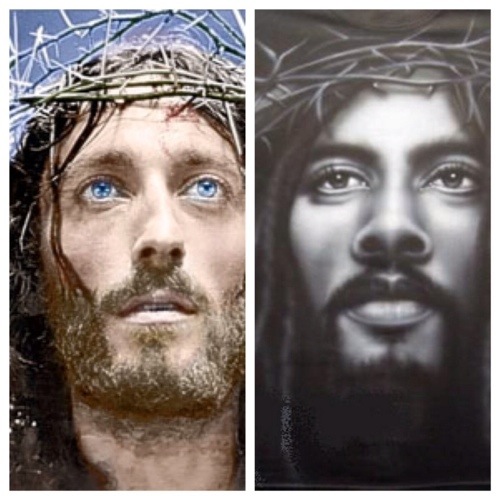
Until the day I met Tony, I had no idea my faith in the descended Jesus also was condescending, the creation of white privilege.

The day my love for “my Jesus” died was the day my church’s junior-high youth group from Marple Presbyterian Church spent helping move furniture at the Green Street Settlement House in Philadelphia.

Opal Street

North Philadelphia street scene

Green Street was the ghetto. We had gone there from our middle-class suburb of Broomall, the home of all things white and Christian, to help those less fortunate than ourselves. We had no knowledge that our Minister and the Minister of the Berean Presbyterian Church on Green Street had conspired to join together the white Marple and the black Berean church youth groups with the excuse of “helping” move the Green Street Settlement House furniture down the street to its newly purchased location.

That was the day I met Tony, whose Jesus was not a suburban white guy with blue eyes and blond hair taking me up the ladder to a white heaven.

Jesus 20140228-091217

Tony’s Jesus had descended from God the Father and had made him a “soldier of the cross” — but the Jesus Tony loved was neither white nor condescending.

“Sinner,” he seemed to ask without an once of hubris, “do you love my Jesus?”

I became conscious of sin.

  • Gordon C. Stewart, Chaska, MN, August 7, 2017.


“Every round goes higher, higher”

Part 2 of “Jacob’s Ladder at Almost 75”

As a child and youth, Jacob’s Ladder touched something deep within me. I couldn’t have described what it was or why at the time.

Looking back, it was a happy song. We were all climbing. Getting older meant climbing higher, getting taller, becoming mature, successful adult “soldiers of the cross.”

“Every round goes higher, higher.”

It expressed a joyful innocence and confidence. I had no knowledge of the economic-political origins of the ‘spiritual’ until much later.

The connection between the slaves’ faith, or their understanding of what it meant to be a “soldier of the cross” — the struggle for economic-political liberation, climbing “higher” to freedom in the North — was as far from consciousness as white is from black.

As a 13 year-old, Jacob’s Ladder expressed an innocent childhood hope during those hormone-challenging years when ascending the ladder toward adult self-sufficiency felt like a fireman trying to save  an 800-pound gorilla in a raging fire. All I could do was stay on the ladder, hoping that human equivalents of angels might be there to catch me when I fell.  The closest thing to angels were people like Mr. and Mrs. Kidder and friends who encouraged my upward progress from childhood to adulthood. Surely some progress must be made.

Faith still meant climbing higher on a ladder that was going someplace, as the Genesis story (Genesis 28:10-19a) of the ladder between heaven and earth seemed to say. We were on the upward ladder.

Then, something happened.

  • Gordon C. Stewart, Chaska, MN, August 6, 2017.


Jacob’s Ladder at almost 75

Sometimes I can’t get it out of my head. I go to sleep with it. Wake up with it. Walk the dog with it. It’s been over a month now.

“We are climbing Jacob’s ladder” begs for my attention.

So this morning I surrender. What will come out on the page is a mystery until it’s written.

I ask myself, “Why this song?”

This stretch of time has been anxious. Unsettling, restless, down, bored, and struggling with my own inner demons and the bigger demons of human madness around the world.

Jacob’s Ladder has been with me my whole life, like an old friend who shows up when I need her. Like her cousins “Sometimes I Feel Like a Motherless Child” and “Swing Low, Sweet Chariot,” and “Joshua Fit the Battle of Jericho,” there’s something about the tune that brings comfort, placing me in the good company of the slaves whose faith and hope are timeless though they themselves are long gone.

It’s the melody, the music – the language of the soul – that gets me. But it’s also the words. Words like ‘climbing, ‘higher’, ‘soldier’, ‘cross’, ’sinner’, ‘love’, ‘Jesus’, ‘serve’. Words that have stuck in my throat at different times in my life journey as either highly objectionable or as deeply expressive of what I know and feel to be ‘true’. “Jacob’s Ladder” feels like a summary of where I’ve been, where I am now, and a strange kind of invitation to resolve the contradictions as I move forward after three-quarters of a century.

So this morning and in the days to come I will have a conversation with Jacob and his ladder, stopping at each stanza and phrase to dig deeper into what is crying for attention.

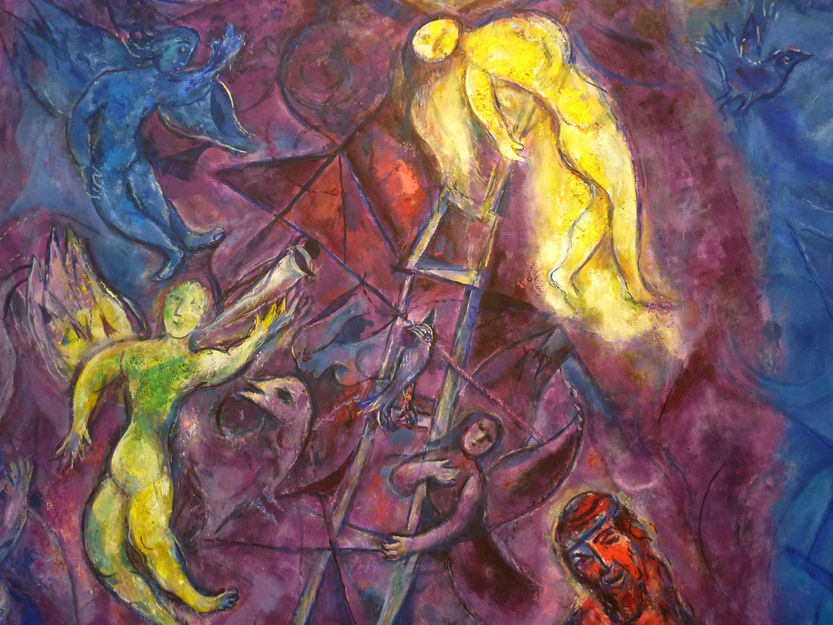
Chagall_jacobs-ladder2_Nice-medium

Chagall, Marc, 1887-1985. Jacob’s Dream, from Art in the Christian Tradition, a project of the Vanderbilt Divinity Library, Nashville, TN. http://diglib.library.vanderbilt.edu/act-imagelink.pl?RC=54650 [retrieved August 6, 2017]. Original source: http://www.flickr.com/photos/abeppu/.

“Listen to your life,” wrote Frederick Buechner in Now and Then: A Memoir of Vocation. “See it for the fathomless mystery that it is. In the boredom and pain of it no less than in the excitement and gladness: touch, taste, smell your way to the holy and hidden heart of it because in the last analysis all moments are key moments, and life itself is grace.”

At almost 75 and no longer climbing, I’ve been pondering grace itself.

  • Gordon C. Stewart, Chaska, MN, August 6, 2017.


Hiroshima: toward a Greater Light

day1 logo

Day1.org logo

Thanks to executive producer Peter Wallace of Day1.org for featuring the podcast of “Only One Sin: Exceptionalism” in advance of the August 8 Anniversary of the bombing of Hiroshima.

Click HERE to sign up and listen on Day1.org.

Kosuke Koyama - RIP

Kosuke Koyama  (1929-2009)

This meditation, an excerpt from Be Still!, reflects on Hiroshima  in the greater light of the Rev. Dr. Kosuke Koyama, the Japanese peacemaking theologian to whom the collection of essays is dedicated.

Kosuke (pronounced ‘KO-soo-kay’) Koyama was 15 years old when it happened, and was baptized during the firebombing of Tokyo.

The horror of the bombings led him to see something else about us: the sin of exceptionalism that knows no limits.

nuclear-bombHis last published book — Theology and Violence: Towards A Theology of Nonviolent Love awaits translation into English from the original Japanese.  We wait on bended knee.
  • Gordon C. Stewart, Chaska, MN, August 5, 2017.


A Good Kick from a stagnant place

This idea that sometimes we need a good kick in order to advance from a stagnant place is not new and does not always find biblical inspiration. Nietzsche said in 1888 “Aus der Kriegsschule des Lebens – was mich nicht umbringt, macht mich starker”– “From the war school of life – what doesn’t kill me, makes me stronger.” – Peter Luijendijk, Dec. 21, 2016.

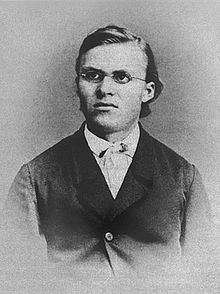
Nietzsche-21

Friedrich Nietzsche

How I got to Peter Luijendijk, the rabbinical student at Leo Baeck College, and the controversial philosopher, Friedrich Nietzsche (1844-1900), he quotes would take too long to explain. Suffice to say it was a serendipitous event inspired by a 3:30 A.M. awakening. I didn’t know of Peter Luijendijk, until this morning when I rushed off a “friend” request on FaceBook.

Although a good kick is always good for advancing me from my stagnant place on the couch with my best friend, the MacBook Air, it was a search for the source of the Nietzsche quote that introduced me, so to speak, to Peter.  “Aus der Kriegsschule des Lebens – was mich nicht umbringt, macht mich starker” had caught my attention moments before as one of three quotations featured on a college religion professor’s faculty page.

Not many religion professors quote Nietzsche to introduce themselves on a college website. Nietzsche is one of those philosophers pious religious types love to hate, in no small part because of his parable of the prophetic madman — the eccentric town crier who announces to the town that God is dead and “we have killed him!”– in Thus Spoke Zarathustra.

Go back now to where this reflection started — the quotation by Peter Luijendijk is part of a Chanukah reflection on the Leo Baeck College (London) online publication. It appeared there as part of a commentary on the Genesis story of Joseph’s survival (Parashat Vayeshev, Genesis 37:1 – 40:23).

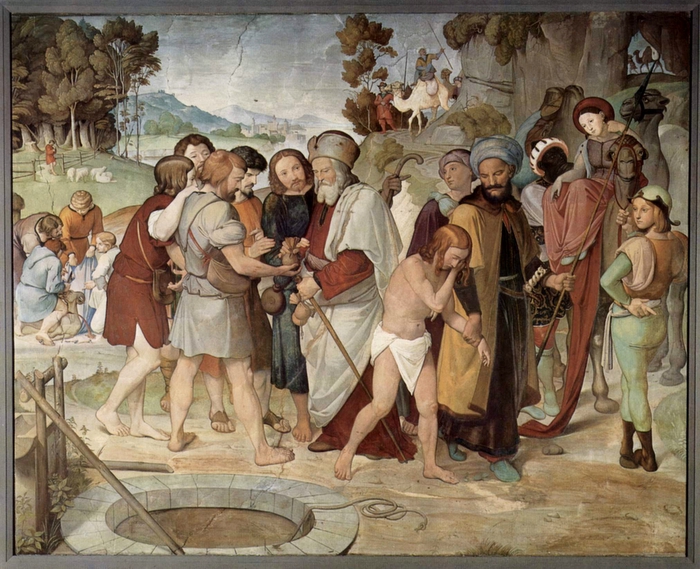
Friedrich_Overbeck_002-medium

Overbeck, Johann Friedrich, 1789-1869. Joseph sold into slavery, from Art in the Christian Tradition, a project of the Vanderbilt Divinity Library, Nashville, TN. http://diglib.library.vanderbilt.edu/act-imagelink.pl?RC=47452 [retrieved August 2, 2017]. Original source: http://www.yorckproject.de.

It turns out that Peter, like Joseph’s painter, Johann Friedrich Overbeck, and Willem Zuurdeeg, the pioneering philosopher of  religion whose work so heavily influences me, is Dutch. Nietzsche’s parable of the madman was pivotal for Zuurdeeg as well. Is there something about being Dutch that leads a Jewish or Christian scholar back to Nietzsche for a good kick in order out of a stagnant place?

This morning the world is making us all Dutch, sending us back to Nietzsche and the town crier who announces that the god of our illusions is dead, leading us to post the quote on a faculty page intro in hopes of a being stronger, more courageous, and perhaps . . . therefore even more biblical.

Peter Luijendijk’s online reflections on the Joseph story concludes with a word of hope in a time of deep darkness like our own:

I guess what I am trying to say is “Kol zeh ya’avor” this all will pass – it will become better. When Rabbi Lionel Blue z’’l talked about the festival of Chanukah in 2013 at the Chanukah reception in Parliament he “commented on a modern miracle – the social change that is leading to widespread acceptance for LGBT people in our society – by saying “Chanukah is a festival of wonder, and tonight is truly a wonder”.*  Chanukah celebrates survival, hope and the promise that the world’s natural AND spiritual light WILL come back. That, my friends, is the hope imbedded in Chanukah and that is the hope imbedded in the story of Joseph and his family.

At 3:30 A.M. this morning, I feel stronger and very, very Dutch.

  • Gordon C. Stewart, Chaska, MN, August 2, 2017.


A Cheerful Note from Baylor

Video

Hulitt Gloer 167563

W. Hulitt Gloer, Professor, Truett Theological Seminary Baylor University

It takes awhile to discover where, if anywhere, a book like Be Still! will land. When published in January there seemed to be three potential homes: readers like the audience of NPR’s “All Things Considered”; college, university, and divinity school classes in philosophy, theology, homiletics, creative writing, and freshman studies programs; and church adult education programs. But you never know until the book has seen some air time.

Slowly but surely, the critical reviews and publicity are coming in, thanks to Bob Todd Publicity.

Day1.org with Peter Wallace has published four essays from Be Still! or from Views from the Edge and will feature a sermon for the First Sunday of Lent in 2018.

Anglican Journal (Anglican/Episcopalian), CURRENTS in Theology and Mission (Lutheran), and The Presbyterian Outlook (Presbyterian [USA}) will publish reviews this summer or fall. Day1.org has re-published four essays from Be Still or from Views from the Edge and will feature a sermon for the First Sunday of Lent in 2018.

And then there is the word from today all the way from Texas — this lovely, encouraging email from W. Hulitt Gloer, Professor of Preaching and Scripture at Truett Theological Seminary of Baylor University:

I have found your essays to be provocative, challenging, refreshing and inspiring. I am planning to use it in one of my courses this fall, assigning an essay a day for reflection and discussion. I think it may become standard.
Many thanks for this wonderful volume. I hope it will be but the first of many!

Thank you, Professor Gloer. You made my day! Next book up with the working title “Don’t Be Weary, Traveler” is ready to look for a publisher.

  • Gordon C. Stewart, Chaska, MN, July 28, 2017.


Who am I?

“Our wisdom, in so far as it ought to be deemed true and solid Wisdom, consists almost entirely of two parts: the knowledge of God and of ourselves. But as these are connected together by many ties, it is not easy to determine which of the two precedes and gives birth to the other.”

Who am I,

this whirling

dervish of a self,

toying with nature,

twirling to and fro

the past that lives

in this whirling

blood and bones?

[GCS]

When “this whirling dervish of a self” came to mind at 3:45 A.M., the image came without forethought as expressing an endless search, the self spinning in search for what John Calvin called the knowledge of the self and of God. It had nothing to do with the phrase’s origins in the Sufi “whirling dervishes” who whirled in ecstatic union with the Divine.

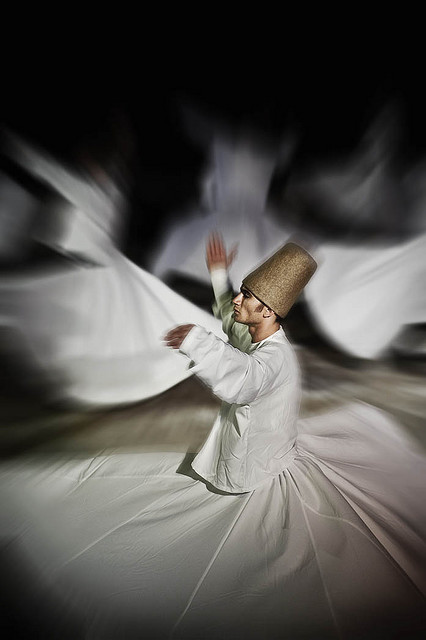
A dervish performs the Sema Ceremony

Turkish whirling dervish with right hand up (heaven-ward) and left hand down (earth-ward) in love.

Who we are – where we come from, who we’ve been, who we’re becoming, and where we’re going – “consists almost entirely of two parts: the knowledge of God and of ourselves.”  [First sentence of the first paragraph of the much maligned John Calvin, the 16th century whirling dervish of the much misunderstood The Institutes of the Christian Religion, 1536].

The more I learn, the less I know. I remain a mystery to myself, a whirling dervish.

  • Gordon C. Stewart [GCS], Chaska, MN, July 24, 2017.


Everything You Want

Two poems by Pat Cegan on the theme of contentment greeted us this morning while enduring a third day of unexpected silence in response to a property offer on the wilderness cabin we want as our own.

Who cares about the property? We never have had it. If the “seller” sells it, we won’t really “own” it – no one really owns a thing! – and the better part of wisdom is being content with what we have.

Pat Cegan's avatarSource of Inspiration

12715754_985019041534194_4314945524831817181_n

What would you do
if you had the perfect body
unlimited money
a loving family
all your wishes come true?

Would you be happy, satisfied
never again feel that yearning
deep within? Would you be free
of fear and doubt?
Love unconditionally?

Would having everything you want
make you who you want to be?

View original post

A Question of Life for Us

“Our heart glows, and secret unrest gnaws at the root of our being. Dealing with the unconscious has become a question of life for us.” – Carl Jung

Ever wonder where you come from — why some things ring a bell, make the heart race, or bring you to a place of sadness you barely understand?

Things like the mill built over a stream or river where your mother took you as a little child to visit your great grandfather.

Andrews Casket Company mill in Woodstock, ME

Andrews Casket Company mill in Woodstock, Maine

Our lives are a matrix of billions of dots. For every dot of which we are conscious, there are millions and millennia of which we know little or nothing. Sometimes the dots connect in ways we could not expect. A line reaches across time to connect two dots, or three, or more, and what was unconscious blossoms into consciousness.

Or it might be a book that’s been sitting on your bookshelf for 20 years that leaps off the shelf for attention, like the one that did this morning in Chaska, Minnesota. The Book of Psalms in Metre and the Scottish Hymnal with Tunes belonging to “John Campbell, Blair Mill, 1880” had made its way across the Atlantic from Blair Mill, Scotland to the  antique book store in the U.S.A.

It could be that the book connects you to another mill, as it did this morning in a google search for John Campbell of Blair Mill:

blair-atholl-watermill

John Campbell (1844-1914) operated the Blair Atholl Mill. He also was the “presenter” (the song leader) of his local church in Blair Mill for 40 years.

BlairAtholl-mill_8905

Blair Atholl Mill, Scotland

I remain a mystery to myself and always will. But some things stand out — photographs of old mills, in my case — that connect the dots of two sides of ancestral history, the Andrews and the Campbells.

A 19th book connects two mills in the dot matrix of a 21st century life, and blossoms into a greater consciousness. I remain a mystery to myself.

  • Gordon C. Stewart, Chaska, MN, July 22, 2017.