Gender Economics: It used to be even worse

 When I Was a Grad Student

The lowest legal wage
was all I made
as part-time teller
in a city bank.
No teller could receive
a tip–if paid
the cameras would see,
you know… “Your back
pocket. The cash you stole!”
At end of day
your balance true would not
be evidence
of innocence no matter
what you’d say.

My wife made ten times
what I did, and hence
in 1968 she applied for
a credit card. No way–
she was not head
of our household. At Field’s
she tried once more:
a woman manager
was brave and said
the card could be in her
own name. My wife
was a real person, too,
with her own life…

– Steve Shoemaker, Urbana, IL, Feb. 5, 2015

Editor’s Note: Steve was a student at McCormick Seminary in Chicago. Nadja was a research scientist at Northwestern.

The prayer from hell

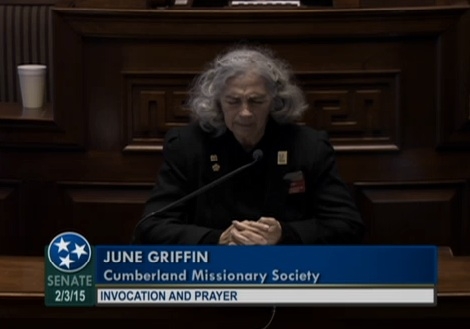
June Griffin, Cumberland Missionary Society, praying      invocation opening Tennessee Senate session, 2015.

June Griffin, Cumberland Missionary Society, praying invocation opening Tennessee Senate session, 2015.

Not even Saturday Night Live or Bill Maher could make up.

Open the Link to Christian minister opens Tennessee Senate with prayer and SCROLL DOWN to watch the video of June Griffin’s anti-government Prayer of Invocation opening a session of the Tennessee Senate.

There used to institutions for people like this.  I used to visit the patients there, but those state hospitals were closed years ago. Today they’re sitting legislators or offering the invocation praying for a Christian-American version of ISIL.


In Memoriam: the MSU Philosophy Student

“The life of the dead is placed in the memory of the living.” – Cicero

The philosophy student who shot himself in the library at Mankato State University yesterday could have been me many years ago. Or is it “could have been ‘I’”? I or me is a question of grammar without much consequence. Philosophy is a question of meaning. Grammarians don’t shoot themselves. Some philosophers do.

I know nothing about the 27-year-old philosophy major at MSU. I don’t need to know more for tears to fall while reading the Star Tribune news report over morning coffee.

A Minnesota State University Mankato student shot and killed himself Monday afternoon in the campus library.

Police were called about 4 p.m. to the library after receiving a report of a suicidal man. After searching Memorial Library, police found the 27-year-old man, a junior philosophy student, on the second floor. Police said he turned the gun on himself and shot.

Police said no one else was in any danger during the incident.

The library was open Monday evening but with access only to the lower level, first and third floors.

I feel sick. It’s sad enough when anyone takes his or her life. It’s sadder still, at least for me, to learn that he was studying philosophy and that he appears to have found a solitary place on the second floor, perhaps among the stacks in the philosophy section of the library, as I imagine it.

He was a junior, as I was when the course in contemporary philosophy plunged me into deep despair. Psychology majors might have called it depression because it looked like that on my face. But there’s a difference between depression and existential despair.

Jean-Paul Sartre’s Being and Nothingness, No Exit and The Flies, and Franz Kafka’s Metamorphosis and The Trial were like nothing I had ever read or heard. They blew my mind to smithereens, leaving me very much alone with the sense of nothingness.

By the time I hit the books in the library that junior year, I ate, drank, and slept philosophy. Of the 18 hours of courses I had decided to carry, only the philosophy course seemed important. Raised in a Christian home, I had always prayed, more or less, giving thanks and asking for blessings on those I loved and the less fortunate. But now prayer seemed a cruel hoax, “bad faith” as Jean-Paul Sartre put it. Why I would return from class and kneel down beside my bed not for “now I lay me down to sleep” but to tell God to go to hell is one of the great ironies, a question grammarians cannot answer.  Had I had a gun that afternoon, my roommate might have found me on the floor in Room 301 of Carnegie Hall.

I know nothing of the circumstances or state of mind of the 27-year-old MSU philosophy student. Perhaps no one will ever know for sure. It may be that his experience bears little or no resemblance to mine all those years ago. It’s not for me to know.

I don’t even know your name, but I sure do feel you! And I feel for those who mourn your loss. “That God does not exist, I cannot deny,” wrote Sartre, “That my whole being cries out for God, I cannot forget” – Jean-Paul Sartre.

Almighty God, Father of mercies and giver of comfort: deal graciously, we pray, with all who mourn; that, casting all their care on You, they may know the consolation of Your love. [The Book of Common Prayer]

Rest in Peace

– Rev. Gordon C. Stewart, Chaska, Minnesota (an hour from Mankato), Feb. 3, 2015.

Mr. Netanyahu, Stay Home!

Speakers of the House sometimes get confused. Under the U.S. Constitution the Speaker of the House is second in line behind the Vice President in the event something happens, God forbid, to the President. Sometimes Speakers – and foreign Heads of State running for their lives in elections back home – speak and act out of turn.

Read Mother Jones’ article Has Netanyahu Finally Gone Too Far with His Contempt for Obama? 


Keystone XL Pipeline and Prairie Roots

The Keystone XL pipeline is more than a pipeline. It’s a rich man’s pipe dream that calls to mind an alternate view of reality itself: the psalmist’s tree with deep roots planted by the rivers of waters. Poets speak truth.

Blessed is the man
who walks not in the counsel of the wicked,
nor stands in the way of sinners,
nor sits in the seat of scoffers;
but his delight is in the law of the Lord,
and on his law he meditates day and night.
He is like ia tree
planted by streams of water
that yields its fruit in its season,
and its leaf does not wither.
In all that he does, he prospers.
The wicked are not so,
but are like chaff that the wind drives away.

– Psalm 1, ESV Bible

Say no to Keystone! Say it for the prairie. Say it for water. Say it for yourself. It’s good for big oil. Good for Congressional Representatives and Senators funded by big oil and and big money. Bad for the environment. Bad for national and global policy shift to renewable sources of energy. The Keystone XL lobby is, in the long run, like chaff which the wind drives away. Let the people say, “Amen!”


Verse — Chicago’s Southside, 1965

The First Presbyterian Church
and the Blackstone Rangers

All stores and resturants must serve all
after the Civil Rights law passed
in 1964. But real
change comes, that has a chance to last,
as power shifts. Our Church began
to work with gangs to help get blacks
to vote. When Stones said everyone
should register, they did! Then folks
began to see that City Hall
responded to their needs: new trucks
to fix the streets appeared, to haul
away the piles of garbage. Police
still threw around their white might, but
some liberal lawyers, black and white,
were found to fight for the release
of innocent poor folks. Some peace
between gangs even came at night…

The Reverend John Fry, ex-Marine,
on Sunday could inspire wood pews
to organize for holy fights.
On Monday words that were not clean
scorched any sinners who refused
to honor all black civil rights.

– Steve Shoemaker, Urbana, IL, Jan. 26, 2015

NOTE: This is a memoir of Steve’s years at McCormick Theological Seminary in Chicago when Steve and Nadja Shoemaker sat in the inspired wood pews listening to the Rev. Dr. John Fry’s preaching at First Presbyterian Church. Click HERE for information on the Reverend John Fry, First Presbyterian Church of Chicago, the Blackstone Rangers, and the Chicago Police Department. John Fry was an inspiration to us at McCormick, a bold preacher in the social gospel tradition who put his life where his mouth was.

Tribute to Marcus Borg (1942 – 2015)

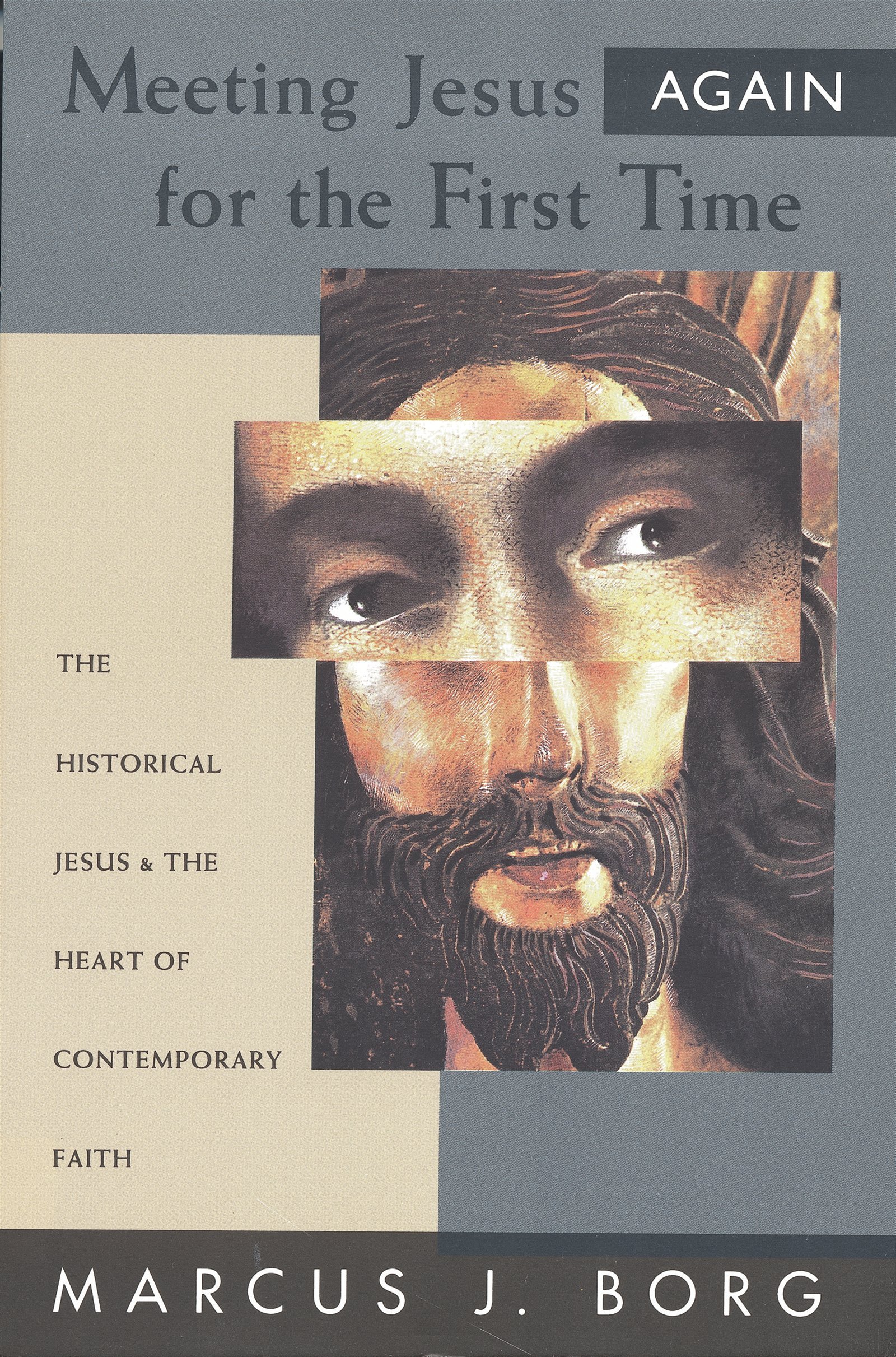
Cover of Marcus Borg book

Cover of Marcus Borg book

Marcus Borg’s writing and teaching affected millions.  Steve Shoemaker received an email of Marcus’s death yesterday from Barkley Thompson, who had quickly writtten the following tribute to Marcus on his blog “God in the Midst of the City“.

My friend, Marcus Borg
WEDNESDAY, JANUARY 21, 2015 / THE VERY REVEREND BARKLEY THOMPSON

Marcus Borg died this morning after a prolonged illness. I received a phone call this afternoon from a Cathedral parishioner and friend of Marcus, relaying the news to me.

I first became aware of Marcus Borg when I was a sophomore at Hendrix College. His landmark book, Jesus: A New Vision had just been released. It hit me at exactly the right time. I was a philosophy & religion major who knew God and increasingly knew about God, but I had little room or need for Jesus. Marcus’ book gave me an entirely new access point: to consider Jesus as Jesus had been historically, as a wisdom teacher, a healer, a social prophet, and more.

Marcus Borg

Marcus Borg

I first heard Marcus speak at Hendrix. He was the epitome of a college professor, right down to the cardigan sweater and pipe. He spoke calmly and with passion, and the first time I heard him in person was also the first time I understood how those tho things–calm and passion–could coincide.

I heard Marcus speak several other times over the years, but it was after I’d become a priest that I came to know him personally. When he was the annual Dodson Lecturer at St. John’s-Roanoke, he and I went to dinner. I was starstruck and wanted to quiz him about his research and his approach to Christianity. He’d have none of it. Marcus wanted only to talk about me, about St. John’s, about our ministry, and about my experience as a young priest in the Episcopal Church. He was solely interested in me, and I’ve never forgotten it.

Several shared meals and opportunities for fellowship later, my Christology has become higher and higher as the years have gone by. In ways I could not have done all those years ago in college, I now attest without hesitation that Jesus the Christ is God Incarnate, the hinge of history, the defeater of death, and the fulfillment in a single human life of God’s hopes for the whole world. And yet, my approach to Holy Scripture, my social convictions, and my love for the Episcopal Church mirror Marcus’ own perspectives quite closely. I once introduced Marcus to a church audience by saying, “I agree with roughly 75% of what Marcus will say to you this evening.” When he stepped into the pulpit, Marcus quipped, “I’m tempted to forego my notes and discuss with Barkley the other 25%!”

Unlike so many other writers in the field of religion (on both ends of the spectrum), Marcus was humble. Once one of my parishioners asked him during Q&A, “But how do you know that you’re right?” He paused, looked at her thoughtfully, and said, “I don’t know. I don’t know that I’m right.”

Very many people who had left the Christian faith have returned to it through Marcus’ evangelism (though he would grimace at my use of the word, I suspect). Marcus was a Christian, a follower of Jesus Christ in word and in deed. He understood Jesus (and especially the Resurrection) differently than I do. But the veracity of his faith was clear. And calm. And passionate.

Marcus and I last corresponded in late November. I’d asked how he was doing, and he responded, “I may have ten years left. Not sure I want more. There comes a time to let go. And I could, with gratitude, sooner than that. My life has been very blessed.”

Like Abraham, Marcus was blessed so that he could be a blessing. He blessed my life, and I am grateful.

NOTE: Since February 2013, Barkley serves as the eighth dean and twentieth rector of historic Christ Church Cathedral in Houston, Texas.  Click HERE for more information about the him.


Water is NOT a Commodity

Video

Nine (9) year-old Luke Sekera-Flanders of Fryeburg in Maine’s poorest county, Oxford County, took on the Nestle company, one of the world’s largest bottled water-for-profit producers, which was seeking a 45 year contract with the Public Utilities Commission. Nestle’s CEO has declared there is no human right to water and that the way to preserve water is to put a price on it. Nestle sees water as a commodity.

“I get my water from the Fryeburg Water Company,” said Luke. “In school we learn about being a good neighbor….”

Sometimes we live on different planets, one public and poor; the other private and getting richer. Or different sides of an aisle as at last night’s State of the Union Address. Score one for the Psalmist: “Out of the mouths of babes and suckling…” (Ps. 8:2)  Click the link below to hear Fryeburg’s little David, Luke Sekera-Flanders.

Boy testifying against Nestle contract in Fryeburg, Maine

This video won a special place in my heart. Oxford County is my maternal ancestral home. My mother and the rest of the Titus and Andrews family would be so proud of Luke.

The Road to Civil Rights in America’s Oldest City

INTRODUCTION: Views from the Edges earlier post from 40th ACCORD referred the KKK kidnapping of four civil rights activists in St. Augustine, FL. Yesterday Francis (“Tate”) Floyd said otherwise.

“No,” said Tate,  who was visiting next door, “they weren’t kidnapped. They got caught at a KKK rally downtown and got their asses kicked.”

Below is more complete information posted by The St. Augustine Record on May 17 , 2014 by Matt Soerge. “Views from the Edge” has added the bolded print and photographs to the text.

Civil rights: 50 years later, the memory is still clear
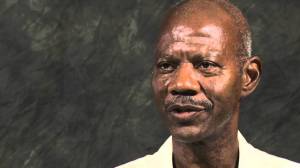
Purcell Maurice Conway

Purcell Maurice Conway

In 1964 St. Augustine, Purcell Conway, a black 15-year-old, held hands with a white nun during a civil-rights demonstration that drew the angry attention of a white mob from the Ancient City and beyond.

The mob surged forward. Conway was attacked, and so was the nun. They tore off her headdress. They dragged her to the ground by her hair. They kicked her.

Fifty years later, the memory is still clear: How can people be so cruel, so petty? he asks, How silly, he says, that there is so much hate over the color of one’s skin.

Conway traveled Wednesday to Tallahassee, where he reunited with other activists from what he calls the “teenage rebellion” — the civil rights demonstrations that rocked St. Augustine from 1963 until the summer of 1964, when the Civil Rights Act became law.

They went to the Capitol building to see Robert B. Hayling inducted into the Florida Civil Rights Hall of Fame. His portrait will go up there along with those of the other inductees, the late James Weldon Johnson and A. Philip Randolph, both of whom grew up in Jacksonville.

Hayling, 84, still sharp and witty, was a dentist who inspired and led the youthful demonstrators in St. Augustine.

Now in their late 60s and early 70s, most of them grew up together in the largely black neighborhoods of Lincolnville and West Augustine.

Asked to describe the St. Augustine of his youth, Shed Dawson, who was arrested nine times, gave a long pause before speaking.

“Scary. Very challenging. Dangerous. Sad.”

Dr. Robert B. Hayling and Mr. James Jackson

Dr. Robert B. Hayling and Mr. James Jackson

You had to be careful, said James Jackson, who was captured and beaten by the Ku Klux Klan.

“You didn’t want to go and get caught out alone at night, especially outside of your comfort zone, outside of Lincolnville.”

Jackson knew many of the Klansmen by sight. He’d see them going about their business during the day, on the streets downtown.

And as the Civil Rights Act moved through Congress, the Klan rallied, openly, on St. Augustine’s quaint downtown streets, in robes that exposed their faces for all to see.

Houses were firebombed. Grenades were thrown at juke joints. Shots were fired.

One white man, with a loaded shotgun on his lap, was shot and killed as the car he was in cruised through a black neighborhood one night. In his death convulsion, he fired shots of his own through the floor of the car.

Young blacks from St. Augustine picketed outside stores, sat at lunch counters where they could not be served. And they marched through the city’s streets, past churches that would not admit them.

One sign asked: “Are you proud of your 400 yrs history of slavery & segregation.”

Demonstrators were threatened and beaten. They were arrested and jailed for attempting to integrate the beaches, lunch counters, hotels.

Many of the black demonstrators were trained in nonviolent ways of protesting and pledged to never strike back.

Others made it clear that they were armed and would defend themselves, their families and their community if called to do so.

Conway says two things united the young black demonstrators: They were fed up with the status quo, where they were permanent second-class citizens. And they were inspired by the civil-rights struggles elsewhere.

Why not St. Augustine too?

“It gets to a point in your life that you’ve been stepped on, mistreated, seen your family members mistreated,” he said. “Forget about the fear — you will die to see this changed.”

‘A mean lady’

At 12, Conway had a white friend, a fellow paperboy, and when they each ordered milk shakes at the lunch counter at the McCrory’s store, he couldn’t understand why the woman there let his friend eat inside, but insisted he go outside.

His friend joined him on the sidewalk. “She’s a mean lady,” he said.

At 14, Conway was mowing the lawn of a white woman who offered him a sandwich and a drink. She left it for him on her garage floor, next to the dog’s bowl.

As a child, he’d been naive. But now his eyes were open — and he chafed as he saw how his parents had to call white people “Mister” or “Miss,” while they were simply called by their first names, George and Julia.

So he was ready, at 14, to join the Movement. That’s what he and his friends called it.

Conway recalled that black teenagers would go the swimming pool at Florida Memorial College, a black Baptist school that moved to Miami a few years later.

College students would tell the teenagers about the Movement. They’d talk about what was happening around the South, about why action was needed in St. Augustine.

By 1964, the Movement drew Martin Luther King Jr. and other prominent black leaders to the city.

It drew the support of many white college students from elsewhere, who were beaten and threatened alongside the young black demonstrators.

It drew the support of rabbis and priests and nuns and 72-year-old Mary Elizabeth Peabody, mother of the governor of Massachusetts, who was jailed after supporting the demonstrators.

And it drew national and international coverage to a tourist city preparing for its 400th anniversary.

Tourists stayed away. In 1965, a state legislative report on the unpleasantness in St. Augustine would note that the city lost $5 million in tourism, which meant the state lost taxes, too.

“Which means that all citizens of Florida indirectly paid for Martin Luther King’s visitation to America’s oldest city,” the report said, before fretting about the “devastating barrage of unfavorable publicity” from “purported” news accounts.

“Despite massive propaganda to the contrary,” the state report said, “Negroes and whites have lived together amicably in St. Augustine for centuries.”

‘I was afraid’
Maude Burrows Jackso

Maude Burrows Jackso

Maude Burroughs Jackson knew unfairness as she grew up in the small black community of Hill Top in Middleburg. Still, she was relatively sheltered, there in the country.

She came to St. Augustine in 1960 to go to Florida Memorial College. The city, she said, felt hostile. Discrimination was open.

“It seemed like a mean place,” she said. “Things have really changed over the years. But I was afraid many times.”

She got involved in the Movement after going to Hayling’s dental office with a toothache.

She went to wade-ins at segregated beaches, and between classes she sat at lunch counters or picketed. She was jailed three times.

One night, in Hayling’s office, she made dinner for King — steak and toast and salad. “He’d come in late that night, and with the situation being the way it was, you couldn’t just go outside and eat.”

‘All right, that’s enough’

KKK rally, St. Augustine, FL

KKK rally, St. Augustine, FL

James Jackson said he tries to find the humor in every situation. So he laughs, still, about the night the Ku Klux Klan caught him, Hayling and two other black men, James Hauser and Clyde Jenkins.

He said he stayed calm through talk about getting killed, about getting set on fire. But when the Klan got to talking about castration? “I said, ‘I got to get out of here.’”

Jackson and his companions had gone to eavesdrop on a Klan rally that drew hundreds to St. Augustine, and figured they could spy safely from a back road. That was almost a fatal error. They were beaten, severely.

Jackson shows off a scar on his forehead, courtesy of a lug wrench. And the Klansmen paid particular attention, he said, to the hands of Hayling, a dentist: How could he practice his profession with broken hands?

“We were lucky as hell to get out of their with out lives,” Jackson said.

The story he heard later was that a preacher in the crowd sneaked away to alert police. Sometime later, an officer walked up to the rally. “He said, ‘All right, that’s enough,’” Jackson recounted.

He took them to the hospital, and then to the sheriff’s office. There, bloodied and bruised, they were charged with assault.

After the Civil Rights Act was signed, Jackson remembers coming out of a hardware store and running into Halstead “Hoss” Manucy, one of the prominent white segregationists in town. Manucy had hurled many insults at Jackson, but apparently didn’t recognize him when they bumped into each other.

“Now I’m not a tall man, but he was shorter than me, and he looked up at me and said, ‘Excuse me sir.’”

Jackson laughed. “Excuse me sir! The biggest smile came over my face.”

‘Shell shock’

Shed Dawson, St. Augustine Movement

Shed Dawson, St. Augustine Movement

 Dawson graduated from R.J. Murray High School just a few weeks before the Civil Rights Act was passed. But he was already a civil-rights veteran; he was arrested nine times and spent at least 90 days in jail.

So within a day or two of the act’s passage, he and three other black teens went to a barbecue place on U.S. 1 to “test” the bill.

They squeezed their car into a tight space at the front door. As they approached the door, a group of 25 to 30 men and women came from behind the building, almost as if they were waiting for them.

They had bricks and beer bottles and baseball bats — “their own little personal weapons,” Dawson said.

The four friends split up and ran. Dawson made it to some nearby woods. “Because I was 18 and they were half-drunk, they couldn’t catch me.”

Frustrated, the mob returned to their truck. Perhaps 15 minutes later, Dawson came out of the woods and saw the truck approaching, with people crowded into the back of it — still looking for him.

He ran back in the woods, hiding there for more than two hours. Finally, he crept out and saw a highway patrol car parked in front of another restaurant. Now, he thought, he would be safe.

Dawson went into the restaurant, where the manager stopped him brusquely: “What do you want?”

Dawson’s shirt and tie were filthy, his best pants were muddy and his good shoes were caked with mud. He said he needed to talk to the trooper, who sat, just a few feet away, ignoring him.

“He’s eating lunch,” the manager said.

Dawson insisted. Eventually the trooper got up, locked Dawson in his car, and resumed his meal.

As he ate, a crowd of whites assembled around the car, rocking it back and forth, pounding on the windshield, calling Dawson names.

The trooper, frustrated, came out, started the engine, and got on the radio. “I found the n—– y’all are looking for,” he said.

At the station, they took Dawson’s mug shot, took his fingerprints, but eventually didn’t charge him. The trooper then took him to the headquarters of the Movement, where Dawson’s disappearance was big news.

“He (the trooper) was a hero,” Dawson said. “Everybody was cheering — yeah yeah yeah — and shaking his hands. He was soaking it up.”

King spoke that night at a church, and invited Dawson to sit with him at the pulpit. So he did, still in his filthy clothes.

Dawson ended up traveling the world as a civil servant for the Navy, working on aircraft carriers — a life that would have seemed impossible to him as a teenager. Before things changed, he might have been a cook or a yard man. If lucky, he could perhaps have been a brick mason or a plumber’s helper.

The struggle was worth it, he said, although when he returns to his hometown, the past sometimes feels far too close.

“I’ve been all around the world and I’m OK,” he said. “But when I got back to St. Augustine, to a restaurant, I feel fear, like flashbacks, like the soldiers had. Shell shock. I guess it will never go away.”

Views from the Edge Note: Click HERE for hour-long Library of Congress interview with Purcell Conway.

MLK Day 2015 – the house next door

94 South Street, St. Augustine, FL

94 South Street, St. Augustine, FL

On Martin Luther King Day 2015 the historic house next door to us on The Freedom Trail here in St. Augustine is a faint shadow of its former self. A weathered sign by the rear entry reads:

“NO TRESPASSING by order of the City of St. Augustine. Violators will be prosecuted to the full extent of the law.”

Some of the louvered glass windows on the back porch are broken out. Sheets and blankets cover the windows.

The White family paid the price for their courage. James and Hattie were leaders in the Civil Rights Movement, as was their son Samuel. But, as Isaac Watts (1674–1748) reminds us in his poem and hymn “O God, Our Help in Ages Past”:

Time, like an ever-rolling stream,
Bears all its sons away;
They fly forgotten, as a dream
Dies at the opening day.

Time has a way of placing brackets around even the best historic moments. James, Hattie, and Samuel, their 14 year-old son, who was sent to reform school for sitting in at the downtown St. Augustine Woolworth’s, have been borne away by time. The three of them are deceased; their story and the dream is still alive.

When young Samuel and his three friends later known as “the St. Augustine Four” were arrested at Woolworth’s, the authorities agreed to release them to their parents’ custody on one condition: that they sign a statement that their children would not violate the law again. The four young men pleaded with their parents not to sign the pledge, assuring their parents that they, the sons, could make no such pledge. Mr. and Mrs. White refused to sign. Fourteen year-old Samuel was sent to reform school for a year. He served six months of the sentence before Dr. Martin Luther King, Jr., Jackie Robinson and other civil rights movement leaders came to St. Augustine to shine the national spotlight on St. Augustine. Samuel and the other incarcerated member of The St. Augustine Four were released by order of the Governor of Florida. The Civil Rights Act followed.

For all the saints, who from their labours rest,
Who Thee by faith before the world confessed,
Thy Name, O Jesus, be forever blessed.
Alleluia, Alleluia!

And when the strife is fierce, the warfare long,
Steals on the ear the distant triumph song,
And hearts are brave, again, and arms are strong.
Alleluia, Alleluia!

– William Walsham How  (1823 – 1897)