Quote Me: More than Words

“The characteristic place to find Christians is among their enemies. The first place to look for Christ is in Hell.” – William Stringfellow (1928–1985), author, My People Is the Enemy.

WIPFSTOCK_TemplateThese aren’t just words. After Harvard Law School, Constitutional attorney Bill Stringfellow moved into an East Harlem tenement apartment on the block the New York Times then called the “worst” in the city, turning down lucrative NYC corporate law firm job offers. The first of his many books, My People Is the Enemy – a theological reflection on racism and poverty in America- opens with an unusual sentence:

“The stairway smelled of piss.”

All these years later, Stringfellow’s words sound strange to many Christians and non-Christians alike who see the Christian life as the search for moral purity and the climb into a Hell-free afterlife. You want to meet Christ? According to the author of An Ethic for Christians and Other Aliens in a Strange Land, Christ will meet you from among your enemies and in the Hell of human suffering racism and wealth create.

  • Gordon C. Stewart, Chaska, MN, January 27, 2016

America’s Original Sin?

Jim Wallace’s new book America’s Original Sin: Race and White Privilege & the Bridge to New America takes a hard look at the origins of the Euro-transplant nation that supplanted America’s indigenous people. Jim Wallace argues that the United States was born of White Privilege. It is the nation’s original sin: it’s America’s first and enduring sin.

It seems no matter how much things progress, or seem to progress, the original sin is always crouching at our door, as the Genesis story of Cain and Abel puts it. “Sin is crouching at your door, and you must master it”.

But is the issue race? Or is it class? Or something else, a fatal flaw in the human psyche and the social psyche? Are racism and White Privilege what they seem, or are they manifestations of something more basic?

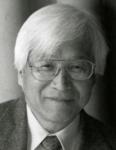
“There is only one sin, said Kosuke Koyama, and it is exceptionalism.” Born in Tokyo in 1929, Koyama saw in the Japanese Empire the myth of exceptionalism. To his great sorrow, he saw the same myth in the United States, the second home where he finished a distinguished career as John D. Rockefeller, Jr. Professor of World Christiankosuke-koyama-2ity at Union Theological Seminary in the City of New York.

Beneath White Privilege lies the election doctrine that arrived on these shores with America’s European settlers. Their theology was wrapped around the belief that the true believers, the elect, were exceptional to the rest of humankind. The result was genocide against America’s indigenous peoples followed shortly by the institution of chattel slavery, both the racial sins of White Privilege of which Jim Wallis writes.

In the larger scheme of things in 2016, one can argue convincingly that exceptionalism has been a primary contributor to climate change. The sin of exceptionalism is the illusion that we, the human species, are superior to nature. In  honor of Koyama: Could it be that there is only one sin: exceptionalism?

I wish Jim and Ko could have spent time with each other. It would have been so enlightening to have sat in not their conversations.

  • Gordon C. Stewart, Chaska, MN, January 25, 2016.

All the World – tout le monde, kl alealam

Christian Theological Seminary‘s “Statement on Attacks on Beirut and Paris” (11.16.15) is one for the ages.

“Friends,

“All the world – tout le monde – grieves and stands with France in the midst of these harrowing days. All the world – kl alealam – grieves and stands with Lebanon. As people of faith, our hearts can only break when God’s children turn against each other in the name of God. And the most elemental, effective way to counter such “turning against” is to reverse the gesture, turning toward one other in solidarity, compassion, and hope.

“On Friday night, I attended the student-organized vigil against racism, a gathering powerfully proclaiming that Black Lives Matter. CTS student body president Whittney Murphy spoke eloquently that we are like the candles we held that night: sometimes flickering in the wind, or even going out, but then rekindled by the lights of others. The shadows may fall and the winds threaten, but together we can walk in the promise that God is with us, and that God is a light the world’s shadows cannot and will not overcome.

“As we stood together in the vigil that night along Michigan Road, the attacks in Lebanon were only a day old, and the news was just beginning to come in about the attacks in Paris. On one level, these various events – the vigil and the attacks – seem separate and distinct. But on a deeper level, they are profoundly connected. The same dehumanizing act of dividing the world into “us” on the one hand and “our enemies” on the other is the root of both racism and religious intolerance. The peace and equality for which the vigil called here at home is the same peace and equality we need in France, Lebanon, and beyond. And what’s more (and more troubling), while France has received a public outpouring of support and solidarity from around the world, Lebanon has not. For many, this has understandably raised the question: When it comes to the world’s solidarity and concern, don’t Lebanese lives matter as much as French ones? If our hearts (or Facebook pages) now bear the French flag’s blue, white, and red, shouldn’t they also bear Lebanon’s red, white, and green?

“In the New Testament Gospels, Jesus’ signature move is to stand with outsiders, with the forgotten or marginalized, and to reach across religious and ethnic lines of hostility. Following Jesus as best we can, we can only heed the call to do the same. Jesus is in Lebanon. Jesus is standing along Michigan Road. Jesus is in France, and in so many other places around the world, mending the brokenhearted, calling for justice, calling for love. Wherever the shadows fall, there Jesus goes, the flickering, quickening light of the world.

“And so we give thanks for student leaders, their voices clear, their faces illuminated by candles of hope. We give thanks for all of those committed to helping to turn these horrifying attacks into renewed resolve to work toward reconciliation. For as we approach the coming Season of Advent, those four weeks of lament and prayer that lead to a once-forgotten backwater not far from Lebanon, we know our lives depend on the love that binds us together. So much depends on that love. All the world – tout le monde, kl alealam – depends on it.

“God’s shalom,

Matthew Myer Boulton

Matthew Myer Boulton

Matthew Myer Boulton
President and Professor of Theology
Christian Theological Seminary
1000 W. 42nd Street, Indianapolis, IN 46208″


Hangman

The lynching tree?

The lynching tree?

Every few days a silhouette of a tree and the invitation to play Hangman appear on my iPad. It’s a real tree with limbs and branches with a kind of Halloween orange sky behind the black silhouette and the noose.

In America there are TWO hangman histories. One seems harmless enough: Hangman, the English word game of British origin some of us played as children. The other is deadly.

As one who’d never heard of the game until it appeared on my iPad, the image is grotesque. It called up America’s long history of the lynching tree when the people who played hangman hid their identity with white hoods over their heads, walking in the dark with torches ablaze, erecting and setting afire crosses on the properties of blacks and whites who hadn’t shown proper respect for their doctrine of white supremacy.

Advertisers are experts in cultural anthropology. They prey on a people’s cultural history and belief systems. Commercials like the one for Hangman are created as a result of research into the fears and hungers of a people. Their ads hold out the bait to attract the quick click to the ap.  I didn’t click, but, if I were a gambler, I’d wager that many who did weren’t thinking about an innocuous word game when they clicked. They may have been seeing what the advertisers meant them to see: a symbol of “the good old days” when white men were in control.  In 2015  America the old racist hanging tree and its hangman are still soliciting successfully, especially when we choose not to remember.

  • Gordon C. Stewart, Chaska, MN, September 29, 2015.

Go Set a Watchman: A Review

Watchman-Mockingbird

A Review: Go Set a Watchman 

by Emily Hedges*, September 3, 2015

Fans of To Kill a Mockingbird have already heard—Harper Lee’s Go Set a Watchman (Harper Collins July 2015) doesn’t reflect well on everyone’s hero, Atticus Finch. The timing couldn’t be worse. With the Charleston shootings still on our minds and the phrase “black lives matter” as a rallying cry instead of an obvious truth, we needed him. We needed Atticus’s courage and ethics to be a sign of hope. Maybe that’s why we were all so ready to accept the story of a found manuscript after all these years. We felt the gods were sending us a sign, like Mockingbird was for the Civil Rights South.

Watchman was written and set in the mid-1950’s in the aftermath of Brown vs. Board of Education. Atticus, who was willing to sacrifice everything to defy the racist establishment in Mockingbird, set in 1936, now sees a different threat looming over the South. Grown up Scout returns home and finds Atticus part of the Macomb County Citizens’ Council, an organization he knows is racist, but feels is their only protection against the federal government (and organizations like the NAACP) usurping the community’s right to determine what and how institutional changes are made.

The fact that Watchman is more about state’s rights than civil rights was always going to be disappointing to me and many fans of Mockingbird, but it’s the preachy way it’s done that makes the novel unpalatable. I think this happens because the story is more about groups than individuals. Where Watchman gives us “negros,” Mockingbird gave us Tom Robinson; where Watchman gives us racists, Mockingbird gave us Bob Ewell; where Watchman gives us the Old Sarum folks (poor whites), Mockingbird gave us Mr. Cunningham. I think this lack of compelling, fully developed characters is what forced Lee to resort to long stretches of didactic dialogue to carry her political message. This is particularly evident in Parts V, VI, and VII where Atticus’s brother, Dr. Jack, is portrayed as a two-dimensional interlocutor, a patient, patriarchal figure that forbears Jean Louise’s passionate tirades about race, guiding the exchanges with patronizing questions and long-winded homilies. There is nothing of the tender charm found in interactions between Scout and Atticus from Mockingbird.

For all its faults and disappointments, it’s almost worth reading Watchman just for Scout’s childhood flashbacks, a few precious scenes where we can once again romp through a lazy, hot summer afternoon with Scout, Jem and Dill. It’s like watching deleted scenes from your favorite movie. In these moments especially, and throughout the novel, Lee’s voice visits you like an old friend. Passages like this:

“Alexandra had been married for thirty-three years; if it had made any impression on her one way or another she never showed it. She had spawned one son, Francis, who in Jean Louise’s opinion looked and behaved like a horse, and who long ago left Macomb for the glories of selling insurance in Birmingham. It was just as well.”

I think it’s obvious that Watchman was the place Lee fine-tuned her characters and worked through plot and point-of-view. For that, we should appreciate that Watchman helped make Mockingbird a masterpiece. Appreciate it, but don’t publish it.

There was just too much money to be made. More than 1.1 million copies sold in the first week. As a recent New York Times op-ed pointed out, it’s no coincidence the manuscript was “discovered” within months after the death of Lee’s old protector (her sister Alice Lee) by her new protector, a woman who worked in Alice’s law office. Supposedly Lee, 89 years old and suffering from dementia in a nursing home, granted consent.

Since publication everyone has wondered, and worried, how Go Set a Watchman will taint the legacy of To Kill a Mockingbird. Many have said they don’t think it will, but I don’t agree. I can’t help feeling like a character from my other favorite American novel, The Great Gatsby, a character whose “count of enchanted objects had diminished by one.” I wish I could go back and un-read this book. Maybe then I wouldn’t feel guilty of shooting a mockingbird, because Atticus was right—it is a sin.

*A native of Muskogee, OK, Emily Hedges is a published writer in a master’s program at Dartmouth College, Hanover, NH.  Emily lives in Lebanon, NH with husband Joe and three beautiful children. Thank you, Emily, for setting the bar for insightful literary criticism and for trusting Views from the Edge to publish your work. – Gordon


Kosuke Koyama – Hiroshima Day

INTRODUCTION: Today is the 60th anniversary of the bombing of Hiroshima. It seems fitting for Views from the Edge to publish an address Japanese theologian and social critic Kosuke Koyama delivered at the Peace Garden in Minneapolis, MN at the very hour “Little Boy” turned Hiroshima into an inferno.  Dr. Koyama spoke these words on August 6, 2006 at the hour the bomb dropped on Hiroshima

Hiroshima Day Speech at the Peace Garden, Minneapolis – August 6, 2006. Kosuke (“Ko”) Koyama was living in downtown Minneapolis at the time.

It is hardly possible to imagine that in an atomic era,
war could be used as an instrument of justice (Pope John XXIII)

Dear Friends,

Sixty-one years ago, at 8:15 in the morning of August 6, 1945, the Japanese city of Hiroshima was annihilated by a nuclear bomb. The bomb, nicknamed “Little Boy” exploded 570 meters above the ground creating a fireball 100 meters in diameter with a temperature at its center of 300.000 degrees Celsius. Instantly the city became a land of death and destruction. 140.000 people perished. Three days later, on August 9th, the city of Nagasaki suffered the same fate. 80.000 perished. The Japanese authority told us that this extremely powerful bomb was the atomic bomb and advised people to wear white shirts and carry ointment. When the war ended 66 major cities of Japan were desolate wildernesses through fire-bombing. During the night of March 10, 1945, five months before Hiroshima, 325 B29s burned 16 square miles of Tokyo killing 100.000 people. I narrowly survived that holocaust.

As we pause to remember Hiroshima day this morning we are deeply disturbed and concerned about the destruction going on in the Near East today. Any bombing is a demonstration of human depravity. It breeds nothing but despair and hatred. Above all, it kills innocent children! Injuring and killing children is an “absolute” evil. Bombing is an indefensible act of terrorism. It must be totally outlawed and abolished if humankind is to remain human. I am not afraid of God. God will never drop nuclear bombs upon the inhabited cities. I am afraid of humans, for they have actually done it and may do it again! Religious speeches about hell do not frighten me. Hell cannot be worse than what I saw and went through the night of March 10, 1945 in Tokyo. I do not think God can make a worse hell than the one made at the order of American Air Force General Curtis E. LeMay. (1906-1990).

What is it in the thinking of people that allows for the kind of violence and terror that we have created through the use of our modern weapons? Sadly we have to admit that too often violence is encouraged by fanatic religious language. Nothing can be more ignorant and violent than religious motivated fanaticism. “God is on our side!” To release the horrors of war in the name of God is the worst of heresies. War is “the failure of all true humanism.” “It [war] is always a defeat for humanity,” says Pope John Paul II. The sages of Asia, Buddha and Confucius, taught that “god-talk” makes humans irresponsible. People, they said, are responsible for what they do. “You make a mess. You clean it up” they say. This is an honest message. “You made a hideous mess in the Rape of Nanjing in 1937. You are responsible. You clean it up!” There is no conflict between this Asian message and the message of the religions of Abraham: Judaism, Christianity and Islam. Honest confrontation may activate “an enormous capacity for goodness and generosity” hidden in human spirits (The New York Times, July 31, 2006, from the Tikkun Advertisement, “STOP THE SLAUGHTER IN LEBANON, ISRAEL AND THE OCCUPIED TERRITORIES!) As I reflect the litany of atrocities that has taken place during my life time I am led to say that it is honest human talk, not dishonest religious talk, that will give 21st century humanity the wisdom and courage to live by hope.

James Baldwin says: “It is a terrible, an inexorable, law that one cannot deny the humanity of another without diminishing one’s own; in the face of one’s victim, one sees oneself.” This is an honest observation not unlike Newton’s law of motion that to every action there is an equal reaction. We cannot demonize others without demonizing ourselves. We cannot bomb others without bombing ourselves. We cannot kill other children without killing our own children. “All who take the sword will perish by the sword,” says Jesus. This is honest human talk. To think that one can deny the humanity of another without diminishing one’s own is pornographic. To suggest that by taking the sword we can prosper by the sword is deceitful. The children in Hiroshima or in Baghdad are as precious as the children in San Francisco. Any religion, any political power, or any ideology that despises this universal preciousness of the lives of children and all human beings must be publicly condemned for the sake of the sanity of human spirit.

During the war (1941-45) the Japanese people were bombarded by the official propaganda that Japan is the divine nation for the emperor is divine. The word “divine” was profusely used. This was Japanese war-time “dishonest religion,” or shall we call it “mendacious theology.” This “god-talk” presented an immature god who spoke only Japanese and was undereducated about other cultures and international relations. Trusting in this parochial god Japan destroyed itself. Then, dear friends, do not trust a god who speaks only English, and has no understanding of Arabic or Islamic culture and history. If you follow such a small town god you may be infected with the poison of exceptionalism: “I am ok. You are not ok.” For the last 5.000 years the self-righteous passion of “I am ok. You are not ok” has perpetuated war and destruction. War “has never been and it will never be” able to solve international conflicts, says Pope John Paul II.

Today eight nations (the United States, Great Britain, Russia, China, France, India, Pakistan and Israel) are in possession of nuclear arsenals. The bomb confers the power that I may characterize as “absolute.” Something that is “absolute” should not be trusted to unreliable human hands. The sanity of being human is to recognize human limitation. The idea of unlimitedness is demonic. Indefensible Weapons (Robert J. Lifton / Richard Falk) are “glorified” for their ability to pose an ultimate threat to an enemy. Albert Einstein saw that “war cannot be humanized. It must be abolished.” That is not an utopian dream. Let me quote from the recent New York Times Tikkun Advertisement: “The paranoid and allegedly ‘realistic’ version of global politics asserts that we live in a world in which our safety can only be achieved through domination, or others will seek to dominate us first. Of course, when we act on this assumption, it becomes self-fulfilling.” Martin Luther King Jr. said that “if we want to survive upon the earth, for our own self-interest, we better learn to love our enemies.”

In spite of the remarkable advances humanity has made in science/technological, our moral and spiritual growth has been stunted. Humankind seems addicted to destruction even with the nuclear arsenal and biological weapons. Today there are 639 million small arms actively present in the world (National Catholic Reporter, June 30, 2006). Fear propaganda always kills Hope. Violence is called sacrifice. Children killed in war are cruelly called a part of the “collateral damage.”

Remember that fireball! It is a human copy of the great fireball called the Sun. Humanity is now in possession of the unimaginable possibility of cosmic super-violence. We, the species called human on the third planet of the solar system, are now capable to obliterate all living beings upon the earth. When Hiroshima/ Nagasaki was nuclear bombed, symbolically the whole world was bombed. Every bomb used against others is ultimately a bomb exploded upon ourselves. How dedicated we are to destroy ourselves! Since Hiroshima, war is no longer about this nation against that nation. It is we, all of humanity, who are against our own good.

We must hold on to the vision of the “enormous capacity for good and generosity” of the billions of people upon the earth! At this moment it is fitting for the world to remember the gift the American people made to Japanese people in 1945 which was enshrined in the Article Nine of the Post War Constitution of Japan:

Aspiring sincerely to an international peace based on justice and order, the Japanese people forever renounce war as a sovereign right of the nation and the threat or use of force as means of settling international disputes.
In order to accomplish the aim of the preceding paragraph, land, sea, and air forces, as well as other war potential, will never be maintained. The right of belligerency of the state will not be recognized.

The Confederate Flag Outside the Library

The Hearst Free Library in Anaconda, Montana is on the National Historic Register. During our four weeks here serving St. Timothy’s Memorial Chapel in Southern Cross, I travel daily to Anaconda to use the library’s internet access.

Walking into the library this morning I noticed a pickup truck with a Confederate flag decal on the back window of the cab. The hackles went up on the back of my neck. The urge to scratch the decal from the window momentarily crossed my righteous mind until I took note of something else.

The pickup truck with the Confederate Flag decal

The pickup truck with the Confederate Flag decal

The truck was old and in poor repair. Its bed was messy, filled with a random collection of stuff. This was not a 2015 GMC Canyon or Cadillac Escalade EXT. It belonged, I surmised, to a poor white guy or woman, or a poor white couple hanging on by their fingernails to what little they have.

Anaconda, MT is a fascinating place to live for a month. Once the world center of copper mining, the city of 9,300 residents today is living with great resilience on this side of the mine’s closing in 1987 and the SuperFund clean up that continues into the present.

There is great pride here in their history and in their capacity for survival beyond the abandoned mine shaft and silent smelter stack that still stands proudly, preserved by Anacondans who opposed its demolition by Anaconda Copper’s successor, ARCO. The stack is the oldest smelter stack in the world, large enough for the Washington Monument to fit inside it.

Miners are a sturdy lot. So are their descendants. The closer a visitor draws to the heartbeat of knowledge, persistence, and compassion in Anaconda — the Hearst Free Library — the more one respects and appreciates the town once built by corporate America and left to fend for itself when its usefulness had ended.

Class is the issue in America. But as soon as class comes into play, race becomes the easier target. When the company owners whose workers produce wealth throw away a town the way we throw away paper towels, racial differentiation produces the scapegoat for poverty. A young white man enters an historic black church, sits down for the Bible study for an hour, considers not pulling the trigger because they seemed like “nice people” and blows nine people away. A poor man’s pickup with a Confederate flag decal is parked down the street from the Hearst Free Library in Anaconda, Montana. What that flag stands for can, and does, show up anywhere in America.

– Gordon C. Stewart, Georgetown Lake, MN

Black Beatings – White Policemen

How do you explain this? Watch and read Steve’s explanation.

http://www.youtube.com/watch?v=Gj2TjGFrqFo

Verse – We Serve & Protect

Sadly, some white policemen
serve themselves, their deepest fears,
on the streets American,
by protecting their ideas:
they think they hear their wives say,
I choose a black man today.

(Only this sort of a Freudian analysis, I think, can explain the extreme anger and violence.)

– Steve Shoemaker, Urbana, IL, May 1, 2015

An Open Letter to Franklin Graham

INTRODUCTION TO THE OPEN LETTER

“We don’t know what prompted Rev. Franklin Graham to log onto Facebook and pound out the words that lit a firestorm last week. But within one day, tens of thousands of his faithful followers liked and shared his short, patronizing post that called “Blacks, Whites, Latinos, and everybody else” to “Listen up” and tune in to his take on why so many black people have died at the hands of police officers recently. According to Graham, the problem is “simple.” It can be reduced to their lack of obedience and bad parenting.

“By Monday morning, more than 80,000 people shared the post and almost 200,000 liked it. Sojourners’ Jim Wallis penned a strong response.” – Sojourners.

Views from the Edge’s hosts signed the letter today.

An Open Letter to Reverend Franklin Graham

Dear Rev. Graham,

We write to you in the spirit of Matthew 18: we aim to reconcile with you. You have sinned against us, fellow members of the body of Christ. While your comments on March 12 were just a Facebook post, your post was shared by more than 83,000 people and liked by nearly 200,000 as of Monday morning, March 14, 2015. Your words hurt and influenced thousands. Therefore, we must respond publicly so that those you hurt might know you have received a reply and the hundreds of thousands you influenced might know that following your lead on this issue will break the body of Christ further.

Frankly, Rev. Graham, your insistence that “Blacks, Whites, Latinos, and everybody else” “Listen up,” was crude, insensitive, and paternalistic. Your comments betrayed the confidence that your brothers and sisters in Christ, especially those of color, have afforded your father’s ministry for decades. Your instructions oversimplified a complex and critical problem facing the nation and minimized the testimonies and wisdom of people of color and experts of every hue, including six police commissioners that served on the president’s task force on policing reform.

In the nadir of your commentary, you tell everyone to “OBEY” any instruction from authorities and suggest that the recent shootings of unarmed citizens “might have been avoided” if the victims had submitted to authority.

And you bluntly insist, “It’s as simple as that.”

It is not that simple. As a leader in the church, you are called to be an ambassador of reconciliation. The fact that you identify a widely acknowledged social injustice as “simple” reveals your lack of empathy and understanding of the depth of sin that some in the body have suffered under the weight of our broken justice system. It also reveals a cavalier disregard for the enduring impacts and outcomes of the legal regimes that enslaved and oppressed people of color, made in the image of God — from Native American genocide and containment, to colonial and antebellum slavery, through Jim Crow and peonage, to our current system of mass incarceration and criminalization.

As your brothers and sisters in Christ, who are also called to lead the body, we are disappointed and grieved by your abuse of the Holy Scriptures. You lifted Hebrews 13:17 out of its biblical context and misappropriated it in a way that encourages believers to acquiesce to an injustice that God hates. That text refers to church leadership, not the secular leadership of Caesar.

Are you also aware that your commentary resonates with the types of misinterpretations and rhetoric echoed by many in the antebellum church? Are you aware that the southern slavocracy validated the systematic subjugation of human beings made in the image of God by instructing these enslaved human beings to “obey their masters because the Bible instructed them to do so?”

Your blanket insistence on obedience in every situation exposes an ignorance of church history. God called Moses to resist and disobey unjust authority. Joseph and Mary were led by the Spirit to seek asylum in Egypt, disobeying the unjust decrees passed down by authority figures in order to ensure the safety of Jesus. And Paul himself resisted authority and ultimately wrote Romans 13 from jail.

In modern times, Christian brothers and sisters abided by Paul’s command to the persecuted Roman church. They presented their bodies as living sacrifices. They refused to conform to the oppressive patterns of this world. Rather, they were transformed by the renewing of their minds. (Romans 12:1-2) Throughout the Jim Crow South, in El Salvador, and in the townships and cities of South Africa Jesus followers disobeyed civil authority as an act of obedience to God — the ultimate authority, the Lord, who loves and demands justice (Psalm 146:5-9, Isaiah 58, Isaiah 61, Micah 4:1-5, all the prophets, Luke 4:16-21, Luke 10:25-37, Matthew 25:31-46, Galatians 3:27-28). Likewise, Christians who marched in Ferguson, Mo., New York City, and Madison, Wis., follow in the holy footsteps of their faithful predecessors.

As one who understands human depravity, your statement demonstrates a profound disregard for the impact of sinful individuals when given power to craft systems and structures that govern millions. The outcome is oppression and impoverishment — in a word, injustice.

Finally, if you insist on blind obedience, then you must also insist that officers of the justice system obey the U.S. Constitution, which protects the right of all to equal protection under the law. Yet, reports confirm unconscious racial biases in policing, booking, sentencing, and in return produce racially disparate outcomes within our broken justice system.

Likewise, you must also call on officers to honor their sworn duty to protect and serve without partiality. The Federal Bureau of Investigations director, James B. Comey, acknowledges that law enforcement has fallen short of this mandate : “First, all of us in law enforcement must be honest enough to acknowledge that much of our history is not pretty. At many points in American history, law enforcement enforced the status quo, a status quo that was often brutally unfair to disfavored groups.”

Let us be clear: We love, support, and pray for our police officers. We understand that many are doing an excellent job under extremely trying circumstances. We also understand that many officers are burdened by systems that routinely mete out inequitable racialized outcomes.

For the past nine months, many of your fellow Christian clergy have been engaged in sorrowful lament, prayerful protest, spirit-led conversations, and careful scriptural study to discern a Godly response to these inequitable racialized outcomes within America’s justice system. We have wrestled with God like Jacob, begging God to bless us with peace in our streets and justice in our courts.

Rev. Graham, as our brother in Christ and as a leader in the church, we forgive you and we pray that one day you will recognize and understand the enduring legacy of the institution of race in our nation.

Now is the time for you to humbly listen to the cries of lamentation rising nationwide. We do not expect you to be an expert in racial issues, police brutality, or even the many factors that go in to our complicated and unjust criminal system. We do, however, expect you to follow the example of leaders and followers of Jesus throughout the scriptures and modern history. We expect you to seek wise counsel and guidance first from those who bear the weight of the injustice and second from other experts in the field.

Ultimately, we invite you to join us in the ongoing work of the ministry of reconciliation.

In Jesus,

Onleilove Alston
Executive Director
Faith in New York

Dr. Brian Bantum
Associate Professor of Theology
Seattle Pacific University

Rev. Leroy Barber
Global Executive Director, Word Made Flesh
Chair of the Board, Christian Community Development Association

Rev. Phil Bowling Dyer
National Director, Black Campus Ministries
InterVarsity Christian Fellowship

Austin Channing Brown
Resident Director and Multicultural Liaison
Calvin College

Dr. Mae Elise Cannon
Author, Social Justice Handbook and Just Spirituality
Co-author, Forgive Us: Confessions of a Compromised Faith

Dr. Christena Cleveland
Associate Professor of Reconciliation Studies
Bethel University

Rev. Dr. Orlando Crespo
Latino Leadership Circle
Board Member, National Latino Evangelical Coalition

Rev. Léonce B. Crump Jr.
Lead Pastor
Renovation Church

Dr. Curtiss Paul DeYoung
Executive Director
Community Renewal Society

Rachel Held Evans
Author, Blogger, Advocate

Rev. Dominique Gilliard
Executive Pastor
New Hope Covenant Church in Oakland, CA

Josh Harper
National Director for Urban Programs
Intervarsity Christian Fellowship

Lisa Sharon Harper
Chief Church Engagement Officer
Sojourners

Dr. Troy Jackson
Director, The AMOS Project
Co-author, Forgive Us: Confessions of a Compromised Faith

Micky ScottBey Jones
Director of Training and Program Development
Transform Network

Kathy Khang
Intervarsity Christian Fellowship

Steve Knight
Co-founder
Transform Network

Rev. Michael McBride
Pastor
The Way Christian Center in Berkeley, CA

Jimmy McGee
CEO and President
The Impact Movement

Rev. Soong-Chan Rah
Milton B. Engebretson Professor of Church Growth and Evangelism
North Park Theological Seminary

Rev. Alexia Salvatierra
Coordinator of Welcoming Congregations Network
Evangelical Lutheran Church in America

Dr. Andrea Smith
Board Member
North American Institute for Indigenous Theological Studies

Rev. Efrem Smith
President and CEO
World Impact

Rev. Gail Song Bantum
Executive Pastor
Quest Church

Alexie Torres-Fleming
Organizer, Advocate, Speaker

Jonathan Walton
Blogger, College Student Organizer, Poet

Jonathan Wilson Hartgrove
Director
School for Conversion

Jim Wallis
President and Founder
Sojourners

Dr. Barbara Williams-Skinner
President, Skinner Leadership Institute
Co-Chair, National African American Clergy Network

Ken Wytsma
President
Kilns College

NOTE: Affiliations included for identification purposes only. Signatures do not necessarily represent the viewpoint of the institution.

– Republished here by Rev. Gordon C. Stewart, Honorably Retired, Presbyterian Church (U.S.A.), Chaska, MN, March 20, 2015. Click HERE to add your name to the letter.

The Church on the Bridge

Pettus Bridge, Selma to Montgomery

Pettus Bridge, Selma to Montgomery

If some churches are like opium dens, others are like Pettus Bridge, the bridge over the Alabama River you must cross to get from Selma to Montgomery, Alabama.

In the history of America’s civil rights movement, Pettus Bridge and the events of “Bloody Saturday” represent a crossing over from the society addicted to violence, hatred, and war to “the peaceable kingdom” of Isaiah. Think Jesus. Think Martin Luther King, Jr. Think Congressman John Lewis. Think all the anonymous souls who dared to cross the bridge from here to there.

“Have we not come to such an impasse in the modern world that we must love our enemies — or else? The chain reaction of evil — hate begetting hate, wars producing more wars – must be broken, or else we shall be plunged into the dark abyss of annihilation.” [The Rev. Dr. Martin Luther King, Jr.]

I suspect Karl Marx never knew a church like that. What he saw was religion as a tool of the powerful, an ideological overlay on reality to keep their subjects compliant with the existing social order.

The church of the bridge is no opium den. No one is doped up. No one is in a stupor. People don’t go there to hide. It is by nature a place that calls for commitment and action. The Church as Pettus Bridge is spiritually, economically, politically, and culturally revolutionary. It requires far-reaching transformation of people, structures, and systems. It’s a risky place. The church on the bridge requires you to put your whole body, mind, and soul on the line – on the  bridge – fully conscious that the troops the old social order will come after you. It is the church of Jesus and the prophets, and of Paul at his best:

I appeal to you therefore, brothers and sisters, by the mercies of God, to present your bodies as a living sacrifice, holy and acceptable to God, which is your spiritual worship. Do not be conformed to this world, but be transformed by the renewing of your minds, so that you may discern what is the will of God—what is good and acceptable and perfect. [Epistle to the Romans 12: 1-2, NRSV]

Every time the Church of the Bridge gathers for worship, the pews are filled with people wearing crash helmets. They expect something real to happen. They expect to make it happen. When they gather around the Lord’s Table for Eucharist, they know what they are celebrating: “the peaceable kingdom”, the City of God on the other side of violence, hatred, and war that puts them on the bridge.