Kurumba tribal woman of Attappadi

The weathered face and eyes of the Kurumba woman living in the interiors of the forest in Kerala, India, seems to say, “I see you. Do you see me? What do you see of me and you – I, living deep in the interior forest, and you, in whatever forest you’re living?” Thank you, Joshi Daniel, for sharing what your eyes see.

joshi daniel's avatarJoshi Daniel Photography

Black and white portrait of an old Kurumba tribe woman of Attappadi in Palakkad district of Kerala

Read more: Kurumba tribe

Nominate your favorite photoblogs for the Fifteenth Annual Weblog Awards: The 2015 Bloggies http://2015.bloggi.es/#photography

View original post

Marcus Borg Up Close and Personal

Marcus Borg

Marcus Borg

Marcus Borg (1942-2015), renowned scholar, teacher, and theologian of progressive Christianity, died January 21, 2015. (Click HERE for information on Dr. Borg.) When Don Dempsey learned of his death, he wrote to six close friends. Views from the Edge publishes it here with permission:

This morning I received notice of Marcus Borg’s death.

Marcus was one of my favorites – he spoke to me.  His “The Heart of Christianity” was one of the most meaningful books I’ve ever read!  I also used his book “Speaking Christian” for several adult ed classes.

When I served as an interim pastor at the First Presbyterian Church of Lake Forest, I coordinated and arranged for Marcus to be present for a weekend visit.  It began with a Friday night presentation, followed by a Saturday workshop, and preaching at both services on Sunday.  He was controversial to some, but I loved it all.  Saturday was standing room only with the majority who were present not from FPC.  He had quite a Chicagoland following. 

It was my honor and privilege to be his guide and host the whole weekend.  It began on Thursday as Meg and I picked him up at O’Hare airport.  We told him we’d meet him at the baggage claim.  As Meg was getting out to go in and find Marcus, she asked, “how will I recognize him?”  She found him right away. 

After picking him up on Thursday we had a delightful conversation driving him to his hotel in Lake Forest.  As we dropped him off we asked, what are your dinner plans?

He said, “What do you suggest?”  We looked at each other and quickly said “Why don’t you get settled in and we’ll be back and pick you up for dinner at our house.”

What a great evening!  Marcus was such a warm and engaging person, he wanted to know all about us, he listened so intently to our stories.  That evening sitting on our deck sharing conversation, beaking bread, and sharing wine was indeed a celebration of communion that Meg and I shall never ever forget.

He inscribed my copy of “The Heart of Christianity” on 9/16/06:

To Don and Meg,
With rich memories, gratitude for your hospitality, and best wishes.
Marcus Borg

Rest in peace my friend, your voice and your presence will be greatly missed!

Don and Meg Dempsey

Don and Meg Dempsey, gracious hosts of Marcus Borg

Don and Meg Dempsey, gracious hosts of Marcus Borg

The Rev. Dr. Donald Dempsey and and Meg live in Fort Sheridan, Highland Park, IL. Don is one of six McCormick Theological Seminary friends who gather annually for renewal of friendship and theological inquiry.


“I don’t know that I’m right”

Marcus Borg‘s answer to the question “How do you know you’re right?” is spot on.

“I don’t. I don’t know that I ‘m right.”

Barkley Thompson reports the exchange in yesterday’s posting on God in the Midst of the City following Dr. Borg’s deathre-posted today on Views from the Edge as “Tribute to Marcus Borg (1942-2015)”.

I never met Marcus Borg. I wish I had. We were born in 1942 within a few months of each other. You might say we grew up next door to each other in different towns. There’s something about time that situates people in the same location, asking the same or similar questions, searching the same search, vexed, in our case, by the early horrors of World War II, German concentration camps, the Holocaust, and the American bombings of Hiroshima and Nagasaki. As children of faith we grew up asking how we could square a loving God with the stacked bodies of Auschwitz and Hiroshima, the economic disparities of poverty and injustice of racial segregation.  As happened to a lesser extent with some of his peers, Marcus developed a theology and Christology that rose out of these compelling questions about the real world that had shaped him, and the irrepressable hope for something better that drove him deeper and wider as he grew older and wiser.

Marcus’s humble response to the questioner who asked how he knew he was right -“I don’t know. I don’t know that I’m right” – is one for the ages. If only we could clone it to create a humbler humanity of neighborliness across all the terror our world is making, we might fetch the blessing from the curse of absolute religious certainty.

“God’s dream for us is not simply peace of mind, but peace on earth.”- Marcus J.Borg & John Dominic Crossan, The First Christmas, 2007, HarperOne.

– Gordon C. Stewart, Chaska, MN, January 22, 2015


Tribute to Marcus Borg (1942 – 2015)

Cover of Marcus Borg book

Cover of Marcus Borg book

Marcus Borg’s writing and teaching affected millions.  Steve Shoemaker received an email of Marcus’s death yesterday from Barkley Thompson, who had quickly writtten the following tribute to Marcus on his blog “God in the Midst of the City“.

My friend, Marcus Borg
WEDNESDAY, JANUARY 21, 2015 / THE VERY REVEREND BARKLEY THOMPSON

Marcus Borg died this morning after a prolonged illness. I received a phone call this afternoon from a Cathedral parishioner and friend of Marcus, relaying the news to me.

I first became aware of Marcus Borg when I was a sophomore at Hendrix College. His landmark book, Jesus: A New Vision had just been released. It hit me at exactly the right time. I was a philosophy & religion major who knew God and increasingly knew about God, but I had little room or need for Jesus. Marcus’ book gave me an entirely new access point: to consider Jesus as Jesus had been historically, as a wisdom teacher, a healer, a social prophet, and more.

Marcus Borg

Marcus Borg

I first heard Marcus speak at Hendrix. He was the epitome of a college professor, right down to the cardigan sweater and pipe. He spoke calmly and with passion, and the first time I heard him in person was also the first time I understood how those tho things–calm and passion–could coincide.

I heard Marcus speak several other times over the years, but it was after I’d become a priest that I came to know him personally. When he was the annual Dodson Lecturer at St. John’s-Roanoke, he and I went to dinner. I was starstruck and wanted to quiz him about his research and his approach to Christianity. He’d have none of it. Marcus wanted only to talk about me, about St. John’s, about our ministry, and about my experience as a young priest in the Episcopal Church. He was solely interested in me, and I’ve never forgotten it.

Several shared meals and opportunities for fellowship later, my Christology has become higher and higher as the years have gone by. In ways I could not have done all those years ago in college, I now attest without hesitation that Jesus the Christ is God Incarnate, the hinge of history, the defeater of death, and the fulfillment in a single human life of God’s hopes for the whole world. And yet, my approach to Holy Scripture, my social convictions, and my love for the Episcopal Church mirror Marcus’ own perspectives quite closely. I once introduced Marcus to a church audience by saying, “I agree with roughly 75% of what Marcus will say to you this evening.” When he stepped into the pulpit, Marcus quipped, “I’m tempted to forego my notes and discuss with Barkley the other 25%!”

Unlike so many other writers in the field of religion (on both ends of the spectrum), Marcus was humble. Once one of my parishioners asked him during Q&A, “But how do you know that you’re right?” He paused, looked at her thoughtfully, and said, “I don’t know. I don’t know that I’m right.”

Very many people who had left the Christian faith have returned to it through Marcus’ evangelism (though he would grimace at my use of the word, I suspect). Marcus was a Christian, a follower of Jesus Christ in word and in deed. He understood Jesus (and especially the Resurrection) differently than I do. But the veracity of his faith was clear. And calm. And passionate.

Marcus and I last corresponded in late November. I’d asked how he was doing, and he responded, “I may have ten years left. Not sure I want more. There comes a time to let go. And I could, with gratitude, sooner than that. My life has been very blessed.”

Like Abraham, Marcus was blessed so that he could be a blessing. He blessed my life, and I am grateful.

NOTE: Since February 2013, Barkley serves as the eighth dean and twentieth rector of historic Christ Church Cathedral in Houston, Texas.  Click HERE for more information about the him.


Water is NOT a Commodity

Video

Nine (9) year-old Luke Sekera-Flanders of Fryeburg in Maine’s poorest county, Oxford County, took on the Nestle company, one of the world’s largest bottled water-for-profit producers, which was seeking a 45 year contract with the Public Utilities Commission. Nestle’s CEO has declared there is no human right to water and that the way to preserve water is to put a price on it. Nestle sees water as a commodity.

“I get my water from the Fryeburg Water Company,” said Luke. “In school we learn about being a good neighbor….”

Sometimes we live on different planets, one public and poor; the other private and getting richer. Or different sides of an aisle as at last night’s State of the Union Address. Score one for the Psalmist: “Out of the mouths of babes and suckling…” (Ps. 8:2)  Click the link below to hear Fryeburg’s little David, Luke Sekera-Flanders.

Boy testifying against Nestle contract in Fryeburg, Maine

This video won a special place in my heart. Oxford County is my maternal ancestral home. My mother and the rest of the Titus and Andrews family would be so proud of Luke.

Another Verse by Steve Shoemaker

Bees

Ora Conley had not liked
her middle name,
so she said, “I’m Ora Bee!”
It had a ring…
She was teased by kids, of course,
“Don’t sting! Don’t sting!”

She had ten kids of her own
and gave the same
name to her child number three,
“She’s Wilma Bee.”
Willie hated “Wilma,” but
she kept the “Bee”
and she passed it on to daughter
Nadja Bee.

Nadja kept her middle name
just for family:
one odd name would do for school,
thank you very
much… “My Dad was reading
Dostoyevsky!”
Her daughter naturally was
her Marla Bee.

Grace Olivia Bee carries
on the fame…

Grace

– Steve Shoemaker, Urbana, IL, January 20, 2014,

Photo is of Grace Olivia Bee at age 11, grand daughter of Nadja Bee, great-great-grand daughter to Ora Bee, and grand daughter of Nadja’s husband. That would be Steve, who loves bees.


She mowed the lawn in high heels!

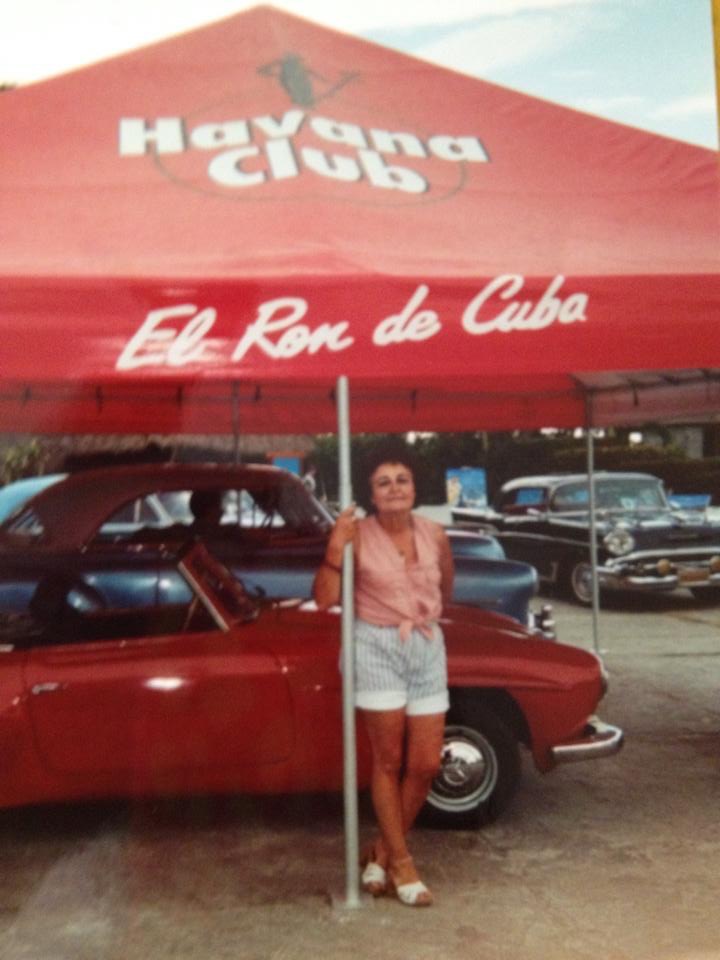
Joan Copeland in Cubs

Joan Copeland in Cuba

We LOVE interesting people!

Joan Copeland was one of a kind. She was a complete stranger to Views from the Edge before Steve Shoemaker read the unique obituary the led us to post The Foster Child who Succeeded at Fostering.  Family members caught eye of the posting and sent comments worth sharing.  The bolded print is added for those who don’t read entire blog posts! -:)

First family comment: I’m her granddaughter…. She was amazing… Growing up she kept me smiling and giggling…she was a free soul… Cubans and Martinis…when I would stay the night she used to pour me ginger ale in a fancy glass cup so we could have woman time lol she never let her past define her…And her family was her life…Sophie her cat lol…meanest thang ever…but she loved her….I’m glad you all enjoyed reading the smallest excerpt of her life…if only you knew the stories of Cuba…her first tattoo at age 75….her passion for dancing…how dolled up she loved to get…my granny was a true diva…an amazing woman….inside and out…- Seylon

Views from the Edge replies: Seylon, WHAT AN UNEXPECTED TREAT to hear from you. I never know who reads the blog, so to hear from you means a lot. Please say more about the Cuban references. Was she Cuban? Had she spent time in Cuba? Smoked Cuban cigars, drank Cuban rum?

At the helm on suitor's boat on the way to Cuba..

At the helm on suitor’s boat on the way to Cuba..

Seylon responds: I googled her name just to see if old real estate photos would pop up and stumbled across your blog. I called my mom she thought it was pretty cool. My grandma was Romanian….but she loved Cuba…she traveled there twice on a friend’s sailboat….I believe ’92 was either her first trip or second…I told her if they ever dropped the embargo and allow all the US citizens not being able to travel there I would take her there on vacation again. 🙂 I wish I could post pictures for you. I have plenty of them from when she was there. [NOTE: the photos on this page were sent later.]

She used to talk about the dolphins that would swim along the sailboat. Her first tattoo the family took her to get was of Dolphins and the word Cuba 🙂 She was 75. She would talk about how she brought a roll of shiny new pennies to give out to the kids there because she knew the country was poor and she thought it would be a cool gift to them. I guess a little boy she had met was not thrilled with the pennies…she used to say he expected more money then her little pennies.

Joan Coleman cigar

Joan Copeland smoking Cuban something or other

But she also loved cigars and used to smoke them. I am in the military and tried getting her cigars made from every place I’ve been…my last trip I got her a while box of Cubans…I told her we could crack the box open once I had my baby. She laughed, she said she didn’t even know if she could smoke one anymore. She mostly collected the boxes…. she collected a lot of stuff… antiques, paintings, everything 🙂 It’s crazy that her obituary got all the way to Minnesota. It’s pretty neat how someone who means so much to you can be a small part of a stranger’s life.

Another granddaugher responds: Hi, I am her oldest granddaughter, Summer. My gran would have loved this!! My gran never left her house without looking like a movie star from her big up-do to her fur coats. She went to the top of a mountain on a dirt bike and mowed the yard in heals. Always had a cocktail and ready for some fun. We always had a project to do together from making jewelry, beading necklaces, sorting jewelry or gemstones. We even made picture frames with jewelry. My mom and I took her to get her tattoo. All three of us got one that day. Three generations getting a tattoo coolest thing ever.

Great grandma singing "Itsy bits spider" to Seylon's newborn child.

Great grandma singing “Itsy bits spider” to Seylon’s newborn child.

She loved her family more than anything else. She wrote notes on everything she ever gave me. She made a tote box for all her grandkids and when I opened mine it has every Christmas card, valentine , letter, picture I drew and my baby clothes. She kept everything I ever gave her my whole life was in this box. She treasured me as much as I did her. Thank you for taking the time to write about my amazing grandma.

Joan’s oldest daughter comments: Hi Gordon. This is Joan’s oldest daughter, Rebecca. My niece, Seylon, called her mother from Germany this afternoon just as my sis and I were sorting thru “the goods.” (There’s a packed house.) I cried as she read your column to us. I’ll have you know that I went all out when writing the obituary because my mother did not want a funeral. She said, “I don’t want a bunch of people strolling by my dead body pretending that they liked me. I know who my friends are.” To be led to your column was an amazing stroke of synchronicity, and I’m sure my mother would think you did right by her. My mother was not Cuban. Her father was a Romanian immigrant who came here as a child. Her mother was from Illinois, and we don’t know much more because the family split up when Joan was young.

Joan Copeland on suitor's yacht sailing illegally to Cuba.

Joan Copeland on suitor’s yacht sailing illegally to Cuba.

Her sailing trips to Cuba were with one of the prospects she finally told to go away. She was in her mid-60’s at the time, and wouldn’t hesitate to smoke a good cigar w/ you.

Here’s just one more little tidbit I thought you might like. My mother enjoyed her martinis and for years she collected antique pewter. At my sister’s suggestion, we had her ashes put into a pewter cocktail shaker from her collection. When Seylon gets to come home on leave in July, we will scatter Joan’s ashes over her mother’s grave as per her wishes. – Rebecca.

I wish we were all that interesting!

The Road to Civil Rights in America’s Oldest City

INTRODUCTION: Views from the Edges earlier post from 40th ACCORD referred the KKK kidnapping of four civil rights activists in St. Augustine, FL. Yesterday Francis (“Tate”) Floyd said otherwise.

“No,” said Tate,  who was visiting next door, “they weren’t kidnapped. They got caught at a KKK rally downtown and got their asses kicked.”

Below is more complete information posted by The St. Augustine Record on May 17 , 2014 by Matt Soerge. “Views from the Edge” has added the bolded print and photographs to the text.

Civil rights: 50 years later, the memory is still clear
Purcell Maurice Conway

Purcell Maurice Conway

In 1964 St. Augustine, Purcell Conway, a black 15-year-old, held hands with a white nun during a civil-rights demonstration that drew the angry attention of a white mob from the Ancient City and beyond.

The mob surged forward. Conway was attacked, and so was the nun. They tore off her headdress. They dragged her to the ground by her hair. They kicked her.

Fifty years later, the memory is still clear: How can people be so cruel, so petty? he asks, How silly, he says, that there is so much hate over the color of one’s skin.

Conway traveled Wednesday to Tallahassee, where he reunited with other activists from what he calls the “teenage rebellion” — the civil rights demonstrations that rocked St. Augustine from 1963 until the summer of 1964, when the Civil Rights Act became law.

They went to the Capitol building to see Robert B. Hayling inducted into the Florida Civil Rights Hall of Fame. His portrait will go up there along with those of the other inductees, the late James Weldon Johnson and A. Philip Randolph, both of whom grew up in Jacksonville.

Hayling, 84, still sharp and witty, was a dentist who inspired and led the youthful demonstrators in St. Augustine.

Now in their late 60s and early 70s, most of them grew up together in the largely black neighborhoods of Lincolnville and West Augustine.

Asked to describe the St. Augustine of his youth, Shed Dawson, who was arrested nine times, gave a long pause before speaking.

“Scary. Very challenging. Dangerous. Sad.”

Dr. Robert B. Hayling and Mr. James Jackson

Dr. Robert B. Hayling and Mr. James Jackson

You had to be careful, said James Jackson, who was captured and beaten by the Ku Klux Klan.

“You didn’t want to go and get caught out alone at night, especially outside of your comfort zone, outside of Lincolnville.”

Jackson knew many of the Klansmen by sight. He’d see them going about their business during the day, on the streets downtown.

And as the Civil Rights Act moved through Congress, the Klan rallied, openly, on St. Augustine’s quaint downtown streets, in robes that exposed their faces for all to see.

Houses were firebombed. Grenades were thrown at juke joints. Shots were fired.

One white man, with a loaded shotgun on his lap, was shot and killed as the car he was in cruised through a black neighborhood one night. In his death convulsion, he fired shots of his own through the floor of the car.

Young blacks from St. Augustine picketed outside stores, sat at lunch counters where they could not be served. And they marched through the city’s streets, past churches that would not admit them.

One sign asked: “Are you proud of your 400 yrs history of slavery & segregation.”

Demonstrators were threatened and beaten. They were arrested and jailed for attempting to integrate the beaches, lunch counters, hotels.

Many of the black demonstrators were trained in nonviolent ways of protesting and pledged to never strike back.

Others made it clear that they were armed and would defend themselves, their families and their community if called to do so.

Conway says two things united the young black demonstrators: They were fed up with the status quo, where they were permanent second-class citizens. And they were inspired by the civil-rights struggles elsewhere.

Why not St. Augustine too?

“It gets to a point in your life that you’ve been stepped on, mistreated, seen your family members mistreated,” he said. “Forget about the fear — you will die to see this changed.”

‘A mean lady’

At 12, Conway had a white friend, a fellow paperboy, and when they each ordered milk shakes at the lunch counter at the McCrory’s store, he couldn’t understand why the woman there let his friend eat inside, but insisted he go outside.

His friend joined him on the sidewalk. “She’s a mean lady,” he said.

At 14, Conway was mowing the lawn of a white woman who offered him a sandwich and a drink. She left it for him on her garage floor, next to the dog’s bowl.

As a child, he’d been naive. But now his eyes were open — and he chafed as he saw how his parents had to call white people “Mister” or “Miss,” while they were simply called by their first names, George and Julia.

So he was ready, at 14, to join the Movement. That’s what he and his friends called it.

Conway recalled that black teenagers would go the swimming pool at Florida Memorial College, a black Baptist school that moved to Miami a few years later.

College students would tell the teenagers about the Movement. They’d talk about what was happening around the South, about why action was needed in St. Augustine.

By 1964, the Movement drew Martin Luther King Jr. and other prominent black leaders to the city.

It drew the support of many white college students from elsewhere, who were beaten and threatened alongside the young black demonstrators.

It drew the support of rabbis and priests and nuns and 72-year-old Mary Elizabeth Peabody, mother of the governor of Massachusetts, who was jailed after supporting the demonstrators.

And it drew national and international coverage to a tourist city preparing for its 400th anniversary.

Tourists stayed away. In 1965, a state legislative report on the unpleasantness in St. Augustine would note that the city lost $5 million in tourism, which meant the state lost taxes, too.

“Which means that all citizens of Florida indirectly paid for Martin Luther King’s visitation to America’s oldest city,” the report said, before fretting about the “devastating barrage of unfavorable publicity” from “purported” news accounts.

“Despite massive propaganda to the contrary,” the state report said, “Negroes and whites have lived together amicably in St. Augustine for centuries.”

‘I was afraid’
Maude Burrows Jackso

Maude Burrows Jackso

Maude Burroughs Jackson knew unfairness as she grew up in the small black community of Hill Top in Middleburg. Still, she was relatively sheltered, there in the country.

She came to St. Augustine in 1960 to go to Florida Memorial College. The city, she said, felt hostile. Discrimination was open.

“It seemed like a mean place,” she said. “Things have really changed over the years. But I was afraid many times.”

She got involved in the Movement after going to Hayling’s dental office with a toothache.

She went to wade-ins at segregated beaches, and between classes she sat at lunch counters or picketed. She was jailed three times.

One night, in Hayling’s office, she made dinner for King — steak and toast and salad. “He’d come in late that night, and with the situation being the way it was, you couldn’t just go outside and eat.”

‘All right, that’s enough’

KKK rally, St. Augustine, FL

KKK rally, St. Augustine, FL

James Jackson said he tries to find the humor in every situation. So he laughs, still, about the night the Ku Klux Klan caught him, Hayling and two other black men, James Hauser and Clyde Jenkins.

He said he stayed calm through talk about getting killed, about getting set on fire. But when the Klan got to talking about castration? “I said, ‘I got to get out of here.’”

Jackson and his companions had gone to eavesdrop on a Klan rally that drew hundreds to St. Augustine, and figured they could spy safely from a back road. That was almost a fatal error. They were beaten, severely.

Jackson shows off a scar on his forehead, courtesy of a lug wrench. And the Klansmen paid particular attention, he said, to the hands of Hayling, a dentist: How could he practice his profession with broken hands?

“We were lucky as hell to get out of their with out lives,” Jackson said.

The story he heard later was that a preacher in the crowd sneaked away to alert police. Sometime later, an officer walked up to the rally. “He said, ‘All right, that’s enough,’” Jackson recounted.

He took them to the hospital, and then to the sheriff’s office. There, bloodied and bruised, they were charged with assault.

After the Civil Rights Act was signed, Jackson remembers coming out of a hardware store and running into Halstead “Hoss” Manucy, one of the prominent white segregationists in town. Manucy had hurled many insults at Jackson, but apparently didn’t recognize him when they bumped into each other.

“Now I’m not a tall man, but he was shorter than me, and he looked up at me and said, ‘Excuse me sir.’”

Jackson laughed. “Excuse me sir! The biggest smile came over my face.”

‘Shell shock’

Shed Dawson, St. Augustine Movement

Shed Dawson, St. Augustine Movement

 Dawson graduated from R.J. Murray High School just a few weeks before the Civil Rights Act was passed. But he was already a civil-rights veteran; he was arrested nine times and spent at least 90 days in jail.

So within a day or two of the act’s passage, he and three other black teens went to a barbecue place on U.S. 1 to “test” the bill.

They squeezed their car into a tight space at the front door. As they approached the door, a group of 25 to 30 men and women came from behind the building, almost as if they were waiting for them.

They had bricks and beer bottles and baseball bats — “their own little personal weapons,” Dawson said.

The four friends split up and ran. Dawson made it to some nearby woods. “Because I was 18 and they were half-drunk, they couldn’t catch me.”

Frustrated, the mob returned to their truck. Perhaps 15 minutes later, Dawson came out of the woods and saw the truck approaching, with people crowded into the back of it — still looking for him.

He ran back in the woods, hiding there for more than two hours. Finally, he crept out and saw a highway patrol car parked in front of another restaurant. Now, he thought, he would be safe.

Dawson went into the restaurant, where the manager stopped him brusquely: “What do you want?”

Dawson’s shirt and tie were filthy, his best pants were muddy and his good shoes were caked with mud. He said he needed to talk to the trooper, who sat, just a few feet away, ignoring him.

“He’s eating lunch,” the manager said.

Dawson insisted. Eventually the trooper got up, locked Dawson in his car, and resumed his meal.

As he ate, a crowd of whites assembled around the car, rocking it back and forth, pounding on the windshield, calling Dawson names.

The trooper, frustrated, came out, started the engine, and got on the radio. “I found the n—– y’all are looking for,” he said.

At the station, they took Dawson’s mug shot, took his fingerprints, but eventually didn’t charge him. The trooper then took him to the headquarters of the Movement, where Dawson’s disappearance was big news.

“He (the trooper) was a hero,” Dawson said. “Everybody was cheering — yeah yeah yeah — and shaking his hands. He was soaking it up.”

King spoke that night at a church, and invited Dawson to sit with him at the pulpit. So he did, still in his filthy clothes.

Dawson ended up traveling the world as a civil servant for the Navy, working on aircraft carriers — a life that would have seemed impossible to him as a teenager. Before things changed, he might have been a cook or a yard man. If lucky, he could perhaps have been a brick mason or a plumber’s helper.

The struggle was worth it, he said, although when he returns to his hometown, the past sometimes feels far too close.

“I’ve been all around the world and I’m OK,” he said. “But when I got back to St. Augustine, to a restaurant, I feel fear, like flashbacks, like the soldiers had. Shell shock. I guess it will never go away.”

Views from the Edge Note: Click HERE for hour-long Library of Congress interview with Purcell Conway.

MLK Day 2015 – the house next door

94 South Street, St. Augustine, FL

94 South Street, St. Augustine, FL

On Martin Luther King Day 2015 the historic house next door to us on The Freedom Trail here in St. Augustine is a faint shadow of its former self. A weathered sign by the rear entry reads:

“NO TRESPASSING by order of the City of St. Augustine. Violators will be prosecuted to the full extent of the law.”

Some of the louvered glass windows on the back porch are broken out. Sheets and blankets cover the windows.

The White family paid the price for their courage. James and Hattie were leaders in the Civil Rights Movement, as was their son Samuel. But, as Isaac Watts (1674–1748) reminds us in his poem and hymn “O God, Our Help in Ages Past”:

Time, like an ever-rolling stream,
Bears all its sons away;
They fly forgotten, as a dream
Dies at the opening day.

Time has a way of placing brackets around even the best historic moments. James, Hattie, and Samuel, their 14 year-old son, who was sent to reform school for sitting in at the downtown St. Augustine Woolworth’s, have been borne away by time. The three of them are deceased; their story and the dream is still alive.

When young Samuel and his three friends later known as “the St. Augustine Four” were arrested at Woolworth’s, the authorities agreed to release them to their parents’ custody on one condition: that they sign a statement that their children would not violate the law again. The four young men pleaded with their parents not to sign the pledge, assuring their parents that they, the sons, could make no such pledge. Mr. and Mrs. White refused to sign. Fourteen year-old Samuel was sent to reform school for a year. He served six months of the sentence before Dr. Martin Luther King, Jr., Jackie Robinson and other civil rights movement leaders came to St. Augustine to shine the national spotlight on St. Augustine. Samuel and the other incarcerated member of The St. Augustine Four were released by order of the Governor of Florida. The Civil Rights Act followed.

For all the saints, who from their labours rest,
Who Thee by faith before the world confessed,
Thy Name, O Jesus, be forever blessed.
Alleluia, Alleluia!

And when the strife is fierce, the warfare long,
Steals on the ear the distant triumph song,
And hearts are brave, again, and arms are strong.
Alleluia, Alleluia!

– William Walsham How  (1823 – 1897) 

MLK, Dr. Hayling, and Mr. James Jackson

Be where you are. If you stay there, really LIVE there, dig into the place, listen to the voices, watch the faces and people movements, you’re likely to discover the deeper streams of courage and frailty that make a place what it is.

Take yesterday, for example. Kay and I attend the “Hands Up!” educational event at St. Paul’s African Methodist Episcopal Church, around the corner from where we’re living this January. Mr. James Jackson, who seems to know a great deal about the law, citizens’ rights, and how to deal with law enforcement, sits behind us. There’s something different about him, a weathered face and voice that come with experience.

Dr. Robert B. Hayling and Mr. James Jackson

Dr. Robert B. Hayling and Mr. James Jackson

When the opportunity presents itself, we step outside for conversation. James Jackson was  a Southern Christian Leadership Conference (SCLC) Field Officer in St. Augustine with the Rev. Dr. Martin Luther King, Jr. I listen to what he tells me about the tumultuous time in St. Augustine that led to the passage of U.S. Civil Rights Act. “The bill was sitting on Johnson’s desk,” he says, “but he didn’t want to move forward with it. What happened here in St. Augustine [referring to the acts of civil disobedience to de-segregate the public beaches] drew national attention and put pressure on Washington.”

After the “Hands Up!” workshop a google search for James Jackson leads to more information about him, Dr.  Robert B. Hayling, a dentist, and another who were kidnapped by the Ku Klux Klan. Gwendolyn Duncan tells the story.

Dr. Robert HaylingFor [Dr. Hayling’s] continued fight to right the injustices perpetrated upon him and his fellow Black Citizens, his home was shot into, barely missing his wife and killing his dog which was within the home. His wife and children escaped without injury. On another occasion, Dr. Hayling, along with Mr. Clyde Jenkins, Mr. James Hauser, Mr. James Jackson were kidnapped by the Klu Klux Klan.

All of the men, except Mr. James Jackson were beaten unmercifully and left semi-conscious. If not for the compassion of a white minister, Reverend Irvin Cheney, who slipped from the rally and called the State Highway Patrol in Tallahassee, Dr. Hayling and his fellow activists, who were stacked like firewood, would have been burned alive with gasoline. Dr. Hayling received the most serious injuries, suffering hospitalization for fourteen days, losing eleven teeth, and several broken ribs. Scars he is known to have said, “I’ll take to my grave.” He and the others were charged with assault but charges were dropped because the Klan never showed up to court. The Klan was never prosecuted in this case.

— Copyright © 2004, Gwendolyn Duncan, “Veterans of the Civil Rights Movement – Dr. Robert B. Hayling”

Dr. Hayling’s house is three blocks from where Kay and I are staying. Before meeting Mr. Jackson yesterday, we read the Freedom Trail plaque walking by the house around the corner here in Lincolnville.

Be where yo are. If you stay there, really LIVE there, dig into the place, listen to the voices, watch the faces and the people movements, you’re likely to discover the deeper streams of courage and frailty that make a place what it is.

– Gordon C. Stewart, Jan. 18, 2015