Ask much of us

“Ask much of us,

expect much of us,

enable much by us,

encourage many through us.”

These words from the prayer that followed Holy Communion yesterday (the Sunday of the Passion: Palm Sunday) at Trinity Episcopal Church in Excelsior, Minnesota leaped from the page. They are part of the congregation’s Post-Communion Prayer, prayed aloud by all worshipers.

In deep gratitude for this moment,

this meal, and for these people,

we give ourselves to you, most holy God.

Take us out into the world

to live as changed people

because we have shared the Living Bread

and cannot remain the same.

Ask much of us,

expect much from us,

enable much from us,

encourage many through us.

May we dedicate our lives to your glory.

Amen.

I needed that. I need daily to be reminded, asked, enabled, and encouraged to live actively in gratitude.

– Gordon C. Stewart, Chaska, MN, March 30, 2015

Verse – Legislate Morality

The Pastor asks for those in need
of prayer–
she wants their names. She writes that Bill
will go
for surgery next week. And Ann
retire
at last from waitressing–what will
she do?

In prayer, the Pastor lists each name,
each need.
She celebrates our joys, lists our
concerns–
not that the One who hears has to
be made
aware, but we require the
reminders

of what we are to do: care for
the sick,
go visit lonely folks, give food
and clothes.
Then lobby Congress for new laws
that make
the ninety-nine percent receive
from those

who have it made, a chance, at least
a share
of hope from those who never seem
to care.

– Steve Shoemaker, Urbana, IL, March 30, 2015

Listen to the crying of our need

It’s not a good day for the power of positive thinking.

News of the Germanwings Airbus A320 crash into the French Alps raises soul-chilling questions that may never be answered.  Early reports assume 27 year-old co-pilot Andreas Lubitz, left alone in the cockpit, deliberately plunged the plane and its terrorized passengers to their deaths.

I need some good cheer on a day like this when it’s hard to tell the difference between terror and tragedy, when 148 travelers who trusted the pilot and co-pilot to get them safely from here to there suddenly find themselves in the hands of…. Of whom? Of what?

In my darkest moments I am aware that we are always standing over the abyss of nothingness. Death. Extinction. But, once in awhile, something comes along to cheer me up. So far today it hasn’t.

“O God…, listen, not to our words, but to the groaning that cannot be uttered; harken, not to our petitions, but to the crying of our need.”

[W.E. Orchard, quoted in Harry Emerson Fosdick’s The Meaning of Prayer, p. 117-118, Association Press, 1915]

– Gordon C. Stewart, Chaska, MN, March 27, 2015.


Our Anxious Time

Ours is an anxious time, a fearful time, an insecure time. We feel it in our bellies.

This morning we’re moved to consider anxiety, fear, and insecurity. For that purpose we turn to philosophical theologian Paul Tillich* (scroll down) and philosopher of religion Willem Zuurdeeg** for whom the questions were passionate and all-consuming over their lifetimes. Even so, they were not the best of friends.

Zuurdeeg was a severe critic of Tillich’s attempts to create a theological system. He saw every system as a flight from finitude and ambiguity into what he called “Ordered World Homes” that make sense of, and defend against, the anxiety intrinsic to finitude. For Zuurdeeg, to be human is to be thrown into chaos and every philosophy from Plato to Hegel to Tillich is “born of a cry” – the cry for help, for sense, for protection, for a security that lies beyond one’s powers.

Reading Tillich’s Systematic Theology again after reading the news this morning leads to the conclusion that Zuurdeeg and Tillich were very close, as is often the case between critics of one another. One thinks, for example, of Sigmund Freud and Carl Jung in a similar manner.

For all their differences, Zuurdeeg and Tillich were joined at the hip by their shared experience with madness in society and the demise of once-trusted foundations of western civilization. The rise of the German Third Reich led them to a lifelong search not only for answers but for the questions that might lead to insight into the existential situation into which Hitler’s madness threw the world headlong into chaos and destruction.

Anxiety, said Tillich, is distinct from fear. Fear has an object. We fear an enemy. We fear Iran; Iran fears us. Israel fears the Palestinians; The Palestinians fear the Israelis. “Objects are feared,” said Tillich.

A danger, a pain, an enemy, may be feared, but fear can be conquered by action. Anxiety cannot, for no finite being can conquer its finitude. Anxiety is always present, although often it is latent. Therefore, it can become manifest at any moment, even in situations where nothing is to be feared….. Anxiety is ontological; fear, psychological… Anxiety is the self-awareness of the finite self as finite. [Paul Tillich, Systematic Theology, Vol. 1,  p. 191-192, University of Chicago Press, 1951]

Anxiety is the self-awareness that we are mortal. We are excluded from an infinite future. We were born and we will die and we know it. Despite every flight into denial, we know it in our bones. We have no secure space and no secure time. “To be finite is to be insecure” (Tillich, p. 195). In the face of this insecurity, said Zuurdeeg, the individual and the human species itself seek “to establish their existence” in time and space, though we know we can not secure it. The threat we experience in 2015 is the threat of nothingness. Politicians pander to it. Preachers pander to it. Advertisers prey on it. They eat anxiety for breakfast, lunch and dinner. Again, Tillich, writing as if for our time:

The desire for security becomes dominant in special periods and in special social and psychological situations. Men create systems of security in order to protect their space. But they can only repress their anxiety; they cannot banish it, for this anxiety anticipates the final “spacelessness” which is implied in finitude. [Tillich, p. 195]

So this morning I sip my coffee aware of and thankful for this moment of finitude, and determined that I will not turn over my anxiety into the hands of those who promise security from every fear. Willem Zuurdeeg and Paul Tillich looked directly into the heart of human darkness and saw a light greater than the darkness. I want to live in the light of their courage and wisdom.

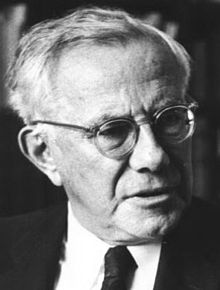
Paul Johannes Tillich (1886-1965)

Paul Johannes Tillich (1886-1965)

*Born and raised in Germany, Paul Johannes Tillich was the first professor to be dismissed from his teaching position in 1933 following the election of Adolf Hitler as Chancellor of Germany for his outspoken criticism of the Nazi movement. At the invitation of Reinhold Niebuhr, he and his family moved to New York where Tillich joined the faculty of Union Theological Seminary. He went on to become one of the best-known philosopher-theologians of the 20th century, publishing widely from teaching from chairs at Union, Harvard University, and the University of Chicago. His best know works are The Courage to Be, The Shaking of the Foundations (a collection of sermons),and his three-volume Systematic Theology.

Willem Frederik Zuurdeeg (1906-1963)

Willem Frederik Zuurdeeg (1906-1963)

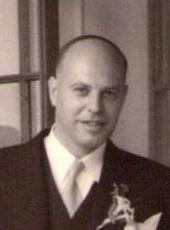
**Born and raised in the Netherlands in a family that served as part of the underground resistance to Hitler’s pogrom, Willem Frederik Zuurdeeg spent his life asking how western civilization’s most sophisticated culture (Germany), could fall so easily into the hands of a madman. His Analytical Philosophy of Religion became a major text for undergraduate and graduate philosophy of religion classes. When Professor Zuurdeeg died of cancer as Professor of the Philosophy of Religion at McCormick Theological Seminary in Chicago, he left behind an unfinished manuscript later completed by his friend and colleague Esther Cornelius Swenson, the title of which is Man Before Chaos: Philosophy Is Born in a Cry. Click HERE for photographs of Willem Zuurdeeg and the family that gave Jews sanctuary in the Netherlands.

Think for yourself – Selective Fundamentalism

The biblical texts a church chooses by which to govern its life say more about the church than the texts it selects.

Critics of the Presbyterian Church (U.S.A.)’s policy of full inclusion of GLBT members – and its newly adopted definition of marriage as between “two people” – quote biblical texts they claim declare homosexuality itself as sinful.

An anonymous comment by a Views from the Edge reader advised people to read the Bible and think for themselves. “I think anyone reading the comments from Mr. Stewart should read the Bible and think for themselves. For example read 1 Timonthy 8-11.”

We don’t usually reply to anonymous sources, but this one deserves consideration because it asks us to do both things: read the text and think for ourselves.

Here’s the text about which the writer invites us to think for ourselves:

“Now we know that the law is good, if one uses it legitimately. This means understanding that the law is laid down not for the innocent but for the lawless and disobedient, for the godless and sinful, for the unholy and profane, for those who kill their father or mother, for murderers,  fornicators, sodomites, slave traders, liars, perjurers, and whatever else is contrary to the sound teaching that conforms to the glorious gospel of the blessed God, which he entrusted to me” [I Timothy 8-11]. Color added by VFTE for emphasis

Texts such as I Timothy are used to identify same-sex relations as sin, albeit in a longer list that names liars and perjurers, among others. But “sodomites” are not consensual lovers; they are rapists so named from the Genesis story of Sodom and Gomorrah from which we get the words ‘sodomy’ and ‘sodomize’.

The story of Sodom and Gomorrah is not about sexuality. It’s about assault, violence and humiliation. The tragedy of Sodom and Gomorrah was not consensual sexual relations. It was gang rape by a group of men intruding into Lot’s house to have their way with Lot’s house guests. Such male behavior was not unfamiliar to the partriarchal world of Hebrew Scripture when victorious soldiers humiliated their vanquished enemies by treating them like females.

While conservative evangelical and fundamentalist biblical interpreters condemn consensual love between two members of the same gender, they ignore the much clearer biblical position on adultery and divorce.

On divorce:Everyone who divorces his wife and marries another commits adultery, and he who marries a woman divorced from her husband commits adultery” [Luke 16:18); and “if [a wife] divorces her husband and marries another, she commits adultery” [Mark 10:12].

On adultery: “You shall not commit adultery” [Exodus 20:14]; and “If a man is found lying with the wife of another man, both of them shall die, the man who lay with the woman, and the woman. So you shall purge the evil from Israel [Deuteronomy 22:22].

Many conservative evangelical and fundamentalist Christians and churches say they do not interpret Scripture. They obey it. But they don’t. They can’t. Because every reader has to think. One always has to decide which biblical texts take primacy over others. Presumably we would all agree – orthodox, conservative, evangelical, fundamentalist, liberal, and progressive – that Jesus’ command to the men who had encircled the woman “caught in adultery” to drop their stones takes primacy over a harsher approach to divorce and adultery.

But that’s a conclusion of interpretation, of selective primacy. For conservative evangelical and fundamentalist Christian churches to remain true to their objection to all biblical interpretation as undermining biblical authority, they should exclude all divorced persons from positions of leadership. That would exclude 50% of the American marital population.

We all think for ourselves. Conservative evangelical and fundamentalist Christians are as selective as the Presbyterian Church (U.S.A.) and others they declare have forsaken biblical authority.

For the sake of “the glorious gospel of the blessed God, which he entrusted to [Timothy and us],” may the Spirit guide us and conform us all according to the rule of love.

– Rev. Gordon C. Stewart, Honorably Retired, Presbyterian Church (U.S.A.), Chaska, MN, March 21, 2015.


Gay Marriage according to Franklin Graham

I never pay attention to Franklin Graham, son of Billy Graham. After Jim Wallis of Sojourners called attention to one of Graham’s FaceBook postings, we found Graham’s more recent posting chastising the Presbyterian Church (U.S.A.)’s newly announced constitutional amendment redefining marriage. Said Franklin Graham:

“In His Word, the Bible, God has already defined marriage, as well as sin, and we should obey that rather than looking for ways to redefine it according to the desires of our culture. Marriage is defined as between a man and a woman—end of discussion. Anything else is a sin against God, and He will judge all sin one day.”

As of this moment, 107,850 Graham FaceBook followers “Like” it and 12,373 have “shared” it. I posted this comment on the FaceBook post.

“I’m sorry, sir, but you have yet to do your homework, and your statement “End of discussion” separates you from the more humble approach of the father whose name you proudly bear. Without interpretation and re-interpretation those who take the Bible at face value should also hold steadfast to the cosmology of a flat earth.

As a Presbyterian (USA) pastor since 1967, I have watched and heard the debates about the nature of human sexuality since 1979. The discussion within the church have not been without rancor or turmoil, but I’m proud that my church has had the courage to look at human sexuality and biblical hermeneutics through the lens of “the rule of love” not hate, separation, exclusion, or one’s own righteousness.

As a pastor who began hearing the stories of gay church members many years ago, I sensed that the prevailing view of homosexuality as a sickness and/or sin was off the mark and damaging to the heterosexual majority no less than the homosexual minority. There is no distinction at the baptismal font. No distinction allowed at the Lord’s table. And, at long last, I am now free, according to the Constitution of the Presbyterian Church (U.S.A.) to make no such distinction at the kneeling bench before the altar.

– Rev. Gordon C. Stewart, H.R., Chaska, MN, March 19, 2015

Verse – Life Together

She cleans the floor.
(I clean the ceiling.)
She washes dishes.
(I clean my plate.)
She cooks.
(I report fascinating
stories from the paper.)

I mow the grass.
(She plays in the flower beds.)
I haul the garbage bin to the street.
(She shops.)
I feed the dog.
(Her cat wakes us up
and terrorizes my dog.)

We get along quite well.
(Her list might be different.)

– Steve Shoemaker, Urbana, IL

Marriage – a covenant between…

Yesterday the Presbyterian Church (U.S.A.) – PC(USA) – approved amending its constitution to define marriage as “a covenant between two people.

Click THIS LINK for the New York Times story, “Largest Presbyterian Denomination Gives Final Approval for Same-Sex Marriage”.

Many, such as I, welcome this change after many years spent in local and national discussion and debate over the nature of biblical authority, biblical interpretation, and the nature of human sexuality.  This morning passersby on State Highway 41 and Engler Boulevard in Chaska, MN will see two flags flying high at Shepherd of the Hill Presbyterian Church: the Presbyterian Church (U.S.A.) flag and, beneath it, a rainbow flag signifying God’s welcome of all.

The church’s re-definition of marriage adds one more enlarging freedom to the Apostle Paul’s list in the Epistle to the Galatians:

“There is no longer Jew or Greek, there is no longer slave or free, there is no longer male and female, [gay or straight]; for all of you are one in Christ Jesus.“- Galatians 3:8 {NRSV].

Thanks be to God.

– Rev. Mr. Gordon C. Stewart, Honorably Retired, Presbyterian Church (U.S.A.), Chaska, MN; March 17, 2015.

The Silencer Debate

“Minnesota lawmakers Tuesday weighed the perceived virtues and dangers of reversing the state’s ban on firearm silencers.Star Tribune, March 13, 2015.

Increasingly we live in separate worlds of perception. We ask ourselves “What am I doing here?”

The committee room at the State Capitol was packed. The committee chair wore a camouflage sports jacket, a visual statement that requires little explanation. Or maybe it does. Hunters wear camouflage. So do soldiers. The firearms industry loves them equally – hunters and soldiers – because the former provides a market in the private sphere while the requirements of war-making guarantee a steady flow from the public trough.

Also before the committee was a proposal to permit guns on the grounds of the State Capitol without first registering with the MN State Department for permission.

It’s confusing why any of us – regardless of how one interprets the Second Amendment of the U.S. Constitution – would want people walking around the State Capitol building with guns. Can someone please explain why that’s a good idea?

On the silencer question proponents argued that silencers were in the interest of firearm users’ health. Silencers lower the decibels and thereby protect the shooter’s ears from the danger of hearing loss incurred by loud noises. Opponents argue that free access to gun silencers is a recipe for more killing, killing more quietly, and expanding the market of gun manufacturers.

The faith tradition – the view from the edge – from which I listen and watch finds all of this more than strange. Not abnormal, but very strange. I’m trying to hear the “still, small voice” translated anew as “a sound of sheer silence” heard by Elijah on Mr. Horeb?

He said, “Go out and stand on the mountain before the Lord, for the Lord is about to pass by.” Now there was a great wind, so strong that it was splitting mountains and breaking rocks in pieces before the Lord, but the Lord was not in the wind; and after the wind an earthquake, but the Lord was not in the earthquake; and after the earthquake a fire, but the Lord was not in the fire; and after the fire a sound of sheer silence.

When Elijah heard it, he wrapped his face in his mantle and went out and stood at the entrance of the cave. Then there came a voice to him that said, “What are you doing here, Elijah?” – I Kings 19:11-13 [New Revised Standard Version]

What are we  doing here?


Climate change or just weather?

Cyclone PamReading  The Atlantic story – “A Cyclone that Destroyed a Nation” [March 15, 2015] – about the category 5 storm that has left most of Vanuatu’s population homeless, brought to mind our earlier post, Winston Churchill on Climate Departure.

New Zealand and Australia are coming to the rescue with massive aid. The question that hovers over every compassionate relieve and rescue attempt is how many rescues it will take before “we” – the human species – plan differently for habitable habitations that take climate change as inevitable.

“The era of procrastination, of half measures, of soothing and baffling expedients, of delays, is coming to its close. In its place we are now entering a period of consequences…. We cannot avoid this period, we are in it now…” – Winston Churchill

Click A Cyclone that Destroyed a Nation to read the story in The Atlantic. Then chime in on the topic of climate change, weather, and climate departure.

– Gordon C. Stewart, Chaska, MN, March 16, 2015