Equal Access to Just Food

Watch this video and consider chipping in to an exciting effort to make locally grown organic food available everywhere. Terry Gips of Sustainability Associates is a leader in the sustainability movement who has blessed a number of in the Twin Cities with his vision and friendship. This project needs to raise $30,000 by October 8. Seems to me the potential impact far exceeds the investment. It’s a model that can be replicated around the country and around the world. Thanks for coming by.

Glaring Omissions and “Something Else”

The Washington Post-ABC News Poll published September 9, 2014 is as interesting for what it ignores as for what it reveals.

Question #13 asks registered voters which of the following will be “the single most important issue in your vote for Congress” – the economy and jobs, international conflicts, health care, the way things are working in Washington, immigration or something else? Eleven percent said “Something Else”.

The omissions of climate change, wealth disparity, and Citizens United (campaign finance reform) are curious and glaring. The poll assumes what the public cares about. By ignoring these matters that reach beyond partisan divides the poll demonstrates one of two things, Either the Washington Post-ABC New Poll is out of touch with those who live on Main Street or their bread is buttered by the Wall Street and the one percent.

Polling and news institutions not only measure public opinion; they shape public discussion by the choices they make about which questions to ask.

The American public is often smarter than given credit for. But its intelligence and its opinions on public policy issues are informed and shaped by the information we receive from the “Fourth Estate” which – in theory, if not always in practice – is independent from the three government branches of the U.S. Constitution. The “free press” is the people’s watchdog, monitoring the actions and decisions of the three constitutional estates and their complex bureaucracies and institutions. We look to the free press to do for its readers what the individual cannot do: investigate the way things are – who’s making the deals and why, who’s stacking the deck, and who’s dealing from the bottom of the deck.

As the ownership of newspapers, radio stations and television cable and satellite dish companies has shrunk to the size of the one percent who live on Wall Street, the press, like the the three constitutional estates, is not so free. While Republicans and Democrats argue about whether climate change is real and while congress fails to act, it falls to the Fourth Estate to exercise whatever freedom it may still have to raise the flag of the single most important issue facing not only the planet itself. The same is true with the moral issue of the wealth disparity and the Supreme Court’s decision that turns the American electoral system over to the highest bidder

The detail of those who answered “Something Else” shows t 14 percent of “white non-evangelical protestants” in response to Question 13. Among this subset – the “traditional” protestant churches (Episcopalian, Presbyterian, United Methodist, Congregationalist United Church of Christ, Unitarian-Universalist) – much attention has been paid from pulpits and from church position statements to the alarming growth in wealth disparity and the environmental degradation that has led us to the brink of “climate departure” when there will be no way back.

Nothing on the list of “single most important” issues is as long-lasting as climate change. It is the darkening global cloud under which all other issues exist. Framing the public discussion as a choice between the economy and jobs, international conflicts, health care, the way things are working in Washington, or immigration continues the myopic gridlock that keeps our eyes too low to the ground. It makes little difference whether one proclaims or denies that the changes in weather patterns are evidence of global climate change that call for action now to reduce carbon and methane emissions. We all know that something is happening here on the North American continent and around the “pale blue dot” (Carl Sagan) that is changing the planet as we have known it.

Enter Vermont Senator Bernie Sanders (I) who answered “something else!” on “Meet the Press.” Congratulations to Meet the Press host Chuck Todd for widening the discussion.

Dead young men – a Rabbi’s perspective

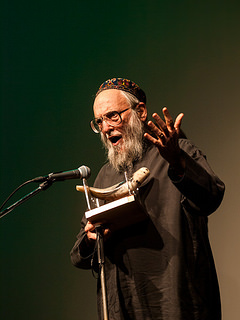
Rabbi Arthur Ocean Waskow

Rabbi Arthur Ocean Waskow

Rabbi Arthur Waskow of the Shalom Center in Philadelphia is one of the more interesting religious leaders of our time. Views from the Edge republishes this week’s “Shalom Report” with permission.

Dead Young Men: 50 Years Ago and Now

Spirals of Violence — or Nonviolence

Dear friends,

I spent several days last week in Mississippi –Mourning the murders of three young men

  • 50 years ago (and many others before and since);
  • Celebrating a Mississippi that today is very different;
  • Facing the truth that Earth and human communities –– especially, still, those of color and of poverty –- are being deeply wounded by the Carbon Pharaohs’ exploitation and oppression;
  • Talking/ working toward a future of joyful community in which Mother Earth and her human children can live in peace with each other in the embrace of One Breath.

And then, a few days later, came the news of the murders of three young men just weeks ago –- three Israeli youngsters — their bodies, like those of Mickey Schwerner, Andy Goodman, and James Earl Chaney, hidden while the search went forward for them.

But not only them. The violent deaths of young Palestinian boys/men as well, during the Israeli Army crack-down on the West Bank. Their mothers also mourning. As the New York Times reported the day before the three Israeli bodies were discovered:

“Most Israelis see the missing teenagers as innocent civilians captured on their way home from school, and the Palestinians who were killed as having provoked soldiers. Palestinians, though, see the very act of attending yeshiva in a West Bank settlement as provocation, and complain that the crackdown is collective punishment against a people under illegal occupation.”

Is there a danger of “moral relativism” in mentioning these deaths together? Is the cold-blooded murder of three hitchhiking youngsters morally equivalent to killings carried out by angry, frightened soldiers faced with a protesting mob? At the individual level, No.

But at the level of decision-making and public policy, there is also no moral equivalence between a cold-blooded military occupation and the impotent rage of the occupied.

Above all, there is no “relativism” in the tears of mothers.

Some Israelis and some Palestinians have joined their sorrow over the killings of their own children to work in the Circle of Bereaved Families for a peace that would end the killing. (See http://www.theparentscircle.com/.)

Others –-including some Israeli cabinet ministers in the last day — have defined their deaths as the warrant for more killing.

But Mississippi did not change through threats like that. It changed because an aroused American citizenry from outside Mississippi allied itself with the oppressed community inside Mississippi to demand – through nonviolent direct action and through passing laws — that an oppressed population of black folk be freed to achieve some measure of political power.

As a result of that arousal, the deaths 50 years ago have made a visible difference. Fifty years ago, a scant few black Mississippians had been allowed to register to vote. As the “Freedom Summer + 50” gathering opened last week, thousands of black Mississippians who are devoted to the Democratic Party intervened in a Republican primary to prevent the nomination and for-sure election of a far-right Tea Party candidate.

Important change? Yes. Enough change? No.

In the Israeli-Palestinian conflict, no sufficiently powerful outside energy has made the commitment to bring all its lawful, nonviolent power to bear to achieve a two-state peace. So the violence worsens in a downward spiral of injustice.

What the gathering in Mississippi showed was that even when change is still necessary, even when injustice still continues, there can be an upward spiral, growing from past transformations into future ones.

For the gathering at Tougaloo College addressed the future as much as the past. The memory of youthful deaths so many years ago –- we recited their names, we sang their songs, we welcomed their families — became the celebration of youthful courage that had led to serious change. So not only many veterans of 1964 were there, but also many many young activists, come to learn and be inspired.

So we addressed the injustices that persist, and we took up some levels of injustice that fifty years ago were not on anyone’s agenda. Even Rachel Carson’s Silent Spring, published in 1962, did not envision a massive disruption of the planetary climate system and the web of life it has nurtured for millions of years.

So there was a confluence of issues almost unimaginable in 1964 when Jacqueline Patterson of the NAACP staff brought together two excellent workshops on ”climate justice.” They were the first climate–action settings I have ever seen in which people of color — Black and Hispanic and Asian and Native — were at least half of those present.

Many spoke of two clear cases in their own region when the fossil-fuel Pharaohs had shattered the lives of poor communities of color even worse than they had damaged prosperous whites:

  • How Hurricane Katrina (which was greatly worsened by the oil rigs that chopped up marshy wetlands that used to absorb much of the energy of hurricanes when they hit land) had most damaged the poor folk who were living closer to the river (because houses were cheaper there).
  • And how poor folk also were the slowest and still the least served by relief and reconstruction efforts after the BP Oil blow-out in the Gulf.

And we learned as well how on a global level the overheating of our planet was hurting and killing the poor even worse than others: How droughts in California, the US corn-belt, central Africa, and Russia had raised the price of staple foods so badly that those who were teetering on the edge in poverty fell into hunger, and those who had been hungry faced starvation. And some who were starving fought civil wars to get their hands on food.
We discussed alternatives for climate activism. Some of us talked about the model of the “Freedom Schools that emerged in 1964, teaching where the impulses to learn and teach were deeply interwoven with the impulse to heal the world. Those Freedom Schools helped give birth to the Teach-Ins against the Vietnam War that flowered in the spring of ’65.

Could we create new Freedom Schools, new Teach-Ins, to fuse the science of climate and the facts of Corporate Carbon domination with the strategies of change? Was our gathering itself a kind of Freedom School, a Teach-In, with the young and the old teaching each other?

And Freedom Summer inspired co-ops, the redirection of our money from feeding bloated corporate power to nourishing the seeds of a grass-roots economic democracy. In that spirit, I shared The Shalom Center’s campaign to Move Our Money/Protect Our Planet (MOM/POP) and handed out copies of our “Action Handbook” on specific steps for how to Move Our Money. See https://theshalomcenter.org/treasury/209.

All of us learned more deeply how important it is to recognize and act on the true linkage of what we might call eco-social justice.

And we learned that what happened fifty years ago in Mississippi sowed the seeds of our ability to recognize and resist new depredations of today. We saw how deeply the nonviolent movement of fifty years before had, even when some of its activists were killed, given continuing birth to nonviolent responses to make more necessary change.

I ended one of those workshops by invoking the spirit of Vincent Harding. If he had not died just a month ago, I said, he would have been deeply pleased by our intergenerational learning, and he would have brought his own deep listening and the quiet with which he surrounded his own wise words.

And most of all, he would have brought his willingness to invest his life in the effort to use nonviolence to expand democracy, to win justice for those who have been oppressed.

And now, in the wake of the news from Palestine and Israel, his ghostly, powerful presence actually reminds me of the Unity of that long effort. For just two summers ago, Brother Vincent took part in a delegation of American Jews and Blacks to visit the occupied West Bank and bring hope to Palestinians committed to nonviolence.

Brother Vincent would have wept over the deaths of the young men of both peoples. As do I.

May the tears we shed become the wellsprings of transformation, not revenge — as they did in Mississippi.

And may we teach the intertwinement of eco-social justice, learning anew from Freedom Summer’s creativity to go beyond our forebears — as they did.

Shalom, salaam, paz, peace! — Arthur

Do not forget! We ARE Nature – Nature Is Us

Text of sermon on sanity and madness visa a vis ourselves (homo sapiens) and the rest of nature preached at Shepherd of the Hill Presbyterian Church in Chaska, MN.

We need stories to keep us sane in a culture whose sanity is madness.

In Souls on Fire Elie Wiesel, the Nobel Peace Prize concentration camp survivor, tells the story of “prophetic madness” that challenges the collective madness of a people who ignore the coming calamity of impending crop failure. “Good people…What is at stake,” says the prophetic messenger, “is your life, your survival! The summons falls on deaf ears and the calamity of starvation is not averted.”

Wiesel concludes, “God loves madmen. They’re the only ones he allows near him.

Late in the year of 1964 a young geography student working toward his doctorate came upon a grove of Bristlecone Pines while doing research searching on Ice Age glaciers.

Wheeler Peak, on Nevada’s eastern border with Utah, reaches an altitude of 13,063 feet with a spectacular glacial cirque on its northeast side. Wheeler Peak cycles through five life zones, from the hot stony desert to alpine tundra, all within a five mile line. Along the edge of this cirque is the home of colossal bristlecone pines. Standing as they have for millennia, in their fields of stone, they overlook the desert far below.

When this student and his associate came upon the bristlecones at the timberline, they began to take core samples from several trees, discovering one to be over 4,000 years old! Needless to say they were excited, and at some point, their only coring tool broke. The end of the field season was nearing. They asked for, and were granted permission, by the U.S. Forest Service to cut the tree down.

They had just cut down one of the oldest living organism on the planet. An earlier group of researchers at Wheeler Peak and given names to the these ancient creatures whose lives reach back to the third century before Christ. They had named some of these trees. Ancient names like Socrates and Buddha. And then there was Prometheus, named after the god in Greek mythology who was punished for stealing fire from the gods and giving it to humankind. Zeus has Prometheus chained to a rock for an eternity of perpetual torment.

It was the tree named after Prometheus that the geology students had killed. They had cut down a tree that was 4,844 year old.

What happened that day on Wheeler Peak is now viewed as a kind of martyrdom by some of the Bristlecone Pine researchers – in inexplicable horror of Prometheus’ death served to save the other Bristlecone Pines from extinction at human hands. You might even say it is to the Bristlecone Pines what the cross of Jesus is to the human species, a death that brings life to the rest of us.

The death of a 4,844 year-old tree and the death of Christ are two sides of a single coin. The death of Prometheus at the tree line on Wheeler Peak is the death of nature at human hands. The death of Jesus on The Hill of Skulls is the death of humankind itself, and out of both deaths, by God’s grace alone, a new human awareness – a new humanity within nature – is awakened.

In the death of that old Bristlecone Pine the other researches came to a new appreciation of nature itself. Not only its magnificence. Not only our dependence upon nature. But our oneness with nature. Homo sapiens do not stand above nature; we stand within it. We are nature; nature is us.

Elie Wiesel reminds us that there are two kinds of madness. There is the societal madness that continues business as usual but is actually insane; the other is what he calls “prophetic” madness that challenges the madness which sees the Earth as a landfill or playground with no value in itself apart from its use to us. Prophetic madmen cry out, “Good people, do not forget! What is at stake is your life, your survival! Do not forget!”

As we remember that story out of which our faith awareness is born around the Lord’s Table, I close with another story from Elie Wiesel.

When the great Rabbi Israel Baal Shem-Tov saw misfortune threatening the Jews it was his custom to go into a certain part of the forest to meditate. There he would light a fire, say a special prayer, and the miracle would be accomplished and the misfortune averted.

Later, when his disciple, the celebrated Magid of Mezritch, had occasion, for the same reason, to intercede with heaven, he would go to the same place in the forest and say, “Master of the Universe, listen! I do not know how to light the fire, but I am still able to say the prayer.” And again the miracle would be accomplished.

Still later, Rabbi Moshe-Leib of Sasov, in order to save his people once more, would go into the forest and say, “I do not know how to light the fire, I do not know the prayer, but I know the place ad this must be sufficient.” It was sufficient and the miracle was accomplished.

Then it fell to Rabbi Israel of Rizhyn to overcome misfortune.

Sitting his his armchair, his head in his hands, he spoke to God: “I am unable to light the fire and I do not know the prayer; I cannot even find the place in the forest. All I can do is to tell the story, and this must be sufficient. And it was sufficient.

God made man because he loves stories.

Remember, Good people. Do not forget. God loves “prophetic madmen” who challenge the madness. Remember Prometheus. Remember the Hill of Skulls. Do not forget. We are not above nature. We are part of nature; nature is us. Thanks be to God.


New EPA Regs: Myths and Facts

Rabbi Arthur Waskow of The Shalom Center in Philadelphia shares this analysis of corporate and media claims regarding the EPA’s new regulations to reduce carbon emissions. Click HERE to read “Myths & Facts: New EPA Regs on CO2 Emissions from Coal Plants.”

Climate change is the number one issue facing every country across the globe. The brutal fact is that the United States is the second only to China on the list of carbon polluters. Rabbi Waskow calls the opposition to responsible climate change action the new Pharaoh.

This morning we posted a piece on Walter Brueggemann’s Sabbath as Resistance. Walter and Arthur share a biblical point of view on the sacredness of Earth and the human vocation.


Still Cookin’

Video

A Sermon by Rev. Gordon C. Stewart at Shepherd of the Hill Presbyterian Church in Chaska, MN inspired by Jesus serving breakfast, Martin the kitchen manager, and Stanley Gordon West’s novel Blind Your Ponies.

Saint Martin of the Handshake

In the pecking order of academic life, Martin the kitchen manager is to the faculty and administration the closest person to the status of persona non grata or, maybe, what wives are called in the First Epistle of Peter, “the weaker vessel”, but what Jesus called “the least”.

In physical stature, Martin stands six-feet-eight inches tall. He’s a big man, hunched over at the upper back and shoulders from many years bending over the grill, serving up food from behind the lunch counter, clearing and washing the dishes of the seminary cafeteria.

It’s been a rough year at seminaries all across the country. Faculties, administrations, and Boards of Trustees have struggled with and against each other to make hard decisions that give some realistic assurance of institutional survival, or, as they euphemistically describe it, “sustainability.” People like Martin have little to no voice in whatever decisions are made.

Thursday morning, my third day staying at the seminary Guest House, I wander across campus to the seminary cafeteria for a cup of coffee. Martin is there. I ask whether he’s a student. He’s older – maybe 60 something – but that’s not unusual these days with second career people going to seminary.

“No,” he says. “I just work here.”

“So, you’re staff? How long have you worked here at the seminary?”

“Twenty years,” he says. “But I’m not on staff, I just run the kitchen.”

“So you’re an independent contractor?”

“Sort of,” he says with a delightful impish smile. “I’ve never had a contract. We do it with a handshake. They give me the space. I do the cooking. It’s all done with a handshake.”

————————-

Early in the morning Martin makes two pots of coffee and puts out the paper cup for the honor system. $1./cup. He chats with whoever comes by…if they strike up a conversation. He does not intrude. He’s just a peaceful, quiet presence who goes about setting up the kitchen and preparing the food for the daily lunch menu.

“Do you know that it takes 1.6 pounds of food for a chicken to produce one egg?” he asks. “Duck eggs are bigger and they’re better for you than chicken eggs. It takes 2.4 pounds of food to produce a duck egg, but the duck doesn’t eat grain feed; the duck just roams around and eats whatever’s there. It’s healthier and more sustainable.”

“Where’d you get that information? How do you know that?” I ask.

“Here, I’ll show you.” He takes out his iPhone and calls up the script from National Pubic Radio (NPR).

I pour myself a cup of coffee and go down the corridor to the bookstore.

———————

Half an hour later, Martin drops by the bookstore to say good morning to the bookstore manager. The bookstore serves free coffee but the first customer, who’s pouring herself a cup, says they’re out of artificial creamer. Martin raises his hairy eyebrows with a smile and asks why people would put chemicals in their bodies if they didn’t have to, but says it in such a playful way that no one seems to take offense. As a coffee drinker who uses that powdered stuff, I ask myself the same question but hearing Martin ask it throws a different light on the question.

Then it dawns on me. I hadn’t paid for my coffee at the cafeteria. I’d forgotten to put my $1 in the paper cup. I’d violated the honor system! I give Martin a five dollar bill. “I don’t have change,” he says. “It’s on the house.”

For the rest of the day, I keep running into Martin in his black t-shirt, black trousers, black socks, and black shoes. He moves slowly. People seem to seek out this gentle giant, the “weaker vessel” – the guy at the bottom of the pecking order – here at the seminary.

He catches me in the hall. He knows there are six of us who gather annually at different locations for renewal, reflection, and friendship. “I don’t know whether your group is planning on coming for lunch, but if you are, come early. There’s a large group coming. If you come by 11:30 you should be fine. Just wanted you to know.”

The group has different plans for lunch, but I need downtime. Time out from the intensity of group life. I’m an introvert who needs alone time. I excuse myself from the group’s plans and go the cafeteria after which I’ll take a quick nap.

During lunch Martin welcomes by name as they place their orders with him at the lunch counter. He looks them in the eye and smiles; they smile back. When most everyone has finished lunch, three faculty and the Academic Dean remain seated together in lively conversation. They signal to Martin to join them. The “weaker vessel” among the “stronger vessels” takes a seat and listens. I observe from a distant table, reading Resisting Structural Evil: Love as Ecological – Economic Vocation, Cynthia Moe-Lobeda’s book I’ve just purchased at the bookstore. I’m wondering whether the Dean and tenured faculty who have contracts recognize the structural disparity in which they are all enmeshed. I wonder if “the stronger vessels” understand love the way Cynthia Moe-Lobeda does, as “ecological-economic vocation” that resists structural evil as it pertains to the seminary’s own structures. My guess, looking on from a distance, is that they have a sense of it, but I still wonder. They’re there on contracts; Martin is there on a handshake and doesn’t seem to want anything more.

By late afternoon I’ve spotted Martin four different times sitting around campus with students, faculty, and administrators. Even at six-foot-eight he floats like a butterfly, hunched over but still alighting gently wherever he goes, quietly engaging others where they are.

It occurs to me that Martin is the unofficial, unpaid Chaplain of this community. His eyes see everything but act as though they are blind. His ears hear everything – all sides of the issues that sometimes roil academic institutions into infernos of accusations, counter-accusations, warring camps, and gossip factories – but he hears nothing and speaks nothing. “I’m just the Lord’s humble servant, the guy who makes the coffee” he had said, the one working behind from the kitchen counter, serving up duck egg omelets with fresh vegetables, and offering good coffee for a buck on the honor system, on nothing more than a handshake.

I leave the seminary thinking: I want to be more like Saint Martin of the Handshake.

A Disciple for Our Time

Video

The Bristlecone Pines

Climate Change: Changing the Way we Think

Video

“We are nature; nature is us. We are NOT the exception to nature.” Rev. Gordon Stewart looks at basic religious assumptions of Western culture and the need to reinterpret the stories that got us here. He looks at the stories of creation, Cain and Abel, and the Wise Men who “departed by another way” as holding clues to the change in consciousness that is required in our time.