
Donald Trump and the Presbyterians

Donald Trump and Ben Carson

Candidate for President Donald Trump’s sideswipe at fellow Republican candidate Ben Carson’s Seventh Day Adventist faith calls for a response from those who are what Mr. Trump is not – a Presbyterian.

Although Mr. Trump attended Sunday School and was confirmed at the First Presbyterian Church of Jamaica in Queens, NY, he is not a member of a Presbyterian Church. His church of choice on Easter and Christmas is Marble Collegiate Church, the historic Reformed Church in America congregation in midtown Manhattan best known for the Rev. Dr. Norman Vincent Peale, author of The Power of Positive Thinking.

“I am Presbyterian Protestant. I go to Marble Collegiate Church,” he told reporters in Greenville, S.C.  Two funny thing about that: 1) Marble Collegiate Church is not a Presbyterian church, and 2) even if it were,  Mr. Trump is not a member there, according to the church itself.

Why does it matter?

Who cares?  UNTIL Mr. Trump presents himself as a Presbyterian in contrast to another candidate’s Seventh Day Adventist faith in a way that is typically very un-presbyterian.

“I’m a Presbyterian. I’m a Presbyterian. I’m a Presbyterian!” he proclaimed with pride, insinuating that he is in the mainstream while Dr. Carson’s Seventh Day Adventism (SDA) is a fringe group outside the mainstream of American religious life. He seemed unaware that 1) Seventh Day Adventists are one of the fastest growing churches both in the U.S. and the world with a worldwide membership of 18.1 million, and 2) unlike the overwhelmingly white Presbyterian Church to which he claims to belong, the SDA is full of color and immigrants.

As to his own faith, Trump’s answer to Frank Luntz’ question of whether he’s ever asked for forgiveness offers further insight:

“I am not sure I have. I just go on and try to do a better job from there. I don’t think so,” he said. “I think if I do something wrong, I think, I just try and make it right. I don’t bring God into that picture. I don’t.”

Trump said that while he hasn’t asked God for forgiveness, he does participate in Holy Communion.

“When I drink my little wine — which is about the only wine I drink — and have my little cracker, I guess that is a form of asking for forgiveness, and I do that as often as possible because I feel cleansed,” he said. “I think in terms of ‘let’s go on and let’s make it right.'”

The Presbyterian-Reformed Tradition

There are a few things about the Presbyterian-Reformed tradition of the Christian faith that Mr. Trump seems not to know or has forgotten:

  1. The Reformed-Presbyterian faith shuns ostentation.
  2. Simplicity is a characteristic of the Christian life.
  3. “The sins forbidden by the First Commandment” include “self-seeking, and all other inordinate and immoderate setting of our mind, will, and affections upon other things;…hardness of heart, pride, presumption, carnal security” (Larger Catechism, Q 1).
  4. Confession of sin – both in private prayer and in the “Confession of Sin” in every Sunday service of worship – is a daily spiritual discipline of Christian life and practice.
  5. Divine grace and the forgiveness are the sources of personal and communal renewal and reconciliation.
  6. Respect for other religions -“Christians find parallels between other religions and their own and must approach all religions with openness and respect” (Confessions of 1967 IIB3) – and humility about one’s own religious claims are called for before God.

Local Presbyterians and Seventh Day Adventists

Momoh Freeman

Momoh Freeman

Every Sunday for seven years Momoh Freeman, a gifted Liberian refugee musician, served as Director of Music at Shepherd of the Hill Presbyterian Church in Chaska; on Saturdays he served in the same capacity at a Seventh Day Adventist Church in Minneapolis. The beliefs and practices of the two congregations are distinctly different in many respects, but we became fast friends.

The SDA Choir, comprised of Liberian-Americans, Liberian refugees, and African Americans, performed in concert at Shepherd of the Hill at our invitation, singing both African hymns and Handel’s Hallelujah Chorus a cappella!

We Presbyterians joined our SDA friends in Minneapolis for Saturday worship, including the foot-washing ritual that preceded the Sacrament of Holy Communion to which we were also welcome. None of us went to the table “drink my little wine…and have my little cracker.”

A remedy of humble faith
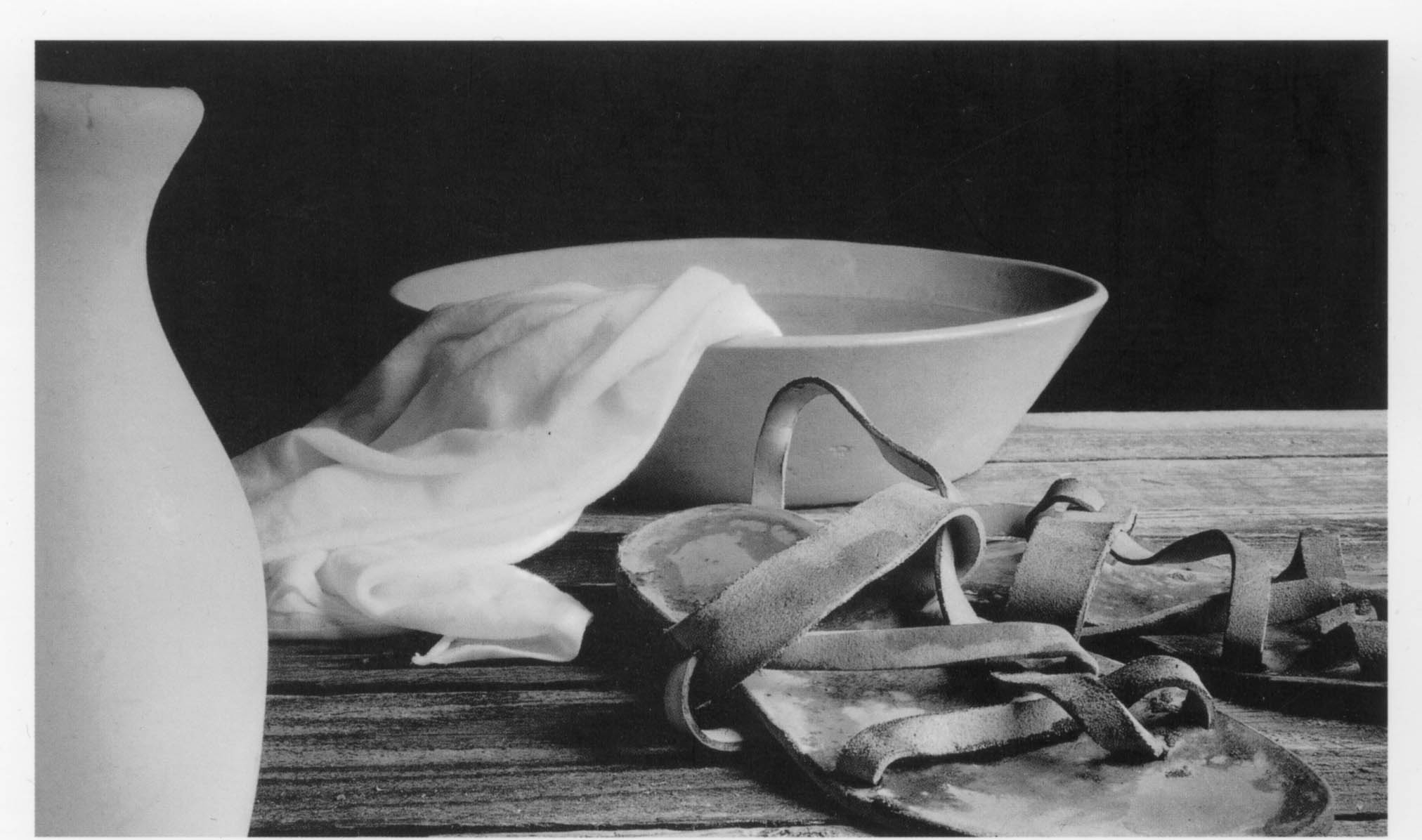
Considering the disrespect in the run up to a presidential nomination, a good foot-washing seems in order.

When Jesus washed Peter’s feet, Peter replied, “Lord, not my feet only but also my hands and my head!” (John 13.9)

  • Gordon C. Stewart, Presbyterian Teaching Elder (i.e., Minister of Word and Sacrament) H.R., Chaska, Minnesota, October 28, 2015


Shabbat Bereishit – The Sound of Your Brothers’ Bloods Cry Out to Me From the Earth

Rabbi Eric Gurvis’s post on Cain and Abel and the debate about guns and mental health came to our attention this morning after posting “Non-Verbal Communication: Cain Looking at Us”.

Source: Shabbat Bereishit – The Sound of Your Brothers’ Bloods Cry Out to Me From the Earth

Hope from the Bowels of Forsakenness

Vulnerable. Weak. Lonely. Frightened. Anxious. Forlorn. Forsaken.

The hospitalized teenager suffering a sudden, undiagnosed illness of the bowels, wondering whether he’s dying, fearful there is no cure, came to my attention during the day. The consciousness of it remain through the night. Awakening in the morning, I look for something that will speak to the helpless feeling of his parents and grandparents.

Opening the Psalter, the opening verse of Psalm 22 leaps from the page — “My God, my God, why have you forsaken me?” — the tortured cry from the cross Jesus quoted many centuries after Psalm 22 had embedded itself in the collective consciousness of the Jewish people.

That the Newer Testament Gospels would put these words on Jesus’s lips is, it strikes me this morning, a Jewish code to look deeper for something much more complex, both tragically realistic and surprisingly hopeful in the psalm’s entirety. Though the forsakenness cry repeats itself immediately — “Why are You so far from helping me, and from the words of my groaning?” — Psalm 22 goes on to recall poetically the existential-spiritual history of Israel’s suffering at the hands of the nations and its deliverance from the same, ending with “They (i.e., our descendants) shall come and make known to a people yet unborn the saving deeds that He has done.”

Jesus’s cry from the cross strikes me as the kind of cry we might read or hear in the writings of Auschwitz survivor Elie Wiesel – honest yet faithful to the Jewish tradition because the tradition itself expresses the horror of god-forsakenness and faith in the absent God at the same time.

Jesus on the cross has this history in his bowels and his bones. The teenager in the hospital has no active faith community, no wisdom tradition or practice, except for the faith and prayers of his grandparents whose faith has been kept at a distance for many years.

The week before learning of the teenager’s plight I had been filled with questions about another young man: the 26 year-old who gunned down the nine students in Oregon who suffered a nano-second of god-forsakenness in the classrooms where they had presumed to be safe from death at the community college that became their execution chamber. The grizzly scene of the shooter asking people about their faith, telling those who rose that they were about to meet their Maker, chilled me to the bone, raising the question of what the shooter’s experience of Christians had been that would so fill him with anger at them and their religion. Was he one of the many in America who, for reasons explainable or inexplicable, feel forsaken and despised? Alone. Isolated. Scorned. Forlorn. Angry.

To be human is to be intrinsically vulnerable. We are all at risk; all headed inevitably toward death. We are not immortal, eternal, timeless, invulnerable. Was the young man turned executioner mocking his death row victim’s belief in an afterlife? Was he saying loudly that there is nothing on the other side of death – a message to the world that this is all there is and that religion is a cruel hoax?

Death is our common lot, but the irony is that it does not wait until the end; it takes hold of us in the middle – between birth and death – as much as at the end. The foreshadowing of it sends us running for cover, running for relief, for an escape. It appears under the guises of control, power, invulnerability. Sometimes its disguise is a pistol or an assault rifle. Other times its disguise is religion that entertains illusions of immortality, belief systems that include and exclude, like “are you a Christian?”

This morning I’m freshly struck by the entire Psalm whose first line has echoed through the centuries every Good Friday: “Eloi, Eloi, lama sabachtani?” —“My God, my God, why have your forsaken me?”. I’m wishing our bowels could hear it, feel it, digest it, weep it, and find the hope and trust that smiles the conviction that the forsakenness we feel is not the final word.

  • Gordon C. Stewart, Chaska, MN October 8, 2015

A prisoner of my own violence

Pope Francis quoted the American Cistercian monk Thomas Merton in his address to Congress.

“I came into the world. Free by nature, in the image of God, I was nevertheless the prisoner of my own violence and my own selfishness, in the image of the world into which I was born. That world was the picture of Hell, full of men like myself, loving God, and yet hating him; born to love him, living instead in fear of hopeless self-contradictory hungers.”

Perhaps Mark had something like that in mind when he attributed to Jesus a grotesque instruction about following in the way of Christ. The images of Mark 9 are ludicrous, violent, grotesque.  Cut off a foot or a hand. Tear out your eye if it causes you to “stumble” — if it causes you to lead a child toward the fire of hell.  It is better to enter the Kingdom of God with one eye than to enter hell with two.

Author Flannery O’Connor seems to have known the genius of these jarring metaphors.

“I use the grotesque the way I do because people are deaf and dumb and need help to see and hear.”

Watching the news of grotesque crimes against humanity, we ask how anyone could behead another human being. How, indeed? And always in the name of God, in the name of righteousness, the children of light against the children of darkness.

Jesus’ words from Mark 9 were read aloud last Sunday in many churches around the world. They are as off-putting now as they were spoken into an earlier violent time, a world that was for Jesus and for Mark what Merton’s was for him: a picture of hell.

But for Jesus, the word we translate “hell” was not a place of divine punishment. It was the name of a place outside of Jerusalem. Paul Nuechterlein writes in last week’s Girardian Reflections:

‘Gehenna’ in Mark’s Greek rendering would have been ‘Ben Hinnom’ in Jesus’ own Hebrew/Aramaic. It’s the valley referred to in Jeremiah 7:30-33:

For the people of Judah have done evil in my sight, says the LORD; they have set their abominations in the house that is called by my name, defiling it. And they go on building the high place of Topheth, which is in the valley of the son of Hinnom, to burn their sons and their daughters in the fire — which I did not command, nor did it come into my mind. Therefore, the days are surely coming, says the LORD, when it will no more be called Topheth, or the valley of the son of Hinnom, but the valley of Slaughter: for they will bury in Topheth until there is no more room. The corpses of this people will be food for the birds of the air, and for the animals of the earth; and no one will frighten them away.

‘Hell,’ ‘Gehenna,’ ‘ben Hinnom’ is the place of human sacred violence that has never even come into God’s mind. It is our violence that we need to fear, not God’s. Jesus is speaking grotesquely of lesser sacrificial violence like cutting off one’s hand, as being better than amped-up sacrificial violence like the child sacrifice of Jeremiah’s day — or the Nazi Holocaust of our day. [bold print added by VFTE]

Self-criticism, prayerful introspection, the opening of one’s own divided heart to Divine judgment and mercy are the stuff of which heaven is made; hell would be when we remain prisoners of our own selfish violence, a place filled with people just like me.

  • Gordon C. Stewart, Chaska, MN, September 28, 2015.

Bernie Sanders at Liberty University

The very thought of Democratic Socialist candidate Senator Bernie Sanders (I-VT) speaking at a compulsory convocation at Liberty University, founded by the late Rev. Jerry Falwell who also founded the Moral Majority, seemed far-fetched until it happened. What happened is an example to follow: a genuine, face-to-face, civil discussion about America, the meaning of morality, and what the Bible has to say about justice in our time.

C-Span’s coverage of the complete 1 hr. 5 min. convocation, including Christian evangelical praise music, and prayer before and after Sanders’ presentation, is all the more remarkable.

  • Gordon C. Stewart, Chaska, MN 55318

If I were a rich man…Labor Day Sunday 2015

Once there was a rich man with gold rings and fine clothes who was applauded by television viewers. “You’re fired!” he’d say with a smirk.  He showed no mercy. He took no prisoners.  He took no guff. Judgment triumphed over mercy, and the people lapped it up. It came from someone just like them, or so they thought, a true-blue American who stands up against intruders from Mexico.

Then some of those who followed him went to church on Labor Day Sunday where they had to square their enthusiasm for the man with the gold rings and fine clothes with the assigned Epistle for the day from New Testament’s Letter of James.

My brothers and sisters, do you with your acts of favoritism really believe in our glorious Lord Jesus Christ?  For if a person with gold rings and in fine clothes comes into your assembly, and if a poor person in dirty clothes also comes in, and if you take notice of the one wearing the fine clothes and say, ‘Have a seat here, please’, while to the one who is poor you say, ‘Stand there’, or, ‘Sit at my feet’, have you not made distinctions among yourselves, and become judges with evil thoughts? Listen, my beloved brothers and sisters. Has not God chosen the poor in the world to be rich in faith and to be heirs of the kingdom that he has promised to those who love him? But you have dishonored the poor. Is it not the rich who oppress you? Is it not they who drag you into court? Is it not they who blaspheme the excellent name that was invoked over you?

You do well if you really fulfil the royal law according to the scripture, ‘You shall love your neighbour as yourself.’ But if you show partiality, you commit sin and are convicted by the law as transgressors. For whoever keeps the whole law but fails in one point has become accountable for all of it. 11For the one who said, ‘You shall not commit adultery’, also said, ‘You shall not murder.’ Now if you do not commit adultery but if you murder, you have become a transgressor of the law. So speak and so act as those who are to be judged by the law of liberty. For judgment will be without mercy to anyone who has shown no mercy; mercy triumphs over judgement.

What good is it, my brothers and sisters, if you say you have faith but do not have works? Can faith save you? If a brother or sister is naked and lacks daily food, and one of you says to them, ‘Go in peace; keep warm and eat your fill’, and yet you do not supply their bodily needs, what is the good of that? So faith by itself, if it has no works, is dead.

[Letter of James 2:1-17, NRSV]

And the people left church thinking the preacher was being political and went back to their television sets imbibing the illusion that one day they, too, might be like The Donald.

  • Gordon C. Stewart, Chaska, MN, Labor Day Sunday, Sept. 6, 2015.

Daily Riches: The Globalisation of Indifference Towards the Poor (Pope Francis)

Bill Britton's avatarRicher By Far

“Jesus states that we cannot serve two masters, God and wealth. … Jesus tells us what the ‘protocol’ is, on which we will be judged: I was hungry, I was thirsty, I was in prison, I was sick, I was naked and you helped me, clothed me, visited me, took care of me. (Matthew 25) Whenever we do this to one of our brothers, we do this to Jesus. Caring for our neighbour; for those who are poor, who suffer in body and in soul, for those who are in need. This is the touchstone. …Poverty takes us away from idolatry and from feeling self-sufficient. …the Gospel does not condemn the wealthy, but the idolatry of wealth, the idolatry that makes people indifferent to the call of the poor. …

‘The Church [is] everyone’s Church, and particularly the Church of the poor.’ (Pope John XXIII)

In the following years, this…

View original post 319 more words

Speaking very clearly


I’m going to speak very clearly now Gordon, in the form of a single question.

How in the name of God can you claim to be a Christian and a Democrat in the same breath?

I don’t know the person who put the question. We’re complete strangers.  We’ve never met. We live in different worlds.  Our understandings are foreign to each other, so strange that suspicion and name-calling, or the fear that the other is calling the other “a nut job”, undermines the possibility of real discussion.

I … read a few of your other posts, needless to say; everything I read merely confirmed my original “understanding” of who you are. In other words Gordon, (and I say this with both respect and disdain) You do not fool me, I knew you from your first words, your Credentials simply confirmed what was obvious from the start. Take that as you will.

At this point, I’m pretty sure that you are convinced that I am some sort of zealot or just another “right-wing nut job”, but in truth I am just another American. A Christian American.

I’m going to speak very clearly now Gordon, in the form of a single question.

How in the name of God can you claim to be a Christian and a Democrat in the same breath?

The writer was responding to Views from the Edge‘s post of Japanese theologian Kosuke Koyama’s speech on Hiroshima Day, 2006. Nothing in that post would lead a reader to assume, or to conclude, knowledge of my political party affiliation.

I asked myself how to respond. I pondered not replying at all. I chose to respond in writing as best I could, assuring the writer that I don’t call people right-wing nut jobs, and addressing other sections of the comment. After an exchange of blog comments and an email inviting a phone conversation, we shared some of the milk of human kindness over the phone long distance.

In further reflection I realized that the writer’s question articulates a point of view that rarely speaks so clearly. It assumes that Christian faith and the Democratic Party are polar opposites. Others on the left assume a Christian cannot be a Republican. Parts of America we are living in two separate worlds – on two different sides without much clear speaking. It’s not surprising that the “Nones” – those who now declare no religious affiliation in national polls – are growing in America.

The writer’s comments repeatedly refer to “the real war” in heaven and on earth, spiritual warfare between Satan and God. Until “the real war” is over, the argument goes, there will be cruelty and wars because of the fallenness of human nature, and there’s nothing we can do to change. In the midst of time we must chose which “side” we are on.

Views from the Edge’s first Hiroshima Day piece and the one that followed it had called attention to the hubris of all claims (Japanese or American) to national exceptionalism.

The writer therefore, as best I can tell, concluded I must be a Democrat, i.e. someone who doesn’t love his country, someone who thinks that America is not a Christian nation. Someone who might be a …. “You don’t fool me.”

The commenter was right that I’m a Christian but mistaken in assuming I’m a Democrat. The Democratic Party and the Republican Party are, in my view, the left wing and the right wing of a single American party. Both wings belong to Wall Street. They march in parades on Main Street at election time, but the parades are funded by Wall Street and America’s wealthiest 1%. We do not live in a democratic republic. We are living under an oligarchy.

Jesus has a few things to say about that.  J.J. Von Allmen (A Companion to the Bible, Oxford University Press, 1958) makes a powerful case that Jesus’s teaching about money is original to him. He is the first to call money “Mammon”: “No one can serve two masters, for either he will hate the one and love the other, or he will be devoted to the one and despise the other. You cannot serve God and Mammon” (Matthew 6:24). Jesus choice to personify wealth stands out as an exception to his normal way of speaking. Mammon and its distribution are at the heart of Jesus’s preaching and teaching. There is the Kingdom of God and there is the Kingdom of Mammon. One cannot serve both.

Had the commenter’s question been “How can you be a Christian and a socialist?” the answer would have been easy.

  • Gordon C. Stewart, Chaska, MN, August 15, 2015

Planetary Economics

The beginning of the GOOD news is HARD news, according to John the Baptist calling people out into the wilderness of Nature (Gospel of Mark 1:1-8).

“We must change,” he cries. Only a 180 degree turn can deliver us from the consequences of the actions that have led us here. He sounds like Bill McKibbon.

For John the Baptist the system at issue was Roman imperialism, an economic-political system centered in Rome expanding out, enforced by military invasions, subjugation, occupation, buffered by generous religious tolerance so long as the religious practices did not interfere with Roman prerogatives.

One could repeat the sentence in 2015 with little change: “the system at issue is [American] imperialism, an economic system centered in [Washington] expanding out, enforced by military invasions, subjugation, occupation, and religious tolerance so long as the local religious practice does not interfere with [American] prerogatives.”

It is this spiritual, moral, economic, cultural and political captivity to a global system that cannot satisfy our real needs or the world’s that produces a longing in our hearts, a readiness to make the trip to the wilderness. We are being called to abandon the house built on the quicksands of greed, manifest destiny, national exceptionalism, and the illusion of unsustainable growth.

We’re a weary people in 2015. Wearied and still disheartened 14 years after “Shock and Awe” took down Saddam Hussein on the pretense that he had weapons of mass destruction (WMDs) that threatened us and the Bush Administration’s persistent mis-association of 9/11 with Saddam Hussein. We’re wearied of lies and 11 years of un-budgeted military expenses, the loss of thousands of American soldiers’ lives and as many as 100,000 Iraqi civilians, a military venture undertaken on the assumption that the Iraqi people would welcome our presence as the onset of a new representative democracy and “free market” economy.

That belief in the goodness of American intentions hit the rocks almost as quickly as Saddam’s statue hit the pavement in Baghdad. All the while we were wearied by the earlier invasion of Afghanistan, whose original justification was a quick elimination of Osama bin Ladin and Al-Qaida untempered by realistic knowledge of the long history of the military interventions that mired the invaders in quagmires such as the Soviet Union found itself before leaving in defeat. To the Afghans it didn’t matter whether the troops were Soviet or American. They were the same. They were the occupation forces of an imperial power destined to fail.

In the midst of the weariness about what was happening abroad, the financial system at home took the American economy to the brink of disaster in 2008. Occupy Wall Street rose to the top of the news cycles. Although the movement fizzled over time, as such movements inevitably do, it caught the attention of television viewers, internet surfers, and newspaper and magazine readers. Occupy Wall Street and the spot light it placed on “crony capitalism” became a hot topic around water coolers at work and the table in the coffee shops.

For the first time in recent memory, capitalism was no longer sacred, no longer off limits. Time’s front cover asked the question whether Capitalism was dead. But, as with Occupy, public attention is short-lived. Amnesia sets in when people are weary. How soon we forget…until some new John the Baptist issues the cry for a 180 degree turn for the sake of something better.

Maybe Naomi Klein is a new kind of John the Baptist. This Changes Everything: Capitalism vs. the Climate, reviewed here by the New York Times, places the over-riding systemic issue squarely before the general public again. Senator Bernie Sanders, America’s only socialist Senator who names climate action as among his four top priorities, is gaining attention as a presidential candidate. Elizabeth Warren, the Senate’s strongest voice on holding Wall Street accountable, is a bulldog who won’t let go. Put them with Bill McKibbon and 350.org and you begin to hear the echo of John’s recognition of the prophetic hard truth-telling that is the forerunner of good news.

The hard truth that precedes good news is the discovery of the myth that couples democracy with capitalism while viewing socialism as democracy’s opposite. Ideological myopia is to nations and cultures what horse blinders are to horses on a race track: they limit vision to the narrow path of the track they’re on. They prevent their adherents from seeing beyond the track.

When the climate is changing in ways that have begun to compel our attention, and when we ask how we will make it through the changes together, the bigger question of the economic system (the track itself) comes into view by virtue of necessity. It calls us off the track of species supremacy and “man over nature” into the wilderness of Nature itself.

The words ‘economy’ and ‘economics’ derive from the Greek words for ‘house’ and ‘the management of the household’. Their real subject is not about markets, free or otherwise. The issue is what and how the managers manage and why we let them. Economics is every citizen’s business because we all live together in the one house. No exceptions. Economics in the original sense is a spiritual-ethical perspective before it creates systems that support (or contradict) its premise of shared life and responsibility for the planet.

John the Baptist with his axe laid to the root of the tree, reminds us that economics is a spiritual matter of the first order. It is what the Hebrew Bible calls “the Day of the Lord” and John the Baptist and Jesus of Nazareth called “The Kingdom [i.e. Society] of God”. Economics is not an academic discipline, or the exclusive province of Wall Street traders who understand how the free market works. Genuine economics begins and ends with the philosophical commitment to the wellbeing of the entire household of Nature and its inhabitants.

The planet — this home within Nature without which no person, society or form of life exists — requires different management. The economy for which our hearts long is the one house imagined by the psalmist and announced by John in the wilderness beyond the track of the Pax Romana: the good news waiting for longing hearts to embrace it, an economy where “righteousness and peace will kiss each other” (Psalm 85:10) and wars will be no more.

The beginning of the GOOD news is HARD news. “Repent, for the kingdom of heaven is at hand.”

– Gordon C. Stewart, Chaska, MN, June 16, 2015

On Hiroshima Day 2015 – Like a Child Piling Blocks

Like a child piling blocks
Your words construct new dreams,
Towering poet.

Gentle and strong, as trees
Bend gracefully in wind,
You stand – and I bow.

One of the great pleasures in life has been the unexpected friendship with Japanese theologian Kosuke Koyama.

Ko, as his friends called him with great affection, and his wife Lois, a native Minnesotan, came to Minneapolis following retirement from a distinguished teaching position at Union Theological Seminary in the City of New York. I knew him only by reputation: John D. Rockefeller, Jr. Professor of World Christianity Emeritus; cutting edge Asian liberation theologian and leader in Thailand, Singapore, New Zealand, and the United States; author of Water Buffalo Theology, No Handle on the Cross, Three Mile an Hour God, Mt. Fuji and Mt. Sinai, among others; pioneer in Buddhist-Christian intersection and inter-religious dialogue; spell-binding keynote speaker at the Fifth Assembly of the World Council of Churches in Nairobi, Kenya.

The friendship that developed, if friendship can be defined to include mentors and those they mentor, great minds and ordinary ones, people of stature and those who look up to them, the wise and the less wise, was particularly impactful because my father had been an Army Air Force Chaplain in the South Pacific in World War II.

During the March, 1945 firebombing of Tokyo, the planes came from my father’s air base. Though my father rarely spoke about the war, there was a certain sullenness that would come over him whenever I would ask him for stories. Now, after my father’s passing, I was learning from Ko what the war had meant to the 15 year-old Japanese boy being baptized in Tokyo while the bombs dropped all around his church.

The pastor who baptized him instructed him. “Kosuke, you are a disciple of Jesus Christ. You must love your neighbors…even the Americans.”

For the rest of his life Ko pursued the daunting question of what neighbor love means. Who is the enemy? Who is the neighbor? Are they one and the same? Late in his life, before he and Lois moved from Minneapolis to live with their son in Massachusetts, he had come to the conclusion that there is only one sin: exceptionalism. At first it struck me as strange. Can one really reduce the meaning and scope of sin to exceptionalism? What is exceptionalism, and why is it sinful?

At the time of our discussion, the phrase “American exceptionalism” – the claim that the United States is exceptional among the nations – was making the news. It was this view that led to the invasions and wars in Afghanistan and Iraq – the unexamined belief that the Afghanis and the Iraqis would welcome us with open arms as liberators – that captured in a phrase the previously largely unspoken popular conviction that America is exceptional.

In this American belligerence Ko heard the latest form of an old claim that had brought such devastation on his people and the people of the world. The voices from the White House, the State Department, and the Department of Defense, though they spoke English, sounded all too familiar, impervious to criticism and restraint on the nation’s military and economic adventures.

Nine years ago today, on Hiroshima Day, 2006 he spoke to a small crowd at the Peace Garden in Minneapolis at the exact hour the bomb incinerated Hiroshima. His voice rang with a quiet authority that only comes from the depths of experience. Here’s an excerpt from that speech:

“During the war (1941-45) the Japanese people were bombarded by the official propaganda that Japan is the divine nation, for the emperor is divine. The word ‘Divine’ was profusely used.This was Japanese wartime ‘dishonest religion’, or shall we call it ‘mendacious theology’? This ‘god-talk’ presented an immature god who spoke only Japanese and was undereducated about other cultures and international relations. Trusting in this parochial god, Japan destroyed itself. “

“Then,he said to make his point to his American listeners, “dear friends, do not trust a god who speaks only English, and has no understanding of Arabic or islamic culture and history. If you follow such a small town god you may be infected with the poison of exceptionalism: ‘I am ok. You are not ok.’ For the last 5,000 years the self-righteous passion of ‘I am ok. You are not ok’ has perpetuated war and destruction. War ’has never been and it will never be’ able to solve international conflicts, says Pope John Paul II.”

Two paragraphs later, Koyama spoke in terms that speak to the policy of drones and other advanced military technology:

“In spite of the remarkable advances humanity has made in science/technological [sic], our moral and spiritual growth has been stunted. Humankind seems addicted to destruction even with nuclear weapons and biological weapons. Today there are 639 million small arms actively present in the world (National Catholic Reporter, June 30, 2006).Fear propaganda always kills Hope. Violence is called sacrifice. Children killed in war are cruelly called a part of the ‘collateral damage’.”

Today, Hiroshima Day, 2015 I wish I could break bread with Ko and my father to discuss the meaning of it all, and share with Dad the haiku poems published in The New York Times following Ko’s death, written in his honor by his colleague at Union, Peggy Shriver, testaments to hope in belligerent times:

Smiling East-West spirit,
You move with sun and Son,
Shining Peace on us.

+++++

Like a child piling blocks
Your words construct new dreams,
Towering poet.

+++++

Gentle and strong, as trees
Bend gracefully in wind,
You stand – and I bow.

  • Gordon C. Stewart, Chaska, MN, August 6, 2015