Unknown's avatar

About Gordon C. Stewart

I've always liked quiet. And, like most people, I've experienced the world's madness. "Be Still! Departure from Collective Madness" (Wipf and Stock Publishers, Jan. 2017) distills 47 years of experiencing stillness and madness as a campus minister and Presbyterian pastor (IL, WI, NY, OH, and MN), poverty criminal law firm executive director, and social commentator. Our cat Lady Barclay reminds me to calm down and be much more still than I would be without her.

The Kavanaugh Nomination and the Founders’ Hope

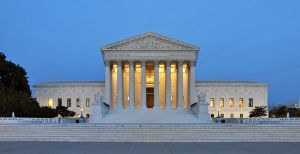
512px-Panorama_of_United_States_Supreme_Court_Building_at_DuskMost deeply at stake in the decision regarding Judge Kavanaugh’s confirmation is the further erosion of public trust in the institutions on which this democratic republic was founded. The Supreme Court was the one institution intended to do its work high above the cock fights of special interest, prevailing winds, and partisanship.

256px-Constitution_of_the_United_States,_page_1Democratic republics are built on trust. The American people’s trust in the republic’s institutions was the bedrock on which the U.S. Constitution was framed and adopted. The genesis of American independence and sovereignty lay in a hope yet to be tested: whether the American experiment would meet the test of being a nation “of the people, by the people, and for the people.” The experiment would depend on the American people’s readiness to trust — and the trustworthiness of those institutions.

No institution of government was more important than the U.S. Supreme Court. While the legislative and executive branches are blown by the winds of the American electorate, the Supreme Court was to more objective, above the influence of partisan agendas and popular winds. The Supreme Court was the guardian of the Constitution, the final decision-maker of cases of that came to it from disputed cases in the lower courts.

In previous eras of the American republic, the justices of the Supreme Court worked behind the screen of public scrutiny. As America morphed into an entertainment culture, the justices’ personal lives and views came out from behind the screen of the legal holy of holies onto the stage of public scrutiny. They made speeches. They heard applause. They became either heros or villains. Like the Wizard of Oz, their humanity frailty came was eposed. A sacred hope — the trust in the Court to stand above the cockfights down the in the valley — died.
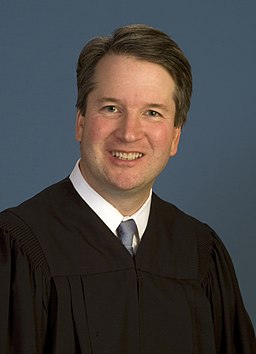
Judge_Brett_KavanaughTomorrow (Thursday) the Senate Judiciary Committee’s hearing will be at the top of the news. One of the three women who accuse Judge Kavanaugh of sexual assault or abuse will be examined by an prosecuting attorney selected by the ruling party majority. The cameras will then turn to Judge Kavanaugh expected denial, the equivalent of a court rebuttal. Senate Majority Leader McConnell has scheduled a vote Friday morning.

One need not be a partisan to object to the process. One need only think of the bedrocks of the people’s trust in their government’s institutions and our perception of their trust-worthiness. The founders’ hope for the American experiment is at risk because of the very institutions established by the U.S. Constitution.

Hope is IN SPITE OF Troubles!

Kosuke Koyama - RIP

Kosuke Koyama (1929-2009)

“You have to be hopeful; you have to give them hope.”

“Okay,” I said, “but I can’t give anyone else hope. Hope comes from within.”

Hope seems harder in 2018 than it was when Kosuke Koyama advised the younger preacher to stay positive. Years later, it was to Dr. Koyama that Be Still! Departure from Collective Madness was dedicated for many reasons. Maintaining hope was one of them. His humility was another. His characteristic kindness and compassion reached out when friends were scarce. But nothing became more impactful than the statement he made over lunch: “There is only one sin: exceptionalism.”

Years before his death in 2009, Koyama (“Ko”) had begun to view the environmental crisis through the lens of humankind’s presumption: the mistaken belief that we, the human species, are the exception to Nature. For Ko it was a form of idolatry.

In light of this week’s avalanche of news, I’ve wondered what Ko would say. He still would bless us with his smile. He would encourage us to resist the claim of American exceptionalism, the confusion of nationalism (worship of country) with patriotism (love of one’s country), any border policy that takes children from their parents arms in the name of national security, every energy policy that feeds the coffers of the fossil fuel industry (“God is green,” said Ko), every exaltation of greed, every distortion of truth, every tax policy that keeps the poor poor while lining the pockets of the 1%, and any President and Congress that reminded him of Emperor Hirohito and the cult of national exceptionalism he grew up with in Tokyo. The god of empire, he observed, never says no. The God of the Bible says no: “You are a stiff-necked people!”

But amid all the issues that deserve our attention, I believe Ko would urge us to keep our eye on the biggest of sin — the mega sin — the sin against Nature that imperils the planet as we know it. His legacy invites us to bow our stiff necks to that which is bigger, longer lasting, and more encompassing than ourselves. Everything less is built on sinking sand.

Ko spoke in metaphors and parables. I believe he would remind us of Jesus’ parable of the wise man who built his house upon the rock versus the foolish one who built his house upon the sand. “And the rains came down, and the floods came up, and the winds blew, and beat upon that house; and it fell: and great was the fall of it.”

256px-ShipTracks_MODIS_2005may11

NASA satellite photo of clouds created by the exhaust of ship smokestacks.


He would rally behind Bill McKibben’s declaration that “climate change is the single biggest thing that humans have ever done on this planet. The one thing that needs to be bigger is our movement to stop it.” The only way to stop it is to turn from the the mega sin — the idol of human exceptionalism, the worship of ourselves.

“[T]hrough endurance, to feel that life is surrounded by the warm approval of God, will that not be the experience of hope? Hope is in spite of troubles. There is not hope apart from troubles. There is no automatic hope, no easy hope. Hope is hope against all odds.” — Kosuke Koyama, Three Mile an Hour God.

  • Gordon C. Stewart, Chaska, MN, September 25, 2018.


Finding Bigfoot

“Americans are the best entertained and least informed people in the world.” – Neil Postman.

AmusinghknI still watch football. I’m sorry — mea culpa — but I do. Always have. But it’s different this season. Though my hopes for my teams have always been subject to injuries, something worse gets injured every two years: truth.

Watching the Gophers (University of Minnesota) and Minnesota Vikings (NFL) last weekend, most of the ads were what we’ve come to expect. They sell us products by entertaining ads that create our appetites for what we don’t need.

But there were other well-placed ads during breaks in the action: “information” ads meant to stir my righteous anger by painting Dean Phillips (D) — the candidate running against Congressman Erik Paulsen (R) in my district (Minnesota’s 3rd Congressional District) — as an immoral hypocrite. It’s not information; it’s carefully crafted disinformation meant to evoke outrage and fear. The campaign season and football season are a lot alike with one big difference: football has penalties. There are referees and umpires.

Neil Postman’s Amusing Ourselves to Death: Public Discourse in the Age of Show Business appeared way back in 1985, years before Citizens United uncorked the tightly secured laboratory vile containing the life-threatening, infectious virus of unaccountable slander, and released the contents into electoral stream of a democratic republic.

We Americans pride ourselves in being a nation “under the rule of Law.” Everyone is equal “under the rule of law.” Citizens United exposed the dirty little secret that we’re not. Slowly over time, the American democratic republic has become an oligarchy. Dark money — big money from unnamed deep-pockets, vested interest sources — was legitimized under the rule of law by the U.S. Supreme Court’s 5-4 Citizens United decision. The rule of law became more explicitly the rule of oligarchs, who buy presidencies and congresses with their campaign contributions, and who spend big money for ads like the one they hope will keep Rep. Erik Paulsen in the House of Representatives.

Congressman Paulsen represents my district. I know him. Well, I don’t really know him. I’ve never had the opportunity to meet him face-to-face. During his eight year tenure in Congress, he never held a town hall meeting before candidate Dean Phillips made an issue of his inaccessibility to the people who elected him to represent us. While others across the country held town hall forums in their districts, Rep. Paulsen refused to hold one. Finally, after increasingly public criticism, Rep. Paulsen offered an alternative: a telephone conference call. My phone would ring at 7:00 P.M. “Hello, This is Congressman Erik Paulsen inviting you to join me in a live conversation . . . Press 1 to participate….” I couldn’t bring myself to press the button lest I contribute to his claim of accessibility. Finally, after his unwillingness became a bigger issue in the Paulsen-Phillips debate, Erik Paulsen held his first face-to-face town hall meeting in eight years.

Yesterday we shared the ads that interrupt my football watching. The Paulsen ads interrupt far more often than the Phillips ads. There’s a reason for that. Money. The Paulsen campaign is well-funded by the unaccountable deep pockets uncorked by Citizens United. The Paulsen ad we posted yesterday is dark in tone and slanderous in content. The Phillips campaign refuses PAC, special interest, or federal lobbyist money. They too are carefully crafted to tell the truth with humor.

Football couch potatoes in MN District 3 are the best entertained voters in the country.

  • Gordon C. Stewart, Chaska, MN, September 20, 2018.

Falsifying Reality: the Road to Power

[George] Orwell saw, to his credit, that the act of falsifying reality is only secondarily about changing perceptions. It is, above all, a way of asserting power.” – Adam Gopnik.* Here’s an example from my congressional district.

Big money for Erik Paulsen‘s re-election is pouring in from PACs, special interests, and federal lobbyists. Dean Phillips refuses dark money. Ads like the one below are funded by small donations from little guys like me who don’t like falsifying reality.

  • Gordon C. Stewart, courtesy of the coffee shop wifi, 20 minutes away from the cabin by the wetland, September 19, 2018.

*Adam Gopnik is author of “Orwell’s ‘1984’ and Trump’s America” Click the LINK.

Thanks to William (Bill) Britton’s Wisdom from the Margins: Daily Readings for bringing my attention to the quotation, one of several by Gopnik, Thomas Merton, Noam Comsky, and the Apostle Paul (“Be transformed by the renewal of your mind”). Bill’s daily menu is worth the price!

The Spiral Staircase

Simone_Weil_1921

Simone Weil (1909-1943)

French playwright-novelist-philosopher Jean-Paul Sartre wrote about “the hole” in me, the hole in you, the hole of nothingness in the midst of mortal being. To live authentically is to live courageously in spite of the threat of nothingness. Sartre’s French contemporary Simone Weil offered a similar observation: “All sins are attempts to fill voids.”

Today their perspectives speak to the greatest challenge of our time: climate change. The spiral stairway we climb up toward the mastery of nature also spirals down to dust and ashes — the death of the planet as we know it.

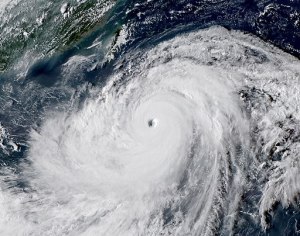
512px-Mangkhut_2018-09-14_0750ZWe are not content to live as mortals on the plain of nature, along clean streams, rivers, and oceans, or in lush valleys, in the desert or on nature’s mountaintops. We must go higher, higher, higher — up, up, up — to no real anywhere.

Our climb to mastery reaches where no other species can go — above the storm clouds, where we look to DNA manipulation to rid us of nature’s mistakes, and where satellites search for other sentient life light years away — above the clouds of Mother Earth’s torrential storms and rains that remind us of the void. The higher we climb, the closer we get to the bottom, the irreversible plunge into Jean-Paul Sartre’s ‘nothingness’, Simone Weil’s ‘sins’ that attempt to fill the void’, the Bible’s ‘dust and ashes’.

António_Guterres_in_London_-_2018_(41099390345)_(cropped)U. N. General-Secretary Antonio Guterres calls for immediate international action on the Paris Climate Change Accords and much more. Days ago, he tweeted:

My condolences to all those affected by storms in East Asia and the United States. We need urgent #ClimateAction to prevent an irreversible spiral into catastrophic climate change. bit.ly/2MHvZkV

Here in the United States the White House and Congress ignore his plea. Funded by dark money legitimized by Citizens United, and forgetting the Wall Street financial crisis of 2008, our elected officials and dominant political parties continue to measure the nation’s health by the stock market’s rises and declines. Crony capitalism provides the electorate with what we demand: positive thinking, silence about the void, and the stuff that keeps us busy shopping at the mall.

1024px-9.3.07GardenStatePlazaMallbyLuigiNovi


“America’s favorite weekend activity,” writes American Quaker Robert Lawrence Smith, “is not participating in sports, gardening, hiking, reading, visiting with friends and neighbors. It’s shopping…. We leave boredom and emptiness behind as we browse through (the mall’s) glittering corridors of stuff. Yet many of us have learned that acquiring too much stuff can get in the way of happiness, lead us back to boredom and emptiness, corrupt our children’s values.”

We stay on the stairway, deaf to the Secretary-General’s startling cry, and blind to the planetary clock ticking closer to midnight. We Americans are positive thinkers who disdain the idea of nothingness and the void that belong to the French philosophers and other negative thinkers. We dare not stop to think.

  • Gordon C. Stewart, on the wetland, September 18, 2018

PS. “The economy’s never been better.” I think I’ll head over to the mall or swing by the Porsche dealership.

Bumpa, what’s faith?

Elijah and Bumpa (i.e. Grandpa) are talking after the Vikings-Packers game.

Elijah and Grandpa talking

Bumpa, what’s faith?

Why are you asking about faith, Elijah?

Mom just said it. She said that word again, just like she did last week.

Said what?

She said “You gotta have faith.” Maybe you should turn up your hearing aids.

I see. Mom was talking about Bumpa’s attempt to lose weight.

Yeah. I hate to wait!

Well, waiting is different but it does require faith. Bumpa can’t just wait to lose weight. I have to work at it.

You’re drivin’ me crazy! I asked you a simple question: “What’s faith?”

Okay. Faith is the assurance of things hoped for, the conviction of things not seen.

What’s assurance?

It’s a little like confidence, Elijah. Or believing things will turn out well even when everything looks bad.

So that rookie kicker needed faith, right?

Yes. He lost his faith right there on the football field…THREE times. He lost his confidence. He didn’t believe it was going to turn out well, and he blew nine points. Nine points!!! All because he lacked faith.

Yeah, his coach lost faith in him and he lost faith in himself, right Bumpa?

Right. But faith is about more than football, Elijah. It’s about life. It’s the assurance of things hoped for, the conviction of things unseen.

What’s conviction? So we believe in ghosts?

No, Elijah. Remember when Barclay let you play with his ball and didn’t bite? It’s a little like that. Faith is trust. I hope you never lose your faith!

  • Bumpa and Elijah, Chaska, MN, September 17, 2018.


Living with Myself

Antoni-de-melo

Anthony de Mello (1931-1937)

Living with myself is hard sometimes. Almost as hard as it is to live with me. I need lots of help to be a better person.

This morning, Anthony de Mello‘s and Dietrich Bonhoeffer‘s reflections featured in William Britton’s Wisdom from the Margins: Daily Readings brought me up short.

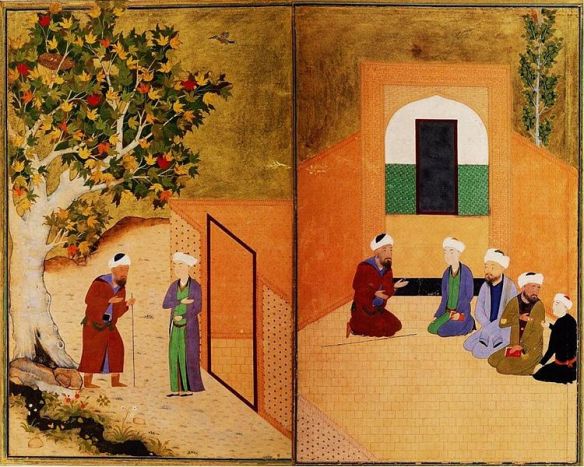
Saʿdī of Shiraz tells this story about himself: “When I was a child I was a pious boy, fervent in prayer and devotion. One night I was keeping vigil with my father, the Holy Koran on my lap. Everyone else in the room began to slumber, and soon was sound asleep. So I said to my father: ‘None of these sleepers opens his eyes or raises his heart to say his prayers. You would think that they were all dead.’ My father replied, ‘My beloved son, I would rather you were asleep like them than slandering.’” (Anthony de Mello, The Song of the Bird)

My own father and Saʿdī’s father were much the same. I can’t help wondering what Dad might say today of all the slandering and the sleeping.

To my unredeemed slandering heart and mind, the sleepers (those who refuse to stay awake to what is happening in America) are readily identifiable by their choice of a news channel. The sleepers, I say to myself, are not awake…like me. Oops! The voices of Saʿdī’s father and mine alert me to my habitual slandering. They call me to a lead a more gracious, fuller, life.

Bundesarchiv_Bild_146-1987-074-16,_Dietrich_Bonhoeffer

Dietrich Bonhoeffer (1906-1945)

But the way of living with myself and others consciously and respectfully seems impossible. It’s not simple. Slander is a sin of commission. Consenting to evil is the sin of omission. One is still called to act, but without slandering.

“Who stands firm?” asked Dietrich Bonhoeffer from his German prison cell following a failed plot to assassinate Hitler to end World War II. “Only the one for whom the final standard is not his reason, his principles, his conscience, his freedom, his virtue, but who is ready to sacrifice all these, when in faith and sole allegiance to God he is called to obedient and responsible action: the responsible person, whose life will be nothing but an answer to God’s question and call” (Letters and Papers from Prison).

While the masses had fallen asleep to the horror of the German Third Reich, Bonhoeffer “stood firm” and paid the ultimate price — state execution — for committing the sin of commission: resistance to Hitler and mass madness and slaughter. One might suppose that a man like Bonhoeffer’s disdained the character of those who fell asleep. But it was this same Bonhoeffer who instructed the students of his underground seminary the lesson Saʿdī’ father and mine tried to teach us.

“By judging others, we blind ourselves to our own evil and to the grace to which others are just as entitled as we are” (Dietrich Bonhoeffer, The Cost of Discipleship).

It’s hard to live with myself! I need all the help I can get. Bill Britton’s Wisdom from the Margins: Daily Readings is a hidden treasure worth the price for anyone feeling the need to “stand up” without slandering.

  • Gordon C. Stewart, on the wetland with the Trumpeter Swans, September 12, 2018.

9/11/18: A Defining Moment

WTCmemorialJune2012Today, the 17th anniversary of 9/11, the subway station that was buried by the fall of the World Trade Center towers, has reopened to loud cheers. Hope survives! So does the question “What have we learned since we trembled in horror and disbelief 17 years ago?”
The 9/11 Anniversary in 2018 coincides with the release of Bob Woodward’s FEAR exposing the moral abyss that is the White House; National Security Advisor John Bolton’s “America First” attack of the legitimacy of the international court; and United Nations Secretary-General Antonio Guterres’s statement urging immediate action on climate change.

António_Guterres_in_London_-_2018_(41099390345)_(cropped)

U.N Secretary General Antonio Guterres

Climate change is the defining issue of our time, and we are at a defining moment. … Far too many of leaders have refused to listen.

If we do not change course by 2020, we risk missing the point where we can avoid runaway climate change. [Antonio Guterres]

The collapse of the World Trade Center brought us to a dead stop. We could see it. First responders touched it. NYC Mayor Rudy Giuliani became “America’s mayor”.

We Americans wondered what sense of morality would lead someone to highjack commercial aircrafts and turn them into weapons of mass destruction. All these years later, morality is still the question. “America’s mayor” today declares that truth is not truth, while we ignore a greater threat, less visible to the naked eye — climate change — exceeds the geographically limited horror of 9/11. 9/11/18 is a defining moment in a sea of moral amnesia requiring a voice from beyond the spiritual-moral morass America has become.

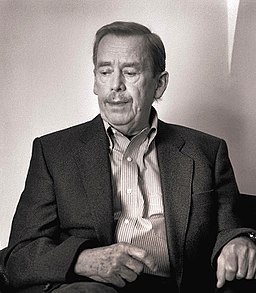
256px-Vaclav_Havel_cropped

Václav Havel

“The worst thing,” wrote the Czech writer and former President Václav Havel, as though peering ahead into the American of 9/11/18, “is that we live in a contaminated moral environment. We feel morally ill because we became used to saying something different from what we thought. Concepts such as love, friendship, compassion, humility or forgiveness lost their depth and dimension” (bold added by Views from the Edge).

In this defining moment, hope again rises against hope with its own kind of prayer for the end of the planetary moral madness:

“There is only one thing I will not concede: that it might be meaningless to strive in a good cause.”
― Vaclav Havel, Summer Meditations

  • Gordon C. Stewart, Chaska, MN, 9/11/18.


A Window of Opportunity: Rosh Hashanah

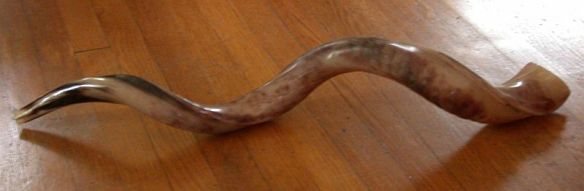
Today is Rosh Hashanah, the Jewish New Year that celebrates the birth of humankind with the blowing of the shofar (AUDIO LINK).

Jemenittisk_sjofar_av_kuduhorn

Rosh Hashanah’s meaning takes me back to last week’s Jewish wedding in Boston Symphony Hall, the kind of joyful occasion that’s good for the weary soul. Although I might have anticipated meeting a Holocaust survivor in his/her 90s, I did not expect the survivor to be my age.

Stephen and I were born two months apart in very different words — the Warsaw ghetto under Nazi occupation, and the U.S.A., respectively. Stephen and his mother survived. His father and the rest of his family died in the gas ovens of Auschwitz. His father arranged for two-year-old Steve and his mother’s to escape and survive under the clandestine protection of Polish Christian. How Stephen’s father made the arrangements is a mystery lost in time and the ashes of Auschwitz.

Rosh Hashanah is marked by the blowing of the shofar that starts the 10 High Holy Days leading up to Yom Kippur, the Day of Atonement.

What is Rosh Hashanah all about? In addition to its meaning as the “head of the year”, we also refer to it as the “Day of Judgment”. What, in fact, did the Rabbis tell us to do on Rosh Hashanah? Curiously, there is virtually no mention of our own personal judgment in the Rosh Hashanah prayers. Instead, the prayers are all about the general condition of the world. – Rabbi Asher Resnick.

The Jewish sense of time is different from the dominant understanding of time in the West. Time spirals. It loops back and forward. Rosh Hashanah cycles back in order to spiral forward. It is, like every other Jewish holiday, “a metaphysical window of opportunity” (Rabbi Asher Resnick).

Meeting Stephen, the retired doctor in Princeton, New Jersey, in Boston at a Jewish wedding opened a different kind of metaphysical window of opportunity. The rapport was immediate, the window of opportunity opened between us as if we were long-lost friends. Such times redefine time. They spiral back to fetch hope for a new humanity and carry it forward in another dark time. This Rosh Hashanah I sound the shofar for Stephen, his family, all victims and survivors of the Holocaust, and the Polish Christian family that protected Stephen and his mother until the horror was (more or less) over and a mad world repents.

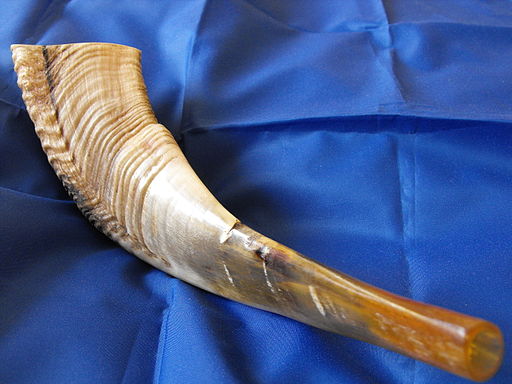
512px-Frank-oil-shofar_(14088680963)

the shofar (ram’s horn)

Shana Tova!

  • Gordon C. Stewart, Chaska, MN, September 10, 2018.


Elijah and Grandpa Walkin’ and Talkin’

Elijah and Grandpa are walkin’ and “talkin'” on the way to his car seat.

“I’m walkin’, yes indeed, and I’m talkin’ ’bout you and me
I’m hopin’ that you’ll come back to me (yes)
I’m lonely as I can be, I’m waitin’ for your company
I’m hopin’ that you’ll come back to me….” – Fats Domino

Click this link — I’m Walkin’ – Fats Domino (1957). All these years later, I’m walking’ and talkin’ ’bout Elijah, hopin’ he’ll come back to me.

  • Gordon C. Stewart (Grandpa). September 10, 2018