Unknown's avatar

About Gordon C. Stewart

I've always liked quiet. And, like most people, I've experienced the world's madness. "Be Still! Departure from Collective Madness" (Wipf and Stock Publishers, Jan. 2017) distills 47 years of experiencing stillness and madness as a campus minister and Presbyterian pastor (IL, WI, NY, OH, and MN), poverty criminal law firm executive director, and social commentator. Our cat Lady Barclay reminds me to calm down and be much more still than I would be without her.

Full Moon by the Wetland

FlomaxFew of my closest male friends still get up in the middle of the night. Most have had surgery or are on Flomax. They sleep through the night. While they’re sleeping, I’m getting up three of four times, on a good night. Last night it was five!

You might think they’re luckier than I am. But sometimes, like last night when I got up five times, there’s a blessing to it. There are windows on three sides of the loft. On a clear night, I look out and up at Orion’s belt — it’s always there — and feel all’s right with the world. I saw Orion belt again last night, but there was a brighter blessing – a full moon throwing a wide swath of moonlight across the wetland onto the yard and through the cabin’s windows.
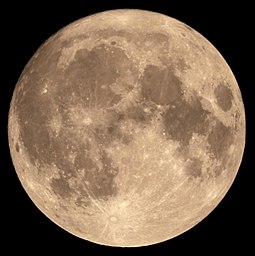
SupermoonThe swath of light shifted with each trip down the handcrafted maple staircase the A-frame’s builder — a Saint Paul fireman — had rescued before the old firehouse was torn down. It’s a beautiful work of art, and, when the evening sun or a full moon shines its light on the maple, those who see it can’t help but be thankful the old fireman rescued it from its fateful trip to the landfill. The angle of the light moves with the moon to create changing patterns formed by the light from above and the different shaped shadows cast by the thin, leaf bare birches and aspens, and by the bigger oaks and maples whose leaves have not yet fallen — each of the five trips up and down the staircase unlike the one before. I thought of all my friends who no longer need to make trips in the night because of surgery or Flomax, or the end of their time under the full moon among the trees and wetlands. 

Someday I’ll make my last trip down that stairwell, but the blessing of the full moon in late October 2018 will stay as long as my memory holds out — an heavenly taste of earth, an experience of the Ineffable, a non-Flomax night of bliss!

After brewing a pot of coffee this morning, I turn my attention back to the book I’d been reading before bed, Marilynne Robinson’s Gideon, the story of a dying old preacher writing a memoir for his young son. I come to a page that speaks of what I felt seeing the full moon. “I am trying to decide,” says the Reverend John Ames, “what I have never before put into words. … It was one day while listening to baseball that it occurred to me how the moon actually moves, in a spiral, because while it orbits the earth, it also follows the orbit of the earth around the sun. This is obvious, but the realization pleased me. There was a full moon outside my window, icy white in a blue sky, and the Cubs were playing Cincinnati.”

Crosley Field

Crosley Field, 1969, home of the Cincinnati Reds

Funny thing about that. Years ago, as a youth, I, like Reverend John Ames — and maybe John’s creator, Marilynne Robinson, listened to Cincinnati Reds radio broadcasts before drifting off to sleep hundred miles away.  The broadcasts came through clear as a bell in Broomall, Pennsylania. There were nights when the Cubs — or my Phillies — were playing Cincinnati.

  • Gordon C. Stewart by the wetland after a full moon, October 23, 2018.

Of Kings and Jesters

King George III in coronation robes

King George III’s in gold coronation attire

William_Merritt_Chase_Keying_up

Jester – “Keying Up” by William Merritt Chase

The kingdoms of former times were ruled by kings. The kings appointed court jesters who acted the fool to bring the king pleasure and keep him honest. Some of the kings were what Rex Tillerson called the king, but, for the most part, those who were loyal kept the secret as best they could. Even the kings who were clinically insane didn’t confuse their roles with the jester’s. They knew who was king. They left it to the jesters to play the fool. They knew the difference between governing and entertaining. Throughout history, however, there were kings who may have been as entertaining as their court jesters, and there were kings who were insane, but they never had television cameras.

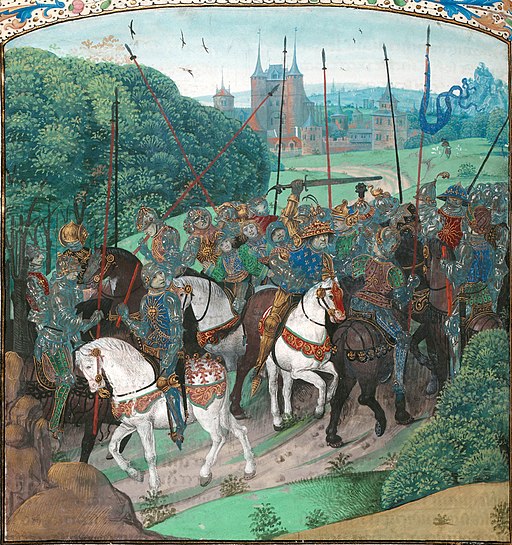
King Charles VI of France (1368–1422) became known as Charles le Fou (Charles the Mad) for a strange psychosis that included the medical diagnosis “glass delusion.” Crossing the forest in Le Mans, King Charles VI mistook his protectors for enemies and attacked them with his sword.

King Charles VI

“Madness of Charles_VI” (15th Century)

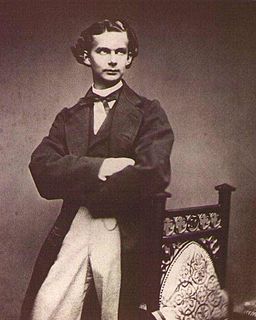
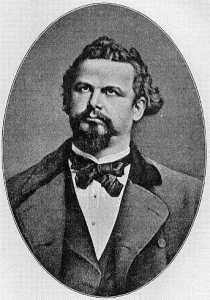
Ludwig II Bavarya GHP 447796

King Ludwig II (Mad King Ludwig)

Ludwig II of Bavaria

Mad King Ludwig later in life.

King Ludwig II of Bavaria (ruled 1864–1886) became known as “Mad King Ludwig,” thought to have suffered from  frontotemporal dementia, schizotypal personality disorder or Pick’s disease.

And there was King George III (see above), remembered for losing American colonies midway through his reign (1760–1820), alternating between eruptions of volcanic rage and sinking into panic attacks, delusions and visual and auditory hallucinations.

None of these kings had a television to assure him he was not about to shatter like a broken glass. None of them had Fox News applauding pantomimes of physically challenged reporters or terrified women who claimed sexual abuse. Nor did any of the kings have to wonder what to do when their favorite TV station no longer covered every rally after their Neilsen Ratings dropped.

What to do? 

Schedule a Thursday lunch with Kanye West and invite the White House press corps for the live, not to be missed, impromptu Oval Office visit with Kanye. But first, go on the road to Erie. Hold a rally. Pack the house with loyal subjects. Do the old campaign schtick. Attack the wicked pretender to the throne: “Lock her up! Lock her up! Crooked Hillary!” Ramp up the act. Make faces. Poke fun at the terrified woman whose story had stolen the spotlight. Bring the ratings back. Play the jester and the king. Prove to Fox you’re still entertaining.

The house in Erie isn’t packed. The schtick is old. But there’s always tomorrow’s photo op with the court jester he can count on to assure him he’s not a glass about to shatter. The Oval Office is packed! The king sits behind his desk for a little entertainment. Kanye is bizarre. Ludicrous. Off the wall. Delusional. Clearly not well.

Which was worse — the Wednesday campaign rally in Erie or Thursday’s intimate moment with the jester on steroids — is hard to say. Both lent credence to Rex Tillerson’s alleged demeaning slur. Mad King Donald — Donald the Mad — made a fool of himself.

  • Gordon C. Stewart, Chaska, MN, October 20, 2018.

Over and Over, We Forget

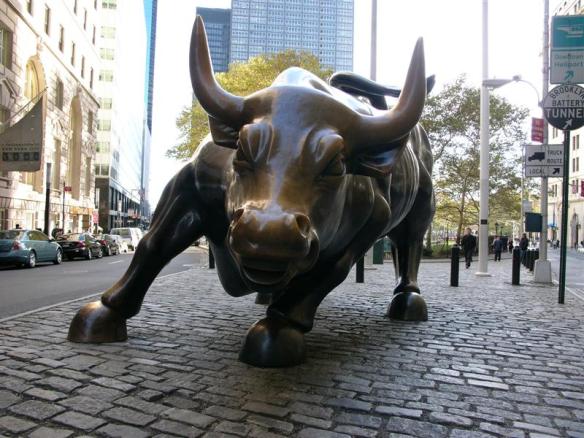
wall-street-bull

The Wall Street Bull

The public’s memory is very short. The panic of near economic collapse 10 years ago is all but wiped from public memory two weeks before the Nov. 6 American national election. We publish the following chapter from Be Still! Departure from Collective Madness (2017, Wipf & Stock), which first appeared as a guest column on MinnPost.com September 10, 2009.

SORROW FLOATS

Concepts, like individuals, have their histories

and are just as incapable of withstanding

the ravages of time as individuals. But in and

through all this they retain a kind of homesickness

for the scenes of their childhood 

[Soren Kierkegaard]

“Sorrow floats.”

Perhaps the line from John Irving’s The Hotel New Hampshire in which “Sorrow,” the stuffed family dog preserved by a taxidermist, floats to the surface of the lake after a plane crash, helps explain what is happening in America.

Something dear to the American family died in September/October, 2008. Prior to the series of chilling events of that period, most of us had lived with the illusion of relative economic and financial health. Then, suddenly, Sorrow was rushed to the emergency room for government resuscitation.

Since then our memories of that pre-October 2008 world have taken a turn that families often take at funerals when the eulogies bear little resemblance to the reality of the deceased. We’re quarreling over what was real and what is mythical reconstruction.

Following the plane wreck that takes the lives of the Berry family parents in Irving’s The Hotel New Hampshire, the stuffed family pet bobs to the surface of the lake, floating among the wreckage. Sorrow floats. So does the thing we lost last fall.

What died? A ruling assumption

What died last year was the ruling assumption that an unregulated free-market system was the best way to organize an economy and that laissez-faire capitalism is democracy’s natural ally. The market almost crashed. It didn’t crash only because the federal government intervened to prevent a repeat of the crash of 1929. Sometime between mid-September and October seventh, when Congress passed its bill to stabilize the financial markets, the myth of the virtue of deregulated capitalism died. It was stuffed by the taxidermy of government intervention, but it still floats.

When a conviction or a myth dies, it doesn’t go away. It continues to bob to the surface. Sometimes, as in the case of the Berry family, the old dog is much easier to love after it is dead. Sorrow—obese, lethargic, and persistently flatulent in its old age—no longer waddles through the dining room to foul the air and ruin everyone’s dinner. In the public psyche, the unpleasant memories of the real life Sorrow give way to the stuffed Sorrow, a thing of nostalgia that lives on . . . even after it’s dead, and long after the plane has crashed.

Over and over, we forget

Sorrow and its old illusions float every time the reconstructed memory, forgetting the real Sorrow, barks about “socialism.” Sorrow floats every time we shout each other down in town-hall meetings. Sorrow floats every time nostalgia forgets that it was only by government intervention with our tax dollars that Sorrow is still around. Sorrow floats every time we forget the voracious appetite, unscrupulous predatory practices, insatiable greed, and the obesity that led to the deaths of Lehmann Brothers, Merrill Lynch, and Bear Stearns, not to mention insurance giant AIG and all the banks that had taken the plunge into a market of deregulated derivatives and mortgages that led to the epidemic of home foreclosures, bankruptcies, pension-fund collapses, and job losses. Sorrow, the old dog that failed us, still floats and still barks a year after the crash when the mind forgets and nostalgia remembers a system we thought was working in our interest.

Old ideas and convictions die hard. The powerful economic forces that grew fat during the years when government was viewed as the people’s enemy will stoke the fires of public anxiety and anger, taking advantage of the floating Sorrow that reminds us of something that we love more in retrospect than we did the day it died of its own obesity.

  • Gordon C. Stewart, Chaska, MN, October 21, 2018.

Though the cause of evil prosper…

No one holds the patent right on lying. At some point everyone is a liar. Little white lies or hug lies; they’re lies just the same. But truth is my judge and yours.

I cannot recall a moment in the America of my lifetime when truth been as scorned as it is today. I remember presidents who lied. Some more than others. But never was truth itself under assault as it is in America today. As a child I asked how Germany could have fallen for the rhetoric and incivility of a madman. Finally I’m coming to understand.

I was raised on the great hymns of the church. Among them was Once to Every Man and Nation with lyrics by James Russell Lowell (1845). The newer hymnals have excluded it, most likely because of the black and white thinking between good and evil or because it’s language is not gender inclusive. But I turn to it today in ways I never have before, and I’m left to wonder whether somethings are just plain evil.

Gordon C. Stewart, Chaska, MN, October 18, 2018.

Beauty and Truth: Adjoining Rooms

IMG_9456

view outside the window

These days leave me cold. I feel the need for beauty and for truth. The beauty I can see just outside the window at sunrise and sunset, in the maples, oaks, red osier and prairie grasses waving in the wind I cannot see. But inside the human house where lies freely fly, truth is scorned and hard to find. Only the poets give voice to what I feel.

I died for beauty, but was scarce
Adjusted in the tomb,
When one who died for truth was lain
In an adjoining room.

He questioned softly why I failed?
“For beauty,” I replied.
“And I for truth – the two are one;
We brethren are,” he said.

And so, as kinsmen met a-night,
We talked between the rooms,
Until the moss had reached our lips,
And covered up our names.

  • Emily Dickinson, I died for beauty but was scarce
EmilyDickinsonGrave

Emily Dickinson headstone in family plot

 ` Gordon C. Stewart, Chaska, MN, October 17, 2018


Barbara Streisand and G.K. Chesterton

256px-Gilbert_Chesterton

G. K. Chesterton, by Ernest Herbert Mills, 1909

00-PEN-777x437Posting Barbara Streisand’s “Don’t Lie to Me” last night brought to mind the hymn lyrics from G. K. Chesterton’s “O God of Earth and Altar”on which my generation was raised in the church of my childhood. In times like this, I return to it often for solace and strength.

O God of earth and altar, bow down and hear our cry,
Our earthly rulers falter, our people drift and die;
The walls of gold entomb us, the swords of scorn divide;
Take not Thy thunder from us, but take away our pride.

From all that terror teaches, from lies of tongue and pen,
From all the easy speeches that comfort cruel men;
From sale and profanation of honor and the sword;
From sleep and from damnation, deliver us, good Lord!

  • G. K. Chesterton

  • Gordon C. Stewart, Chaska, MN, October 14, 2018.

Don’t Lie to Me

Video

Thank you, Barbara Streisand, for speaking the truth in a way only an artist can. Suffer through the short ad to get to the video. Then share with your friends.

Everyone answers to someone. Share with your friends. Leave a comment. Vote!

Gordon C. Stewart, Chaska, MN, October 13, 2018.

Supreme Court Chief Justice refers Kavanaugh ethics questions

256px-Official_roberts_CJ

Chief Justice Roberts

A friend drew our attention to this article in Forbes  — IMHO, worth the read. Click the link below.

Chief Justice Roberts requests tenth circuit investigate Kavanaugh ethics questions.

“Hope is being able to see that there is light despite all the darkness” — Desmond Tutu.

  • Gordon C. Stewart, Chaska, MN, October 13, 2018

Why I Wake Early

This photograph of early dawn and Mary Oliver‘s poem “Why I Wake Early” greeted me early this morning, as did Aldous Huxley‘s wisdom about walking more lightly, thanks to David Kanigan‘s “I Can’t Sleep” post.

Photograph by spanishlandia re-blogged on Live & Learn

I’ve been feeling heavy lately. Not on the bathroom scales — that weight is down — but on the scales of the soul, the psyche, my spirit. That weight is up. Every day I get heavier. I don’t know what to do. Maybe you don’t either. The news is dark and heavy. The UN climate change report just gave us a decade to act before we trip over the edge of global warming. These are scientists with no vested interest in producing conclusions that would make us smile. Meanwhile, as the latest storm weighs heavily on the hearts of people across the country, a President who insists that climate change is a hoax calls the press and television camera crews into the Oval office to show his concern and assure television viewers that he’s on top of it.

Mike (a retired federal investigator) and I catch a bit of the live coverage. The President is sitting behind his desk. Two members of his Administration are standing near his desk. The President crosses his arms over his chest. “He’s defensive,” says Mike. “He’s hiding something. He’s feeling threatened. He’s feeling exposed.” Later in the day, while Hurricane Michael storms its way through the South, the President boards Air Force One for another photo with a cheering crowd in Erie, Pennsylvania. Before the crowd, the cameras again focus on the President. His arms no longer fold across this chest. His hands are free. His face is smug. I feel sick. I feel heavy. I go to bed. I toss and turn. I can’t sleep.

This morning I rise at 4:00 A.M., go downstairs to make a pot of coffee and check my emails. David Kanigan’s post on  I Can’t Sleep: Live & Learn is waiting to greet me. I open it. The beauty of the photograph lightens my spirit, chases away the heaviness. I read Mary Oliver’s “Why I Wake Early” and Aldous Huxley’s words, written just for me, or so it seems, and, maybe just for you.

“It’s dark because you are trying too hard. Lightly child, lightly. Learn to do everything lightly. Yes, feel lightly even though you’re feeling deeply. Just lightly let things happen and lightly cope with them” — Aldous Huxley.

I’ve finished my third cup of coffee and determine to try not to try so hard, to walk more lightly, even when feeling deeply.

  • Gordon C. Stewart, Chaska, MN, October 11, 2018.

Lightly Child, Lightly

Earlier today we re-blogged this Lightly Child, Lightly post and promptly moved on to write a reflection it inspired. We moved too quickly. We forgot to “stick it” on Views from the Edge’s “front page”. This afternoon, we’re making amends by putting it on our front page with an apology, and with deep thanks to our friend up in Canada, David Kanigan, host of Live & Learn.

Live & Learn's avatarLive & Learn

lest we would sift it down
into fractions, and facts
certainties
and what the soul is, also
I believe I will never quite know.
Though I play at the edges of knowing,
truly I know
our part is not knowing,
but looking, and touching, and loving,
which is the way I walked on,
softly,
through the pale-pink morning light.

-Mary Oliver, from “Bone” in “Why I Wake Early


Notes:

  • Photo: spanishlandia
  • Prior “Lightly child, lightly” Posts? Connect here.
  • Post Title & Inspiration: Aldous Huxley: “It’s dark because you are trying too hard. Lightly child, lightly. Learn to do everything lightly. Yes, feel lightly even though you’re feeling deeply. Just lightly let things happen and lightly cope with them.”

View original post