Verse – Diabetes Doctor

“Well, technically you are obese.”
(This followed by a stunned silence…)

“But I’m just twelve pounds over my
ideal weight for a man my size!”

“Your Body Mass Index is more
than ideal: 26.4.”

(She is quite small, from India–
the size of a fasting Gandhi.)

“I just want you to be healthy.
How much exercise do you do?”

“I mow the lawn in the summer.”
(I don’t say on a nice tractor…)

“But now, you know, it is winter…”
(Her British accent is a winner.)

“Could you eat smaller meals? Less fats?
Much fewer carbs? And exercise?”

(I think of running up a hill…)
“Could you prescribe a better pill?”

– Steve Shoemaker, Urbana, IL, Feb. 26, 2014

The Right and Left Hand of God

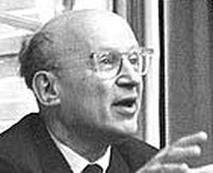
The Rev. Dr. Paul Louis Lehmann

The Rev. Dr. Paul Louis Lehmann

Theologian-ethicist Paul Louis Lehmann (b.1906, d.1994) observed that the right hand of God is the left hand of the world. Paul Lehmann was a friend of Dietrich Bonhoeffer and one of the giants of his time who opposed McCarthyism and published books that influenced subsequent generations.

Pondering his statement over the years led to an alteration of Dr. Lehmann’s statement to the effect that it is as though God ties the right hand (the hand of power) behind God’s own back and invites us to do the same. The left hand, the non-dominant hand, the hand of weakness, you might say, is the way the world enters into its own salvation from its own tyranny.

Her Best Valentine’s Present Ever

Our wedding anniversary
was coming up. My card said, “Free
Pass: you can have one fantasy
night with Michael Jordon! I’ll pay
for the room myself. I can say
I will not have a jealous day.”

The year was 1993–
the three of us were in our prime.
The Bulls were going for a Three-
peat. She would lust for him each time
she saw him playing on TV.
I set the date for their big game…

Her ticket cost one hundred bills,
but she was with Chicago Bulls
and MJ in his shorts, it’s true–
with twenty thousand others, too.

– Steve Shoemaker, Urbana, IL, Feb. 25, 2014

Costly Grace

The previous week’s sermon at Shepherd of the Hill had addressed the question “What must I do to be saved?” with “You already are! God is not wrathful. God is loving. Now start to live into that gift. Stop living so anxiously. Live more joyfully. Take more risks….”

“Costly Grace” is a follow-up anchored in a clear, though impossible, ethic where Jesus instructs his disciples on how to live as children of God.

“Love your enemies and pray for those who persecute you, so that you may be children of your Father in heaven, for he makes his sun rise on the evil and on the good, and sends rain on the just and on the unjust…. You, therefore, must be perfect, as your heavenly Father is perfect.” (Sermon on the Mount, Gospel of Matthew 5:44-48.)

Oatmeal Cookies

Sometimes when you’ve been cooped up too long because of winter storms, your memory drifts beyond the snow drifts. You remember your mother and the aroma of fresh baked cookies. It happened this week to little Stevie Shoemaker out on the Illinois prairie.

My mother’s oatmeal lacy cookies

Mash flat with back of small teaspoon
each dab of dough. Cook for eight or
ten minutes at 350. Then
remove from oven, wait for four
long minutes till you slide a wide
steel spatula under each thin
(one rolled oat thick) cookie. Held
together by white/brown sugar,
one egg, one tablespoon of flour,
two sticks (one cup) of real butter,
when cooled are crisp but chewy, brown
around the edges: will not last an hour.

– Steve Shoemaker, Urbana, IL

Mother's oatmeal lacy cookies

Mother’s oatmeal lacy cookies

Who are the real welfare dependants?

Video

http://www.upworthy.com/if-you-think-only-poor-people-need-welfare-wait-till-you-see-what-really-rich-folks-do-with-it?c=upw1

This brief film from the University of California at Berkley posted by upworthy.com is as clear as it gets re: poverty, wealth, and government welfare. Well worth a watch.

Black History Month: Buying on Credit

Everyone today lives on credit. You might even say we’ve all become credit slaves, according to ex-slave Fountain Hughes, whose grandfather had been a slave of Thomas Jefferson. Fountain Hughes was 101 years old when he was interviewed about his life. The year was 1949. The complete interview is available HERE from the Voices from the Days of Slavery project of the Library of Congress.

Don’t want everything somebody else has got. Whatever you get, if its yours be satisfied. And don’t spend your money till you get it. So many people get in debt. Well, that all was so cheap when I bought it. You spend your money before you get it because you’re going in debt for what you want. When you want something, wait until you get the money and pay for it cash. That’s the way I’ve done. If I’ve wanted anything, I’d wait until I got the money and I paid for it cash. I never bought nothing on time in my life.

Now plenty people if they want a suit of clothes, they go to work and they’ll buy them on time. Well they say they was cheap. They cheap. If you got the money you can buy them cheaper. They want something for, for waiting on you for, uh, till you get ready to pay them. And if you got the money you can go where you choose and buy it when you go, when you want it. You see? Don’t buy it because somebody else go down and run a debt and run a bill or, I’m going to run it too. Don’t do that. I never done it. Now, I’m a hundred years old and I don’t owe nobody five cents, and I ain’t got no money either. And I’m happy, just as happy as somebody that’s oh, got million. Nothing worries me. I’m not, my head ain’t even white. I, nothing in the world worries me. I can sit here in this house at night, nobody can come and say, “Mr. Hughes, you owe me a quarter, you owe me a dollar, you owe me five cents.” No you can’t. I don’t owe you nothing. Why? I never made no bills in my life. And I’m living too. And I’m a hundred years old. And if you take my advice today, you’ll never make a bill. Because what you want, give your money, pay them cash, and then the rest of the money is yours. But if you run a bill they, well, so much and so much and you don’t have to pay. Nothing down it’s, it’s all when you come to pay. It’s all, you don’t have to pay no more. But they, they’ll, they’ll charge you more. They getting something or other or else they wouldn’t trust you. But I can’t just say what they getting. But they getting something or other else they wouldn’t want your credit. Now I tell you that anybody that trusts you for two dollars or have a account with them by the month or by the week, store count or any account. They’re getting something out of it. Else they don’t want to accommodate you that much to trust you. Now, if I want, course I ain’t got no clothes, but if I want some clothes, I, I ain’t got no money, I’m going to wait till I get the money to buy them. Indeed I am. I’m not a going to say because I can get them on trust, I go down and get them. I got to pay a dollar more anyhow. But either they charge you more or they say taxes are so much. But if I’ve got the money to pay cash, I’ll pay the taxes and all down in cash, you know. It’s all done with. So many of colored people is head over heels in debt. Trust me trust. I’ll get it on time. They want a set of furniture, go down and pay down so much and the rest on time. You done paid that, you done paid for them then. When you pay down so much and they charge you fifty dollar, hundred dollars for a set and you pay down twenty-five dollars cash, you done paid them. That’s all it was worth, twenty-five dollars, and you pay, now you, I’m seventy-five dollars in debt now. Because I, I have to pay a hundred dollars for that set, and it’s only worth about twenty-five dollar. But you buying it on time. But people ain’t got sense enough to know it. But when you get old like I am, you commence to think, well, I have done wrong. I should have kept my money until I wanted this thing, and when I want it, I take my money and go pay cash for it. Or else I will do without it. That’s supposing you want a new dress. You say, well I’ll, I’ll buy it, but, uh, I don’t need it. But I can get it on time. Well let’s go down the store today and get something on time. Well you go down and get a dress on time. Something else in there, I want that. They’ll sell that to you on time. You won’t have to pay nothing down. But there’s a payday coming. And when that payday comes, they want you come pay them. If you don’t, they can’t get no more. Well, if you never do that, if you don’t start it, you will never end it. I never did buy nothing on time. I must tell you on this, I’m sitting right here now today, and if I’s the last word I’ve got to tell you, I never even much as tried to buy a, a shirt on time. And plenty people go to work, go down to the store and buy uh, three and four dollars for a shirt. Two, three uh, seven, eight dollars for a pair of pants. Course they get them on time. I don’t, no, no, no. I say, I got, I buy something for five dollars. Because I got the five dollars, I’ll pay for it. I’m done with that.

In 2014 we live in a credit economy, a consumer market where instant gratification is too slow. Ouch! Thank you, Mr. Hughes, for the words of wisdom.

Flood Watch

Two days ago the fields were white
for not harvest but snow and ice.
The cold front now is to the east
and we have rain and wind and heat
and flooded roads.
…………….. She drove the four-
wheel-drive Jeep Cherokee too fast
and aquaplaned into the ditch,
and then yelled S.O.B.! at him
for telling her it would be much
more safe than her blue Ford…

– Steve Shoemaker, Urbana, IL, Feb. 21, 2014

Black History Month: Fountain Hughes

101 year old ex-slave Mr. Fountain Hughes’tape-recorded interview is preserved by the Library of Congress. Hermond Norwood interviewed him. Here’s an excerpt:


Hermond Norwood: Do you remember much about the Civil War?

Fountain Hughes: No, I don’t remember much about it.

Hermond Norwood: You were a little young then I guess, huh.

Fountain Hughes: I, uh, I remember when the Yankees come along and took all the good horses and took all the, throwed all the meat and flour and sugar and stuff out in the river and let it go down the river. And they knowed the people wouldn’t have nothing to live on, but they done that. And that’s the reason why I don’t like to talk about it. Them people, and, and if you was cooking anything to eat in there for yourself, and if they, they was hungry, they would go and eat it all up, and we didn’t get nothing. They’d just come in and drink up all your milk, milk. Just do as they please. Sometimes they be passing by all night long, walking, muddy, raining. Oh, they had a terrible time. Colored people that’s free ought to be awful thankful. And some of them is sorry they are free now. Some of them now would rather be slaves.

Hermond Norwood: Which had you rather be Uncle Fountain?

Fountain Hughes: Me? Which I’d rather be ? [Norwood laughs] You know what I’d rather do? If I thought, had any idea, that I’d ever be a slave again, I’d take a gun and just end it all right away. Because you’re nothing but a dog. You’re not a thing but a dog. Night never comed out, you had nothing to do. Time to cut tobacco, if they want you to cut all night long out in the field, you cut. And if they want you to hang all night long, you hang, hang tobacco. It didn’t matter about your tired, being tired. You’re afraid to say you’re tired. They just, well [voice trails off].You wasn’t no more than a dog to some of them in them days. You wasn’t treated as good as they treat dogs now. But still I didn’t like to talk about it. Because it makes, makes people feel bad you know. Uh, I, I could say a whole lot I don’t like to say. And I won’t say a whole lot more.”


A Climate Dialogue: the Challenge Before Us

The day Pete Seeger died, Susan Lince composed a song on climate change in honor of Pete. The song, written as a lament spoken back to us by our grandchildren and all future generations, asks repeatedly “You knew… Why didn’t you take a stand?”

Susan and John Lince-Hopkins created Requiem2020.org as a means of rallying artists to widen public consciousness and awaken a new sense of ecological responsibility in the face of climate change and climate departure. John and Susan taught and painted in Alaska. John, a scientist as well as painter, helped supervise the clean-up operation following Exxon-Valdez.

Click HERE for the Evite to First Tuesday Dialogues’ program on Climate Departure led by John and Susan. The song on climate departure, arranged with Susan’s grandson, will debut at this event.

Date: Tuesday, March 4, 2014
Time: 7:00 – 8:30 P.M.
Place: Shepherd of the Hill Presbyterian Church, 145 Engler Blvd., Chaska, MN 55318.