Operation Popeye and Leonardo da Vinci

Scientist and artist John Lince-Hopkins responded to Geoengineering and Nature Itself:

“Don’t forget that the U.S. was the first (and so far, only) world power to weaponize climate during the Viet Nam War (Operation Popeye).

“Whither now?”

Here’s an excerpt from Wikipedia’s article on Operation Popeye:

The cloud seeding operation during the Vietnam War ran from March 20, 1967 until July 5, 1972 in an attempt to extend the monsoon season, specifically over areas of the Ho Chi Minh Trail. The operation was used to induce rain and extend the East Asian Monsoonseason in support of U.S. government efforts related to the War in Southeast Asia.

The former U.S. Secretary of Defense, Robert S. McNamara, was aware that there might be objections raised by the international scientific community but said in a memo to the president that such objections had not in the past been a basis for prevention of military activities considered to be in the interests of U.S. national security.

The chemical weather modification program was conducted from Thailand over Cambodia, Laos, and Vietnam and allegedly sponsored by Secretary of State Henry Kissinger and CIA without the authorization of then Secretary of Defense Melvin Laird who had categorically denied to Congress that a program for modification of the weather for use as a tactical weapon even existed.[1]

Click Operation Popeye for a history of Operation Popeye’s attempt at weaponizing the climate.

Then join John in asking “Whither now?” John’s no Leonardo da Vinci, but he represents the wisdom of the master artist from an earlier era:

“It is easier to resist at the beginning than at the end.” – Leonardo da Vinci. 

  • Gordon C. Stewart, Chaska, MN, June 29, 2017.

Geoengineering and Nature Itself

John Hopkins paintingThis morning John Lince-Hopkins of Lynx North Studio brought to our attention Technological Fixes for Climate Change.

We share below one theologian’s response to Technological Fixes for Climate Change.

Regarding “geoengineering”, maybe it’s just my depression, but I think not. The Tower of Babel has always been one of my go-to texts because it holds the paradox of the human condition. All attempts at “engineering” our way to security will fail.

There is an architecture that eludes our engineering when it comes to the planet. It’s called Nature. We are living in the time of what Bill McKibben calls “the end of Nature”. To what extend the end of Nature is the result of human disruption conceived in Western terms as “man over nature,” and to what extend climate change is attributable to non-human factors makes little difference IMHO to the call of the human species within Nature.

The Human Vocation

There are two very different creation stories in the Book of Genesis. Chapter one comes from the priestly (P) tradition.

It was the genius of the Priestly tradition’s creation story (Genesis 1) that they saw the balance of Nature as “Good”  (“and God saw…and it was good!”). The artchitecture of creation is a beautiful piece of art that inspires praise and awe. To imagine something else would be to fall from praise. You might say the P writers were more like scientists who beheld and marveled at the intricate web of natural life.

No sooner do we read Chapter One that we come to the second very different creation story from the perspective of what biblical scholars call “J”,  so called because of the use of the writer’s Name for God.

Genesis two and three read more like novels, expressing in very earthy terms the earth-bound character of human nature and human creature’s resistance to creaturely life — the inexplicable choice of the archetypal “earthlings” to eat the fruit of the ONLY tree among all the trees of the garden based in humankind’s tragic urge of to become “like God, knowing good and evil.”

Only when they fail to stand in awe and thanksgiving in the midst of the Good (a good which includes nature’s “limits” on their behavior) do they invoke the curse that renders them shamefully conscious of their nakedness (their naturalness) and sends them into a hiding from their Creator. Fratricide (Cain’s slaying of Abel) quickly follows their expulsion from Eden.

The continuing human calling is to see Earth itself as the theater of a glory not of our own making and to resist the illusion of the serpent: “if you eat of the one tree which is forbidden, you will become like God.” It’s the second part of that statement that is the temptation – refusing to live with the limits of Nature itself. One might even say “the Fall” is an attempt at geoengineering.

Genesis 1-11 is called the Primeval History — a history that never was but always is. The Primeval History concludes with the story of Tower of Babel — human engineering for the purpose of “making a name for ourselves”, i.e., establishing and securing our existence in time in the face of chaos.

Now it’s “GEO-engineering” – the illusion that we can fix this, that we can “engineer” our way out of the mess our geoengineering on behalf of a more perfect world has created. There’s a HUGE difference between geoengineering and being responsible. The former disturbs Nature. The latter works collaboratively with Nature…or whatever is left of her. Anything else is Babel. It is doomed to fail.

John captures in paint what his word say of his intention.

jr-3“Environmentally focused paintings and other art forms from the early 21st century build a foundational historic context for future generations.  They are documents of the time of ‘the first awareness’ by the human species about the course and implications of climate disruption. As this awareness settles in, climate disruption in the form of weather (as it affects biodiversity, human society and the physical planet) has become, for me, a main topic of my work.”

Perhaps it’s not too much of a stretch to say that John Lince-Hopkins, the scientist and the painter, combines in the 21st Century the ancient wisdoms of the P writer and the J writer — the awe of Genesis 1 and the earthy calling and tragedy of Genesis 2, 3, and 11. Would that we might all do the same.

Click Art Wander for more on how John views his work as a climate change scientist and artist.

Thankful for the friendship,

  • Gordon C. Stewart, Chaska, MN, June 29, 2017.


The Parents, the son, and the girlfriend

She was homeless when he welcomed her into his parents’ new townhouse. So far as the parents knew, she was “sort of” their adult son’s “girlfriend” but they weren’t exactly sure what their relationship was. It was strange. It didn’t seem romantic. She seemed different.

Among the neighbors everything seemed fine until the squad cars’ flashing red lights lit up the street and four uniformed police officers ran by their homes reaching for their holsters. Something was different.

The parents of the son who’d invited the son’s “girlfriend” to live with them had called 911 after a screaming meltdown in the upstairs bathroom where their guest had poked huge holes in the walls with the towel fixtures she had yanked from the walls and had threatened to kill everyone in the house.

When the police arrived and called upstairs, she calmly came downstairs, curious to see what the ruckus was about, appearing calm as a cucumber, without a care in the world while the son’s mother sat trembling with her head between her hands and the 35 year-old son stepped outside for a smoke.

No charges were filed. The parents had come to realize over time that the girlfriend had “some problems” and thought they could help her. The four of them continued to occupy the house after the incident was “resolved” by the police visit.

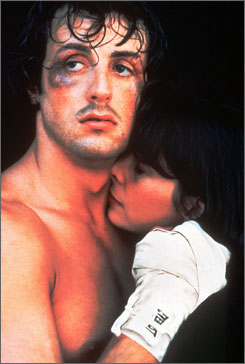
Two months later the red lights appeared again after another upstairs commotion left the son’s face looking like Rocky Balboa after his fight with Apollo Creed. This time the girlfriend was no Adrian. Adrian  had acted like Apollo…with a knife.

This time Rocky was rushed to the emergency room. Adrian was taken away in handcuffs, screaming at the officers, the boyfriend, and his parents, for another committal to a mental health facility for violation of probation resulting from previous domestic assaults. The parents stayed where they are, dumbfounded how compassion can turn out so badly.

“Life is like an onion. You peel it off one layer at a time,” said Carl Sandburg, “and sometimes you weep.”


Bill in the Waiting Room

visual image of hospital waiting room

He sits by himself in the hospital waiting room.

“Where you from?” he asks, as if welcoming the stranger who’s come to hid home for a stress test.

“Chaska.”

Where?” he asks over the whine from his hearing aids.

I’m not anxious to strike up a conversation. I’m here for a stress test. I’m an introvert. Chatting with strangers when I’m gathering myself when I’m under stress, waiting for a stress test, is the last thing I want.

C h a s k a!” I repeat.

“Oh! I’m from Waconia! I’m Bill.”

He gives a broad smile as though we’re related. (Waconia and Chaska are neighbors in Carver County, MN.)

His gowned wife, fresh off the treadmill, returns from her stress test.

“This is my wife, Jane. She’s a lot younger than I am. I’m 96.”

“Ninety-four,” says the younger wife. “We’ve been together 15 years.”

“Chaska’s the county seat,” says Bill. “That’s where i was sworn in.” (Clearly, he’s an extrovert. He feels better when he has guests.)

“World War II?”

“February 6, 1942. Eighty of us. A lot of guys from Chaska.”

“Where’d you serve?”

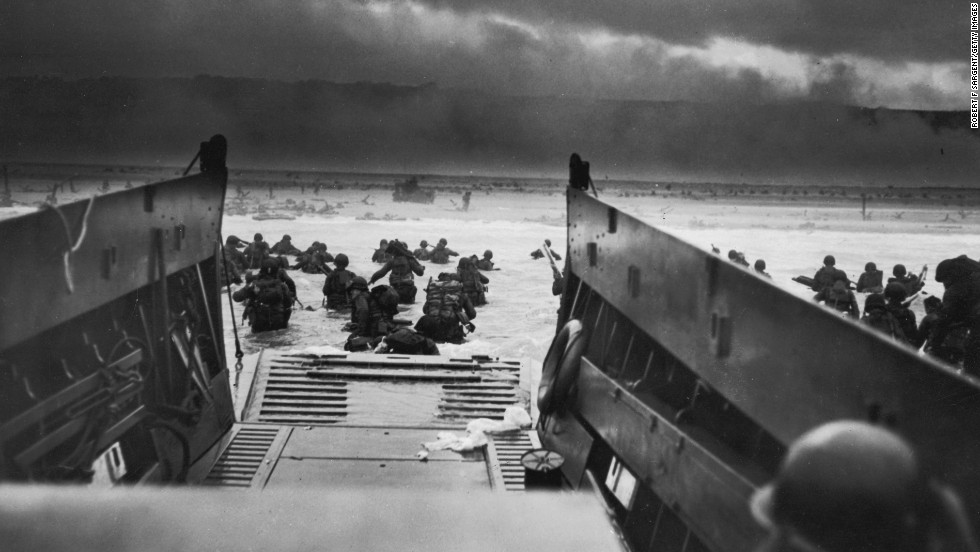
“He was part of D-Day,” answers Jane. Bill’s head sinks toward his lap. His chin begins to quiver. A long pause follows.

D-Day, WWII.

Only 15 of us came back.”

“Were you injured?”

“No,” he says, forming his hands in prayer and looking up. “I don’t know why.” He falls again into silence.

Fort Snelling National Cemetery, Minnesota

Bill’s body is with us, but he’s not here. He’s back at Normandy Beach on D-Day.

“That’s a lot of death,” I say. “A lot of killing. A lot of loss.”

He looks up, nods, and drops his head again.

Post-traumatic Stress,” I say quietly to Jane. “I’m a pastor. I’ve seen it so many times with Vietnam War and Iraq War veterans.”

“I think so,” she says. “He still can’t talk about it after all these years.”

The technician calls my name. “Mr. Stewart?”

As I stand to leave the stress test waiting room, Bill reaches up to say good-bye with a firm handshake and friendly smile for the whippersnapper from Chaska.

Robert Davis of Clarkston has an outpatient stress test run by exercise physiologist’s Richard Andrevzzi and Donna McCollom in the Royal Oak hospital.

I leave the waiting room and get on the treadmill, reminded that there is stress and there is stress, knowing that mine bears no comparison to Bill’s and thankful for a few moments with 94 year-old who has every reason to think he’s 96.

  • Gordon C. Stewart, Chaska, MN, June 27, 2017.

Elijah and Pumphouse Creamery

Elijah’s Mom, and Grandma just learned of  Pumphouse Creamery.  They’re getting excited. They want Grandpa to drive them to the Pumphouse for ice cream.ElijahIMG_5621

Elijah’s never had ice cream.

In a pinch, he’s had pumped milk, but he’s never been to the Pumphouse.  Listening to Grandma talk about all the flavors and the Sundaes, Elijah’s starting to get excited.

Elijah, they have special flavors at the Pumphouse.

Like what?

Like Madagascar Vanilla, Fresh Rhubarb, and Belgian Chocolate.

Are they organic? I can only do organic.

Yes, Elijah, they’re mostly organic. It’s handcrafted ice cream that starts with natural, organic and locally-sourced ingredients. It says so right on the Pumphouse website.

Grandma, do I have to go in that car seat?

Yes. We’ll take you in your car seat.

I’m going to tell Grandpa! I hate my car seat! Sometimes Mom pumps right here in our own little pump house!

  •  Gordon C. Stewart, Chaska, MN, June 26, 2017


Grandpa, this is boring!

Grandpa IMG_5556Grandpa, who are the Twins? What’s baseball?

Well, Elijah, the Twins are Grandpa’s team.

What’s a team?

That’s a little like us – more than two people working for the same goal.

Yeah, like us! Trying to sleep through the night so Mom can get some sleep. Right, Grandpa?

Right! Because you and Mom are on the same team. She’s the Manager. You’re her only player.

I thought you said we were Twins. How can I be the only player if I’m a Twin?

Well, you and I are Twins. Mom, not so much. Mom likes basketball.

We’re twins?! How’d that happen? You’re old. REALLY old. Poor mom! She must have been in labor a long time. Wow! How old is Mom?

No, Mom’s a lot younger. We’re not twins like that. We’re Twins FANS. We watch baseball. The Twins are our favorite team. When I was your age I was a Boston Red Sox fan . . . but I didn’t know it yet. Then we moved to Philadelphia and Grandpa became a Phillies fan. And then a Cleveland Indians, fan; and then a Cincinnati Reds fan; and now I’m a Twins fan. We love baseball.

e2aad2db16c6beb64a94489477ec11c8Yeah. That’s what we’re watching, right, Grandpa? BORING!

It is, Elijah. Baseball’s much more fun to play that it is to watch. Some day you’re going to be a slugger! But remember our conversation yesterday about day and night? You need to stay awake until it’s bedtime so you and Mom can sleep through the night. Mom’s the Manager. Without Mom you don’t have a team. You’re on Mom’s team.

Yeah. I’m on Mom’s team. And we’re twins. And night is when the sun goes to sleep. The sun went to sleep hours ago. Good-night, Grandpa.

  • Gordon C. Stewart, Chaska, MN, June 22, 2017.


“Elijah, Grandpa is God talking!”

Elijah is confused. He thinks night is day and day is night. Which is very inconsiderate of his mother. 

Elijah, you’re three weeks old now. You need to start sleeping at night.

What’s night, Grandpa?

Well, night is when it gets dark. It’s when the sun goes to sleep.

I like to sleep in the light. It makes me feel safe. Mom’s happier in the light.

No, she’s not. She’s really not. You need to be more considerate.

Uh uh! Mom’s afraid of the dark!

No, Elijah, she likes the dark. She just wants to sleep all the way through the night.

But what about me? I get hungry in the night! I need Mom.

I know you do. And she needs you. She trying to teach you something important.

Like what?

Well, like “Do unto others as you would have them do unto you.” When you don’t sleep at night, you’re not treating Mom the way you want to be treated.

Grandpa, I just get hungry a lot. Mom loves me as she loves herself . . .  . Doesn’t she?

She does, Elijah. She does! But she needs your help. Mom needs her sleep. She just needs you to get into a biblical rhythm, like it says in the Bible. “In the beginning when God created the heavens and the earth, the earth was a formless void and darkness covered the face of the deep, while a wind from God swept over the face of the waters. Then God said, ‘Let there be light’; and there was light. And God saw that the light was good; and God separated the light from the darkness. God called the light Day, and the darkness he called Night. And there was evening and there was morning, the first day.”

Wow! God can talk?!

Yes. And right now Grandpa is God talking. If you want Mom to treat you the way you want be treated, you need to sleep through the night. Otherwise you won’t get fed. There will be a formless void and darkness all the time!

  • Gordon C. Stewart, Chaska, MN, June 21, 2017.


The Best and Worst Sellers Lists

Publishing is a pain in the neck; marketing what’s been published moves the pain down the spine to a lower place of an author’s anatomy. Unless, of course, the book makes the Best Sellers’ List because your publisher is one of the decreasing number of corporate giants who do the marketing and have the connections.

Small publishing houses like Wipf and Stock and its authors are ancestors of the poor man Lazarus left to pick up the crumbs from the rich man’s table. We do what we can to catch the reading public’s attention with an occasional success. But, without divine intervention, few, if any, make it to the New York Times Best Sellers list.

So, for the sake of all things just and fair, we herby propose an “alternative” list: The Worst Sellers List, and offer readers one of the “dog-eared” crumbs that fell from the table yesterday to a dog on The Worst Sellers List:

My reason for this email is to let you know that I have just finished reading your wonderful BE Still. We all need a “Departure from Collective Madness” and your book has been such a breath of sanity in the midst of this messy world. I’m grateful to you for your book. I read it, as someone else who has a copy is also reading theirs – one entry at a time on any given day.

I began to read your book and the very first thing I underlined was the instruction from “The Brothers of Opal Street.”*[see explanatory note below] I can’t tell you how many people I have told of that instruction of theirs, and the very wise pastor who passed on the message to us. The idea that we must change things where we live, instead of being the saviors to the poor in the ghetto, is such a powerful message.

Following from that, I went on to dog-ear the prayer from the Book of Common Worship. That prayer is so familiar to me and I love it. It’s not part of any prayers I learned in the Catholic school, but probably one I picked up from the “religion” of the other side of my family. As you may remember, or not, my parents came from two different backgrounds. Mom was very Catholic. My dad’s side followed no particular religious persuasion, with grandpa and my aunt never seeming to attend any church. My paternal Grandma Allie was Baptist, Presbyterian, or Congregational, depending on the Minister and the music. She loved the traditional hymns of her earlier years and they were often heard by me as she listened to her radio when she couldn’t get about and lived with us in our home. Also, Grandma had my mother join her Congregational church group aptly named The Friendly Circle, where every meeting began with a hymn and a Bible verse. I often went along to these meetings. There were probably no baby sitters available. As I grew older I went to baby sit the younger children there.

My underlining and “dog-earing” pages increased as I read of your liberal philosophy, your concern for the direction of this country and humanity as a whole, and your concern for all people of various colors, and persuasions. This diversity thing has become probably my greatest issue and concern. It’s so good to read the views of someone who shares the same perspective. With grandchildren who are half Afghan and whose Grandfather spent much time in Gaza working with USAID, a daughter who teaches the Ojibwe language and mentors Native students, another daughter married to a fellow who is Jewish, I have come to appreciate various perspectives and religions. I am thankful for all this learning. I find it goes a long way when dealing with folks who can be quite narrow in their thinking and really have no experience with other perspectives on a one to one basis.

Before this gets any longer I just want to say, “thanks again for the wonderful book.”

* The Brothers of Opal Street are honored in Be Still!‘s Acknowledgements. Remembering them again so many years later is appropriate to the date on the calendar: Juneteenth.

Last, but by no means least, is a group of men who would be shocked to find themselves mentioned anywhere but in a courtroom.

“The Brothers of Opal Street,” as they called themselves, eight black homeless former inmates of Eastern State Penitentiary, had a farewell conversation at the end of August, 1962 with me, a naive nineteen year-old church street outreach worker. As we sat on the stoop of a boarded up tenement on Opal Street, they said good-bye with a startling instruction not to return to the ghetto. “Go back to ‘your people’ and change things there. Only when things change there will there be hope for the people here.” What they called “my people” were in the white western suburb of Philadelphia. I have come to believe that lsat day on Opal Street was its own kind of ordination. This book is in memory of them. – Be Still! Departure from Collective Madness, p. xiv.

Gordon C. Stewart, Chaska, MN, June 19 — Juneteenth — 2017.

TOO EARLY TO BE DRINKING? – GARRY ARMSTRONG

Garry Armstrong, the veteran reporter pictured here with Tip O’Neill, offers an insider view to the stress of a reporter’s life with a humorous touch.

Garry Armstrong's avatarSerendipity - Seeking Intelligent Life on Earth

Isn’t it too early to be drinking? by Garry Armstrong


I heard these lines recently in a movie. They made me laugh.


“Isn’t it too early to be drinking?” he said.
“No,” she said. ” I’m awake.”

The line had stayed with me many years after the laughter faded, replaced by memories of work, reporters, bars, and pubs from New York to Saigon.

As a reporter, I covered Presidential politics from 1962 to 2001. From JFK to Bush, Jr. As a newbie reporter, I saw veteran correspondents fueling up with multiple Bloody Marys as we began our day on the political or campaign trail. I was impressed. During my rookie year, I summoned up enough courage to question one famous reporter who had begun his career working with Edward R. Murrow. He was on his third Bloody Mary — in one 10-minute period.

“Isn’t it too early to be drinking?”…

View original post 285 more words

“Not guilty” – Law and Justice in America

“A jury found St. Anthony police officer Jeronimo Yanez not guilty Friday in the fatal shooting of Philando Castile, whose livestreamed death during a traffic stop stunned a nation.

“Castile’s family called the decision proof of a dysfunctional criminal justice system, while prosecutors cautioned the public to respect the jury’s verdict “because that is the fundamental premise of the rule of law.” – StarTribune, June 17, 2017.

The acquittal of the officer Jeronimo Yanez opens again the pandora’s box of racial profiling, justice, law, police training, jury instructions, and race in America.

Shortly after the verdict was announced, Minnesota State Senator Tina Liebling, a candidate for governor, sent the following email.

My heart goes out to the family and friends of Philando Castile, and to all who mourn him. His killing was a tragedy that should not have happened and the verdict today brings back the pain and horror of that day. While I share the outrage of many over the unnecessary killing and its aftermath, I do not blame the jury or even Officer Yanez. The law itself is to blame, and this is something that can and must be changed.

Minnesota law allows police to use deadly force “only when necessary to protect the peace officer or another from apparent death or great bodily harm” and to prevent death or great bodily harm to others. Whether the officer believes the force is “necessary” is examined only in the moment when the officer reacts, and it is hard for a jury to find beyond reasonable doubt that the officer did not have that fear at the moment he fired the gun.

Our law should require officers to avoid creating the situation in the first place-and police agencies should train and reward them for doing so. The officer’s first obligation should be to protect the life and safety of everyone involved in an incident-whether a suspect, victim, or the officer-as it is in many other nations. This may mean waiting for backup before approaching a vehicle, setting up a perimeter and waiting out a suspect, or similar tactics. If we are to reduce the horrible killings of innocent people by police, we must change our laws.

Serving as Executive Director of the Legal Rights Center (1998-2006), I experienced daily the tilting of the scales of justice against African-Americans, American Indians, Latinos, and other people of color. LRC was born of the shared commitment of north Minneapolis African-American civil rights leaders and south Minneapolis American Indian founders of the American Indian Movement to righting the scales of justice. Racial profiling on the streets, racial bias in the courtroom, and finding ways to overcome those disparities of law and justice were and still are Legal Rights Center’s reason d’être.

On days like this, I remember who we are and who we are not. I remember the reality of the law and justice that are not blind, the jury members, all who weep, those who speak and protest in whatever nonviolent ways they can, and hope and pray we will yet find a reason d’être way in America to move beyond “not guilty” to a time that has become harder to imagine.

  • Gordon C. Stewart, Chaska, MN, June 17, 2017.