The River of Consciousness

How and why the mind works the way it does came to mind these past few days. My mind has been like a river pouring over rapids and waterfalls, splitting into two or three paths around the islets that still rise from the riverbed, and then returning from two or three to one river with a single flow.

Niagara Falls

Integrating one’s plunges over the falls, side trips around the islets, and tumbling over rapids is what the mind does as it looks back upstream from down river. More often than not, one’s life is a blur. We move with the flow downstream. But once in while, what happened upstream invites or demands reflection.

No moment in the river’s journey is superfluous. Daily routines in periods of calm dull our awareness of the river itself and lay aside questions of its whence and whither until another event, or a memory, moves us to clear the blur. One event or memory leads to others we thought we had forgotten, pushed aside, or left behind.

The path of descent is the path of transformation. Darkness, failure, relapse, death, and woundedness are our primary teachers, rather than ideas or doctrines.

Richard Rohr, Yes

Think a moment of all the events and encounters that have shaped you most deeply and lastingly. How many did you see coming? How many did you engineer, manufacture, chase down? How many were interruptions? . . . The span between life as we intend it and life as we receive it is vast. Our true purpose is worked out in that gap. It is fashioned in the crucible of interruptions.

Mark Buchanan, The Rest of God: Restoring Your Soul by Restoring Sabbath.
Aerial view: confluence of the Yukon River (lighter color) and the Koyukuk River (darker), Alaska

All moments are part of the river of whence that flows over rocks and waterfalls, splits, and returns to one on its way to a whither beyond our knowing.

Gordon C. Stewart, by the wetland, Minnesota, August 12, 2019.
‘Trouble’ is God’s middle name

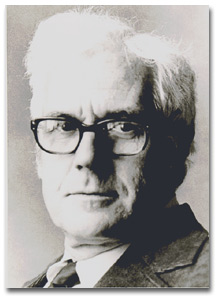
Robert McAfee Brown is not a household name for most folks, but it is for a dwindling multitude shaped by his life and teaching. Few of us sat in his classes at Macalester College, Union Theological Seminary in New York, or at Stanford, and few of us marched with him for civil rights or an end to the Vietnam War. Although we never met him, he seemed to know who were, and spoke of God in ways that struck a chord with adolescent ears itching to change the world.

One of the people who did know him personally was Jo Bede. Jo knew him up close as his student assistant at Macalester College, typing the manuscripts for the books he published. All these years later, Jo is in a Memory Care Center here in Minnesota. Like many other members of the multitude, she no longer remembers his name or the name of her alma mater.

Unlike many members of the Robert McAfee Brown multitude, Jo remembered everything until Alzheimer’s stole’s her powers of recognition. Many other members remain unaware of their membership, though they read (or didn’t read) Brown’s book used in Presbyterian confirmation classes all across the United States. Like most kids that age, we didn’t pay attention to the author. We didn’t want to be ‘churchy’. But if The Bible Speaks to You sounds ‘churchy’ to you today, it’s likely because ‘church’, as Robert McAfee Brown understood it, bore no resemblance to the churches that decades later would replace intelligent faith with platitudes in the era of Donald Trump.

Some things are stranger than strange. In 2019 few things feel as strange as the likelihood that a young Donald Trump had become part of the multitude as a member of the confirmation class at First Presbyterian Church of Jamaica Heights, NYC. He was just another kid who didn’t give a thought to Robert McAfee Brown or crack the book we were supposed to read.

“We can be sure that ‘Trouble’ is God’s middle name,” he wrote, “and that such a God will be alongside us in the midst of trouble rather than off in a remote heaven practicing neutrality. And if we begin to make that most difficult switch of all — away from the gods of middle-class values and upward mobility, and gilt-edged retirement plans — and if we can explore, even tentatively and gingerly, what it would be like to think and act for those who are the victims, we just might uncover ‘the most unexpected news’ of all: that God got there before we did.”

All these years later, I imagine Bob Brown inviting all of us to his home in Palo Alto for a reunion of the crowd we didn’t know. Jo, Donald, and I are in the Browns’ living room. He begins the welcome by turning to Jo, whose head is down and who appears to be asleep. “Jo, it’s so good to see you after all these years! Do you still have that typewriter?” Jo lifts her head and smiles at the sound of her old teacher’s voice. “And, Donald and Gordon, Carolyn, Woody, Ted, Bob, Dottie, and David, I can’t wait to hear what you’ve done with your lives.” We go around the circle, introducing ourselves to each other from across the country. After the last of introduction, there is a silence while all eyes return to our host.

“So . . .,” he begins with a kindly smile, “how are all of you doing with the God whose middle name is ‘Trouble?'” All eyes lower into a deafening silence. Before any of us speak, he asks the second question for which he has brought us together:

“‘How are you doing with the switch?”

  • Gordon C. Stewart, from the wilderness, August 10, 2019.

Toni Morrison to Dayton: “Just turn your backs!”

Toni Morrison, the 1993 Nobel laureate and beloved national treasure Americans mourn today, wrote and spoke words fit for the crowd of people who will stand before the president today in Dayton, OH.

“Anger … it’s a paralyzing emotion … you can’t get anything done. People sort of think it’s an interesting, passionate, and igniting feeling — I don’t think it’s any of that — it’s helpless … it’s absence of control — and I need all of my skills, all of the control, all of my powers … and anger doesn’t provide any of that — I have no use for it whatsoever.”

[Interview with CBS radio host Don Swaim, September 15, 1987.]”
― Toni Morrison

anybody white could take your whole self for anything that came to mind…. Not just work, kill, or maim you, but dirty you. Dirty you so bad you couldn’t like yourself anymore. Dirty you so bad you forgot who you were and couldn’t think it up

Toni Morrison

Remember that Narcissus depends on applause and cameras. “Don’t get mad. Don’t yell and scream and lose control. STAND TALL and speak with single voice. JUST TURN YOUR BACKS when he speak!

— Gordon C. Stewart, Chaska, MN, August 7, 2019.

The “invaders” — a psalmic reflection

The Power of Language for good and for evil

According to the New York Times, the Trump 2020 re-election campaign has run 2,000+ Facebook ads framing the national conversation by calling the migration at our southern border “an invasion”.

Introducing an exercise

It gets harder every day. The carnage is in full sight. So are the tweets. It’s depressing. In times like this a Psalm sometimes comes along that expresses the emotions. They laments. The anger at cruelty. Hope for something better beyond what we can see as possible.

Psalm 79: How Long, O Lord?

 O God, the nations have come into Your inheritance;
    they have defiled your holy temple;
    they have laid Jerusalem in ruins.

America today is not the sweet land of liberty of whom we sing. We grieve amid the latest ruins in El Paso and Dayton. We lament the human sacrifice that defile the good green Earth,Your holy temple, the inheritance of global grace.

  They have given the bodies of your servants
    to the birds of the heavens for food,
    the flesh of your faithful to the beasts of the earth.

They trade doves for vultures, and olive branches for military materiele on the streets of Baghdad and Kabul, El Paso, and Dayton, Virginia Beach, Aurora, Thousand Oaks, Pittsburgh, Annapolis, Santa Fe, Parkland, Sutherland Springs, Las Vegas, Orlando, Fort Lauderdale, Burlington, Orlando, San Bernardino, Roseburg, Chattanooga, Charleston, Sandy Hook . . . . Mankato and Wounded Knee.

They have poured out their blood like water
    all around Jerusalem,
    and there was no one to bury them.

  We have become a taunt to our neighbors,
    mocked and derided by those around us.

The invaders call the tired and the poor, yearning to breathe free; the homeless, and tempest-tossed “invaders” — caravans of an invasion crossing the southern border. The vultures prey on fathers and daughters drowned and lying face-down on the Texas bank of the Rio Grande. In the name of national security they take nursing children far from their mothers’ breasts, separate families, and forget where they have placed the invaders’ children, while the authorities retreat to golf courses and sent their children to fancy summer camps.

Let the groans of the prisoners come before You;
    according to Your great power, preserve those doomed to die!

May the groans that hurt Your ears rouse the nation’s conscience to close the prisons and preserve all those White Nationalism dooms to die.

“National extremists are idealists. Racial and religious extremists are idealists. ISIL is idealist. American exceptionalism is idealist. . . . Idealistic terrorism lives to rid the world of evil as its adherents understand it, projecting evil as ‘the other’ while flying ‘the sore point’ in ourselves that we conscious animals seek to avoid.”

“Idealism and Terror,” Be Still! Departure from Collective Madness (2017 Wipf and Stock), p. 33-39

Return sevenfold into the lap of [their captors]
    the taunts with which they have taunted You, O Lord!
But we Your people, the sheep of your pasture,
    will give thanks to You forever;
    from generation to generation we will recount Your praise.

“I’m ninety-six,” wrote Benedictine monk Sebastian Moore of Downside Abbey, introducing his last book, “and for most of my life I’ve been a monk. My life as a monk has been, for the most part, a search for God as real.”

Dom Sebastian Moore, OSB, Remembered Bliss (2014, Lapwing Publications)
  • Gordon C. Stewart, Chaska, MN, August 6, 2019

America’s silent colossal National Lie

“The silent colossal National Lie that is the support and confederate of all the tyrannies and shams and inequalities and unfairnesses that afflict the peoples—that is the one to throw bricks and sermons at.” — Samuel Clemmons (Mark Twain).

The National Lie of white supremacy may lie silent for a time, but it doesn’t die easily. It was the unspoken lie behind the invasion and slaughter of people it called ‘savages’ to justify stealing America’s indigenous peoples’ continent and herding them onto federal reservation. The conquerers were white. The indigenous peoples were ‘red’. The invaders spoke English. Those they conquered did not. The same colossal National Lie rationalized the invasion of “the dark continent” to capture men, women, and children as slave labor to work the plantation owners’ cotton fields. The faces of the Lie wore white hoods, lit crosses on lawns, and hanged their former slaves from the lynching trees. And on and on it goes. It lives on in 2020, no longer silent, branding brown, Spanish-speaking migrants fleeing for safety “invaders” who must be stopped.

It’s a long way from El Paso TX to Dayton OH — a 22-hour drive through Oklahoma, Missouri, Illinois, and Indiana. It took less than 13 hours for El Paso and Dayton to become twin cities suffering together “all the tyrannies and shams and inequalities and unfairnesses that inflict the people” while the lie of White Nationalism carries on.

“A lie can travel halfway around the world while the truth is putting on its shoes.” — Mark Twain.

  • Gordon C. Stewart, Chaska, MN

My People and the 19th Hole

How we look at the world is a matter of personal experiences and how we integrate them. Each new experience confirms or changes how we see and what we see. Reading exchanges about Baltimore took me back to a shattering of perception at the end of a summer internship as a street outreach worker with Corinthian Avenue Chapel in North Philadelphia. The acknowledgements of Be Still! Departure from Collective Madness take the reader back to “the Brothers of Opal Street”:

Last, but by no means least, is a group of men who would be shocked to find themselves mentioned anywhere but in a courtroom. “The Brothers of Opal Street,” as they called themselves — eight black homeless former inmates of Eastern State Penitentiary in North Philadelphia — had a farewell conversation in late August 1962, with me, a naive nineteen year-old street outreach worker. As we sat on the stoop of a boarded up tenement on Opal Street, they said good-bye with a startling instruction not to return to the ghetto. “Go back to ‘your people’ and change things there. Only when things change there will there be hope for the people here.”

What they called “my people” lived in the white western suburbs of Philadelphia. I have come to believe that last day on Opal Street was its own kind of ordination. This book is in memory of them.

Be Still! Departure from Collective Madness (2017 Wipf and Stock), p. xiv

Opal Street was one-block long with no traffic. The far end of the street was boarded in the same way the street’s tenements were. At the far end was the yellow chalk outline of a body. Half way between the entrance to Opal Street and the police chalk mark sat the men on wood orange crates, passing the bottle or the jug to numb themselves against the world that had no regard for their dignity or the stories that had brought them there.

“‘Go back to your people and change things there” sent me home and off to college asking existential questions about who ‘my people’ were and what the relationship was between the manicured lawns, rash-free streets, and country clubs of the Mainline western suburbs and the “rat and rodent infested mess” I had left behind in North Philadelphia.

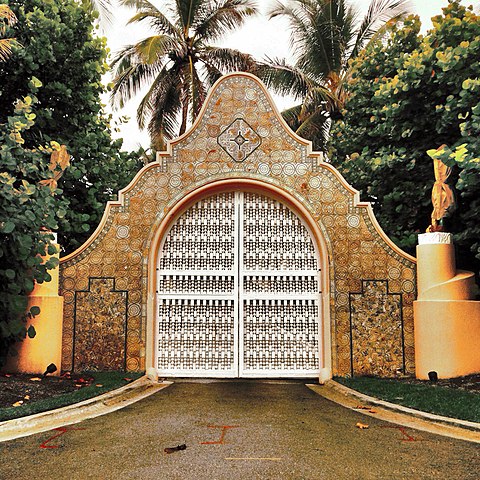
entrance gate to Mar-a-Largo

Some moments last a lifetime. Some experiences forever change what we see as much as how we see. It’s hard to see Opal Street over drinks at the 19th hole.

Gordon C. Stewart, Chaska, MN, July 29, 2019.

Silence and Faith

Views from the Edge is pleased to share this recording of Max Picard’s The World of Silence read aloud by David Juda of Voetica Poetry Spoken.

Here’s a taste of Picard:

The silence of God is different from the silence of men. It is not opposed to the word: word and silence are one in God. Just as language constitutes the nature of man, so silence is the nature of God; but in that nature every- thing is clear, everything is word and silence at the same time.

Excerpt from Silence and Faith of Max Picard, read by David Juda on Voetica Poetry Spoken

Click Silence and Faith and turn up the volume.

Thank you, David!

Gordon C. Stewart, Chaska, MN, July 29, 2019

Before the gods I will sing

Many gods? More than one?

Why does the psalmist speak of ‘gods’ — “before the gods I will sing Your praise” (Ps.138:1) –as though there is more than the One the psalmist proclaims? Why does the First Commandment of the Ten Commandments say, “You shall have no other gods before Me”?

These ‘gods’ are real. They do not exist only in our imagination. They make their appeals to our human need and aspirations in the midst of time. Like the First Commandment, Psalm 138 recognizes the ‘gods as contenders with the One God of heaven and earth. It goes to the heart of the human longing for closer-at-hand gods, the imposters of God that charm us with their melodies and promises.

...before the gods I will sing Your praise.” (Ps. 138:1 NIV)

We live among the ‘gods’. We see them with our own eyes. We hear them with our own ears.

  • Children held in squalid ‘detention’ camps in the name of national security. Parents whose children have been kidnapped and lost in the name of national security. The multitudes walking on blistered feet in hopes of crossing the Rio Grande to safety. The asylum-seekers fleeing cruel regimes. They are all living under the siege of the ‘gods’, resistance to which is commanded the First Commandment.
  • I will sing Your praise before the gods. I will not sing in silence. I will not praise You in hiding. I will publicly defy the ‘gods’ that solicit my praise and obedience. I will place my hope and trust where it belongs. Before the gods that divide and terrorize I will sing Your praise.
  • I will sing Your praise before the gods of national security that kidnap babies, separate families, and stereotype those seeking safety as criminals, drug runners, rapists and terrorists.
  • I will sing Your praise before the gods and not be silent when my president deceives the public, announcing that asylum-seekers may now apply for asylum in Guatemala, one of the nations from which the poor flee for safety because of human rights violations, whose military we train and whose arms we supply.
  • I will sing Your praise before the gods of homophily that erase the American aspiration of e pluribus from e pluribus unum, leaving the unum of whiteness.
  • I will sing Your praise before the gods of my country’s original sins: stealing the continent from its indigenous peoples’, and stealing African men, women, and children to become slaves.
  • I will sing Your praise before the gods under which the constitutional checks and balances that protect a democratic republic from totalitarian rule are eroded.
  • I will sing Your praise before the gods of fossil fuel profiteers and a government that denies climate change, removes restraints protecting clean air and water, and scorns international cooperation necessary for responsible action in the face of climate change.
  • I will sing Your praise before the gods of greed that amass wealth, consolidate power, and skirt Congress to proved arms to Saudi Arabia in spite of an American journalist’s dismemberment and supplying arms for continuance of a proxy war in Yemen.
  • I will sing Your praise before the gods of racist nationalism that excite the masses — Mein Kampf, the speeches of Hitler, and strategies for the seizure of power — now echoing from the Oval Office and campaign rallies.
  • I will sing Your praise before the gods that divert attention from atrocities at the Southern border with tweets describing the congressional district represented by the Chair of the House of Representatives’ Committee on Oversight and Government Reform as a “disgusting rat and rodent infested mess” immediately following the Rep. Elijah Cummingspointed criticism of inhumane conditions for which the Trump Administration is responsible.
I will praise You, LORD, with all my heart;
      before the gods I will sing Your praise. (Ps/ 138:1 NIV)
 For though the Lord is high, he regards the lowly,
      but the haughty he knows from afar. (Ps. 138:6 NRSV)

Before the gods: Jesus of Nazareth

One of them . . . tested [Jesus] with this question: “Teacher, which is the greatest commandment in the Law?” Jesus replied: “‘Love the Lord your God with all your heart and with all your soul and with all your mind.’ This is the first and greatest commandment. And the second is like it: ‘Love your neighbor as yourself.’ All the Law and the Prophets hang on these two commandments.” (Matthew 22:35-40 NIV)

Before these ‘gods’ — and so many more — I will sing Your praise.

  • So help me God, in the name of Jesus, Gordon C. Stewart, Chaska, MN, July 28, 2019

Truth-making and the Lie-making Machine

Special Counsel Robert Mueller

Special Counsel Robert Mueller’s appearance before Congress brings a sliver of hope that truth will prevail. Living in a surreal era where absurdity is the rule rather than the exception led me back to words from an earlier time and another country, the description offered by French novelist and absurdist philosopher Albert Camus (1913-1960).

Never before has the individual stood so alone before the lie-making machine. We used to wonder where war lived, what it was that made it so vile. And now we realize that we know where it lives, that is inside ourselves.

Albert Camus, Notebooks

If you see a turtle on top of a fencepost, you can be sure it didn’t get there by itself.

Gordon C. Stewart, Chaska, MN, July 24, 2019

Rest in Peace, Dennis

This remembrance of Dennis Aubrey, written by Dennis’s brother for Via Lucis, touches the heart and soul, and the expansive brilliance known by those whose lives have been deepened and enriched by him. There is opportunity to comment or leave your condolences for PJ and members of PJ and Dennis’s family.

Ann Aubrey Hanson's avatar

IMG_2049

It is with infinite sadness that I must tell you that Dennis passed away suddenly last Friday. I write this on behalf of his wife and partner, PJ.

With his passing, Dennis leaves a gaping abyss in our lives. He was a man larger than life, zestful in his embrace of all that life offered. Readers of this blog enjoyed the excellence of PJ and Dennis’s photographic art, and the enlightening and entertaining musings that accompanied those featured photographs.

The power of Dennis’s writing derived from his encyclopedic brain: he brought his vastly read knowledge to every subject he wrote about, whether history, or philosophy, religion or geometry, music or poetry. Via Lucis isn’t simply a photography blog. It isn’t simply an art and architecture blog. It is a brief—and intriguing—glimpse into the mind of one of the artists who brings these Romanesque churches to life through photograph and word.

View original post 961 more words