Hiroshima 75th Anniversary — “You stand; I bow”

Smiling East-West spirit,
You move with sun and Son,
Shining Peace on us.

Like a child piling blocks
Your words construct new dreams,
Towering poet.

Gentle and strong, as trees
Bend gracefully in wind,
You stand – and I bow.

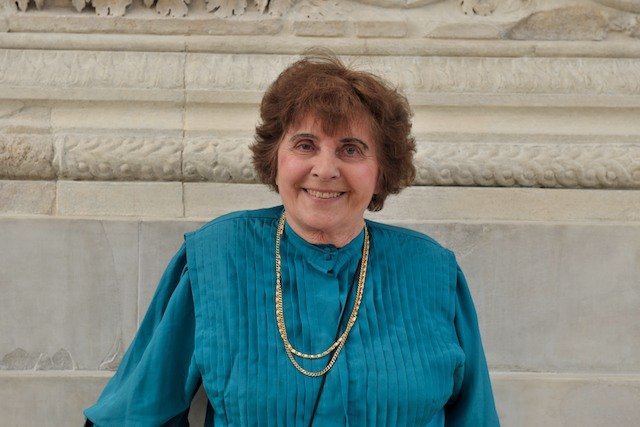
— In memory of Kosuke Koyama, Peggy Shriver, NY, NY

Bombing of Hiroshima, 75 years ago today

Meeting Kosuke Koyama

One of the great pleasures in life has been the unexpected friendship with Japanese theologian Kosuke Koyama.

Ko, as his friends called him with great affection, and his wife Lois, a native Minnesotan, came to Minneapolis following retirement from a distinguished teaching position at Union Theological Seminary in the City of New York. I knew him only by reputation: John D. Rockefeller, Jr. Professor of World Christianity Emeritus; cutting edge Asian liberation theologian and leader in Thailand, Singapore, New Zealand, and the United States; author of Water Buffalo Theology, No Handle on the Cross, Three Mile an Hour God, Mt. Fuji and Mt. Sinai, among others; pioneer in Buddhist-Christian intersection and inter-religious dialogue; spell-binding keynote speaker at the Fifth Assembly of the World Council of Churches in Nairobi, Kenya.

The Firebombing of Tokyo

The friendship that developed, if friendship can be defined to include mentors and those they mentor, great minds and ordinary ones, people of stature and those who look up to them, the wise and the less wise, was particularly impactful because my father had been an Army Air Force Chaplain in the South Pacific in World War II.

During the March, 1945 firebombing of Tokyo, the planes came from my father’s air base. Though my father rarely spoke about the war, a sullenness came over him when I would ask him for stories. All these years later I was learning from Ko what the war had meant to him, the 15-year-old Japanese boy being baptized in Tokyo while the bombs dropped all around his church.

Neighbor-Love — “Even the Americans”

The pastor who baptized him took Ko’s face in his hands to instruct him: “Kosuke, you are a disciple of Jesus Christ. You must love your enemies…even the Americans.”

For the rest of his life Ko pursued the daunting question of what neighbor love means. Who is the enemy? Who is the neighbor? Are they one and the same? Late in his life, before he and Lois moved from Minneapolis to live with their son in Massachusetts, he had come to the conclusion that there is only one sin: exceptionalism. At first it struck me as strange. Can one really reduce the meaning and scope of sin to exceptionalism? What is exceptionalism, and why is it sinful?

The Sin of American Exceptionalism

At the time of our discussion, the phrase “American exceptionalism” – the claim that the United States is exceptional among the nations – was making the news. It was this view that led to the invasions and wars in Afghanistan and Iraq – the unexamined belief that the Afghanis and the Iraqis would welcome us with open arms as liberators – that captured in a phrase the previously largely unspoken popular conviction that America is exceptional.

In this American belligerence Ko heard the latest form of an old claim that had brought such devastation on his people and the people of the world. The voices from the White House, the State Department, and the Department of Defense, though they spoke English, sounded all too familiar, impervious to criticism and restraint on the nation’s military and economic adventures.

Hiroshima Day in Minneapolis 2006

Fourteen years ago today, on Hiroshima Day, 2006 he spoke to a small crowd at the Peace Garden in Minneapolis at the exact hour the bomb incinerated Hiroshima. His voice rang with a quiet authority that only comes from the depths of experience. Here’s an excerpt from that speech:

“During the war (1941-45) the Japanese people were bombarded by the official propaganda that Japan is the divine nation, for the emperor is divine. The word ‘Divine’ was profusely used.This was Japanese wartime ‘dishonest religion’, or shall we call it ‘mendacious theology’? This ‘god-talk’ presented an immature god who spoke only Japanese and was undereducated about other cultures and international relations. Trusting in this parochial god, Japan destroyed itself.

“Then, dear friends,”” he said to make his point to his American listeners,do not trust a god who speaks only English, and has no understanding of Arabic or islamic culture and history. If you follow such a small town god you may be infected with the poison of exceptionalism: ‘I am ok. You are not ok.’ For the last 5,000 years the self-righteous passion of ‘I am ok. You are not ok’ has perpetuated war and destruction. War ’has never been and it will never be’ able to solve international conflicts, says Pope John Paul II.”

Two paragraphs later, Koyama spoke in terms that speak to the policy of drones and other advanced military technology:

“In spite of the remarkable advances humanity has made in science/technological [sic], our moral and spiritual growth has been stunted. Humankind seems addicted to destruction even with nuclear weapons and biological weapons. Today there are 639 million small arms actively present in the world (National Catholic Reporter, June 30, 2006). Fear propaganda always kills Hope. Violence is called sacrifice. Children killed in war are cruelly called a part of the ‘collateral damage’.”

This Hiroshima Day I wish I could break bread with Ko and my father to discuss the meaning of it all and share with Dad the haiku poems published in The New York Times following Ko’s death, written in his honor by his colleague at Union, Peggy Shriver, testaments to hope in belligerent times.

“You stand — and I bow.”

  • Gordon C. Stewart, Chaska, MN, August 6, 2015

Two Medals of Freedom: The Freedom Rider and the Mouth

John Lewis and Rush Limbaugh were miles apart, but they shared the distinction of having been awarded the Presidential Medal of Freedom, a recognition as close to sacred as the American republic gets.

Today in America: Selma and Palm Beach

Six months after First Lady Melania Trump draped the medal around Mr. Limbaugh’s neck, the Freedom Rider beaten by the law-and-order enforcers at the Edmund Pettus Bridge (see photo below) made his last trip from Selma to Montgomery. The other Medal of Freedom honoree is holed up in a Palm Beach mansion, pontificating about “the Leftists” conspiring to take away your guns and strike your Second Amendment rights from the Constitution.

Whether John Lewis and Rush Limbaugh ever occupied the same space before or after the 2020 State of the Union Address, I imagine Mr. Lewis greeting Mr. Limbaugh with the courtesy and kindness that shows due regard toward a precious, wounded, soul hidden somewhere behind the blabbering vitriol. There is a part of us — a divine spark within — that cannot be erased, no matter how hidden from our eyes.

Tears are flowing among those who have lived long enough to see the terrifying difference between the two presidents, two awards, and two men who symbolize such different bridges: one from Selma to Montgomery, and the newer one that leads a democratic republic to fascism. From some of us a prayer is offered that when our time comes to cross over, our crossing may be worthy of renaming some bridge where we made our sacrifices for humankind.

Gordon C. Stewart, Chaska, MN, Monday, July 26, 2020, in honor of Congressman John Lewis (RIP) and the way of love.

Homeland Militarization can’t be our future

What is happening in Portland and American cities where Black Lives Matter continues to oppose the violence and lawlessness of those sworn to protect and serve. A search through previous Views from the Edge posts led back to August 22, 2014.

Click THIS LINK to read “Homeland Militarization — tanks in Ferguson, Blackhawks in Minneapolis — must be stopped” published by MinnPost.com. The conversation — 38 comments — was more telling than the piece. In 2017 the MinnPost commentary became the 30th of the 48 brief social commentaries of Be Still! Departure from Collective Madness (2017, Wipf and Stock).

Today’s NYT sounds an alarm with a picture from the June 6, 2020 cover of Der Spiegel (6.6.20) depicting Donald Trump with a match. What German readers see feels chillingly familiar. They still smell the smoke from 1933.

Thanks for coming by. Be careful out there. Wear a mask to stay safe, and tonight –while mourners pay their respects to John Lewis in sanctuary of the African-American Episcopal Church of Selma and prepare for his last trip across the Edmund Pettus Bridge — make some good trouble, the only kind that heals a broken world.

Gordon C. Stewart, Chaska, MN July 25, 2020.

Resurrection of a Dead Sermon

Video

Pardon, please, the posting of an old sermon. It’s the best I can do this morning.

With “thanks, thanks, and ever thanks” to the gentle people of Shepherd of the Hill Presbyterian Church in Chaska, MN — Gordon C. Stewart, author of Be Still! Departure from Collective Madness (2017 Wipf and Stock), a collection of 49 brief reflections written from inside the furnace of the refiner’s fire; Chaska, MN, July 25, 2020.

Our Only House — John Lewis and Kosuke Koyama

Introduction

John Lewis never knew and had no reason to care that we held some things in common. We shared a point of view that comes from reading the Psalms (“The earth is the LORDS’s and the fullness thereof…”[Ps. 24:1]), and the Book of Micah (“What does the LORD require of you but to do justice, love mercy, and walk humbly with your God?” [Micah 6:8]), singing the same hymns in our Baptist and Presbyterian hymnals, and finishing theological educations at Fisk and McCormick.

John Lewis knew what a cracked head was

Yesterday’s Views from the Edge’s post pointed to what might be considered the centerpiece of John Lewis’s life — the conviction that “we all live in the same house.” John Lewis lived that conviction before and after the batons cracked his skull at Edmund Pettus Bridge.

John Lewis knew what a cracked skull was, and he knew that the Crackers’ skulls were cracked worse than his.

John Lewis and Kosuke Koyama

There is no evidence that John Lewis met Japanese theologian Kosuke Koyama or read any of Koyama’s books on the anguished heart of God. But focusing on the Congressman’s witness in word and action brought the two of them together in my cracked head. I’m even more confident that John Lewis never knew of or read “The Economy: Only One House,” “Only One Sin: Exceptionalism” or “The World in an Oyster” in Be Still! Departure from Collective Madness, the collection of essays dedicated to Koyama. (Note: Click the above link to Amazon, click “Look Inside,” open the Table of Contents, and click the titles to glimpse the essays, or read “Just One Country” published May 2, 2012 by Views from the Edge.

A Poet’s bow to gentleness and strength — Peggy Shriver’s Haiku to Koyama

The haiku tribute to Koyama by his friend and faculty colleague at Union Theological Seminary in the City of New York featured on Be Still!‘s dedication page, expressed how I felt after Ko’s death in 2009. Today the last stanza of Peggy’s haiku puts words to what I feel about John Lewis.

Gentle and strong, as trees
Bend gacefully in wind,
You stand — and I bow.

Peggy Shriver, 2009

Gordon C. Stewart, author Be Still! Departure from Collective Madness (2017 Wipf and Stock), Chaska, Minnesota, July 21, 2020.

John Lewis: “we all live in the same house”

Giving thanks for Congressman John Lewis

So much can and should be said following the death of Congressman John Lewis, but every attempt to pay tribute to him here on Views from the Edge fails to reach the high bar of tribute and thanksgiving to which he is entitled. Into this wordless void came a message sharing Eric Whitacre’s virtual global choir singing “Sing Gently” – the sound of hope and gentleness that sings what words cannot say.

The Congressman’s words after watching video of George Floyd’s death reach are as deep and wide as Eric Whitacre’s musical testimony (scroll down).

“We’re one people,” he said, “we’re one family. We all live in the same house, not just the American house but the world house.”

YouTube of virtual global choir singing Eric Whitacre’s composition “Sing Gently”

They cracked his skull at the Pettus Bridge; his character remained unbroken

John Lewis’s skull was cracked by officers enforcing the law-and-order of white supremacy and white nationalism, but his faith and Christ-like character could not be broken. He was as gentle as he was strong.

Sing boldly. Sing gently. If John Lewis found the strength and courage to sing his way through all the troubled waters his world was making, who am I to keep from singing?

Gordon C. Stewart, author of Be Still! Departure from Collective Madness (2017 Wipf and Stock) available on the publisher’s website and on Amazon, Chaska, MN, July 20, 2020.

Elijah knows his ABCs

Video

Oops! Editorial Correction: Wrong Birthday!

Elijah’s joy reciting his ABCs, posted moments ago, was Not on Elijah’s birthday! It was his mother’s.

Elijah says his ABCs

Thanks for dropping by for Mommy’s birthday party,

Elijah and Bumpa, July 15, 2020

The Stone that Floats

The stone-skipping little boy

As a child you may have scanned the shoreline for just the right flat rock to skip. When you were lucky, the stone you picked skimmed the the water, skipping five, six, seven or —if you had thrown it side-arm like the ageless Satchel Paige — eleven or twelve times, or more. Some day you might make it to the Bigs!

You lost all sense of time. It was you, the water, and the latest stone you had freed from among the millions of unremarkable rocks and pebbles on the shoreline. The stone couldn’t be too big or too small. It couldn’t be too heavy or too light. It couldn’t be round, rough, or jagged.. It had to be flat to skim across the water, or it would sink like a stone and disappear. Or cause a loud splash that only losers make.

Last Friday, in the darkness, a little boy picked a jaggest stone, hoping against reason, that, if he commuted its sentence as worthy of skipping its sentence, it would draw little attention. The boy leaped for joy until the splash was heard around the shoreline. The Stone did not skip or sink. It floats like styrofoam. The boy insists the Stone was flat and worth the skip. The ripples from the splash grow wider by the hour.

Three days later: Washington, D.C.

A federal judge on Monday demanded more information about the boy’s selection of the stone for special treatment.

Later in the day, the boy told reporters that he was getting “rave reviews” for picking Stone and restated his position that the Russia investigation “should have never taken place.”

While Stone floats, the little boy is sinking.

Gordon C. Stewart, Chaska, MN, author, Be Still! Departure from Collective Madness (2017, Wipf and Stock), Chaska, Minnesota, July 14, 2020.

America and the Sands of Time

Who we shall become is as cloudy as who we have been. Whatever pasts and futures we Americans imagine differently, we know we are in the midst of a national and global crisis. Whether or not we wear a mask, social distance, or march on the streets, we sense it in our bones. Anxiety is everywhere. We cover our eyes and wait to see who and what shall become of us.

Crisis as terrible, wonderful, and . . . .

Crisis – that is, the serious encounter of a man (sic) with exactly that which now threatens his own life, with that which represents, signifies, and warns of his own death – is always terrible, wonderful, eventually inescapable, saving and holy. ― William Stringfellow, A Private and Public Faith.

Re-imagining America

Re-imagining America begins with facing reality as we experience it, and asking why. No two people experience America the same way, yet all of us experience the same America. How it looks from the shores of Palm Beach and La Jolla or the banks of the Potomac is different from East Harlem where “street lawyer” William Stringfellow worked and bore witness in “Jesus the Criminal” in Christianity and Crisis in 1970:

We who are Americans witness in this hour the exhaustion of the American revolutionary ethic. Wherever we turn, that is what is to be seen: in the ironic public policy of internal colonialism symbolized by the victimization of the welfare population, in the usurpation of the Federal budget—and, thus, the sacrifice of the nation’s material and moral necessities—by an autonomous military-scientificintelligence principality, by the police aggressions against black citizens, by political prosecutions of dissenters, by official schemes to intimidate the media and vitiate the First Amendment, by cynical designs to demean and neutralize the courts.

Yet the corruption of the American revolutionary ethic is not a recent or sudden problem. It has been inherent and was, in truth, portended in the very circumstances in which the Declaration of Independence was executed. To symbolize that, some 30 white men who subscribed to that cause at the same time countenanced the institutionalization in the new nation of chattel slavery, and they were themselves owners of slaves. That incomprehensible hy­pocrisy in America’s revolutionary origins foretells the contemporary decadence of the revolutionary tradition in the USA. — “Jesus the Criminal,” Christianity and Crisis, June 8, 1970.

Some things remain the same

Some things remain. Some things never go away. Some things that look different are the same. Jesus of Nazareth and Jesus Barabbas shared more than a name. Both were criminals in Roman custody. One was convicted and executed; the other was released. Both are with us still.

A numbing detachment from others

In 2020, it is no longer only the descendants of slaves in East Harlem who cope with the horrifying sense of meaninglessness, hopelessness, and lovelessness Cornel West described in Race Matters.

THE PROPER STARTING POINT for the crucial debate about the prospects for black America is an examination of the nihilism that increasingly pervades black communities. Nihilism is to be understood here not as a philosophic doctrine that there are no rational grounds for legitimate standards of authority; it is, far more, the lived experience of coping with a life of horrifying meaninslessness, hopelessness, and (most important) lovelessness.

The frightening result is a numbing detachment from others and a self-destructive disposition toward the world. Life without meaning, hope, and love breeds a cold-hearted, mean-spirited outlook that destroys the individual and others. — Cornel West, Race Matters (1994).

Alternative revolutions

Two revolutionary Jesuses are with us still. The prisoner who was released re-builds the haunted house on sand. The other builds a house on rock. We can rebuild the house on shifting sands that wash away our loftiest intentions, or we can build a house on the rock of meaning, hope, and love.

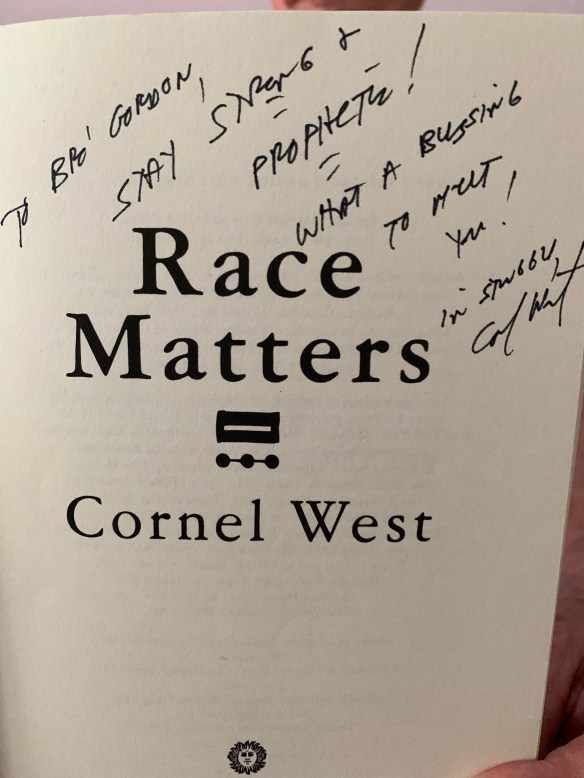
face page of Cornel West's Race Matters

While visiting the Westminster Town Hall Forum in Minneapolis years ago, Cornel West inscribed Race Matters with a gracious personal charge and benediction.

All these years later, I still don’t know how to fulfill the charge or honor his blessing. I have not stayed strong, I am not, and never have been, prophetic. But the instruction and the blessing are with me still.

Gordon C. Stewart, Chaska, MN, July 11, 2020.

A Fifth for the Fourth of July

A Different Fourth of July

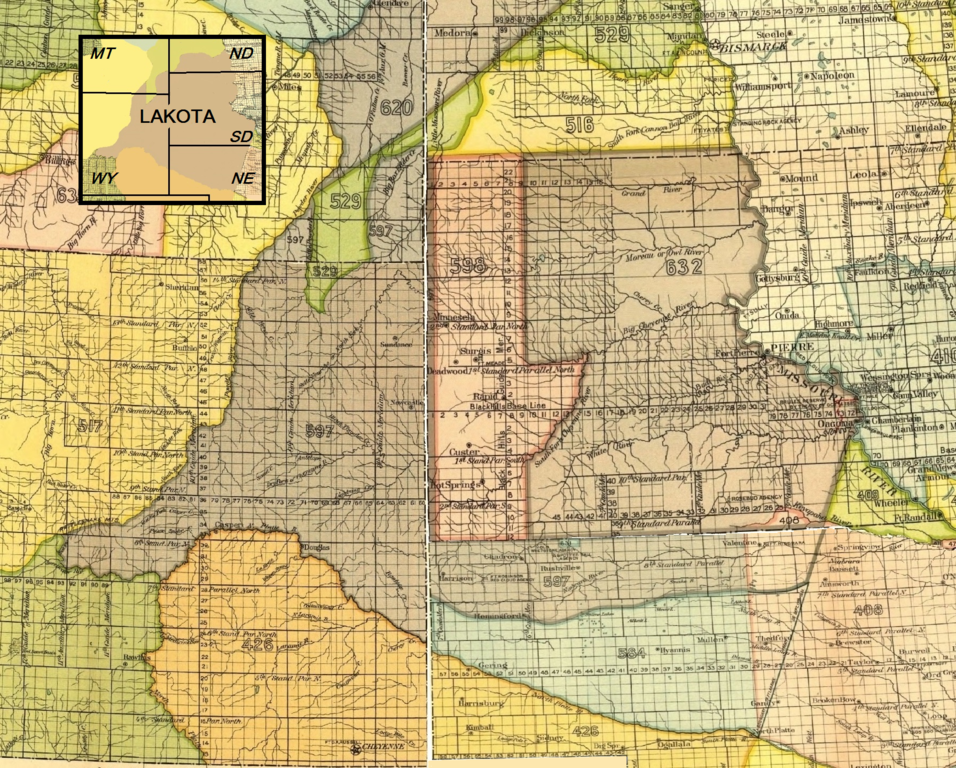
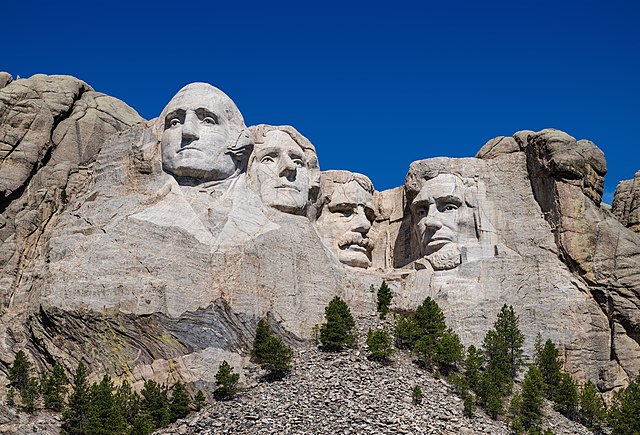
The Fourth of July in 2020 is different. You could see it and hear it at Mount Rushmore. The crowd was as colorless as the ones I remember in my childhood. But before they took their seats to sing the national anthem, salute the flag, and look up at the Blue Angels’ aerial display of military power, some of them had heard the chant “Land back!” and seen the fireworks between the police and National Guard and demonstrators whose skin was darker the their’s. On the road to Mount Rushmore they may not have known — or knew but didn’t care — that they were trespassing on stolen property; but they could not remain unaware that some people were not happy. The Lakota had regarded the Black Hills as sacred ground and still does. No one “owned” land before the Nation that celebrated its independence from the British crown saw it as property and stole it by breaking a treaty.

Lakota Territory

Lakota 1851 treaty territory

A White Nationalist Revisionist History

Inside the red-white-and-blue bannered stadium, the president targeted the protestors. “If we tear down our history we will not be able to understand ourselves or America’s destiny,” he declared, with no apparent consciousness of longer American history of the Black Hills. “The left wing mob and those practicing ‘cancel culture’ are engaged in totalitarian behavior that is completely alien to American life — and we must not accept it.” Did anyone inside the make-shift stadium catch the irony? Did anyone know that the original proposal for what became Mount Rushmore featured different faces — heroes of the American West, such as Sacagawea and Lewis and Clark, Oglala Lakota chief Red Cloud, Buffalo Bill Cody, and Oglala Lakota chief Crazy Horse? Did anyone in the white Fourth of July crowd shout “Land back!”?

Four U.S. Presidents on Mount Rushmore

According to Tony Schwartz, the real writer of Donald Trump’s autobiography, Art of the Deal, the president knows a thing or two about desecration and deception. He is a master at tarnishing those who will not bow to him with a brush dripping paint from the can of his own empty soul.

If Mr. Trump had known American history, he would have flown to the Black Hills with Desmond Tutu to announce formation of an American Truth and Reconciliation Commission to lead the nation through the healing process of confession, repentance, and reparation instead of a white nationalist campaign rally that trespassed on another nation’s sacred ground.

The Nation of Sheep

Donald Trump may be ignorant of America’s unvarnished history, but he’s not stupid. Those cheering him at Mount Rushmore most likely never read, or had forgotten, William J. Lederer’s 1961 Best Seller, A Nation of Sheep. “We are acting like a nation of sheep — not a vigorous community of bold, well-informed Americans,” Lederer wrote. We are “uneasy, but too apathetic and uninformed to know why — endorsing any solutions which appear cheap and easy and which come from a source better informed than themselves.” Perhaps the president had read Lederer’s book and decided a nation of sheep was ripe for a shepherd.

The Sheep and the Shepherds

It seems less likely he has read the Parable of the Good Shepherd in the book he hasn’t read –the one he displayed in front of Saint John’s after clearing the demonstrators from Lafayette Square. “Very truly, I tell you, anyone who does not enter the sheepfold by the gate but climbs in by another way is a thief and a bandit. The one who enters by the gate is the shepherd of the sheep” (Gospel of John 10:1-2, NRSV).

The Fourth of July entertainer at Mount Rushmore knows about thievery and sheep. He senses we are uneasy. He is well-schooled in the skill of shearing sheep too apathetic and too uninformed to know why they are uneasy. He knows how prone hungry sheep are to feed on quick and how easily we fall for the illusion that ours is the only sheepfold and that we are exceptional to all other sheep. One need not believe The Art of the Deal‘s ghost writer Tony Schwartz’s claim that Mein Kampf was the only book in Donald Trump’s bedroom to recognize in his bellicose language and behavior the political philosophy of the Strong Man who climbed into a sheepfold by blaming the nation’s problems on black sheep, the unpatriotic “left wing” non-Aryans whose color and history threatened the ideology of racial superiority and national manifest destiny.

Nations which no longer find any heroic solution for such distress can be designated as impotent, while we see the vitality of a people, and the predestination for life guaranteed by this vitality, most strikingly demonstrated when, for a people’s liberation from a great oppression, or for the elimination of a bitter distress, or for the satisfaction of its soul, restless because it has grown insecure – Fate some day bestows upon it the man endowed for this purpose, who finally brings the long yearned-for fulfillment.

Adolf Hitler, “The Strong Man,” Mein Kampf, an autobiographical political manifesto, 1925.

Last night — the Eve of July Fourth 2020 — I thought I saw in the Black Hills a flock of sheep, restless because it had grown insecure, and I heard the distant sound of clippers fleecing an earlier flock.

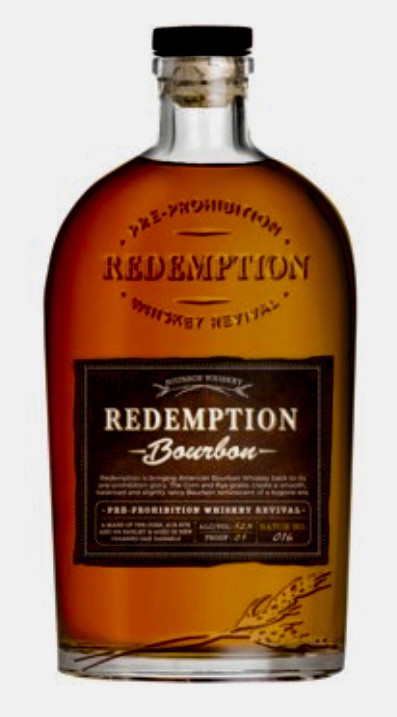
I couldn’t take it anymore. I closed the Bible, grabbed my COVID-19 mask, and ran out for a Fifth for the Fourth –a fifth named Redemption.

Gordon C. Stewart, Chaska, MN, July 4, 2020.