Imagine yourself listening in on a conversation between God and Vladimir Putin. Even if you don’t believe in God. Pretend you do for just a moment. -:)
“But I know your rising and your sitting,
    your going out and coming in,
    and your raging against me.

Because you have raged against me
    and your arrogance has come to my ears,
I will put my hook in your nose
    and my bit in your mouth;
I will turn you back on the way
    by which you came.
-- 2 Kings 19:25-27
“Your arrogance has come to my ears.”
The rage and arrogance hurt my ears. If I had a hook, I’d put it in Vladimir Putin’s nose to rein in his urge to reign. If I had a bit to tame arrogance, I’d put it in the mouth of Putin’s best friend in Florida who applauds Putin’s “genius” in re-framing the invasion of Ukraine as a peace-keeping mission. Two best friends who have no other friends.
The “hook” in the nose and the “bit” in the mouth were tools for bringing an unruly camel under control. The raging camel was Sennacherib, the arrogant King of Assyria. The message is for him.
Isaiah put these words on the lips of the One who has no lips but whose anguish cries out in us and whose tears run down our cheeks whenever a feral camel wanders into someone else’s yard.
Whoever wrote Second Kings would be shocked to find that the story of the two kings — Sennacherib of Assyria and Hezekiah of Judah — would be read in 2022. But the story is ageless. Watching another strongman invade his next door neighbor, who can fail to imagine the divine rebuke of the unruly camel who sticks its nose under tents where it does not belong, and the other camel whose mouth never stops?
-- Gordon C. Stewart, public theologian, author of "Be Still! Departure from Collective Madness" (2017 Wipf and Stock, Eugene, OR), writing from Brooklyn Park, MN, February 25, 2022.
In Russia, Vladimir Putin denies responsibility for the death of Alexei Navalny. In the U.S.A, Donald Trump serpentine mind twists Navalny’s assassination into a fun house mirror, portraying himself as America’s Navalny — a victim of state power. When words fail me, I often turn to the Hebrew prophets. Finding Isaiah’s rebuke of Assyrian King Sennacherib in the Seventh Century BCE gives me the words. Isaiah speaks in the name of God (“I AM”) who cannot be mocked.
Isaiah’s rebuke
But I know your sitting down and your going out and coming in, and your raging against Me. Isaiah 37:28
ISaiah 37:28
A personal reflection
You cannot hide. You plot and scheme as though unseen, not noticed, secure in the dark places of public life. You rise. You sit. You go out among the shadows, declaring innocence and impunity. You mislead. You cheat. You lie. You bear false witness and concoct stories to assail your neighbors. You connive, conspire, and assassinate.
You poison your opponents and flood the public with fear and hate. You threaten your critics, and pay legal fees for sycophants who have placed their trust in you. You rant and rage and rouse the people with a voice that feigns righteous indignation.
Isaiah’s rebuke continued
Because you have raged against Me and your insolence has come to My ears, I will put My hook in your nose and My bit in your mouth; I will turn you back on the way by which you came.
Isaiah 37:29
A hook in the nose
Personale reflection
Uncivil, insolent, resistant, unhinged, kicking up dust on everyone around you, you mock whatever would restrict you, restrain you, expose you to the light of day, but darkness is not dark to Me. I hear you snorting, braying and bellowing. I see you bucking against the bit and bridal that will break you of your whims and schemes, your defamations and slander, your arrogance and threats, your schemes of terror, your treasonous justifications of insurrection and assassination.
I AM. You cannot hide from Me.
A call for prophets
The biblical prophets Isaiah, Amos, Micah, Ezekiel et.al. were not, as is commonly supposed, fortune tellers. They were not palm readers. Isaiah confronted Sennacherib, king of an empire, while he called his countrymen to re-claim the souls they had almost lost.
Eugene Peterson paraphrases the rebuke of Sennacherib in his masterpiece rendering of the Bible, The Message:
I know all about your pretentious poses,

  your self-important comings and goings,

 and, yes, the tantrums you throw against me.

Because of all your wild raging against me,

 your unbridled arrogance that I keep hearing of,

I’ll put my hook in your nose and my bit in your mouth.

I’ll show you who’s boss. I’ll turn you around

 and take you back to where you came from.

Isaiah 37:28-29
Gordon C. Stewart, public theologian, author of Be Still!: Departure from Collective Madness (2017, Wipf and Stock), 49 brief (two to four page) reflections on faith and public madness; Brooklyn Park. MN, Feb. 22, 2024.
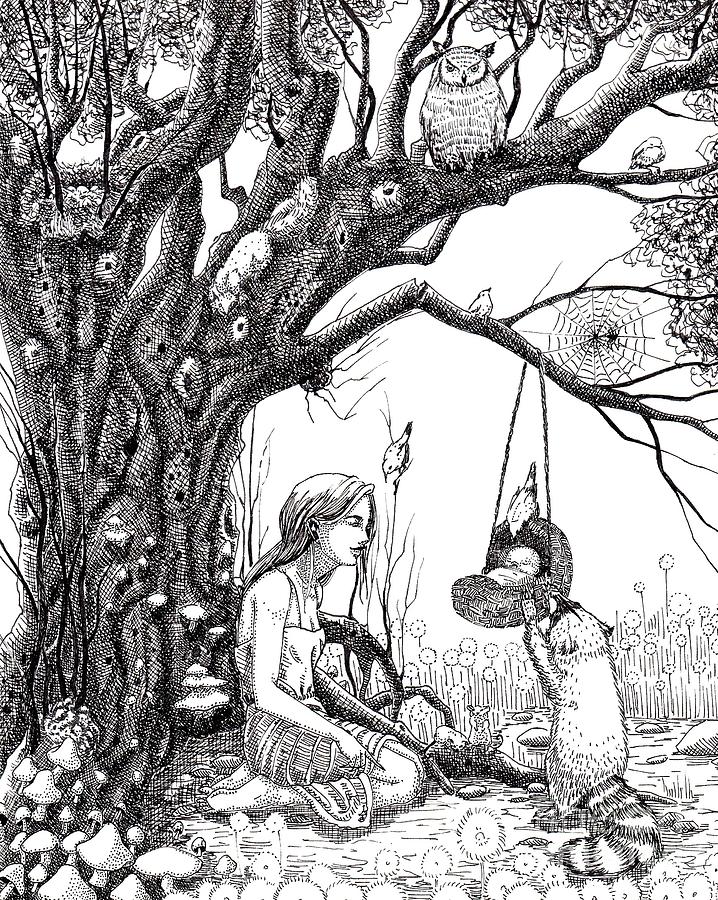
Rock a bye baby on the tree top, When the wind blows the cradle will rock, When the bough breaks the cradle will fall, And down will come baby, cradle and all.
Rock a bye baby on the tree top, When the wind blows the cradle will rock, When the bough breaks the cradle will fall, And down will come baby, cradle and all.
Multiple drafts of a reflection on “Rock a reflection on the Baby” missed the mark. I was aiming at humor, but I’m no Andy Borowitz. None of them was funny. Some I ripped up. They’re on the floor of my office.
The drafts had been attempts to take “Rock a Bye Baby” as the template for a commentary on American public life in February, 2022. When the baby on the tree top is rocked by gale force winds, we hear the boughs of the old oak tree creaking. If and when the bough breaks and Baby and cradle do fall, we can only hope the chain-saw rescue crew doesn’t cut down the tree and turn it into sawdust.
The Origins of “Rock a Bye Baby”
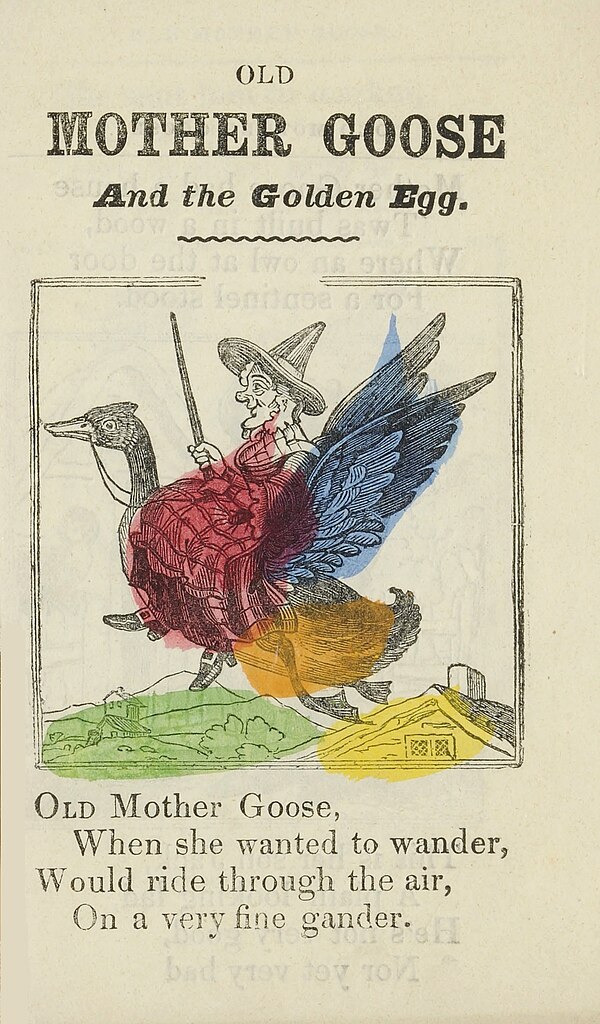
The oldest copy of “Rock a Bye Baby” is found in “Mother Goose’s Melody” in London in 1765. One story of origins locates it in a London pub on the occasion of the birth of King George II’s son, the prince who would continue the royal line they detested. The first known copy of “Rock a Bye Baby” has a hand-written note:
The oldest copy of “Rock a Bye Baby” is found in “Mother Goose’s Melody” in London in 1765. One story of origins locates it in a London pub on the occasion of the birth of King George II’s son, the prince who would continue the royal line they detested. The first known copy of “Rock a Bye Baby” has a hand-written note:
"This may serve as a warning to the proud and ambitious, who climb so high that they generally fall at last."
That hope feels farther away after a perplexing presidential debate and the Supreme Court’s 6-3 ruling interpretation of the meaning and boundaries of the U.S. Constitution’s provision of Presidential Immunity. Drip by drip, bucket after bucket, I shudder at the erosion of democracy. I scream, watching a Narcissistic entertainer move closer to the White House, and ask again whose shoulders lifted him to the tree, and why they have. Then I remember Daniel Boorstin who now seems like the Greek seers of classical Greece and the Greek.
The Reign of the Image
Daniel Boorstin’s book, The Image: A Guide to Pseudo-events in America (1662), was a ground-breaker. Historian and Librarian of the Library of Congress. Here are a few excerpts from Daniel Boorstin’s The Image in 1962.
“We [Americans] suffer primarily not from our vices or our weaknesses, but from our illusions. We are haunted, not by reality, but by those images we have put in their place.”
“Celebrity-worship and hero-worship should not be confused. Yet we confuse them every day, and by doing so we come dangerously close to depriving ourselves of all real models. We lose sight of the men and women who do not simply seem great because they are famous but are famous because they are great. We come closer and closer to degrading all fame into notoriety.”
“A sign of a celebrity is often that his name is worth more than his services.“
“The image, more interesting than its original, has become the original. The shadow has become the substance.“
“The American citizen thus lives in a world where fantasy is more real than reality, where the image has more dignity than its original. We hardly dare face our bewilderment, because our ambiguous experience is so pleasantly iridescent, and the solace of belief in contrived reality is so thoroughly real. We have become eager accessories to the great hoaxes of the age. These are the hoaxes we play on ourselves.“
“By a diabolical irony the very facsimiles of the world which we make on purpose to bring it within our grasp, to make it less elusive, have transported us into a new world of blurs.“
Thanks for coming by.
Have courage; hold to the good; refuse to return evil for evil; love your enemies,
Gordon
Gordon C. Stewart, public theologian, author of Be Still! Departure from Collective Madness (2017 Wipf and Stock), Brooklyn Park, MN, July 1, 2024. Originally published on VFTE, February 12, 2022.
WHEN ALL THAT'S LEFT IS LOVE

When I die
If you need to weep
Cry for someone
Walking the street beside you.
You can love me most by letting
Hands touch hands, and
Souls touch souls.
You can love me most by
Sharing your Simchas (goodness) and
Multiplying your Mitzvot (acts of kindness).
You can love me most by
Letting me live in your eyes
And not on your mind.

-- Rabbi Allen S. Maller
Rabbi’s Maller’s website — rabbimiller.com — is a treasure trove of Jewish tradition and biblical interpretation.
Rabbi Allen S. Miller
Gordon C. Stewart, Public Theologian and social commentator, host of Views from the Edge; author of Be Still! Departure from Collective Madness (2017, Wipf and Stock), Brooklyn Park, Minnesota, Feb. 8, 2022.
Last night’s documentary of Congressman Jamie Raskin before and after the tragic loss of his beloved son, showed qualities of character in short supply: personal integrity, moral-spiritual courage, a playful spirit, and faithfulness to his oath of office to uphold the Constitution. Those qualities were evident before and after the tragic death of his son “Tommy” whose funeral was the day before the January 6 attempted coup at the U.S. Capitol.
Thomas (“Tommy”) was 25 when he took his life. Thomas fell within the 18 – 29 year-old age range of the Harvard-Kennedy Center Youth Poll taken in the autumn of 2021. The poll’s findings are staggering.
When one in four young adults between ages18 and 29 think of doing harm to themselves more than once in a two-week period (Oct. 26- Nov. 8, 2021) something is terribly wrong.
More than half (51%) of young Americans report having felt down, depressed, and hopeless — and 25% have had thoughts of self-harm — at least several times in the last two weeks.
The youngest participants in the poll were one year-olds when the Twin Towers fell in 9/11, 2001. Tommy was four. The oldest were eight years old, old enough to be terrorized and fearful of the world around them. Even the children at the lower end of the poll’s range would not have escaped sensing their parents’ emotions — shock, fear, panic, despair, anger, dread.
Thomas Raskin and His Peers
No stranger can know what broke in Tommy on New Years Eve. But we do know this. Whatever mixture of clinical depression and despair over a dark world he could not repair, we know from the Harvard-Kennedy Center Youth Poll that Tommy lived and died as one of a host of young adults struggling to make it through the day.
Tom Raskin’s generation has been served an omelet of violence, fear, distrust, and hatred for breakfast. Every day. They have never known a time of peace. Terror has broken into their homes and schools, synagogues, churches, mosques, malls, supermarkets, music concerts with a frequency and rapidity unknown to my generation.
The events of their lifetime blow the hinges off my generation’s prevailing sense of innocence. The America they experience is the scene of madness, splintered into camps of trust or distrust in one another and the institutions on which democracy depends. They encounter a world of cruel absurdity. Election to office is not public service. Partisanship is more about power and greed than about governing wisely. Driving Black or walking Black puts target on your back, and the man with the badge puts his knee on your neck until you can’t breathe. A president of the United States of America sweeps a peaceful Black Lives Matter protest off the plaza for a photo op, proudly holding up a Bible he doesn’t read. This generation knows that White’s not right. White privilege weighs on people like Tommy, as it always has on African Americans and America’s First People for whom Whiteness meant slave-ownership and genocide.
On top of all that, there is Donald Trump, and there is QAnon
Any pastor who visits congregants in psychiatric hospitals or hospitals for the criminally insane is not shocked when religion becomes the host of insanity. Often the patient suffered illusions of grandeur. Some think of themselves as Jesus Christ, or feel the burden of saving people from a cruel world. Some hear voices. Some live in a endless nightmare of conspiracy. I would like to say I’ve never seen anything close to QAnon, but I can’t say that.
Many of the patients I’ve visited know where they are; some know why there are there. But the years of my pastoral visits ended before Donald Trump and QAnon. I’ve met the likes of Donald several times in a hospital for the criminally insane, but I never met anyone who imagined a satanic conspiracy of a cabal of child-kidnapping, child-molesting, sex-trafficking cannibals intent on destroying a president.
Why would it surprise us that 51% of young adults in the poll feel “down, depressed, and hopeless” or that 25% of them have had “thoughts of self-harm — at least several times in the last two weeks?” Twenty-five year old Thomas Raskin was one them.
There is a Yearning for Meaning, Integrity, and Courage in the Storm
Rep. Raskin speaking at the 2020 AFGE Leadership Conference
Thomas’s father writes in Unthinkable: Trauma, Truth, and the Trials of Democracy reflects on how January 6, 2021 would have affected Tommy. That “stomach-churning, violent insurrection; that desecration of American democracy would have wrecked Tommy Raskin.
“So as a congressman and a father of a lost son and two living daughters, I would take a stand, with everything I had left, against that violent catastrophe in the memory and spirit of Tommy Raskin, a person I have, alas, not even begun to properly render in words.”
Rep. jamie raskin, unthinkable: trauma, truth, and trials
While a criminally insane former president remains free, Tommy’s father and every prosecutor who can hold him to account have bull’s eyes on their backs. Perhaps, by the grace of God and the stand of a grieving father, the Constitution will continue and the Oath of Office be honored.
Gordon C. Stewart, author of Be Still! Departure from Collective Madness (2017, Wipf and Stock), Brooklyn Park, MN, Feb. 7, 2022
A crowd of students gathers on the university plaza at 11:00 p.m. for a parade to a bonfire. They walk by torch-light with drums drumming through the streets of the city, followed by a truck, on their way to the Opera House where a huge pile of wood is waiting. By the time they arrive, the crowd has grown to 30,000, eager for the match to be struck.
A voice thunders across the plaza:
The age of arrogant Jewish intellectualism is now at an end! . . . You are doing the right thing at this midnight hour — to consign to the flames the unclean spirit of the past. This is a great, powerful, and symbolic act. . . . Out of these ashes the phoenix will rise. . . . O Century! O Science! It is a joy to be alive!
The date was May 10 of 1933. The speaker was newly appointed Reich Ministry of Public Enlightenment and Propaganda, Joseph Goebbels. The event was part of “Action Against the un-German Spirit,” a program developed in April by the German Student Union’s Office of Press and Propaganda. At midnight of May 10, 1933, the sights, sounds, and scent of bonfires filled the air of every university town in Germany.
A member of the SA throws confiscated books into the bonfire during the public burning of “un-German” books on the Opernplatz in Berlin.” — United States Holocaust Museum.
The Twelve Theses
“Action against the un-German Spirit” was accompanied by another product of the Student Union leader gathering on April 8. “Twelve Theses,” 12 short statements designed to appeal to German Lutherans’ celebration of Martin Luther’s posting of 95 thesis on the Wittenburg Church door. The “Twelve Theses” were published and posted everywhere. In spirit and tone the “Twelve Theses” was the fitting companion of “Action Against the un-German Spirit.”
The students described their action as a “response to a worldwide Jewish smear campaign against Germany and an affirmation of traditional German values.” The following excerpts illustrate the tone.
"Language and literature have their roots in the people. It is the German people’s responsibility to assure that its language and literature are the pure and unadulterated expression of its Folk traditions.” “Purity of language is your responsibility!” “Our most dangerous enemy is the Jew and those who are his slaves…. "A Jew can only think Jewish. If he writes in German, he is lying. The German who writes in German, but thinks un-German, is a traitor!”
“We want to regard the Jew as alien… The unGerman spirit is to be eradicated from public libraries.” "At present there is a chasm between literature and German tradition. This situation is a disgrace." “We demand of German students the desire and capability to overcome Jewish intellectualism and the resulting liberal decay in the German spirit.”
On the List
The list of “unclean spirit”…”un-German”… or “anti-German” literature was long. Among the 4,000 books to be purged were the works of Albert Einstein and Thomas Mann, Hellen Keller, Jack London, H.G. Wells, Karl Marx, Erich Maria Remarque, Sigmund Freud, and Heinrich Heine.
Heinrich Heine was a widely-read 19th Century German poet, journalist and essayist whose prescient line in Almansor: A Tragedy, published a century before in 1823, hit too close for comfort in 1933.
“Where they have burned books, they will, in the end, burn people, too.”
–Poet Heinrich Heine, 1823
February 1, 2022, Brooklyn Park, Minnesota in the U.S.A.
At dawn I take the dog out and bring in the paper. “Campaign to ban books spreads across the U.S.” leaps from the front page, as had a report two days ago —“School Board in Tennessee Bans Teaching of Holocaust Novel ‘Maus’” NYT, Jan. 27.” The Tennessee school board had voted to remove the novel “Maus” by Pulitzer Prize-winning author Art Spiegelman because it contains swear words, according to the board minutes. The vote was unanimous.
When Art Spiegelman learned that “Maus” — his Pulitzer Prize-winning graphic novel about his family’s experience during the Holocaust — had been banned by a Tennessee school board, he told the Washington Post exactly what he thought of the antisemitic decision:
“It’s part of a continuum, and just a harbinger of things to come. This is a red alert.”
Art Spiegelman to Washington post re: censorship
Book burnings, censorship and purging have a history. Most often the books are judged as unclean, not pure, unpatriotic, unChristian, un-this and anti-that, un-American and anti-American, etc. Yesterday’s NYTimes article (Jan. 31, 2022) on book-banning cites a poignant quote by Lauri Halsi Anderson, contemporary author of young adult books.
"By attacking these books, by attacking these authors, by attacking the subject matter, what they are doing is removing the possibility for conversation. You are laying the groundwork for increasing bullying, disrespect, violence and attacks."
Letter to Benjamin Franklin, September 24, 1765
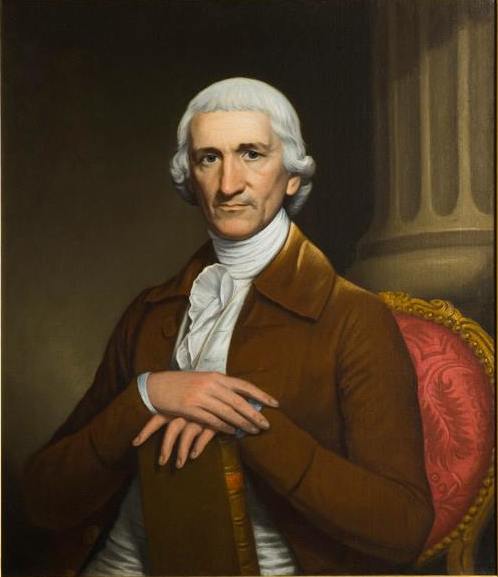
Correspondence between “Founding Fathers” Charles Thomson and Benjamin Franklin is preserved in the National Archives. Thomson’s letter to Franklin now feels as prescient in the U.S.A. as Heinrich Heine’s line was for Germany.
“The Sun of Liberty is indeed fast setting, if not down already, in the American colonies: But I much fear instead of the candles you mention being lighted, you will hear of the works of darkness.” — Charles Thomson: letter to Benjamin Franklin, September 24, 1765 .
At the time of Thompson’s letter, “the Sons of Liberty” were turning to violence and intimidation in response to the Stamp Act. Franklin was a principled Quaker committed to reason, civility and non-violence. Franklin would likely have chuckled at Thomson’s play on words, but not at the warning of the works of darkness.
Conroe, Texas, U.S.A – January 30, 2022
“If I run and if I win,” declares Donald Trump to a cheering crowd in Conroe Texas,”we will treat those people from January 6 fairly. And if it requires pardons, we will give them pardons because they are being treated so unfairly.”
He accuses Black prosecutors of racism. “These prosecutors are vicious, horrible people. They’re racists and they’re very sick, they’re mentally sick. They’re going after me without any protection of my rights from the Supreme Court or most other courts. In reality, they’re not after me, they’re after you…. If these radical, vicious, racist prosecutors do anything wrong or illegal, I hope we are going to have in this country the biggest protest we have ever had in Washington, D.C, in New York, in Atlanta and elsewhere.”
A little gray Maus who’d been shooed off the stage quivers and squeals to the audience, “This is a red alert!”
Gordon C. Stewart, public theologian, author of “Be Still! Departure from Collective Madness” (2017 Wipf and Stock), Brooklyn Park, MN, Feb. 3, 2022.
REALITY
The book of flesh and
Blood hangs by a
Slender thread we cut
To shred the pages
We wish were not —
The days and nights of
sadness, fear and dread
Where death is realReality is now a holo-
Gram for us who live
In cyberspace and Sci-
Fi worlds that wipe
The Black board clean
And White again
As it was before the
Black birds came
The hollow holograms
Float on air they never
Breathe while we and
All that is or ever was
In flesh and blood shine
Light and bright andWhite again but miss
Clouds and rainbows
GCS
2.2.2022
Rainbow over the IL prairie.
Between Substance and Illusion
“The line between substance and illusion is as thin as the line between reality and appearance. The history of humankind is a tale of an idiot, humankind’s conscious preference for the ‘sweet illusions’ that glimmer from tinsel, broken glass, and oily rags for the colors of a rainbow.
“It seems to be the contention of the Trump campaign that nothing is really true,” wrote Jack Holmes in the September 26, 2016 issue of Esquire; “it only matters what enough people believe, and whether you can dangle enough shiny objects in front of them until the clock runs out on November 8.” -- Jack Holmes, Esquire, September 26, 2016
Gordon C. Stewart, Brooklyn Park, MN, Feb. 1, 2022
The beginning of this commentary will sound familiar to those who have read “The Counterfeit Gospel” (Jan. 29, 2022). The beginning through “The Gospel of Jesus the Loser” is edited and amplified. Everything from the rubric “From Prosperity to QAnon” is original to this post.
A Question of Glory
Donald Trump and I each claim a footing in the Presbyterian Church and its Reformed theological tradition. It’s hard to remember much of what happened in Confirmation Class. But it’s hard to forget the first article of the Shorter Catechism. The way to a meaningful life is “to glorify God, and enjoy Him forever.” None of us understood it, of course. But one thing was clear: We are not to glorify ourselves.
The Workshop for Cranking Out Idols
The Reformed faith tradition focuses on the majesty of God and our propensity to bow before an infinite variety of substitutes for the Infinite. The issue for faith is not belief or unbelief. The issue is idolatry. Earth is the theatre of God’s glory. Yet human nature is a perpetual factory of idols. –Jean Calvin, Institutes of the Christian Religion,1556.
Author theologian William Stringfellow described idols as “imposters of God,” — the finite, manageable works we crank out that take the place of the Ineffable and Infinite.
There are gods and there is God. There is the finite and there is the Infinite. The gods are nearer-to-hand stand-ins, substitutes that promise what they cannot deliver. The world is beautiful and filled with goodness, yet the underlying goodness is twisted against itself. The idols are endless and varied. Nation, work, money, status, race, religion, political party, ideology take center stage in “the theater of God’s glory.”
The Gospel of Jesus the Loser
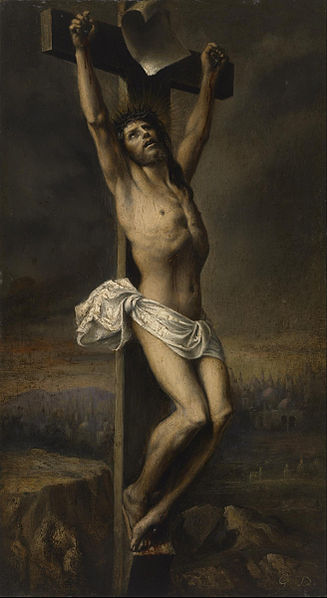
By the standards of the Prosperity Gospel, Jesus of Nazareth was a loser. Yet the loser will not go away. The loser executed on a Roman cross was raised as the archetype of authentic humanity. Unless the church gets that straight, everything it gains is loss. In spite of all attempts to circumvent, delete, or deny it, the cross remains the primary symbol for those who seek to follow Jesus. Whoever spends time looking at Gustav Doré’s painting of the crucifixion cannot dismiss the horror of it, the cruelty of it, the god-forsakenness of it.
From Prosperity to QAnon
It’s a short distance from the Prosperity Gospel to QAnon. Neither pays attention to Matthew or Luke’s vivid narratives of Jesus in the wilderness. Is Satan real? Yes and no. Satan is not someone’s name. It’s a title — the Shatan, the Diabolos — for the diabolical. It has no other home than our hearts and minds, the blacksmith shop that never ceases. The factory that cranks out idols. Satan is the Adversary of the Divine. QAnon says little about God but sees Satan everywhere. QAnon is the latest metastasis of a simplistic theology that divides the world between God and Satan, good and evil, saved and damned, elect and non-elect, heaven and hell, soldiers and cowards. If those characteristics sound familiar, it’s because they are.
“You people seem normal”
Thanksgiving is a day of mostly cheerful moments, but some Thanksgivings are also epiphanies. My younger son’s college friend opened a window to his experience of Christian faith and practice. During a light-hearted conversation around the Thanksgiving table, the student guest took what seems like a risk, but it landed on ears that understood how he felt. “I don’t know quite how to say this,” he said with eyebrows rising, “but you people seem normal.” The conversation the followed focused on his view of Christians as whackos. The whackos held the worldview described in the previous paragraph. Why did he think so? While changing channels he had stopped in on Jimmy and Tammie Baker, Jimmy Swaggert, and other televangelists who had not seemed normal. They were abnormal by almost any standards mental health, reason and sanity.
The Lure of Prosperity
The Prosperity Gospel preachers proclaim it can all be yours, if… If you accept Jesus Christ as your Savior, if you stop thinking negatively, it can all be yours. It can all be yours in a secure gated community. It can be yours if you climb to the top. It can all be yours if you just close your eyes to the homeless who disturb an otherwise beautiful day. It can all be yours, if you stop thinking of yourself as a school drop-out ditch digger and think of yourself as (fill in the blank).
Flights from Ambigiuity
What is missing in the Prosperity Gospel and QAnon are the biblical stories of Jesus in the wilderness with Satan. Any study of the Gospel of Matthew’s or Gospel of Luke’s narratives lead to a conclusion that life is more ambiguous than we would like it to be. It is good that our material needs are met. It’s not good when we turn needs into greed. In the same way, religion can go either way. It is good to praise God and practice a tradition’s wisdom, but religion can become, and often is, a form of idolatry that substitutes itself for the Eternal and Ineffable it claims to worship. But the third scene in the wilderness narratives that leaps from the page in America today, is the one about power and authority described below.
Satan
You may or may not hear much about Satan from Prosperity Gospel preachers or, for that matter, from the pulpits of traditional churches. It’s either because it’s not popular. It won’t attract new adherents. Or it’s an embarrassment. Or the biblical texts that speak of Satan or the Devil require an inordinately long explanation than a sermon allows. Not so for QAnon where the talk is all about Satan.
What has been lost is a literary and emotional understanding of the complex and confounding character of the biblical Satan. Satan is the personification of the diabolical. The Trickster, the Deceiver, the Twister, the Half-Truth Teller, the Liar. Beauty, truth, and goodness are given lip service, but beneath the talk of beauty lies ugliness, beneath the tributes to truth lies deceit, beneath the salute to goodness lies a tornado twisting goodness into its opposite.
The most poignant of the three wilderness scenes
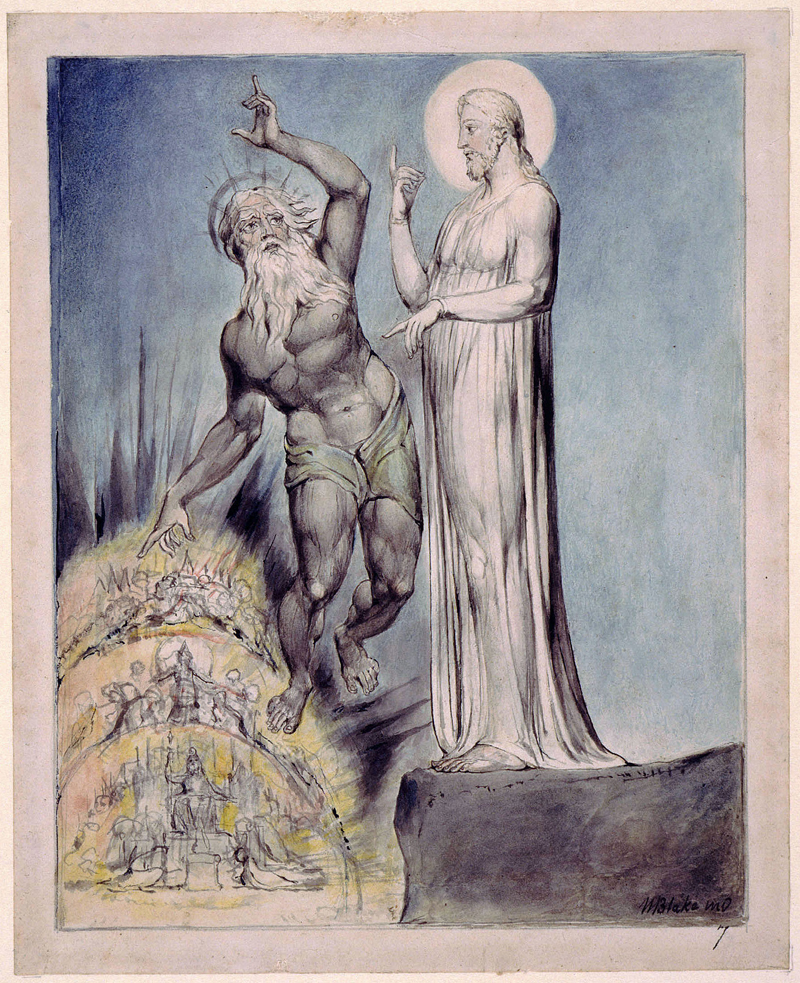
William Blake paints the most poignant of the three episodes of Jesus’s 40 days with the Diabolos in the wilderness. The scene is a mountaintop where Satan and Jesus the Christ have in view all the nations and kingdoms of the word. Blake’s painting gives visual expression to the narcissistic lure of political power and authority. “Then the devil took him to a very high mountain and showed him all the kingdoms of the world and their glory. ‘All this I will give you,’ he says, ‘if you will bow down and worship me.’ Jesus says to him, ‘Begone, Satan, for it is written ‘you shall worship the Lord your God, and serve him only.'” (Matthew 4:10 NIV and NRSV combined)
Blake – Kingdoms
Where was God?
Those who see the countenance of God in the face of Jesus the Loser face a challenge that won’t go away. Where was God when America’s First People were being stripped of their homeland, slaughtered, stripped of their religion and culture, and consigned to reservations and Christian boarding schools? Where was God when White hoods with torches burned their crosses and formed a congregation gathered around the lynching tree? Where was God at the whipping post? Where was God during the Holocaust, the “Final Solution”? Where was God at the gun massacres at Columbine, Sandy Hook, and Parkland? Where was God when Narcissus was dying of dehydration at the edge of the pond?
You will find God there
Jesus the Loser tells us where. God was among those who were robbed of their homeland. God was shuttled off to the reservations. God was hanging from the lynching tree. God was whipped at the whipping post. God was on the trains to Auschwitz; God was among the children, teachers, and parents at Sandy Hook. God was among the Losers — the tortured, the poor, the starving, the dying and the dead. God was in the pond inviting Narcissus to drink. We will find God there.
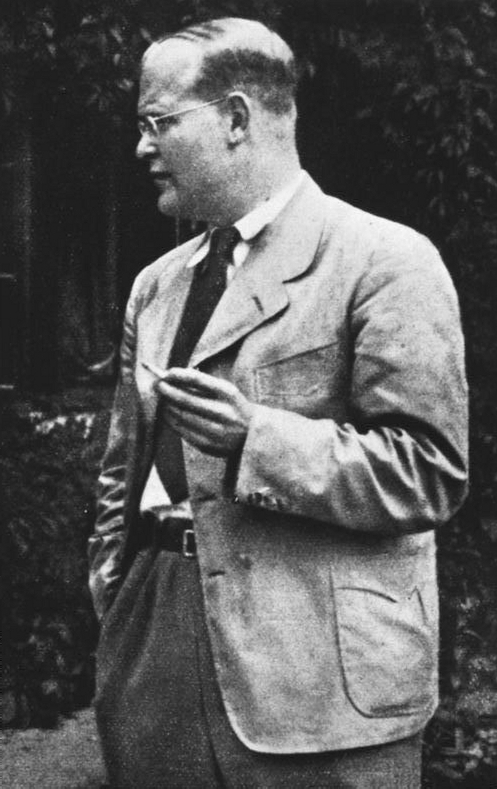
Letters and Papers from Prison preserves a poem from the cell of a pastor, theologian, professor, and resistor of the German Third Reich. Dietrich Bonhoeffer was hanged at Flossenburg Concentration Camp April 9, 1945 as the Nazi regime was collapsing.
CHRISTIANS AND UNBELIEVERS
Dietrich Bonhoeffer, July, 1944
Men go to God when they are sore bestead, Pray to him for succour, for his peace, for bread, For mercy for them sick, sinning or dead: All men do so, Christian and unbelieving.
Men go to God when he is sore bestead, Find him poor and scorned, without shelter or bread, Whelmed under weight of the wicked, the weak, the dead: Christians stand by God in his hour of grieving.
God goeth to every man when sore bestead, Feedeth body and spirit with his bread, For Christians, heathens alike he hangeth dead: And both alike forgiving.
Gordon C. Stewart, Presbyterian minister (H.R.) and public theologian, Brooklyn Park, MN, author of Be Still! Departure from Collective Madness (2017, Wipf and Stock), available in kindle and paperback.
I often have wondered whether Donald Trump would disturb me less if we did not both claim a footing in the Presbyterian Church and the Reformed theological tradition. I have asked what happened to Donald after Confirmation Class.
To glorify God — Not Ourselves
If we remembered nothing else from confirmation class, it was the first and most important question of the Shorter Catechism. “What is the chief end of man (human beings)? Answer: The chief end of man (human beings) is to glorify God and enjoy God forever.” Whatever questions remained, one thing was clear. We are called to glorify God, not ourselves.
In the Reformed tradition of faith and practice the issue in life is not belief or unbelief. The perennial daily issue is idolatry understood as the substitution of what is finite and manageable for the “I AM” the Name too holy to name. Valuing humility and modesty in spirit and lifestyle, the Reformed tradition shuns extravagance, arrogance, and ostentatious living as gates to a world swirling toward self-destruction.
The Gospel of the Winner
The Prosperity Gospel is the impostor gospel on whose shoulders America hoisted a hologram to the Office of President and continues to insist Mr. Trump could not have been defeated. While greed knows no time limits, the Prosperity Gospel is the latest spiritual product of consumer capitalism which divides humankind into the elect and the damned, the materially privileged and the “less fortunate” for whom alike, amassing a fortune is life’s purpose and goal. Donald Trump is not just Donald Trump. He is the embodiment of privilege in all its forms: prestige, power, tower, country clubs for the rich and famous, a beautiful wife or two or three, a winner free to put his hands wherever his urges lead him with no evidence of guilt or shame. Donald is the symbol of success. Donald is a winner who cannot lose.
Paula White’s prayer service for Donald Trump offers a good look at what this impostor for God looks and sounds like. Paul White became a spiritual advisor in the Trump White House. Listen carefully.
President Trump White House spiritual advisor Paula White
Those who observe the prayer service for the president’s re-election in the aftermath of the January 6, 2021 Capitol insurrection must not forget or ignore how fascists rose to power in the 1920s and ’30s by inciting violence against leftist protesters. The Nazis sent Brownshirts to left-wing gatherings to provoke street fights and wreak havoc which they blamed on leftists. When more than 100 people were injured at the Red Wedding rally in 1927, the Nazis claimed they, the Nazis, were the victims of leftist anarchists. Hitler may have been a victim, but Hitler would never be a loser.
The Gospel of Jesus the Loser
By the standards of the Prosperity Gospel, Jesus of Nazareth was a loser. He did not prosper. He did not accumulate. He didn’t win. Yet the loser whose cry Eloi, Eloi, lama sabachtani? — “My God, my God, why have you forsaken me?” — rang out from the executioner’s cross was, according to Christian faith, raised as the archetype of authentic humanity. Unless the church gets that straight, everything it may gain will be loss. Jesus was not and is not a winner.
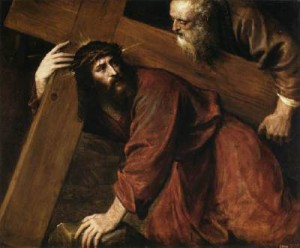
In spite of all attempts to circumvent, delete, or deny it, the cross remains the primary symbol for those who seek to follow Jesus. Whoever spends time looking at Caravaggio’s painting of the crucifixion cannot dismiss the horror of it, the cruelty of it, the god-forsakenness of it, or the helping hand of Simon of Cyene.
Like every other religious institution and faith tradition, the church which Donald and I once held in common is a failure. Lord knows how often the Presbyterian Church (USA) has stood on the other side of the fence from Jesus, Moses, and the prophets. Even so, like the Friends (“Quakers”), the voice of conscience lies near the heart of who we seek to be. We are taught to listen for “the still small voice” (the whisper) that calls us “to do justice, love kindness, and walk humbly with our God” (Micah 6:8).
From the Counterfeit Gospel of Prosperity to QAnon and Fascism
It’s a short distance from the winner or loser, good vs. evil, us/them theology of the Prosperity Gospel to QAnon and fascism. All these years after Edward R. Murrow called Joseph McCarthy’s search for communist conspirators to a screeching halt, a nameless figure who goes by “Q” gathers a following by uncovering a Satanic cabal working in high places of “the Deep State.” The enemy in 2022 is still leftists, as it was with the Third Reich and Joe McCarthy, but far worse and ludicrous — an underground Leftist cabal of child kidnapping, molestation, sex trafficking, pederasty, and cannibalism conspiring to take away our freedom. QAnon followers still make invoke the old fear of communist, but the culprits now are called Democrats.
QAnon’s view of Satan is fueled by the biblical literalist mindset of far-right fundamentalist and conservative Christian theology that turns Satan into an independent, identifiable being. If only it were that simple. The biblical Satan is the personification of the diabolical dimension of human nature. In the Bible Satan stands for the Trickster who twists Earth’s essential goodness against itself and its Creator. Satan’s workshop is the human mind and heart that cranks out impostors of God.
Responsibility and Ambiguity
Charles Thomson, a quiet member of America’s Founders, the first and only Secretary of the Continental Congress, wrote his friend Benjamin Franklin of his concern about “the cursed schemes dragging us into civil war, and national ruin.” The American experiment was “teetering at the edge of the cliff.” That was 1774, two years before the Declaration of Independence was issued. The threat of yearning for a king is as real now as it was then. Are we mature enough to turn back from the road to ruin? Will we remember, forget, ignore, or oppose the question and answer Donald and I learned in confirmation class? You don’t need a Presbyterian confirmation class to conclude that self-glorification is glory misplaced. Whatever happens, we do well to remember Charles Thomson’s wisdom and look at the diabolical dimension within ourselves and find the factory that cranks out substitutes for God. The search for glory always ends badly.
“The character of human life,” observed Paul Tillich, “like the character of the human condition, like the character of all life, is ‘ambiguity’: the inescapable mixture of good and evil, the true and the false, the creative and the destructive forces –both individual and social” — Time, May 17, 1963.
Gordon C. Stewart, Presbyterian minister (HR), and public theologian, Brooklyn Park, MN, author of Be Still! Departure from Collective Madness (2017, Wipf and Stock), available in kindle and paperback.
After an extended period of dismay and bewilderment, Psalm 39 opened a vein to write again.
Hermit Crab crawling into an abandoned shell
A Psalmic Meditation of a Hermit Crab
I said, “I will be careful how I act and will not sin by what I say.
I have been careful. A hermit crab at low tide, I sidle into a borrowed shell, not too big and not too small, to hide from birds of prey. I stuff myself inside. When the tide comes in, I may leave this shell. But not now. The sand is hot. The gulls are feeding.
I will be careful what I say around wicked people.”
It’s not just the birds of prey that keep me here. Whatever I say outside will make it hotter for crabs like me. I’m crabby and cranky. “Keep your words to yourself! The world doesn’t need more heat. We all need to cool down.”
So I kept very quiet. I didn’t even say anything good, but I became even more upset.
Despair is a horrible thing. “If you can’t say something nice, don’t say it. Stay in your room until you have something nice to say. You have to be positive.” I have nothing good to say. Nothing calm. Nothing of value. Nothing to cool the beach at noon. Nothing to lower the blistering heat rising in me.
I became very angry inside, and as I thought about it, my anger burned.
Glass shattering, Stop the Steal, Hang Mike Pence, Execute Nancy, Make America Great Again, sounds of threats and violence, cries for help, and the silence from the White House still hurt my ears.
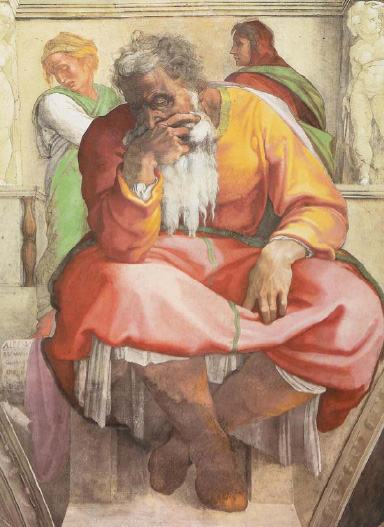
Then I remember how Jeremiah wept. Truth, he said, was dark and deep, and bought a worthless plot of land where hope could live.
The prophet Jeremiah, Michelangelo fresco, Sistine Chapel
So I spoke:
“Lord, tell me when the end will come and how long I will live. Let me know how long I have.
You have given me only a short life; my lifetime is as nothing in your sight; Even those who stand erect arebut a puff of wind.
It’s hard alone outside the shell. The wind is stiff. The sky is dark. Light is White and right; Black is dark and wronged again. Truth sways by a noose from the lynching tree.
When will this end? When will it stop? How will it stop? I’m an old man; my time is short, this short puff of air, soon to disappear.
People are like shadows moving about. All their work is for nothing; they collect things but don’t know who will get them.
My kind and I are like ghosts sidling along the wall of shadows we faintly see in Plato’s cave. We find no respite from the heat and clamor into which we once could crawl — or thought we could. We leave behind a scorched gift to generations yet to come.
“So, Lord, what hope do I have? You are my hope.”
Sea levels have rise, the tides are higher, the forests burning, the rivers drying, fields once lush and green now parched and brown, the planet spinning out of control, like a top our hands have spun. These mortal selves, this factory of gods our hearts conceive, cannot hide from Thee, O Lord, the “I AM” without end, the Breath of Life that breathes a breath through me.
Gordon C. Stewart, author of Be Still! Departure from Collective Madness (2017, Wipf and Stock), host of Views from the Edge: To see More Clearly, Brooklyn Park, MN, January 23, 2023.














 Views from the Edge