I want to be an Egret

image1In the estuary 100 yards from our deck, 18+ Egrets, Great Blue Herons, and Wood Storks have gathered in mid-day prayer at low tide.

They’re facing the same direction like worshipers in a mosque, or a church, or a choir facing a Maestro before the downbeat that opens the symphony. They stand perfectly still. Their heads are raised, looking up, focused on the sun as it moves the day from sunrise to mid-day to sundown to the night that will be broken again, as always, with daybreak.

The estuary is part of a tidal river that leaves the wide bay beyond our porch shallow and nearly empty at low tide. A feast of mud, oysters, clams, and small fish enough to satisfy them all. In the morning they turn their prayer mats to the East and give thanks for the new day. From noon to three, they look up, slowly turning their mats from East to South to West, unaware of the smell of smoke billowing up into the VRBO renters’ temporary shelter from the owners below, the cheap plastic chair that broke under me on the balcony, or the sceptic tank that overflowed onto the driveway after five inches of rain the other day.

Today I want to be an Egret or a Great Blue Heron. We came here to sit in the sun like the birds, to be more natural at thanksgiving, freer from the plastic, the smoke, the greed, the cold. I’ve decided to be a Great Blue Heron, an Egret, or maybe one of the forgiving, cooing mourning doves perched on the telephone wire between our place and the estuary bay.

Life is good! Life is for the birds!

  • Gordon C. Stewart, Snowbird, Tampa, FL, January 20, 2016.


Link

Last Monday I learned of a student’s tragic death in Saint Paul. This morning I read this remarkable reflection. The writer and blog are new to me. I’ve chose to “follow” this site.

The Donald at 11 year old

Imagine a class room of 11 year olds. Donald Trump takes on the teacher!

Click Li’l Donald to enjoy Bill Flanagan’s story in the The New Yorker. 

About Us: One Little Corner

I’ve always had a sense of living at the edge of the world. It’s not a bad thing. It’s not a good thing. It’s just the way it’s always been for me. But, as I watch and listen from my little corner of the world, something’s changed. I have a growing sense of blah, blah, blah, both others’ and my own.

Ours is an anxious time that cries out for a foothold. Speech is the primary way we establish a foothold in changing times.

“Threatened by nonbeing, by chaos, and meaninglessness, man looks for a foothold in the Imperishable,” wrote Dutch philosopher Willem Zuurdeeg years ago in Man Before Chaos: Philosophy Is Born in a Cry.

Influenced by Zuurdeeg’s work, I look and listen for the footholds – unspoken convictions that rarely get discussed – in the battlefield of ideas “where ignorant armies clash by night” (Matthew Arnold, “Dover Beach“). Just below the words, or between them, lie the ideological, prejudicial, cultural, national, class, political, religious, and economic ideals and convictions (footholds) by which we secure our existence in the face of the threat of nonexistence.

My friend and colleague Steve Shoemaker adds his poetry and verse – unique voice that draws readers to Views from the Edge. Over the years, our number of posts have been about the same with Steve’s being the more popular by far.  The frequency of Steve’s contributions has decreased in the past few months following diagnosis and treatment for pancreatic cancer. His recent posts on death and dying continue the joyful sense of humor and play that draw people to his poetry and verse.

Whether Views from the Edge (VFTE) contributes to thoughtful social criticism and a deeper appreciation of life, or adds more to the blah, blah, blah, is for readers to decide. Like other writers, we just can’t help ourselves!

NOTE: This post About Us is part of an assignment for a three-week course with WordPress.com. I’m also re-doing the tagline and the platform. Thanks for your patience.


The Green Man

Every generation tends to think of itself as superior to its predecessors. Ours is no different. Sometimes we’re right. Often, we’re wrong. We ignore or don’t know history.

Take, for example, the consciousness of green and climate change – the discovery, or is it the re-discovery, of nature as the context of human life. We tend to think it’s a new consciousness that sets aside the longer consciousness by which the human race justified ravaging the earth.

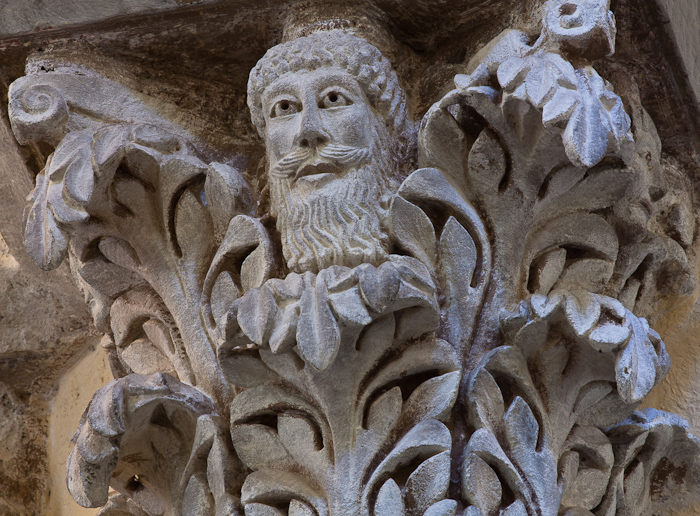
The Green Man in Clermont-Ferrant, Photo by Dennis Aubrey, Via Lucis Photography

The Green Man in Clermont-Ferrant, Photo by Dennis Aubrey, Via Lucis Photography

But, then, along comes the forgotten Green Man of Romanesque churches build in the Medieval Period, one version of which is featured in Dennis Aubrey’s post “A Green Man in Clermont-Ferrand” on Via Lucis Photography of Religious Architecture.

I turn to Via Lucis whenever I feel the need to get out of my skin, to shed the ignorant arrogance of the 21st Century presumption of progress and superiority.

The whole human story is captured in the various Medieval renderings of The Green Man, the human race fatally mis-perceived as “man over nature” and properly conceived as “man within nature”. 

Gordon C. Stewart, Chaska, MN, January 13, 2016

Question for readers of Views from the Edge

I need your help. I’m taking a refresher course called Blogging 101.

Views from the Edge is the name of this site. Fine. I’m sticking with it.  But what about a “tag line”?

Since “Views from the Edge” doesn’t say what the blog is about, the tag line is important to give the reader a better clue to the nature of the site.

One member of the webinar suggested something like “Looking at public life and the assumptions that shape it”.

I’ve also thought about using the Amish rocking chair as a tag line to indicate a slower, more thoughtful look at the world. Or adapting Kosuke Koyama’s observation that God is a three-mile-an-hour God – walking at the normal speed of a human walking. I confess! I’m stumped!!!

ALL SUGGESTIONS ARE WELCOME.

Thanks for considering,

Gordon

← Back

Thank you for your response. ✨


THE QUESTION – to be or not to be?

Hamlet, William Shakespeare

Hamlet, William Shakespeare

The questions “Who am I?” and “Why is Views from the Edge still here in 2016?” share a bit of Hamlet’s question whether “to be or not to be?”

We’re no Shakespeare! But writing is what we do. To not write would be not to be, a kind of denial of consciousness and the need to speak. So I’ve written and aired commentaries on MPR’s All Things Considered and anywhere else that has provided an opportunity to think and feel out loud.

Speaking from a pulpit is what I did most of my professional life along with some publishing on the side. Words matter. They deserve to be handled with care and thought. Which is why I go back and forth between days when I dare to think I have something worth saying and days when my words and thoughts feel like sending more pollution into cyberspace.

Not everyone cares about Views from the Edge, nor should they. But if you’re interested in a different viewing point on the news that searches out the hidden, taken-for-granted convictions, beliefs, and ideas that underlie life in the 21st century, you might find a second or third home here.

The edge from which my colleague Steve Shoemaker and I view the world is the margin, the place of an outsider peering in, the way an anthropologist looks at an ancient civilization to find out what it was really about. Steve and I cut our eye teeth on two stories that likely never happened but are always happening: Cain slaying his brother Abel, and the building and crumbling of the Tower of Babel. Both stories concern human anxiety and a refusal to live within the limits of meaningful time.

Hamlet’s “to be or not to be?” is the question in 2016 as climate change exposes the folly of the prideful, unspoken western philosophical conviction that the human species is superior to or exceptional to nature. We’re learning the hard way that we are not, and perhaps, just perhaps, we will also rediscover in the deepest core of the western tradition itself a wisdom and virtue akin to aboriginal traditions: a humbler human calling and way to be our neighbor’s and our planet’s keeper.

  • Gordon C. Stewart, Chaska, MN, Jan. 4, 2016

O Radix, A Third Advent Reflection and Sonnet

We’re pleased to re-blog Malcolm Guite’s poem “O Radix“[Latin for Root], a movement from “the surface of the wide-world screen” to “the forgotten root…of every living thing.”

malcolmguite's avatarMalcolm Guite

https://lanciaesmith.com/image-for-the-day-advent/ https://lanciaesmith.com/image-for-the-day-advent/ The third Advent antiphon,inmy Advent Anthology fromCanterbury PressWaiting on the Word, O Radix, calls on Christ as the root, an image I find particularly compelling and helpful. The collect is referring to the image of he ‘tree of Jesse the family tree which leads to David, and ultimately to Christ as the ‘son of David, but for me the title radix, goes deeper, as a good root should. It goes deep down into the ground of our being, the good soil of creation. God in Christ, is I believe, the root of all goodness, wherever it is found and in whatsoever culture, or with whatever names it fruits and flowers, a sound tree cannot bear bad fruit said Christ, who also said, I am the vine, you are the branches. I have tried to express some of my feelings for Christ as root and vine more…

View original post 271 more words

O Adonai, a second Advent reflection and sonnet

Malcolm Guite

Malcolm Guite

NOTE: Anglican priest, songwriter and poet poet Malcolm Guite is becoming a favorite of VFTE. His work reflects that playful but profound interplay between the particular and the universal that is poetry’s great gift. Here’s Malcolm’s post for today.

  • Gordon C. Stewart, Chaska, MN, Dec. 18, 2015. Malcolm writes from Cambridge, England. Click the link:

O Adonai, a second Advent reflection and sonnet

Noisy Advent

Mary Luti

Mary Luti

A brief reflection for any day or time of the year. Click Noisy Advent to open the piece by Mary Luti, author of Teresa of Avila’s Way.

Gordon