A Climate Dialogue: the Challenge Before Us

The day Pete Seeger died, Susan Lince composed a song on climate change in honor of Pete. The song, written as a lament spoken back to us by our grandchildren and all future generations, asks repeatedly “You knew… Why didn’t you take a stand?”

Susan and John Lince-Hopkins created Requiem2020.org as a means of rallying artists to widen public consciousness and awaken a new sense of ecological responsibility in the face of climate change and climate departure. John and Susan taught and painted in Alaska. John, a scientist as well as painter, helped supervise the clean-up operation following Exxon-Valdez.

Click HERE for the Evite to First Tuesday Dialogues’ program on Climate Departure led by John and Susan. The song on climate departure, arranged with Susan’s grandson, will debut at this event.

Date: Tuesday, March 4, 2014
Time: 7:00 – 8:30 P.M.
Place: Shepherd of the Hill Presbyterian Church, 145 Engler Blvd., Chaska, MN 55318.

Verse – Night Blooming Cereus

My grandmother would phone the night
it finally bloomed.  An ungainly
plant, sparse, with long tendrils, all light
green. Four brothers climb happily
into the car all wearing their
pajamas, excited to see
even an ugly plant.  We stare
at the white and gold bloom, and she
smiles, having hope even for me.

– Steve Shoemaker, Urbana, IL, Feb. 16, 2014

Click HERE for more information and photos of the Night Blooming Cereus. The bloom only lasts one night.

Divine Folly and Human Wisdom

A sermon at the Olivet Congregational Church in Saint Paul, Minnesota, March, 2003.

Texts: Exodus 20:1-17; Psalm 19; I Corinthians 1:18-25; John 2:13-22

“For God’s foolishness is wiser than human wisdom, and the weakness of God is stronger than human strength.” “God chose what is foolish in the world to shame the wise, God chose what is weak in the world to shame the strong. God chose what is low and despised in the world, things that are not, to reduce to nothing the things that are, so that no one might boast in the presence of God.”

Author Frederick Buechner reminds us that as the curtain falls on the final tragic scene of Shakespeare’s King Lear, the final words are uttered: “The weight of this sad time we must obey, Speak what we feel, not what we ought to say.”

We cannot help but speak what we feel and if what I say this morning misses the mark of preaching the gospel, perhaps by God’s grace you will hear nonetheless a Word for your life and the world’s. For the Spirit takes our words and uses them in the hearing of the listener at least as much as in the speaking of the speaker.

I speak to you this morning – in the weight of this sad time of war – as a child of wartime. I was born 1942. When I was a year old my father enlisted as an Army chaplain. When I was one-and-a-half I waved goodbye from a dock in Los Angeles as the tears streamed down my mother’s face. Although too young to understand the reason for the tears, I was not too young to inhabit the sorrow, the dread and the grief. I grew up with air raid sirens ringing in my ears. Several years after my father returned safely from the South Pacific – from Guam, Saipan, and Tinian, the island from which the “Enola Gay” made its run at Hiroshima – the sound of the fire siren would wake me with the horror of impending death.

Though the bombs never fell near my house or on my city, I grew up as a child of Baghdad, and I will be forevermore.

And so these days I awaken very early. I can’t sleep. I get up, make the coffee, turn on the reading lamp in the living room and read to still the storm. In the dark of night I feel like Alice in Wonderland. I plummet down one rabbit hole after another, trying to get my bearings in a world that seems to have lost its sanity – no north or south, no east or west, only a whirring gyroscope of confusion and nonsense. I feel sick over the bombs, sick over the lies and disinformation. Sick with a sense of impending doom.

But I also know that the Christian should not be surprised by this. “For the word of the cross is folly to those who are perishing, but to us who are being saved it is the power of God. For it is written,

‘I will destroy the wisdom of the wise,
and the cleverness of the clever I will thwart.’”

The cross of Jesus refutes all human wisdom that confuses might with right. The cross – the Roman means of State execution, the first century equivalent of an electric chair – stands empty. In the light of Easter, the might of the mighty is powerless. The cleverness of the clever is thwarted. The wisdom of the wise is destroyed. The cross exposes the vanity of power. It judges every act of ethnic cleansing, every assassination, every torture, every death committed in the name of national security. It exposes the untruth of every clever piece of propaganda and disinformation that twists the truth to shiver our knees in fear. The cross of Jesus exposes the foolishness of the wise, the powerlessness of the powerful, the folly of the clever.

As I sit in the pre-dawn darkness with my morning paper and a cup of coffee, the dawn slowly lights the horizon ‘til the sun lights the eastern sky and floods the porch with morning light. With the rising of the sun on the far horizon there rises within me the psalmist’s psalm of joyful praise, an awareness of a larger providence:

The heavens are telling the glory of God;
and the firmament proclaims his handiwork…
In them he has set a tent for the sun,
which comes forth like a bridegroom leaving his chamber,
and like a strong man runs its course with joy.
Its rising is from the end of the heavens, and its circuit
to the end of them. (Ps. 19:1-1,4b-5)

I am suddenly keenly aware that the sun rises on my neighbor, as well as on me, and that it rises every morning on Iraq and North Korea, on Afghanistan and China, on Venezuela and Timbuktu…without discrimination. It rises on Muslims and Christians and Jews, on Sikhs and Buddhists, on atheists and agnostics, capitalists, communists and anarchists. “The foolishness of God” – this expansive, inclusive providence and generosity of God – is wiser than human wisdom.” It is in that spirit that our Lord said to all would-be disciples:

“You have heard that it was said, ‘You shall love your neighbor and hate your enemy.’ But I say to you, ‘Love your enemies and pray for those who persecute you, so that you may be children of your Father who is in heaven; for he makes his sun to rise on the evil and on the good, and sends rain on the just and on the unjust. If you love those who love you, what reward have you? Do not even the tax collectors do the same? And if you greet only your neighbors, what more are you doing than others? Do not even the Gentiles do the same? You, therefore, must be perfect, as your heavenly Father is perfect.” (Mt. 5:43-48)

God’s care is like that. To be perfected in God’s image is to love like that – ubiquitously! If it were up to us, there would be sunshine fences everywhere. “Send a little sun over here, God, and ominous clouds over there! Send a few spring showers over here, God, and torrents of rain over there! A little warmth over here, a blizzard over there.” God’s providence does not create sunshine fences. God plays no favorites. There is no such division in God’s care.

So, when Paul writes to the Corinthians about the divine folly being wiser than human wisdom – when he says that “to those who are being saved (notice that Paul does not say “To those who are saved, but to those who are being saved”), “it (the cross) is the power of God” – it cannot be a division between the saved and the damned. No war of the children of light against the children of darkness. No sunshine fences. All such constructs are of human origin. Salvation (healing) is a work in progress. And it’s a work of God, not us. It’s not a done deal. It’s a daily process of transformation day-by-day, hour-by-hour, minute-by-minute. There can be no boasting except to boast of the man on the cross, no definition of human perfection other than this extravagant love of God.

Several years ago I was blessed by the friendship of Japanese theologian Kosuke Koyama, former John D. Rockefeller Professor of Ecumenical Theology at Union Theology Seminary in the City of New York, who now lives here in the Twin Cities with his American wife, Lois.

Dr. Koyama vividly remembers being baptized as a teenager. He was baptized during the bombing of Tokyo. As the bombs rained down on his city, Kosuke’s pastor told him that those who are baptized in Christ must love their enemies. “Kosuke, you are a disciple of Jesus Christ. You must love your enemies. Even the Americans.” The planes that were bombing Kosuke’s city were sent off from my father’s airstrips!

Dr. Koyama recalls being startled by the God of the Bible, as he read the Book of Isaiah. What struck him was that the God of the Bible stands not only for but also against his own people. God takes the people to task. The God of Isaiah, Amos and Jeremiah is saddened and offended by their behavior. In stark contrast, says Koyama, the Japanese god – the god of the emperor and the imperial cult, never criticized the emperor or the people. “You want to invade Manchuria? Sure. Go ahead. Good boy, good boy. Japanese. Good boy! You want to bomb Pearl Harbor? Go ahead. Good boy, good boy! Japanese. Good boy!”

At that early age, Kosuke Koyama decided that he would never again follow a god that spoke only one language. And that he would never again worship an uneducated god. The God of the Bible, he says, speaks more than one language. The God of the universe speaks many languages. The God of the Bible is a spacious God. Not the god of an imperial cult. The God of the Bible is an educated God. Not the god of the nation.
__________________

In the early morning hours, even as my soul rises in praise of the sun’s rising, I feel sad and just a bit angry. I can feel something of that tremendous feeling of loneliness and anger that Jesus must have felt as he watched the commerce of the temple and sat there in silence, braiding a whip out of the chords they had used to tie the animals. I can see him and hear him cracking his whip to chase out the traders and the money-changers: “You shall not make of my Father’s house a house of trade!”

There is a place in the Christian faith for indignation. There is a place for anger when wrong is done, when falsehood parades as truth, when arrogance takes the place of diplomacy, when religion blesses bombs. And for the sake of the nation, if not for ourselves, we need to recover our ability to feel things deeply. All around us and within us there is fear and acquiescence. Only the power of God’s kingdom can revive in us the capacity for outrage when children anywhere shiver in fear in air raid shelters.

Terrorism is a real threat. But the greater threat to America is that we will lose our capacity to mourn unnecessary death, that we will lose our capacity for anger when a child dies or is psychologically damaged by American bullets and bombs, that we will lose our souls by placing them on the altar of what President Eisenhower chillingly described as a military-industrial complex which, one day, would be out of control, turned loose to do its job.

And when Jesus had driven out those who sold and those who bought, he taught them, and said to them, “Is it not written, ‘My house shall be called a house of prayer for all nations’? But you have made it a den of robbers. And the chief priests and the scribes heard it and sought a way to destroy him, for they feared him.” (Mk. 17-18b)

And so Paul writes that “the word of the cross is folly to those who are perishing, but to us who are being saved it is the power of God. For it is written,

‘I will destroy the wisdom of the wise,
And the cleverness of the clever I will thwart.’”

Why is the word of the cross the power of God?

Bishop Desmond Tutu tells the story of a visit to Rwanda after the genocide of 1994. In his book No Future Without Forgiveness, Bishop Tutu tells of visiting a church in the capitol of Rwanda where Tutsis had been mowed down and where the bodies continued to lie as they had fallen the year before during the massacre. He describes the church as a disturbing monument to the viciousness of which we as human beings are capable.

“Those who had turned against each other in this gory fashion had often lived amicably in the same villages and spoken the same language. They had frequently intermarried and most of them had espoused the same faith – most were Christians. The colonial overlords had sought to maintain their European hegemony by favoring the main ethnic group, the Tutsis, over the other, the Hutu, thus planting the seeds of what would in the end be one of the bloodiest episodes in modern African history.”

Asked to preach at the main stadium in Kigali, the capitol, the Bishop said that the history of Rwanda “was typical of a history of ‘top dog’ and ‘underdog’. The top dog wanted to cling to its privileged position and the underdog strove to topple the top dog. When that happened, the new top dog engaged in an orgy of retribution to pay back the new underdog for all the pain and suffering it had inflicted when it was top dog.

He said that the extremists among the Hutus had proven that they were quite capable of waiting thirty years for the day when they could exact revenge, and that the same could be expected of the Tutsis – unless the cycle of reprisal and counter-reprisal was broken. He told the crowd that “the only way to do this was to go beyond retributive justice to restorative justice, to move on to forgiveness, because without it there was no future.”

Human wisdom is “top dog” wisdom. Divine wisdom is the wisdom of the cross. Human wisdom is cyclical and vicious. Divine wisdom is a breakthrough – from cross to empty tomb.

Why is the word of the cross the power of God?

At the center of our crucifying behavior is fear. “The chief priests and the scribes sought a way to destroy him, because they feared him.” So do we. For the sake of this fear, we have been given a spirit of courage and boldness. We “did not receive a spirit of slavery to fall back into fear, but … have received the spirit of adoption. When we cry, ‘Abba! Father!’ it is that very Spirit bearing witness with our spirit that we are children of God, and if children, then heirs, heirs of God and joint heirs with Christ, if, in fact, we suffer with him in order that we may also be glorified with him” (Rom. 8:15-17).

A client in deep distress, grief and sorrow, after struggling alone in anonymity with what Chaim Potok has called “the four-o’clock-in- the-morning-questions” and battening down the hatches of his psyche finally goes to a therapist for help. When he arrives, the therapist asks how it feels to be there. “Good,” says the man. “Good. If feels good to be in a safe place.” To his surprise, the therapist asks, “What makes you think this is a safe place? This isn’t a safe place. This is a very dangerous place! You didn’t come looking for safety. The only really safe place is six feet under. You didn’t come looking for safety. You came here looking for life.”

Isn’t it the same with you? We come here looking for life, not safety, not death. We come looking for wisdom, not folly. For straight talk, not double-talk. We come listening for the genuine good news of the gospel. We come because we’re tired of falling down rabbit holes. We come for truth and straight talk about a gospel that lays bare every lie and every pretense, every fleeting power – a gospel that lays us bare before God.

In our nakedness, standing before the Mercy Seat of God’s judgment, exposed in our vain substitute of safety for life, may the Spirit that cries out with our spirits for life in its fullness silence every voice but its own, free us from fear and from the tyranny of security, and grant us to enter boldly through the foolishness of the cross to the fullness and joy of life itself.

And let us remember that this world is no cheap five and dime house of trade in which life is bought and sold for nickels and dimes. This world is the House of our Father who is in Heaven! And now to the One who is able to keep us from falling, to the only wise God our Savior, be glory and majesty, dominion and power, now and forever. Amen.

Palm fronds and Ashes

Tomorrow morning Ida will be laid to rest. When her family cleaned out her hospice care room, already Spartan in its simplicity, they found stashes of old palm fronds she had saved from Palm Sunday along the way of her 99 years. They were the last things to go, found under her mattress, under her bed, and anywhere else she could think to keep them close. The Palm fronds and mass cards were among her most precious belongings.

In the Christian tradition the Palm fronds from the previous year’s Palm Sunday are burned and saved for the imposition of ashes on Ash Wednesday, the beginning of Lent. “Dust to dust, ashes to ashes.” We are children of dust, and to dust we shall return.

Preparing to lead the Ash Wednesday Service several years ago, I could not find the ashes. The following piece, aired on Minnesota Public Radio, serves as a twinkle in the eye tribute to Ida, whose faith was enviably simple and strong. She never got into the collection of stuff; the few things she retained bore witness to her quiet faith.

Ashes

“They’re missing! Where are the ashes?!”

It’s fifteen minutes before the Service. “Where are the ashes!”

Every year I put the ashes for the Ash Wednesday Service in the credenza in my office. I never gave it a second thought that we had moved the credenza out of my office last fall. I rush downstairs to look for it. No credenza anywhere. Then I remember. We sold it at the Annual Fall Festival! Somebody has our ashes!

What to do with no ashes? Burn some newspapers? Smoke a cigar and use the ashes? No time.

I grab a pitcher and pour water into the baptism font.

I begin the Ash Wednesday Service with the story of the missing ashes. Smiles break out everywhere. Maybe even signs of relief. “Instead of the imposition of ashes this year, we will go to the font for the waters of baptism, the waters of the renewal of life.”

We have some fun justifying the change in the Service, focusing on part of the Gospel text for the day – the words of Jesus himself. “And when you fast, do not look dismal, like the hypocrites, for they disfigure their faces that their fasting may be seen my others…. But when you fast, anoint your head and wash your face, that your fasting may not be seen by others but by your Father who is in secret…” (Mt. 6:16-18).

People come to the font, one-by-one, for the Imposition of Water. I dip my hand into the font. “Pat, (making the sign of the cross on her forehead), “Dust to dust, ashes to ashes. You are a child of God. Live in this peace.”

After the Service is over, one of the worshipers asks whether anyone has done the same for me. She reaches her hand into the font. “Gordon, dust to dust ashes to ashes. You are a child of God….”

I’ll never forget it. Neither will they.

Somewhere in this world someone has a credenza with a sack full of ashes. Whoever you are, feel free to keep them. They’re all yours.

————

Agatina (Ida) Misiti Terranova was born in Queens, NY, the second child of first generation immigrants. She spoke only Italian until the school truant officers paid a visit to inform Ida and Millie’s parents that all children in America had to go to school. Her father wanted them to stay home to help their mother. Girls didn’t need to go to school! Ida and Millie learned English, went to work in the garment district of NYC, married two brothers, Al (Ida) and Mike (Millie) Terranova, and raised their families on the best Italian cooking and a love that was as demonstrably joyful as their egg plant parmesan sandwiches were mouth-wateringly delicious.

Millie, Al, and Mike preceded Ida in death. May they all rest in peace.

Me and My Smart Phone

My right hand has a callus where
I hold my iPhone when I read
or type.  I’m losing feeling on
my thumb tip where I tap the bare
small screen.  My left hand learned to feed
my mouth while I still grip the phone.

My wrist has carpel tunnel pain–
I’m on-line more than off.  I reach
inside my pocket more each day
for phone than wallet or a coin,
a penknife, or a handkerchief.
On-line Scrabble is all I play…

Are FaceBook friends my only friends?
Am I alone with just my phone?

– Steve Shoemaker, Urbana, IL, Feb. 10, 2014

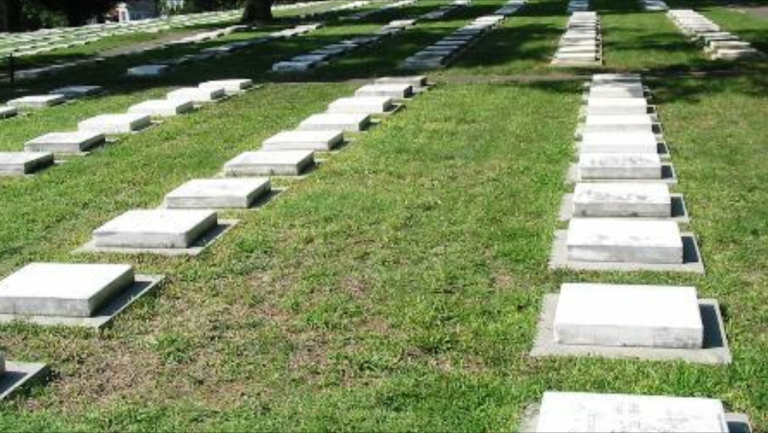
Old Salem Cemetery

Old Salem Cemetary

Old Salem Cemetery


The square marble white stones
lie flat in straight rows
in God’s acre: unity,
liberty, and love.

No gaudy spire
of a wealthy patriarch;
no spreading plot of a family
blessed with many offspring.

The bachelor, the single woman,
the infant, the child–each in a choir
that someday will rise up and sing
along with the married folks.

The brass bands gather
and play across the rolling grounds
each Easter morning: trumpet,
trombone, euphonium…harmony.

– Steve Shoemaker, Urbana, IL, Feb. 9, 2014

The Fuller Brush Man

In 1959, I was sixteen
and in summer was hired to help a man
who went each day from woman to woman
and sold Fuller Brushes.
……………………………….I’d drive a van
delivering what he had sold. I’d pick
up bags full of the product with the names
and addresses of customers. I’d pack
the van there by the many waiting trains
beside the trailer park.
……………………………….The salesman’s home
was rusty, filled with screaming little kids.
The homes that bought the cleaning gear were from
the poorer parts of town: more kids, and wives
were always home–there was no second car.
The new toilet brush cost just one dollar.

-Steve Shoemaker, Urbana, IL, Feb. 9, 2014

Was Jesus guilty?

by Gordon C. Stewart (copyright)

Was Jesus of Nazareth guilty as charged?

The charge against Jesus of Nazareth was that he “refused to pay tribute to Caesar” and that “he stirred up the people.” One translation called him a “seditionist” or, in a congressman’s language, a subversive, an enemy of the state. The late lay theologian and lawyer William Stringfellow argued that Jesus was a revolutionary. Not a rhetorical revolutionary, but one whose very existence threatened his world in a revolutionary way.

Years of pouring over the Gospel texts and the Dead Sea Scrolls for clues as to the nature of the time of Jesus of Nazareth have not quite brought me to the stark nakedness of Bishop James Pike, but I’m close.

The Bishop was in Washington, D.C. for a meeting of some sort. His friend Anthony Towne went to his hotel room to take him to breakfast. When Anthony knocked on the door, the Bishop shouted out, “Come on in, Tony, the door’s open.” He opened the door to find the Bishop sitting in an arm chair, Dead Sea Scroll manuscripts scattered around the floor surrounding the chair, sitting there in the altogether. The Bishop was so entranced with the Scrolls and the Scriptures that he had forgotten to dress; he was unaware of his nakedness. Bishop Pike later died alone in the Judean wilderness searching for the historical Jesus.

I’m not as obsessed with the question as James Pike was, but I am nonetheless intrigued, fascinated, confused, and excited by Jesus of Nazareth and the New Testament witness to him precisely because of the new information that invites us to ask again who Jesus was.

Christians often see the cross as something that God intended for Jesus as the Son of God, as if God sent his son into the world that we might kill him and that Jesus was surely innocent of the charges brought before Pilate. Rarely do we consider the possibility that Jesus was guilty as charged. Likewise, what we in the church call Palm Sunday/Passion Sunday is often observed in a way that paints Jesus as the non-political spiritual man whose kingdom is not of this world, contrary to the people on the street who mistakenly hailed him as the warrior king whose aim was to throw Rome out of Palestine.

Palm Sunday provides a window into the question of whether Jesus was guilty as charged. Go beneath all theological assumptions to step onto the road with the people who waved the branches and ask what they were doing there and why Jesus did what he did. But before we look at the parade into Jerusalem we remember that the death we observe on “Good Friday” was a political execution, the Roman equivalent of the electric chair, the firing squad, and the gas chamber. The charges against him at the trial are clearly political. “We found this man inciting our people to revolt, opposing payment of the tribute to Caesar, and claiming to be Christ, a King” (Luke 23:2, Jerusalem Bible). Jesus was executed as a revolutionary against the Roman Empire.

Behind the New Testament texts lie the familiar strains of the older texts from Zachariah and II Maccabees.

The background of Palm Sunday in the Book of Zachariah

One of the first things to notice about the Palm Sunday episode, the “triumphal entry” into Jerusalem, is that the demonstration is not spontaneous. “The master has need of it” – the words the disciples have been instructed to speak to a man in town who owns a donkey – is code language, arranged in advance. Furthermore, Christ rides on the donkey, not a horse. Traditionally this has been taken to mean that he refuses the title of king and prefers to come instead in humility, riding on a donkey. But look more closely at the setting for the donkey passage in the literature of Zachariah and you will find an oracle against a foreign occupier. It is in the context of his oracle against oppression that Jesus chooses to ride on a donkey (or two donkeys!). Here’s the Zachariah passage:

“Near my house I will take my stand like a watchman on guard against prowlers; the tyrant shall pass their way no more, because I have now taken notice of its distress. Rejoice heart and soul, daughter of Zion! Shout with gladness, daughter of Jerusalem! See now, your king comes to you; he is victorious, he is triumphant, humble and riding on a donkey, on a colt, the foal of a donkey. He will banish chariots from Ephraim and horses from Jerusalem; the bow of war will be banished. he will proclaim peace for the nations. His empire shall stretch from sea to sea, from the River to the ends of the earth. As for you, because of the blood of your covenant, I sending back your prisoners from the pit (in which there is no water?” – Zachariah 9:8-11, Jerusalem Bible.

Jesus’ entry into Jerusalem is rooted in the hope of Zachariah. Riding the colt identifies Jesus with the long-held hopes of Jesus’ people for an end to their bondage – economic, political, financial, cultural, spiritual, imperial bondage. The Zachariah text occurs in a section of curses against oppressors. To cherry pick humility from the text while ignoring the context and symbolism of the donkey fails to do justice to the sweeping hope of an altogether new and totally revolutionary transformation.

The background of Palm Sunday in Second Maccabees

The people lining the streets are waving branches hailing Jesus as the Messiah, the liberator of the nation from foreign occupation. The palm was a symbol of Jewish resistance. At an earlier time in the Second Century BCE Simon Maccabaeus was hailed with palm branches after a successful Jewish warfare that had regained the nation’s freedom and reclaimed the integrity of the Temple. Here’s the text:

“Maccabaeus and his companions, under the LORD’s guidance, restored the Temple and the city, and pulled down the altars erected by the foreigners in the market place, as well as the sacred enclosures. They purified the sanctuary and built another altar; then striking fire from flints and using this fire, they offered the first sacrifice for two years, burning incense, lighting the lamps and setting out the loaves. When they had done this they threw themselves flat on the ground and implored the LORD never again to let them fall into such adversity, but if they should ever sin, to correct them with moderation and not to deliver them over to blasphemous and barbarous nations. This day of the purification of the Temple fell on the very day on which the Temple had been profaned by the foreigners, the twenty-fifth of the same month, Chislev. They kept eight festal days with rejoining, in the manner of the Feast of Tabernacles, remembering how, not long before at the time of the Feast of Tabernacles, they had been living in the mountains and caverns like wild beasts. Then, carrying branches, leafy boughs and palms, they offered hymns to him who had brought the cleansing of his own Holy Place to a happy outcome. They also decreed by public edict, ratified by vote, that the whole Jewish nation should celebrate the same every year.” (II Maccabees 10:1-8)

In times such as this I join Bishop Pike in asking who he was and find myself quite naked and often alone in the search. But one thing I think I know. Bill Stringfellow nailed it. Jesus was a revolutionary of the most profound sort. His very existence – his being – was enough to bring charges from a world that refused to be disturbed by him. “See now, your king comes to you; he is victorious, he is triumphant, humble and riding on a donkey, on a colt, the foal of a donkey. He will banish chariots from Ephraim and horses from Jerusalem; the bow of war will be banished. he will proclaim peace for the nations. His empire shall stretch from sea to sea….”

Will we shrink Jesus of Nazareth to our own small size and purposes, or will we line the streets with festal branches for the humble man on the colt whose kingdom of justice, peace, and love is always being crucified but can never be extinguished?

NOTE

This sermon was preached March 19, 1978 in McGaw Chapel at The College of Wooster, Wooster, OH.

Verse – dream of dancing

loving parents but the way they
read the bible meant no dancing

on my own after college I
took lessons to please my new wife

i was never good but had fun
for years moving with the music

now my knees and back restrict me
to a slow shuffle and a sigh

but in my sleep i leap and fly

– Steve Shoemaker, Urbana, IL, Feb.  6, 2014


My son’s first drink

I was reading an article last night about fathers and sons, and memories came flooding back of the time I took my son out for his first drink.

Carling Black Label ad

Carling Black Label ad

Off we went to the local watering hole which is only two blocks from the house. I got him a Castle … he didn’t like it – so I drank it.

Then I got him a Carling Black Label, he didn’t like it, so I drank it.

It was the same with the Windhoek Lager and Premium Dry Cider.

By the time we were done with the whiskey, I could hardly push the stroller back home.

– Sent from a friend in Texas. Years ago it could easily have been [we’ll call him] Bob just for the fun of it. Bob’s humor broke the soberness of pondering climate departure. I needed that today.