
The grateful nine year-old
Devin Smeltzer had never expected to pitch in the Major Leagues. He was diagnosed with cancer at the age of nine. A softball-sized tumor required surgery, chemotherapy, and a feeding tube. Since leaving Philadelphia’s St. Christopher Hospital for Children, wrote Ben Rohrbach after Devin started pitching in the minor leagues two years ago,
he’s scrawled the names of those who have inspired him on his cap — friends and family members diagnosed with cancer and the many children he’s seen pass through the doors at St. Christopher’s upon volunteering each month.
Ben Rohrbach
Then it happened. The Twins called him up from the Pensacola Wahoos, the Twins’ Double-A affiliate in Florida, to stand in for the fifth member of their pitching rotation who’d been placed on the Disabled List for a short while.
Twenty-three year-old lefty Devin Smeltzer, the cancer patient in remission, blew through six innings against the Milwaukee Brewers, one of the toughest lineups in the League. He performed like an Ace — think Sandy Koufax, Ryan Nolan, Steve Carleton — allowing no runs, just three hits, and seven strikeouts in six full innings.
A second start
Tonight in Cleveland, Devin Smeltzer will take the mound for a second start in a Minnesota Twins uniform. As he has done since rejoining his Little League team following his release from St. Christopher’s Hospital for Children, Devin will not take the mound alone. The cancer patients, his family, and medical staff will go with him under the bill of his cap.
Devin Smeltzer is a singularly remarkable life story. Equally remarkable, no matter how he pitches tonight or whether he makes it as a major league pitcher, is his humility and gratitude.
“My story’s not about me anymore.”
“My story isn’t about me anymore,” he told CBS Philadelphia this past spring. “My story is about giving hope to other people. There was a kid almost the same age as me. He didn’t make it. The hardest thing about going through cancer is meeting all these amazing people, and those people passing away and you moving on. I remember Frankie. There was Baby Lea, and it was hard to hear when she passed away. She was under 2. That’s the hard part. I beat cancer, but the battle is still there. I’ll always have it. You have to help the people that have helped you — and there are a lot of people that have been there for me.”
Ben Rohrbach, Yahoo Sports
Not many of us write the names of others under the bills of our caps or make it to the Big Leagues. But there are more like him. Mostly unseen. Behind the scenes showing the same gratitude, humility, courage, and compassion that quietly bless others every day without the cheering of the crowd.
- Gordon C. Stewart, Chaska, MN, June 2, 2019
 Few of my closest male friends still get up in the middle of the night. Most have had surgery or are on Flomax. They sleep through the night. While they’re sleeping, I’m getting up three of four times, on a good night. Last night it was five!
 The swath of light shifted with each trip down the handcrafted maple staircase the A-frame’s builder — a Saint Paul fireman — had rescued before the old firehouse was torn down. It’s a beautiful work of art, and, when the evening sun or a full moon shines its light on the maple, those who see it can’t help but be thankful the old fireman rescued it from its fateful trip to the landfill. The angle of the light moves with the moon to create changing patterns formed by the light from above and the different shaped shadows cast by the thin, leaf bare birches and aspens, and by the bigger oaks and maples whose leaves have not yet fallen — each of the five trips up and down the staircase unlike the one before. I thought of all my friends who no longer need to make trips in the night because of surgery or Flomax, or the end of their time under the full moon among the trees and wetlands.

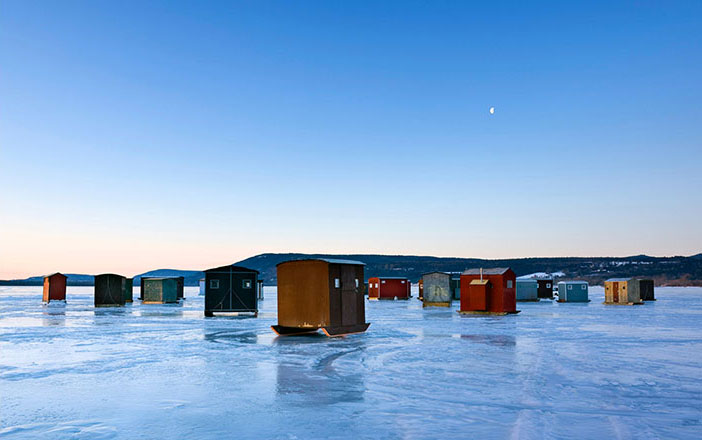


 A flock of Canadian geese flews over the wetland before dusk, honking their way south before winter comes to the Upper Midwest, while inside the cabin walls the Toronto Blue Jays had flown south to Minneapolis over the radio to play a ballgame with the Twins. Unlike the Canadian geese, the Blue Jays are going nowhere; the Minnesota Twins are preparing for a long flight to the World Series.
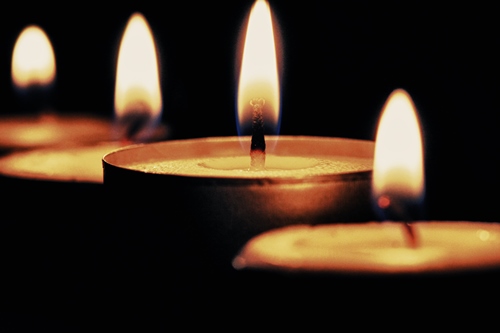 There is something strange about being alone in a remote wilderness cabin without a remote or internet, but some things stay close. Like the radio I bring to listen to the Twins games, and my canine companion Barclay who doesn’t care about the Twins or the radio but does care about candlelight. Barclay had headed for his kennel for the night an hour after the Twins had broken the sacred silence—until the sound of a match drew him back to the sofa to watch the candlelight flicker against the walls.
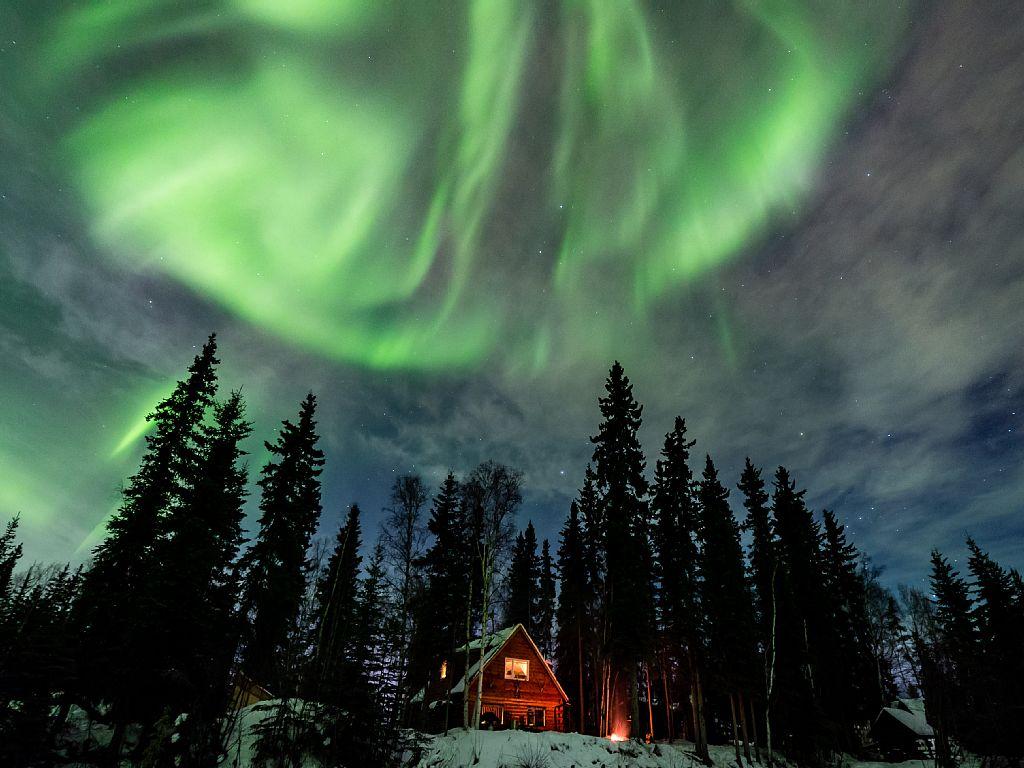 By the seventh inning stretch, I’m tired of the Twins game, blow out all the candles, see Barclay to his kennel, and head up the ladder to the loft in the darkness. Only then do I notice the light show beyond the cabin walls: the Northern Lights dancing across the sky, a natural light show no World Series can match. Through the loft window I watch the light that knows nothing of matches, candles, or our whereabouts off the human map.
 Views from the Edge