Donald Trump’s refrain begs for interpretation. What does he mean by ‘great’? Is there a synonym for ‘great’ in Trump’s speech and demeanor?
“Make America the BULLY again!”
Mr. Trump – Mr. You’re Fired! – acts like a bully and talks like a bully. “We’re going to make America great again! You’re going to love it!”
Need we say more? Yes, we do. Because people are falling for it.
Imagine the voice of William Stringfellow coming from the same stage as Mr. Trump:
“The sheer arrogance of the idolatrous claims of nations, perhaps especially those possessed of enormous economic and military strength, is so starling that the fascination of men (sic) with idolatry can be explained in no other conceivable manner than as moral insanity….
“More than one President of the United States, not to mention other lesser orators, have propounded, with sober face, the theme that America’s extraordinary power evidences an erstwhile holy dispensation and constitutes God’s partisanship for American dominance in the world.”- William Stringfellow, Imposters of God: Inquiries Into Favorite Idols, Wipf & Stock Publishers, 2006. [Imposters for God was original written as a confirmation curriculum for confirmands in the Episcopal Church in America.]
Gordon C. Stewart, Presbyterian minister, Chaska, MN, Feb. 27
Any and all religions are divided between two types. One shouts; the other listens. One makes war in the name of God; the other makes peace in the name of God. One kills its enemies; the other prays for its enemies.
Both types are found within each of the three Abrahamic religions. The sacred texts of Judaism, Christianity, and Islam can be interpreted either way. Sections of the Hebrew Bible and the New Testament – the Book of Revelation, for instance – lend themselves to interpretations that shout, go off to war, and kill in the name of a warrior God. The same is true of the Qu’ran.
Apocalyptic fear or expectations – end of the world theology – light the fires of fear and hatred.
Richer by Far this morning invites us to pause and ponder the deepest truth about ourselves and others.
“The acceptance of oneself is the essence of the whole moral problem and the epitome of a whole outlook on life. That I feed the hungry, that I forgive an insult, that I love my enemy in the name of Christ – all these are undoubtedly great virtues. What I do unto the least of my brethren, that I do unto Christ. But what if I should discover that the least among them all, the poorest of all the beggars, the most impudent of all the offenders, the very enemy himself – that these are within me, and that I myself stand in need of the alms of my own kindness – that I myself am the enemy who must be loved – what then? As a rule, the Christian’s attitude is reversed; there is no longer any question of love or long-suffering; we say to the brother within us ‘Raca,’ and condemn and rage against ourselves. We hide it from the world; we refuse to admit ever having met this least among the lowly in ourselves.” Carl Jung,Modern Man in Search of a Soul.
Apocalyptic theology of whatever sort ignores the deepest truth about ourselves. Martin Niemoller, the German churchman who resisted Hitler gives the succinct word to ponder.
“It took me a long time to learn that God is not the enemy of my enemies. He is not even the enemy of His enemies.” Martin Niemöller
As a child, I wondered what God was like. I was told God was like Jesus. But I couldn’t see Jesus; neither could the artists who painted God and Jesus. They just made up what they looked like. I never got an answer to what God looks like, or what God sounds like.
All these years later young children ask me the same questions:
“What does God look like? What language does God speak? How do we know it’s God?”
Recently a kind of answer came while speaking with a neurosurgeon at a hospital in Ukraine.
Imagine you’re a fly on the wall in the neurosurgery floor of a hospital. All the patients have had, or will soon have, brain surgery. You observe the neurosurgeon make his daily rounds, going from room to room – just as you would expect anywhere in the world.
But this isn’t anywhere in the world. Something’s different here. This hospital is an embattled region on the eastern border of Ukraine… and the patients under this doctor’s care aren’t just any patients. Some of them are enemy soldiers. The patients are from both sides of the war.
One Russian soldier with a bullet still in his head occupies Room 401. Next door in Room 403 is a Ukrainian soldier, recovering from surgery. One speaks only Russian; the other speaks Russian and Ukrainian.
Like many other citizens in this city in the Donbass Region of Ukraine, the neurosurgeon speaks fluent Russian and Ukrainian. He communicates equally well with the Russian and Ukrainian enemy soldiers.
The surgeon walks into the Russian soldier’s room. He greets him in Russian: “Dobroye utro [Good morning], Vladimir, how are you feeling this morning?”
“Khorosho” [Good], says Vladimir.
He goes next door to Room 403. He greets Alexei in Ukrainian: “Dobroho ranku, [Good morning] Alexei. How’s the headache this morning?”
“Ne take dobre!” [Not so good], says Alexei.
Both the Russian and Ukrainian soldiers trust that the doctor lives by a different code than the geopolitical code of conduct that has landed them – two former enemy combatants – in the same hospital next door to each other.
__________________
What does God look like? What language does God speak?
As Japanese theologian Kosuke Koyama noted, God speaks more than one language. God speaks many languages. Maybe God looks and sounds like a multilingual brain surgeon making rounds in the war-zone hospital taking the bullets out of the heads of enemy combatants.
This morning we introduce readers to the work of David Steindl-Rast, O.B. by means of this TED Talk on the relationship between happiness and gratitude.
“And as they were stoning Stephen, he prayed, ‘Lord Jesus, receive my spirit.’ And he knelt down and cried with a loud voice, ‘Lord, do not hold this sin against them.’ And when he said this, he died.” [Acts 7:59-60]
“Flesh and blood is weak and frail,” wrote T.S.Eliot in his poem “The Hippopotamus,” “While the True Church can never fail/ For it is based upon a rock.
We don’t know for sure whether Stephen, the martyr, was murdered by a mob or was executed with government sanction. We do know that he didn’t lose his life; it was taken. Yet he did not let the terror of “nervous shock” strip him of his faith or his humanity. Like Jesus, Stephen did the unthinkable as he died. “He knelt down and cried out with a loud voice, ‘Lord, do not hold this sin against them” [Acts 7:60].
The back story for Stephen’s death is a squabble between Greek-speaking Jewish Christians and Aramaic-speaking Jewish Christians about the fair distribution of the early church’s common wealth. To resolve the matter, the Apostles invited the people to choose seven men to be a kind of leadership council that would see to the needs of the community’s members. They chose Stephen, “a man full of faith and of the Holy Spirit, and Philip, and Prochorus, and Nicanor, and Timon, and Parmenas, and Nicolas a proselyte from Antioch… And when they had prayed, they laid their hands on them.”
Not long after that, false charges were made against Stephen from a few disgruntled factions. Stephen, though flesh and blood and, like all flesh and blood, susceptible to nervous shock, was not deterred. He responded by reciting Israel’s history, but in doing so also pointed to their collective and habitual disobedience, particularly in the form of idolatry. He went so far as to call them “stiff-necked,” meaning hardheaded or stubborn. Not a good way to make friends or to influence your accusers.
Stephen was a bold witness who lost his life for the Lord’s sake only to find it. He paid the ultimate price and his testimony lives on even today, as in persecution the Church has spread across the world. There are others, too, however, who have testimonies in this story. The hands of those who participated in the murder and who stood by doing nothing are left with the crimson stain of innocent people. It is the German liberation theologian Dorothee Sölle who wrote in her book Suffering, “In the face of suffering you are either with the victim or the executioner–there is no other option.” Whether for good or evil, love or hate, health or dysfunction, protection or exploitation, we all have a testimony.
One of the lasting testimonies comes from a man named ‘Saul’, whom the Church remembers as ‘Paul’, who was there at the stoning of Stephen.
While Scripture doesn’t say that Paul hurled any stones, if you peek over to chapter eight, you will discover that Saul approved of Stephen’s murder. The fraudulent witnesses took off their coats and “laid them down at Saul’s feet”, improving the range of motion of their throwing arms like pitchers warming up in the bullpen. This same Saul was on a crusade to crush the Jesus movement until the heavens opened, struck him blind with overwhelming light, and spoke his name: “Saul, Saul, why are you persecuting me?”
It’s easy to judge those who laid down their coats at Saul’s feet, and to judge the young persecutor who was there at the stoning of Stephen. But we, too, throw our stones from a distance – not only the distance of time but at a fearful distance from the shock of our own flesh and blood reality and the shock of who we are.
Rembrandt’s first painting was of the Stoning of Stephen. A close look at the faces of the crowd reveals at least three self-portraits of Rembrandt peering out from the crowd, just behind a prominent executioner with a large rock ready to pummel the praying Stephen’s head. Rembrandt saw himself there, close up and aghast, among the stoners but sympathizing, it seems, with the one being executed.
You and I are also there in the story. Check the echoes of the “stoning of Stephen” in your own life. Perhaps you have participated in your own stoning through some debilitating sense of perfectionism and self-hate. In the courtroom of your own deepest self, you have testified on behalf of the prosecuting attorney who calls you loathesome. Perhaps you have borne witness against yourself, not only unable to forgive the sins of others but standing as your harshest, most unforgiving, critic – serving as prosecutor, judge, and jury against yourself.
“And as they were stoning Stephen, he prayed, ‘Lord Jesus, receive my spirit.’ And he knelt down and cried with a loud voice, ‘Lord, do not hold this sin against them.’ And when he said this, he died.”
Like the Amish who tipped their hats as they passed by the home and the family of the man who had murdered their children in the West Nickel Mines Amish school house shooting 10 years ago, Stephen could only do this with divine help infusing his weak and frail flesh and blood susceptible to nervous shock.
What informed Stephen and what can direct us is Stephen’s vision of the crucified Jesus as the one who sits at the right hand of God. For the right hand of God is the hand of God’s power. But, according to Stephen’s testimony, God’s power is not like human power. God’s power is not the power of might or revenge. It is exercised in weakness. God’s power is exercised is long-suffering patience with the creatures God hands have formed.
Stephen accused his accusers of being “stiff-necked people” who broker no criticism, perhaps because they had mistaken the Holy One as the sternest of judges. With stones in hands, executing Stephen, or peering out as silent observers, like Rembrandt, they were stoning themselves.
The stoning scene in The Book of the Acts of the Apostles reads:
“[W]hen they heard (Stephen’s words), they were enraged and ground their teeth against him.”
“But Stephen, full of the Holy Spirit, gazed into heaven and saw the glory of God, and Jesus standing at the right hand of God; and he said, ‘Behold, I see the heavens opened and the Son of Man standing at the right hand of God.”
While his accusers and executioners picked up their stones, Stephen stood upon the Rock of his salvation: the faith that his future and the future of his killers lay in the hands of the One who sits at the right hand of God the Father Almighty, the Crucified Human One, our judge and our redeemer. It was this crucified Jesus, now seated at God’s right hand, who on the cross had become humanity’s defense attorney – “Father, forgive them, for they know not what they do” – whose cry inspired Stephen to breath his last in peace rather than in spite.
While we never hear again of Prochorus, Nicanor, Timon, Parmenas or Nicolas – the fellow first deacons chosen with Stephen – Saul, the participant in Stephen’s stoning, bore the fruit from which the gospel was carried into the world. Over time, Stephen’s vision and prayer to the right hand of God ate away at the heart and mind of the young man Saul who’d been entrusted with the coats of Stephen’s killers, and he, Saul, became Paul who, by grace, became the supreme witness to the defense, and opponent of all heartless prosecution.
The Church was built upon this rock amidst the mud of the hippopotamus and human flesh and blood. We proclaim with Stephen and with Paul that it is the crucified-risen Christ who sits at the right hand of God, and that because he does, there is hope for us and for the world.
Two independent but related stories on religion appeared within hours of each other.
“Pope says Trump border stance is not Christian,” reads the lead headline of this morning’s StarTribune. The AP story focuses on statements by the Pope and Mr. Trump. “A person who thinks only about building walls, wherever they may be,” said the Pope, “and not building bridges, is not Christian.” Donald Trump replied, “For a religious leader to question a person’s faith is disgraceful. I’m proud to be a Christian.”
This afternoon Presbyterian ministers in the Twin Cities Area received this announcement about a conference called “Recovery from Religion“:
“The conference, sponsored by MICAH and the Minnesota Institute of Contemplation and Healing, will address toxic theology, post-traumatic stress disorder and the road to healing. The conference is designed for healthcare professionals, clergy and anyone whose life has been touched by a negative religious message.”
The cartoon text reads as follows: “And then, boys and girls, our loving Father throws all those unbelievers into the fires of Hell where they’re unbearably tortured for ever and ever. Now who’s ready for a snack?”
Lord, save us from toxic religion! Put me in the Pope’s column!
Samuel Clemons (“Mark Twain”) wrote in his autobiography words akin to the Gospel of Mark’s briefest description of Jesus’s 40 days and nights in the wilderness:
“With the going down of the sun my faith failed and the clammy fears gathered about my heart. Those were awful nights, nights of despair, nights charged with the bitterness of death. In my age as in my youth, night brings me many a deep remorse.
None of us is ever quite sane in the night. Our faith fails. The clammy fears gather in our hearts. Despair descends. It is into this primitive night of the soul that Jesus enters when Mark describes Jesus’s wilderness temptation with one line:
“He was with the wild beasts, and angels ministered to him.”
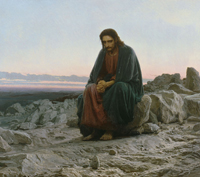
Christ in the Wilderness -Kramskoi
In Mark’s Gospel there is none of the later Gospel’s three temptations. Jesus simply enters that frightening solitude Gerard Manley Hopkins described as a miserable soul “gnawing and feeding on its own miserable self.”
The wild beasts of Mark and of the Hebrew Scripture are symbols representing the violence and arrogance of nations and empires: the lion that threatened David’s sheep; the lion with wings and a bear gnawing insanely on its own ribs in Daniel’s dream; a leopard and a dragon with great iron teeth destroying everything in its way. The beasts of Daniel and the Hebrew Scripture symbolize the deepest threats, threats to human wellbeing and existence itself. In Daniel’s dream, when the Ancient of Days takes his judgment seat and gathers the nations (wild beasts), they are as nothing before him, but “of his kingdom there shall be no end.”
Like Samuel Clemons, with the going down of the sun [our] faith fails and the clammy fears gather about my heart.
In his book Man Before Chaos Dutch philosopher-theologian Willem Zuurdeeg argues that all philosophy and religion is born in a cry. Whether the great philosophies of Plato or Aristotle or Hegel, whether Buddhism, Judaism, Islam, Christianity or what we arrogantly describe as ‘primitive’ religions; whether the political philosophy of Western democracy or Islamic theocracy or one or another economic theory – capitalist, socialist, communist, or communitarian – all philosophy and religion is born in a cry for help. It is the primal cry of human vulnerability, our contingency, our finitude, our mortality. It is the cry for order, protection and meaning in the face of the chaos without and within.
Separated from all social structure and from all the answers that express or muffle the cry, removed from civilization and all distraction – no computers, no video games, no reading material, no play stations, no TV, no artificial noise, nothing unreal to distract him – in the wilderness of time, “he was with the wild beasts.”
“He was with the wild beasts” is a kind of cliff notes for Jesus’ entire life and ministry. He would dwell among the wild beasts – the unruly principalities and powers that defy the ways of justice, love and peace. He lived and died among the wild beasts that mocked him at his trial – “Hail, King of the Jews!” – stripped him of his clothing, plaited a crown of thorns believing they had seen the end of him. But after the beasts of empire had torn him to shreds, he become for us the crucified-risen King whose love would tame us all.
There are times for each of us when the beasts are all too real, moments when faith falters, nights in the darkness when despair gnaws and paws at us, and hope has all but disappeared.
A young woman sits in the Atlanta airport. She is returning home from a year of study abroad. All flights have been delayed because of a storm. She is anxiously awaiting the final leg of her journey home. But home as she had known it no longer exits. Her mother and father have separated. Her father has entered treatment for alcoholism. She has entered a wilderness not of her own choosing. The beasts are tearing her apart. Her ordered universe has fallen apart.
She goes to the smoking lounge to catch a smoke. A stranger, her father’s age, sits down. He jolts her out of her fog. “Do you have the time?” he asks. As strangers are sometimes wont to do, they begin to talk. Unaware of her circumstances, he tells her that he is a recovering alcoholic, a former heavy drinker whose drinking was destroying his marriage until his wife became pregnant. The impending birth of his daughter snapped him into treatment and sobriety. “I thought I was going to die,” he says, “but it was the beginning of a resurrection, a whole new life.”
The young woman begins to feel a burden lifting. The stranger finishes his cigarette and disappears. She never gets his name.
The loudspeaker announces her flight’s departure. She boards her flight, and as the plane rises through the clouds, she finds herself momentarily sandwiched between two sets of clouds – one below, one above – and the space between is filled with rainbow light, a world whose grandeur and grace exceed all reasons for despair. She is strangely calm in the face of what lies ahead. A sense of peace descends. She is sure that the man has been given to her as a gift. She has been with the wild beasts. An angel has ministered to her.
During these 40 days and nights of Lent we live more consciously with the wild beasts, praying that the angels of our better nature will minister to us in the wilderness of time, dreaming with Daniel and Jesus of the Ancient of Days taking his judgment seat and gathering the nations. They are as nothing before him, but of his kingdom there shall be no end.
Life moves at break-neck speed. Are we built for speed, pressure, stress of this magnitude?
My Amish Rocking Chair
I answered “Yes!” until hearing impairment garbled the sounds, muted the music, confused conversations, and made solitary moments my preferable times of day. I chose slowness over speed, ease over pressure, peace over stress – an end to the vocation of active ministry with a loving congregation.
“How’s retirement?”
Life is slower. I share the quiet with Kay and our canine friend Barclay. I write a lot, which was my intention as the hearing loss progressed.
Still, I’m addicted to speed. Between my MacBook Air and iMac, I’m still dependent on speed – the speed of the internet. The speed of instantaneous communication. The speed of news makes my head ache. I can’t keep up. The pressure builds in my head. My heart gets heavy. Not a good thing, I think, for a privileged person who chose solitude over crowds, silence over confusion, low-pressure and low-stress over high-pressure and high-stress.
Slowing life down is a spiritual thing. The Amish rocking chair in our living room reminds me of the virtue of spiritual simplicity. But I rarely sit in it. I rarely sit and rock without my MacBook Air. The speed, pressure, and stress are in my head or, as the Hebrew ancients would say, in my heart. My heart and head don’t easily un-learn what they’ve been taught. But it seems now that un-learning, not learning, is the privilege and task of solitude.
“Barclay, want to go up and take a nap with Dad?” Barclay races up the stairs and takes his place at the foot of the bed. If I’m late with the invitation, he comes to get me for our intimate hour with no speed, no pressure, no stress – and no MacBook Air!
“I am the way, the truth, and the life; no one comes to the Father but through me [Jesus]” is sometimes used as a billy club, as in, “if you believe, you’re ‘in’ – if you don’t, you’re ‘out’.” According to Matthew Myer Boulton, the statement has nothing to do with belief. Read in context, this line in the Gospel According to John is the opposite: an assurance of divine comfort and inclusion.
Matthew (“Matt”) Myer Boulton, President of Christian Theological Seminary in Indianapolis, is the son of Wayne and Vicki Boulton, friends of Gordon and Steve for 51 years. Matthew’s leadership is a source of great joy. He is the author of God Against Religion and Life in God.
Click The End of Exileto read the story of Ed, the beloved Jewish atheist communist in the assisted living facility. The story is memorable, especially for those losing their memories.

 Imagine the voice of William Stringfellow coming from the same stage as Mr. Trump:
 Rembrandt’s first painting was of the Stoning of Stephen. A close look at the faces of the crowd reveals at least three self-portraits of Rembrandt peering out from the crowd, just behind a prominent executioner with a large rock ready to pummel the praying Stephen’s head. Rembrandt saw himself there, close up and aghast, among the stoners but sympathizing, it seems, with the one being executed.
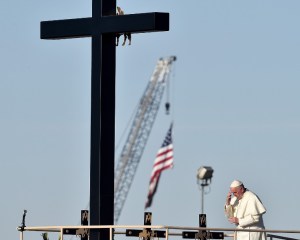 “Pope says Trump border stance is not Christian,” reads the lead headline of this morning’s StarTribune. The AP story focuses on statements by the Pope and Mr. Trump. “A person who thinks only about building walls, wherever they may be,” said the Pope, “and not building bridges, is not Christian.” Donald Trump replied, “For a religious leader to question a person’s faith is disgraceful. I’m proud to be a Christian.”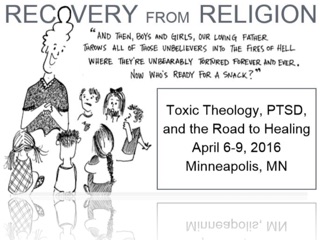

 Views from the Edge