Listening for the Whisper

Video

In this time of great restlessness many of us long for the “still small voice” heard by Elijah hiding in the cave of his own self-righteous pouting. This sermon was preached in a moment similar to this – the political campaign season of 2014 – and the search for stillness in a world gone mad. FYI, several of the members of this lovely church were in their 9os. They owned neither cell phone nor computer. They had no idea what a tweet was. But they knew experienced a stillness that sometimes comes with the wisdom of age. I post this here in honor of Carol and Maxine.

Grace and Peace,

Gordon C. Stewart, Chaska, Minnesota, author of Be Still! Departure from Collective Madness, now available through Amazon, Wipf and Stock, Barnes and Noble, and your local bookstore.


Dominant and counter-cultural narratives

Idolatry is the elevation of something relative and finite to the absolute and infinite. Theologian Walter Brueggemann speaks clearly and concisely about the anxiety produced by the dominant the military-consumerist narrative of the American national security state, and the gospel’s counter-cultural narrative.

I sure wish I could say that so clearly! Thank you, Walter.

  • Gordon C. Stewart, Chaska, MN, March 7, 2017


The Sound of Trumpets in the Morning

Video

Times such as this beg for an historical perspective. According to a Jewish legend, what Satan missed most after falling from heaven was the sound of the trumpets in the morning. This sermon was preached the Sunday before the 2012 U.S. election.

The Most Real Day

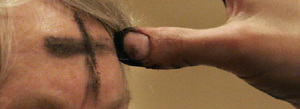
Today strips away every illusion. “Dust to dust, ashes to ashes.” Other days we avoid it like the plague, but it is our mortal truth. We die. Without exception.

It’s Ash Wednesday, the first day of Lent, when many Christians offer our foreheads for “the imposition of ashes” as the beginning of everything that the is truthful.  Perhaps the term “imposition” is chosen because the recognition of our mortality and ultimate dependence rarely comes willingly, although it is the most “natural” of all cognitive recognitions.

We all run from death, but we never outrun it, leaving us to ponder on our most real day.

“Whatever lies on the other side of my years is beyond my mortal knowing. But I can and do affirm the eternity of God and the scriptural point of view that whether we live or die, we belong to the Lord, ‘All flesh is grass. The grass withers, the flower fades, but the Word of our God (YHWH, the eternal) shall last forever.’ Right now, that’s enough bread to live on today. . . . ”

– Excerpt from “When the Breath Flies Away,” Be Still! Departure from Collective Madness, p. 64, now available through Amazon and Barnes and Noble.

Today, I wish you a most real day. . . beyond exceptionalism.  It’s the beginning of all joy and personal responsibility.

  • Gordon C. Stewart, trying to get real, Ash Wednesday, March 1, 2017, in Chaska, MN.

Somebody has my ashes!

Gordon C. Stewart's avatarViews from the Edge

It’s Ash Wednesday. I put on my ministerial robe 15 minutes before the traditional Service that marks the beginning of Lent with the imposition of ashes and go the drawer of the credenza.

Ash Wednesday“They’re missing! Where are the ashes?!” 

Every year I store the ashes in the credenza in my office. I’ve forgotten that we’d moved the credenza from my office last fall. I rush downstairs to look for it. No credenza anywhere. Then…I remember. We sold it at the Annual Fall Festival!

“Somebody has our ashes!”

What to do with no ashes? Burn some newspapers? Smoke a cigar and use the ashes? No time.

I grab a pitcher and pour water into the baptism font.

We begin the Service with the story of the missing ashes. Smiles break out everywhere. Maybe even with signs of relief. “Instead of the imposition of ashes this year, we will go to the…

View original post 245 more words

Should we pray for the President?

“Should we pray for Trump?” asks The Washington Post Saturday Opinions piece by Colbert I. King.

While it’s well worth the read, we draw your attention to After Presidential power shifts, Episcopalians ask: How should we pray? which looks deeply within a single Christian denomination for a look at the meaning of prayer for the President in this time of deep national division.

Over the last eight years of ministry in a Presbyterian (USA) local church, we often used the Episcopal Book of Common Prayer‘s Prayers of the People. It became our practice to pray for the president, governor, and mayor by their first names, not because we voted for them, liked them, agreed with them, or approved of them, but because the public trust was in their hands; they, like us, were human – weak and frail, and in need of guidance; and, even though we may have despised one o them, we were called to pray for our enemies.

Increasingly I sense beneath our new President’s bravado a deep insecurity and fear, a deeply troubled, as well as troubling man. I see a lonely little boy desperate for approval playing with some very big toys. I’m doing my best to pray for him even as I pray for the world. I cannot pray for the world without praying for him. In the end he’s just Donald, and I’m just Gordon, and only God is God. God, help us all.

  • Gordon C. Stewart, Chaska, MN, Feb. 11, 2017.


Tuesday’s Tide Pool

High tide washed a wondrously diverse group of sea creatures into the same small tide pool last Tuesday, and at low tide (7:00 p.m.), we began to discover and celebrate each other.

Thanks to Shepherd of the Hill Presbyterian Church for hosting the Tuesday Dialogue and Book Launch for Be Still! Departure from Collective Madness.

By 9:30 p.m. the momentary tide pool was empty. But the brief time we had together refreshed us all with hope for better times and with a greater appreciation for the larger ocean and the tides of history.

As the author whose book publication the rest of us creatures came to celebrate, I could look from my old pulpit at the faces in the tide pool, a gathering unique to its moment in time. Not better than other times. Not exceptional. No tide pool or creature is exceptional – no group, no nation, no race, no religion, no class, no gender, no culture, no species – but each one, like this one, is distinct to its moment in time.

There were star fish large and small, green, pink, red, and brown; crabs and lobsters, sea anemones, periwinkles, muscles, a young salmon, and a bunch of old barnacles.

This tide pool is a small church existing along the shore of eternity, a place of Christian worship that washes up a bunch of Presbyterians every Sunday morning.

But Tuesday there were agnostics, atheists, seekers, and other Christians (Catholics, Baptists, Lutherans, Methodists, and Episcopalians); white, black, and red; venture capitalist and struggling to survive in the trailer court; Democrat, Republican, Socialist, and Communist; Ph.Ds and high school drop-outs; co, a five year-old and a 96 year-old; the co-founder of the American Indian Movement, other Standing Rock campers, and couch potatoes; those with TVs and those without them, with cell phones and without them, those who’ve been homeless and those who haven’t, the able and the less abled, the hard of hearing and the sound of hearing; a group of creatures such as will never again be in the same tide pool.

Time in the tide pool meant the world to me.

  • Gordon C. Stewart, Chaska, MN, Feb. 9, 2017



Finding America

In a time like this it helps to take a deep breath. Just stop for a moment. Breathe deeply.

But stopping to breathe isn’t easy.

This morning I jump out of bed to get the latest news reports of the dispute over the President’s travel ban executive order: Judge Robart Rules’s Federal District Court ruling in Seattle staying the travel ban; President Trump’s tweet calling Judge Rules a “so called” judge; the Ninth District Court of Appeals’ delay in responding to the Justice Department’s request to immediately restore the travel ban.

Where and how will it stop? How do you take a deep breath when the things you value and the things you fear are colliding as fast as atoms in a super-collider?

Stepping outside this little moment of time for some perspective helps me to stop and breathe. The story of Herod and the Wise Men (Gospel of Matthew 3:1-23) comes quickly to the mind of a retired preacher.

After a long journey to Bethlehem from their foreign country, the Wise Men (the Magi) “returned to their own country by another way”–which is to say, they refused to return to Herod who had sought to deputize them. They did not accede to Herod’s disingenuous, anxious request that they return to inform him of the whereabouts of the newborn child who would threaten his rule. “They returned . . .  by another way.”

The Wise Men were returning to a different country, thought to be Persia (our Iran). They had been wise to come; they were wise to return . . .  by another way than Herod’s. Although the rest of the story is gruesome – the slaughter of innocents before the death of Herod – the good news is that the world did not belong to Herod then, and it doesn’t now.

The story of the Wise Men helps me stop, take a deep breath, and find hope for the America I feel I’ve almost lost. If we “return to [our] own country by another way,” we may yet find American democracy again.

  • Gordon C. Stewart, Chaska, MN, Feb. 5, 2017.


Prayer for Immigrants

Sometimes it helps to step outside our little moment in American life to seek wisdom from an earlier time.

Among the few books on my desk top is a collection of prayers first published in 1910. This morning we share part of one of those prayers.

For Immigrants

O thou great Champion of the outcast and the weak, we remember before thee the people of other nations who are coming to our land, seeking  bread, a home, and a future. …

We, too, are the children of immigrants, who came with anxious hearts and halting feet on the westward path of hope.

We beseech thee that our republic may no longer fail their trust. We mourn for the dark sins of past and present, wherein men who are in honor among us made spoil of the ignorant and helplessness of the strangers and sent them to an early death. In a nation dedicated to liberty may they not find the old oppression and the fiercer greed. May they never find that the arm of the law is but the arm of the strong. …

Make our great commonwealth once more a sure beacon-light of hope and a guide on the path which leads to the perfect union of law and liberty.

  • Walter Rauschenbusch, Prayers of the Social Awakening, The Pilgrim Press, New York and Chicago, 1925 (originally published by The Phillips Publishing Company in 1910.
  • Gordon C. Stewart, Chaska, MN, February 2, 2017.

Who We Are and Whose We Are

The man simply can’t stop talking about himself. In the lobby of the Central Intelligence Agency Headquarters building in Langley, Virginia, there is a large marble wall. In the wall are engr…

Source: Who We Are and Whose We Are