✚ The Artist (PJ McKey) ✚

This piece was published today by Via Lucis Photography: Photography of Religious Architecture. Click the blue link to view P.J. McKey’s lovely post.

✚ The Artist (PJ McKey) ✚.

Tomorrow is the Feast of Pentecost. At Vespers on Pentecost, the monks sang Veni Creator Spiritus in Latin (here translated into English), attributed to Rabanus Maurus (776-856 CE). Click HERE to hear the sounds of prayer.

Come, Holy Spirit, Creator blest,
and in our hearts take up Thy rest;
come with Thy grace and heav’nly aid,
to fill the hearts which Thou hast made.

O Finger of the hand divine,
the sevenfold gifts of grace are Thine
….
Thy light to every sense impart,
and shed Thy love in every heart,
….
Praise we the Father and the Son
and Holy Spirit with them One;
and may the Son on us bestow
the gifts that from the Spirit flow.

Wilderness – Carl Sandburg, Jesus, and Us

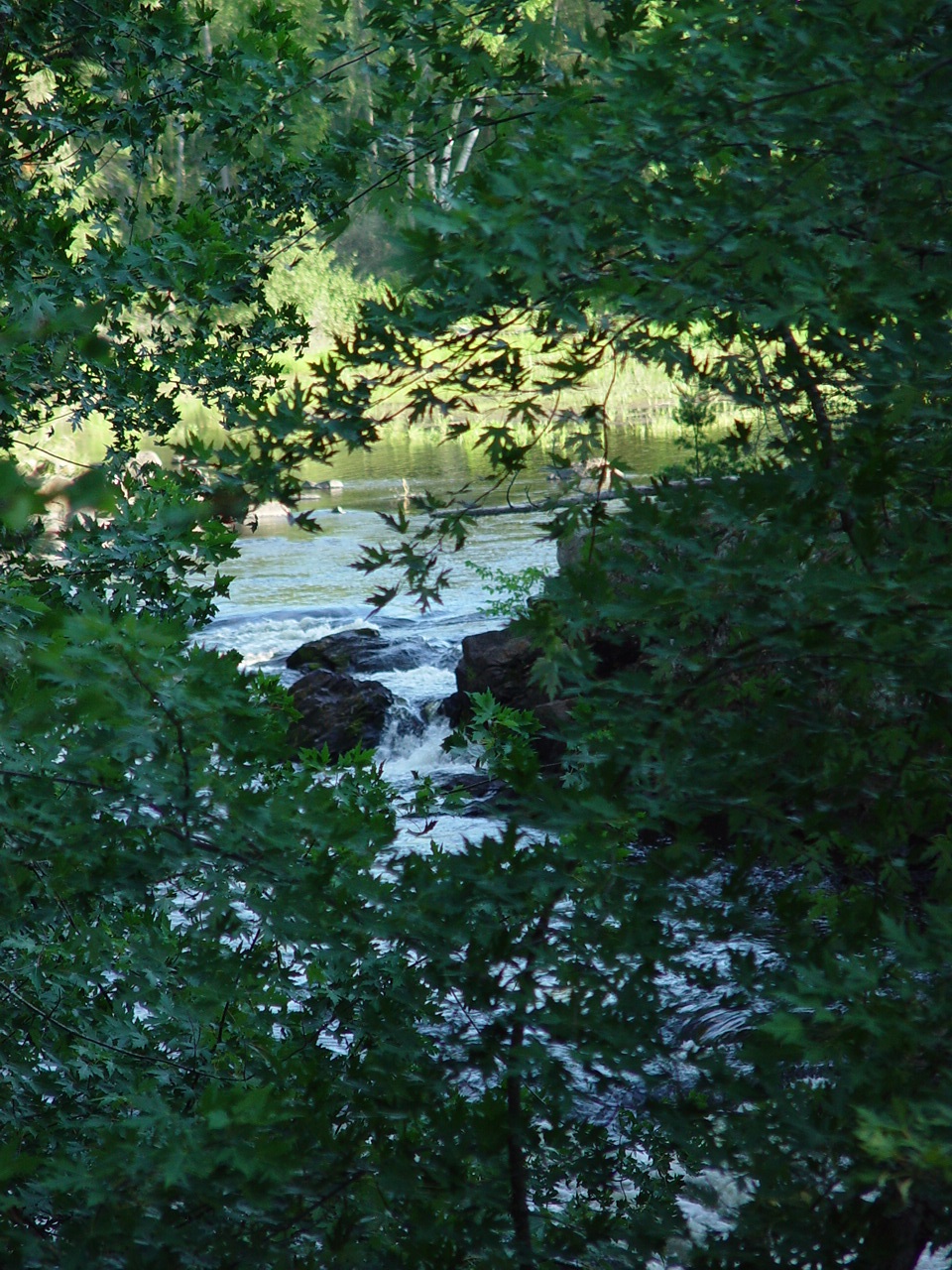
Boundary Waters Canoe Areas Wilderness, Minnesota

Boundary Waters Canoe Area Wilderness, Minnesota

Once upon a time a pompous nobleman paid a call to the English Embassy in St. Petersburg, Russia. He walked into the office and demanded to see the ambassador immediately. “Pray, take a chair,” said the young attaché, “the ambassador will be here soon.”

The visitor took exception to the off-hand way he had been treated. “Young man, do you know who I am?” he demanded, and recited a list of his many titles and appointments.

The lowly attaché listened, paused and said, “Well then take two chairs.”

Pride, vanity, greed, self-deception, and illusions of grandiosity are part of the human condition.

We are creatures of the wilderness, wanderers and sojourners in time who have here no lasting city to dwell in. And so, as in the legend of the Tower of Babel in The Book of Genesis (chapter 11), we (humankind) come upon the Plain of Shinar . . . or some other version of it. . . and settle down to rid ourselves of anxiety . . . and we settle there as though we could build something permanent that would be a fortress against the uncertainties of the wilderness and the knowledge of ultimate vulnerability and ultimate dependence. We build our own societies and towers of Babel.

Yet there is something about us that still loves a wilderness. Something in us that knows that refusing the nomadic wilderness – “and as they journeyed, they came upon the Plain of Shinar, and settled there” – is fraught with greater danger and social peril. Something in us knows better than to settle down on the Plain of Shinar to build something impervious to the dangers of the wilderness and time. Something in us knows that the brick and mortar will crumble, that the projects of pride, vanity, and greed will fall of their own weight, and that the high towers we build with the little boxes at the top that presume to house and control Ultimate Reality (G-d) are little more than signs of a vast illusion, the vain act of species grandiosity. For in the Hebrew tale of the tower of Babel with its “top in the heavens,” the joke’s on us. The narrator speaks truth with humor: God has to come down to see this high tower.

Every society and culture has its own version of the city and the tower of Babel. Equally so, in every society there is at least the memory of the wilderness, a sense of call to recover our deeper selves as mortals whose destiny is only found by traveling beyond the politics and religiosity of pride, vanity, greed, self-deception, and grandiose illusions.

Perhaps that is why John the Baptist heads out to the wilderness – “the voice of one crying in the wilderness” – away from delusions and distractions of the city of Babel. Perhaps that is also why, as scripture tells it, the masses also went out to the wilderness and the Jordan River to go under the muddy Jordan waters to rise to the hope of a fresh beginning on the other side of the formative influences of Babel-ing nonsense.

After the authorities imprison John, Jesus asks the crowds what had drawn them to John in the wilderness. “What did you go out to see? A reed shaken by the wind? A man clothed in soft raiment? No. Those who wear soft clothing live in kings’ houses. What then, did you go out to see?”

Jesus begins his ministry in the wilderness. He partakes of John’s baptism, and when he did, the Spirit grasped him and called him further into the wilderness, “drove him into the wilderness” – away and apart from all distractions and illusion – back to the place where humankind lives before it “settles” to build the political-economic-religious tower, the impervious fortress and monuments to itself in the Plain of Shinar.

Those who would learn from the Genesis legend and those who wish to follow Jesus are called into the wilderness to restart the long spiritual journey that stopped too early.
For the fact we deny is that underneath all our steel, glass, and technology, we are still animals – mortals subject to the most primitive yearnings, vulnerable creatures who possess nothing.

In his poem “The Wilderness” American poet laureate Carl Sandberg realized a great truth long before it came into vogue.

There is a wolf in me . . . fangs pointed for tearing gashes . . . a red tongue for raw meat . . . and the hot lapping of blood—I keep this wolf because the wilderness gave it to me and the wilderness will not let it go.

There is a fox in me . . . a silver-gray fox . . . I sniff and guess . . . I pick things out of the wind and air . . . I nose in the dark night and take sleepers and eat them and hide the feathers . . . I circle and loop and double-cross.

There is a hog in me . . . a snout and a belly . . . a machinery for eating and grunting . . . a machinery for sleeping satisfied in the sun—I got this too from the wilderness and the wilderness will not let it go.

There is a fish in me . . . I know I came from salt-blue water-gates . . . I scurried with shoals of herring . . . I blew waterspouts with porpoises . . . before land was . . . before the water went down . . . before Noah . . . before the first chapter of Genesis.

There is a baboon in me . . . clambering-clawed . . . dog-faced . . . yawping a galoot’s hunger . . . hairy under the armpits . . . here are the hawk-eyed hankering men . . . here are the blonde and blue-eyed women . . . here they hide curled asleep waiting . . . ready to snarl and kill . . . ready to sing and give milk . . . waiting—I keep the baboon because the wilderness says so.

There is an eagle in me and a mockingbird . . . and the eagle flies among the Rocky Mountains of my dreams and fights among the Sierra crags of what I want . . . and the mockingbird warbles in the early forenoon before the dew is gone, warbles in the underbrush of my Chattanoogas of hope, gushes over the blue Ozark foothills of my wishes—And I got the eagle and the mockingbird from the wilderness.

O, I got a zoo, I got a menagerie, inside my ribs, under my bony head, under my red-valve heart—and I got something else: it is a man-child heart, a woman-child heart: it is a father and mother and lover: it came from God-Knows-Where: it is going to God-Knows-Where—For I am the keeper of the zoo: I say yes and no: I sing and kill and work: I am a pal of the world: I came from the wilderness.

Jesus of Nazareth, whom Christians call The Christ, walked in our wilderness to live authentically and faithfully as a human being among all the beasts of the menagerie that were part of his nature and are part of our nature. Immediately after he had gone down into the waters to die to the worlds that would fool and twist him, and just as quickly as the voice from heaven declared him “my beloved Son in whom I take pleasure,” the spirit immediately drove him into the wilderness. As the Gospel of Mark narrates the story, he was there for forty days among the wild beasts, and angels ministered to him.

By God’s grace and power, may it be so also with us.

Sermon preached by Gordon C. Stewart, Shepherd of the Hill Presbyterian Church in Chaska, MN.

Alt-Facts and the ‘Anti-Christ’

Talk radio host

Talk radio host

Views from the Edge re-publishes this piece on Maundy Thursday, 2017. It first appeared here on March 24, 2010. Sadly, nothing much has changed. The U.S. was sucker-punched by the apocalyptic spirituality of the alt-right politics of Rush Limbaugh and Steve Bannon.

Something from the Christian tradition – the idea of ‘the Anti-Christ’ – is lifting its ugly head, a word and concept that could trigger unthinkable tragedy unless we clean up our civil discourse.

According to Harris Interactive Poll taken between March 1 and 8, “more than 20% believe [President Obama] was not born in the United States, that he is ‘the domestic enemy the U.S. Constitution speaks of,’ that he is racist and anti-American, and that he ‘wants to use an economic collapse or terrorist attack as an excuse to take dictatorial powers.’ Fully 20% think he is ‘doing many of the things that Hitler did,’ while 14% believe ‘he may be the anti-Christ’ and 13% think ‘he wants the terrorists to win.”

The poll reflects what we all know: our civic health as a nation is being poisoned by inflammatory rhetoric from both sides of the political aisle. This toxic disregard for truth lies behind the results of the Harris Poll. Trigger words like ‘socialist,’ ‘communist,’ ‘terrorist,’ ‘anti-American,’ and ‘the Anti-Christ’ and the allegation that America’s first black president is the nation’s chief domestic enemy take us beyond the McCarthyism of the ‘50s. This cocktail is lethal.

As a Christian pastor I rue the use of Christian scripture to stoke the fires of fear and hate. The Christian life – or spiritual life of any sort, for that matter – is a life of discernment about the powers that shape ordinary life. It is not blind to evil. But loud spirituality is an oxymoron. We need to be reminded that all the great religions hold some version of the essential tenet expressed in the First Letter of John. “Whoever says he is in the light and hates his brother is in the darkness still” and “If any one says, ‘I love God,’ and hates his brother, he is a liar, for he who does not love his brother whom he has seen cannot love God whom he has not seen. And this commandment we have from him, that he who loves God should love his brother also.”

Labeling the President of the United States ‘the Anti-Christ” gives deranged minds a license to kill . . . in the name of the non-violent, crucified Jesus. If some deranged American patriot like the Marine who plotted to assassinate the President should succeed . . . God forbid! . . . the blood will be on the hands of all who remained silent when the hate speech was being poured into the public stream of consciousness. And if you claim to be a disciple of Jesus, get yourself to church Maundy Thursday and Good Friday to ground yourself again in the love that conquers hate and fear.

  • Gordon C. Stewart, Chaska, MN, Maundy Thursday morning, Chaska, MN.

Marriage piece published today by MinnPost

gaymarriageThanks to MinnPost for editing and publishing “Marriage, or not? One more state where gays can choose“.

Of Falls, Bungalows, Castles, and Fawns

This sermon was preached at Shepherd of the Hill Presbyterian Church in Chaska May 12, 2013 following a trip to Cambria, CA that began with Kay breaking her ankle on the way down the stairs as we were leaving for the airport. The rest is story of William Randolph Hearst desire for a bungalow that ended up as a castle, and an encounter with Mr. Excellent. The fawn story never made it into the sermon because of a forgetful preacher.

The story of the fawn is this. The morning Kay and I were preparing to leave Cambria for the trip home, I noticed a deer in the backyard pacing. There was a fawn lying on the lawn. Examining the fawn, it appeared to be alive, but was not moving, injured perhaps. The next time I looked, its eyes were closed. After examining it, I called the owner of the home we had rented to suggest that she call animal rescue. I thought there was a dead fawn in her back yard.

When we arrived home in Minnesota there was a voicemail that Animal Rescue had come and taken away the fawn only to realize that it was very much alive. It had just been born that morning. Point of the story for a Mother’s Day sermon: God is like that mother, staying nearby waiting for her newborn baby to get up.

The Way to Love Jesus

A sermon three years after Deep Water Horizon on love, freedom, and caring for each other, the oysters and the crabs in the Gulf of Mexico.

Marriage Equality in Minnesota

gaymarriageMy younger son is gay. For 12 years he’s been in a committed relationship in New York.

His response to the news that Minnesota will now become a marriage equality state was:

“Great. One more state in which I get to choose not to get married!”

He doesn’t want to get married. He just wants for anyone who chooses the covenant of marriage to have that choice. He just wants to live his life.

In 1978 students at The College of Wooster began “coming out” to me in the safe space of my office at The Church House”, the campus ministry center that housed the offices of the College Church, Westminster Presbyterian Church. I served the dual role of Pastor of the church and Pastor to the College of Wooster.

Dr. Violet Startzman, the physician at the College’s Health Center, came home with the results of a three-year study on homosexuality commissioned by the General Assembly of the Presbyterian Church (USA). Westminster sponsored public forums, adult studies, and less formal conversations about the core finding of the study: same-gender orientation is not a choice; it’s part of the natural spectrum of human sexual attraction and love.

It was in that context that previously fearful or confused students shared in the privacy of the pastor’s office and found affirmation. They were active in the college church. They were ordained (student) elders on the church board.

My story since then is complicated, more so than I would like it to have been, in retrospect. Pastors are teachers and educators as well as advocates. Those of us who seek to minister to a congregation wear the mantle of conflicting responsibilities of conscience, patience, unity, and advocacy. We are first and foremost rabbis (teachers). Teaching is different from preaching, although the good preacher is also a teacher. And teachers begin by respecting their students, no matter what their views are on a given subject. Each of us perceives the world through eyes that see what experience has taught us to see.

When my son came out to us, we were grateful. Grateful for his self-knowledge. Grateful for his trust. Grateful that a (not-so-secret) secret was no longer a secret. So very grateful and proud of who he was as a young man and all that he had done and stood for.

Now, today, I am in Minnesota. He is in New York. I, like him, am grateful that there is one more state in which he can choose whether or not to be married.

When help doesn’t come

“If you believe in GOD’s powers and you ask for help and he doesn’t help you right away, it means he believes in you!

It only takes 20 seconds of insane courage to do the impossible.”

– Ruth J., 9 yrs. old.

After worship at Shepherd of the Hill in Chaska, Ruth and Lily hand me their reflections on the sermon – either in words or in drawings and symbols printed on the backs of yellow visitor/prayer request cards. Their insights blow me away. I look at their cards and ask myself, “Why didn’t I think of that?”

Ruth is a young Paul Tillich:

“Faith is the courage to be. Courage can show us what being is, and being can show us what courage is.” – Terry Lectures delivered at Yale University, The Courage To Be, Yale University Press, 1952.

Wall Street Man

Missing Something

Missing Something

Stone cold bronze age
Man sits stone cold still
In clothes no ape would wear
Living inside his business suit
Even when alone.

His faceless head retains
the slivered brain of stone-cold
Men who wage the wars
And capitalize on capital
And Capitols.

There is no logic, no capacity
For reason or self-assessment,
Where air blows through the
Empty space a left brain
Might fill.

What’s left is all right and
would still feel and leap
For joy or bow with sadness
Had it not been turned to
Bronze or gold.

His fingers touch left to
Right and right to left
In prayerful hope for the
Missing mind and face, and
Heart of flesh.

– Gordon C. Stewart, May 10, 2013, Chaska, MN

“I will give you a new heart and put a new spirit in you; I will remove from you your heart of stone and give you a heart of flesh.” – The promise for the bones in the Valley of the Bones (Ezekiel 36:26).

Verse – Morning Chorus

Steve's prairie haven - home of the Urbana  "Morning Chorus"

Steve’s prairie haven – home of the Urbana “Morning Chorus”

We live near a tree farm
that birds love.
Transplanted small trees
around our home
are now large,
and at first light, noisy.

Springtime is the loudest.
Breeding has begun.
The travelers have returned:
finches, swallows, robins,
hummers, whippoorwills.

Our dead end rural road
has little traffic even later
in the day–none at 5 am in May.
No sound but bird song:
Coos, chirps, whistles,
call and response.

The choir has no conductor
that we see.

– Steve Shoemaker, Urbana, IL, May 9, 2013