Good Friday is good
not because of the betrayal,
the abandonment,
the suffering and death,
(the denial),
but because of the result:
Easter Sunday.
- Steve Shoemaker, Urbana, IL, March 25, 2016

Good Friday is good
not because of the betrayal,
the abandonment,
the suffering and death,
(the denial),
but because of the result:
Easter Sunday.
The deer is lost – out of place – in the civilized world of pavement and traffic beyond the woods. It runs past us at break-neck speed, capturing the attention of customers in the coffee shop.
Such primal fear invokes a hush. Everyone is standing at attention now, hoping against hope that the beautiful frightened animal will make it across the bridge over the divided highway to the woods on the other side.
As it reaches the overpass, a car approaches from the opposite direction, startling the deer. With high wire fences on each side of the overpass, it races toward the car and then, as suddenly as it had appeared, it jumps 10 to 15 feet into the air, over the fence, plunging headlong to the berm of the highway 30 feet below. It gathers itself for a moment, wobbling up the hill to its right, and collapses on the entrance ramp like a lump of warm putty.
Fear is a deadly thing. The deer had lost its bearings in the man-made world where natural landmarks get displaced by bridges, and unnatural cliffs take the place of natural terrain.
The picture is etched in my mind. It wake me up early this morning thinking about mortality. The mortal vulnerability of a thing so beautiful and precious as a deer — the beauty and preciousness of all mortal life.
Death is the limit that binds together the viewers in the coffee shop with all other creatures. Fear is the acolyte of death – the unconscious or unconscious knowledge of our fragility, our ultimate dependence, our vulnerability to forces we cannot control, the reminder of our own ticking clocks, our time-bound nature within nature itself.
I’m sad for the deer. Sad for a civilized world that displaced it, confused it, frightened it to death. Sad over the sight of something so beautiful leaping so gracefully into the air, leaping into open space into the nothingness of death. Sad that something so lovely experiences such terror. Sad that it not know better; sad it did not take a breath and think before letting fear control its course.
Something in all of us at the coffee shop stood still for a moment at the Caribou — made us put down our coffee and touch this deeper place of vulnerability, watching this pantomime of our own inner lives, the too real to face reality of our struggles with anxiety, with fear, with death, with sudden and final extinction.
When the dear leaped from the overpass, Katie, my adult stepdaughter, put her face in her hands. Others of us could not take our eyes away, too stunned not to watch, staring in stunned silence in hope, at first, that the poor thing would get up and walk away from it all, that it hadn’t happened the way we’d seen it, plunged into the reality that the deer couldn’t just get up and walk away to safety.
Wendell Berry reminds us that we Americans are the descendants of the road builders — the placeless people who cut the forests, leveled the trees, and bulldozed their way to their ideas of what the world should be. says Wendell Berry in “The Native Hill.” Our European ancestors fled their familiar places to escape them. To build something better. Something freer perhaps, less restricted not only by law and custom but, more fundamentally, by the limits of creaturely life: time and space. They landed on the soil of the path walkers, the indigenous people whose foot paths wound their way harmlessly following the contours of the hills, rivers, streams and valleys.
Today is Palm Sunday/Passion Sunday, the day after the deer leaped into the air to its death, and the day Jesus walked the road-builders road in humility on a donkey. The liturgy reminds the worshipers that the grandest leaps — personal or collective —lead to tragic ends, but an essential goodness greater than ourselves surrounds every leap and every plunge.
 First Sunday in Lent – February 14, 2016
The Rev. Devon Anderson, Rector, Trinity Episcopal Church, Excelsior, MN
The season always begins with the story of Jesus in the wilderness being tempted by the devil. The Gospel tells us that no sooner is Jesus baptized in the River Jordan than he is led away into the desert. Led away from the crowds, with his hair still damp, with the words of God still ringing in his ears, “This is my Son, the Beloved, with whom I am well pleased.”
Jesus’ forty days in the desert is a time unlike any other in his life. It is a time in between his anointing by God and the start of his ministry. Before he could start the work he had been given to do, a few things needed to be sorted out. In the words of Frederick Buechner “Jesus went off alone into the wilderness where he spent forty days asking himself the question what it meant to be Jesus.”
It is only after the forty days are up, only after Jesus is good and parched, good and exhausted, good and depleted that the devil shows up. The devil wasn’t stupid. He allowed Jesus some time wear down, time to exhaust his own resources. Maybe then, the devil thought, Jesus might be open to accepting a little help.
Years ago I spent some time in a desert like the one Jesus struggled in for 40 days. It was during a summer study course at St. George’s Anglican College in Jerusalem. Part of that program included a week in the Sinai desert exploring sacred sites and camping. As we crossed the border into Egypt, our Bedouin guides met us. Strapped to the top of each of their jeeps were the week “supplies” – a few dusty sleeping bags, some kerosene burners, gallon containers of water, and a small cage of live chickens, one that would be, each night for dinner, killed, plucked, gutted, and roasted. We loaded the jeeps and were off. In no time at all we were deep in the Sinai desert driving over sand and more sand, having left the one-lane highway and all civilization almost immediately.
After several days exploring and camping, we came to a mountainside, and our guides told us that the time had come when we would go our separate ways for awhile. We were to walk no more than 5-10 minutes in any direction by ourselves and spend an hour and a half in silence. At this point, the strident introvert in me leapt for joy – this was going to be awesome. Finally, what I had come for – some uninterrupted, focused, time to breathe and be with God.
I walked out into the craggy desert, found myself a shady rock to sit on and began to pray. I noticed at once was how silent it was. Obviously there were no planes overhead, or cars driving by with their stereo bass level turned up. My classmates had all but disappeared. There was also no wind, or birds or voices. It was so deafening quiet that I thought I could even hear the blood rushing through my body like a hum.
The second thing I noticed was the flies. How could I not? Here I was trying to commune with Jesus, all the while this annoying insect insisted on circling my head,
1
buzzing my ears, and trying with all its might to fly up my nose. The Gospel narratives never mention flies, but after my experience I am convinced they were Jesus’ fourth temptation. “You think you’re so holy? You think you’re the Son of Man? Try this little bugger on for size!”
The third and most important thing I noticed was how quickly I became lonely. Once I found a comfortable place to sit, I cleared my mind, sang all the songs I knew, drank water, fixed my hat, prayed all the prayers I could remember, I listened, I said more prayers, I listened. And after awhile the time was up. I stood up, stretched, and began to make my descent from the craggy rock upon which I had had quite a nice meditation.
But on the way down, I happened to glance at my watch and, good God, only 25 minutes had gone by. What was I going to do now??? How would I fill the next 65 minutes? I began to feel nervous.
Those of you who have spent time in a desert know: there is something about them that have the power to suck out your self-confidence. They are so big, so quiet and empty that one in comparison feels inconsequential and perishable. I was shocked and ashamed by how I had so quickly come to the end of what I could do myself to fill the space and quiet. I had run out of things to say and think and do, and all that remained was kind of an empty, low-grade panic. I did slog it out, and gratefully returned to our camp, live chickens and my annoying classmates never looking so good.
In hindsight, that experience was a bit of an epiphany. For I realized for the first time how I had, up to that point, done my best to avoid coming in contact with that empty, carved out space inside me. I had confused quiet and silence. I had avoided, at all costs, an awareness of where what I can do for myself ends and where my dependence upon God’s grace begins.
There Jesus was, in a desert not that far from the Sinai peninsula. He had just come from his glorious baptism, surrounded by crowds, affirmed and crowned by God – only to be led into a long, lonely time in the desert. During that time, God makes no appearance – there are no voices, descending doves, no reassurance. Only silence and that carved out empty space inside. Over forty days, Jesus gets to the bottom of his own reserves. It is precisely into this empty, hollowed-out place that the devil makes his appearance.
What is important about the devil’s temptations is the theme that ties them together. How the devil tempts Jesus, in three different ways, is with the provocation that Jesus deserves better than what God is giving him. That he, Jesus, has the power to provide for himself what he needs. That he doesn’t, ultimately, need God. Listen to the devil’s taunts: “Command this stone to become a loaf of bread.” Feed yourself. “See the kingdoms of the world. If you worship me, it will all be yours.” Make your own power, authority. Fashion your own worth. “Throw yourself down from the temple.” Protect yourself. With each taunt the devil dares Jesus to prove who he is by acting with the ultimate power of a god instead of a man. And with each taunt, Jesus resists, replies with an emphatic “no.” “I will not assume to provide what only God can give.”
2
Lent is a time unlike any other set aside for us to wrestle with the very same temptations set before Jesus. We are all vulnerable to the viral illusion that we can, ultimately, provide for ourselves. We are vulnerable to the idea that if we make enough money and invest wisely, we will be able to feed ourselves – provide all the sustenance and nourishment we will ever need. That we can, through our sheer determination, obtain what we need to fill ourselves in every way, buy what we need to make ourselves whole. We are vulnerable to the temptation that if we advance and distinguish ourselves in our professions, speak articulately, exhibit learnedness and intellectual capacity that we can win for ourselves authority and respect. That it is entirely up to us to create our own value and worthiness. We are vulnerable to the idea that if we buy the right car or car seat, install a home security system, live in the nice neighborhoods, put our kids in the right schools, if we keep our cholesterol down and choose the best health plan and doctors that we have the power to inoculate ourselves from the sadness and pain that are part of being human.
In her book, Things Seen and Unseen: A Year Lived in Faith, Nora Gallagher equates these temptations to fantasies, illusions that suck out our vitality, that keep us from discovering God’s rich reality. “To come to terms with illusion,” she writes, “is one of the great jobs of our lives: to discern what is fantasy and what is reality, what is dead and what is alive, what is a narcotic and what is food. It is dangerous, wrenching, and unavoidable. The seductive call of the Sirens was so compelling Odysseus lashed himself to his mast. In the desert, Jesus fought for his life. What is asked of Jesus is what is asked of us: that we give up illusion – its false promises and its addicting inertia – and come to our senses. That we, as Vaclav Havel would say, ‘live within the truth.’”
The devil’s agenda is to convince us that we can go it alone, that God is to us a pleasurable elective – something interesting and provocative to ponder, a presence that offers solicit in time of need. But Lent challenges us, right off the bat, to question ourselves. It is, after all, the season that derives its name from the old English word, lenten, meaning “spring.” It is not only a reference to the season before Easter, but also an invitation to a springtime of the soul. Forty days to cleanse our system of the illusion that we are in control, that what we ultimately need – to nourish our souls, prove our inherent worth, guard our lives — we can provide for ourselves. Forty days to open our eyes to the one holy and gracious God, by whose mercy alone we live and move and have our being. AMEN.
3

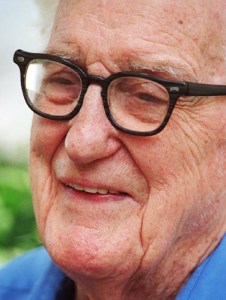
Steve talks about his battle with stage 4 pancreatic cancer last Tuesday at his home south of Urbana, IL.
‘Lucky to have had the life I had’
Sun, 03/06/2016 – 7:00am | Melissa Merli,The News-Gazette
Steve Shoemaker talks about his battle with stage 4 pancreatic cancer on Tuesday at his home south of Urbana.
URBANA — Steve and Nadja Shoemaker’s contemporary-style home lies on a ridge south of Urbana, overlooking the prairie.
Through its tall windows, they enjoy magnificent sunrises and can see 30 miles into the distance. Even on an overcast day, they can pick out the wind turbines over in the next county, etched in light gray against the darker sky.
“If you’re going to die, this is a great place to be,” Steve says, sitting in a comfortable sofa on the south end of Prairie Haven, the architect-designed house he and his wife, a retired University of Illinois microbiologist, had built 10 years ago.
“I love the house,” Steve adds. “We have great neighbors and friends. I’ve been very fortunate. I feel like Lou Gehrig — lucky to have had the life I had.”
Lucky.
Fortunate.
The retired Presbyterian minister and University YMCA director, former Champaign County Board member, ex-radio host, poet and outspoken advocate for the less fortunate uses those words often.
He avoids “blessed” — he doesn’t believe in the “prosperity gospel” — as he reflects on his life of 73 years and the fact it might come to an end sooner than he would like.
Shoemaker was diagnosed with pancreatic cancer three months ago.
His doctors told him with chemotherapy he had six months to live.
He tells people he’s now into Month 3. He tries not to dwell on his cancer but will answer questions — though his daughter set up a CaringBridge website so his many friends and family can go there for updates.
He says his main symptom had been stomach pain, due to a growth that cut off oxygen to his intestines. Pancreatic cancer is usually deadly because the pain doesn’t come until it’s too late.
“In my case, it had already spread to the lungs and liver. The chemotherapy has reduced some of it so that’s a good sign,” he says.
Most days now, he’s without pain. But he feels the side effects of chemotherapy. Low energy. Fatigue.
He sometimes needs a walker or wheelchair. And he finds that his emotions swing.
“I’ll probably cry before you leave,” he says.
But he doesn’t, not until he points to two tangible markers of what he’s most proud of in his life besides his two children, Daniel and Marla, and his friends, among them self-described agnostics and atheists.
One trophy is heavy and glass and set on a windowsill. It’s the Intercultural Dialogue Award, given to Shoemaker in 2006 by the Intercultural Friendship Foundation for his efforts to bring together Muslims, Christians and Jews in a post-9/11 world, when he was director of the University YMCA.
The other, also made of glass, came from the Martin Luther King Jr. Advocacy Committee for Shoemaker’s 20 years of service.
“I’m pleased that part of the local black community felt that I did something worthwhile,” he says, choking up.
Many communities here, both off and on campus, feel the same way about Shoemaker. For years, he’s been one of the most visible, outspoken ministers in Champaign-Urbana, advocating for the poor, homeless, minorities, gays and most recently immigrants.
In 1998, he was designated a “Point of Light” for his work with the homeless while pastor at McKinley Presbyterian Church, where he helped set up a basement shelter for homeless men.
Besides his outspokenness, Shoemaker is visible for other reasons: At 6-foot-8, he usually towers above everyone else in a room.
And for most of the past 50 or so years, he’s worn a full beard. It’s gone now as a result of his medical treatment.
Earlier in his life, he didn’t get a pastor’s job in the Durham, N.C., area because he wouldn’t shave his beard.
“It was 1969, a time of hippies, protesters, malcontents,” he says. “One of the messages (of the beard) would be to accept other people,” Shoemaker told the pastor who was interviewing him.
“Sorry, that’s not a battle I want to fight,” the minister responded.
At the time, Shoemaker was working on a doctorate in religion at Duke University. He ended up preaching at two North Carolina churches for four years and spent eight as a Presbyterian minister on the North Carolina State University campus.
Then he and his wife, Nadja — they had dated while attending Urbana High School — returned to their hometown so Steve could take the pastor position at McKinley in 1981.
He doesn’t regret having become a minister, saying a Presbyterian campus ministry suited his liberal leanings.
He doesn’t regret returning to his hometown to live and work.
“I still have some friends here and still see some of them,” he says. “I played basketball with Gary Storm in high school. He moved back after he retired, and I see him fairly regularly.”
The only regrets he would mention: He wishes he would have been more organized and had made better grades in college.
Shoemaker, who played center on Urbana High’s basketball team, went to Wheaton College, a private Christian liberal arts school, though he had offers to play the sport at the NCAA Division I level. He played for two years at Wheaton.
“I wasn’t very interested in playing basketball,” he says. “I didn’t want to devote my whole life to basketball. It’s just a game. I never could care who won. I didn’t have the right attitude.”
He was more interested in literary pursuits. He had begun writing poetry in high school. At Wheaton, he worked for the school newspaper and literary magazine.
At the time, he didn’t want to be a minister. He wanted to be a writer.
He applied to writing programs but was rejected. His grades weren’t good enough.
So he applied to seminary, feeling he would like to be a social worker in a church agency. But he realized he wouldn’t like the bureaucracy.
At the time, he and Nadja were attending a Presbyterian church in Chicago, where 60 percent of the congregation was black.
“We loved the pastor and what he was doing in the neighborhood, trying to improve it,” Steve says. “I decided then I wanted to be that kind of pastor.”
Both Shoemaker’s father and grandfather had been fundamentalist Baptist preachers. At age 13, Steve began questioning that faith.
Eventually, he and his father mutually decided they wouldn’t discuss religion and would instead focus on the grandchildren.
Recently, though, Shoemaker’s three brothers came to visit Steve. They hired a Baptist pianist to accompany them as they sang the Baptist gospel hymns of their youth.
Steve has always loved to sing. He sang in many choirs, including The Chorale, a mixed-voice community choir.
He’s too sick now, he says, to sing with choral groups but he continues to write poetry, which he enjoys as an intellectual challenge more than emotional outlet.
Since his diagnosis, he’s writing mostly limericks. He titled a recent one “Ol’ Fuzzy Head.”
The nurse said I had “Chemo Brain,”
From writing, I just should refrain;
But I have the notion
That writing’s the potion
To retrain the brain to be sane.
He calls another one “When Cancer Patients Cry.”
It may mean nothing when you see
The tears, or when you hear the voice
Begin to catch and whisper. The
Strong drugs for pain remove the poise
And self-control. Emotions rule
Or
The patient, for some reason, may
regret the loss of family
And friends … Feel sorrow, not to stay
In this the known world, possibly
The only world. Hope fades, Faith flees.
Actually, his faith — Shoemaker’s 14-year WILL-AM radio show was called “Keepin’ the Faith” — fluctuates, just like anyone’s, he says.
“I hope for an afterlife, but I don’t think it matters much what I believe,” he says. “I think what matters is if there is a God that he’s loving, compassionate and merciful, and what that God thinks of me. I think God is beyond us, and we can’t comprehend it.
“How I live. I think that’s what matters.”
He also likes the Catholic belief that God has a “preferential option” for the poor.
“God’s eye is on the sparrow, not the eagle, on the people who are hurting,” he says. “That’s the God that makes sense to me.”
He admits to feeling doubt, fear and worry at times.
“Sometimes I’m scared thinking about how my spouse will do after I pass away and my kids and my two grandkids.”
But he says he’s not afraid to die.
“I’ve had a good life, and I’m grateful for it. I hope there’s an afterlife, especially for people who have not been as lucky as I have. I hope they will be compensated.”
This post by John Buchanan’s “Hold to the Good” is well worth the read IMHO. John is Pastor Emeritus of Fourth Presbyterian Church-Chicago, past Moderator of the Presbyterian Church, and recently retired Publisher of The Christian Century.
Thank you, John, for your fine work than and now.
- Gordon and Steve
I simply do not know what to say about Donald Trump. I grew up in a home where what was going on in the world and in the nation was talked about regularly at the dinner table. Politics was often a spirited discussion between my father, a dyed-in-the-wool Republican and conservative in almost all his opinions and positions, and my mother who I realized was a lot less ideological and more liberal. He didn’t have much good to say about President Roosevelt and Eleanor but she liked them a lot. Dad used to brag that the first words I spoke as a toddler were “Wendell Wilkie”, the Republican presidential candidate in the 1940 election, an election FDR won handily. I still have his Republican campaign lapel pin bearing Wilkie’s picture from that election. Robert Taft, Harold Stassen, Earl Warren, Dwight Eisenhower, Richard Nixon, and Nelson Rockefeller, were familiar names to…
View original post 775 more words
Copyright 1996 The Cincinnati Enquirer
A sermonic reflection on Luke 13:1-9
Ordinary citizens are not terrorists, are we? We didn’t bring down the World Trade Center, kill and maim marathon runners and spectators at the Boston Marathon, or kill innocent co-workers in San Bernadino. The Rev. Maurice McCrackin answered that we are and we have, for reasons we’ll explain later.
Mac was informed by today’s Gospel reading (Luke 13:1-9) where Jesus addresses terrorism and urges his hearers to turn. “Unless you all repent, you will all … perish.”
It happens when some people inform Jesus “about the Galileans whose blood Pilate has mingled with their sacrifices.” The speakers seem to be contrasting the Galileans – known for their armed resistance to Roman rule, i.e. guerilla warfare – and the Jerusalemites.
Remember, Jesus himself is a Galilean!
The non-Galileans are putting him to the test. As he so often does so ably, Jesus, the Galilean Jewish rabbi, begins strangely by appearing to agree with their anti-Galilean prejudice. He asks whether these violent Galileans were any different from the rest of the Galileans. One can almost hear the applause from the more sophisticated, non-terroristic Jerusalemites.
Then he quickly shifts their attention to a scene in Jerusalem. He asks them if the eighteen saboteurs “upon whom the tower of Siloam fell, and slew them, do you think they were worse sinners than all others in Jerusalem?”
“No,” he says, “but unless you (plural) repent, you will all likewise perish.”
Sometimes reading a familiar text in a form much closer to the original context of Jesus’ linguistic-religious-cultural-political-economic context serves to awaken us to hear it differently.
Now … there were some present reporting to Rebbe, Melech HaMoshiach about the men of the Galil whose blood Pilate mixed with their zevakhim (sacrifices).
And, in reply, Moshiach said, Do you think that these men of the Galil were greater chote’im (sinners) than all others of the Galil, because they suffered this shud (misfortune)?
Lo (no), I say, but unless you make teshuva, you will all likewise perish.
Or do you think that those shmonah asar (eighteen) upon whom the migdal (tower) in Shiloach fell and killed them, do you think that they were greater chote’im (sinners) than all the Bnei Adam living in Yerushalayim?Lo (no), I tell you, but unless you make teshuva, you will all likewise perish.
And Rebbe, Melech HaMoshiach was speaking this mashal. A certain man had an etz te’enah (fig tree) which had been planted in his kerem, and he came seeking pri (fruit) on it, and he did not find any. [YESHAYAH 5:2; YIRMEYAH 8:13]So he said to the keeper of the kerem, Hinei shalosh shanim (three years) I come seeking pri on this etz te’enah (fig tree) and I do not find any. Therefore, cut it down! Why is it even using up the adamah (ground)?
But in reply he says to him, Adoni, leave it also this year, until I may dig around it and may throw fertilizer [dung] on it,
And if indeed it produces pri in the future, tov me’od (very well); otherwise, you will cut down it [Ro 11:23].
– The Orthodox Jewish Bible (OJB) Copyright © 2002, 2003, 2008, 2010, 2011 by Artists for Israel International.
The ‘mashal’ (a familiar proverb or parable) he re-interprets is already part of his and his hearers’ self-understanding from Isaiah 5:2 and Jeremiah 8:13:
Jesus is speaking about collective social life – politics, economics, religion, resistance, keeping the faith – a whole society, a culture, a nation. He is calling for thorough-going societal transformation – turning from blaming others (the Galileans) to looking in the mirror to see the log that is in every eye: the underlying pervasive violence in our way of being in the world, taking up “ground” on this beautiful planet.
In Hebrew Scripture the human species, Adam, is derived from Adamah – earth, soil, dirt, ground. Humans, created in the image of God, are to produce sweet figs. But the Owner of the vineyard with the barren fig tree shows two traits: deep disappointment – “Why is it even using up the ground?” – and an over-riding patience that allows it more time to produce the sweet figs it was intended to bring forth from the dirt (adamah).
As I look out the window this morning to the world outside, I feel a tiny shiver of God’s frustration and long-suffering. I read the paper, read my emails, look in the mirror, and take my morning shower wondering what it will take before we see the violence of terrorists in ourselves.
The Rev. Maurice McCrackin is the one soul I know who really dared to live what Rabbi Jesus preached about teshuvah (repentance). Mac was Pastor of St. Barnabas Presbyterian Church, by far the poorest church in the poorest section of Cincinnati, until he was removed. But it wasn’t his daily work among the poor that brought him attention. Mac was a war tax resister. He refused to pay federal taxes -not because he didn’t believe in taxes. He did! In the name of crucified Jesus, the Prince of Peace, Mac refused to join in funding a “defense” budget that was, in fact, a war budget that supported state-sponsored international terrorism. “Ordinary citizens aren’t terrorists, are we?” Mac said we are, and, in the name of Jesus, the Prince of Peace, and he was carried off to jail again and again and again. “To give financial support to war while at the same time preaching against it is, to me, no longer a tenable position.” His spirit was as free as anyone I’ve ever known.
Now … there were some present reporting to Rebbe, Melech HaMoshiach about the men of the Galil whose blood Pilate mixed with their zevakhim (sacrifices).
And, in reply, Moshiach said, Do you think that these men of the Galil were greater chote’im (sinners) than all others of the Galil, because they suffered this shud (misfortune)?
Lo (no), I say, but unless you make teshuva, you will all likewise perish.
How shall we make teshuvah?
Donald Trump’s refrain begs for interpretation. What does he mean by ‘great’? Is there a synonym for ‘great’ in Trump’s speech and demeanor?
“Make America the BULLY again!”
Mr. Trump – Mr. You’re Fired! – acts like a bully and talks like a bully. “We’re going to make America great again! You’re going to love it!”
Need we say more? Yes, we do. Because people are falling for it.
 Imagine the voice of William Stringfellow coming from the same stage as Mr. Trump:
“The sheer arrogance of the idolatrous claims of nations, perhaps especially those possessed of enormous economic and military strength, is so starling that the fascination of men (sic) with idolatry can be explained in no other conceivable manner than as moral insanity….
“More than one President of the United States, not to mention other lesser orators, have propounded, with sober face, the theme that America’s extraordinary power evidences an erstwhile holy dispensation and constitutes God’s partisanship for American dominance in the world.”- William Stringfellow, Imposters of God: Inquiries Into Favorite Idols, Wipf & Stock Publishers, 2006. [Imposters for God was original written as a confirmation curriculum for confirmands in the Episcopal Church in America.]
“I am the way, the truth, and the life; no one comes to the Father but through me [Jesus]” is sometimes used as a billy club, as in, “if you believe, you’re ‘in’ – if you don’t, you’re ‘out’.” According to Matthew Myer Boulton, the statement has nothing to do with belief. Read in context, this line in the Gospel According to John is the opposite: an assurance of divine comfort and inclusion.
Matthew (“Matt”) Myer Boulton, President of Christian Theological Seminary in Indianapolis, is the son of Wayne and Vicki Boulton, friends of Gordon and Steve for 51 years. Matthew’s leadership is a source of great joy. He is the author of God Against Religion and Life in God.
Click The End of Exile to read the story of Ed, the beloved Jewish atheist communist in the assisted living facility. The story is memorable, especially for those losing their memories.
“The characteristic place to find Christians is among their enemies. The first place to look for Christ is in Hell.” – William Stringfellow (1928–1985), author, My People Is the Enemy.
 These aren’t just words. After Harvard Law School, Constitutional attorney Bill Stringfellow moved into an East Harlem tenement apartment on the block the New York Times then called the “worst” in the city, turning down lucrative NYC corporate law firm job offers. The first of his many books, My People Is the Enemy – a theological reflection on racism and poverty in America- opens with an unusual sentence:
“The stairway smelled of piss.”
All these years later, Stringfellow’s words sound strange to many Christians and non-Christians alike who see the Christian life as the search for moral purity and the climb into a Hell-free afterlife. You want to meet Christ? According to the author of An Ethic for Christians and Other Aliens in a Strange Land, Christ will meet you from among your enemies and in the Hell of human suffering racism and wealth create.

 Views from the Edge