America’s Original Sin?

Jim Wallace’s new book America’s Original Sin: Race and White Privilege & the Bridge to New America takes a hard look at the origins of the Euro-transplant nation that supplanted America’s indigenous people. Jim Wallace argues that the United States was born of White Privilege. It is the nation’s original sin: it’s America’s first and enduring sin.

It seems no matter how much things progress, or seem to progress, the original sin is always crouching at our door, as the Genesis story of Cain and Abel puts it. “Sin is crouching at your door, and you must master it”.

But is the issue race? Or is it class? Or something else, a fatal flaw in the human psyche and the social psyche? Are racism and White Privilege what they seem, or are they manifestations of something more basic?

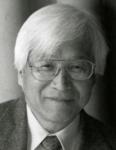
“There is only one sin, said Kosuke Koyama, and it is exceptionalism.” Born in Tokyo in 1929, Koyama saw in the Japanese Empire the myth of exceptionalism. To his great sorrow, he saw the same myth in the United States, the second home where he finished a distinguished career as John D. Rockefeller, Jr. Professor of World Christiankosuke-koyama-2ity at Union Theological Seminary in the City of New York.

Beneath White Privilege lies the election doctrine that arrived on these shores with America’s European settlers. Their theology was wrapped around the belief that the true believers, the elect, were exceptional to the rest of humankind. The result was genocide against America’s indigenous peoples followed shortly by the institution of chattel slavery, both the racial sins of White Privilege of which Jim Wallis writes.

In the larger scheme of things in 2016, one can argue convincingly that exceptionalism has been a primary contributor to climate change. The sin of exceptionalism is the illusion that we, the human species, are superior to nature. In  honor of Koyama: Could it be that there is only one sin: exceptionalism?

I wish Jim and Ko could have spent time with each other. It would have been so enlightening to have sat in not their conversations.

  • Gordon C. Stewart, Chaska, MN, January 25, 2016.

Word for the Day: Semiotics

The word for the day was suggested by a former Kindergarten classmate. Carolyn, a retired university music librarian, brought Semiotics to our attention after reading yesterday’s posts on hermeneutics. She knew the word but had had to look it up at least seven times, but could no longer remember what it meant.

The request took us online to the Encyclopaedia Britannica entry on Semiotics.

Semiotics, also called Semiology, the study of signs and sign-using behaviour. It was defined by one of its founders, the Swiss linguist Ferdinand de Saussure, as the study of “the life of signs within society.” Although the word was used in this sense in the 17th century by the English philosopher John Locke, the idea of semiotics as an interdisciplinary mode for examining phenomena in different fields emerged only in the late 19th and early 20th centuries with the independent work of Saussure and of the American philosopher Charles Sanders Peirce.

Click HERE for the Encyclopaedia Britannica‘s one page entry, ending with references and links to the influence of Semiotics in the fields of aesthetics, anthropology, psychoanalysis, communications, and semantics. The Britannica doesn’t mention hermeneutics, although the relation between them is that of kissing cousins. Both understand us humans as meaning-makers who create meaning by means of signs and language.

Most students of hermeneutics and semiotics disagree with religious fundamentalism’s view that meaning already exists and that the human task is to find it, as in the statement often made at times of death that “God has a better plan.” The role of the divine, if one supposes it, is as creative Spirit beneath the human spirit, always creating, never finished, never pre-determined. Scholars in theology, philosophy, anthropology, and linguistics can no longer do their work honestly without going through the Semiotics door of Claude Lévi-Strauss, Jacques Lacan, Michel Foucault, and Jacques Derrida.

  • Gordon C. Stewart, Tampa, FL, January 22, 2016

Hermeneutics

Never heard of it? It’s not one of the big words we hear every day. But ‘hermeneutics’ is a basic activity we’re engaged in every day. It’s like breathing – one of those basic things we don’t notice until someone disagrees with us.

The word’s origins date back to Greek philosophy, long before Peewee Herman, Herman Goehring, or George Herman (“Babe”) Ruth did it. But I digress. Their names were spelled with an ‘a’; there was no ancestor named Hermen.

But Peewee, Herman, and George each engaged in hermeneutics, the theory and practice of interpretation. They interpreted life, respectively, as comedy, tragedy, and sport. They looked at the human experience through their own interpretative lenses.

Every time we read a text, watch a film, listen to a speech, or view a painting, we interpret it. We are doing hermeneutics. We put into practice the largely unconscious principles that shape how we experience the world.

The study of hermeneutics, a Latinized version of the Greek hermeneutice, reaching back to Plato and Aristotle, has been part of the great thinkers of Western civilization down to our own times. Click The Stanford Encyclopedia of Philosophy for the history of the term.

  • Gordon C. Stewart, Tampa, FL, January 21, 2016.

Thanks to Wonderfulwordsblog for inviting readers to create a post on a lesser known word.


Two Guys from Corinth

The students at Liberty University heard about the two guys from Corinth yesterday. Guest speaker Donald Trump quoted 2 Corinthians, confirming his Christian credentials to the scripture-based evangelical Christian audience at Liberty University.

There were snickers. People who know the New Testament don’t call Paul’s Second Letter to the Corinthians “TWO Corinthians”; they use the short hand “Second Corinthians.”

Most other places Trump’s mention of Two Corinthians would make a great opening line for a story.

A guy walks into a bar and says, “‘Hey, listen up. Two Corinthians were walking in mid-Manhattan, and the one guy says to the other, ‘You know what? This Trump guy comes up to me at 86th and Fifth Avenue and starts talking like he knows our town.’

“‘Yeah?’says the second guy from Corinth. ‘He did the same with me. But does he speak Greek?’

“‘What’s the matter with you! As long as he tells stories about Two Corinthians, I don’t care. The guy’s makin’ us famous. The people at Liberty love us. Besides, Greece is in big trouble. Maybe Trump can fix Greece, too!'”


The Donald at 11 year old

Imagine a class room of 11 year olds. Donald Trump takes on the teacher!

Click Li’l Donald to enjoy Bill Flanagan’s story in the The New Yorker. 

Four Big Questions – I don’t “get” it

I don’t get it. Or maybe I do, but don’t want to.

Some things jade a person’s spirit.  Like the poisonous, partisan punditry that made a lot of noise responding to last night’s State of the Union Address. Blah, blah, blah; blah, blah, blah!

“I don’t get” why, or how, a thoughtful listener could disparage the FOUR BIG QUESTIONS that framed the President’s speech. 

► “How do we give everyone a fair shot at opportunity and security in this new economy?”

► “How do we make technology work for us, and not against us – especially when it comes to solving urgent challenges like climate change?”

► “How do we keep America safe and lead the world without becoming its policeman?”

► “How can we make our politics reflect what’s best in us, and not what’s worst?”

In the run up to the 2016 Presidential Election, President Obama’s last State of the Union Address spelled out the philosophical-ethical questions that every candidate should be asking and answering. Will we, the citizens – the voters – take the cue? Will we test every candidate for President, the Senate, and House of Representatives to assure ourselves that they “get it”: governing in the United States of America requires thoughtful reflection on complex matters that do not lend themselves to simple solutions or demonizing an opponent.

If we, the people,  don’t “get that”, it won’t be because we can’t. It will be because we prefer the poison of partisan blah, blah, blah.

  • Gordon C. Stewart, Jan. 13, 2016.


A New Government of National Concentration

Video

Adolf Hitler rose to power by playing to the fears, anxieties, and anger of the German people. His strategy was to play the strongman who would fix it, make Germany great again. A nation that had regarded itself as exceptional had lost its way, humiliated by defeat in World War I. Hitler focused that anger at the weakness of the post-World War I Weimar Republic whose inept Chancellor and Reichstag (i.e. Congress) he blamed for the nation’s drift. He blames Marxist thinking and Communists. He declares Christianity to be the religion of the German state. By narrowing and scapegoating, he focuses the people’s fears and anxieties on visible targets. It was only a matter of time before Jews, homosexuals, and gypsies joined the ranks of those to be eliminated in a purified Aryan state.

Notice how quietly, how slowly this speech begins. He waits for the crowd to be quiet before he continues to speak. He is taming them. Mesmerizing them. Training them for Fascism. And when he has brought them to heel, he unleashes a tirade that taps into the people’s volcanic desire for a return to national exceptionalism.

“Those who cannot remember the past are condemned to repeat it.” – George Santayana, The Life of Reason, 1905.

  • Gordon C. Stewart, Chaska, MN, Jan. 11, 2016.

Adolf Hitler’s Appeal to the German People

Radio broadcast, January 31, 1933

Over fourteen years have passed since that unhappy day when the German people, blinded by promises made by those at home and abroad, forgot the highest values of our past, of the Reich, of its honor and its freedom, and thereby lost everything. Since those days of treason, the Almighty has withdrawn his blessing from our nation. Discord and hatred have moved in. Filled with the deepest distress, millions of the best German men and women from all walks of life see the unity of the nation disintegrating in a welter of egoistical political opinions, economic interests, and ideological conflicts.

As so often in our history, Germany, since the day the revolution broke out, presents a picture of heartbreaking disunity. We did not receive the equality and fraternity which was promised us; instead we lost our freedom. The breakdown of the unity of mind and will of our nation at home was followed by the collapse of its political position abroad.

We have a burning conviction that the German people in 1914 went into the great battle without any thought of personal guilt and weighed down only by the burden of having to defend the Reich from attack, to defend the freedom and material existence of the German people. In the appalling fate that has dogged us since November 1918 we see only the consequence of our inward collapse. But the rest of the world is no less shaken by great crises. The historical balance of power, which at one time contributed not a little to the understanding of the necessity for solidarity among the nations, with all the economic advantages resulting therefrom, has been destroyed.

The delusion that some are the conquerors and others the conquered destroys the trust between nations and thereby also destroys the world economy. But the misery of our people is terrible! The starving industrial proletariat have become unemployed in their millions, while the whole middle and artisan class have been made paupers. If the German farmer also is involved in this collapse we shall be faced with a catastrophe of vast proportions. For in that case, there will collapse not only a Reich, but also a 2000-year-old inheritance of the highest works of human culture and civilization.

All around us are symptoms portending this breakdown. With an unparalleled effort of will and of brute force the Communist method of madness is trying as a last resort to poison and undermine an inwardly shaken and uprooted nation. They seek to drive it towards an epoch which would correspond even less to the promises of the Communist speakers of today than did the epoch now drawing to a close to the promises of the same emissaries in November 1918.

Starting with the family, and including all notions of honor and loyalty, nation and fatherland, culture and economy, even the eternal foundations of our morals and our faith—nothing is spared by this negative, totally destructive ideology. Fourteen years of Marxism have undermined Germany. One year of Bolshevism would destroy Germany. The richest and most beautiful areas of world civilization would be transformed into chaos and a heap of ruins. Even the misery of the past decade and a half could not be compared with the affliction of a Europe in whose heart the red flag of destruction had been planted. The thousands of injured, the countless dead which this battle has already cost Germany may stand as a presage of the disaster.

In these hours of overwhelming concern for the existence and the future of the German nation, the venerable World War leader [Hindenburg] appealed to us men of the nationalist parties and associations to fight under him again as once we did at the front, but now loyally united for the salvation of the Reich at home. The revered President of the Reich having with such generosity joined hands with us in a common pledge, we nationalist leaders would vow before God, our conscience and our people that we shall doggedly and with determination fulfill the mission entrusted to us as the National Government.

It is an appalling inheritance which we are taking over.

The task before us is the most difficult which has faced German statesmen in living memory. But we all have unbounded confidence, for we believe in our nation and in its eternal values. Farmers, workers, and the middle class must unite to contribute the bricks wherewith to build the new Reich.

The National Government will therefore regard it as its first and supreme task to restore to the German people unity of mind and will. It will preserve and defend the foundations on which the strength of our nation rests. It will take under its firm protection Christianity as the basis of our morality, and the family as the nucleus of our nation and our state. Standing above estates and classes, it will bring back to our people the consciousness of its racial and political unity and the obligations arising therefrom. It wishes to base the education of German youth on respect for our great past and pride in our old traditions. It will therefore declare merciless war on spiritual, political and cultural nihilism. Germany must not and will not sink into Communist anarchy.

In place of our turbulent instincts, it will make national discipline govern our life. In the process it will take into account all the institutions which are the true safeguards of the strength and power of our nation.

The National Government will carry out the great task of reorganizing our national economy with two big Four-Year Plans:

Saving the German farmer so that the nation’s food supply and thus the life of the nation shall be secured.

Saving the German worker by a massive and comprehensive attack on unemployment.

In fourteen years the November parties have ruined the German farmer.

In fourteen years they created an army of millions of unemployed.

The National Government will carry out the following plan with iron resolution and dogged perseverance.

Within four years the German farmer must be saved from pauperism.

Within four years unemployment must be completely overcome.

Parallel with this, there emerge the prerequisites for the recovery of the economy.

The National Government will combine this gigantic project of restoring our economy with the task of putting the administration and the finances of the Reich, the states, and the communes on a sound basis.

Only by doing this can the idea of preserving the Reich as a federation acquire flesh and blood.

The idea of labor service and of settlement policy are among the main pillars of this program.

Our concern to provide daily bread will be equally a concern for the fulfillment of the responsibilities of society to those who are old and sick.

The best safeguard against any experiment which might endanger the currency lies in economical administration, the promotion of work, and the preservation of agriculture, as well as in the use of individual initiative.

In foreign policy, the National Government will see its highest mission in the preservation of our people’s right to an independent life and in the regaining thereby of their freedom. The determination of this Government to put an end to the chaotic conditions in Germany is a step towards the integration into the community of nations of a state having equal status and therefore equal rights with the rest. In so doing, the Government is aware of its great obligation to support, as the Government of a free and equal nation, that maintenance and consolidation of peace which the world needs today more than ever before.

May all others understand our position and so help to ensure that this sincere desire for the welfare of Europe and of the whole world shall find fulfillment.

Despite our love for our Army as the bearer of our arms and the symbol of our great past, we should be happy if the world, by restricting its armaments, made unnecessary any increase in our own weapons.

But if Germany is to experience this political and economic revival and conscientiously to fulfill its duties towards other nations, a decisive act is required: We must overcome the demoralization of Germany by the Communists.

We, men of this Government, feel responsible to German history for the reconstitution of a proper national body so that we may finally overcome the insanity of class and class warfare. We do not recognize classes, but only the German people, its millions of farmers, citizens and workers who together will either overcome this time of distress or succumb to it.

With resolution and fidelity to our oath, seeing the powerlessness of the present Reichstag to shoulder the task we advocate, we wish to commit it to the whole German people.

We therefore appeal now to the German people to sign this act of mutual reconciliation.

The Government of the National Uprising wishes to set to work, and it will work.

It has not for fourteen years brought ruin to the German nation; it wants to lead it to the summit.

It is determined to make amends in four years for the liabilities of fourteen years.

But it cannot subject the work of reconstruction to the will of those who were responsible for the breakdown.

The Marxist parties and their followers had fourteen years to prove their abilities.

The result is a heap of ruins.

Now, German people, give us four years and then judge us.

Let us begin, loyal to the command of the Field-Marshal. May Almighty God favor our work, shape our will in the right way, bless our vision and bless us with the trust of our people. We have no desire to fight for ourselves; only for Germany.

Source of English translation: Jeremy Noakes and Geoffrey Pridham, eds., Nazism 1919-1945, Vol. 1, The Rise to Power 1919-1934. Exeter: University of Exeter Press, 1998, pp. 131-34.

Source of original German text: “Aufruf der Reichsregierung vom 31. Januar 1933,” reprinted in Hans-Adolf Jacobsen and Werner Jochmann, eds., Ausgewählte Dokumente zur Geschichte des Nationalsozialismus, 1933-1945. Vol. 2, Bielefeld, 1961, no page number (Document 31. I. 1933).



Donald Trump’s Bible

“Vote: the instrument and symbol of a freeman’s power to make a fool of himself and a wreck of his country.” —Ambrose Bierce, The Devil’s Dictionary

“Everything is changing. People are taking their comedians seriously and the politicians as a joke.” —Will Rogers

61c82479a4d640ef3fed3bcfaca3cd16“That’s it! You people have stood in my way long enough. I’m going to clown college!” Homer Simpson.

“It takes two to lie: one to lie and one to listen” Homer Simpson.

“It’s not easy to juggle a pregnant wife and a troubled child, but somehow I managed to fit in eight hours of TV a day.” Homer Simpson.

“When will I learn? The answers to life’s problems aren’t at the bottom of a bottle, they’re on TV!” – Homer Simpson.

Bart: “Grandpa, why don’t you tell a story?” Lisa: “Yeah Grandpa, you lived a long and interesting life.” Grandpa: “That’s a lie and you know it” Grandpa Abraham Simpson [Loser]

“Life is just one crushing defeat after another until you just wish Flanders was dead” – Homer Simpson on his religious neighbor Ned Flanders.


THE QUESTION – to be or not to be?

Hamlet, William Shakespeare

Hamlet, William Shakespeare

The questions “Who am I?” and “Why is Views from the Edge still here in 2016?” share a bit of Hamlet’s question whether “to be or not to be?”

We’re no Shakespeare! But writing is what we do. To not write would be not to be, a kind of denial of consciousness and the need to speak. So I’ve written and aired commentaries on MPR’s All Things Considered and anywhere else that has provided an opportunity to think and feel out loud.

Speaking from a pulpit is what I did most of my professional life along with some publishing on the side. Words matter. They deserve to be handled with care and thought. Which is why I go back and forth between days when I dare to think I have something worth saying and days when my words and thoughts feel like sending more pollution into cyberspace.

Not everyone cares about Views from the Edge, nor should they. But if you’re interested in a different viewing point on the news that searches out the hidden, taken-for-granted convictions, beliefs, and ideas that underlie life in the 21st century, you might find a second or third home here.

The edge from which my colleague Steve Shoemaker and I view the world is the margin, the place of an outsider peering in, the way an anthropologist looks at an ancient civilization to find out what it was really about. Steve and I cut our eye teeth on two stories that likely never happened but are always happening: Cain slaying his brother Abel, and the building and crumbling of the Tower of Babel. Both stories concern human anxiety and a refusal to live within the limits of meaningful time.

Hamlet’s “to be or not to be?” is the question in 2016 as climate change exposes the folly of the prideful, unspoken western philosophical conviction that the human species is superior to or exceptional to nature. We’re learning the hard way that we are not, and perhaps, just perhaps, we will also rediscover in the deepest core of the western tradition itself a wisdom and virtue akin to aboriginal traditions: a humbler human calling and way to be our neighbor’s and our planet’s keeper.

  • Gordon C. Stewart, Chaska, MN, Jan. 4, 2016