
Deepwater Horizon fire

Chief Albert Naquin

The parents of the murdered children of Sandy Hook Elementary School in Newtown are back in Washington, D.C today and tomorrow. They are meeting with our nation’s law-makers.
Like Jeremiah, “the Weeping Prophet” who cried over the plight of his people, these mourning parents are courageous spokespersons for sanity, compassion, and an end to America’s love of violence.
May the Spirit that inspires these grieving parents to leave home for meetings in the center of American power and public scrutiny stir the consciences of the Congressional Representatives and Senators with whom they meet.
A friend brought to my attention “Thank God, I’m Alive” on the latest tragedy of gun violence to garner national attention in Santa Monica, California.
As Moses said when Joshua wanted to silence two people (Eldad and Medad) who were speaking out without authorization: “I wish that all God’s people were prophets!” (Book of Numbers 11:29, Torah, Hebrew Bible).
I invite your prayers and well wishes for the parents of Newtown as they carry forward the prophetic tradition. Let no one silence you. Speak the truth with love, and let the Spirit do its work.
Please share your comments.
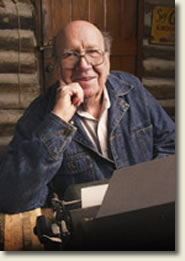
Will Campbell
Will Campbell was that rare person of integrity who seemed to fulfill the hard calling described once by his friend William Stringfellow – “to be the same person everywhere all the time” – and his different places still blow the mind.
He was idiosyncratic. Who else would or could march at the forefront of the Civil Rights Movement in the 1950s and ‘60s, once the law was changed, turn his ministry to sipping whiskey with the Good Ol’ Boys on the front porches of the Ku Klux Klan?
Campbell was a son of the Deep South, a white Southern Baptist preacher raised in Mississippi, who betrayed his white privilege as a matter of Gospel discipleship. He became one of the closest friends of the youth Rev. Dr. Martin Luther King, Jr., the only white person present at the founding of the Southern Christian Leadership Conference that led the charge for Civil Rights in America. He was trusted that much.
His life was threatened repeatedly. He gained national prominence as a field worker for the Department of Racial and Cultural Relations of the National Council of Churches, the nation’s largest ecumenical council that suffered heavy criticism from anti-civil rights forces across the country, but especially in the Deep South. The National Council of Churches and Will Campbell were to their critics what the KKK was to those who worked to eliminate segregation in America.
When the nine black school children walked through hostile crowds to integrate the public school system in Little Rock, Arkansas, Will Campbell was one of four people at their side.
He became Director of the Committee of Southern Churchman, a position he used to promote racial reconciliation, his vocation until the day he died.
With the passage of the Civil Right Act, the man who spent his ministry to help win freedom for blacks did something no one could have imagined. He chose to re-direct his ministry to the new lepers of society, the defeated hooded enemies of integration, the Ku Klux Klan.
No one but Will Campbell would have done this, and few others could have done this. But he did. He became known as the chaplain to the KKK. Campbell wrote in Brother to a Dragonfly, one of 26 publications that bear his name:
“I had become a doctrinaire social activist without consciously choosing to be. And I would continue to be some kind of social activist. But there was a decided difference. Because from that point on I came to understand the nature of tragedy. And one who understands the nature of tragedy can never take sides.”
Will Campbell was not a hater. He was a reconciler who loved people. All kinds and conditions of people, even his ‘enemies’. He was the same person everywhere all the time.
He confused his critics – first the Right and then the Left – by insisting that his soul did not belong to any team – racial, political, religious, cultural. It belonged to the Kingdom of God. There was only one team, and that was the family of ALL God’s children everywhere. Compassion came first in his hierarchy of values. Compassion led him to campaign for justice in the Civil Rights Movement, and compassion led him to sip whiskey with the cross-burners in the rocking chairs on their front porches. His was a ministry of reconciliation, a living, idiosyncratic expression a bold declaration of the biblical gospel that God was in Christ reconciling the world to God’s own Self.
The notice of Will’s death (June 3, 2013) at the age of 88 in Nashville, Tennessee reminded me of just how hard it is to be a disciple of Jesus, how hard it is to love my neighbor as myself, especially when the neighbor is the enemy of my own claims to righteousness. Would that all of us were as idiosyncratic as Will.
A dear friend sent an email about cause-weariness. She’s not alone in suffering an assault of email alarms and solicitations. She’s very conscientious and exhausted. I responded:
I, too, find myself increasingly angry. And that’s not a good thing. It’s right, but it’s not good for my soul. You have always been a tender, gentle, loving, musical person with that unique sense of humor, and this hits you hard, maybe harder than it hits me. I, too, am weary of all the emails and solicitations. They, too, have come to make me angry. “Just leave me alone!!!” I say to myself…and… out loud sometimes. “I’m not on your team. I’m not on anybody’s team. I don’t like teams. And stop treating me like one of the President’s best friends! He doesn’t know me from the man-in-the-moon, and, NO, you can’t get another $100 from me by peddling a raffle for lunch with the president! I don’t like gambling. Never have. Never will. Giving should be giving, not for purposes of getting.”
Anyway, you get my point.
I am torn between being a responsible disciple and citizen – staying abreast of current events and looking deeply into their meaning and the powers and principalities behind them – and living in the joy to which we are called.
I don’t know what to do either. I do know that you are one of God’s very precious children with a love of music and the arts. Listen to LOTS of music and spend time with beauty to off-set the ugliness.
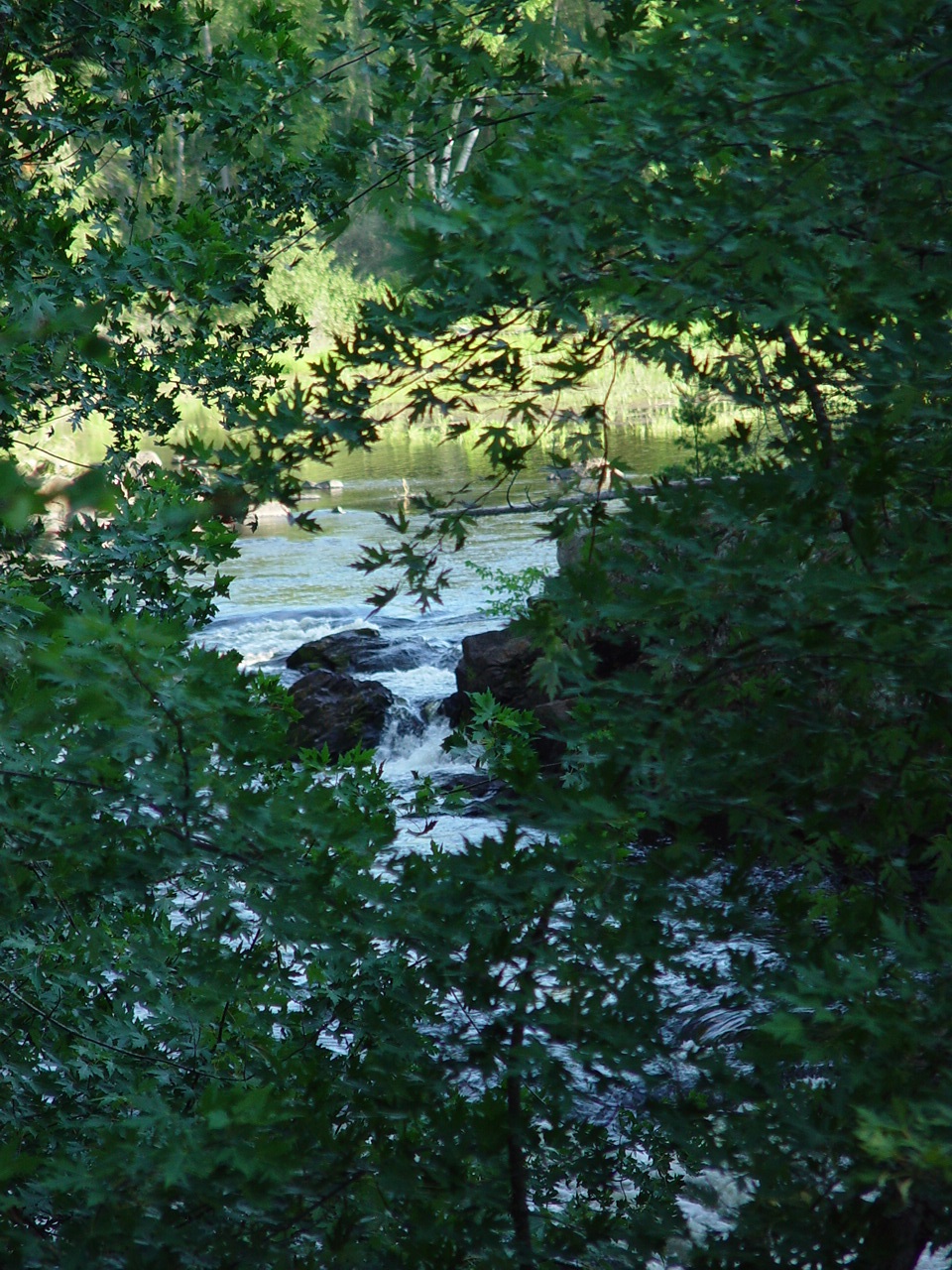
Boundary Waters Canoe Area Wilderness, Minnesota
The visitor took exception to the off-hand way he had been treated. “Young man, do you know who I am?” he demanded, and recited a list of his many titles and appointments.
The lowly attaché listened, paused and said, “Well then take two chairs.”
Pride, vanity, greed, self-deception, and illusions of grandiosity are part of the human condition.
We are creatures of the wilderness, wanderers and sojourners in time who have here no lasting city to dwell in. And so, as in the legend of the Tower of Babel in The Book of Genesis (chapter 11), we (humankind) come upon the Plain of Shinar . . . or some other version of it. . . and settle down to rid ourselves of anxiety . . . and we settle there as though we could build something permanent that would be a fortress against the uncertainties of the wilderness and the knowledge of ultimate vulnerability and ultimate dependence. We build our own societies and towers of Babel.
Yet there is something about us that still loves a wilderness. Something in us that knows that refusing the nomadic wilderness – “and as they journeyed, they came upon the Plain of Shinar, and settled there” – is fraught with greater danger and social peril. Something in us knows better than to settle down on the Plain of Shinar to build something impervious to the dangers of the wilderness and time. Something in us knows that the brick and mortar will crumble, that the projects of pride, vanity, and greed will fall of their own weight, and that the high towers we build with the little boxes at the top that presume to house and control Ultimate Reality (G-d) are little more than signs of a vast illusion, the vain act of species grandiosity. For in the Hebrew tale of the tower of Babel with its “top in the heavens,” the joke’s on us. The narrator speaks truth with humor: God has to come down to see this high tower.
Every society and culture has its own version of the city and the tower of Babel. Equally so, in every society there is at least the memory of the wilderness, a sense of call to recover our deeper selves as mortals whose destiny is only found by traveling beyond the politics and religiosity of pride, vanity, greed, self-deception, and grandiose illusions.
Perhaps that is why John the Baptist heads out to the wilderness – “the voice of one crying in the wilderness” – away from delusions and distractions of the city of Babel. Perhaps that is also why, as scripture tells it, the masses also went out to the wilderness and the Jordan River to go under the muddy Jordan waters to rise to the hope of a fresh beginning on the other side of the formative influences of Babel-ing nonsense.
After the authorities imprison John, Jesus asks the crowds what had drawn them to John in the wilderness. “What did you go out to see? A reed shaken by the wind? A man clothed in soft raiment? No. Those who wear soft clothing live in kings’ houses. What then, did you go out to see?”
Jesus begins his ministry in the wilderness. He partakes of John’s baptism, and when he did, the Spirit grasped him and called him further into the wilderness, “drove him into the wilderness” – away and apart from all distractions and illusion – back to the place where humankind lives before it “settles” to build the political-economic-religious tower, the impervious fortress and monuments to itself in the Plain of Shinar.
Those who would learn from the Genesis legend and those who wish to follow Jesus are called into the wilderness to restart the long spiritual journey that stopped too early.
For the fact we deny is that underneath all our steel, glass, and technology, we are still animals – mortals subject to the most primitive yearnings, vulnerable creatures who possess nothing.
In his poem “The Wilderness” American poet laureate Carl Sandberg realized a great truth long before it came into vogue.
There is a wolf in me . . . fangs pointed for tearing gashes . . . a red tongue for raw meat . . . and the hot lapping of blood—I keep this wolf because the wilderness gave it to me and the wilderness will not let it go.
There is a fox in me . . . a silver-gray fox . . . I sniff and guess . . . I pick things out of the wind and air . . . I nose in the dark night and take sleepers and eat them and hide the feathers . . . I circle and loop and double-cross.
There is a hog in me . . . a snout and a belly . . . a machinery for eating and grunting . . . a machinery for sleeping satisfied in the sun—I got this too from the wilderness and the wilderness will not let it go.
There is a fish in me . . . I know I came from salt-blue water-gates . . . I scurried with shoals of herring . . . I blew waterspouts with porpoises . . . before land was . . . before the water went down . . . before Noah . . . before the first chapter of Genesis.
There is a baboon in me . . . clambering-clawed . . . dog-faced . . . yawping a galoot’s hunger . . . hairy under the armpits . . . here are the hawk-eyed hankering men . . . here are the blonde and blue-eyed women . . . here they hide curled asleep waiting . . . ready to snarl and kill . . . ready to sing and give milk . . . waiting—I keep the baboon because the wilderness says so.
There is an eagle in me and a mockingbird . . . and the eagle flies among the Rocky Mountains of my dreams and fights among the Sierra crags of what I want . . . and the mockingbird warbles in the early forenoon before the dew is gone, warbles in the underbrush of my Chattanoogas of hope, gushes over the blue Ozark foothills of my wishes—And I got the eagle and the mockingbird from the wilderness.
O, I got a zoo, I got a menagerie, inside my ribs, under my bony head, under my red-valve heart—and I got something else: it is a man-child heart, a woman-child heart: it is a father and mother and lover: it came from God-Knows-Where: it is going to God-Knows-Where—For I am the keeper of the zoo: I say yes and no: I sing and kill and work: I am a pal of the world: I came from the wilderness.
Jesus of Nazareth, whom Christians call The Christ, walked in our wilderness to live authentically and faithfully as a human being among all the beasts of the menagerie that were part of his nature and are part of our nature. Immediately after he had gone down into the waters to die to the worlds that would fool and twist him, and just as quickly as the voice from heaven declared him “my beloved Son in whom I take pleasure,” the spirit immediately drove him into the wilderness. As the Gospel of Mark narrates the story, he was there for forty days among the wild beasts, and angels ministered to him.
By God’s grace and power, may it be so also with us.
– Sermon preached by Gordon C. Stewart, Shepherd of the Hill Presbyterian Church in Chaska, MN.
This conversation about BP, the oil companies, coastal erosion, and the distribution of the BP Settlement Fund took place at Shepherd of the Hill Presbyterian Church in Chaska one week before the 3rd Anniversary of the Deep Water Horizon explosion.
Albert Naquin is Chief of the Isle de Jean Charles Band of Biloxi-Chitimacha-Choctaw, a subsistence fishing community whose traditional land and way of life are vanishing quickly.
Kristina Peterson is Pastor of the Bayou Blue Presbyterian Church in Gray, LA and a disaster recovery professional and researcher with the University of New Orleans Center for Hazard Assessment, Response, and Technology. Kristina was a speaker at First Tuesday Dialogues in Chaska, MN one year after the explosion of Deep Water Horizon. She returned with Chief Albert for this conversation on their way to a conference in Duluth, MN of indigenous people who live along the Mississippi River from its headwaters in Minnesota to its mouth in the Louisiana Delta of the Gulf Coast.
The off-camera voice later in the conversation is the editor of Views from the Edge and Pastor of Shepherd of the Hill.
“Something is very wrong with a system that puts corporations above people.” – Kristina Peterson
This sermon was preached at Shepherd of the Hill Presbyterian Church in Chaska May 12, 2013 following a trip to Cambria, CA that began with Kay breaking her ankle on the way down the stairs as we were leaving for the airport. The rest is story of William Randolph Hearst desire for a bungalow that ended up as a castle, and an encounter with Mr. Excellent. The fawn story never made it into the sermon because of a forgetful preacher.
The story of the fawn is this. The morning Kay and I were preparing to leave Cambria for the trip home, I noticed a deer in the backyard pacing. There was a fawn lying on the lawn. Examining the fawn, it appeared to be alive, but was not moving, injured perhaps. The next time I looked, its eyes were closed. After examining it, I called the owner of the home we had rented to suggest that she call animal rescue. I thought there was a dead fawn in her back yard.
When we arrived home in Minnesota there was a voicemail that Animal Rescue had come and taken away the fawn only to realize that it was very much alive. It had just been born that morning. Point of the story for a Mother’s Day sermon: God is like that mother, staying nearby waiting for her newborn baby to get up.
A sermon three years after Deep Water Horizon on love, freedom, and caring for each other, the oysters and the crabs in the Gulf of Mexico.

Hearst Castle, San Simeon, CA
The Hearst Castle began with Hearst’s desire for “a bungalow” retreat on the site where a tent had always been his preference on vacations there.
William Randolph Hearst (1863-1951) was interesting in so many ways. He attended an exclusive boarding school in New Hampshire and was expelled from Harvard for mischievous behavior, like sponsoring spontaneous beer blasts on Harvard Yard and having potty chambers containing the photographs of professors he didn’t like delivered to their homes and offices.
After Harvard the young Mr. Hearst was given a job by his father, George, in the Hearst family newspaper business. He rescued the San Francisco Examiner from near failure by hiring some of the very best journalists of his time. He purchased other large city newspapers in Chicago, Atlanta, Boston, and New York. He built the Hearst family business into a newspaper, radio, and television news and entertainment empire.
The young Hearst was a maverick and political progressive. He appears to have been a man of conscience. He worked for the end of child labor, championed the causes of organized labor, allied himself with progressives, and, as shown in a film viewed at the end of Hearst Castle tour, called for the redistribution of wealth in America.
“The distribution of wealth is just as important as its creation. Any man who has the brains to think and the nerve to act for the benefit of the people of the country is considered a radical by those who are content with stagnation and willing to endure disaster. If you ask, “Am I my brother’s keeper?” The answer is, “You are.”
Twice elected to the United States House of Representatives (1903 and 1907) as a Democrat, Hearst sought his party’s nomination for President in 1904 but was sorely disappointed that his hero, Williams Jennings Bryant, would not support his nomination. He was narrowly defeated in candidacies for Mayor of New York City (1905 and 1909) and as candidate for Governor of New York (1906). In his second bid for Mayor, he ran as candidate of a short-lived a third party of his own creation, the Municipal Ownership League, formed to defeat Tammany Hall’s stranglehold on the NYC Democratic Party.
By the time of his last run at political office – his bid to become the Democratic Party candidate for the U.S. Senate seat in New York in 1922, backed by Tammany Hall – he had become know for “yellow journalism” whose chief journalistic opponent was Joseph Pulitzer.
“In 1934 after checking with Jewish leaders to make sure the visit would prove of benefit to Jews, Hearst visited Berlin to interview Adolf Hitler. Hitler asked why he was so misunderstood by the American press. ‘Because Americans believe in democracy,’ Hearst answered bluntly, ‘and are averse to dictatorship.’ Hearst’s Sunday papers ran columns without rebuttal by Hermann Göring and Dr. Alfred Rosenberg.” (Brechin, “Imperial San Francisco”, 1999, University of California Press, cited on Wikipedia)
In 1935, John Spivak described Hearst’s “current efforts to scare up the ‘Red’ bogey as one of the first steps in preparing the country for Fascism. Hearst, with his chain of newspapers reaches millions of readers. Just before he started his anti-Red drive he returned from a visit to Germany where he had conferred with Hitler and other Nazi leaders. Shortly after his arrival home he stated in a front page editorial that this country need not fear Fascism, that Fascism can come only when a country is menaced by Communism.” (Source: John Spivak, New Masses, Feb. 5, 1935. Hitler asked Hearst ”
Throughout it all, Hasrst found respite in the lovely hills that quickly rise 1600 feet above the Pacific Ocean shoreline up a winding road in San Simeon, California. As a boy and young man it was his favorite place, a place of extraordinary natural beauty where he was alone.
In 1919, Hearst decided to forgo the camping that had been his practice. He hired Los Angeles architect Julia Morgan to design a modest bungalow.
How, then, did a bungalow turn into a 90,000+ square foot castle that was still expanding when Hearst died in 1951? How did the bungalow retreat become the lavish quarters that hosted George Bernard Shaw, Winston Churchill, Franklin Delano Roosevelt, and Calvin Coolidge, not to mention the host of other high-profile guests from the entertainment industry, newspaper, magazine, radio/television magnates like himself?
Perhaps the better question is why? How is easy. He had the money. He paid for it.
Why is harder and deeper than how. Why would a man who loved to camp under the stars in the clouds overlooking the Pacific Ocean and his own land for as far as his eye could see give up the relative simplicity of a bungalow?
What happens inside a man or woman is always a mystery beyond human understanding at its fullest. We rarely understand our own selves, let along understand what goes on inside the hearts and minds of others. One can only guess at why, but the journey from the bungalow to a castle – or the dream of it – is not far from any of us, if truth be told.
Certainly a bungalow would do. And not just any “bungalow” but one designed by a brilliant female architect from LA (250 miles south of San Simeon). Even William’s bungalow would have been a castle for most Americans. His bungalow would have born little resemblance to the working-class bungalows of Queens, New York or Little Italy in Chicago. It would be a Hearst bungalow. But it would not be a castle.
Touring the Hearst Castle this week helped shed light on why the bungalow mushroomed into a castle.
Ours was a special two-hour handicapped-accessible evening tour. There were four of us with a docent to ourselves. My wife, Kay, qualified for the handicapped tour because she had broken her leg and needed a wheel chair. The other couple was paired, although neither of them was disabled. Long before they climbed aboard the bus, we had been fascinated with the man who seemed agitated that the ticket agents weren’t showing him special deference. Ticket agents are like that. They don’t care who you are. If you’re not next in line, you’re not next and that’s just the way it is, even a the Hearst Castle.
The couple climbed aboard our bus just as we were about to leave. The man, dressed in a black suit with black shirt and black shoes, continued to shake his head. His wife managed a smile our way.
On the tour, the man showed no interest in conversation, but asked lots of questions about Mr. Hearst’s rise to prominence and the fortune represented by the castle itself. He was intensely interested to learn how William Randolph Hearst ended up with a castle.
At the end of the tour, he handed me his business card. “I’m Mr. Excellence. and within five years my real estate company will be bigger than Century 21.”
The business card had two pictures – Mr. Excellent dressed in black, looking very serious; and a black silhouette of Super Man with an E on his chest complete with a cape.
“So where are staying?” I asked. “We’re not staying. We’re driving home tonight. (It’s 9:00 P.M.) “You live nearby?” “No, it’s about an hour south of LA, a five hour drive. We’ll switch off. No problem. We’ll sleep in late in the morning.”
So the man who now boasts of the fastest growing real estate company in all of California drives five hours at 9:00 P.M. instead of springing for a room on the plains below the Hearst Castle in Cambria or San Simeon? It seemed an incongruity, apparent to the inquirer, yet unapparent to the speaker.
More interesting was the question why. Why did Mr. Excellent feel the need to give us his business card and tell us how successful – how important – he was or would become? Why did the young conscientious William Randolph Hearst, the advocate for the redistribution of wealth, forsake his bungalow for a castle?

 Views from the Edge