Prayers for the people of Moore, Oklahoma

Social reformers Frank Mason North in foreground, Walter Rauschenbusch behind.

Social reformers Frank Mason North in foreground, Walter Rauschenbusch behind.

There are no original words today. Tears. Sighs. Stunned silence.

But an old prayer for Passion Sunday from the Riverside Church in New York City came to mind. It was the prayer of The Rev’d Dr. Ernest (“Ernie”) Campbell for the workers most of us take for granted daily in good times. Today it applies to all the first responders who labor to care for the people of Moore.

Bless with Thy power and presence, gracious God, those who do the menial chores and thankless tasks behind our city’s bright façade:
those who rise early to bring fresh food and produce from the marketplace;
those who clean our halls and offices through the night;
those who work our switchboards and see that messages get through;
those who load and unload trucks;
those who stock the shelves and work the back rooms of our stores;
those who fire boilers and provide maintenance in the heat and noise of basements that we seldom visit;
those who clean our windows and mend our masonry and keep our flagpoles in repair;
those who set tables, bus dishes, and work in our many kitchens.

In following our several callings, make us aware of what we owe to unnamed thousands whose work is indispensable to our well-being. And give them to know, O God, that in Thy sight, if not in ours, the least of the earth are very big indeed.

– Ernest Campbell (Click HERE for Ernest Campbell’s obituary.)

The hymn “Where Cross the Crowded Ways of Life” (music by Ludwig von Beethoven; lyrics by Frank Mason North, pictured above) meant so much to him that he used it for the title of one of his three books. Below are the lyrics. Click HERE for an organist’s rendition of “Where Cross the Crowded Ways of Life”.

Where cross the crowded ways of life,
Where sound the cries of race and clan
Above the noise of selfish strife,
We hear your voice, O Son of man.

In haunts of wretchedness and need,
On shadowed thresholds dark with fears,
From paths where hide the lures of greed,
We catch the vision of Your tears.

From tender childhood’s helplessness,
From woman’s grief, man’s burdened toil,
From famished souls, from sorrow’s stress,
Your heart has never known recoil.

The cup of water given for You,
Still holds the freshness of Your grace;
Yet long these multitudes to view
The sweet compassion of Your face.

O Master, from the mountainside
Make haste to heal these hearts of pain;
Among these restless throngs abide;
O tread the city’s streets again.

Till all the world shall learn Your love
And follow where Your feet have trod,
Till, glorious from Your Heaven above,
Shall come the city of our God!

Mumblety-peg

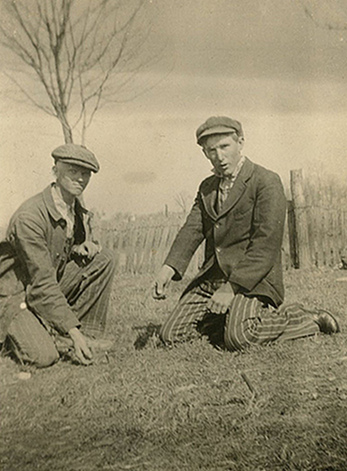
Mumblety-peg playersSteve Shoemaker’s friends call him “Shoe” to this day. Shoe is 6’8″ with huge feet and shoes.

Mumblety-peg

When we played “Stretch” we used our feet,
and not some “candy” wooden stick
stuck in the ground. From my pocket
the folded Barlow knife I’d pick
up by the blade and spin into
the ground. My grade school friend would yell
if it would land anywhere too
close to his tenny-runner shoe,
“Shoe, you can go straight down to hell!”
Then I would have to stand while he
taught me strict reciprocity.

– Steve (“Shoe”) Shoemaker, Urbana, IL, May 19., 2013

You say you’ve never heard of Mumblety-peg? Click HERE for a “manly” definition on “The Art of Manliness” website :-).

Wilderness – Carl Sandburg, Jesus, and Us

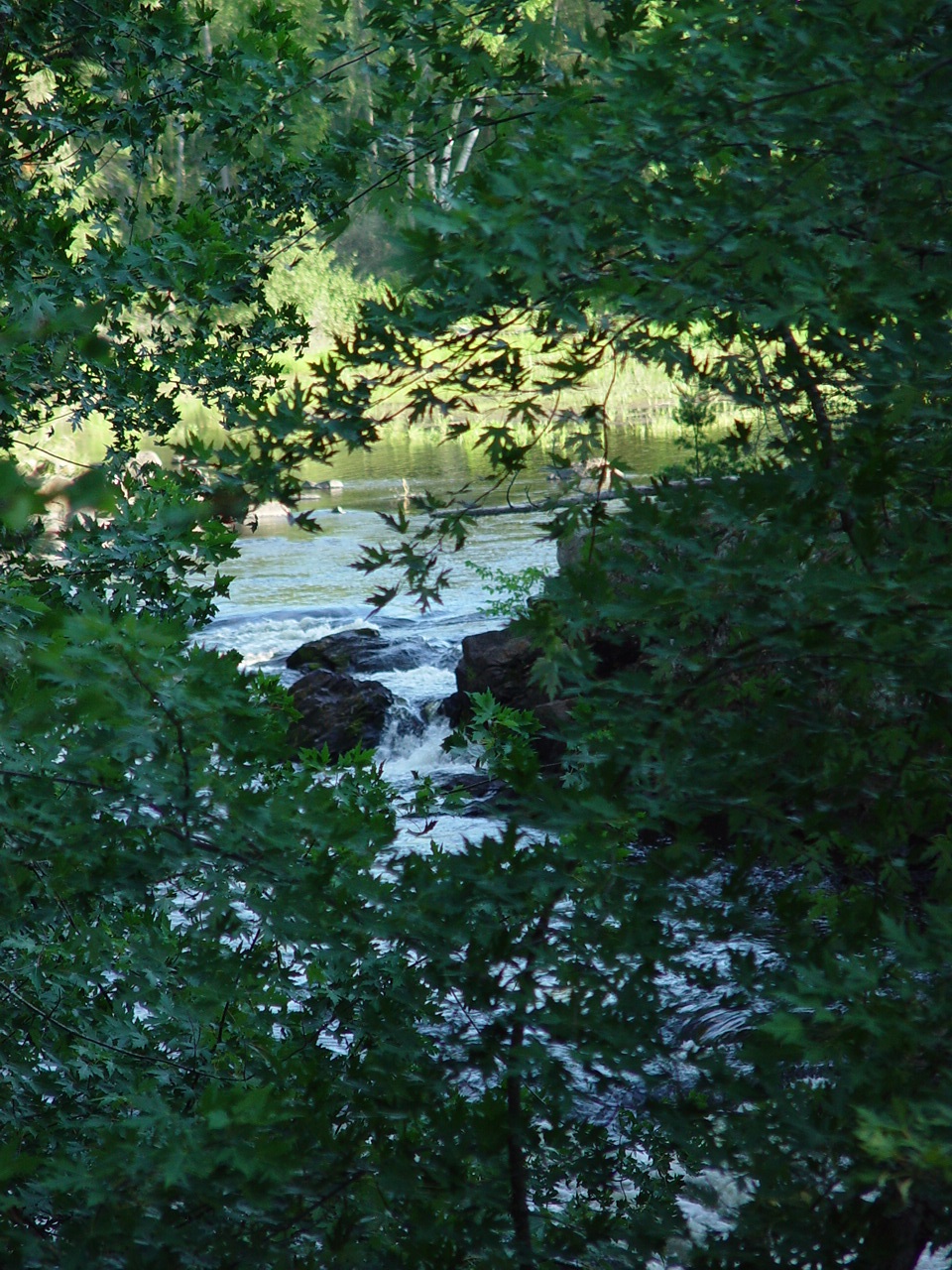
Boundary Waters Canoe Areas Wilderness, Minnesota

Boundary Waters Canoe Area Wilderness, Minnesota

Once upon a time a pompous nobleman paid a call to the English Embassy in St. Petersburg, Russia. He walked into the office and demanded to see the ambassador immediately. “Pray, take a chair,” said the young attaché, “the ambassador will be here soon.”

The visitor took exception to the off-hand way he had been treated. “Young man, do you know who I am?” he demanded, and recited a list of his many titles and appointments.

The lowly attaché listened, paused and said, “Well then take two chairs.”

Pride, vanity, greed, self-deception, and illusions of grandiosity are part of the human condition.

We are creatures of the wilderness, wanderers and sojourners in time who have here no lasting city to dwell in. And so, as in the legend of the Tower of Babel in The Book of Genesis (chapter 11), we (humankind) come upon the Plain of Shinar . . . or some other version of it. . . and settle down to rid ourselves of anxiety . . . and we settle there as though we could build something permanent that would be a fortress against the uncertainties of the wilderness and the knowledge of ultimate vulnerability and ultimate dependence. We build our own societies and towers of Babel.

Yet there is something about us that still loves a wilderness. Something in us that knows that refusing the nomadic wilderness – “and as they journeyed, they came upon the Plain of Shinar, and settled there” – is fraught with greater danger and social peril. Something in us knows better than to settle down on the Plain of Shinar to build something impervious to the dangers of the wilderness and time. Something in us knows that the brick and mortar will crumble, that the projects of pride, vanity, and greed will fall of their own weight, and that the high towers we build with the little boxes at the top that presume to house and control Ultimate Reality (G-d) are little more than signs of a vast illusion, the vain act of species grandiosity. For in the Hebrew tale of the tower of Babel with its “top in the heavens,” the joke’s on us. The narrator speaks truth with humor: God has to come down to see this high tower.

Every society and culture has its own version of the city and the tower of Babel. Equally so, in every society there is at least the memory of the wilderness, a sense of call to recover our deeper selves as mortals whose destiny is only found by traveling beyond the politics and religiosity of pride, vanity, greed, self-deception, and grandiose illusions.

Perhaps that is why John the Baptist heads out to the wilderness – “the voice of one crying in the wilderness” – away from delusions and distractions of the city of Babel. Perhaps that is also why, as scripture tells it, the masses also went out to the wilderness and the Jordan River to go under the muddy Jordan waters to rise to the hope of a fresh beginning on the other side of the formative influences of Babel-ing nonsense.

After the authorities imprison John, Jesus asks the crowds what had drawn them to John in the wilderness. “What did you go out to see? A reed shaken by the wind? A man clothed in soft raiment? No. Those who wear soft clothing live in kings’ houses. What then, did you go out to see?”

Jesus begins his ministry in the wilderness. He partakes of John’s baptism, and when he did, the Spirit grasped him and called him further into the wilderness, “drove him into the wilderness” – away and apart from all distractions and illusion – back to the place where humankind lives before it “settles” to build the political-economic-religious tower, the impervious fortress and monuments to itself in the Plain of Shinar.

Those who would learn from the Genesis legend and those who wish to follow Jesus are called into the wilderness to restart the long spiritual journey that stopped too early.
For the fact we deny is that underneath all our steel, glass, and technology, we are still animals – mortals subject to the most primitive yearnings, vulnerable creatures who possess nothing.

In his poem “The Wilderness” American poet laureate Carl Sandberg realized a great truth long before it came into vogue.

There is a wolf in me . . . fangs pointed for tearing gashes . . . a red tongue for raw meat . . . and the hot lapping of blood—I keep this wolf because the wilderness gave it to me and the wilderness will not let it go.

There is a fox in me . . . a silver-gray fox . . . I sniff and guess . . . I pick things out of the wind and air . . . I nose in the dark night and take sleepers and eat them and hide the feathers . . . I circle and loop and double-cross.

There is a hog in me . . . a snout and a belly . . . a machinery for eating and grunting . . . a machinery for sleeping satisfied in the sun—I got this too from the wilderness and the wilderness will not let it go.

There is a fish in me . . . I know I came from salt-blue water-gates . . . I scurried with shoals of herring . . . I blew waterspouts with porpoises . . . before land was . . . before the water went down . . . before Noah . . . before the first chapter of Genesis.

There is a baboon in me . . . clambering-clawed . . . dog-faced . . . yawping a galoot’s hunger . . . hairy under the armpits . . . here are the hawk-eyed hankering men . . . here are the blonde and blue-eyed women . . . here they hide curled asleep waiting . . . ready to snarl and kill . . . ready to sing and give milk . . . waiting—I keep the baboon because the wilderness says so.

There is an eagle in me and a mockingbird . . . and the eagle flies among the Rocky Mountains of my dreams and fights among the Sierra crags of what I want . . . and the mockingbird warbles in the early forenoon before the dew is gone, warbles in the underbrush of my Chattanoogas of hope, gushes over the blue Ozark foothills of my wishes—And I got the eagle and the mockingbird from the wilderness.

O, I got a zoo, I got a menagerie, inside my ribs, under my bony head, under my red-valve heart—and I got something else: it is a man-child heart, a woman-child heart: it is a father and mother and lover: it came from God-Knows-Where: it is going to God-Knows-Where—For I am the keeper of the zoo: I say yes and no: I sing and kill and work: I am a pal of the world: I came from the wilderness.

Jesus of Nazareth, whom Christians call The Christ, walked in our wilderness to live authentically and faithfully as a human being among all the beasts of the menagerie that were part of his nature and are part of our nature. Immediately after he had gone down into the waters to die to the worlds that would fool and twist him, and just as quickly as the voice from heaven declared him “my beloved Son in whom I take pleasure,” the spirit immediately drove him into the wilderness. As the Gospel of Mark narrates the story, he was there for forty days among the wild beasts, and angels ministered to him.

By God’s grace and power, may it be so also with us.

Sermon preached by Gordon C. Stewart, Shepherd of the Hill Presbyterian Church in Chaska, MN.

A Beautiful Woman

Mary Magdalene

Mary Magdalene

“Not a Limerick”

A beautiful woman named Honey
Told jokes with a countenance sunny.
The punch lines were bold,
and the jokes were well told,
but since not about sex were not funny.

– Steve Shoemaker, Urbana, IL, May 15, 2013

NOTE: Views from the Edge added Mary Magdalene to the post.

Wall Street Man

Missing Something

Missing Something

Stone cold bronze age
Man sits stone cold still
In clothes no ape would wear
Living inside his business suit
Even when alone.

His faceless head retains
the slivered brain of stone-cold
Men who wage the wars
And capitalize on capital
And Capitols.

There is no logic, no capacity
For reason or self-assessment,
Where air blows through the
Empty space a left brain
Might fill.

What’s left is all right and
would still feel and leap
For joy or bow with sadness
Had it not been turned to
Bronze or gold.

His fingers touch left to
Right and right to left
In prayerful hope for the
Missing mind and face, and
Heart of flesh.

– Gordon C. Stewart, May 10, 2013, Chaska, MN

“I will give you a new heart and put a new spirit in you; I will remove from you your heart of stone and give you a heart of flesh.” – The promise for the bones in the Valley of the Bones (Ezekiel 36:26).

Verse – Morning Chorus

Steve's prairie haven - home of the Urbana  "Morning Chorus"

Steve’s prairie haven – home of the Urbana “Morning Chorus”

We live near a tree farm
that birds love.
Transplanted small trees
around our home
are now large,
and at first light, noisy.

Springtime is the loudest.
Breeding has begun.
The travelers have returned:
finches, swallows, robins,
hummers, whippoorwills.

Our dead end rural road
has little traffic even later
in the day–none at 5 am in May.
No sound but bird song:
Coos, chirps, whistles,
call and response.

The choir has no conductor
that we see.

– Steve Shoemaker, Urbana, IL, May 9, 2013

A Mother’s Love

Katie and Kay (Mom) at Katie's graduation.

Katie and Kay (Mom) at Katie’s graduation.

Today Kay shared this at the cemetery as we laid to rest the ashes of her first-born daughter Katherine (“Katie”)

For Christ to have gone before us,
To have kept us from ultimate sadness,
To be our brother, our advocate,
The One who ushers in the Kingdom,
Here
And the One to come,

Does not keep us from our digging today.
We still gather here and throw the dirt on our sacred dust,
We take the shovel like all those gone before us
And surrender to the Unknowable—
The place where
Love and Beauty and Kindness grow wild.
Where sorrow has no needs,
Where there is all beginning and
Nothing ends.

I know this Love of hers lives on. I feel it.
I watch it in many streams of synchronicity,
Where my heart leaps from memory’s knowing,
Where I share a breath from her beyond.

And then I cry in secret,
Begging that she return

On my terms.

But if my begging is selfish,
The answer to it is not.
If I but knew the splendor of that Place where Love lives,
I would marvel in her good fortune
And ponder her grace inside a timeless waiting for us,
A begging for our good fortune
To come on her terms.

We live our lives in time.
She lives all time as Splendor.
We are bound between this stalemate
And the mystery that is our promise.

Until then we have no other luxury than
To shout her precious memories to the sky
In loud thanksgiving that Love herself lived with us awhile.

Then, because we live with fuller hearts
From knowing more than before our loss,
We turn our shovels over
As those with little other choice for now.
For now we dig.
And shed our tears
With greater Trust.

Thy Kingdom come,
Thy will be done,
On earth as it is
In heaven.

– Kay Stewart, Chaska, MN, May 9, 2013,
the third anniversary of loss and fuller hearts.

Katherine Slaikeu Nolan

Katie and Chris at Arenal Volcano, Costa Rica

Katie and Chris at Arenal Volcano, Costa Rica

Today we inter Katherine’s (“Katie’s”) ashes – three years to the day after she left her cancer behind at the age of 33.

It takes awhile sometimes. The stages of grief don’t come in standard sequence like the innings of a baseball game.

In “The Final Time” in Max Coots’ collection of poetic prose, Seasons of the Self (Abington Press, 1971), he wrote:

It takes a little while to know how much of life is death and not to dread it so.
To sense the equilibrium of the earth,
To be at home in time, and take the limits of both life and love.

A person’s death is a private thing, like grief, like prayer, like birth.
I know nothing of that final time, except what I know of life,
But I know I live and in my life I have so many opportunities to die,
For death is many things and times,
Before the days are gone,
But I have, yet, a while, and things to be, and much to do.

Max Coots is a poet and Minister Emeritus of the Canton Unitarian-Universalist Church in Canton, NY. His words still echo today as the family gathers to lay Katie’s ashes to rest. Special prayers today for Katherine’s husband Chris, her mother Kay, her father Steve, and her siblings Kristin and Andrew.

It’s the little deaths before the final time I fear.
The blasé shrug that quietly replaces excited curiosity,
The cynic-sneer that takes the place of innocence,
The soft sweet odor of success that overcomes the sense of sympathy,
The self-betrayals that rob us of our will to trust,
The ridicule of vision, the barren blindness to what was once our sense of beauty –
These are deaths that come on so quietly we do not know when it was we died.

Precious Lord, deliver us from these, and grant us peace within the limits of life and love.

The Donkey: a Kid’s Verse

“The Donkey” has been waiting for the right occasion. Dennis Aubrey’s photographs and commentary “The Ineffable” on Via Lucis Photography linking suffering and beauty led me fetch “The Donkey” from the “draft” file today for reasons hard to explain.

What I love about Dennis’s commentaries is that he refuses to engage in simplicities that reduce ambiguity to something manageable.

It led me this morning to The Passion (“suffering”) of Jesus, which begins Palm Sunday with a mistaken public perception: the Redeemer is a King who will vanquish the Roman “King” and who, perhaps, by his “Triumphal” Entry, will triumph over suffering.

The wish to escape suffering is, in some way, the kiss of death. There are Christian theologians today who argue that we should remove the cross as the central Christian faith symbol because it glorifies suffering, shifts the focus away from Jesus’ life, and contributes to the perpetuation of violence. But to do so would be to run and hide from the peculiar mystery of the human condition described by Dennis Aubrey’s piece – the ineffable and the beautiful in the face of suffering. The truth is in the paradox and the contradiction.

Steve’s poem brings all of that to mind. Jesus sets his face toward Jerusalem to free it from its military-economic occupiers and from its own violent self. The Passion continues to arrest our deepest soul in the mystery of life in the face of suffering and the abyss of nothingness. As Dom Sebastian Moore observed, “the crucified Jesus is no stranger” – we put him there…and we are he.

A Poem for Palm Sunday: “The Donkey: a Kid’s Verse…”

The coats the folks are throwing down

sure make it hard for me to walk

especially carrying this clown

whose feet are almost to the ground.

“Hosannah King!” is all the talk,

but this guy seems to be as poor

as I am–no one could mistake

him for a Royal–he’s just a fake!

They wave palm branches, and they roar,

but my long ears can hear the real

parade across the city square:

the General, the Priests, the score

of war horses–the whole grand deal.

This pitiful parade will fail

to save a soul, and soon the yell

will change from “Hail!” to…”Kill!”

– Verse by Steve Shoemaker, Urbana, IL, March 28, 2012

Verse – Dreams of Failure

Why now, in my retirement, age 70,
have I a vivid dream of being at mid-semester
in a college American History class
and not even knowing when the class meets?
I dream I like the teacher, even the subject,
but I had been sick some, otherwise occupied often,
and absent always… I know I cannot catch up.
Where has the class been meeting?
Who will loan me their notes, and why should they?
Do I even own the textbook or have the syllabus?
The mid-term exam is over; the term paper
for the semester is due soon; the extra credit
readings form a mountain of unread pages;
I don’t know where the library is…

(Am I afraid of a Last Judgment
by God? Have I been truant from life?
Have I spent whole days with trivia, with trash,
with momentary pleasures?)

Then I dream of dying in a head-on car crash.

– Steve Shoemaker, Urbana, IL, May 2, 2013 having a bad night at 70 😦