Morning Moon

just a muslim scimitar
but no single star in sight
clouds obscure the rest of sky

three so young are killed by hate
trusting they opened their door
though they’d seen his gun before

today’s dawn they will not see
moonlike from behind the clouds
they observe us as we cry

– Steve Shoemaker, Feb. 15, 2015

Preaching to Myself

The longer I live, the less I know. The less I have lived, the more I think I know.

“Knowledge puffs up; but love builds up.”(I Cor. 8:1b)

These words seem strange to those of us who value education. But peeking into the internal squabble within the First Century CE Corinthian church (First Corinthians 8:1-13) may also give us an unexpected peek into ourselves in 2015.

There is a tension between knowledge and love. The better educated among us see the relation between knowledge and love as complimentary. Love and knowledge grow together into ever expanding circles of freedom, like snakes shedding their skins and lobsters shedding their shells for bigger skins and shells that can hold their more mature selves.

Yet we are sometimes scornful of the less educated, the concrete thinkers, the legalists who are certain about what little knowledge they have. We are quick to join Paul’s opinion that “Anyone who claims to know something does not yet have the necessary knowledge ….” (I Corinthians 8:2). A little knowledge is a very dangerous thing. True education leads not only to increasing knowledge but to increasing awareness of one’s own vast ignorance.

We think of Copernicus and Galileo who challenged the prevailing knowledge, and those who judged them for their unbelief, a new “knowledge” that has changed the human view of our place in a vast, expanding universe. Or we think of Darwin and the Scopes Trial – the showdown between the knowledge of evolution and the ignorance of the creationists. We think of the difference between enlightened biblical scholarship that interprets Scripture through the eyes of love’s expansion and the biblical inerrantists who insist that the Bible be taken literally, such that the book is closed on matters of human sexuality.

“‘All of us possess knowledge.’ Knowledge puffs up; but love builds up.” 

Paul makes a masterful move here in the chess game of the knowers. He says that all the “knowers” know little, and that those who know more – the stronger in faith – are in greater danger than those who know less – the weaker in faith.

He is writing to the strong, the ones who are more advanced in the knowledge of the liberty to which Christ has set them free. “But take care that this liberty of yours does not somehow become a stumbling block to the weak.” Knowledge itself puts us on trial, the trial of humility, the trial of love. Paul calls for the stronger to be humble lest what they assume to know become the new idolatry that places Christ’s weaker followers on the cross of educated privilege.

The Christian claim of faith is not our knowledge, no matter how great or small. The claim of the disciples of Jesus is God’s knowledge of us. It is God’s knowing us that is the heart of faith for followers of the crucified, risen Christ. It is God’s knowledge -the wisdom of love – into which we are baptized as novices. One might even say, we die to every claim but love.

We are saved by grace through faith, not by works. For the likes of me and my progressive friends and colleagues in the Presbyterian Church (USA) and for members of the church who are choosing to leave the PC(USA) because of what they regard as excessive liberty, knowledge sometimes becomes the new “works” that substitute for justification by grace.

To be justified (i.e. made “right” with God) by grace through faith, as Paul understood it, represents a 180 degree repentance, a reversal of the direction and flow of the human-divine encounter from us to God to from God to us. Paul later speaks of the practical implications of love with respect to all claims of knowledge:

“And if I ….understand all mysteries and all knowledge, and if I have all faith, so as to remove mountains, but have not love, I am nothing.” (I. Co. 13:2)

“Love is patient and kind; love does not envy or boast; it his not arrogant or rude. It does not insist on its own way; it is not irritable or resentful; it does not rejoice at wrongdoing, but rejoices with the truth. Love bears all things, believes all things, hopes all things, endures all things.” (I Corinthians 4-7)

I am among those who remain puzzled by what to do. It’s far from simple. Paul’s description of the Christ-like life is centered, but it’s not simple. The patience and kindness come hard when faced with what I am sure are the weaker, more homophobic folks whose view of Scripture supports their opposition to the full inclusion of LGBTQ members. I boast of a greater knowledge based on love. In the name of love, I become arrogant. I am rude. I have a short fuse. I want to separate myself and the more enlightened from the less enlightened, the weaker, as Paul might say. In their presence I quickly become irritable, resentful of their presence in the Body of Christ. I do not bear all things. I do not believe all things, hope all things, endure all things. I do not believe that if I understand all mysteries and have all knowledge but have not love, I am nothing.

Though Paul was writing his letter to the tumultuous church at Corinth in the middle of the First Century CE, his words still speak. They arrive unexpectedly like a surgeon’s scalpel removing a cancer for the sake of the Body of Christ. The gospel cuts with a knife, but it is always for the sake of healing, a dying to ego for the sake of the resurrected Body of Christ.

Gracious Lord, by your healing mercy, keep me in the knowledge of Your love.

– Gordon C. Stewart, Sunday, Feb. 1, 2015.

Basking in the Light – “What a good boy!”

Video

Apologies to you who foolishly stopped by today looking for something serious! We’ve been thinking about lesser things the last few days.

Like about cats and dogs and humans. It started with a verse from Steve Shoemaker about an old man and his dog, followed by a humorous fight between cat-lovers and dog-lovers on the social media site that begins with an ‘f’ and ends with a ‘k’. Then came Steve’s verse about his old cat, the Queen Cat, and this morning’s “Kennel-Mates, After Work” about a young Irish Wolfhound (Steve) and a tabby cat (Nadja). A few hours later the video of Sleepy Head Barclay reached us through cyberspace from back home in Minnesota.

While Kay and I are basking in the sun in St. Augustine, FL, Barclay the Soccer Dog had some quiet time this morning under an artificial SAD (“Seasonal Affect Disorder”) light back home in cold Minnesota. The voice belongs to his older sister Kristin. We’re not into philosophy, theology, politics, or global news this morning. I hope your world is lighter peeking behind the curtain of intimacy, you break into a smile for 35 seconds.

Kennel-mates, After Work

At first when they paired-off, the dog and cat
would fight when they got home from work. His bark

was silent almost the whole day, and that
made the young Irish wolfhound want to speak

so badly he would arf and yowl when she
came through the door. The tabby, though had heard

enough already, thank you, from the three
cats and five dogs in her small lab, and would

soon scratch at him “Can’t you leave me alone?!”
Their love made them negotiate, in time:

he gave her thirty minutes to wind down,
and then would softly smooth her fur… When tame,

she’d purr, and they would share their different days:
his reading, her solving squabbles between

the strange and varied, feisty animals
at work. Neither the dog nor cat was mean

at heart. There didn’t have to be a spat
each day…even between a dog and cat.

– Steve Shoemaker, Urbana, IL, Jan. 30, 2015

Ever wish you were a dog?

The voice in this video is Barclay’s favorite sister, Kristin, who’s “babysitting” while Barclay the soccer dog’s parents are away. Sometimes I wish I could turn on a dime and have this much fun entertaining myself. Listen for the “Woof!” in reply to Kristin’s “Good boy!”  We miss you, little guy!


Verse – Old Age and Dogs

When my dog’s on a trail I can’t see,
And I call him to sit by my knee,
It never takes long,
His idea is just gone,
And with age it now happens to me!

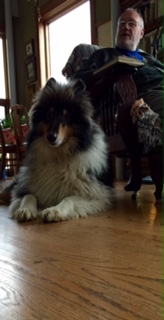
Steve and his constant companion

Steve and his constant companion

– Steve Shoemaker, Urbana, IL, Jan. 28, 2015

NOTE: Steve and Nadja’s Collie enjoys the tall fields behind the Shoemaker home on the Illinois prairie, but his ears are tuned for his tall friend’s invitation. I [Gordon] would include his name, but I’ve forgotten.


Verse – Laments and Transmutations

O
to
see
them
whole
before
laments
overcome
excessive
confidence
anticipating
transmutation

gcs
St. Augustine, FL
1.23.2015

————-

So…you may be wondering what this is, the desire to see them who now before we lament the day we missed the opportunity. We need to pay attention NOW and act on behalf of wholeness in THIS LIFE instead of indulging in excessive confidence in an afterlife to remedy the injustices of how.

“Young and old lie together in the dust of the streets; my young men and young women have fallen by the sword. You have slain them in the day of your anger; you have slaughtered them without pity.” – Lamentations, 2:21, NIV

Mr. Cub and Dr. Borg

Ernie Banks, known with great affection against his protestations as “Mr. Cub”, died yesterday, two days after theologian Marcus Borg.

Each excelled in his respective field, Ernie in the ivy-covered walls of  “the Friendly Confines” of Wrigley Field, Marcus in the ivy-covered walls of the academy. Though their fields were different, their way of life was the same. It was humble.

Ernie objected to the “Mr. Cub” title, arguing that the designation should be shared among team members who excelled each year.

Marcus responded to the question “How do you know you’re right?” with “I don’t know. I don’t know that I’m right.”

Each was humble, and each anticipated death.

“I may have ten years left. Not sure I want more. There comes a time to let go. And I could, with gratitude, sooner than that. My life has been very blessed.”

Dr. Marcus Borg (Mar. 11, 1942 – Jan. 21, 2015) to former student and friend, the Very Reverend Barkley Thompson, October, 2014.

“When I die, I want my ashes to be spread over Wrigley Field with the wind blowing out!”

–  “Mr. Cub” – Ernie Banks (Jan. 31, 1931 – Jan. 23, 2015)

Thank you, Gentlemen, for the memories. R.I.P.

Verse – The Chicago Shortstop Smiles in Heaven

Ernie Banks rocks a robe that’s Cubs blue.
Pennant hopes are eternal, it’s true,
Wrigley’s sky might be gray,
Mr. Cub will still say:
“It’s a beautiful day–let’s play two!”

– Steve Shoemaker, Urbana, IL, Jan. 25, in memory of Mr. Cub, Ernie Banks.

Ernie Banks (Jan. 31, 1931 – Jan. 23, 2015), the MLB Hall of Fame shortstop affectionately known by the ever-hopeful Cubs fans of Wrigley Field as Mr. Cub, died yesterday at the age of 83.

Tribute to Marcus Borg (1942 – 2015)

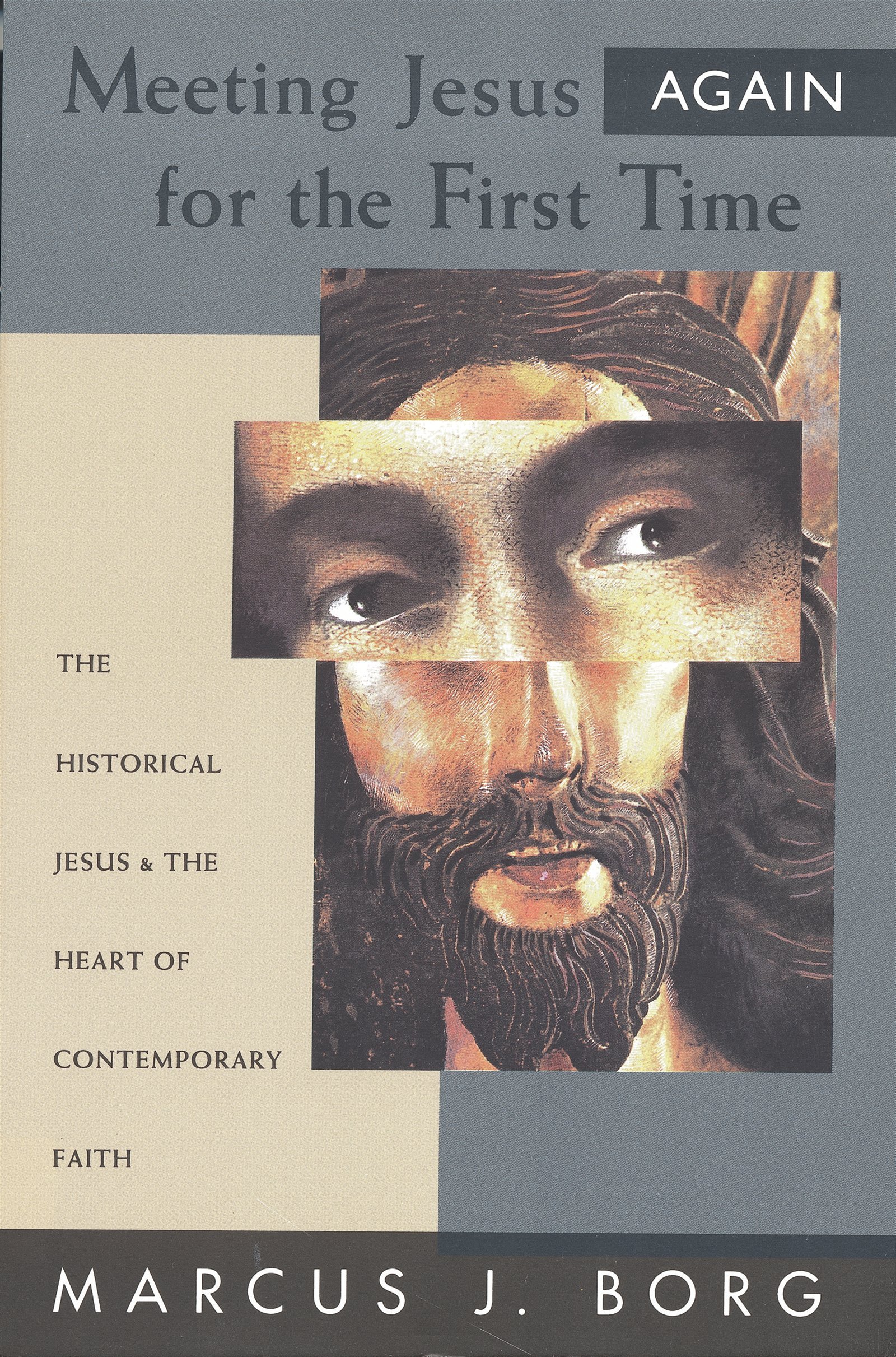
Cover of Marcus Borg book

Cover of Marcus Borg book

Marcus Borg’s writing and teaching affected millions.  Steve Shoemaker received an email of Marcus’s death yesterday from Barkley Thompson, who had quickly writtten the following tribute to Marcus on his blog “God in the Midst of the City“.

My friend, Marcus Borg
WEDNESDAY, JANUARY 21, 2015 / THE VERY REVEREND BARKLEY THOMPSON

Marcus Borg died this morning after a prolonged illness. I received a phone call this afternoon from a Cathedral parishioner and friend of Marcus, relaying the news to me.

I first became aware of Marcus Borg when I was a sophomore at Hendrix College. His landmark book, Jesus: A New Vision had just been released. It hit me at exactly the right time. I was a philosophy & religion major who knew God and increasingly knew about God, but I had little room or need for Jesus. Marcus’ book gave me an entirely new access point: to consider Jesus as Jesus had been historically, as a wisdom teacher, a healer, a social prophet, and more.

Marcus Borg

Marcus Borg

I first heard Marcus speak at Hendrix. He was the epitome of a college professor, right down to the cardigan sweater and pipe. He spoke calmly and with passion, and the first time I heard him in person was also the first time I understood how those tho things–calm and passion–could coincide.

I heard Marcus speak several other times over the years, but it was after I’d become a priest that I came to know him personally. When he was the annual Dodson Lecturer at St. John’s-Roanoke, he and I went to dinner. I was starstruck and wanted to quiz him about his research and his approach to Christianity. He’d have none of it. Marcus wanted only to talk about me, about St. John’s, about our ministry, and about my experience as a young priest in the Episcopal Church. He was solely interested in me, and I’ve never forgotten it.

Several shared meals and opportunities for fellowship later, my Christology has become higher and higher as the years have gone by. In ways I could not have done all those years ago in college, I now attest without hesitation that Jesus the Christ is God Incarnate, the hinge of history, the defeater of death, and the fulfillment in a single human life of God’s hopes for the whole world. And yet, my approach to Holy Scripture, my social convictions, and my love for the Episcopal Church mirror Marcus’ own perspectives quite closely. I once introduced Marcus to a church audience by saying, “I agree with roughly 75% of what Marcus will say to you this evening.” When he stepped into the pulpit, Marcus quipped, “I’m tempted to forego my notes and discuss with Barkley the other 25%!”

Unlike so many other writers in the field of religion (on both ends of the spectrum), Marcus was humble. Once one of my parishioners asked him during Q&A, “But how do you know that you’re right?” He paused, looked at her thoughtfully, and said, “I don’t know. I don’t know that I’m right.”

Very many people who had left the Christian faith have returned to it through Marcus’ evangelism (though he would grimace at my use of the word, I suspect). Marcus was a Christian, a follower of Jesus Christ in word and in deed. He understood Jesus (and especially the Resurrection) differently than I do. But the veracity of his faith was clear. And calm. And passionate.

Marcus and I last corresponded in late November. I’d asked how he was doing, and he responded, “I may have ten years left. Not sure I want more. There comes a time to let go. And I could, with gratitude, sooner than that. My life has been very blessed.”

Like Abraham, Marcus was blessed so that he could be a blessing. He blessed my life, and I am grateful.

NOTE: Since February 2013, Barkley serves as the eighth dean and twentieth rector of historic Christ Church Cathedral in Houston, Texas.  Click HERE for more information about the him.